Written by: Matthew Timmins, Founder and Managing Director, Leva Sleep
Key Takeaways
- Split king adjustable bases give each partner independent control over elevation and firmness, so snoring or different sleep needs cause fewer disruptions.
- The center gap between the two Twin XL mattresses is the most common complaint, so buyers should confirm built-in connector bars and gap-bridging accessories before purchasing.
- Key evaluation criteria include independent controls, motor noise levels, anti-snore presets, mattress compatibility, and white-glove delivery options.
- Split king setups require specialized Twin XL bedding and typically cost 40–65% more than single king configurations, so couples should calculate total ownership expenses upfront.
- Leva Sleep offers split king and split queen adjustable bases with quiet German motors, integrated frame connectors, and white-glove delivery—explore split base options.
What Is a Split King Adjustable Base and When Is It Worth It?
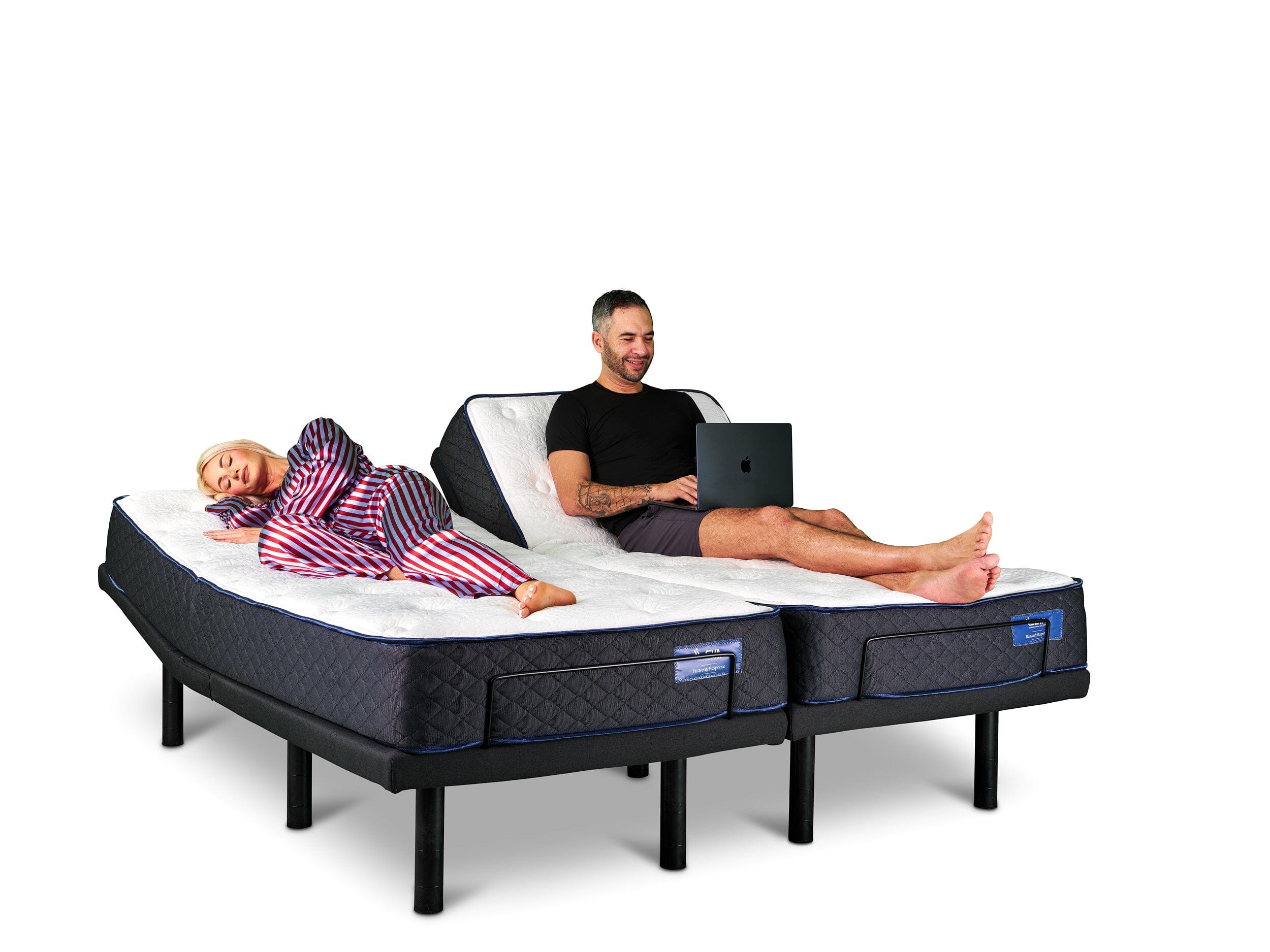
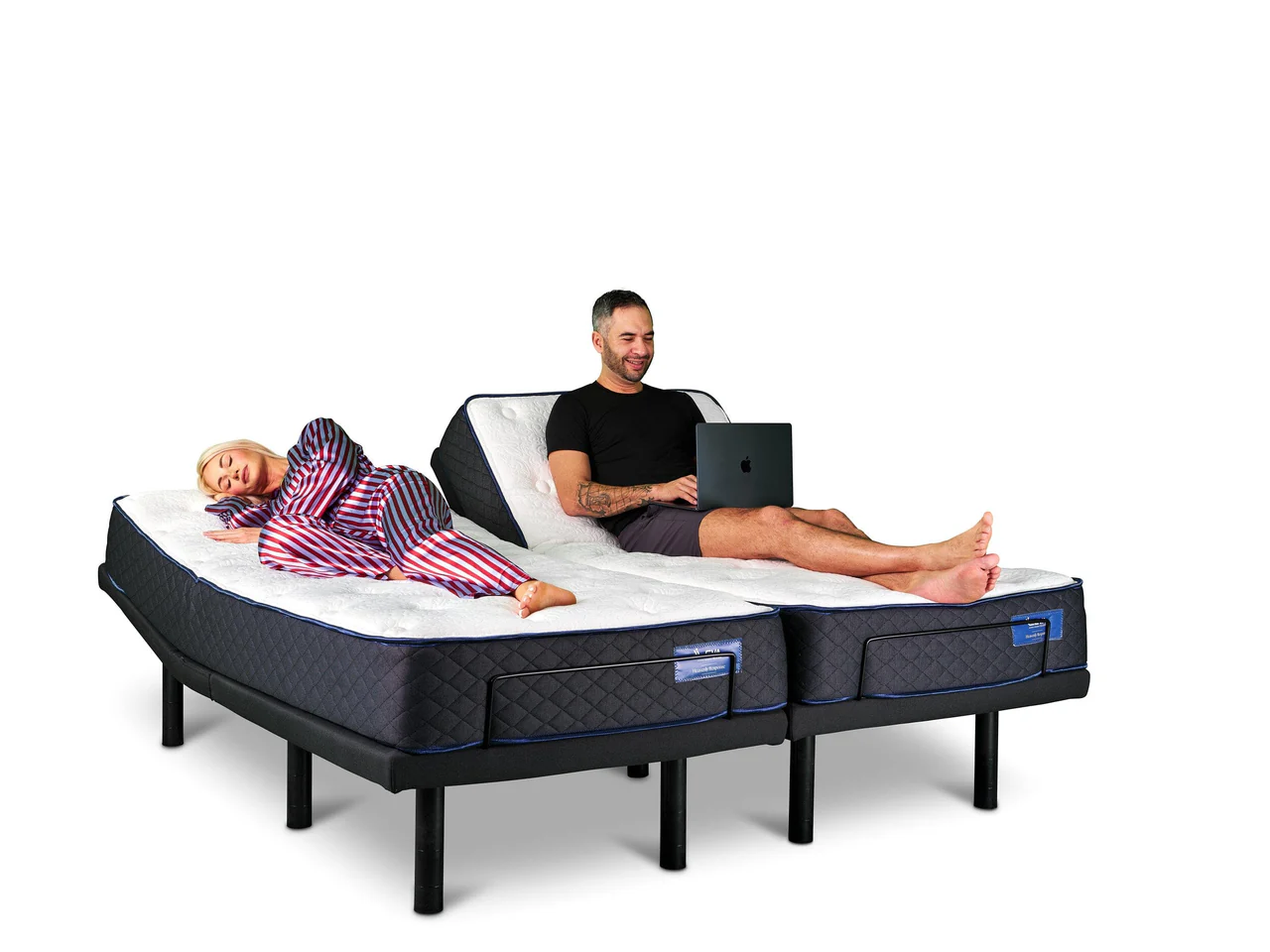
A split king adjustable base uses two Twin XL mattresses (38″ × 80″ each) placed side by side on two independent motorized platforms, forming a standard 76″ × 80″ king footprint. Each side raises and lowers independently. This configuration makes sense when partners have different firmness needs, one partner snores or needs elevation for a medical condition, or movement from one side repeatedly wakes the other.
Keeping a Split King Bed Together and Managing the Gap
The two independent frames in a split king setup can shift apart during use, especially when one side is elevated. Frames without a physical anti-gap bracket or retention bar allow the two Twin XL sections to move apart over time when one side is raised. Buyers should confirm that a base includes a built-in connector bar or anti-gap bracket before purchasing. Some owners apply improvised fixes such as heavy-duty zip ties or gap-filler foam strips when the frame lacks this feature, which signals a design gap rather than a true solution. Leva Sleep split bases include integrated frame connectors as a standard feature, so couples avoid these workarounds.
Do You Fall in the Crack of a Split King?
Industry professionals describe the 2–4 inch center gap as the biggest complaint in split king setups, with 60% of couples finding it intolerable for maintaining physical closeness. The gap exists because two separate mattresses sit on two separate platforms. A gap-bridging pad, which is a foam or fabric insert that spans the center seam, reduces the sensation of separation when both sides are flat. When one side is elevated, the gap becomes more pronounced and a bridging pad cannot fully compensate. Couples who prioritize physical closeness should test a split king in person before purchasing and ask specifically about the gap-bridging accessories included with the base.
Disadvantages of Split King Adjustable Beds
Split king configurations carry financial, practical, and relational trade-offs that buyers should weigh honestly.
On the financial side, adjustable split king bases range from $1,398–$2,699 before adding mattresses and bedding. Practical drawbacks include bedding complexity, because split kings require two Twin XL fitted sheets ($100–$308 per set) rather than standard king bedding, which doubles laundry loads. Motor durability also varies across different split king bases, and some models show a slight delay between the two Twin XL halves during synced operation.
Beyond cost and logistics, couples face relational trade-offs. The center gap reduces spontaneous closeness, particularly when sides sit at different angles. Warranty experiences can also create stress, because warranty enforcement on split king bases can be inconsistent, with some manufacturers refusing service despite advertised coverage.
Among these disadvantages, snoring and gap-related intimacy issues often drive couples to consider split configurations in the first place. The next section focuses on how to evaluate bases when snoring is the primary concern.
Best Split King for Snoring Couples
Anti-snore presets raise the head section 7–12° to open the airway and work well for positional snoring. Positional snoring comes from sleep position rather than a structural airway problem. This distinction matters because diagnosed moderate-to-severe sleep apnea requires CPAP or physician-directed treatment rather than head elevation alone. A bed cannot replace medical care.
For couples where one partner is a positional snorer, the most effective split king setup includes an automatic anti-snore mode that detects snoring and makes micro-adjustments without waking either partner. A sleep specialist notes: “Split king with memory presets is the setup I recommend most for couples where one person snores or has reflux. Each side does its own thing. No compromises, no arguments about the bed angle.” Leva Sleep anti-snore mode, arriving spring 2026, automates this adjustment through the Leva app.
7 Evaluation Criteria for Split King Adjustable Bases
These seven criteria help couples match a split king or split queen base to their real-world needs. Each one addresses a common pain point with split configurations.
1. Independent Controls
Each side must operate entirely independently so one partner’s adjustment never changes the other person’s position. To confirm this, verify that the base ships with two separate remotes or app profiles, that memory presets save per side, and that one partner adjusting their position does not trigger movement on the other side. Split king setups require labeling remotes to prevent confusion and programming presets together while ensuring each remote is paired to the correct base.
2. Motor Noise
Motor noise during nighttime adjustments can wake a sleeping partner and undo the benefit of independent controls. Ask the retailer for the decibel rating of the motor and, when possible, test the base in a showroom at night-equivalent quiet. Higher-end units carry 50,000-cycle motor validation, which correlates with more consistent, quieter long-term operation. Leva Sleep uses low-noise German motors across its split base lineup.
3. Gap-Bridging Solutions
Gap management directly affects comfort and relationship satisfaction. Confirm whether the base includes a built-in connector bar, an anti-gap bracket, and a center-seam bridging pad. The center gap most couples cite as the primary complaint needs a clear plan. Ask whether the bridging solution still works when both sides are elevated at the same time.
4. Anti-Snore Presets
A manual anti-snore preset requires the snoring partner to wake and adjust, which interrupts sleep. An automatic mode responds to detected snoring without waking either partner. Ergomotion’s Sleep Assist app, launching August 1, 2026, is an AI-powered sleep wellness platform that offers personalized reports, biometric insights, recommendations, and controls for compatible smart beds. Evaluate whether the anti-snore feature operates on one side only, so the non-snoring partner can remain flat.
5. Mattress Compatibility
Mattress flexibility and grip determine how comfortable an adjustable base feels. Certain mattresses cause users to slide toward the foot of the bed when the head section is raised, loosening sheets and creating uncomfortable positioning. Verify that the mattress is rated for adjustable base use, that the retailer offers sheets with deep pockets and extra elastic, and that the mattress warranty stays valid on an adjustable platform. Leva Sleep designs its mattresses and bedding accessories specifically for adjustable bases.
6. Delivery Experience
A split king involves two heavy motorized platforms, two mattresses, and multiple accessories, which can overwhelm many households. Confirm whether the retailer offers white-glove delivery that includes in-room setup, leg-height adjustment, app pairing, and removal of the old bed. Split king total ownership costs 40–65% more than single king setups, so professional setup becomes a relatively small addition to the overall investment. Leva Sleep provides white-glove delivery and setup for a fee, including a full product tutorial.
7. Split Queen Option and Total Cost of Ownership
A split queen uses two independent 30″ × 80″ halves that together form a standard 60″ × 80″ queen footprint, which suits bedrooms that cannot accommodate a king. King mattresses fit best in rooms measuring at least 12×12 feet (ideally 12×14), while queen mattresses work well in rooms as small as 10×12 feet. Couples should factor in the full cost, including two mattresses, two bases, specialized bedding, delivery, and accessories. Leva Sleep offers split queen configurations, a rare option in the market, at 30–50% below comparable luxury competitors.
See split queen pricing and configurations.
The table below summarizes how different bases typically handle these seven criteria and highlights what matters most to verify before you buy.
Comparison Table: How Different Bases Address the 7 Criteria
| Criterion | Typical Trade-off | What to Verify |
|---|---|---|
| Independent Controls | Some models show sync delays between the two halves | Two separate remotes or app profiles, plus per-side memory presets |
| Motor Noise | Budget motors rated 5,000–10,000 cycles vs. 50,000-cycle premium units | Decibel rating and a quiet showroom demonstration |
| Gap-Bridging | The center gap often becomes the main comfort complaint | Built-in connector bar and a center-seam bridging pad included |
| Anti-Snore Presets | Manual presets require the snorer to wake and cannot replace CPAP in severe apnea | Automatic detection with single-side operation only |
| Mattress Compatibility | Some mattresses cause sliding when the head is raised | Adjustable-base rating and deep-pocket sheets included |
| Delivery Experience | Box delivery leaves assembly and setup to the buyer | White-glove in-room setup, old bed removal, and app pairing tutorial |
| Split Queen / Total Cost | Total system cost (bases, mattresses, bedding) often ranges $4,800–$14,000+, and split queen options are rare | Room dimensions and full system cost, including bedding |
Now that you understand the trade-offs across each criterion, use the checklist below to confirm you have covered every decision point before purchasing.
Decision Checklist for Couples
Before finalizing a purchase, work through the following questions together:
- Does your bedroom accommodate a 76″ × 80″ king footprint, or does a 60″ × 80″ split queen fit better?
- Have you tested the gap in person and confirmed a bridging solution works for your closeness needs?
- Does the base include automatic anti-snore detection, or only a manual preset?
- Are the motors rated for high-cycle durability, and can you hear them operate in a quiet environment?
- Is the mattress explicitly rated for adjustable base use, and does the warranty remain valid on a motorized platform?
- Does the retailer offer white-glove delivery, in-room setup, and a product tutorial?
- Have you calculated the full cost of ownership, including two mattresses, two bases, specialized bedding, and delivery?
Frequently Asked Questions
Do you fall in the crack of a split king?
The center gap in a split king is typically 2–4 inches wide. Most couples do not physically fall into it during sleep, but many find it uncomfortable for cuddling or physical closeness. A gap-bridging pad reduces the sensation when both sides are flat. When one side is elevated, the gap widens and a pad cannot fully compensate. Testing the configuration in a showroom before purchasing remains the most reliable way to assess personal tolerance.
How do you keep a split king bed together?
The most reliable method is a base that includes a built-in connector bar as a standard feature. Some owners use heavy-duty zip ties or foam gap fillers as workarounds, but these signal a design limitation rather than a proper solution. As discussed earlier, ask the retailer specifically whether a frame connector is included and whether it functions when both sides sit at different elevations.
Is a split king adjustable base good for snoring?
A split king with an anti-snore preset is effective for positional snoring, where elevating the head 7–12 degrees opens the airway and reduces snoring frequency. As noted earlier, this is not a substitute for CPAP in diagnosed apnea cases. The most practical setup for snoring couples is a base with automatic snore detection that adjusts only the snoring partner’s side, leaving the other partner undisturbed.
What is the difference between a split king and a split queen adjustable base?
A split king uses two 38″ × 80″ Twin XL halves for a total footprint of 76″ × 80″, giving each partner 38 inches of individual width. A split queen uses two 30″ × 80″ halves for a 60″ × 80″ footprint, giving each partner 30 inches. The split queen fits in smaller bedrooms and costs less overall, but provides less personal sleeping space. Both configurations offer fully independent elevation and firmness control per side. Split queen bases are significantly harder to find than split king options.
What are the main disadvantages of a split king adjustable bed?
The primary disadvantages are the center gap, higher total cost compared to a single king, the need for specialized Twin XL bedding on each side, and potential motor noise on lower-end models. Couples who prioritize physical closeness during sleep often find the gap the most significant drawback. Higher-end bases address motor noise and durability concerns, but the gap and bedding complexity remain inherent to the split configuration regardless of price point.
If you have worked through the evaluation criteria, tested the gap in person, and calculated total ownership costs, you are ready to make an informed decision.
Ready to Stop Compromising on Sleep?
A split king or split queen adjustable base solves a core problem many couples face: two people with different bodies, different sleep needs, and different medical realities sharing one flat surface. The configuration works when buyers focus on the right criteria, including independent controls, motor noise, gap-bridging, anti-snore automation, mattress compatibility, delivery quality, and total cost of ownership.
Leva Sleep has spent more than eight years and 25,000 customers refining this system, offering 15–20 adjustable base models, quiet German motors, a spring 2026 app-based anti-snore mode, specialized bedding designed for adjustable bases, and white-glove delivery at 30–50% below comparable luxury competitors.
Schedule a La Jolla showroom visit or start shopping online.