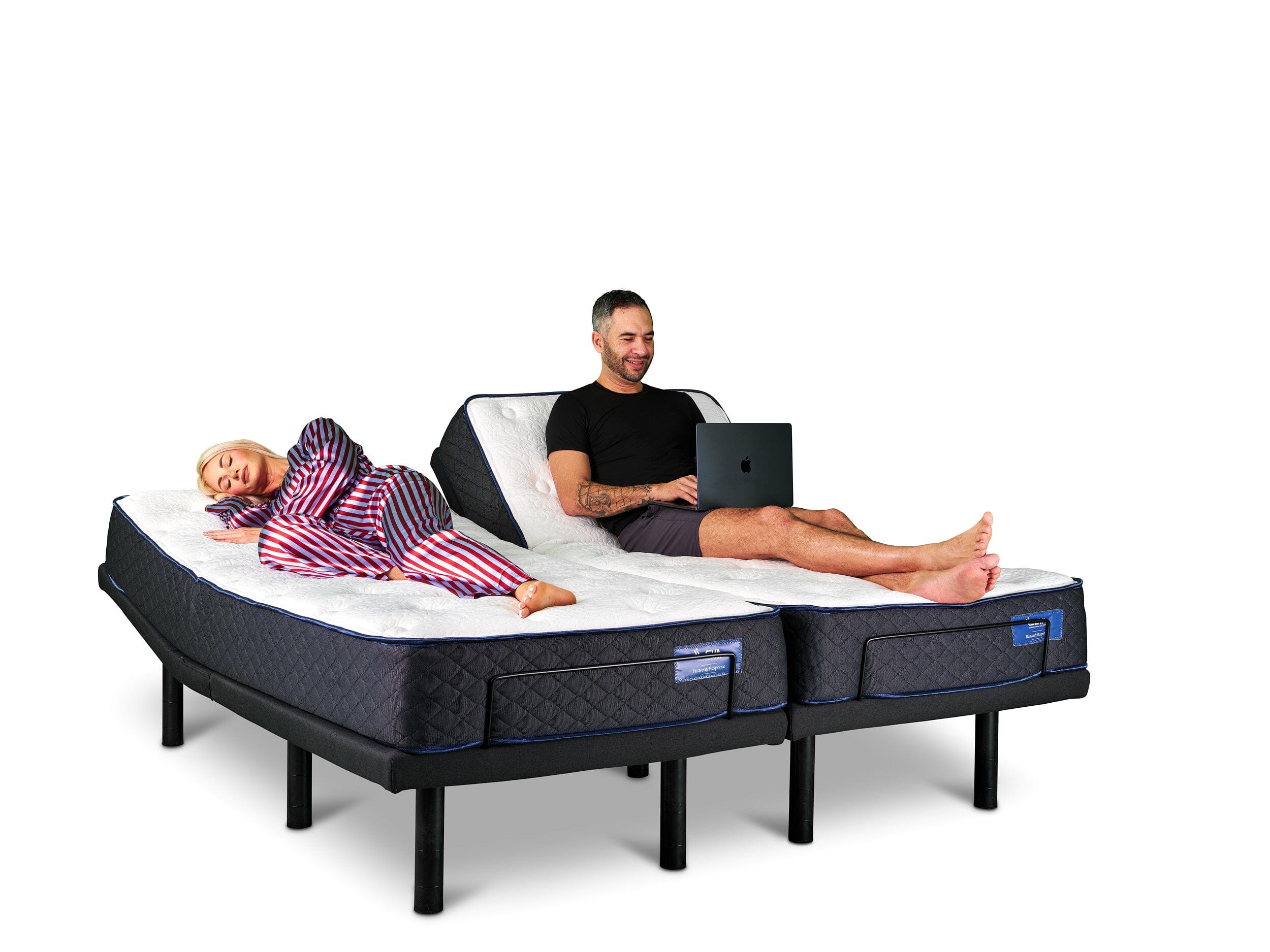

Written by: Matthew Timmins, Founder and Managing Director, Leva Sleep
Key Takeaways
- Flat sleeping surfaces can worsen chronic lower back pain by forcing the lumbar spine into prolonged extension and increasing disc pressure.
- Adjustable beds provide relief through zero-gravity positioning, knee elevation, and flexion-based spinal canal widening that reduce lumbar strain.
- Orthopedic specialists in 2026 recommend reclined positions with hips and knees slightly bent for patients whose symptoms worsen when lying flat.
- Medium-firm mattresses (5–7 on a 10-point scale) work best with adjustable bases to maintain spinal alignment and prevent hammocking or pressure points.
- Leva Sleep offers adjustable bases and compatible mattresses designed for back-pain relief, so you can explore Leva Sleep’s solutions and find a setup that matches your needs.
How Flat Beds Can Aggravate Chronic Lower Back Pain
Flat sleeping surfaces keep the lumbar spine in prolonged extension, which increases uneven pressure on intervertebral discs and keeps paravertebral muscles from fully relaxing overnight. Stomach sleeping on a flat surface hyperextends the lumbar curve as the midsection sinks into the mattress, and even flat back sleeping without knee support maintains excessive lordosis. Research cited by the National Institutes of Health shows that poor sleep posture creates a cycle in which pain disrupts sleep and sleep deprivation heightens pain sensitivity.
These biomechanical problems, including prolonged extension, disc compression, and muscle tension, can be addressed through three specific mechanisms that adjustable beds provide: zero-gravity positioning, knee elevation, and flexion-based spinal canal widening.
How Adjustable Beds Support Back Pain Relief
Adjustable positioning helps counter the main problems created by flat beds by using three targeted biomechanical mechanisms that change how your spine loads during sleep.
- Zero-gravity positioning: Zero-gravity positioning redistributes body weight, reduces lumbar disc pressure compared with lying flat, and can ease back pain and improve sleep for some people with chronic low back pain.
- Knee elevation (30–45°): Elevating the knees reduces the pull on the lower back and sciatic nerve for people with lumbar strain or nerve-related leg pain. The Mayo Clinic recommends that back sleepers place a pillow under the knees to relax back muscles and maintain the natural lumbar curve, and an adjustable base holds that position steadily all night, unlike a pillow that can slide out of place.
- Flexion-based spinal canal widening: Adjustable beds enable a semi-Fowler position that opens spaces between vertebrae, mimicking the relief patients feel when leaning forward on a walker, relief that flat sleeping, which forces spinal extension and narrows the canal, cannot provide.
How Clinicians Use Adjustable Positioning in 2026
Physical therapists often recommend a reclined position on an adjustable bed for patients whose symptoms worsen when lying flat, with the hips and knees slightly bent to reduce strain on the lower back. This positioning approach becomes especially helpful for people with degenerative conditions, because maintaining neutral spinal alignment during sleep plays a key role in day-to-day symptom control.
How Adjustable Beds Help Spinal Stenosis
The flexion-based spinal canal widening described earlier is particularly valuable for people with spinal stenosis, because even small increases in canal space can ease nerve compression and leg symptoms. Semi-Fowler positioning on an adjustable base supports this gentle flexion through the night.
Orthopedic specialists recommend the fetal position for spinal stenosis patients because curling opens the spaces between vertebrae and reduces nerve pinching. An adjustable base can approximate this flexion by elevating both the head and the knees, creating a sustained semi-flexed posture that flat sleeping cannot maintain. The earlier zero-gravity positioning also reduces lumbar disc pressure, which can further ease symptoms for some people with lumbar stenosis.
How Adjustable Beds Support Degenerative Disc Disease
An adjustable bed can help patients with degenerative disc disease by allowing customized sleep positions that directly address the mechanical forces driving disc deterioration.
One critical force is shear, which refers to horizontal loads that cause one vertebral body to slide relative to another and accelerate disc wear while aggravating facet joint inflammation. By placing the spine in a supported reclined posture, an adjustable base can reduce the gravitational component driving that shear. Adjustable beds provide positional control that standard flat frames cannot match, and for certain lower back pain patterns this control produces measurable differences in comfort.
When an Adjustable Bed Can Worsen Back Pain
Adjustable beds do not suit every patient or every condition, and some situations require caution or medical clearance before use.
- Recent spinal fusion: Patients recovering from recent spinal fusion surgery may need strict flat positioning during early healing, so presets with head or foot elevation are inappropriate without explicit surgeon approval.
- Severe spinal instability: Patients with documented instability should confirm safe elevation angles with their spine surgeon before using zero-gravity or other presets.
- Circulatory conditions: Patients with deep vein thrombosis or arterial insufficiency should consult a physician before nightly foot elevation, because circulatory conditions can change the safety of leg elevation used for lower back pain relief.
- Implanted cardiac devices: Pacemaker or implanted-device users should confirm safety with their cardiologist before using a motorized adjustable base due to potential electromagnetic interference from the motor.
- Incorrect use: Adjustable beds do not cure chronic back pain but can reduce pressure and improve alignment in certain positions, and they work best when paired with a compatible supportive mattress and good sleep posture habits rather than used alone.
Any patient with a diagnosed spinal condition, recent surgery, or cardiovascular concern should talk with their physician before purchasing an adjustable base.
Mattress Firmness That Pairs Well With Adjustable Bases
Biomechanical studies show that medium-firm mattresses maintain the spine’s natural curvature and alignment more effectively when used on adjustable bases. Mattresses that are too soft let the spine hammock, while very firm surfaces create high-pressure points and increase disc stress during adjustable bed use. A 2021 systematic review found that medium-firm mattresses support comfort, sleep quality, and spinal alignment, although findings on preventing back pain onset remain mixed.
A compatible mattress for an adjustable base should meet the following criteria:
- Medium-firm to firm feel, roughly 5–7 on a 10-point firmness scale
- All-foam or hybrid construction with high-density layers that flex repeatedly without tearing
- Minimum 10 inches of thickness so the foam or coil depth flexes properly at bend points without bottoming out
- No traditional innerspring construction, which lacks the lateral flexibility needed for articulation
- Manufacturer confirmation that the mattress is rated for adjustable-base use
Leva Sleep designs its all-foam and hybrid pocket-coil mattresses to articulate with its adjustable bases, and its US lineup includes California-made brands such as Airloom along with Tempur-Pedic, Helix, and Diamond Mattress, all verified compatible with Leva’s proprietary bases.
Checklist for Choosing an Orthopedic-Grade Adjustable Bed
Shoppers managing chronic lower back pain can use the following checklist to evaluate whether an adjustable base meets orthopedic standards before buying.
- Elevation range: Head elevation should reach at least 20° and knee elevation at least 45° to achieve commonly recommended zero-gravity and flexion angles.
- Motor noise: Quiet motors prevent sleep disruption during position changes, so ask for decibel ratings or request an in-person demonstration.
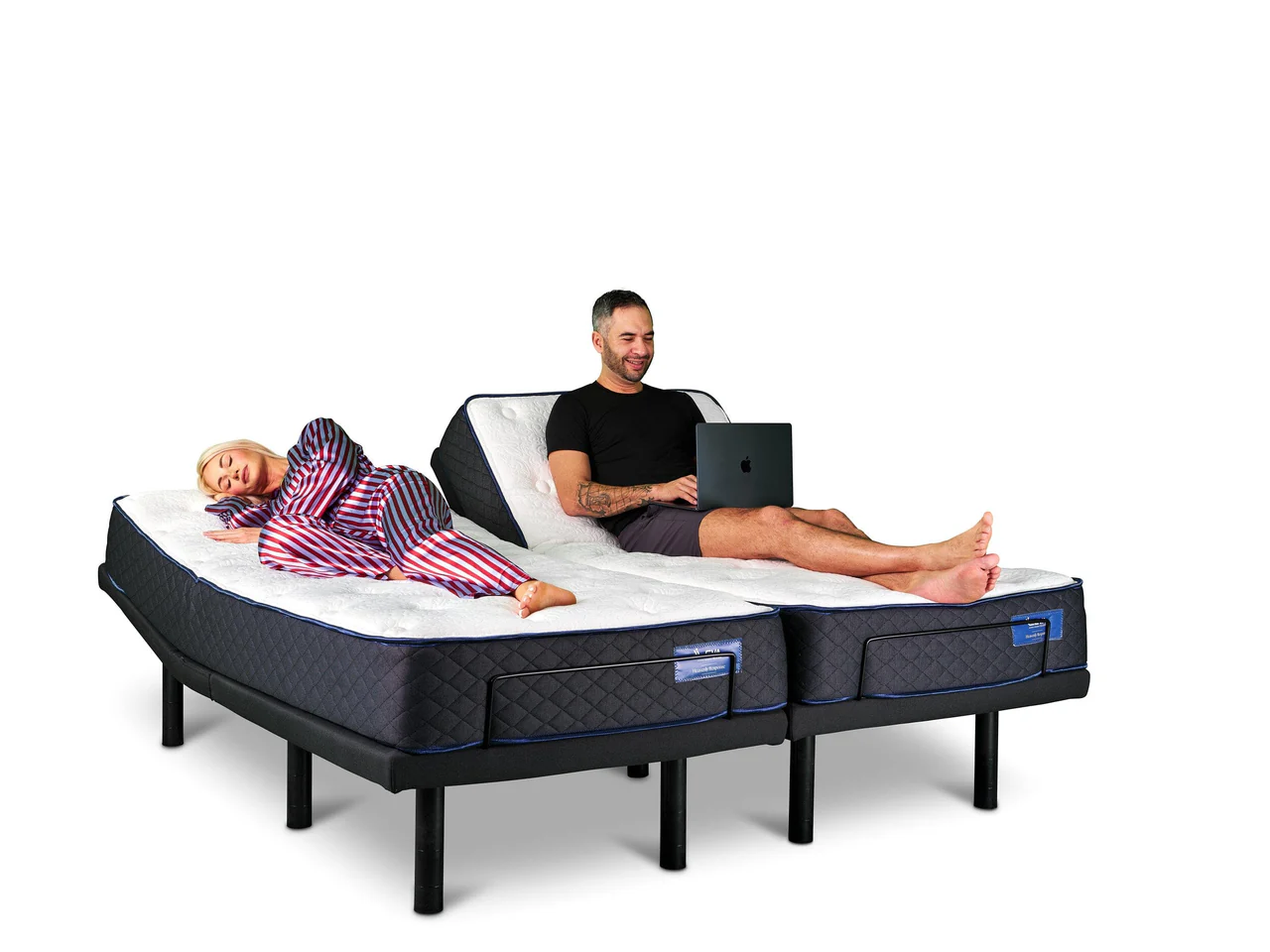
- Split configuration: Split King or Split Queen bases let each partner control their own side, which helps when one partner needs therapeutic positioning and the other prefers a flatter surface.
- Mattress compatibility: Confirm that the paired mattress meets the medium-firm and flexible-construction criteria listed above.
- Warranty and support: Look for at least a 10-year frame warranty and accessible domestic customer service.
- White-glove delivery: Professional setup ensures correct leg height, proper mattress seating, and a product tutorial, which matters for users with mobility limitations.
- Model selection: A specialist retailer offering 15–20 adjustable models gives enough range to match specific clinical requirements, compared with the 3–5 models usually found at general mattress retailers.
Leva Sleep stocks 15–20 adjustable base models, offers Split Queen and Split King configurations with independent app control, uses whisper-quiet German motors, and provides in-house white-glove delivery and setup, including old bed removal and real-time height adjustment for customers in the San Diego region.
How Adjustable Beds Fit Into a Back-Pain Plan
Flat sleeping can sustain lumbar disc compression, elevated paraspinal muscle tension, and spinal canal narrowing, while adjustable positioning can help counter these forces. Clinical evidence supports adjustable beds as a useful adjunct for chronic lower back pain, spinal stenosis, and degenerative disc disease. Limitations remain for post-fusion patients, people with circulatory conditions, and anyone using an incompatible mattress, so physician consultation remains a key step before purchase.
For adults who have already cycled through mattresses and pillows without lasting relief, an adjustable base paired with a medium-firm, flexible mattress offers a practical next step. Leva Sleep’s specialist model, which includes 15–20 curated bases, split configurations, quiet motors, US-made mattress options, and white-glove setup, is built to match the criteria that many spine and pain specialists outline.
Frequently Asked Questions
How long does it take to notice improvement in lower back pain after switching to an adjustable bed?
Most users report noticeable changes in comfort within the first one to two weeks of consistent use. Timelines vary based on the underlying diagnosis, mattress compatibility, and whether the adjustable base is used as part of a broader treatment plan that includes physical therapy or exercise.
Is a split adjustable base necessary for couples, or can a single base work for both partners?
A single adjustable base moves as one unit, so any elevation change affects both sleepers at the same time. For couples where one partner needs therapeutic positioning, such as knee elevation for sciatica or head elevation for stenosis relief, and the other prefers a flatter surface, a single base often forces compromise that can disrupt the unaffected partner’s sleep. A Split King or Split Queen base with independent controls lets each side operate separately, addressing different medical and comfort needs without requiring separate beds. Leva Sleep specializes in split configurations, including the less common Split Queen for smaller rooms.
Can an adjustable bed replace physical therapy or other medical treatments for chronic lower back pain?
An adjustable bed cannot replace physical therapy or medical treatment, because it functions as a positional aid rather than a structural treatment. It can reduce compressive load, shearing forces, and muscle tension during sleep, which may lower pain levels and improve sleep quality, both of which support recovery. However, it does not correct underlying structural problems such as disc herniation, spinal instability, or muscle deconditioning. Clinical specialists typically recommend adjustable beds as part of a comprehensive plan that includes physical therapy, appropriate exercise, and physician-guided care instead of using them as a standalone solution.
What is the difference between zero-gravity positioning and simply elevating the head of the bed?
Elevating only the head of the bed tilts the body at an angle that can increase pressure at the hip crease and lower lumbar region. Zero-gravity positioning raises both the head and the knees, which distributes body weight more evenly across the sleep surface and places the spine in a neutral, decompressed posture. This dual elevation comes from NASA research on reducing gravitational stress on the body and can provide a more protective configuration for the spine. A base that only elevates the head does not create the same biomechanical effect.
Does Leva Sleep offer mattresses specifically designed for people with back pain?
Leva Sleep offers all-foam and hybrid pocket-coil mattresses that are built to articulate fully with its adjustable bases without bottoming out at bend points, a common problem with mattresses not designed for adjustable use. These mattresses come in medium-firm configurations that align with firmness recommendations supported by clinical research for chronic lower back pain. Leva’s US lineup also includes curated third-party brands such as Airloom, Tempur-Pedic, Helix, and Diamond Mattress, all verified compatible with Leva’s proprietary bases. Customers can test options in person at the La Jolla showroom, where sleep specialists can match mattress firmness and base configuration to specific pain patterns and sleep positions.