Written by: Matthew Timmins, Founder and Managing Director, Leva Sleep
Key Takeaways
- Five practical criteria guide adjustable bed choices: lumbar support, couple adjustability, noise, mattress fit, and delivery experience.
- SmartFlex SF500 offers basic head and foot elevation, while SF600 adds limited lumbar tilt. Both move as a single unit.
- Split-lumbar systems give each partner independent control of head, foot, and lumbar zones, which helps with chronic back pain.
- Premium split systems like Leva Sleep pair quiet motors with white-glove delivery and matched mattresses for long-term comfort.
- For tailored lumbar support and per-side adjustability, explore Leva Sleep’s split-lumbar systems at Leva Sleep.
Five Criteria That Shape Adjustable Bed Comfort
Every model below is measured against the same five criteria.
- Targeted lumbar and spinal-alignment support. Built-in lumbar contour mechanisms directly address lower back alignment during supine sleep, whereas head and foot positioning alone often receives more marketing attention. A base without dedicated lumbar adjustment leaves the mattress responsible for all alignment work.
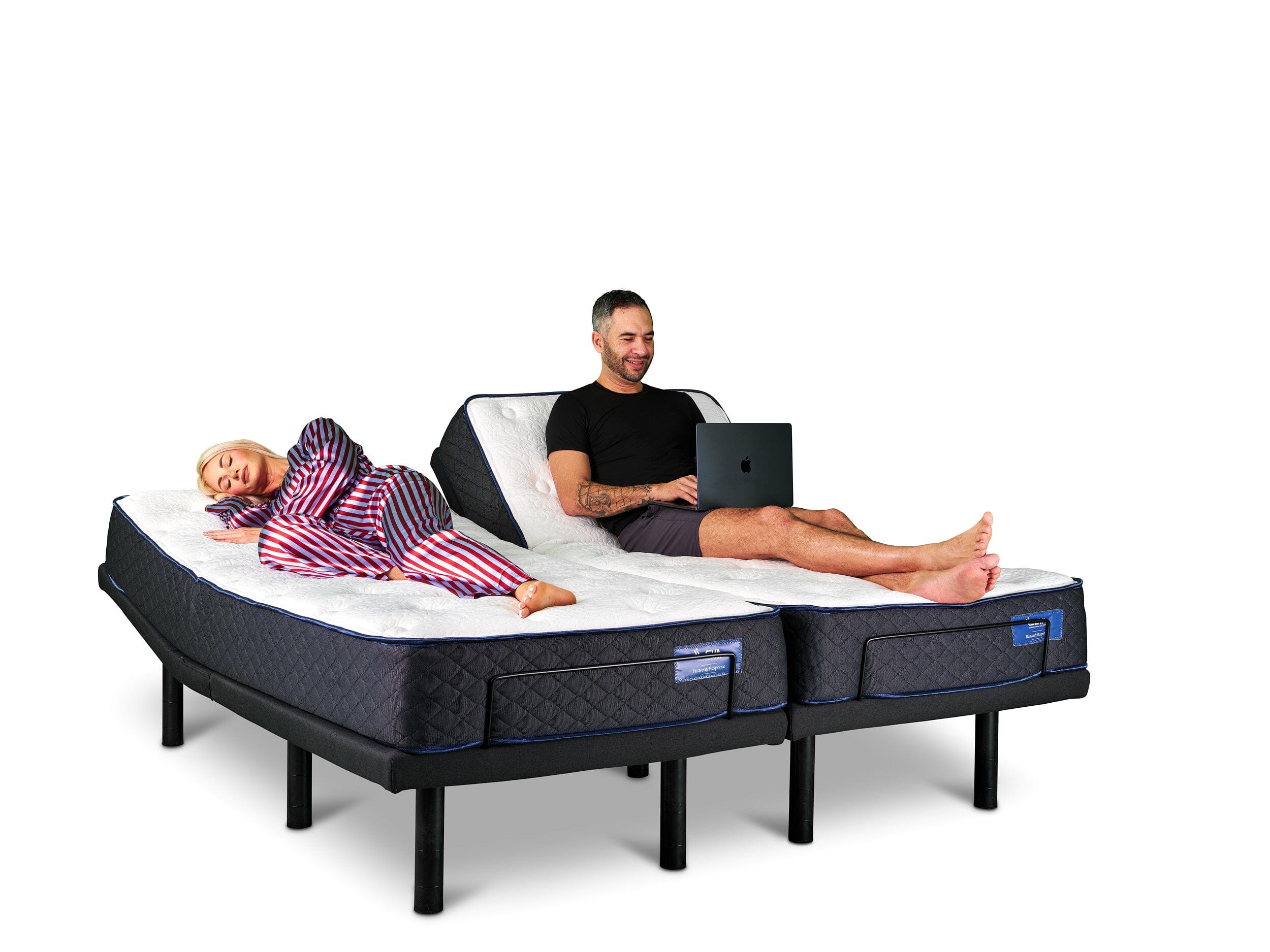
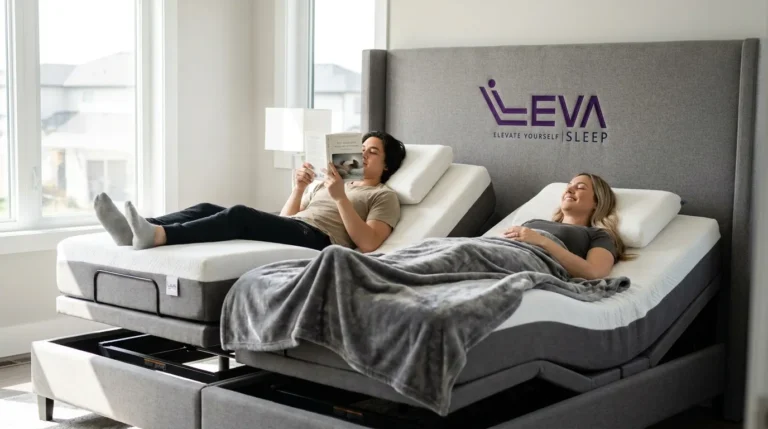
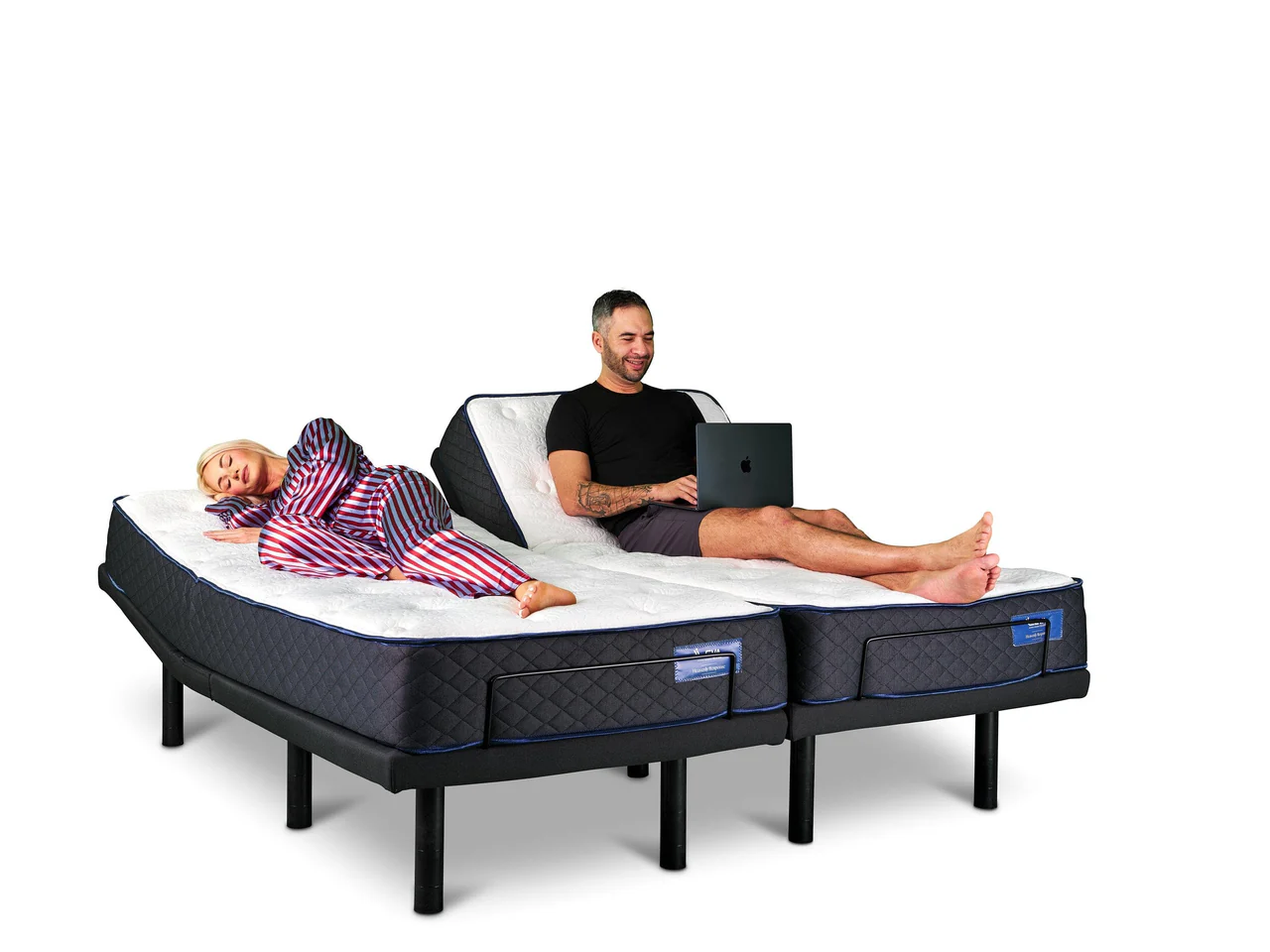
- Independent couple adjustability without compromise. Single-side bases lock both partners into the same head and foot angle. Split systems let each side operate independently, which matters when one partner needs zero-gravity elevation and the other sleeps flat.
- Real-world noise and motion transfer. Motor noise and frame vibration during nighttime adjustments rank among the most common owner complaints. Whisper-quiet motors create fewer sleep disruptions.
- Mattress compatibility and long-term durability. Repeated flexing on adjustable bases stresses mattress materials, making quality construction essential to prevent delamination, sagging, and premature wear at bend points that could compromise lumbar support and worsen morning stiffness.
- Delivery, setup experience, and ongoing service. A base that arrives in pieces or expects you to configure motor settings alone adds friction at the exact moment you need relief.
These five criteria apply first to SmartFlex SF500 and SF600, then to premium split-lumbar systems for a clear comparison.
How Each Adjustable Bed Category Fits Real Sleep Needs
Knowing where each category sits in the market helps narrow your options before you compare specific models.
Traditional flat beds suit sleepers with no positional needs, no partner conflict, and no medical recommendations for elevation. Anyone considering this guide has usually moved beyond that category.
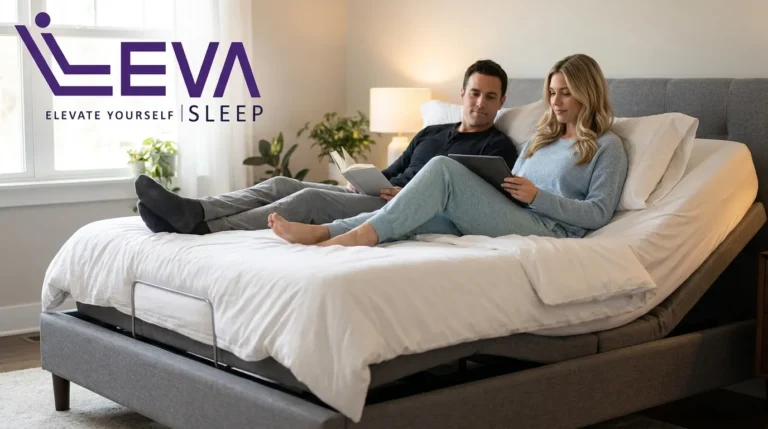
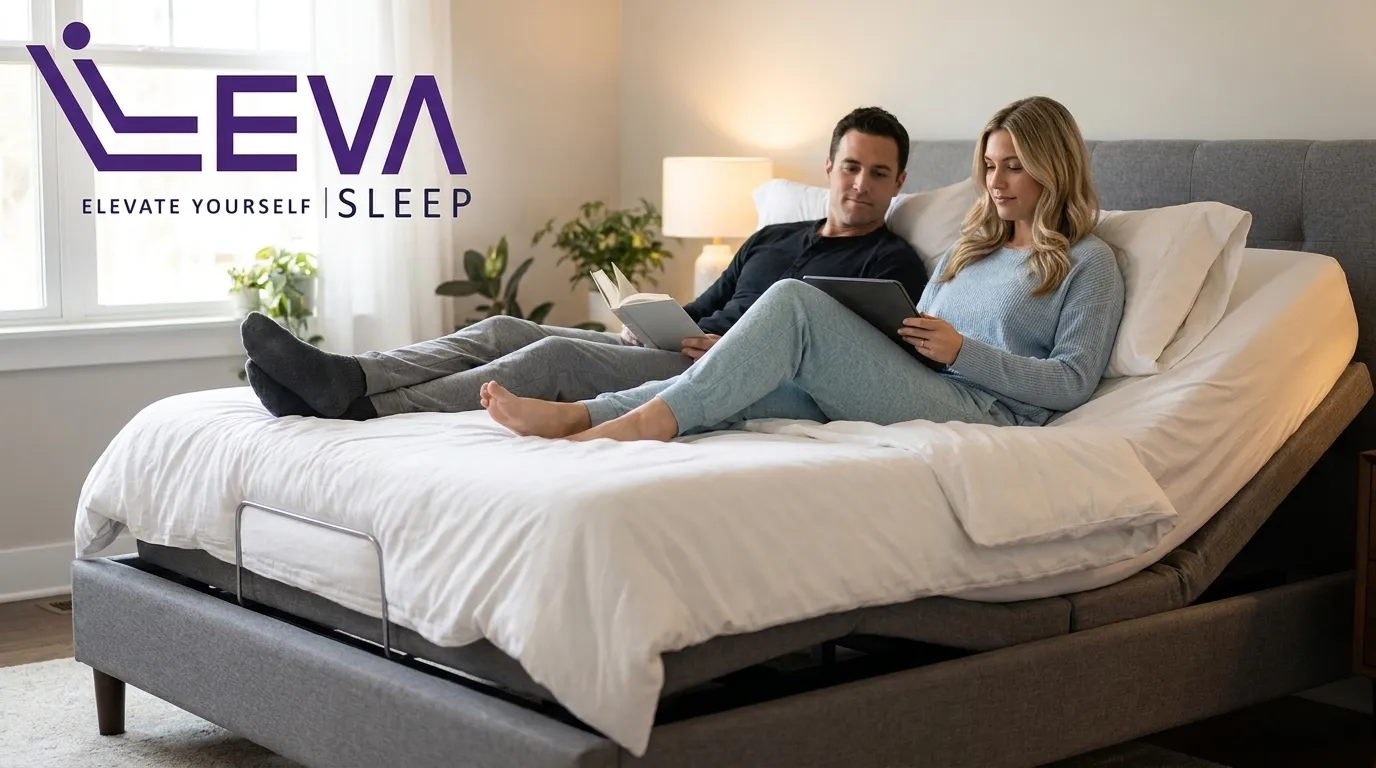
Single-side adjustable bases, including the SmartFlex SF500 and SF600, suit solo sleepers or couples who share the same positional preferences. They offer head and foot elevation, basic massage, and app or remote control at a mid-tier price. The trade-off is shared movement for both partners and limited or absent lumbar adjustment.
Integrated split adjustable systems suit couples with differing needs, sleepers with chronic back conditions, and anyone whose physician recommends individualized positioning. Each side operates independently. Premium models add dedicated lumbar zones, anti-snore detection, and quiet motors designed for nightly micro-adjustments.
Explore Leva Sleep’s split-lumbar lineup online or in the La Jolla showroom.
SF500 vs SF600 vs Split-Lumbar Systems on the Five Criteria
This comparison reflects public owner feedback and published specifications. It does not use proprietary test data.
Criterion 1: Targeted lumbar and spinal-alignment support
Lumbar support architecture drives back pain relief more than any other feature.
- SF500: Provides head and foot elevation only with no dedicated lumbar zone. Head and foot positioning alone often receives more marketing attention than the lumbar contour mechanisms that directly address lower back alignment. The mattress must supply all lower-back contouring.
- SF600: Adds a lumbar tilt feature over the SF500, which helps many back sleepers. Owner reports describe a narrow adjustment range, so fine-tuning can feel limited.
- Split-lumbar systems (e.g., Leva Sleep): Use a dedicated lumbar zone with independent control per side. Each partner dials in lower-back support without changing the other person’s position.
Criterion 2: Independent couple adjustability
Per-side control determines whether couples can each sleep in their ideal position.
- SF500 / SF600: Both are single-side bases. A queen or king moves as one unit, so couples with different elevation needs must agree on a shared angle every night.
- Split-lumbar systems: Use a true split configuration with independent head, foot, and lumbar control per side. Each partner sets their own profile without negotiation.
See how Leva Sleep’s split configurations handle per-side control in person or via virtual consult.
Criterion 3: Real-world noise and motion transfer
Noise level and vibration affect how often you can adjust without waking your partner.
- SF500 / SF600: Owner forums from 2025–2026 describe the massage function as light vibration that works for relaxation. Massage functions on adjustable bases are mild vibration systems best treated as relaxation aids rather than targeted interventions for back pain. Motor noise during nighttime adjustments appears often in mid-tier base reviews.
- Split-lumbar systems (Leva Sleep): Use whisper-quiet German motors tuned for frequent micro-adjustments. Leva’s anti-snore mode, scheduled for spring 2026, makes subtle head changes that aim to avoid waking either partner.
Criterion 4: Mattress compatibility and long-term durability
Mattress pairing influences both comfort and how long the system lasts.
- SF500 / SF600: Work with most memory foam and hybrid mattresses in the 8–12 inch range. Mattresses over 12 inches thick or made of very dense all-foam or pure latex risk creasing or delaminating at hinge points during repeated flexing on adjustable bases, potentially leading to uneven support and worsened back pain over time. Neither model includes a paired mattress, so buyers must confirm compatibility themselves.
- Split-lumbar systems (Leva Sleep): Ship with compatible mattresses. Leva’s curated lineup includes all-foam and hybrid pocket-coil options matched to the base’s motion range.
Criterion 5: Delivery, setup, and ongoing service
Setup quality and support affect how quickly you reach a comfortable, sustainable configuration.
- SF500 / SF600: Usually arrive via standard freight or threshold delivery, depending on the retailer. Setup expectations vary, and many buyers assemble and configure the base themselves.
- Split-lumbar systems (Leva Sleep): Include white-glove delivery with in-room setup, leg-height adjustment, a product walkthrough, and old-bed removal. Trained professionals complete configuration before they leave.
Real-World Scenarios: Matching Features to Back Pain Patterns
Chronic lower-back pain (solo sleeper or same-preference couple): A prospective study of chronic back pain patients using an adjustable airbed reported 95% experienced pain improvement and average pain decreased 32%. Zero-gravity positioning, where head and knees sit above the heart, reduces compressive load on the lumbar spine. The SF600’s lumbar tilt offers more relief than the SF500 for this group, although both lack per-side control.
A related but distinct condition, sciatica, adds more specific positional needs. Sciatic nerve irritation often responds to knee elevation that reduces tension on the piriformis and lumbar roots. Lumbar support effectiveness hinges on the sleeper identifying the correct position plus compatibility with the rest of the sleep system, including mattress firmness and flexibility. A split system lets the affected partner fine-tune angles without disturbing the other.
Post-surgical recovery: Elevation requirements after spinal, hip, or knee surgery can change week by week. A split-lumbar system with dedicated lumbar control and quiet motors adapts to those changes while allowing the recovering partner to adjust without waking the other.
Couples with differing firmness and elevation needs: Single-side bases struggle here by design. One partner’s ideal zero-gravity preset often feels like an uncomfortable incline to the other. A split king or split queen with independent controls provides the structural solution that avoids a “sleep divorce.”
Total Cost of Ownership: What You Pay Over Time
The SF500 and SF600 usually carry lower upfront prices than premium split systems, yet downstream costs can narrow that gap. Buyers who later realize they need independent control must replace the entire single-side base. Mattress incompatibility, where firm, rigid mattresses can snag on the frame’s lift mechanism during adjustment, interfering with smooth movement and reducing effectiveness for users seeking back pain relief, can trigger a second mattress purchase within the first year. Standard delivery without professional setup also adds time and increases the risk of incorrect configuration.
Leva Sleep’s split systems sit 30–50% below many comparable luxury competitors on sticker price, and the cost advantages continue after purchase. White-glove delivery removes setup time and reduces configuration errors. Paired mattresses avoid the compatibility problems that often push SF500 and SF600 owners into an unplanned mattress upgrade. Purpose-built bedding accessories, such as deep-pocket sheets with extra elastic and duvet clips, arrive as part of a coordinated package instead of surprise add-ons. The anti-snore mode planned for spring 2026 can also replace a separate device that might otherwise cost several hundred dollars.
Decision Checklist: Match Your Situation to a Bed Type
Use this checklist to connect your pain points and sleep habits to the right category.
- Solo sleeper, mild positional needs, budget focus: A single-side base like the SF500 or SF600 offers a practical starting point.
- Chronic lower-back pain requiring lumbar zone control: SF600 provides limited lumbar tilt, while split-lumbar systems deliver full, independent lumbar adjustment per side.
- Couple with different elevation or firmness preferences: Single-side bases cannot meet this need. A split king or split queen is necessary.
- Snoring or mild sleep apnea affecting either partner: Anti-snore mode with quiet micro-adjustment, such as Leva Sleep’s planned 2026 feature, addresses this without waking the other partner.
- Post-surgical recovery or physician-directed positioning: A split-lumbar system with dedicated lumbar control and white-glove setup fits these medical requirements best.
- Existing mattress you want to keep: Confirm flexibility, thickness in the 8–12 inch range, and coil type before pairing with any adjustable base. Stable edges are critical on adjustable bases because positioning changes weight distribution, and poor adaptation can create instability that reduces effective lumbar support during elevated or zero-gravity positions.
Use this checklist during your Leva Sleep showroom visit or online consultation.
FAQ: Practical Answers About Adjustable Beds and Back Pain
What is the zero-gravity angle and why do back specialists recommend it?
Zero-gravity is a preset position where the head and knees are elevated so body weight spreads more evenly across the surface. This posture reduces compressive load on the lumbar discs and resembles the position astronauts use during launch to limit spinal stress. It does not cure structural disc disease, yet it offers a mechanically sound way to reduce pressure during sleep. The exact angle varies by base and body type, so most people need a short trial period to find their ideal setting.
Why does my back hurt more after sleeping in an adjustable bed?
Increased morning pain after switching to an adjustable base usually traces to three causes. The mattress may feel too firm or too soft once the bed inclines. The lumbar zone may lack independent support from head and foot elevation. The chosen angle may not match the specific pain pattern. Raising the head or foot concentrates weight over a smaller area, which can make a mattress feel firmer than it does when flat. A medium-firm mattress combined with a base that includes dedicated lumbar control gives the broadest range for dialing in comfort.
Do mattresses shift on adjustable bases, and how can I prevent that?
Mattress migration occurs most often on bases without a retainer bar at the foot or when the mattress fabric has low friction. Most quality bases include a foot retainer. Pairing the base with a mattress designed for adjustable use, such as memory foam, latex, or a hybrid with individually pocketed coils, also reduces movement because these materials flex with the frame. Purpose-built fitted sheets with deep pockets and extra elastic help keep bedding from tugging the mattress out of place during elevation changes.
Does wall-hug (zero-clearance) technology matter for back pain users?
Wall-hug technology moves the sleep surface toward the wall as the head section rises, keeping your upper body near the nightstand and outlets. Without this feature, elevating the head pushes your torso toward the foot of the bed, which can disrupt lumbar positioning and force you to scoot back after each adjustment. For users who adjust positions frequently, including those relying on anti-snore micro-adjustments, wall-hug design helps preserve the lumbar alignment you set at the beginning of the night.
How do couples with different back pain needs share one adjustable base?
Couples with differing needs rarely succeed on a single-side base. A queen or king single-side base moves as one unit, so both partners share the same head angle, foot angle, and lumbar setting. Split king and split queen setups use two independent bases placed side by side, each with its own controls, motors, and lumbar adjustment. Each partner chooses their own position without affecting the other. Split configurations require split-size bedding, yet they provide the only structural fix when partners’ back pain patterns differ.
Conclusion: Choosing the Right Adjustable Bed for Your Body and Household
The SmartFlex SF500 works as a functional entry option for solo sleepers with straightforward positional needs. The SF600 adds limited lumbar tilt, which helps many back sleepers who do not require per-side independence. Neither model suits couples with different needs, and neither offers the level of dedicated lumbar control that most chronic back pain sufferers eventually seek.
Split-lumbar systems with quiet German motors, independent per-side control, anti-snore detection, and white-glove delivery address the full set of criteria that mid-tier single-side bases leave unresolved. Leva Sleep’s integrated approach, which combines paired mattresses and purpose-built bedding with pricing below many comparable luxury competitors, makes it a strong next step for buyers ready to move beyond the compromises of single-side bases.
Explore Leva Sleep’s split-lumbar systems and schedule a personalized fitting in La Jolla or online.