Written by: Matthew Timmins, Founder and Managing Director, Leva Sleep
Key Takeaways
- Targeted lumbar vibration combined with zero-gravity positioning can reduce spinal pressure and ease lower-back muscle tension.
- Effective systems use independent lumbar zone control, several intensity levels, and quiet motors for consistent, nightly pain relief.
- Split-base designs with independent controls let couples run different massage programs without disturbing each other.
- Mattress compatibility and professional white-glove setup help massage vibration reach your body and keep the system working correctly.
- Experience quiet, app-controlled lumbar massage and zero-gravity positioning with Leva Sleep to find relief tailored to your back pain.
Six Evidence-Based Criteria for Evaluating Massage Features
The following six criteria highlight the difference between massage features that truly help back pain and those that feel like gimmicks. Each point focuses on how the mechanics, controls, and setup affect real-world comfort and long-term use. Use this list as a checklist when you compare adjustable bases in a showroom or online.
- Lumbar-specific zonal massage mechanics
- Zero-gravity positioning synergy
- Split-base independence for couples
- Noise and timer performance
- Mattress compatibility and pressure mapping
- Long-term value and white-glove setup
1. Lumbar-Specific Zonal Massage Mechanics
The lumbar spine, the five vertebrae between the ribcage and pelvis, carries most of your body’s compressive load during the day. Adjustable bed reviewers at AginginPlace.org note that full-body vibration spreads stimulation too widely to focus on the lower back. Zonal control solves this problem by isolating the lumbar segment so intensity concentrates where chronic tension builds.
When you evaluate a base, look for independent zone toggles instead of a single full-body program. This zonal independence turns the feature into a therapeutic tool, because you can activate lumbar massage while keeping shoulder and leg zones off. Bases with three or more discrete zones, such as head, lumbar, and leg, extend this control so you can direct stimulation exactly where you need it.
Intensity range also matters for real relief. A system with only two or three intensity steps limits your ability to match stimulation to how your back feels that night. Look for at least five intensity levels so you can lower settings during acute flare-ups and increase them for chronic muscle tightness. Depth of vibration, meaning how far the mechanical wave penetrates tissue, varies by motor design, so ask about this directly when you visit a showroom.
Higher intensity settings create a practical trade-off related to motor noise. Cheaper motors often turn vibration into an audible hum, which works against relaxation and can wake a partner. Motor quality and how the motor mounts to the frame determine whether the massage feels targeted or simply rattles the entire bed.
2. Zero-Gravity Positioning Synergy
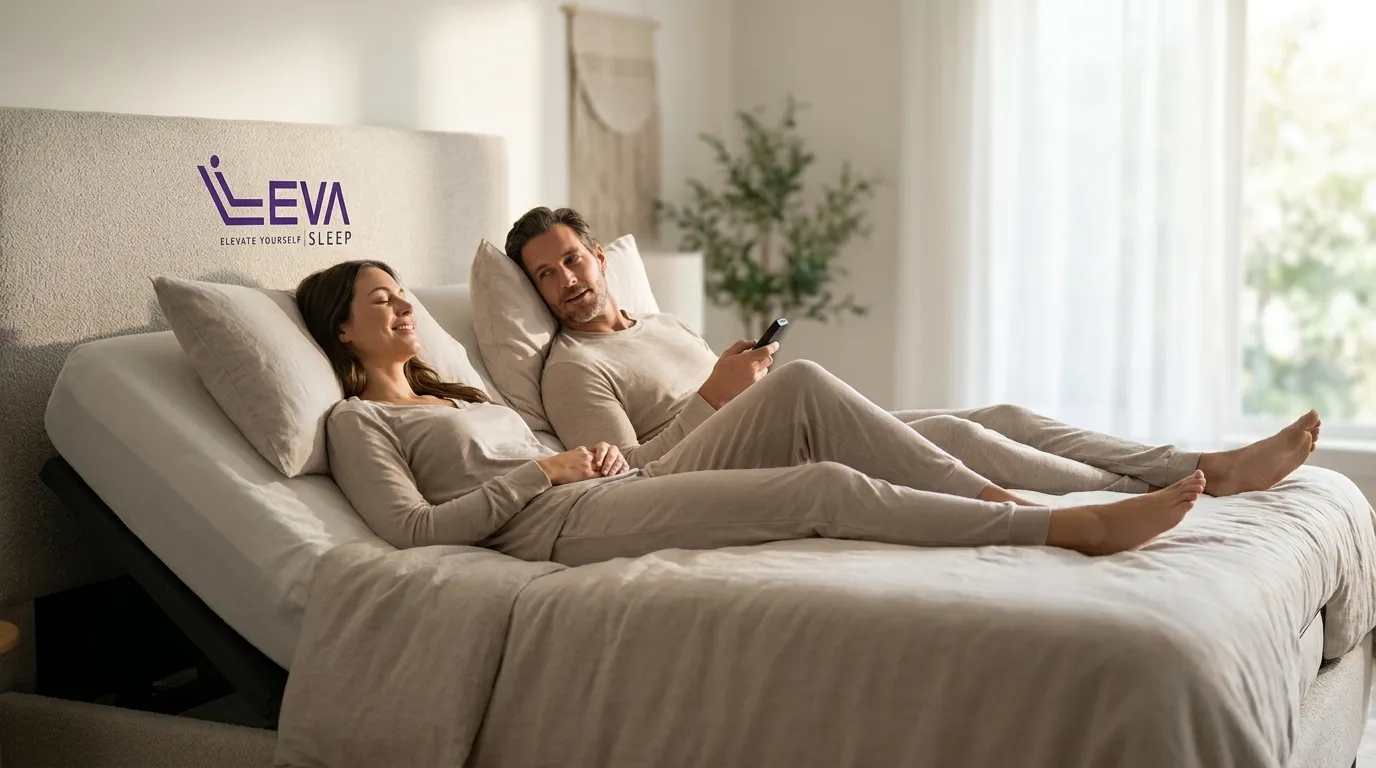
Zero-gravity positioning, a concept drawn from NASA research on neutral body posture, raises the head and knees together so the spine rests in a gentle recline. Sleepopolis explains that this posture reduces lumbar disc pressure by spreading body weight more evenly across the back. This makes zero gravity a natural partner for lumbar massage.
When massage runs while the base holds a zero-gravity angle, the lumbar muscles already carry less load. The tissue is not bracing as hard against gravity, so vibration can work more deeply and comfortably. Bases that store a zero-gravity preset and let you start massage at the same time create a smoother, more relaxing routine than systems that require separate manual adjustments.
Check whether the base’s zero-gravity preset is programmable or fixed. A fixed preset may not suit every body type, since taller or shorter sleepers often need a slightly different head-to-knee angle. Programmable presets that save your custom zero-G position along with preferred massage zone and intensity offer the most complete setup for back-pain management.
3. Split-Base Independence for Couples
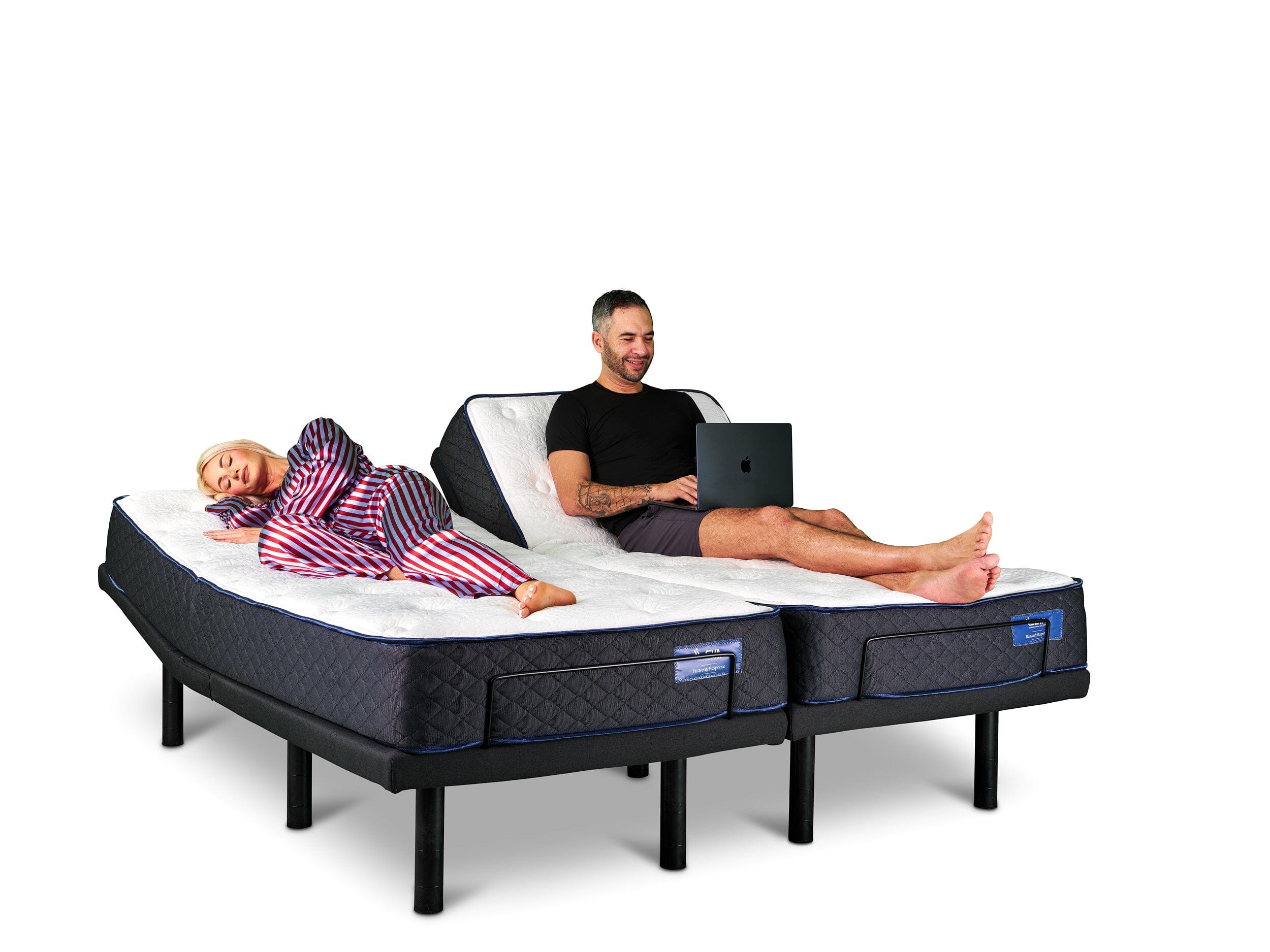
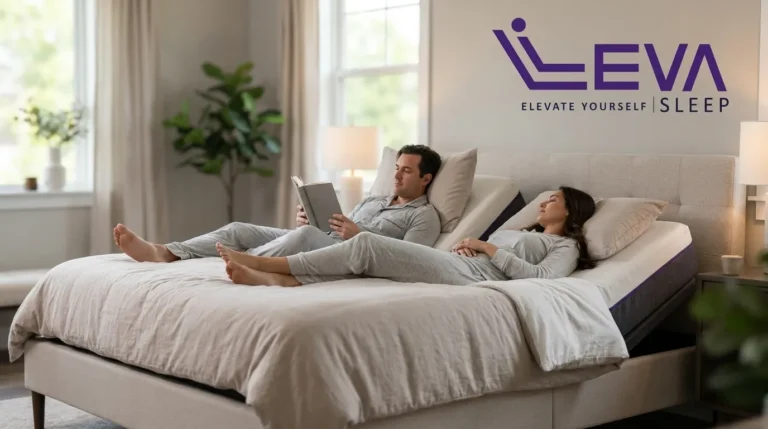
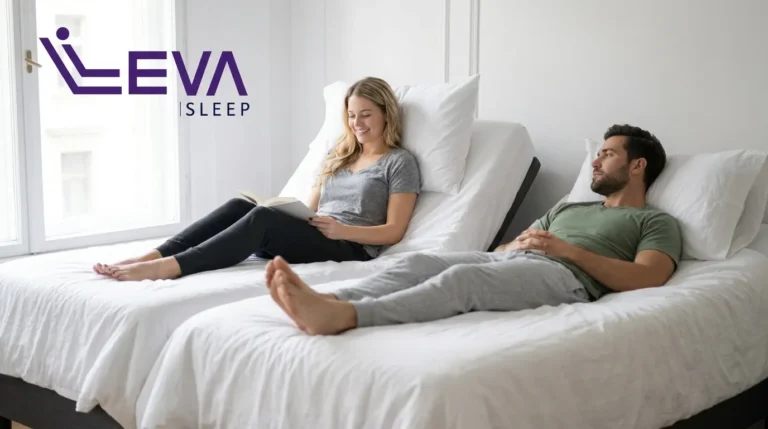
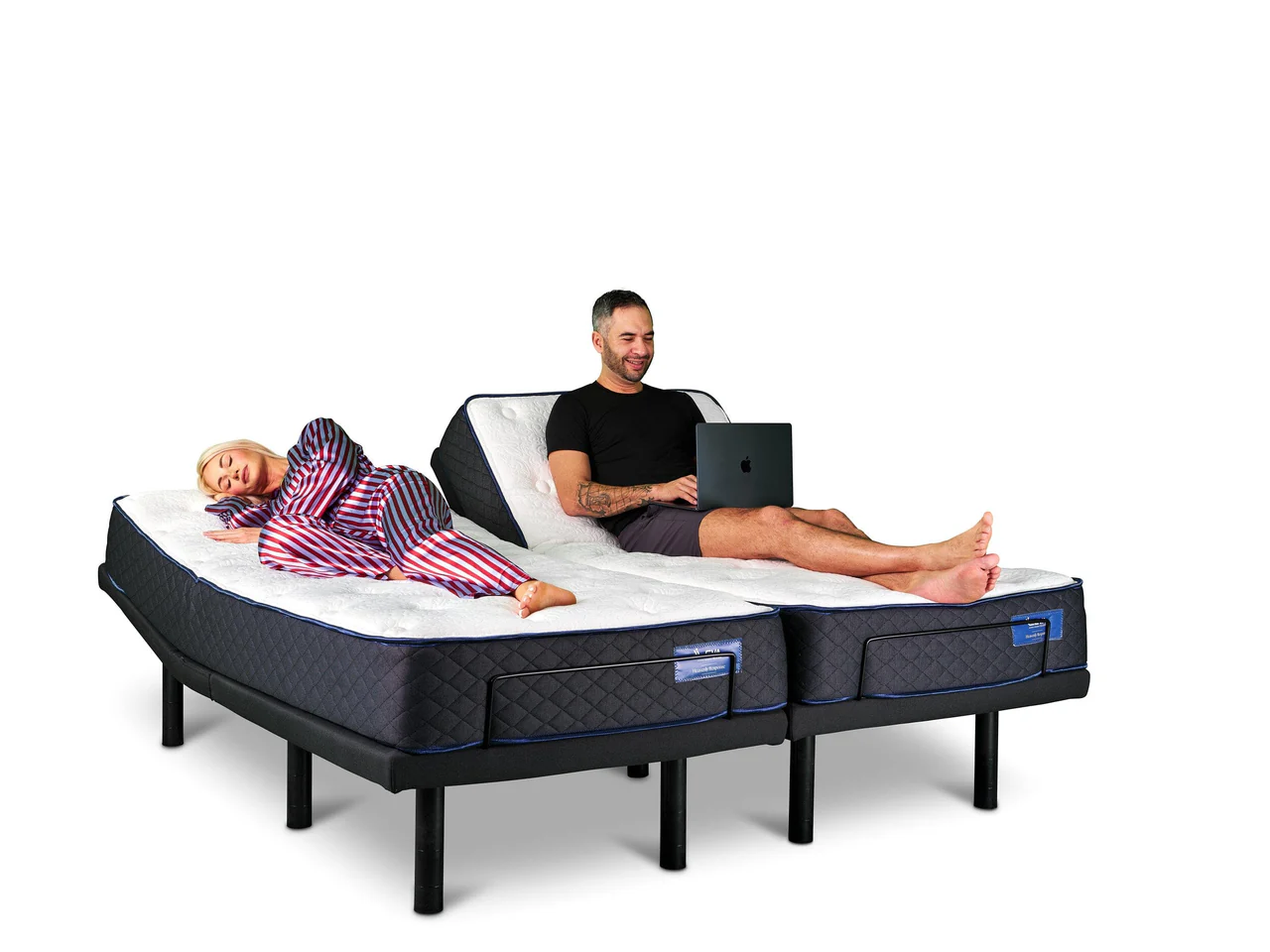
A split adjustable base uses two independent frames placed side by side under a shared mattress or two separate mattresses. Each side operates on its own, so one partner can run a medium-intensity lumbar massage while the other sleeps flat and still. Mattress Firm’s adjustable base guide identifies split configurations as the main solution for couples with different sleep needs.
The key evaluation point is whether the split base uses truly independent motors and controllers or a shared control unit that limits one side when the other runs. Fully independent systems support different programs on each side at the same time without mechanical interference. App-based control, where each partner manages their side from a smartphone, removes the need for a shared remote and reduces the chance of changing the other person’s settings.
Split Queen configurations appear less often than Split King but work well for couples in smaller bedrooms. Leva Sleep is one of the few providers offering a Split Queen built to customer specifications, which brings independent control to rooms where a King footprint will not fit.
4. Quiet Operation and Smart Timer Controls
Motor noise often becomes the top complaint among adjustable bed owners who use massage features. A base that hums or rattles during a session disrupts relaxation and can easily wake a sleeping partner. Quiet German motors, like those in Leva Sleep bases, are engineered to limit vibration transfer from the motor housing to the frame, which keeps sound below normal conversation levels.
Timer controls decide whether a massage session ends on its own or needs manual shutoff. A base without an auto-off timer keeps running until you wake up enough to stop it, which works against a calming pre-sleep routine. Look for timers with at least 10, 20, and 30 minute options, and confirm that the timer can apply per zone if the base supports zonal control.
Experience quiet motor performance firsthand at the La Jolla showroom or explore models online.
5. Mattress Compatibility and Pressure Mapping
Mattress design strongly affects how well massage vibration reaches your body. Thick memory foam layers, especially those over three inches, tend to absorb mechanical waves before they reach the lumbar area. Sleepopolis notes that latex and hybrid pocket-coil mattresses usually transmit vibration more efficiently than dense all-foam builds.
Mattress flexibility creates a separate concern. An adjustable base needs a mattress that bends without damaging its internal structure. Innerspring mattresses with rigid border rods generally do not work well on articulating bases. When you evaluate a system, confirm that the mattress is certified by the manufacturer for adjustable-base use, and ask specifically about vibration transmission at the lumbar zone.
Leva Sleep designs its all-foam and hybrid pocket-coil mattresses for use with its adjustable bases so massage vibration reaches you at the intended intensity. This pairing avoids the common frustration of buying a separate mattress that dulls the massage effect on a new base.
6. Long-Term Value and White-Glove Setup
Total value depends on more than the base’s sticker price. Delivery, setup, and how easily you learn the controls all affect whether you keep using the massage features. A base that arrives in boxes for self-installation is more likely to be assembled incorrectly, which can reduce lumbar effectiveness, than a base set up by trained professionals.
Leva Sleep’s in-house white-glove delivery service includes bedroom delivery, full assembly, leg-height adjustment, and removal of your old bed. This careful setup matters for lumbar massage, because a base installed at the wrong height relative to the mattress can change the angle where vibration meets your lower back.
Warranty coverage on motors and massage components varies widely between brands. Confirm that the massage motor carries at least a five-year warranty separate from the frame warranty. Also verify that the manufacturer, not just a third-party retailer, stands behind that coverage.
Decision Table: Single vs. Split Configurations, Noise Levels, and Lumbar Adjustability
| Configuration Type | Partner Independence | Lumbar Zone Control | Motor Noise Profile |
|---|---|---|---|
| Single adjustable base | None, one program affects the full bed | Available on select models, one zone serves both sleepers | Varies by motor grade, budget models often produce audible hum |
| Split King adjustable base | Full, each side operates independently via separate motors | Independent lumbar zones per side on premium models | Varies by motor grade, premium models with quiet motors operate near-silently |
| Split Queen adjustable base | Full, same independent operation as Split King in a smaller footprint | Independent lumbar zones per side on premium models | Same motor-grade dependency as Split King, configuration often requires specialist sourcing |
Note: Noise levels and lumbar zone availability depend on the specific model and motor specification. Confirm these details with the retailer before purchase. No proprietary test scores are represented above.
Is the Massage Feature Worth the Extra Cost?
For chronic back-pain sufferers, a lumbar massage feature adds clear value when it is zonal, intensity-adjustable, paired with zero gravity, and quiet enough for sleep. For people without back pain, the feature functions more as a comfort upgrade than a medical tool. The calculation changes for couples, because a split base with independent massage programs removes the compromise of one partner tolerating a massage they did not choose.
The feature rarely justifies the premium when it appears as a single-zone, two-intensity program on a budget base with a loud motor. In that setup, vibration spreads too broadly to target the lumbar region, offers too little adjustment for changing pain levels, and creates too much noise for shared bedrooms.
Why Some Adjustable Beds Can Aggravate Back Pain
An adjustable base can worsen back pain when the zero-gravity or head-elevation angle does not match your spinal geometry. A preset angle designed for an average body may place a taller or shorter sleeper’s lumbar spine in slight flexion or hyperextension, which builds discomfort over a full night. A base with programmable position memory lets you fine-tune the angle to your body instead of relying on fixed presets.
Mattress incompatibility creates another common problem. A mattress that feels too thick or rigid on an articulating base can form pressure ridges at the bend points, often near the lumbar zone, that press into the lower back. Pairing the base with a mattress engineered for articulation removes this mechanical mismatch.
A base used only in a flat position also fails to support the spine more effectively than a standard frame. Sleepers who never adjust the base do not benefit from the positioning features that justify the upgrade.
Frequently Asked Questions
What massage intensity is appropriate for chronic lower back pain on an adjustable bed?
Start at the lowest available intensity and increase gradually over several nights. Chronic lower back pain often involves inflamed tissue, and high-intensity vibration on an inflamed area can increase discomfort instead of easing it. A medium setting used consistently for 15 to 20 minutes before sleep works well for many users. Consult a physician or physical therapist before using massage features if you have a diagnosed spinal condition such as a herniated disc or spinal stenosis.
Can a split adjustable base use different massage programs on each side simultaneously?
Yes, as long as the base uses fully independent motors and controllers for each side. On a properly engineered split base, one partner can run a lumbar massage at medium intensity while the other side remains flat and still. App-controlled systems simplify this by letting each partner manage their own side from a smartphone instead of sharing a remote.
Does zero-gravity positioning enhance the effectiveness of lumbar massage?
Zero-gravity positioning reduces compressive load on the lumbar spine by spreading body weight across the back and legs instead of concentrating it at the lower vertebrae. When lumbar massage runs in this posture, the target muscles are already partially unloaded, so vibration works on tissue that is not actively bracing. Bases that allow both settings to operate together, rather than forcing you to choose one or the other, offer the most integrated pre-sleep back-pain relief.
What should I look for in a mattress to ensure the massage feature works effectively?
Choose a mattress with a flexible construction, such as an all-foam build with a comfort layer no thicker than three inches or a hybrid with individually wrapped pocket coils. These designs usually transmit vibration more efficiently than dense, thick memory foam. Confirm that the mattress is certified by its manufacturer for use with an articulating adjustable base, and ask the retailer whether the mattress has been tested for vibration transmission at the lumbar zone.
How long should a massage session last for back-pain relief before sleep?
A session of 15 to 30 minutes suits most pre-sleep routines. Longer sessions do not always improve relief and may delay sleep if stimulation keeps your nervous system alert. An auto-off timer set to around 20 minutes lets the massage finish and your body shift toward sleep without requiring you to wake up and stop the program. Bases without an auto-off timer usually work less well for therapeutic pre-sleep use.
Start With Lumbar and Zero-G Before Exploring Full Programs
For any adjustable bed you test for back-pain relief, start by pairing the lumbar massage zone with the zero-gravity preset before trying full-body programs. This combination of targeted lumbar vibration in a decompressed spinal posture delivers the core therapeutic benefit of the category. Features such as wave patterns or foot massage add comfort but do not replace this foundation.
A base that delivers this combination quietly, independently on each side, and through an intuitive app interface meets the six criteria that separate a therapeutic sleep system from a simple feature list. Leva Sleep’s app-controlled split bases with independent lumbar zone control are available for hands-on evaluation at the La Jolla showroom, where trained specialists can configure a zero-gravity and lumbar massage demonstration tailored to your body type and pain profile. Schedule a personalized demonstration of lumbar massage and zero-gravity positioning at the La Jolla showroom.