Written by: Matthew Timmins, Founder and Managing Director, Leva Sleep
Key Takeaways
- About half of CPAP users struggle with therapy, yet six evidence-backed options can treat obstructive sleep apnea without a mask.
- Positional therapy, including head-of-bed elevation, can lower AHI and is often easier to tolerate than CPAP for positional OSA.
- Alternatives span lifestyle changes, myofunctional therapy, oral appliances, nerve stimulation, and surgery, each with distinct results, costs, and partner effects.
- Adjustable bases with anti-snore modes, such as Leva Sleep’s, raise the head quietly to reduce airway collapse without any mask or wearable.
- Couples can stay in one bed with Leva Sleep’s split adjustable bases; shop online or visit the La Jolla showroom today.
How Positional Therapy Helps Sleep Apnea
Positional therapy eases OSA symptoms by changing how the airway behaves during sleep. Up to 75% of OSA patients have the positional type, where back-sleeping lets gravity pull soft tissue into the airway. Shifting to side-sleeping or raising the head 5–10° reduces that gravity-driven collapse. A 2026 network meta-analysis by Song et al. confirmed this effect by showing positional therapy can reduce AHI versus control.
This places positional therapy among several mask-free approaches to treating OSA. It also sets up how head elevation and other posture-based tools fit into the broader landscape of CPAP alternatives.
Mask-Free Alternatives to CPAP
No device currently reproduces CPAP’s continuous airflow without some type of interface at the nose or mouth. Several mask-free alternatives, including positional therapy, instead target the airway mechanics that drive obstruction. The six options below progress from least to most invasive.
- Lifestyle and weight management. Weight loss correlates with lower AHI, and regular exercise alone can help reduce AHI. Avoiding alcohol within 3–4 hours of bedtime also limits airway relaxation. This approach works best for mild OSA (AHI 5–15) as a primary strategy or as support for other treatments. Partner impact is neutral to positive. The main drawback is that results develop slowly and are not guaranteed.
- Positional therapy. Side-sleeping aids, electronic vibration trainers, or head-of-bed elevation keep the airway more open without an oral device. The 2026 Pavlov RCT presented at the ATS International Conference found positional therapy comparable to CPAP in effectiveness and better tolerated, with more than two-thirds of patients maintaining side-sleeping behavior one year after stopping active therapy. This option fits positional OSA especially well. Partner impact is minimal. It may not be enough for moderate-to-severe non-positional cases.
- Myofunctional therapy. Targeted exercises strengthen the tongue, soft palate, and throat muscles. This therapy can reduce apnea severity in mild OSA, with meaningful improvements usually appearing after 3–6 months of consistent practice. Partner impact is essentially zero. The limitation is the daily discipline required and variable results based on starting muscle tone.
- Oral appliances (mandibular advancement devices). Custom-fit MADs prescribed by a sleep physician move the lower jaw forward to prevent airway collapse. Many patients maintain benefits over long-term follow-up, and average nightly use often exceeds CPAP use. The 2026 Song et al. meta-analysis found oral appliance therapy can reduce AHI at a level statistically comparable to positional therapy. This option suits mild-to-moderate OSA (AHI 5–30). Partner impact is low because only the patient wears the device. Drawbacks include dental fitting, titration visits, ongoing follow-up, and possible TMJ side effects.
- Hypoglossal nerve stimulation (Inspire). An implanted device sends timed pulses to the hypoglossal nerve to keep the tongue forward during sleep. Inspire reports median AHI reductions from 34.4 to 8.3 events/hour in Singapore and from 30 to 4.5 events/hour in a US limited release for the Inspire V system. Most commercial insurers, Medicare, and the VA cover it for qualifying patients. UnitedHealthcare’s April 2026 policy deems it medically necessary for adults with moderate-to-severe OSA who have failed or refused PAP. Partner impact is minimal after implantation. The tradeoffs include outpatient surgery, strict eligibility, and higher cost.
- Surgery. Procedures range from uvulopalatopharyngoplasty (UPPP) to maxillomandibular advancement (MMA). Both can lower AHI, with MMA generally producing larger reductions, while UPPP’s effect may fade over time. Surgery fits anatomically driven, severe OSA that has not responded to other treatments. Partner impact centers on a temporary disruption during recovery. Surgery is irreversible, carries operative risks, and produces variable outcomes.
New Sleep Apnea Treatments in 2026
Two developments stand out in 2026. First, Tirzepatide (Zepbound) received FDA approval on December 20, 2024, as the first medication for moderate-to-severe obstructive sleep apnea in adults with obesity. A large RCT showed significant AHI improvement, driven largely by weight loss of up to 20%. Second, the 2026 Song et al. network meta-analysis reinforced positional therapy as a first-line choice for positional OSA by confirming that it can reduce AHI versus control.
On the consumer side, Leva Sleep’s 2026 anti-snore mode uses sensors to detect snoring and then makes quiet micro-adjustments to the head of the bed. These shifts raise the head into the 5–10° range supported in clinical literature for reducing airway collapse. The result is a mask-free, wearable-free, single-bed solution for many couples.
See how Leva Sleep’s anti-snore mode works at the La Jolla showroom or explore models online.
The “Japanese Trick” and Modern Positional Tools
The so-called “Japanese trick” for sleep apnea refers to the tennis-ball technique, where a tennis ball is sewn into the back of a sleep shirt to discourage back-sleeping. This method offers a very low-cost entry into positional therapy. Modern electronic positional trainers, which are vibrating wearables that buzz when a sleeper rolls onto their back, represent the next step up in technology. The Song et al. 2026 meta-analysis grouped both tennis-ball methods and vibration trainers under positional therapy, with evidence that they can reduce AHI versus control.
Both of these approaches require wearing or attaching something to the body every night. Leva Sleep’s adjustable base reaches the same positional goal of sustained head elevation through a silent, app-controlled motor. No wearable sits on the sleeper, and no vibration alarm wakes a partner. The elevation is set once and then maintained passively all night.
CPAP Alternatives Compared
The comparison below focuses on cost, partner impact, and how each option fits into daily life. Evidence strength and exact AHI changes vary by treatment, so those details appear in the prose above rather than as a single numeric column.
| Alternative | Estimated Cost Range | Partner Impact | Typical Use Pattern |
|---|---|---|---|
| Lifestyle / Weight Management | $0–$500/yr (gym, nutrition) | No device disruption | Ongoing behavior changes, variable adherence over time |
| Positional Therapy (wearable/trainer) | $15–$400 (tennis ball to electronic trainer) | Vibration alerts may disturb partner | Nightly wearable use; about two-thirds maintain behavior at 1 year |
| Myofunctional Therapy | $1,000–$3,000 (therapist sessions) | No device disruption | Daily exercises for 3–6 months, then maintenance as advised |
| Oral Appliance (custom MAD) | $1,800–$3,500 (device + dental visits) | Worn by patient only; no noise | Nightly wear with periodic dental follow-up |
| Hypoglossal Nerve Stimulation (Inspire) | $30,000–$50,000 (often insured for qualifying patients) | Invisible post-implant; no noise | Implanted device used nightly for many years |
| Surgery (MMA / UPPP) | $10,000–$60,000+ (varies by procedure) | Recovery period disrupts shared sleep | One-time intervention with long-term anatomical change |
| Leva Sleep Adjustable Base (head elevation + anti-snore mode) | Varies by model; 30–50% below comparable luxury competitors | Split controls, quiet motors, no wearable on either partner | Passive nightly use after initial setup, no behavior change required |
The table shows that each alternative involves tradeoffs in cost, lifestyle demands, and partner experience. For couples, the partner impact column often determines whether a treatment feels sustainable over the long term.
Why Adjustable Beds Work Well for Couples
Many couples affected by OSA eventually sleep in separate rooms because of snoring and related disruptions. That pattern reflects a real clinical issue: bed partners of people with untreated OSA lose about one hour of sleep per night and experience frequent arousals that mirror the patient’s breathing events.
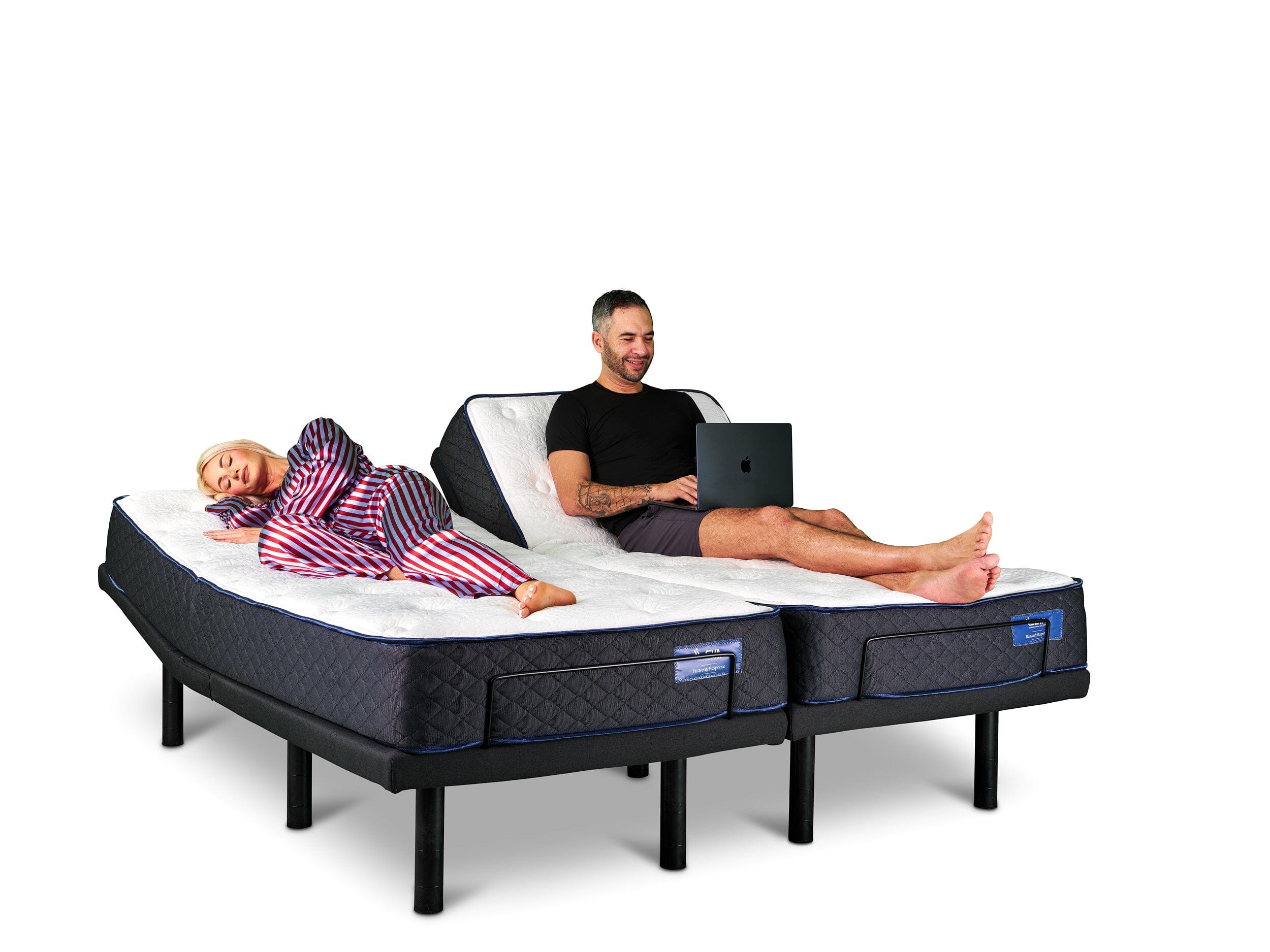
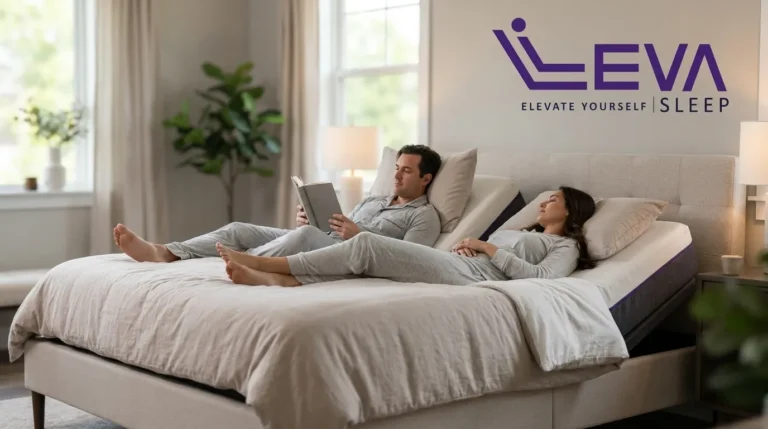
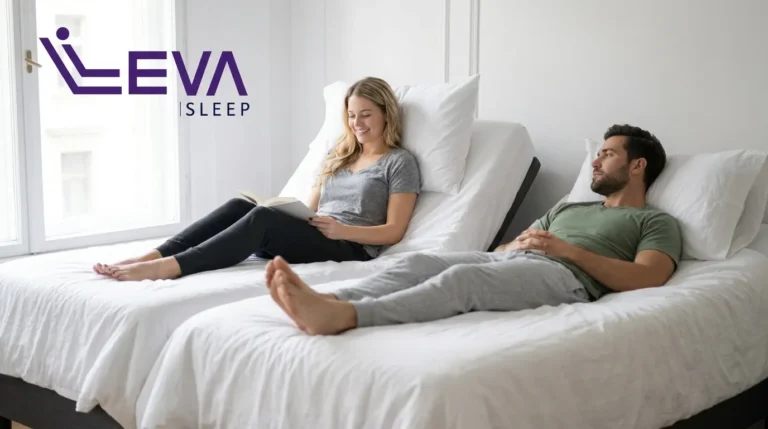
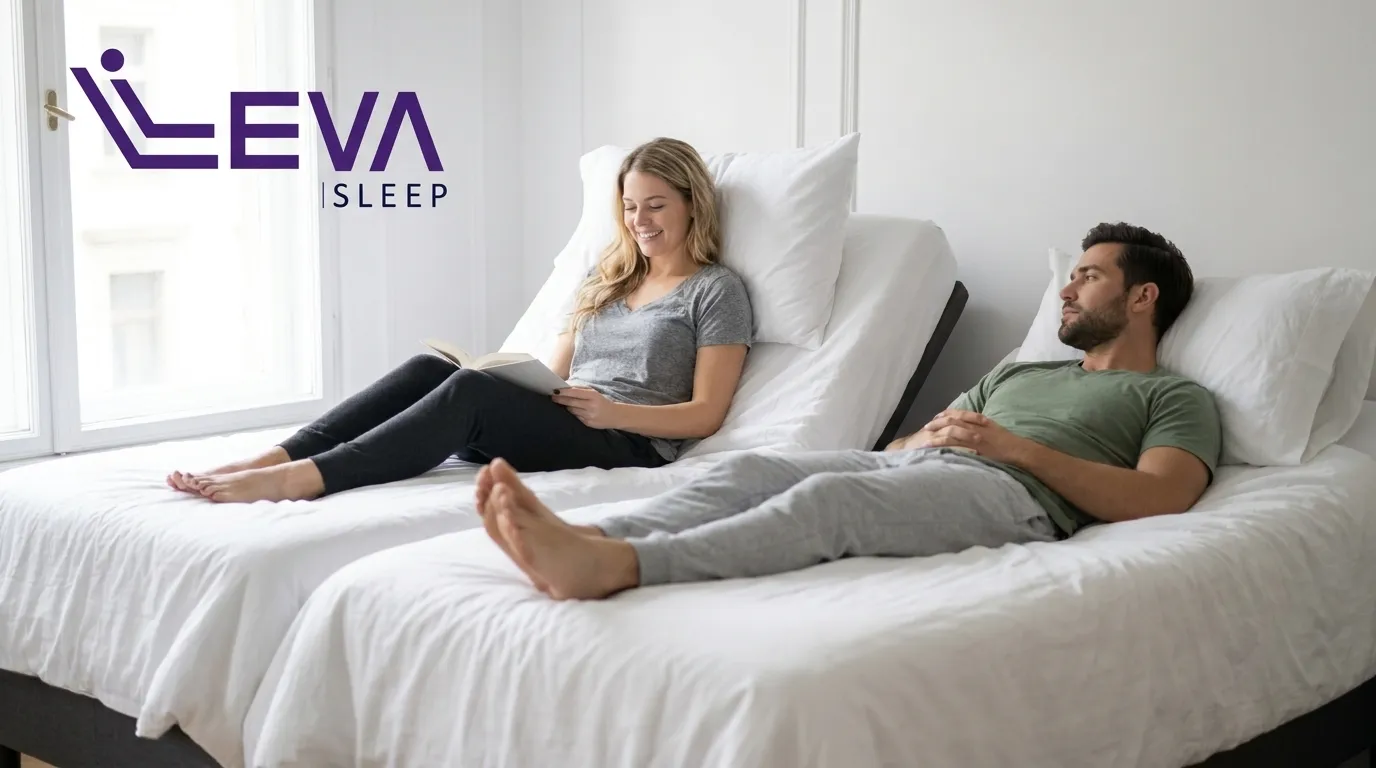
A split adjustable base addresses this without forcing either partner to move to another bed. Leva Sleep’s Split Queen and Split King configurations give each side independent control over elevation, firmness, massage, and temperature. The partner with positional OSA can raise their head 5–10°. The partner without OSA can keep their side flat. Both remain in the same bed.
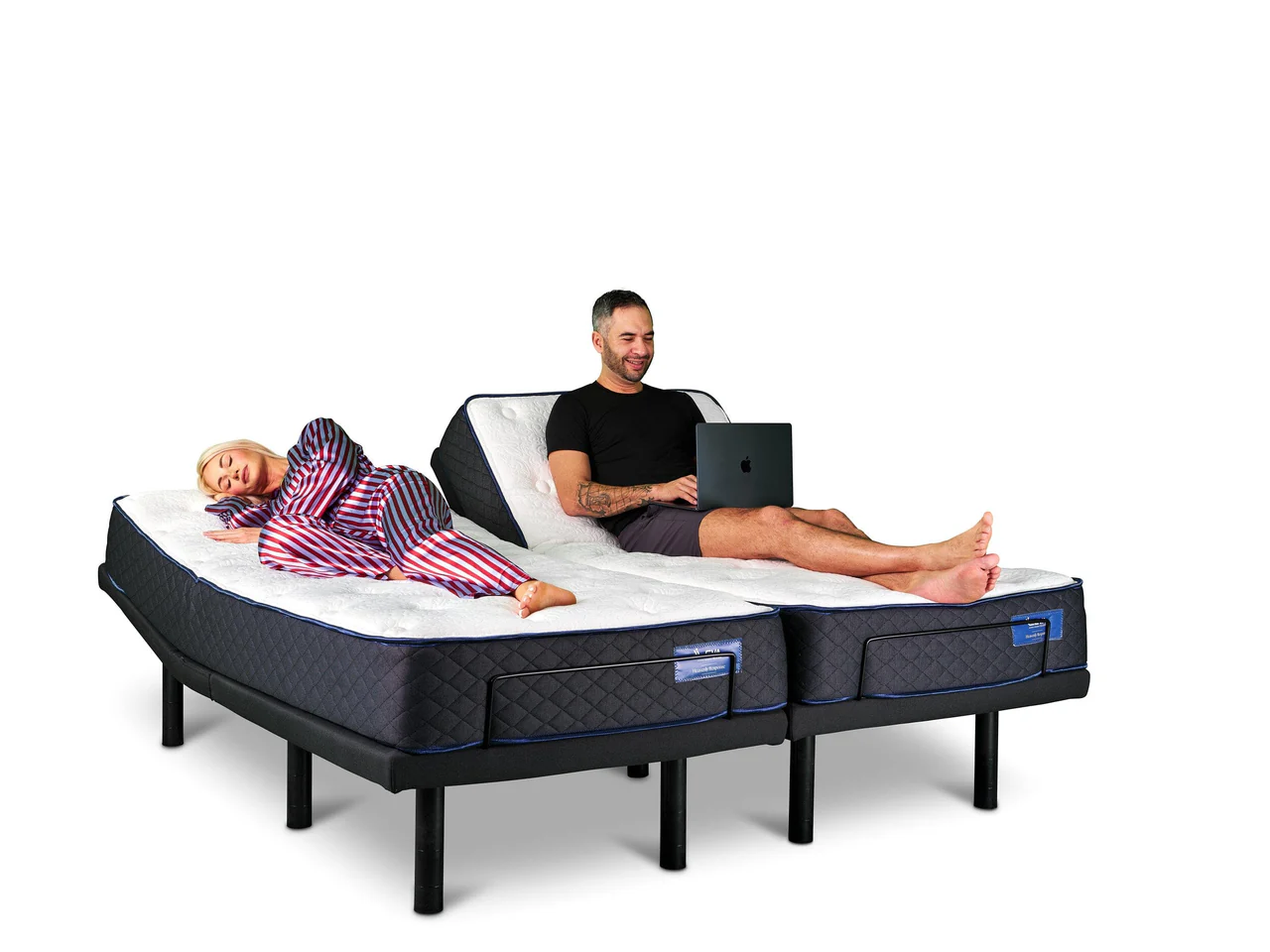
Real scenarios highlight the benefit:
- One partner snores while the other needs quiet. The anti-snore mode adjusts the snoring partner’s head elevation without waking either person.
- One partner runs hot while the other runs cold. Compatible temperature-regulating bedding manages each side separately.
- One partner has acid reflux while the other has hip pain. Each side can match the medically recommended position without compromise.
Whisper-quiet German motors keep adjustments from registering as noise. A 2024 study presented at SLEEP 2024 found that higher patient sleep efficiency correlated with higher relationship satisfaction for both patients and partners. That finding underscores why the partner’s experience matters as much as the patient’s.
How Leva Sleep Keeps Head Elevation Comfortable
Leva Sleep designs head elevation as a responsive system rather than a simple up-or-down setting. Sensors detect the start of snoring and the base makes small, quiet adjustments that are gentle enough not to wake either partner yet large enough to change airway geometry. The Leva Sleep app controls these features over Bluetooth, including custom saved positions, vibrating wake alarms, and lumbar support settings.
Comfort at elevation also depends on the bedding that surrounds the base. Standard fitted sheets often pop off when a base flexes. Leva designs its own bedding, including deep-pocket fitted sheets with reinforced elastic, duvet clips that keep sides separate when positions differ, and mattress protectors built for articulation. These details help the sleep surface stay smooth and secure at any angle.
White-glove delivery completes the experience by handling setup from start to finish. Trained professionals bring the base to the bedroom, assemble the system, adjust leg heights, walk through a product tutorial, and remove the old bed. Customers do not have to manage any technical steps on their own.
Decision Checklist: Matching Options to Your Situation
Use the criteria below to connect your specific situation to the most appropriate alternatives.
- OSA severity: For mild OSA (AHI 5–15), lifestyle changes, positional therapy, or myofunctional therapy make practical starting points. For mild-to-moderate OSA (AHI 5–30), oral appliances and adjustable base elevation have strong support. For moderate-to-severe OSA (AHI >30), a sleep physician should guide care, and Inspire or surgery may be appropriate.
- Positional vs. non-positional OSA: If your AHI drops substantially when you sleep on your side compared with your back, a pattern seen in many OSA patients, positional therapy is directly indicated per the 2026 Pathophysiology review. Head-of-bed elevation fits within this category.
- CPAP intolerance: If you have tried CPAP and cannot maintain use, UnitedHealthcare’s 2026 policy recognizes oral appliances as medically necessary for documented CPAP-intolerant patients. Positional therapy and adjustable base elevation do not require insurance approval.
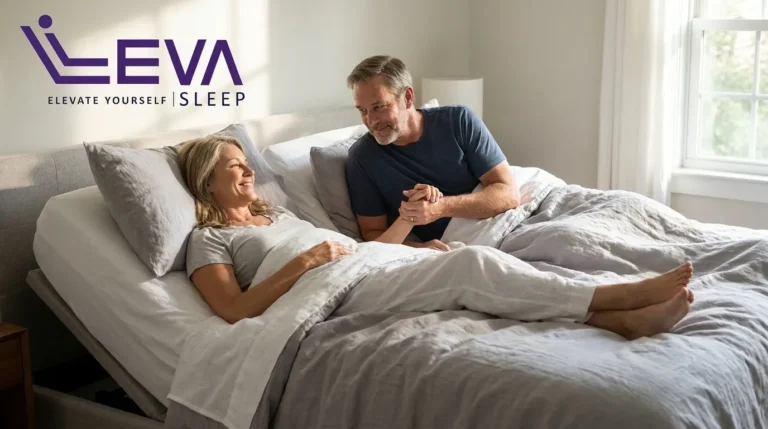
- Partner dynamics: If snoring or movement is pushing you toward separate beds, a split adjustable base can meet both partners’ needs at once without any wearable device on either side.
- Budget and insurance: Lifestyle changes and positional therapy have the lowest upfront costs. Oral appliances and Inspire may receive partial coverage. Adjustable bases require a one-time purchase and do not involve recurring device costs or replacement parts.
- Preference to avoid surgery or implants: Lifestyle changes, positional therapy, myofunctional therapy, oral appliances, and adjustable base elevation all remain non-surgical and reversible.
Frequently Asked Questions
Is there a maskless CPAP?
No device currently reproduces CPAP’s continuous positive airway pressure without some interface at the nose or mouth. Several mask-free options instead address airway collapse during sleep through different mechanisms. Oral appliances reposition the jaw. Positional therapy changes sleep posture. Hypoglossal nerve stimulation activates tongue muscles electrically. Head-of-bed elevation with an adjustable base reduces gravity-driven airway collapse passively. For many people with positional or mild-to-moderate OSA, these approaches can deliver meaningful AHI reductions without a mask.
What is the new treatment for sleep apnea in 2026?
Recent years brought both a new medication and stronger support for positional therapy. Tirzepatide (Zepbound) now holds FDA approval for moderate-to-severe OSA in adults with obesity, with benefits tied to substantial weight loss. On the non-drug side, the 2026 Pavlov RCT showed that positional therapy can match CPAP’s effectiveness for positional OSA and is better tolerated, with durable effects one year after stopping active therapy. For couples, Leva Sleep’s 2026 anti-snore mode applies these positional principles through silent, app-controlled head elevation that keeps both partners in the same bed.
What is the Japanese trick for sleep apnea?
The “Japanese trick” describes the tennis-ball technique, where a tennis ball or similar object is attached to the back of a sleep shirt to prevent rolling onto the back. This method represents one of the oldest and least expensive forms of positional therapy. The 2026 Song et al. network meta-analysis grouped it with electronic vibration trainers under the positional therapy category, which can reduce AHI versus control. Comfort and consistency remain the main challenges because the device must be worn nightly and can disturb sleep. Newer options, including app-controlled adjustable bases that maintain head elevation passively, reach the same positional goal without a wearable.
Can an adjustable bed replace CPAP for sleep apnea?
An adjustable bed does not qualify as a medical device and does not replace CPAP prescribed by a physician. For people with positional or mild-to-moderate OSA, head-of-bed elevation targets the same gravity-driven airway collapse that positional therapy addresses in clinical studies. Anyone with moderate-to-severe OSA, non-positional OSA, or complex sleep-disordered breathing should consult a sleep physician before changing CPAP use. An adjustable base can complement other treatments and is especially helpful for couples when one or both partners snore or have positional OSA, because it improves airway mechanics without disrupting the shared sleep environment.
How does a split adjustable base help couples dealing with sleep apnea?
A split adjustable base gives each partner independent control over their side of the bed. The partner with positional OSA can elevate their head while the other partner remains flat. This setup avoids separate bedrooms, which research links to lower relationship satisfaction and more conflict. Leva Sleep’s split configurations, available in Queen and King sizes, use whisper-quiet motors so adjustments during the night stay nearly silent. The 2026 anti-snore mode adds automation by detecting snoring and making micro-adjustments to head elevation without requiring either partner to wake up or intervene.