Written by: Matthew Timmins, Founder and Managing Director, Leva Sleep
Key Takeaways for Hot-Sleeping Couples
- Active water and air systems outperform passive materials for steady, all-night temperature control when couples share a bed.
- Water-based dual-zone systems offer the most precise independent temperature settings (55°F–115°F) and work with many split adjustable bases. Air-based options often need two units and create more noise.
- Passive options such as gel-infused foam and phase-change materials cool only for 30–90 minutes, which does not help chronic night sweats or large partner temperature differences.
- Integrated split adjustable bases with dual-zone cooling manage both temperature and positioning needs like snoring, acid reflux, and recovery in one coordinated system.
- For couples who want reliable, quiet, customizable cooling without subscriptions, explore Leva Sleep’s solutions to transform your sleep experience.
How Active and Passive Cooling Systems Stack Up
Active systems use continuous energy input to remove heat throughout the night. Water-based and air-based devices circulate cooled or warmed fluid or air so the bed surface stays near your chosen temperature. Passive technologies such as phase-change materials, gel-infused foam, and copper infusions require no power but eventually saturate with body heat. Once a passive material absorbs enough heat, its cooling effect fades until it fully cools again. Because active systems avoid this saturation limit, they provide more reliable all-night cooling for hot sleepers.
What Matters Most for Couples Choosing Cooling Tech
- Cooling consistency: The system should hold a steady temperature from lights-out through morning without fading halfway through the night.
- Dual-zone capability: Each partner needs independent temperature control that does not change the other side.
- Noise level: Pumps and fans must stay quiet enough for light sleepers who wake easily.
- Integration with adjustable bases: The system should work with a split adjustable base without limiting elevation on either side.
- Long-term ownership cost: Couples should consider three to five years of costs, including subscriptions, replacement parts, and maintenance.
- Couple compatibility: The setup should support fully independent control so neither partner has to compromise on comfort.
With these criteria in mind, the next sections walk through each technology type and how it performs for couples.
Water-Based Systems for Precise Dual-Zone Cooling
Water-based systems circulate temperature-controlled water through a thin pad placed over the mattress. Chilipad 2.0 Dual Zone systems and Eight Sleep Pod 5 Dual Zone systems sit in the premium price tier. Eight Sleep Pod 5 also layers in AI features that require a subscription of $199 or more per year. The Orion Sleep System, priced at $2,295, focuses on core temperature control with no required subscription and offers an optional paid sleep-tracking add-on.
Pros: Water-based systems deliver very precise temperature control. Eight Sleep Pod 5 provides independent dual-zone control from 55°F to 110°F on each side. Chilipad 2.0 Single Zone units work with split-adjustable beds, so each partner can elevate their side independently while keeping separate temperature settings.
Cons: Maintenance requirements vary by model and can feel demanding. The original PLS Chilipad needs only periodic hydrogen peroxide in the reservoir. Later Cube, Dock Pro, and OOLER models require monthly cleaning solution and semi-annual flushes. Some Eight Sleep users on Reddit report yearly leaks and weak customer support. Water-filled pads can also be punctured by pets, which creates a risk for households with cats or dogs on the bed.
Trade-offs: Water-based systems offer the strongest and most adjustable cooling but also bring the highest upfront prices and the most ongoing care. On certain platforms, AI features add recurring subscription costs on top of hardware and maintenance.
Air-Based Systems for Lower-Cost Active Cooling
Air-based systems pump temperature-controlled air under or through the bedding to move heat away from the body. The BedJet 3 Climate Comfort System costs about $699 and includes a 2-year warranty and 60-day sleep trial.
Pros: Air-based options usually cost less than water-based systems. They avoid water tanks and related cleaning. Strong airflow helps dry sweat quickly, which benefits people with night sweats. Core functions work without any subscription.
Cons: Fan noise often bothers light sleepers, especially when two units run in the same room. True dual-zone coverage usually requires one unit per side, which raises cost and takes up more floor or under-bed space. Air-based systems also tend to offer a narrower temperature range than water-based setups.
Trade-offs: Air-based systems create an affordable entry into active cooling. Couples must accept more noise and plan for two units if they want independent temperatures on each side.
Passive Mattresses and Phase-Change Materials
Phase-change materials store and release heat during a melt and re-solidify cycle, which produces a short cooling window. Gel-infused foam feels cooler than standard memory foam for the first 30 to 90 minutes, then warms toward body temperature and loses its edge.
Pros: Passive materials need no power, subscriptions, or active maintenance. They usually cost less than active systems. Passive cooling bedding products avoid recurring fees and still improve comfort for mildly warm sleepers.
Cons: Cooling effects fade during the night and rarely reset before morning. Active water or air systems provide adjustable, all-night cooling, while passive materials only soften the heat load and cannot match that sustained performance.
Trade-offs: Passive materials work well as a first step for mild heat sensitivity or as a supplement to active cooling. Couples dealing with chronic night sweats or large temperature gaps between partners usually need an active solution.
Integrated Adjustable Bases with Built-In Cooling
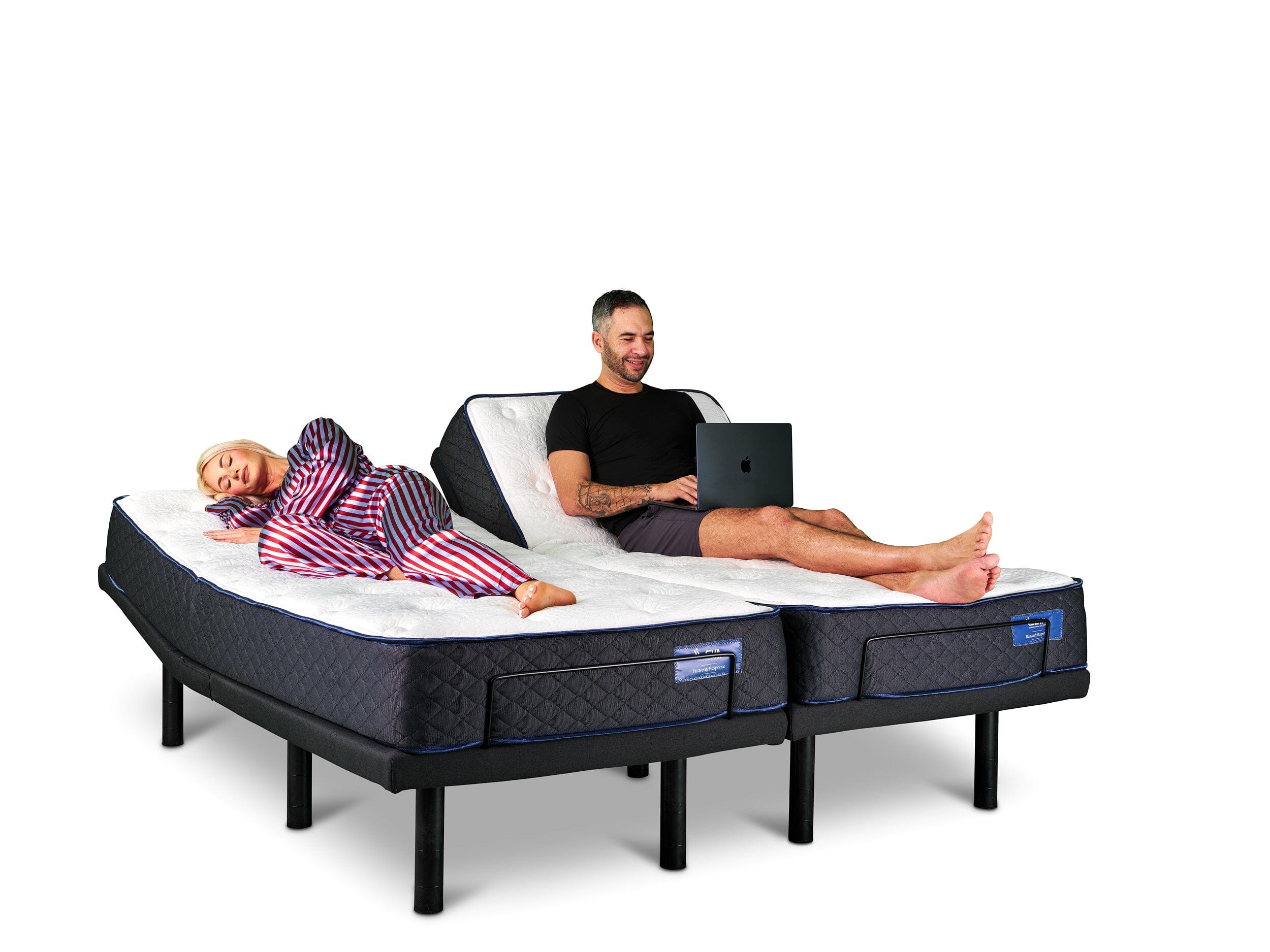
Integrated systems pair a split adjustable base with a built-in or directly compatible cooling layer. Each partner controls both elevation and temperature from a single app or remote, which simplifies nightly use.
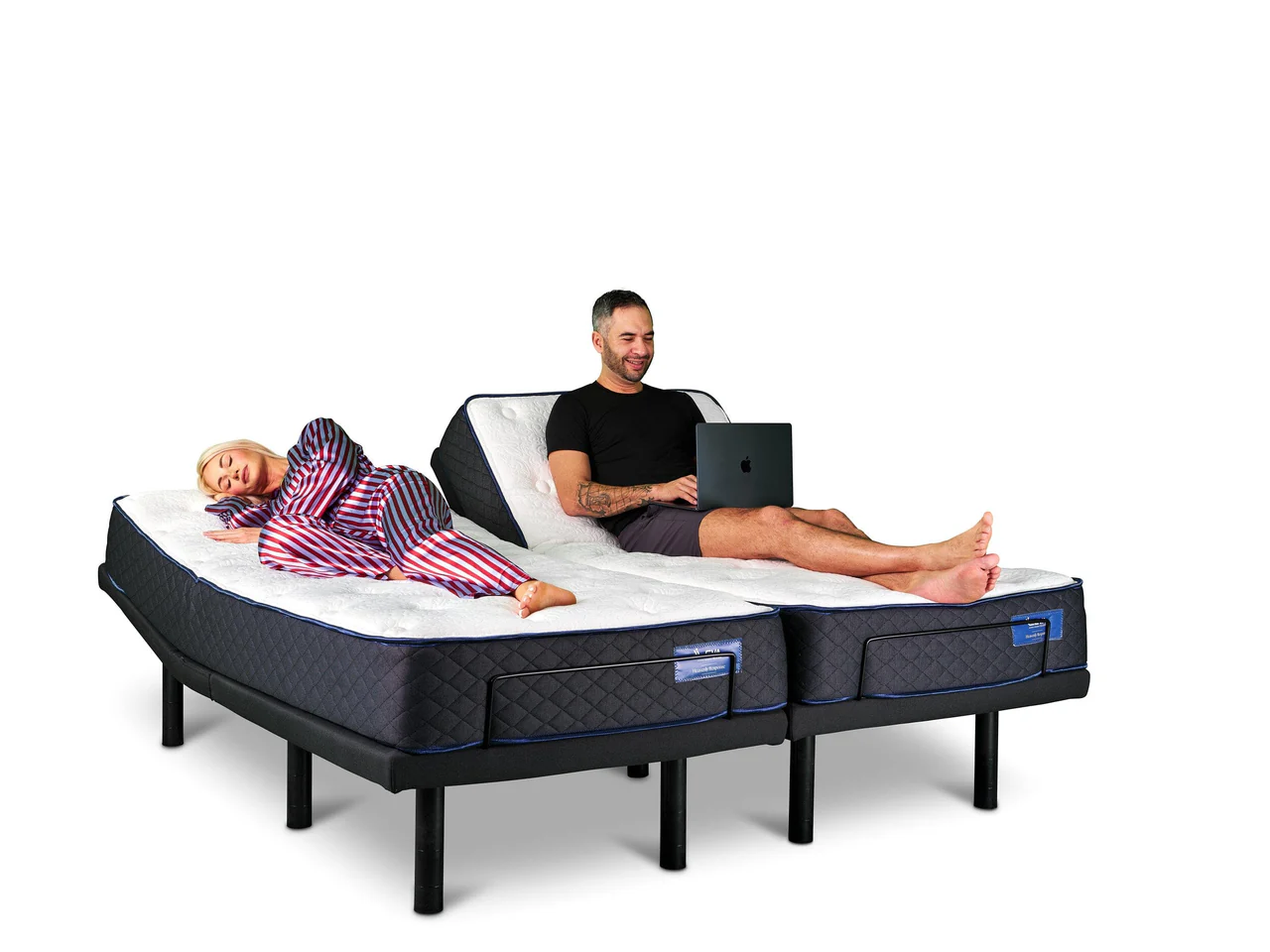
Pros: One purchase can address temperature mismatch, snoring, mild apnea, acid reflux, and post-surgery positioning at the same time. This consolidation removes the need for separate cooling devices that would occupy nightstand or floor space. Because the base and cooling layer are designed to work together, split-base compatibility comes built in rather than added later with adapters. As noted earlier, Chilipad 2.0 supports independent elevation per side, while Eight Sleep Pod covers require a single elevation across the full bed, which matters for couples with different positioning needs.
Cons: Integrated setups cost more upfront than standalone cooling devices. Couples must also choose a mattress that works with both adjustable articulation and the cooling pad.
Trade-offs: This approach removes most compatibility guesswork and creates a unified sleep environment for couples with overlapping comfort and health needs.
How Cooling Plus Adjustable Bases Help Real Couples
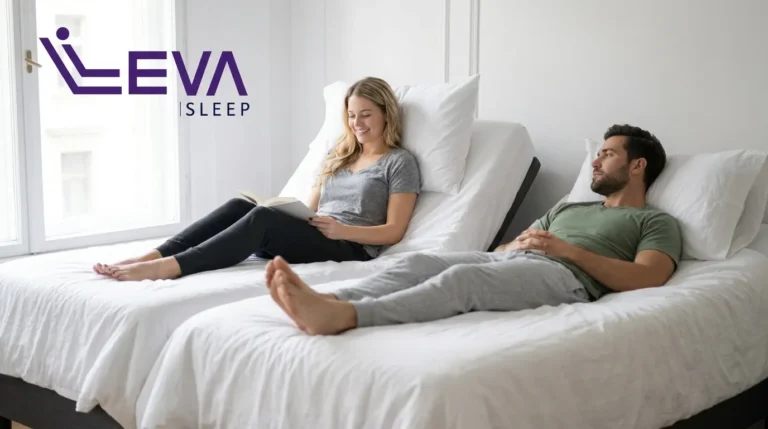
A split adjustable base lets each partner choose their own head and foot elevation. When paired with a dual-zone cooling layer, each side functions as an independent sleep station within a shared bed. The following scenarios show how that combination helps in daily life.
Night-sweat disruption: One partner overheats and wakes several times, while the other feels cold and dislikes a cooler room. Dual-zone temperature control allows a colder surface on one side and a warmer surface on the other without thermostat arguments.
Snoring and airway positioning: Raising the head of the bed can open the airway and reduce snoring intensity. An integrated system lets couples adjust this through an app or remote, which offers a non-mask option for mild snoring that a flat mattress cannot provide, regardless of cooling.
Post-surgery or chronic pain recovery: One partner may need leg elevation for circulation or hip recovery while the other prefers a flat surface. A split base supports both positions at once, and the cooling layer helps prevent overheating during long recovery periods.
Visit Leva Sleep in La Jolla or shop online to see integrated setups that combine cooling and positioning for couples.
Which Sleep Technology Reduces Night Sweats Best?
Active water-based systems provide the strongest relief from night sweats because they hold a set temperature all night. Passive options such as gel foam and phase-change materials lose their cooling edge within 30 to 90 minutes and 2 to 4 hours. That timing leaves many hot sleepers unprotected during the second half of the night. Air-based systems also cool continuously but usually with less temperature precision and more audible operation than water-based units.
How Water-Based and Air-Based Systems Compare for Couples
Water-based systems hold a clear lead for dual-zone performance. Chilipad 1.0 offers the temperature range mentioned earlier (55°F to 115°F) for each sleeper in its “we” configuration. Air-based setups need two units for true dual-zone coverage, which adds cost and noise. On maintenance, Chilipad 2.0 supports full offline operation and sells individual replacement parts. Eight Sleep offers replacement Pod 5 covers, hubs, and maintenance inserts and handles repair or replacement under warranty instead of forcing a full new purchase. Couples who prioritize quiet bedrooms usually find water-based systems more acceptable than fan-driven air systems.
2026 Comparison Table for Couples
| Technology Type | Dual-Zone Control | Subscription / Annual Cost | Noise Level | Split Adjustable Base Compatibility |
|---|---|---|---|---|
| Water-Based (e.g., Chilipad 2.0) | Yes, two independent control units, 55°F–115°F per side | $0 required, optional intelligence add-on available | Low, water pump operation | Yes, compatible with split-adjustable bases |
| Water-Based (e.g., Eight Sleep Pod 5) | Yes, independent zones, 55°F–110°F per side | $199+ per year for full AI feature access | Low, water pump operation | No, requires single elevation across entire bed |
| Air-Based (e.g., BedJet 3) | Requires two units for dual-zone coverage | $0 subscription, about $699 per unit | Moderate to high, fan-based airflow | Compatible, separate units per side required |
| Passive / Phase-Change | No active control, material-dependent passive effect only | $0, no power or subscription required | None, no powered components | Compatible with any base configuration |
Decision Checklist for Couples
- Budget under $800: Start with an air-based single-zone system and add a second unit later for dual-zone coverage.
- Budget $1,600–$3,400 and no subscription: Choose a water-based dual-zone system with offline operation, such as Chilipad 2.0.
- Budget $3,000+ and comfortable with subscriptions: Consider a water-based system with AI features, such as Eight Sleep Pod 5.
- High noise sensitivity: Favor water-based systems and review pump decibel ratings before buying.
- Medical positioning needs: Select an integrated split adjustable base with a compatible cooling layer, since standalone cooling does not solve elevation.
- Split adjustable base already owned or planned: Confirm cooling compatibility in advance. Eight Sleep Pod 5 does not support independent elevation per side.
- Mild heat sensitivity only: Try a passive phase-change or hybrid mattress with coil airflow as a lower-cost first step.
Summary of Trade-Offs for Hot-Sleeping Couples
Passive cooling materials offer a low-cost, zero-maintenance starting point, yet their saturation limits make them poor fits for chronic night sweats or large temperature gaps between partners. Active air-based systems improve on passive performance at moderate prices but introduce fan noise and usually need two units for real dual-zone coverage. Active water-based systems provide the most precise and sustained cooling with true dual-zone capability, although they cost more upfront and may involve maintenance and subscription fees. Couples who also need independent positioning for snoring, apnea, joint pain, or recovery benefit most from a split adjustable base paired with a compatible cooling layer. Assembling that combination from separate products can create compatibility risks that a purpose-built integrated solution avoids.
Explore Leva Sleep’s integrated cooling and adjustable base systems to see how a coordinated setup can handle both temperature and positioning needs in one purchase.
Frequently Asked Questions
What is the difference between active and passive sleep cooling systems?
Active cooling systems use a continuous power source, either circulating water or forced air, to remove heat from the sleep surface all night. Because they draw on external energy, they can hold a set temperature without hitting a saturation limit. Passive systems rely on material properties such as gel-infused foam, phase-change compounds, or open-cell structures to absorb and release body heat. Once those materials reach capacity, the cooling effect fades and usually does not reset during a single night. Hot sleepers who sweat in the second half of the night generally see better results with active systems.
Can a cooling system work with a split adjustable base?
Compatibility depends on the specific product. Some water-based systems, including Chilipad 2.0, are built for split-adjustable beds and allow each side to elevate independently while keeping separate temperature zones. Other water-based systems, such as Eight Sleep Pod 5, use a single cover that spans the mattress and does not support independent elevation. Air-based systems usually work with split bases when each partner uses a separate unit. Passive materials sit on top of any base and therefore work with all configurations. Couples who plan to combine cooling with a split base should confirm compatibility in product specs, since brands do not always highlight this detail.
How much does a dual-zone cooling system cost to own over three to five years?
Total ownership cost varies by technology type and subscription model. Water-based systems without mandatory subscriptions, such as Chilipad 2.0, involve a one-time hardware cost of about $2,998–$3,198 for a dual-zone Queen or King, plus cleaning solution and periodic maintenance. Systems that require subscriptions, such as Eight Sleep Pod 5 at $199 or more per year, add roughly $600–$1,000 or more over five years on top of hardware. Air-based systems start at a lower price per unit but need two units for dual-zone setups, and fan parts may need replacement over time. Passive materials cost the least overall but also deliver the lowest sustained cooling performance.
Do integrated adjustable bases with temperature control replace the need for a CPAP machine?
An adjustable base that raises the head can reduce snoring and ease mild airway obstruction by using gravity to keep the airway more open. This positional strategy supports treatment for mild obstructive sleep apnea and snoring. It does not replace a CPAP machine prescribed for moderate or severe sleep apnea. Anyone with a diagnosed apnea condition should consult a physician before changing or stopping prescribed therapy. For couples where one partner snores without a formal diagnosis, or where a doctor has recommended positional therapy, an adjustable base with independent head elevation offers a non-mask option that can pair with temperature control in a single system.
What should couples look for when evaluating a sleep cooling system together?
Couples should focus first on dual-zone independence, noise level, and split adjustable base compatibility. Dual-zone independence means each partner can choose a different temperature without software or hardware linking the two sides. Noise level matters because one light sleeper may wake to sounds that the other barely hears. Split-base compatibility determines whether the couple can also address snoring, acid reflux, and joint pain without buying a separate device. After those core factors, couples should review total cost of ownership, subscription terms, replacement part availability, and whether the system needs an internet connection for basic scheduling. A system that runs fully offline reduces the risk that future software changes or subscription rules will affect performance years later.