Written by: Matthew Timmins, Founder and Managing Director, Leva Sleep
Key Takeaways: Mouthpieces vs Adjustable Bases
- MADs like SmartGuard push the jaw forward and often cause soreness, TMJ risk, and partner disturbance.
- Leva Sleep adjustable beds use head elevation to open the airway without any oral appliance.
- Adjustable bases remove nightly compliance issues and recurring replacement costs that come with mouthpieces.
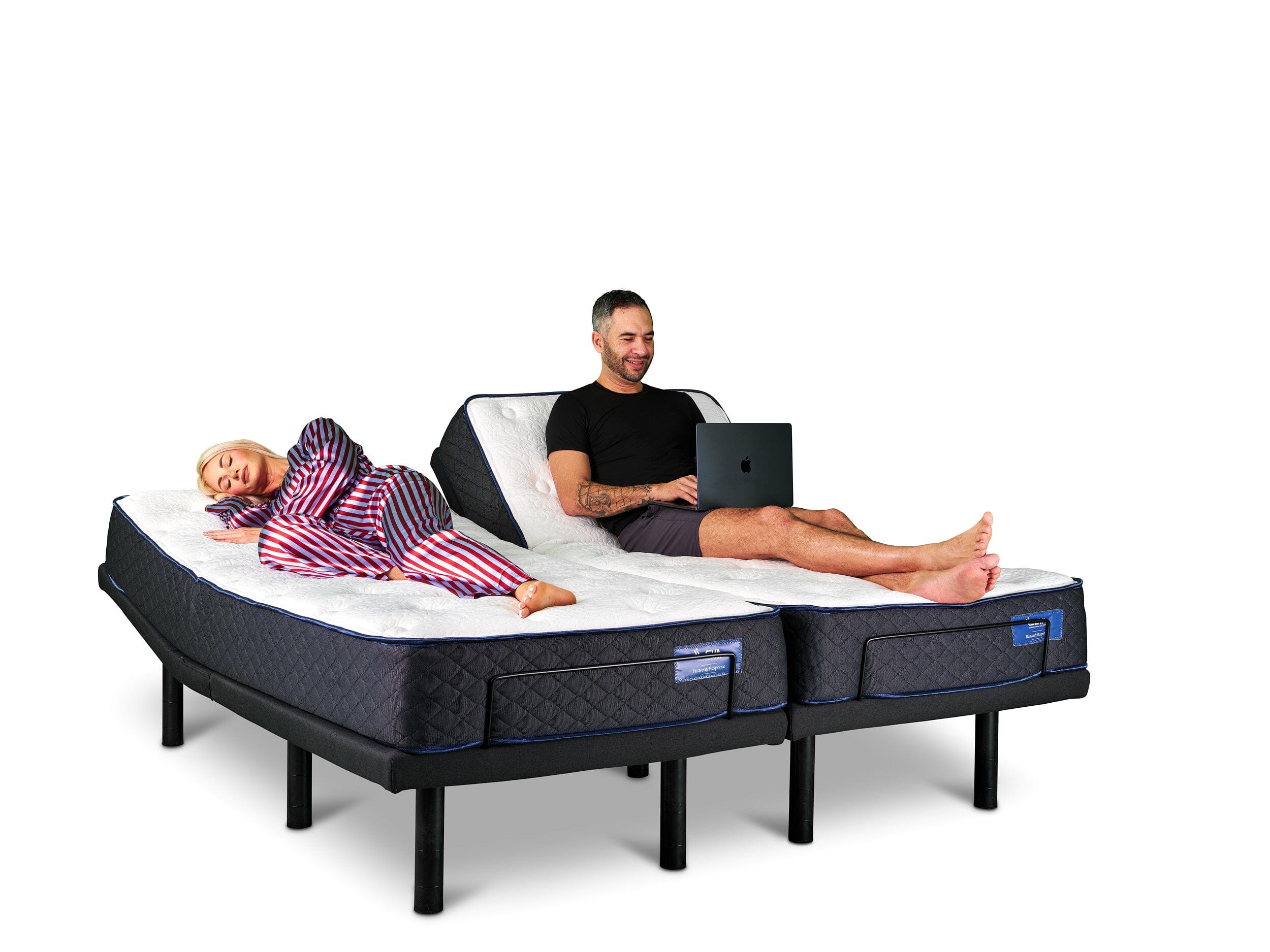
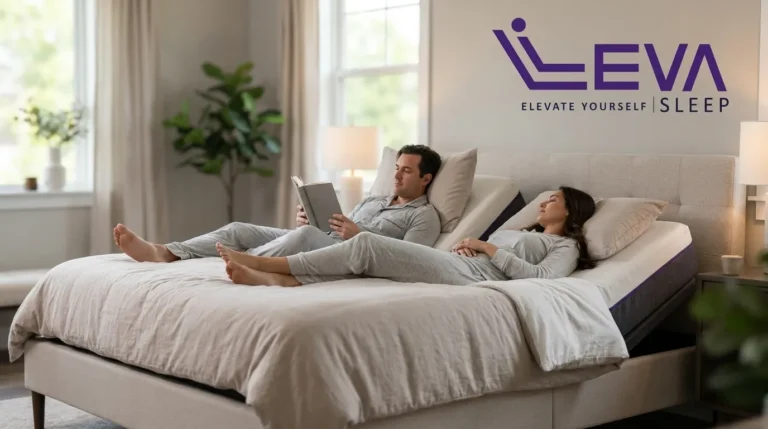
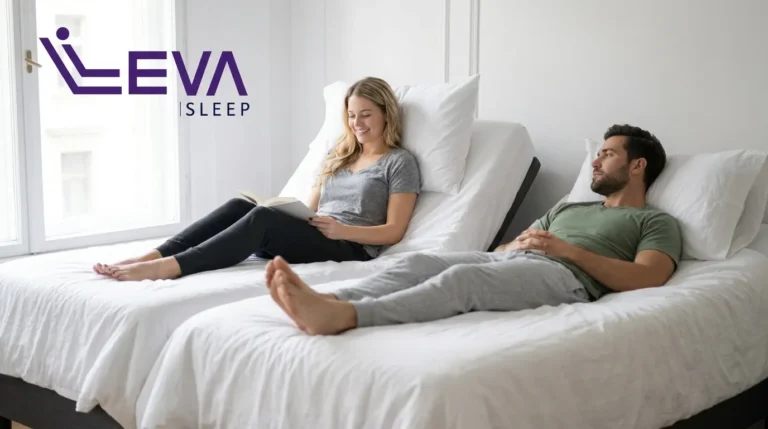
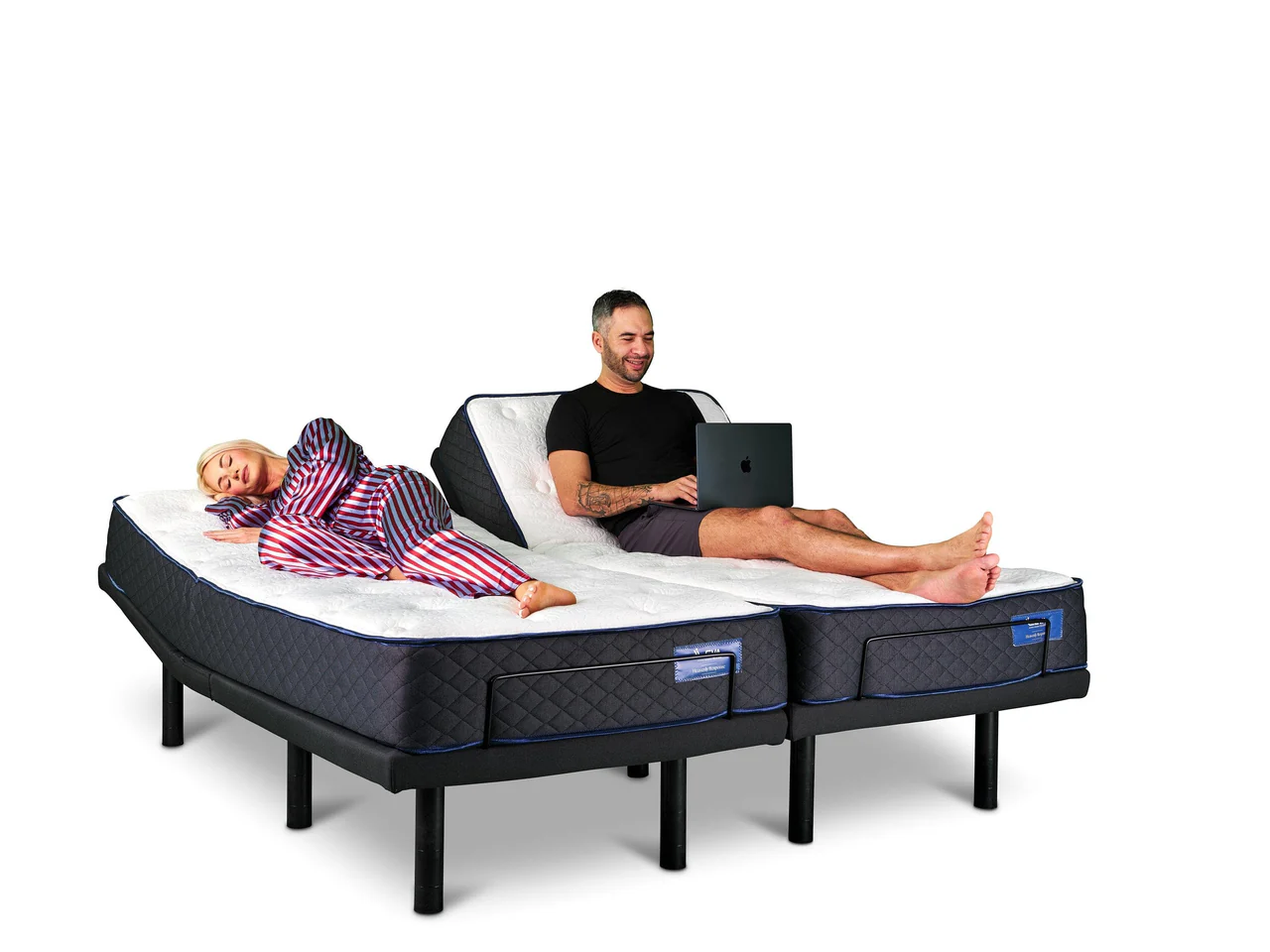
- Split configurations let each partner control their own elevation, which improves comfort in a shared bed.
- Explore a non-invasive snoring solution at Leva Sleep today.
Side-by-Side Comparison: MADs vs Anti-Snore Adjustable Bed
| Criterion | SmartGuard / SnoreRx / VitalSleep (MADs) | Leva Sleep Anti-Snore Adjustable Bed |
|---|---|---|
| Jaw Soreness Risk | Documented jaw pain, stiffness, and TMJ risk | None, since there is no oral contact |
| Typical Durability | 6 months to 2 years before replacement | Long-term durable base with no consumable parts |
| Partner Disturbance | Device noise, drooling, and repositioning can wake a partner | Whisper-quiet German motors and independent side control |
| Couple Compatibility | Single-user device with no shared-bed benefit | Split King/Queen with independent app control per side |
Explore Leva Sleep’s adjustable bed lineup at the La Jolla showroom or online.
Most Effective Anti-Snoring Options for Different Sleepers
No single device category works best for everyone. The right choice depends on snoring cause, severity, jaw health, and partner comfort.
Among MADs, SmartGuard, SnoreRx, and VitalSleep rank among the most recognized over-the-counter options. Each uses a boil-and-bite or adjustable tray that holds the lower jaw slightly forward. MADs carry documented risks including jaw pain and stiffness, drooling, dry mouth, and potential aggravation of temporomandibular joint (TMJ) disorder. Users without jaw sensitivity may see short-term snoring reduction. Users with existing jaw discomfort, or partners who wake from device-related noise and movement, often find the trade-off significant.
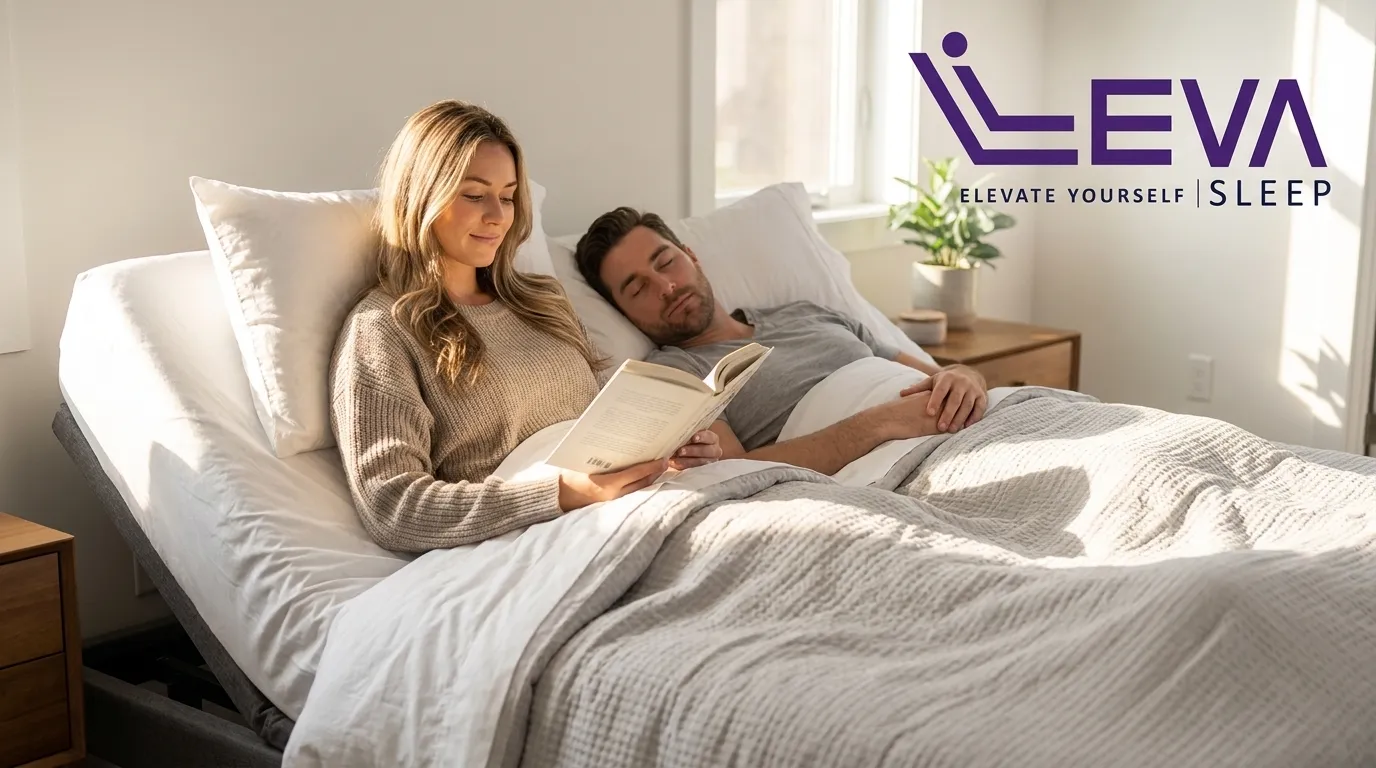
Head elevation offers a different path. Raising the head of the bed 7 to 15 degrees opens the airway through gravity instead of jaw mechanics. Leva Sleep adjustable bases deliver this positioning automatically and do not require any oral appliance. The approach works especially well for couples, because each partner’s side adjusts independently.
Real-World Effectiveness and Compliance With Anti-Snoring Devices
MADs reduce snoring for many users, yet real-world results often drop off because of poor compliance. Physician Dustin Cotliar, MD, MPH, advises reconsidering an anti-snoring mouthpiece if ongoing jaw soreness, tooth pain, or no improvement in sleep quality appears after several weeks of consistent use. Many people stop using MADs within the first few months because of discomfort, which removes any benefit.
Leva Sleep adjustable bases address this compliance problem by automating the solution. Users set a gentle head elevation that opens the airway through positioning, then let the base maintain that angle. Because the adjustment is positional rather than mechanical in the mouth, both partners can sleep undisturbed while still benefiting from the elevated head position.
FDA-Cleared Mouthpieces and How to Evaluate Them
Several MADs have received FDA clearance as Class II medical devices, which means they show substantial equivalence to a predicate device. FDA clearance confirms safety and basic effectiveness for the intended use. It does not guarantee comfort, long-term durability, or suitability for every user.
When you evaluate any FDA-cleared mouthpiece, focus on comfort over a full night, durability over months, and any noise or drooling that could disturb a partner. Also consider compatibility with existing dental or jaw conditions. Over-the-counter MADs that are not custom-molded can cause pain and irritation to the teeth and gums. Users with TMJ history, dental work, or jaw sensitivity should speak with a dentist before using any MAD.
Leva Sleep’s adjustable-bed anti-snore mode functions as a positional sleep system rather than a medical device, so it does not require FDA clearance. For users who cannot tolerate or prefer to avoid oral appliances, it offers a non-mouthpiece path to snoring reduction.
Key Downsides of Sleep Apnea Mouth Guards
Comfort and Durability: Anti-snoring mouthpieces typically last between six months and two years before requiring replacement, which creates a recurring cost. Jaw pain, stiffness, and risk of TMJ disorder rank among the most frequently reported complaints.
Couple Compatibility: MADs serve a single user. They do not improve a partner’s sleep quality, and side effects like drooling or nighttime repositioning can disturb the person sharing the bed. A split adjustable base allows both partners to benefit from independent positioning without sharing a device.
Long-Term Cost: As noted earlier, the typical six-to-twenty-four-month replacement cycle adds up over time. A premium adjustable base is a one-time investment with no consumable components, and Leva Sleep’s pricing comes in at a significant discount to comparable luxury competitors.
Health Considerations: MADs carry more potential side effects than tongue-retaining devices, including jaw pain and stiffness, drooling, and dry mouth. Users with moderate-to-severe sleep apnea should consult a physician before relying on any over-the-counter device as a primary treatment.
Couple Sleep Scenarios: Mouthpiece vs Split Adjustable Base
Scenario A: The MAD Frustration Cycle
One partner starts using a boil-and-bite MAD. Within six weeks, jaw soreness appears every morning. The device gets adjusted, then replaced after ten months when it cracks. Snoring decreases but does not disappear, and the partner still wakes twice a night from repositioning sounds. After the second replacement, the couple begins researching alternatives.
Scenario B: The Leva Split King Solution
The same couple installs a Leva Sleep Split King adjustable base. The snoring partner’s side is set to a gentle head elevation, and the spring 2026 anti-snore mode manages automatic micro-adjustments through the night. The other partner sets their side to zero elevation with lumbar support. Both save their preferred positions in the Leva app. Neither partner wakes the other, and no device enters the mouth.
Decision Framework: Matching Your Needs to a Snoring Solution
Use the following criteria as a step-by-step guide when you compare snoring solutions.
- Jaw health: Start with your jaw history. Any TMJ issues, dental sensitivity, or jaw pain make MADs a higher-risk choice and point you toward positional options.
- Partner impact: Next, weigh both partners’ sleep quality. If both matter equally, a couple-compatible system usually outperforms a single-user device.
- Compliance likelihood: Then consider your nightly habits. A solution that does not require inserting a device each night removes a major barrier to consistent use.
- Long-term cost: Finally, compare total cost over several years by factoring in MAD replacement cycles versus a durable adjustable base.
- Medical severity: Moderate-to-severe sleep apnea requires physician-supervised treatment. Positional therapy and MADs fit best for mild cases and primary snoring.
Leva Sleep’s adjustable-bed lineup includes 15–20 models with whisper-quiet German motors, independent app control per side, specialized bedding for adjustable bases, white-glove setup, and U.S.-made mattress options. The spring 2026 anti-snore mode adds automatic snoring detection and micro-adjustment, which makes the system self-managing through the night.
Explore Leva Sleep in person at the La Jolla showroom or compare models online.
Frequently Asked Questions About Leva Sleep and MADs
Can an adjustable bed actually reduce snoring without a mouthpiece?
Yes. Elevating the head of the bed between 7 and 15 degrees uses gravity to shift the tongue and soft palate forward, which reduces airway obstruction. This effect mirrors the way sleeping on your back often worsens snoring. Leva Sleep adjustable bases support manual head elevation and app-controlled positioning, which provide the core positional benefit for snoring reduction.
How does Leva Sleep’s split adjustable base work for couples with different preferences?
Leva’s Split King and Split Queen bases divide the bed into two independently controlled zones. Each partner uses the Leva Sleep app to set their own elevation, lumbar support, massage intensity, and saved sleep positions. Adjustments on one side do not affect the other, and whisper-quiet German motors help prevent disturbance during nighttime changes.
What should I look for when comparing anti-snoring mouthpieces?
Focus on comfort over a full night of wear, adjustability of jaw advancement, material durability, and compatibility with your dental history. If you have jaw sensitivity, crowns, or bridgework, consult a dentist before purchasing any MAD. Also consider whether the device improves your partner’s sleep quality, since most mouthpieces do not.
How much does a Leva Sleep adjustable base cost compared to luxury competitors?
Leva Sleep prices its systems 30–50% below comparable luxury adjustable-bed brands by designing and assembling locally and selling direct to the consumer. The La Jolla showroom allows in-person comparison across 15–20 models, and white-glove delivery and setup is available for a fee.
Does Leva Sleep offer automatic snoring detection?
Leva Sleep adjustable bases currently support manual head elevation and app-controlled positioning for snoring reduction through positioning. Users can test different elevation levels to see whether this approach meets their needs.
Conclusion: Choosing Between Mouthpieces and Adjustable Beds
SmartGuard, SnoreRx, VitalSleep, and other MADs can help users without jaw sensitivity who want a low-cost, portable snoring intervention. Their documented limitations, including jaw soreness, frequent replacement, and single-user design, make them a weak fit for couples sharing a bed or for users with TMJ concerns.
Head elevation through an adjustable base addresses snoring through body position instead of jaw mechanics, removes the nightly compliance ritual, and, in a split configuration, improves both partners’ sleep at the same time. Couples who want to stay in the same bed, sleep better individually, and avoid the recurring cost and discomfort of oral appliances can treat Leva Sleep’s adjustable systems as a direct, non-invasive alternative worth serious consideration.
Transform your sleep with Leva Sleep by visiting the La Jolla showroom or shopping online today.