
Written by: Matthew Timmins, Founder and Managing Director, Leva Sleep
Key Findings for Back-Pain Sleepers
- Aireloom and Stearns & Foster both start with strong spinal support, yet owner reports show body impressions and softening within two to five years.
- Neither brand offers independent firmness or elevation, so couples with different needs or medical positioning requirements lack a complete solution on a flat mattress.
- Side sleepers and heavier individuals see pressure-point breakdown sooner. Back sleepers usually do better in the first one to two years on medium-firm or firm models.
- Chronic back pain relief requires both surface support and spinal positioning. Flat mattresses cannot provide the head or leg elevation that reduces lumbar load.
- Pairing an Aireloom mattress with a Leva Sleep split adjustable base adds independent elevation, lumbar support, and anti-snore positioning so each partner maintains alignment longer.
Aireloom Design and How It Supports Your Spine
Aireloom mattresses are handcrafted in California and Pennsylvania using tempered coils and natural fiber layers such as wool and silk. The hand-tufting process compresses layers uniformly. This reduces early settlement and spreads body weight across a broader coil surface area compared with many glued foam stacks.
- Tempered offset coils provide conforming support that follows lumbar curvature for back sleepers.
- Natural fiber layers breathe well but compress faster than high-density polyfoam under sustained pressure.
- Two-sided construction can extend usable life when flipped regularly, although most consumers do not flip on schedule.
- Firmness options range from Plush to Firm, yet one firmness covers the entire surface with no per-partner zoning.
- No head or foot elevation is available, so spinal positioning remains fixed at flat.
Stearns & Foster Design and Spinal Alignment
Stearns & Foster uses an IntelliCoil innerspring system with individually wrapped coils and multiple foam comfort layers. The coil-on-coil architecture in Estate and Reserve tiers aims to reduce motion transfer and provide targeted lumbar response.
- Individually wrapped coils deflect independently, which helps side sleepers with hip and shoulder pressure points.
- Foam comfort layers are one-sided and glued, so rotation is the only maintenance option because flipping is not possible.
- Quilted pillow tops add initial pressure relief but usually soften first and lose loft.
- Firmness is fixed per model, so couples with different needs must compromise on one feel.
- No elevation capability exists, so a flat orientation cannot accommodate medical positioning for acid reflux, sleep apnea, or post-surgical recovery.
Owner-Reported Sagging Timelines
Owner communities on platforms such as Reddit’s r/Mattress and GoodBed document recurring patterns for both brands. The following table compares when owners typically first notice body impressions and highlights that support often declines before warranty thresholds are met. These are aggregated owner-reported observations, not manufacturer specifications.
| Brand | Reported Onset of Body Impressions | Common Complaint | Warranty Threshold |
|---|---|---|---|
| Aireloom | Customer reports document body impressions in Aireloom mattresses as early as 6 months to 1.5 years of use | Sagging and discomfort at pressure points | Typically 1.5 inches visible sag |
| Stearns & Foster | Some owners report sagging within three years | Pillow top softening unevenly, foam comfort layers losing loft | 1.5 inches visible sag |
Stearns & Foster sets its warranty sag threshold at 1.5 inches of visible impression without body weight. Many owners report functional support loss well before that depth appears.
How Each Brand Performs for Side and Back Sleepers
Side sleepers need deeper contouring at the shoulder and hip to keep the spine laterally neutral. Back sleepers need firmer lumbar support with moderate contouring so the lower back neither arches nor flattens.
Aireloom’s natural fiber layers and tempered coils perform well for back sleepers at medium-firm and firm settings during the first one to two years. Many heavier side sleepers report limited shoulder relief on firmer Aireloom models. Stearns & Foster’s individually wrapped coil system offers more granular contouring for side sleepers, especially in the Estate tier, although pillow-top softening speeds up pressure-point return over time. Neither brand provides a mechanical way to reposition the spine during the night, so head and leg elevation for lumbar relief remain unavailable on any flat mattress.
Weight-Based Guidance for Aireloom and Stearns & Foster
Body weight strongly affects how either brand performs because heavier sleepers compress comfort layers faster and need stronger coil support to avoid bottoming out.
- Under 130 lbs: Plush Aireloom or Stearns & Foster pillow-top models usually provide enough contouring. Sag timelines often run longer because of lower compression force.
- 130–230 lbs: Medium-firm options in both brands give the most balanced mix of support and contouring for back and combination sleepers.
- Over 230 lbs: Firm Aireloom two-sided models or Stearns & Foster Reserve firm tiers work better. Pillow-top models in this range show faster softening based on owner reports at The Mattress Underground.
- Couples with a weight difference over 50 lbs: One shared firmness usually underserves at least one partner. Split adjustable configurations address this directly.
Couples, Conflicting Firmness, and Shared Beds
Both Aireloom and Stearns & Foster lock couples into the same firmness, the same elevation, and the same surface temperature on a shared flat mattress. When one partner needs a firm surface for lumbar support and the other needs more pressure relief for hip pain, at least one person loses proper spinal alignment every night.
This conflict often drives what many call a “sleep divorce”, where partners move to separate beds or rooms. Separate beds reduce intimacy and still ignore the mechanical cause of discomfort. A split adjustable base with independent controls lets each partner set their own firmness pairing and elevation while staying in the same bed.
How Aireloom Performs for Back Pain Over Time
Aireloom mattresses rank among the better-constructed flat options for back pain during the first two to three years. The tempered offset coil system delivers consistent lumbar support, and hand-tufting helps limit early layer separation. For back sleepers between 130 and 230 lbs who choose a medium-firm or firm model, Aireloom compares well with most competitors in its price tier.
Limitations appear with time and specific conditions. Natural fiber comfort layers compress faster than many high-density foam alternatives, so the original support profile changes. Most Aireloom models lack zoned lumbar reinforcement, so sleepers with pronounced lumbar curvature may notice inconsistent support. For chronic back pain that needs medical positioning, such as elevated head for acid reflux, elevated legs for lumbar decompression, or inclined positioning for sleep apnea, no flat Aireloom setup can provide those positions regardless of firmness.
Why Flat Mattresses Fall Short for Chronic Pain
Chronic back pain management during sleep depends on two variables: surface pressure distribution and spinal positioning. Premium flat mattresses address surface pressure through materials and firmness. They cannot change spinal positioning because the surface stays horizontal.
Orthopedic and physical therapy guidance often recommends sleeping with the knees slightly elevated to reduce lumbar load or with the head elevated to reduce cervical strain. A flat mattress cannot structurally create these positions. As comfort layers soften over time, pressure distribution also worsens. Many chronic pain sufferers end up with a mattress that no longer supports them the way it did when new.
How an Adjustable Base Changes Back-Pain Outcomes
An adjustable base introduces this second variable through mechanical elevation. Raising the head between 15 and 30 degrees reduces pressure on the lumbar discs and opens the airway for sleepers with mild sleep apnea or snoring. Raising the legs lowers venous pressure and takes load off the lower spine.
Combining both adjustments creates a zero-gravity style position that spreads body weight more evenly across the surface and reduces peak pressure at the hips and shoulders. These positional benefits apply regardless of mattress firmness and remain available even as comfort layers soften.
Pairing Aireloom with Leva’s Split Adjustable Systems
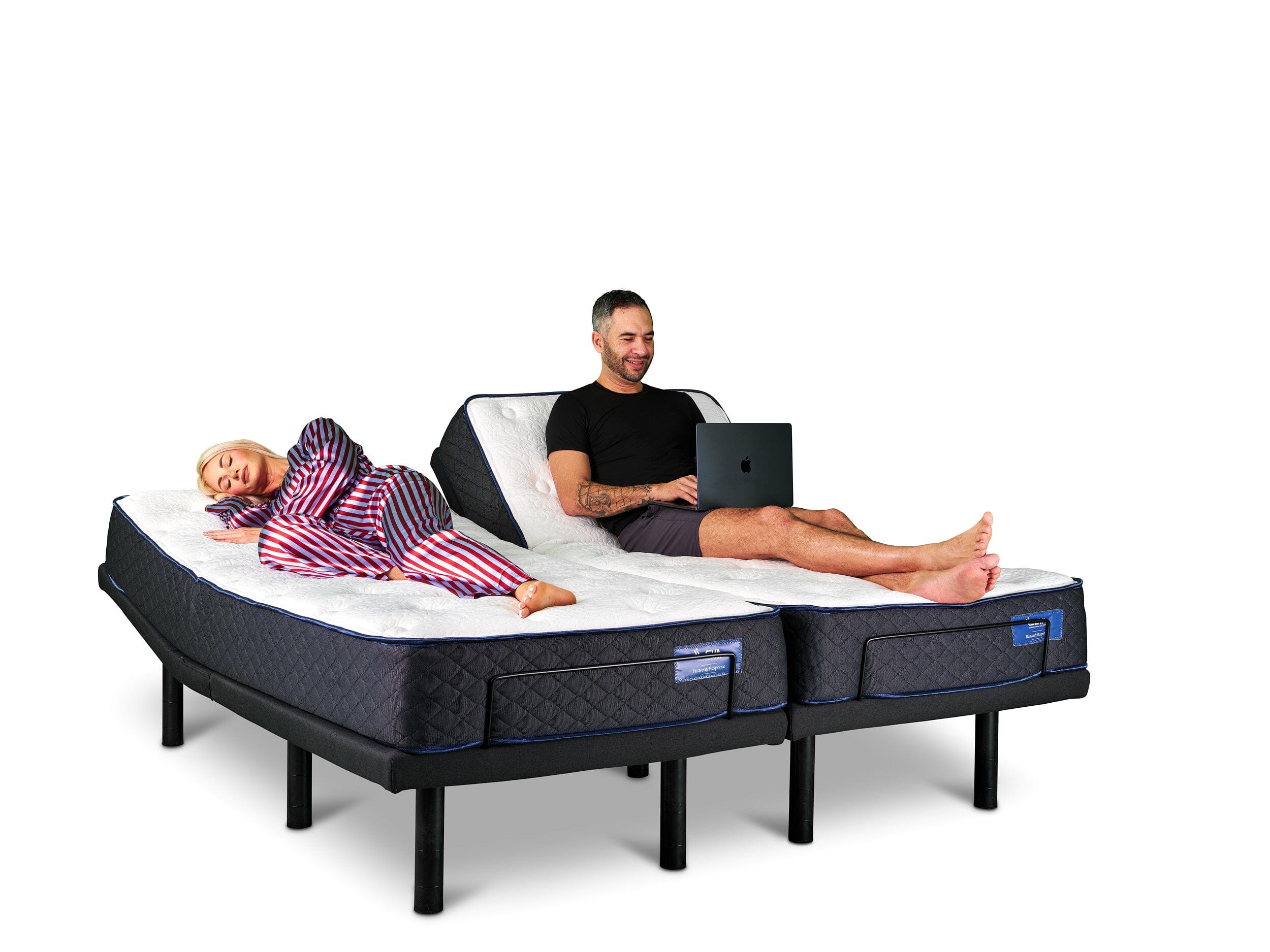
Leva Sleep’s split adjustable bases serve couples who want independent control while sharing one bed. Whisper-quiet German motors limit mechanical noise. Each side of a Split King or Split Queen has independent head elevation, foot elevation, a lumbar support motor, and a pillow tilt motor. One partner can sleep flat while the other uses a zero-gravity or anti-snore position at the same time.
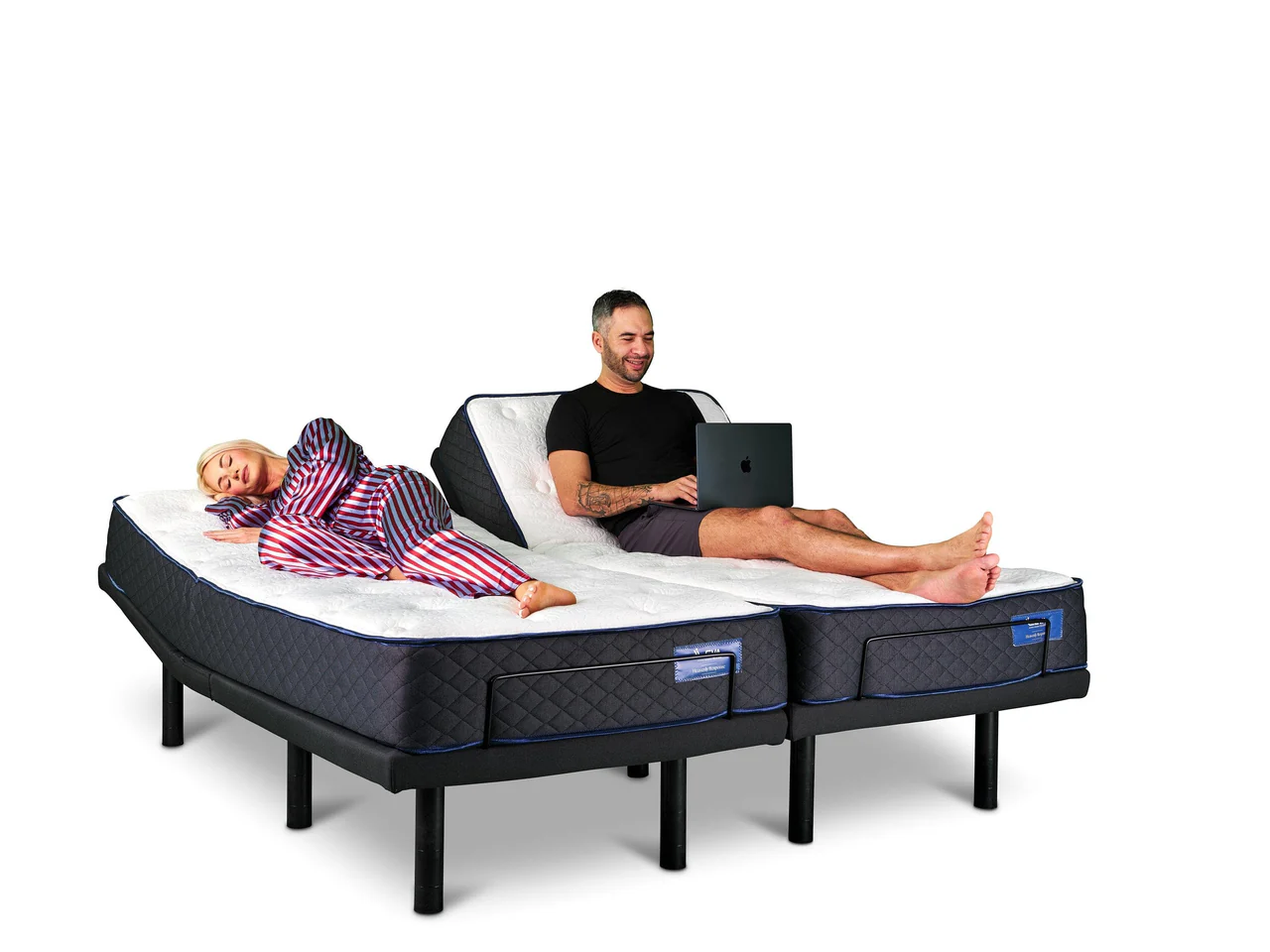
The Leva Sleep app ties these features to clear benefits. Bluetooth control and custom position memory let you return to your ideal back-pain setting with one tap. Vibrating alarms and subtle micro-adjustments for snoring detection help manage nighttime disruptions without waking a partner. Leva’s systems work with Aireloom’s two-sided construction, and Leva carries Aireloom as a curated US partner brand, so mattress and base are selected and configured together instead of pieced together from different retailers.
Leva Sleep has served over 25,000 customers in more than eight years. The company offers 15 to 20 adjustable base models, compared with the three to five typically found at general mattress retailers, and prices its systems at 30 to 50 percent below comparable luxury competitors by removing wholesale distribution markups. White-glove delivery includes in-room setup, leg height adjustment, a product tutorial, and removal of the existing bed.
Decision Checklist for Back-Pain Sleepers and Couples
- Both partners share the same firmness preference and sleep position: A premium flat Aireloom or Stearns & Foster in the right firmness tier can work as a starting point. Because comfort layers soften over time, plan to reassess your support needs within three to four years to confirm that spinal alignment still holds.
- Partners have different firmness needs: A split adjustable base is the only configuration that solves this while keeping partners in the same bed.
- One or both partners have chronic lower back pain: Focus on adjustable bases with lumbar support motors and leg elevation capability. Flat mattresses cannot provide positional decompression.
- Snoring or mild sleep apnea is present: Anti-snore head elevation on an adjustable base addresses the mechanical cause. A flat mattress does not.
- Medical positioning has been recommended by a clinician: An adjustable base is required. No flat mattress configuration fulfills this need.
- Budget is a primary constraint: Leva Sleep’s direct-to-consumer model offers adjustable systems with clear pricing advantages over traditional luxury retail.
- Mattress durability is a concern: Pairing an Aireloom two-sided model with an adjustable base and rotating it regularly extends functional support life. The adjustable base compensates for comfort layer softening through positional adjustment.
Frequently Asked Questions
Do Aireloom mattresses sag easily?
Aireloom mattresses do not usually sag rapidly by flat-mattress standards, especially on two-sided models that can be flipped. Natural fiber comfort layers such as wool, silk, and cashmere compress faster than many high-density synthetic foams under steady body weight. Owner reports often describe noticeable softening in the shoulder and hip zones between two and four years on one-sided designs. Regular flipping on two-sided models can extend this timeline. The 1.5-inch visible sag threshold required for most warranty claims does not reflect the earlier functional support loss many sleepers feel.
What mattress do chiropractors recommend for back pain?
Chiropractic and orthopedic guidance usually favors medium-firm mattresses for back pain. This firmness level tends to balance lumbar support with enough contouring to prevent pressure buildup at the hips and shoulders. The exact construction, whether innerspring, foam, or hybrid, matters less than matching firmness to body weight and primary sleep position. Many practitioners also suggest sleeping with the knees slightly elevated to reduce lumbar disc pressure, which requires an adjustable base rather than any flat mattress.
Is Stearns & Foster or Aireloom better for side sleepers with hip pain?
Stearns & Foster’s individually wrapped coil system provides more granular contouring at the hip and shoulder than Aireloom’s offset coil construction. For the first two years, this often makes Stearns & Foster the more comfortable choice for side sleepers with hip pain. Aireloom’s firmer models can create pressure buildup at the greater trochanter for side sleepers above 160 lbs. Both brands’ pillow-top and plush configurations soften over time, which reduces pressure relief. Slight leg elevation on an adjustable base lowers hip joint load regardless of mattress brand, so adjustable positioning often outlasts mattress choice as a long-term solution.
Can an adjustable base be used with an Aireloom mattress?
Yes. Aireloom’s two-sided models generally work with adjustable bases, although the specific model should be confirmed before purchase because some thicker or more rigid builds have limited flex range. Leva Sleep carries Aireloom as a curated partner brand and configures the mattress and adjustable base together to ensure compatibility and performance. Leva’s split adjustable bases let each partner set independent elevation while sharing the Aireloom comfort surface.
How long do premium mattresses like Aireloom and Stearns & Foster maintain back support?
Both brands are built to outlast many mass-market mattresses, yet functional support life often runs shorter than the warranty period. Owner communities report meaningful comfort layer softening between two and four years for Aireloom and between one and a half and three years for Stearns & Foster pillow-top models. Pairing either mattress with an adjustable base extends effective support life because elevation redistributes body weight and reduces peak pressure where impressions form first.