Written by: Matthew Timmins, Founder and Managing Director, Leva Sleep
Key Ways Head Elevation Eases Midlife Snoring
- Snoring often increases in middle age as muscle tone declines and airways narrow, so tissues vibrate more easily.
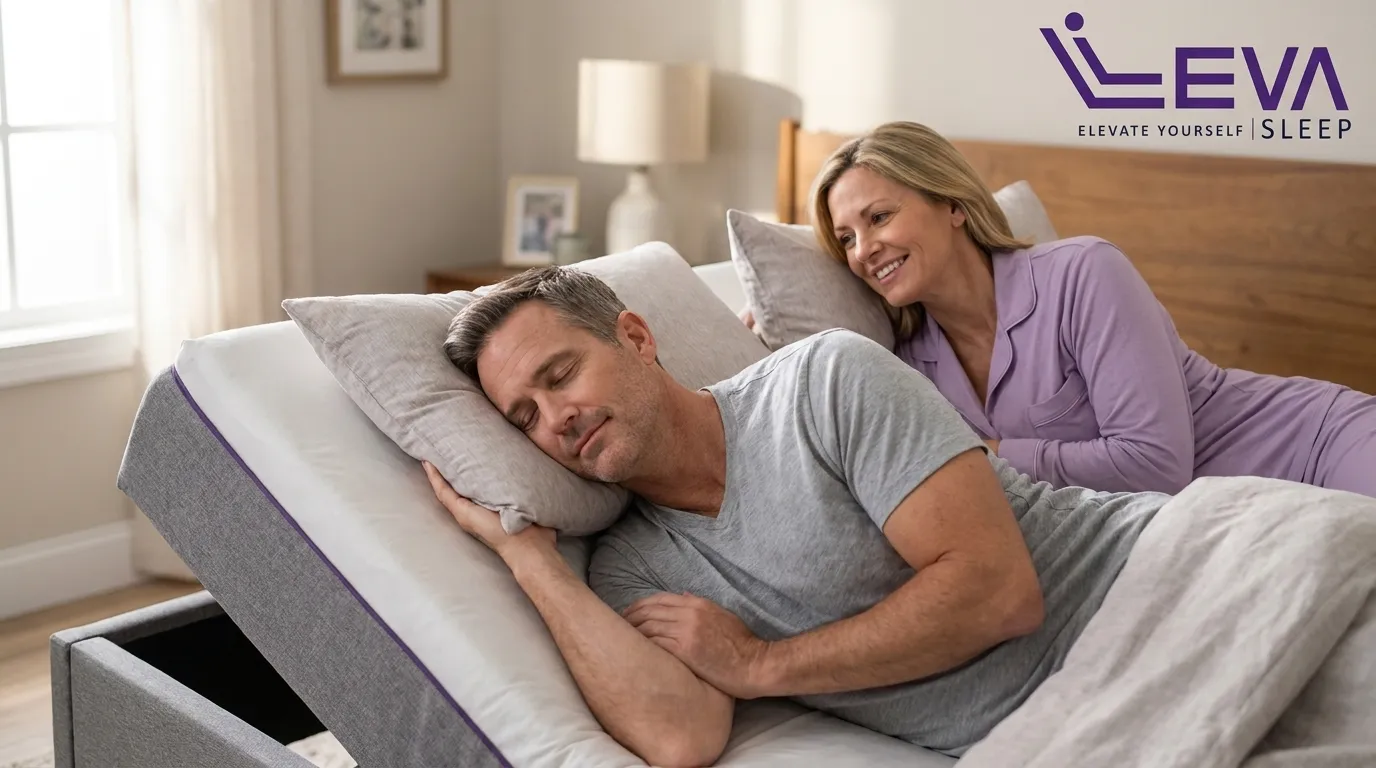
- Head elevation reduces gravity’s pull on relaxed airway tissues, which can cut snoring and improve sleep quality.
- Weight gain, hormonal shifts, alcohol use, and nasal congestion all contribute to midlife snoring and often respond to positional elevation.
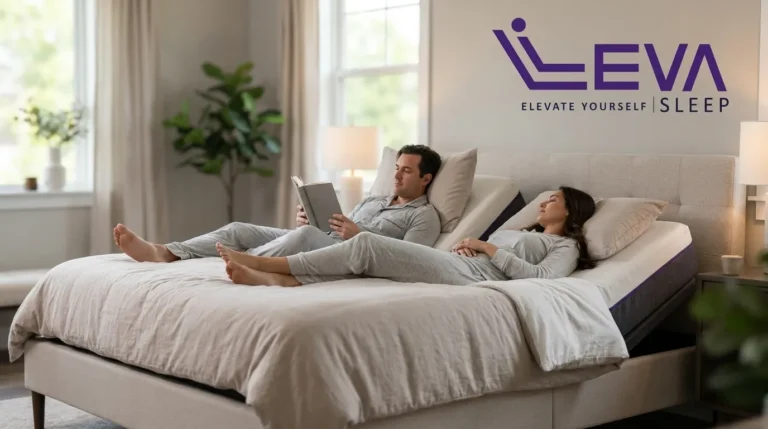
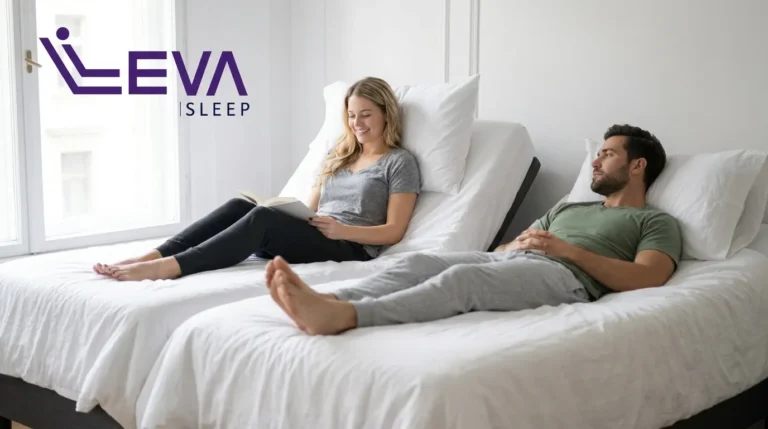
- Adjustable bases with split configurations let each partner set their own head height, preserving co-sleeping without masks or strict behavior changes.
- Explore adjustable sleep solutions at Leva Sleep in La Jolla or online.
How Age-Related Muscle Tone Loss Triggers Snoring
With age, natural muscle tone decreases and the airway can become more collapsible, contributing to increased snoring prevalence in midlife adults. The muscles of the soft palate, uvula, and pharyngeal walls lose the structural integrity needed to hold the airway open under the negative pressure created during inhalation. This loss of support leads to partial collapse and tissue vibration.
Head elevation changes the geometry of the upper airway. Switching from sleeping flat on the back to sleeping on the back with the head elevated results in less snoring, fewer nighttime awakenings, and more time spent in deep sleep. Even modest elevation reduces gravitational pull on relaxed pharyngeal tissues, which can meaningfully lower vibration frequency.
How Midlife Weight Gain and Neck Size Affect Snoring
Excess weight increases fatty tissue around the neck and upper airway, narrowing the breathing space and raising the chance of vibration and snoring, while also increasing the risk for sleep apnea. This effect is cumulative, so even modest weight gain can compound existing anatomical vulnerabilities and worsen snoring.
Head elevation uses gravity to lessen how much excess soft tissue compresses the airway opening. Elevating the entire head of the bed on an incline between 7.5 and 20 degrees is an ideal range to reduce snoring, and this approach may also help with acid reflux and GERD.
Why Hormonal Changes Increase Snoring in Women
After menopause, lower estrogen and progesterone may reduce airway muscle tone, making the airway more likely to narrow and vibrate during sleep; menopause is also associated with increased risk for obstructive sleep apnea. Progesterone has a stimulatory effect on upper airway dilator muscles, and its decline removes a protective mechanism that many women relied on during their reproductive years.
For postmenopausal women, positional strategies carry particular value. Hormonal changes reduce the baseline tone of pharyngeal muscles. Reducing the gravitational load on those muscles through head elevation offers a mechanical benefit that does not depend on hormone levels.
How Sleeping Position and Gravity Shape Snoring
Many people who snore but do not have sleep apnea tend to snore while sleeping flat on their back. Back-sleeping can allow the tongue and soft tissues to fall backward, narrowing the airway, whereas side sleeping and supportive pillows may reduce snoring.
Benoist et al. (2018) evaluated subjective effects of a wearable sleep-position trainer device in position-dependent non-apneic snorers and found limited evidence of effectiveness. This result highlights a key limitation of devices that only change position without addressing gravity’s effect on airway collapse. An adjustable base addresses both variables at once, because it elevates the head to counteract gravity and can be configured to encourage lateral positioning through incline.
How Alcohol and Sedatives Worsen Snoring
Alcohol, sedatives, and lack of sleep relax the muscles in the upper airway, limiting airflow and causing tissues to vibrate against each other during sleep. The effect is dose-dependent and timing-sensitive, so snoring worsens when alcohol is consumed close to bedtime.
On nights when alcohol or sedatives are used, the airway becomes more vulnerable to collapse than baseline physiology alone would predict. Head elevation provides a consistent positional countermeasure that remains in place regardless of chemical muscle relaxation. This approach can reduce the severity of vibration even when pharmacological factors are present.
How Nasal Congestion and Deviated Septum Contribute
Anatomical factors including a deviated septum restrict airflow and contribute to airway blockage that causes snoring. Nasal congestion due to allergies and colds can block airflow and trigger snoring by increasing tissue vibration. When nasal resistance rises, the sleeper often compensates by breathing through the mouth. Mouth breathing bypasses the nose’s natural filtering and humidifying functions and places greater vibratory stress on oropharyngeal tissues.
Elevating the head during sleep improves airflow and can reduce snoring by supporting nasal drainage and reducing mucosal edema in the nasal passages. Lower nasal resistance makes nasal breathing more sustainable throughout the night.
Why Snoring Often Becomes a Couple Problem
While the physiological causes of snoring affect the individual, the consequences often reach both partners. Partners of snorers had measurably worse sleep quality that improved significantly when the snoring was clinically treated, according to a Mayo Clinic study of bed partners. Bed-sharing in couples is associated with increased and stabilized REM sleep and sleep-stage synchronization. Separate sleeping arrangements reduce noise exposure but leave the airway problem unresolved and remove the relational and physiological benefits of co-sleeping.
Nightly sleep-wake concordance is associated with daily marital interactions, showing that similar sleep patterns can improve relationship quality. For couples weighing separate rooms, evidence suggests that treating the snoring mechanism directly, rather than separating, produces better outcomes for both partners’ sleep and relationship quality.
See how split adjustable bases can support co-sleeping at Leva Sleep.
How Adjustable Elevation Targets Midlife Snoring
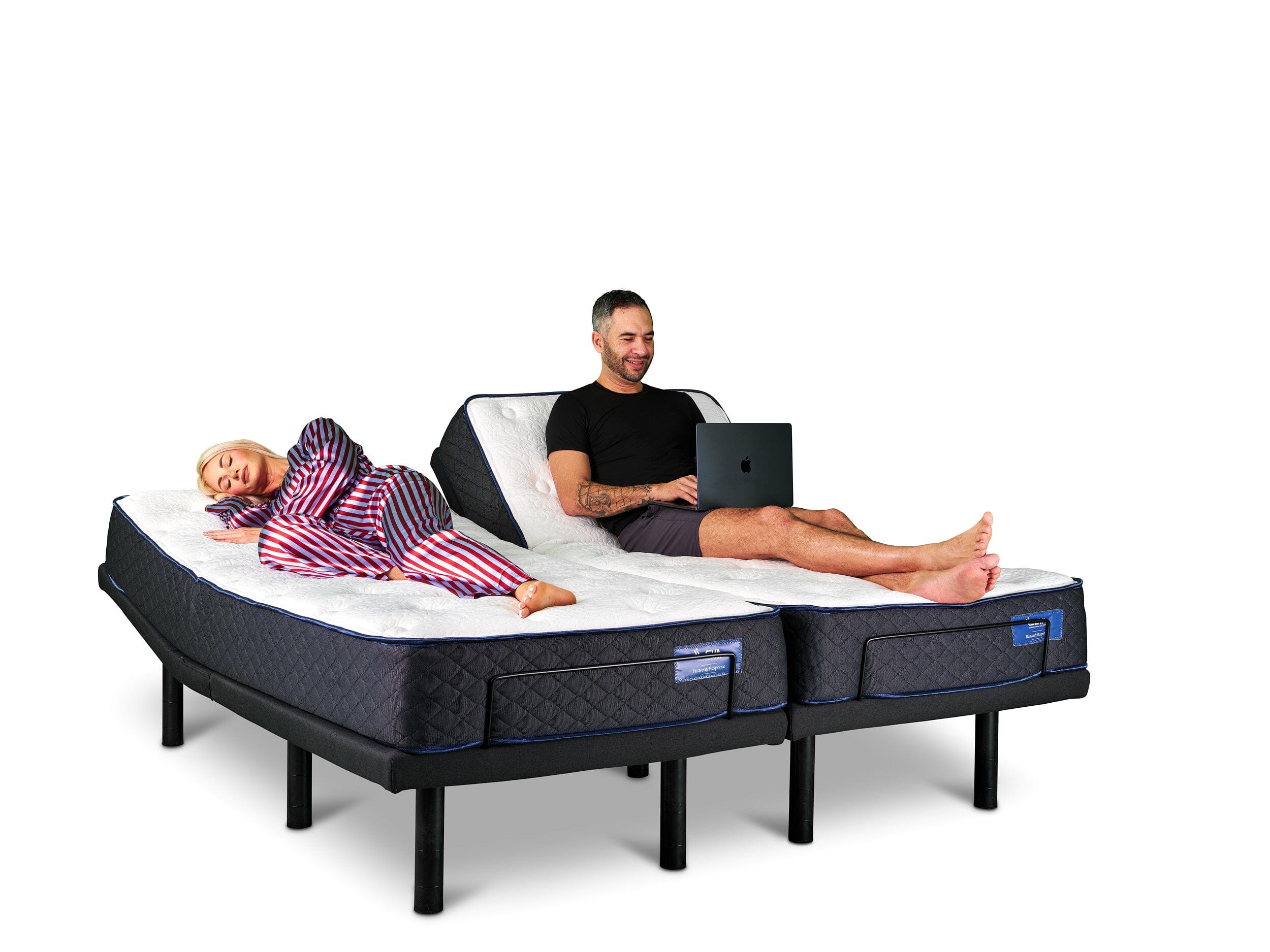
Adjustable sleep systems let each partner control the elevation angle on their side of the bed through an app or remote. The head section of the base rises to a chosen incline, positioning the upper airway more favorably without a mask, mouthpiece, or major behavior change beyond lying down. Split King and Split Queen configurations allow one partner to elevate their head while the other sleeps flat, which removes the compromise that often drives sleep divorce discussions.
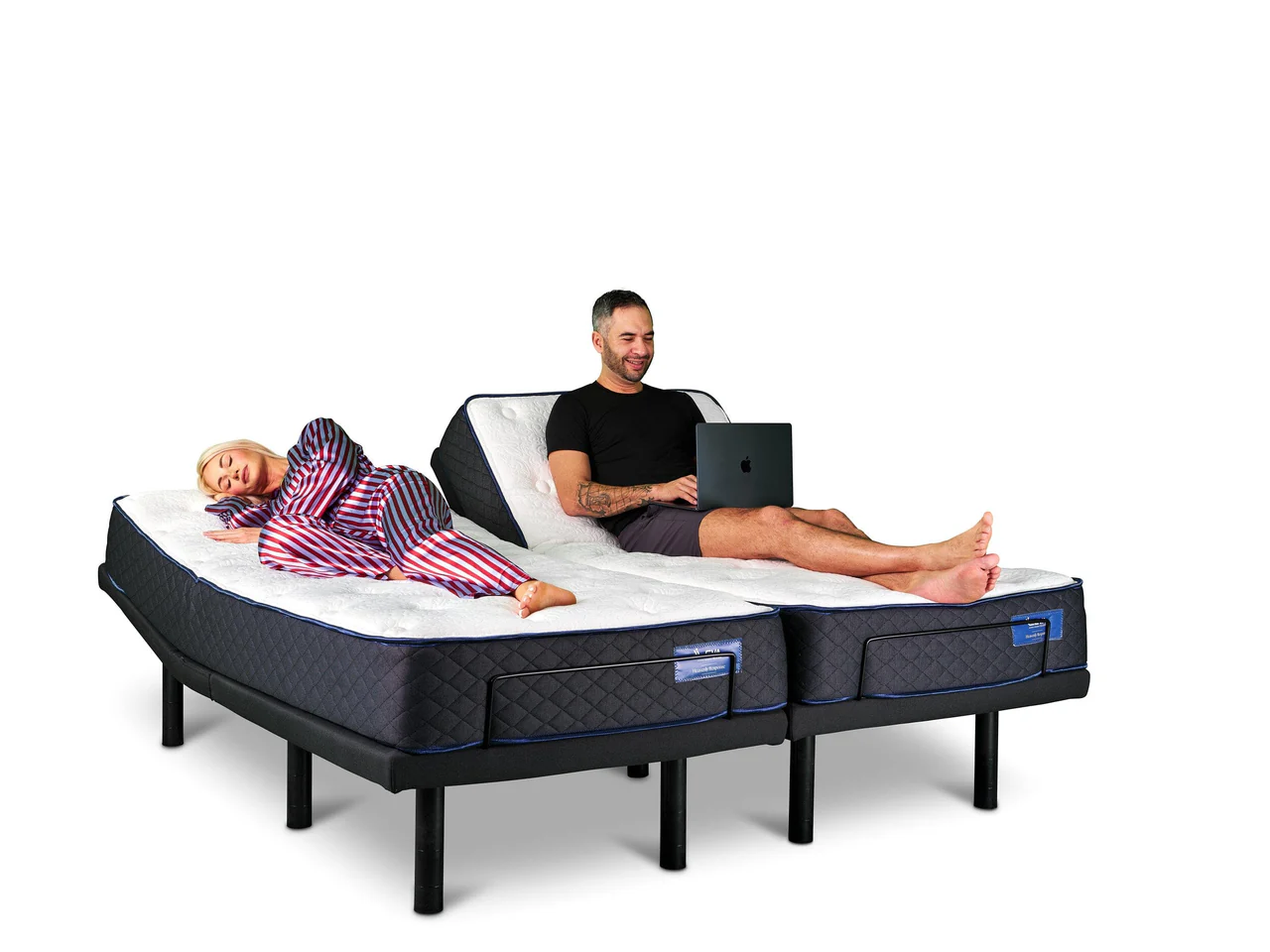
Leva Sleep’s adjustable bases use whisper-quiet German motors and are controlled via the Leva Sleep app, which lets users save custom positions, set vibrating alarms, and make small adjustments without waking a partner. An anti-snore mode, arriving spring 2026, is designed to detect snoring acoustically and make automatic micro-adjustments to head elevation in real time. The systems work with all-foam and hybrid pocket-coil mattresses engineered for adjustable bases, so the mattress flexes correctly at elevation without creating pressure points.
Experience whisper-quiet German motors in person at the Leva Sleep La Jolla showroom.
Comparing Common Approaches to Midlife Snoring
| Approach | Invasiveness | Nightly Compliance | Partner Impact | Long-Term Cost Consideration |
|---|---|---|---|---|
| CPAP Therapy | Requires mask worn over face each night, positive airway pressure stabilizes soft tissues that relax at sleep onset | Mask discomfort, hose management, and noise reduce adherence for many users | CPAP adherence improves the bed partner’s emotional state and relationship quality, but mask and machine presence affect intimacy for some couples | Machine, masks, tubing, and filters require ongoing replacement, typically covered by insurance only with confirmed OSA diagnosis |
| Lifestyle Changes Alone | Non-invasive, weight loss in adults with BMI over 30 improves OSA symptoms by reducing neck fat that narrows the airway | Requires sustained behavioral change, results vary by individual and timeline is months to years | No direct nightly partner disruption from the intervention itself, benefit depends on snoring reduction achieved | Low direct cost, indirect costs can include gym, nutrition, or program fees |
| Nasal Strips | Non-invasive external adhesive applied nightly to the nose bridge | Simple to use nightly, addresses nasal resistance only, not pharyngeal collapse | No noise or movement impact on partner, limited efficacy when snoring originates in the throat rather than the nose | Low per-unit cost, ongoing consumable expense accumulates over years |
| Adjustable Elevation System | Non-invasive, uses the 7.5–20 degree elevation range shown to reduce snoring and may also help with acid reflux | Passive compliance, elevation is set once and maintained automatically each night without any wearable or consumable | Split configurations allow independent elevation per partner and preserve the REM sleep benefits of co-sleeping | Higher upfront investment, no recurring consumable costs, Leva Sleep systems are priced 30–50% below comparable luxury competitors |
What to Check Before Buying an Adjustable System
Several practical details help determine whether an adjustable sleep system fits a specific bedroom and couple.
- Room layout and bed frame compatibility: Measure the clearance between the current bed frame and the wall, because head elevation requires the base to articulate upward. Confirm whether the existing frame can hold a split base or whether a new frame is needed.
- Partner height and weight differences: Split configurations allow each side to be set independently, but verify that the weight capacity per side covers both partners’ body weights with margin.
- Motor noise levels: Ask for a live demonstration or request decibel specifications. Whisper-quiet motors matter for light sleepers, because a partner who wakes easily will notice even minor mechanical sounds during position changes.
- Delivery and setup process: Confirm whether the retailer provides in-room setup, mattress placement, leg-height adjustment, and a product tutorial. White-glove delivery reduces the risk of improper assembly that can affect both function and warranty.
- Mattress compatibility: Not all mattresses flex correctly on an adjustable base. Verify that the mattress is rated for adjustable use and that the retailer offers mattresses engineered for articulating bases, along with deep-pocket fitted sheets designed to stay in place at elevation.
Frequently Asked Questions
Why did I start snoring at 40?
Snoring that begins or worsens in the late 30s and 40s usually reflects several age-related changes acting together. Pharyngeal muscle tone declines gradually with age, which makes the upper airway more collapsible under the negative pressure of inhalation. Midlife weight gain deposits fatty tissue around the neck, narrowing the airway opening. In women, the hormonal shifts of perimenopause reduce progesterone, which previously stimulated upper airway dilator muscles. Lifestyle patterns common in midlife, including increased alcohol use, higher stress, and reduced physical activity, compound these physiological shifts. An airway that was previously adequate can become marginal, and snoring then emerges or intensifies.
Can head elevation replace CPAP for mild snoring or apnea?
Head elevation is a positional strategy, not a medical device, and it does not replace CPAP therapy for diagnosed moderate or severe obstructive sleep apnea. For people whose snoring is positional, meaning it occurs mainly when lying flat on the back, elevation can meaningfully reduce snoring frequency and intensity. For mild, position-dependent snoring without confirmed apnea, elevation is a reasonable first-line non-invasive approach. Anyone who suspects sleep apnea, experiences gasping or choking during sleep, or has been told they stop breathing at night should see a physician and complete a sleep study before relying on positional therapy alone. The STOP-Bang questionnaire is a widely used screening tool that a physician can administer to assess apnea risk before choosing any intervention.
Will an adjustable base fit my current mattress?
Compatibility depends on how the mattress is built. Memory foam and latex mattresses usually flex well on adjustable bases. Many hybrid mattresses with individually wrapped pocket coils are also compatible, provided the coil gauge and foam layers are designed to articulate. Innerspring mattresses with interconnected coil systems are typically not compatible, because the rigid coil structure resists bending and can be damaged by repeated articulation. The safest option is to verify compatibility directly with the mattress manufacturer or to purchase a mattress from a retailer, like Leva Sleep, that designs and tests its mattresses specifically for adjustable bases.
How loud are the motors on adjustable bases?
Motor noise varies widely across product tiers. Entry-level adjustable bases from general mattress retailers often use motors that produce noticeable mechanical sounds during movement, which can wake a light-sleeping partner. Premium adjustable bases use precision-engineered motors that operate at low decibel levels and are often described as whisper-quiet. When evaluating a base, request a live demonstration with the motor running through a full elevation cycle or ask the retailer for published decibel ratings. Visiting a showroom where you can operate the base in person is the most reliable way to judge whether the noise level works for both partners.
When should I see a doctor about snoring?
Snoring accompanied by gasping, choking, or observed pauses in breathing during sleep needs prompt medical evaluation, because these signs suggest obstructive sleep apnea, which carries documented cardiovascular and metabolic risks. Snoring that causes excessive daytime sleepiness, morning headaches, difficulty concentrating, or mood changes also warrants assessment. Positional strategies and lifestyle changes are appropriate for simple, uncomplicated snoring, but they should not delay evaluation when symptoms point to a more serious condition. A sleep medicine specialist or otolaryngologist can order a home sleep test or in-lab polysomnography to determine whether apnea is present and guide treatment decisions.
Conclusion: Bringing Snoring and Sleep Back Under Control
Snoring in middle age does not have to be managed by sleeping in separate rooms. It usually reflects identifiable physiological mechanisms, including declining muscle tone, neck adiposity, hormonal shifts, sleeping position, chemical muscle relaxants, and nasal obstruction, and each of these mechanisms responds to head elevation as a mechanical countermeasure. Adjustable sleep systems with split configurations address several of these factors at once while preserving the relational and physiological benefits of co-sleeping. Couples can use the practical criteria above as a checklist for selecting a system that fits their bedroom, body types, and sleep preferences.
Find the right adjustable sleep system for your bedroom at Leva Sleep.