Written by: Matthew Timmins, Founder and Managing Director, Leva Sleep
Key Takeaways from Smart Bed Sleep Tracking
- Smart beds do not measure sleep quality directly. They infer it from pressure changes, micro-vibrations, and movement patterns instead of brain waves.
- Pressure sensors and ballistocardiography (BCG) capture respiration rate, heart rate, and movement. These signals act as mechanical stand-ins for true physiological measurements.
- Sleep stage estimates come from machine-learning models trained on PSG data. Accuracy is moderate compared with clinical polysomnography, especially for wake detection and deep or REM stages.
- Environmental sensors for temperature, light, and noise add helpful context but cannot replace EEG-based clinical measurements for accurate sleep staging.
- Leva Sleep pairs sensor data with split adjustable bases that turn insights into real-time actions such as anti-snore positioning. Discover how at Leva Sleep.
How Mattress Pressure Sensors Capture Your Night
Pressure sensors embedded in mattresses or under-mattress pads convert physical force into electrical signals. Two primary sensor types appear in consumer sleep systems.
- Piezoelectric sensors: These sensors generate a voltage when deformed by mechanical pressure. They detect gross body movement, shifts in weight distribution, and the subtle pressure oscillations produced by breathing and heartbeat.
- Load cells: These devices measure static and dynamic force with higher precision. Arrays of load cells enable pressure mapping across sleep zones, identifying where body mass concentrates and how it shifts during the night.
From these signals, pressure-based systems estimate respiration rate from rhythmic chest-wall expansion. They also estimate heart-rate ballistics from the pressure pulse each cardiac contraction sends through the body, along with overall movement frequency. These outputs do not represent direct measurements of physiological state. Each one functions as a mechanical proxy.
How Ballistocardiography (BCG) Reads Micro‑Movements
Ballistocardiography captures the micro-vibrations the body produces each time the heart ejects blood. Every cardiac cycle generates a recoil force that travels through the torso and into the sleep surface. Under-mattress BCG sensors detect this signal and extract heart rate, heart-rate variability (HRV), and respiratory effort from the waveform.
BCG differs from pressure-only systems in signal resolution. Pressure mapping captures how force spreads across the mattress surface. BCG isolates the timing waveform of each heartbeat. Systems that combine both approaches can cross-reference movement data with cardiac timing, which improves stage-estimation algorithms. Under-mattress nearables using BCG and acoustic sensing derive heart rate, respiratory rate, movement, and snoring without any body-worn device, which enables continuous nightly monitoring without contact.
How Smart Beds Estimate Sleep Stages
No consumer bed sensor reads brain electrical activity. Sleep stage classification in laboratory PSG depends on EEG, electrooculography, and electromyography. Consumer systems use a different input set. Movement frequency, HRV, and respiration rate feed into proprietary machine-learning models trained on PSG-labeled datasets.
The algorithm assigns each epoch, typically 30 seconds, to one of three or four categories: wake, light sleep, deep sleep, or REM. The assignment is probabilistic. When movement is low and HRV is elevated, the model infers deep or REM sleep. When movement is high, it infers wake or light sleep. Consumer wearables lack direct EEG measurement and must infer sleep stages indirectly from heart rate, HRV, and movement data. The same inferential constraint applies to bed sensors.
Given this inferential approach, the next step is to look at how closely these probabilistic assignments match clinical measurements.
Accuracy Compared with Polysomnography
These inferential inputs, including movement, heart rate, and HRV, produce varying levels of agreement with polysomnography. Bed-sensor BCG systems share the same inferential architecture as wrist wearables and face comparable limitations. When you evaluate accuracy claims, rely on documented performance ranges from independent validation studies rather than manufacturer assertions. The table below summarizes validated performance metrics across key sleep measurements. It highlights relatively strong sleep detection and weaker wake specificity and stage differentiation.
| Metric | Consumer Device Performance vs. PSG | Key Limitation | Source |
|---|---|---|---|
| Sleep vs. wake detection (sensitivity) | 85–95% | High sensitivity, low specificity for wake | Ubie Health |
| Wake detection specificity | 50–80%; 29–52% in a 2025 six-device validation study | Quiet wakefulness classified as sleep | Ubie Health; Sensio AI |
| Deep sleep stage accuracy | Moderate agreement | Overestimates deep sleep time vs. PSG | Ubie Health |
| REM sleep stage accuracy | Moderate agreement | No EEG or eye-movement data available | Ubie Health |
| Apnea screening sensitivity / specificity | High sensitivity but low specificity for moderate-to-severe OSA | Frequent false positives, cannot distinguish obstructive from central apnea | Sensio AI |
Overall agreement between wearables and PSG for sleep stage classification is moderate. That disagreement rate does not reflect a product flaw. It reflects the fundamental absence of EEG in any consumer system.
Environmental Factors Your Smart Bed Tracks
Many smart bed platforms supplement biometric inference with ambient sensors. Common environmental inputs include the following factors.
- Temperature and humidity: These readings correlate thermal conditions with reported sleep quality and can trigger active cooling or heating adjustments.
- Light levels: Photodiodes detect room-darkening conditions and flag early-morning light exposure that may shorten sleep.
- Noise and acoustic monitoring: Microphones or accelerometers detect snoring events and ambient sound levels, which support snore-detection algorithms.
Environmental data improves the contextual richness of a sleep report but does not resolve the core inferential gap. A room-temperature reading cannot substitute for EEG in staging sleep.
Why Tracking Alone Rarely Fixes Sleep Problems
Consumer bed sensors are positioned as complementary screening and longitudinal-monitoring tools rather than replacements for laboratory PSG. That positioning is accurate, yet it exposes a practical gap. A sleep score delivered each morning can show that one partner spent less time in deep sleep, but it offers no built-in way to change that outcome the following night.
Snoring elevates a partner’s arousal index. Pressure concentration at the hips or shoulders causes micro-awakenings. Temperature mismatch between partners fragments sleep architecture. A score that reflects these problems without offering a corrective action leaves the underlying physiology unchanged. Relying exclusively on consumer sleep tracker data can delay appropriate medical intervention for sleep disorders including obstructive sleep apnea.
How Leva Sleep Adjustable Bases Turn Data into Action
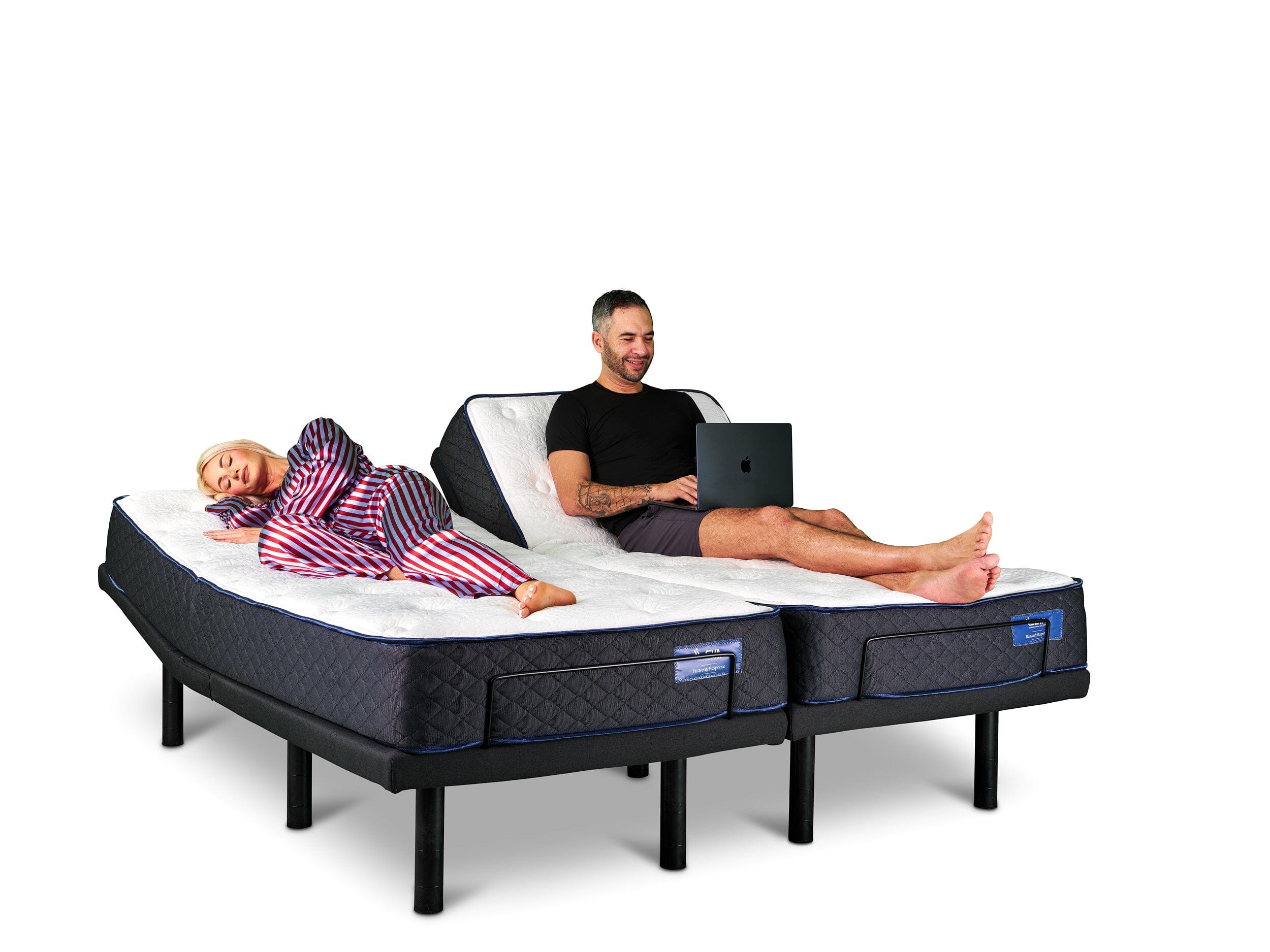
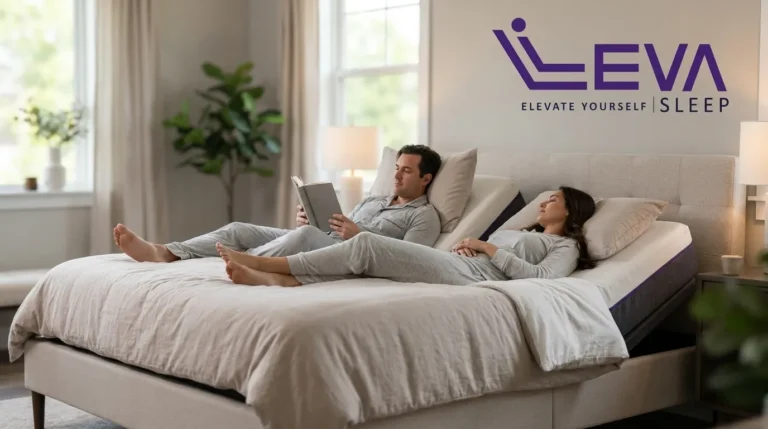
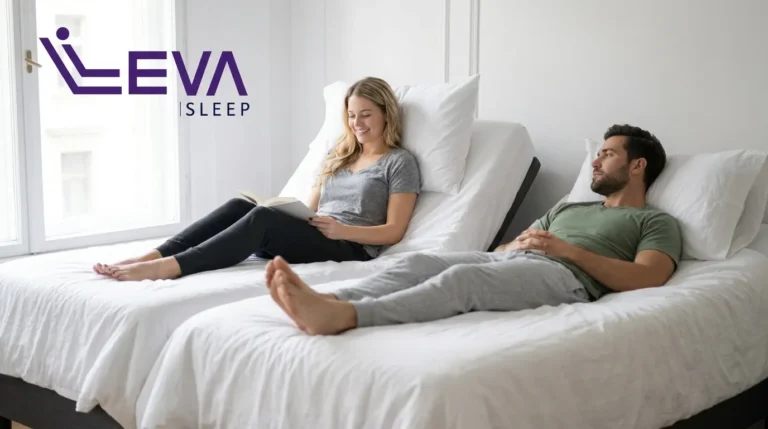
An adjustable base addresses the mechanisms that sleep scores can only describe. When you evaluate smart bed systems, consider whether sensor data can trigger automatic responses such as anti-snore positioning and zero-gravity settings based on detected biometric signals. Leva Sleep’s split adjustable bases extend this principle with independent per-partner control. Each sleeper can act on their own data without disturbing the other.
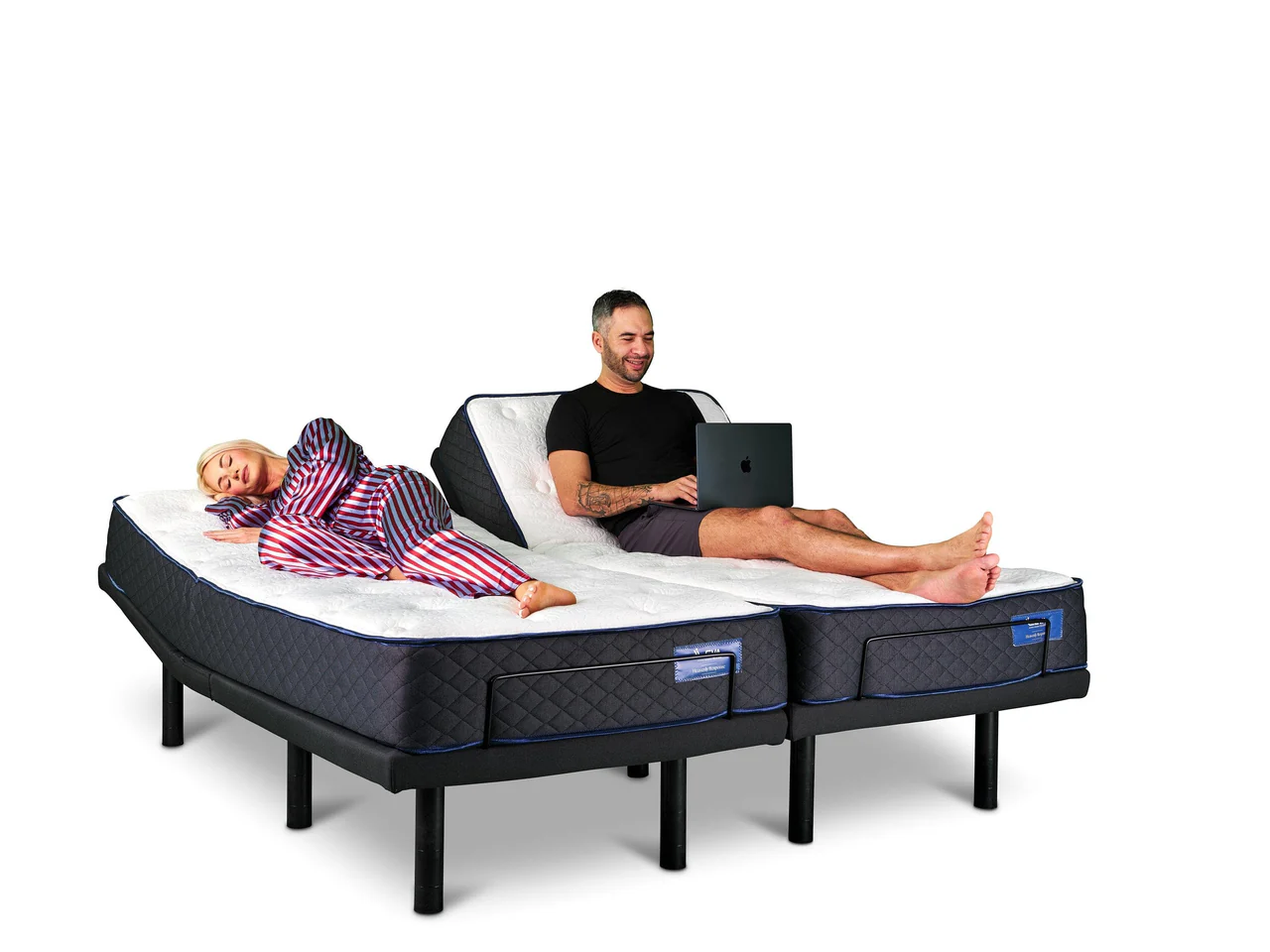
Leva Sleep’s systems provide four categories of response that map directly to problems sensor data reveals. Independent head and foot elevation addresses snoring and reflux events that acoustic and movement sensors detect. Each side of a Split King or Split Queen adjusts separately, so one partner can elevate while the other remains flat.
Adjustable lumbar support targets pressure concentration that sensor arrays flag as a fragmentation source. This support reduces the micro-awakenings that erode deep sleep percentages. Temperature control resolves the thermal mismatch that environmental sensors detect but cannot fix on their own. Compatible heating and cooling pads let each partner set a personal microclimate.
Anti-snore mode, planned for spring 2026, closes the loop between detection and correction. The system detects snoring acoustically and makes micro-adjustments to head elevation to open the airway. That response converts a detected event into an immediate positional change.
When you compare smart bed systems, consider how an adjustable base changes the angle of the sleep surface, while a smart mattress with active pressure relief detects and removes pressure points across independent zones. The two technologies solve different problems. Leva Sleep integrates both dimensions. The adjustable base changes position in response to detected conditions, and specialized mattresses designed for adjustable bases maintain pressure relief at any elevation angle.
Frequently Asked Questions
Can a smart bed diagnose sleep apnea?
No consumer bed sensor can diagnose sleep apnea. Under-mattress BCG systems can screen for moderate-to-severe obstructive sleep apnea with high sensitivity but low specificity, so false positives are common. Without direct airflow channels, respiratory-effort belts, or oxygen-saturation monitoring, bed sensors cannot distinguish obstructive from central apneas or detect respiratory-related arousals that do not produce large movement signals. A positive screen from a bed sensor should prompt a follow-up with a sleep physician and formal polysomnography, not a self-directed treatment decision.
How accurate is a smart bed’s sleep stage data compared to a sleep lab?
As explained earlier, bed sensors use the same inferential approach as wrist wearables. They estimate stages from mechanical proxies rather than brain waves. As the accuracy table shows, wake-detection specificity can fall as low as 29–52%, and deep sleep time is typically overestimated. These limitations stem from the absence of EEG rather than defects in a particular product.
Do motion artifacts from a partner affect bed sensor readings?
Partner motion can affect bed sensor readings. Under-mattress sensors that rely on pressure changes and BCG signals are susceptible to motion artifacts generated by a partner’s position shifts. A partner rolling over can register as a movement event for the other sleeper’s sensor zone, which reduces the specificity of wake detection and introduces noise into HRV calculations. Split-zone sensor arrays reduce this cross-talk but do not eliminate it. Couples evaluating smart bed systems should ask manufacturers how their sensor layout isolates each partner’s signal.
Does changing the adjustable base angle interfere with sleep sensor data?
Changing the elevation angle of an adjustable base alters the geometry of the sleep surface and can shift the resting position of BCG and pressure sensors relative to the body. Some integrated systems account for this in their signal-processing algorithms. Others do not. When you evaluate a smart bed with an adjustable base, confirm whether the manufacturer validates sensor accuracy across the full range of head and foot elevation angles, not only in the flat position used in most published studies.
Conclusion: From Sleep Scores to Real Sleep Improvements
Smart bed sleep tracking functions as a useful inference engine, not a clinical measurement tool. Pressure sensors and BCG detect mechanical proxies for cardiac and respiratory activity. Algorithms translate those proxies into stage estimates that show moderate agreement with polysomnography overall and lower accuracy for specific stages and wake detection. Environmental sensors add contextual data but do not close the EEG gap.
When you evaluate any smart bed system, focus on whether the system can act on what it detects rather than on perfect score precision. A split adjustable base that independently elevates each partner’s head, adjusts lumbar support, and regulates temperature converts inferred problems into corrective positional changes the same night they appear. That mechanical response creates the practical difference between a system that only reports sleep and one that helps improve it.