
Written by: Matthew Timmins, Founder and Managing Director, Leva Sleep
How Adjustable Beds Change Your Nightly Sleep
- Adjustable beds improve sleep by raising your head and legs in ways a flat mattress cannot, which supports spinal alignment and pressure relief.
- Head elevation between 7 and 30 degrees helps open your airway, which can reduce snoring, ease mild sleep apnea, and calm acid reflux.
- Leg elevation supports circulation, reduces swelling, and helps venous return, which can benefit people with edema or varicose veins.
- The zero-gravity preset spreads body weight more evenly, which can lower spinal and cardiovascular strain for more comfortable sleep.
- Split adjustable systems from Leva Sleep let couples choose their own positions on each side, either online or in the La Jolla showroom.
The Problem: Why Flat Beds Fall Short for Couples
A flat mattress forces two different bodies into one shared position. Each person brings unique pain points, medical needs, and comfort preferences. One partner may snore while the other struggles with acid reflux. One may need a firmer surface for lower back support while the other needs more pressure relief at the hips and shoulders.
When a physician recommends sleeping with the head elevated for sleep apnea or with legs raised for circulation, a flat bed cannot meet those instructions consistently. Couples end up compromising, waking each other, or moving to separate bedrooms. Adjustable beds target these pressure points with specific, measurable changes in body position.
Spinal Alignment and Pressure Relief for Back Comfort
A flat sleeping surface leaves spinal alignment at the mercy of mattress firmness and body weight distribution. Slight elevation of the head and a modest lift at the knees, typically 10 to 30 degrees, can reduce lumbar lordosis. This shift moves load away from the sacroiliac joint and intervertebral discs.
Research indexed on PubMed consistently identifies sleep position as a modifiable factor in chronic low back pain management. Clinical guidelines from the National Institute of Neurological Disorders and Stroke also note that supported positioning can reduce mechanical stress on spinal structures overnight.
These findings come with important caveats. Most published studies use hospital-grade adjustable frames rather than consumer adjustable bases, and sample sizes are often small. Individuals with structural spinal conditions should speak with a spine specialist before choosing specific elevation angles.
Head Elevation to Ease Snoring and Mild Sleep Apnea
Head elevation between 7 and 30 degrees can help keep the tongue and soft palate from collapsing toward the back of the throat. This collapse is a primary mechanical cause of snoring and many obstructive apnea events. Gravity becomes an ally when the upper body is slightly raised instead of flat.
The Sleep Foundation lists positional therapy, including head elevation, as a recognized non-drug option for positional obstructive sleep apnea. The National Heart, Lung, and Blood Institute also notes that sleeping position can influence apnea severity.
Head elevation works best for positional or mild-to-moderate sleep apnea. Severe obstructive sleep apnea usually requires CPAP therapy or surgical evaluation. An adjustable base can support a treatment plan but does not replace a formal sleep study or physician guidance.
Leg Elevation to Support Circulation and Reduce Swelling
Raising the legs above heart level encourages venous blood to move from the lower legs back toward the core. This shift reduces the hydrostatic pressure that contributes to ankle and calf swelling. Overnight leg elevation can ease morning puffiness and discomfort for many adults.
The American Heart Association recognizes leg elevation as a standard supportive measure for venous insufficiency and edema. Adults aged 35 to 70 who spend long hours seated or standing often notice meaningful relief when they elevate their legs at night.
Leg elevation does not suit every heart or vascular condition. Some cardiac issues can worsen when fluid shifts toward the chest and increases cardiac preload. People with congestive heart failure or peripheral arterial disease should get medical clearance before using sustained leg elevation during sleep.
Head Elevation for Acid Reflux and Nighttime GERD
Gastroesophageal reflux occurs when stomach acid moves upward through the lower esophageal sphincter. Gravity normally helps keep acid in the stomach. When the upper body lies flat, acid faces little resistance and can travel more easily into the esophagus.
The National Institute of Diabetes and Digestive and Kidney Diseases recommends elevating the head of the bed as a first-line lifestyle change for nighttime GERD. An adjustable base can reach and maintain this angle with precision. Wedge pillows often shift or compress during the night, which reduces their effectiveness.
Head elevation can reduce symptom severity but does not correct the underlying sphincter dysfunction. Persistent GERD still requires evaluation by a gastroenterologist. People should not stop prescribed medications solely because symptoms improve with positional changes.
The Zero-Gravity Position for Full-Body Relief
Beyond single-angle adjustments for specific issues, adjustable bases also offer preset positions that combine several angles at once. The most widely known preset is zero gravity, which many sleepers use for full-body comfort rather than a single symptom.
Zero gravity is a preset position originally developed by NASA to distribute astronaut body weight during launch. The position elevates both the head and knees so that the thighs are roughly parallel to the floor and the torso reclines at about 120 degrees. This configuration can reduce compressive forces on lumbar discs, lower mechanical load on the heart, and spread body weight across a larger surface area.
NASA’s neutral body posture research supports the biomechanical reasoning behind this position. Many people find that zero gravity feels more like floating than lying flat.
Zero gravity does not feel ideal for everyone. Sleepers who move frequently during the night may find a fixed elevated position disruptive. People with certain hip replacements or knee conditions should ask an orthopedic specialist before using deep knee flexion overnight.
Couples and Split Bases: Personalized Positions on Each Side
Couples need solutions that respect each person’s body rather than forcing a shared compromise. If one partner needs head elevation for reflux and the other prefers a flat surface, a single adjustable base still creates conflict. Split adjustable systems solve this problem by separating control while keeping partners in the same bed.
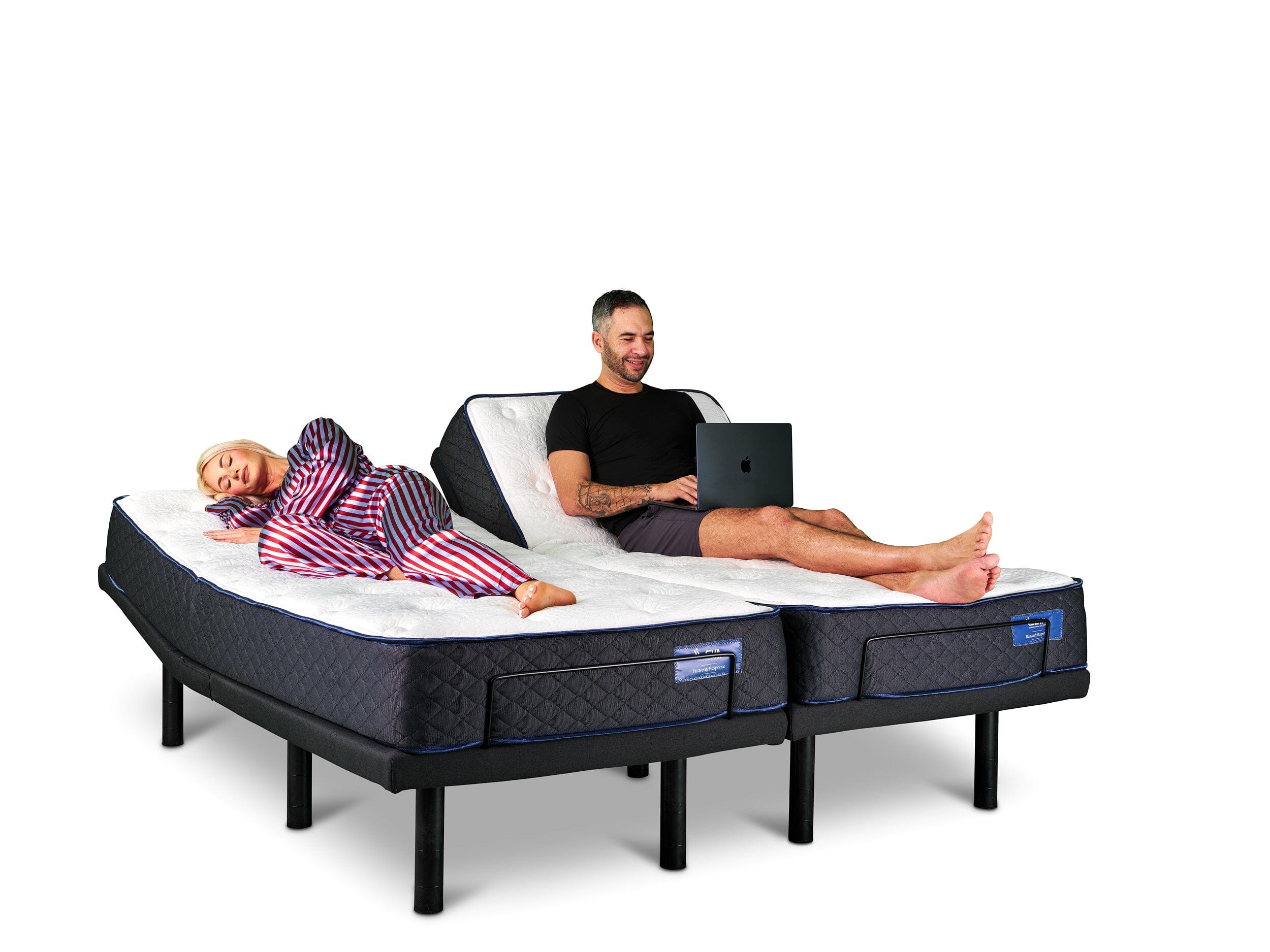
Split adjustable systems, available in Split King and, uniquely through Leva Sleep, Split Queen configurations, place two independent bases side by side. Couples can use a shared mattress designed for splits or two twin XL mattresses. Each side runs on its own motor and controller, so one partner can rest in zero gravity while the other lies flat without transferring motion.
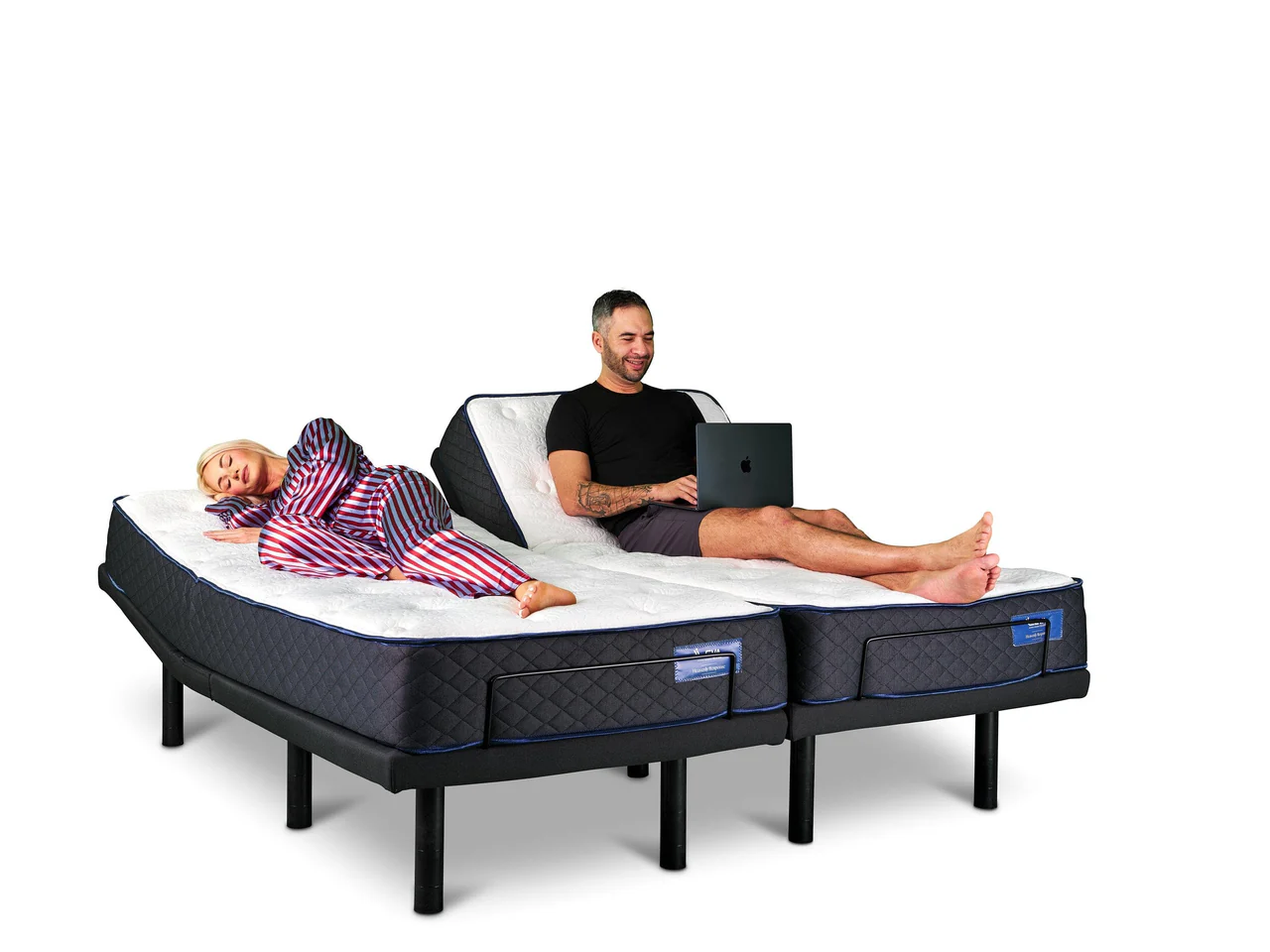
Motor noise often appears as a concern in consumer reviews. Leva Sleep systems use whisper-quiet German motors to reduce the chance that a position change on one side will wake the other partner. Independent app control over Bluetooth lets each sleeper save custom positions and set vibrating alarms that do not disturb their partner. With Leva’s anti-snore mode, the system can make small automatic adjustments when snoring is detected.
Mattress compatibility also matters for couples. Many standard mattresses do not flex cleanly at the head and foot zones. Leva designs its all-foam and hybrid pocket-coil mattresses to articulate with adjustable bases. This design helps prevent bunching and pressure points that can occur when a non-compatible mattress bends on an adjustable frame.
Who Gains the Most from Adjustable Beds
Adults with chronic lower back pain, nighttime acid reflux, positional snoring, leg edema, or a disruptive partner often benefit most from an adjustable base. Couples who disagree on firmness or temperature can gain extra value from split configurations that allow independent settings on each side.
Adjustable bases represent a meaningful investment rather than an impulse purchase. Entry-level split adjustable bed systems start around $700 to $1,515 per side, and premium systems with lumbar control, pillow tilt, and app integration cost more. Setup usually requires a compatible bed frame or platform-style foundation, since many fixed-slat frames do not work with adjustable bases.
Delivery and assembly are more complex than a standard flat mattress. White-glove setup, where technicians handle placement, height adjustments, and a walkthrough of the controls, often proves worth the added fee. People who change sleep positions frequently during the night may prefer a modest elevation rather than a dramatic angle. A trial period or showroom visit remains the most reliable way to judge comfort before committing.
Experience Leva Sleep Adjustable Beds in Person
Visit the La Jolla Leva Sleep showroom or browse adjustable systems online to explore current models and pricing. Take time to test different positions, compare split configurations, and discuss your specific sleep issues with a specialist before you decide.
Frequently Asked Questions
Do adjustable beds actually help with back pain, or is that marketing?
Adjustable beds address one clear contributor to back pain: sustained mechanical load on spinal structures during sleep. Slight elevation of the head and knees can reduce lumbar compression and shift pressure away from the sacroiliac joint. This change does not cure structural spinal conditions, herniated discs, or nerve impingement.
For adults whose back pain worsens when they sleep flat, positional adjustment offers a legitimate, evidence-supported tool. A spine specialist or physical therapist can recommend specific elevation angles for your diagnosis.
Can an adjustable bed replace a CPAP machine for sleep apnea?
An adjustable bed cannot replace a CPAP machine for moderate or severe sleep apnea. Head elevation can help positional and mild-to-moderate obstructive sleep apnea by using gravity to keep the airway more open. For moderate-to-severe sleep apnea, CPAP therapy remains the standard of care.
An adjustable base can complement CPAP use. Some users find that head elevation allows lower pressure settings. It still does not replace a formal sleep study or physician-directed treatment. Anyone with symptoms of sleep apnea should consult a sleep medicine physician before relying on positional therapy alone.
What should couples look for when evaluating a split adjustable base?
Couples should focus on motor noise level, range of positions, mattress compatibility, and delivery and setup quality. Motor noise is best judged in person at a showroom because decibel ratings in product listings rarely follow a standard. The range of positions should include independent head and foot elevation at minimum.
Lumbar support and pillow tilt can provide meaningful upgrades for back pain and snoring. Mattress compatibility requires checking that the mattress flexes at the correct zones without bunching or creating pressure points. Split systems also add complexity during delivery and setup, which makes white-glove installation a practical necessity for many households.
Is a Split Queen adjustable base actually available, or is it a niche product?
Split Queen adjustable bases remain a niche option that most major retailers do not stock. The Split Queen configuration places two 30×80-inch bases side by side inside a standard queen-sized frame. This layout gives couples in smaller bedrooms the independent control of a Split King without requiring a larger room.
Leva Sleep is one of the few providers that builds Split Queen systems to customer specifications. This option can be especially helpful for couples who want independent positioning but cannot fit a king-sized bed.
How long does it take to adjust to sleeping on an adjustable base?
Most users adapt within one to two weeks to sleeping on an adjustable base. The early days involve testing different angles and learning which positions feel comfortable for a full night, not just a short trial. Saving custom positions in an app or remote can speed up this process.
Some people relax into zero gravity immediately. Others prefer a modest 10 to 15 degree head elevation at first and then adjust gradually. Visiting a showroom and spending real time in several positions, rather than lying down for a brief moment, usually shortens the adjustment period after purchase.
Conclusion: How Adjustable Beds Support Better Sleep
Adjustable beds improve sleep quality through five main mechanisms. They reduce spinal load, open the airway, support venous return, ease acid reflux, and distribute weight more evenly in zero-gravity positions. Each mechanism rests on established anatomy and is recognized by major medical organizations as a legitimate non-drug intervention.
For couples, split adjustable systems extend these benefits by letting each partner choose the position their body needs without forcing compromise. The right adjustable base depends on health conditions, partner dynamics, room size, and budget. A physician, physical therapist, or sleep specialist can guide medically appropriate elevation angles.
As discussed earlier, hands-on evaluation remains the most reliable path to the right system. Start your search at Leva Sleep’s La Jolla showroom or compare adjustable bed options online to find a system that fits your needs. With more than 25,000 customers served and a wide range of adjustable models, Leva Sleep offers the focused expertise that a long-term sleep decision deserves.