Written by: Matthew Timmins, Founder and Managing Director, Leva Sleep
Key Takeaways for Post‑Surgery Sleep
- Post-surgery recovery beds work best when they combine three features: a hi-low base for safer transfers, independent head and foot elevation to relieve pressure at surgical sites, and quiet motors with reinforced edges that support movement without strain.
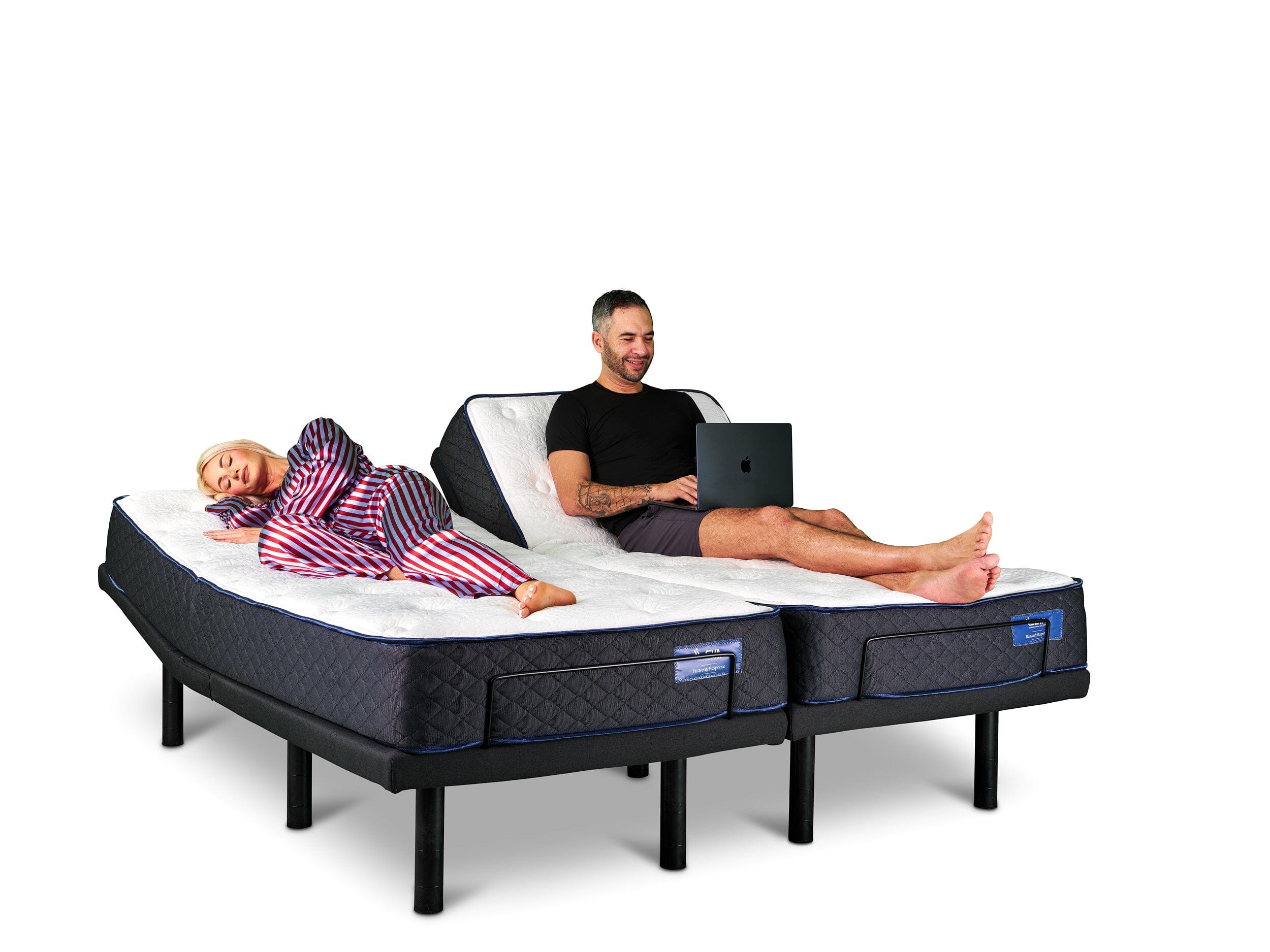
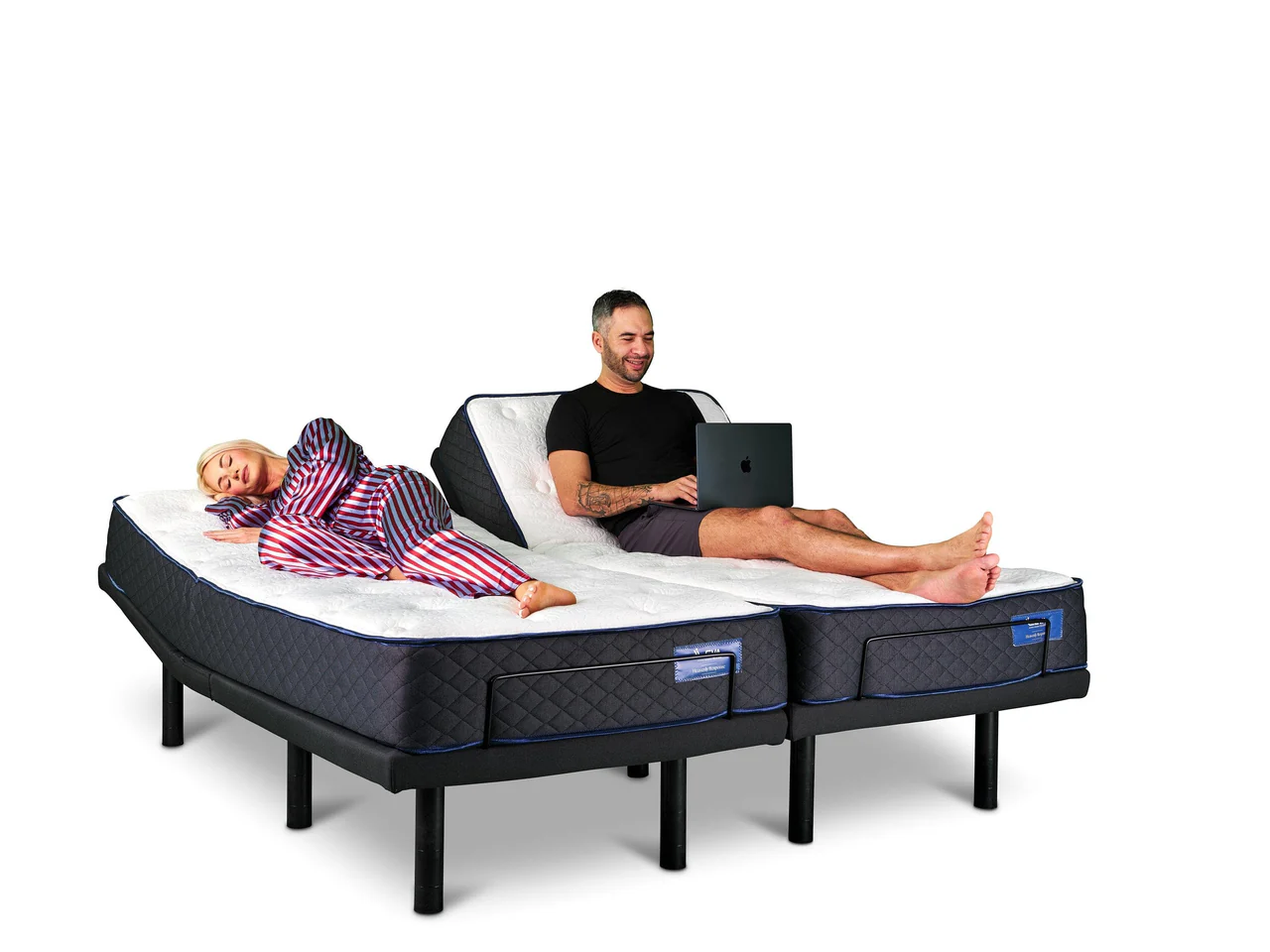
- Split-king and split-queen configurations let one partner maintain surgeon-prescribed angles like zero-gravity or semi-Fowler’s while the other sleeps flat, which prevents motion transfer and avoids separate-bed setups.
- Specific Leva Sleep models support different procedures, including hi-low bases for hip replacement, zero-gravity and lumbar-control options for spinal surgery, and semi-Fowler’s or anti-snore modes for abdominal recovery.
- Key advantages include very quiet German-engineered motors, pricing significantly below many luxury competitors, and surgery-specific bedding that stays in place when the bed elevates.
- Leva Sleep’s split adjustable systems provide medical-grade positioning that supports faster healing and lets couples recover in the same bed; explore split configurations and pricing.
Hip Replacement Recovery Beds
1. Leva Sleep Split King with Hi-Low Base
A floor-to-mattress-top height of about 20–26 inches supports safer post-surgical transfers. At this height, many patients can sit on the edge with feet flat and knees near 90 degrees. Leva Sleep’s Split King hi-low base covers this range with motorized full-platform height adjustment, so the recovering partner can lower the surface for safe exit while the non-surgical partner’s side stays at a preferred height. After posterior-approach hip replacement, many patients are advised to keep hip flexion below 90° for the first 6–8 weeks, and matching the surface to standing knee height helps protect that limit when sitting. Two separate bases provide independent control and eliminate motion transfer, so a partner’s nighttime movement does not disturb the healing side. Quiet German motors keep repositioning discreet during sleep.
2. Leva Sleep Split Queen with Hi-Low Base
Couples in smaller bedrooms can use Leva Sleep’s Split Queen to get the same independent hi-low and head and foot elevation in a more compact footprint, a size that most national retailers do not stock. Elevating the legs on an adjustable base helps blood flow back toward the heart and reduces swelling after knee or hip replacement. The Split Queen allows foot elevation on one side only, so the non-surgical partner can remain flat if preferred. Reinforced edge support on Leva’s paired mattresses creates a stable push-up surface for patients who must roll to the side and use their arms to exit without engaging core muscles.
Spinal Surgery Recovery Beds
Hip replacement recovery focuses on safe transfer height and controlled hip flexion. Spinal surgery recovery focuses more on sustained decompression that reduces pressure on healing vertebrae. The following configurations address those spinal needs.
3. Leva Sleep Zero-Gravity Split King
The zero-gravity position reduces pressure on the lumbar spine and may help during lumbar fusion recovery. The Zero Gravity preset elevates the head and raises the knees, which minimizes spinal compression. On the Split King, the surgical partner can hold this preset while the other side remains flat, so couples avoid the compromises that a single-control base creates.
4. Leva Sleep Lumbar-Control Split King
Leva Sleep’s higher-tier bases include a dedicated lumbar support motor that adjusts the lower back area independently from head or foot elevation. An adjustable base makes transitioning to a seated position easier for spinal patients by raising the head section. This reduces the core engagement that post-fusion protocols often restrict. The Leva Sleep app stores custom positions so patients can return to their surgeon-prescribed angle with a single tap instead of manually re-dialing settings each night.
Abdominal Procedure Recovery Beds
Abdominal procedures introduce different challenges, including incision protection and breathing comfort. These configurations support semi-reclined positions that reduce strain on the abdomen.
5. Leva Sleep Semi-Fowler Split King
A 2020 randomized controlled trial in BMC Anesthesiology found that the semi-Fowler’s position significantly reduced postoperative wound pain after abdominal surgery compared with flat supine positioning. Leva Sleep’s Split King reaches this angle range through independent head elevation. The paired all-foam or hybrid mattress maintains edge integrity so patients can roll and push up without stressing abdominal incisions. Semi-Fowler’s positioning can also improve breathing comfort after abdominal surgery.
6. Leva Sleep Anti-Snore Split Queen (Spring 2026)
Leva Sleep’s spring 2026 anti-snore mode detects snoring through the base and makes small adjustments to the head section to open airways. This feature benefits abdominal surgery patients whose breathing can be affected by post-operative discomfort. The Split Queen format keeps these adjustments on the snoring partner’s side only, which preserves the other partner’s sleep position. At 30–50% below comparable luxury competitors, this configuration delivers medical-grade positioning without the clinical look of a hospital bed.
Comparison Table: 2026 Adjustable Base Configurations for Post-Surgery Recovery
The table below compares how Leva Sleep’s split configurations stack up against medical-grade alternatives in three key areas for post-surgical recovery: elevation range and transfer safety, motor noise during nighttime repositioning, and true split availability for couples.
| Configuration | Elevation Angles & Transfer Safety | Noise Level | Split Availability |
|---|---|---|---|
| Leva Sleep Split King — Hi-Low | Head 0–60°; full-platform hi-low for safe transfer height | Quiet German-engineered motors | Split King; Split Queen available |
| Leva Sleep Split King — Zero Gravity | Head elevated with knees raised in zero-gravity preset | Quiet German-engineered motors | Split King; Split Queen available |
| SonderCare Aura Companion | Hi-lo 20–23 in.; pre-programmed 21 in. transfer position; Zero Gravity, Trendelenburg presets | Quiet motors | Split King (two 39 in. sides); hi-lo synchronized |
| Flexabed Hi-Low SL | Full-platform hi-low 13.25–20.75 in.; optional side rails | Not publicly specified | Single base; no split configuration listed |
See how Leva Sleep’s hi-low and zero-gravity configurations compare to medical-grade alternatives in more detail.
What Kind of Bed Is Best After Surgery?
Post-surgical recovery beds must hold the angles your surgeon recommends and still let you get in and out safely. Five core features determine whether a bed can meet both needs.
- Hi-low adjustable base. A hi-low bed changes the height of the entire sleep surface, which supports safer supervised entry and exit and better caregiver working height for repositioning, dressing, and skin checks.
- Independent head and foot elevation. An adjustable base with independent head and foot elevation is highly recommended for knee replacement recovery to alternate between elevated and flat leg positions without manual pillow stacking, and for shoulder surgery to maintain a semi-reclined 30–45 degree position for 4–6 weeks.
- Reinforced edge support. Reinforced mattress edges are critical for back, spinal, and abdominal surgery patients who must roll to the side and push up with their arms to exit the bed without using core muscles or stressing incisions.
- Split configuration for couples. Two separate bases provide zero motion transfer, so if one partner tosses, turns, or gets up at night, the other feels nothing, which protects post-surgery rest.
- Quiet motors. Loud or jerky motor movement disrupts the light sleep stages that are most vulnerable during recovery. Quiet motors allow nighttime repositioning without waking either partner.
How to Get Comfortable in Bed After Surgery
Comfort after surgery comes from safe transfers, correct angles, and bedding that stays put. These five steps create a simple plan you can follow.
- Match bed height to transfer safety standards. A suitable floor-to-mattress-top height for many adults is often in the 20–25 inch range. This height lets patients sit on the edge with feet flat on the floor and knees at about 90 degrees. Heights outside this range can increase stress on healing joints, incisions, or the spine.
- Use the correct elevation angle for your procedure. For abdominal surgery, target semi-Fowler’s positioning at 30–45 degrees. For spinal fusion, use zero-gravity with both head and foot raised. For hip replacement, sleep on the back with a pillow between the legs and avoid hip flexion beyond 90 degrees.
- Elevate legs correctly. For leg or foot elevation, the foot should sit higher than the knee and the knee higher than the hip. Support belongs under the knee and calf rather than the ankle to avoid heel pressure.
- Prioritize sleep quality. People who achieve adequate quality sleep after surgery often heal faster than those with disrupted rest. Deep sleep releases growth hormones that support tissue regeneration, increase blood flow, and activate immune responses.
- Use surgery-specific bedding. Standard fitted sheets often pull off adjustable bases during elevation. Leva Sleep designs sheets with deep pockets, extra elastic, and duvet clips that maintain separation when each side sits at a different angle, which prevents bedding disruption during recovery.
Conclusion: Matching Medical Needs With Real-World Sleep
Selecting the right bed after surgery means matching two sets of criteria. The first is the surgeon’s positioning orders, such as elevation angle, hip flexion limits, and transfer height. The second is the couple’s shared need to stay in the same bed without one partner’s recovery disrupting the other’s sleep. A flat mattress fails on both counts, since it offers neither therapeutic positioning nor independent control. A single-control adjustable base solves the positioning problem but forces both partners into the same angle, so couples must choose between medical compliance and sleeping together.
Leva Sleep’s split-queen and split-king systems with hi-low adjustability, independent head and foot controls, quiet German motors, and surgery-specific bedding accessories address both requirements at the same competitive pricing mentioned earlier. These systems are also backed by white-glove delivery and professional setup that ensures every component is calibrated before the first night of recovery.
Visit the La Jolla showroom or browse Leva Sleep’s recovery-ready bases online to plan your post-surgery sleep setup.
Frequently Asked Questions
Can a split adjustable bed be used during post-surgical recovery if my partner does not need medical positioning?
A split king or split queen adjustable base is designed for this situation. Each side operates on its own motor and remote, so the recovering partner can hold a surgeon-prescribed elevation angle, such as semi-Fowler’s at 30–45 degrees after abdominal surgery or zero-gravity after spinal fusion, while the non-surgical partner sleeps flat or at any other preferred position. As described earlier in the product sections, the two mattresses on two separate bases also eliminate motion transfer, so a partner’s nighttime movement or position changes do not affect the recovery side. Leva Sleep offers both Split King and the less commonly available Split Queen configuration, which helps couples in smaller bedrooms.
What is the difference between a hi-low adjustable bed and a standard adjustable base for post-surgery use?
A standard adjustable base changes the angle of the head and foot sections but keeps the overall platform at a fixed height. A hi-low adjustable bed raises or lowers the entire sleep surface vertically, which directly supports safer transfers after surgery. When the platform is lowered, a patient can sit on the edge with feet flat on the floor and knees near 90 degrees before standing, which is critical for hip replacement patients who must avoid excessive hip flexion. When raised, the surface brings the patient closer to standing height and reduces the core engagement and spinal flexion that post-abdominal or post-spinal surgery protocols often restrict. Leva Sleep’s hi-low bases combine full-platform height adjustment with independent head and foot elevation, so patients receive both transfer safety and therapeutic positioning in a system that looks like bedroom furniture rather than clinical equipment.
How does Leva Sleep’s pricing compare to medical-grade hospital beds for home recovery?
Dedicated home hospital beds with hi-low functionality, side rails, and clinical positioning presets are priced as medical equipment and often carry significant premiums. Leva Sleep’s split adjustable bases deliver comparable positioning capabilities, including hi-low height adjustment, independent head and foot elevation, zero-gravity and semi-Fowler’s angle ranges, and quiet motors, at significantly lower cost than many luxury sleep competitors, without the institutional aesthetic of a hospital bed. Leva also manages the full experience from design and local assembly through white-glove delivery and setup, so the system arrives calibrated and ready for the first night of recovery instead of requiring self-assembly or a separate technician visit. For couples who need medical-grade positioning during a defined recovery window and also want a long-term bedroom upgrade, Leva Sleep’s systems serve both purposes.
What mattress type works best with an adjustable base for post-surgical recovery?
The mattress must flex repeatedly through elevation angles without developing permanent creases or losing support, which rules out innerspring mattresses with rigid coil systems. All-foam mattresses conform well to elevation angles and provide pressure redistribution at surgical sites. Hybrid mattresses with individually wrapped pocket coils offer more responsive edge support, which matters for patients who must roll to the side and push up with their arms to exit the bed. Leva Sleep designs its mattresses specifically to pair with adjustable bases, offering both all-foam and hybrid pocket-coil options made in the United States. The hybrid option is especially helpful for post-surgical recovery because reinforced edges provide a stable push-up surface without the mattress collapsing under the patient’s weight during transfer.
Is the spring 2026 anti-snore mode relevant for post-surgical recovery patients?
Post-surgical patients often experience disrupted breathing during recovery because of residual anesthesia effects, pain medication, and the challenge of maintaining ideal sleep positioning throughout the night. A partner’s snoring can make this worse. Leva Sleep’s spring 2026 anti-snore mode detects snoring through the base and makes micro-adjustments to the head section of the snoring partner’s side only, gently opening the airway without waking either sleeper. For couples where the non-surgical partner snores, this feature protects the recovering patient’s sleep quality, which directly affects healing speed. For the recovering patient who develops positional snoring due to swelling or medication, the same feature provides automatic correction without requiring manual adjustments in the middle of the night.