Written by: Matthew Timmins, Founder and Managing Director, Leva Sleep
Key Takeaways for Aireloom Owners
- Aireloom mattresses are single-sided and should never be flipped. Rotate them 180 degrees head-to-foot to protect comfort layers and maintain warranty coverage.
- Regular rotation reduces uneven sagging, body impressions, and premature wear, especially for couples or heavier sleepers.
- Rotation frequency ranges from every 3–4 weeks during the first 90 days for couples to every 6 months for single sleepers after the break-in period.
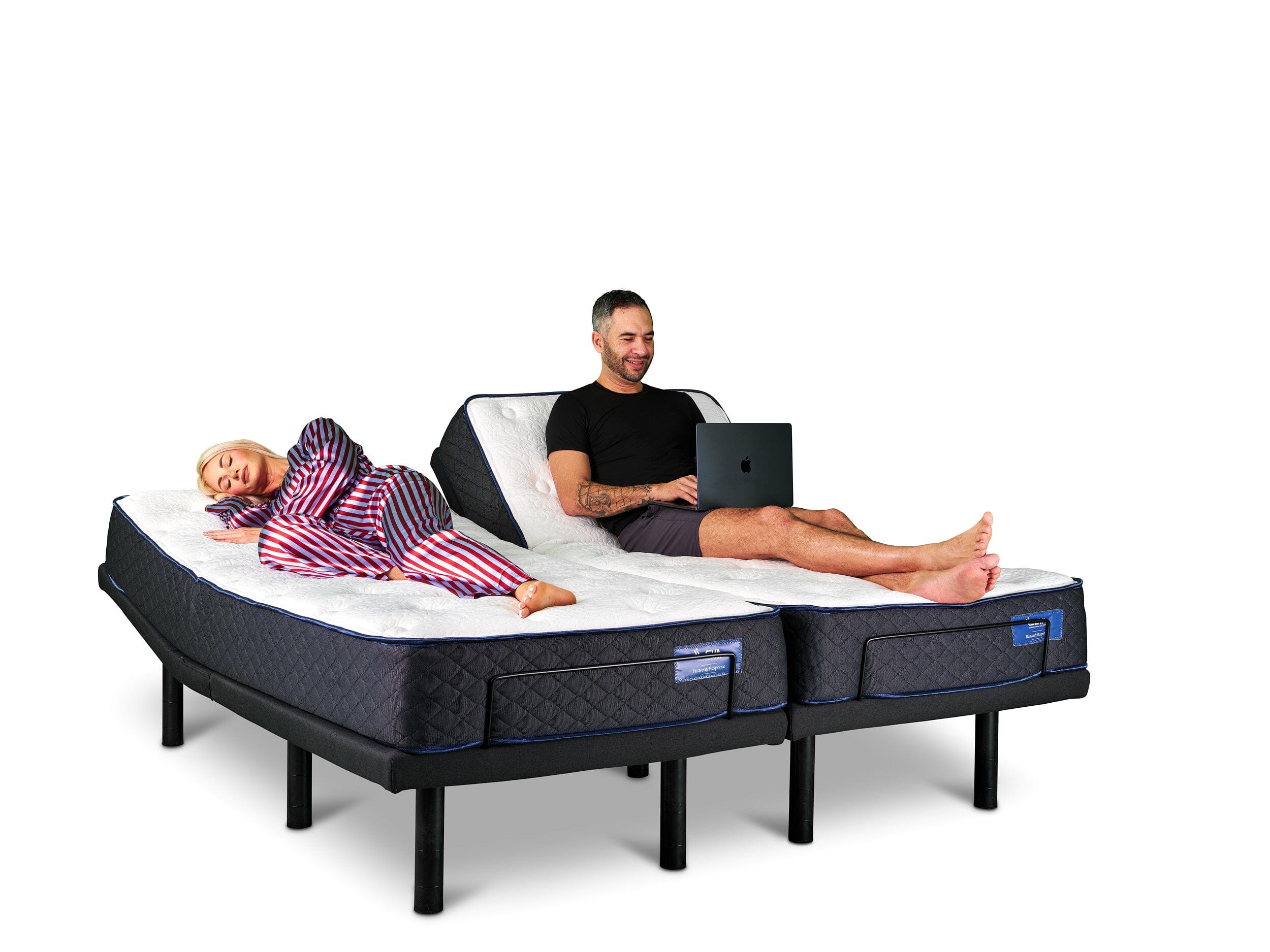
- Rotating on Leva split adjustable bases adds steps such as flattening the base, disengaging retainer bars, and using non-slip mats so the mattress stays aligned and articulates correctly.
- Leva Sleep provides expert guidance and accessories that help couples protect their Aireloom investment. Explore Leva’s complete Aireloom system including premium mattresses and adjustable bases.
Why Aireloom Mattresses Must Be Rotated, Not Flipped
Aireloom mattresses use comfort layers such as hand-tufted upholstery, pocketed coils, and proprietary latex or foam stacked only on the top surface. The underside functions as a structural support base and is not designed for sleeping. Flipping a mattress places the sleeper directly on the support core, which lacks comfort materials and can cause back damage. Rotation, which turns the mattress 180 degrees so the head end moves to the foot of the frame, is the only manufacturer-approved maintenance step for Aireloom mattresses.
The Sleep Foundation recommends rotating most mattresses regularly to maintain support and prevent premature sagging. For Aireloom hybrid and latex models, rotating every few months helps couples share the bed without creating deep, localized impressions.
Why Aireloom Mattresses Need Regular Rotation
Skipping rotation concentrates wear in the same zones night after night. When rotation is neglected, wear builds under the hips and shoulders, which creates body impressions, uneven support, reduced comfort, and a shorter usable lifespan. For couples, two separate body-imprint locations speed up this process on both sides of the mattress at the same time.
Foam and innerspring mattresses often show the biggest firmness changes early in their life cycles. This pattern confirms that the first year of ownership is the highest-risk period for uneven compression. Impressions under 1.5 inches are generally considered normal wear, while impressions of 1.5 inches or greater typically qualify as a warranty-eligible defect under most manufacturer policies, but only when the owner has followed the prescribed rotation schedule. Ignoring rotation can shift a potential defect into the “normal wear” category and remove warranty protection.
Failing to rotate a mattress regularly produces uneven wear that manufacturers do not classify as a defect and that can result in loss of warranty coverage. Consistent 180-degree rotation therefore supports comfort and keeps the mattress in compliance with typical warranty expectations. The natural next step is understanding how often to rotate to meet both goals.
Official Aireloom Rotation Schedule for Singles and Couples
The table below outlines the recommended rotation frequency based on sleeper configuration. Notice that couples require roughly twice the rotation frequency of single sleepers at every stage, and the first 90 days use the most aggressive schedule for all sleepers because materials compress fastest during this break-in period.
| Rotation Frequency | Single Sleeper | Couples on Split Base |
|---|---|---|
| First 90 days (break-in) | Every 6–8 weeks | Every 3–4 weeks |
| Ongoing standard | Every 6 months | Every 3 months |
| Heavier sleeper (115+ kg / 253+ lbs) | Every 3 months | Every 3 months |
Model-specific notes: Some hand-tufted Aireloom models use natural fiber upholstery. Regular head-to-toe rotation helps these comfort layers compress more evenly and reduces the chance of permanent soft spots forming under common pressure points.
The quarterly schedule for couples is easy to forget without a simple system. The checklist below creates a repeatable routine and a basic record that can support a future warranty claim if sagging develops.
- Set a recurring phone reminder on January 1, April 1, July 1, and October 1.
- Link each rotation to a quarterly sheet change so both tasks happen together.
- Mark the current head end of the mattress with a safety pin in a non-visible location to track orientation across rotations.
- Log the date of each rotation in a notes app or on the warranty card so you have documentation.
How to Rotate an Aireloom on Leva Split Adjustable Bases
Rotating a mattress on a split adjustable base involves more steps than rotating on a flat frame. Each half of a Leva split base operates independently, which means the head and foot articulation points, pillow-tilt motors, and retainer bars all need attention before and after the rotation. These mechanical components create stress points in the mattress that make rotation even more critical, because the head articulation point, roughly one-third from the top of the mattress, experiences the most stress from repeated bending every time the base moves.
Rotating every few months moves this high-stress zone toward the foot end and spreads wear across a larger surface area. This pattern helps the mattress maintain a more consistent feel from head to toe over time.
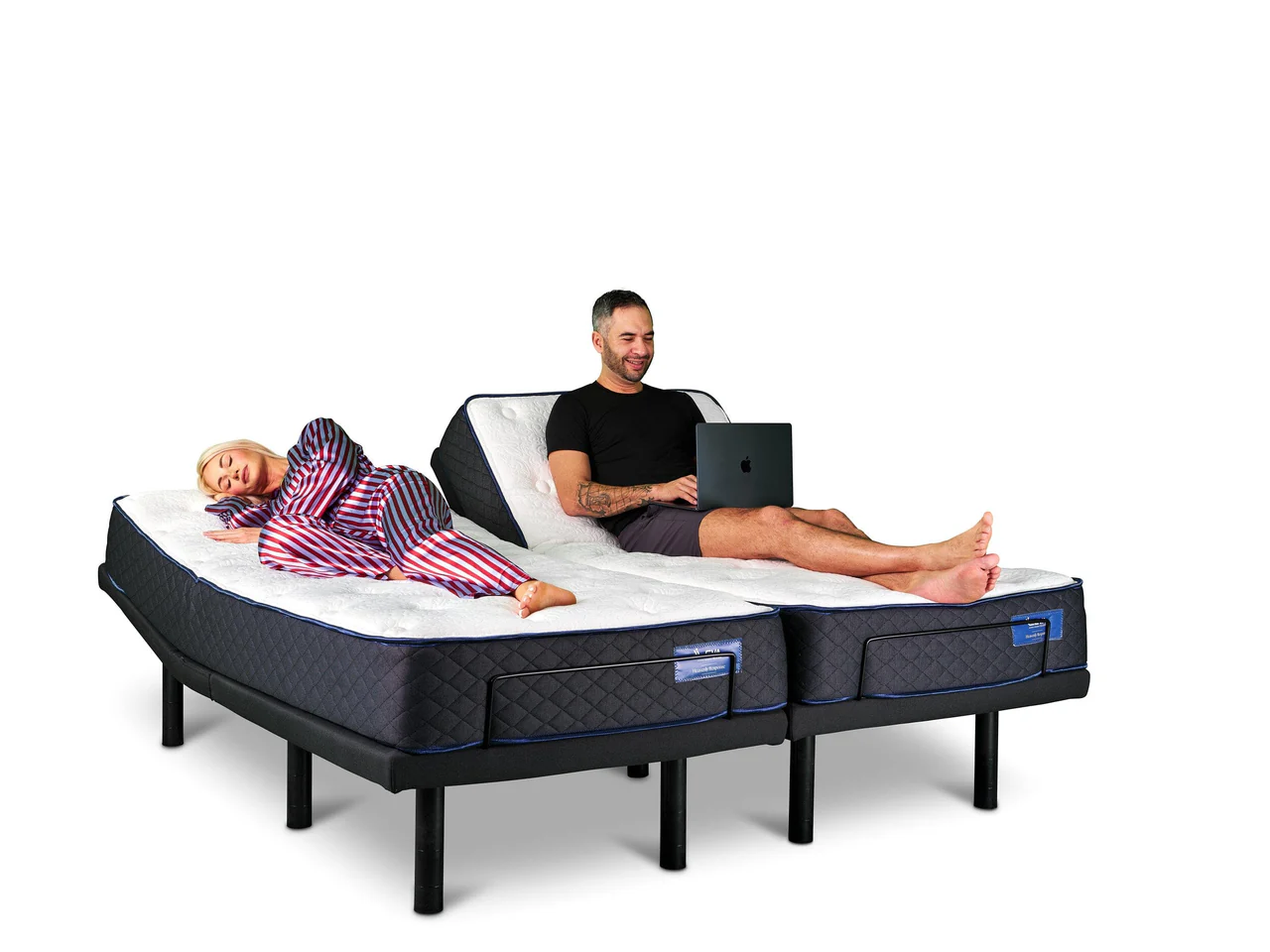
Use this step-by-step rotation procedure for Leva split adjustable bases:
- Use the Leva app or remote to return both base halves to the fully flat position before you begin.
- Disengage or lower any retainer bars at the foot of each base half.
- Strip all bedding from the mattress.
- With one person at the head and one at the foot, slide the mattress slightly toward the foot of the frame to create clearance.
- Rotate the mattress 180 degrees on the horizontal plane. Do not fold, crease, or bend the mattress.
- Re-center the mattress on the base and check that the edges line up with the frame perimeter on both sides.
- Re-engage the retainer bars and confirm the mattress lies flat without unusual shifting.
- Place a non-slip mat ($15–$30) between the mattress and base surface if the mattress slides toward the foot when the head is elevated.
- Test both base halves through a full elevation cycle to confirm the mattress articulates correctly in its new orientation.
White-glove tip: Leva’s delivery team sets retainer bars and non-slip underlays during initial setup. If the mattress has shifted noticeably since installation, contact Leva’s service team to schedule a base inspection and retainer bar adjustment before your next rotation.
Warranty Rules and First-90-Day Rotation Priorities
Many mattress warranties include specific rotation requirements. Missing these requirements can affect coverage for body impressions, while following the schedule can support a claim if sagging appears. Keeping a simple log of rotation dates gives you clear evidence of compliance if you ever need to file a warranty request.
The first few months represent a high-risk period for uneven compression because foam and fiber materials compress fastest during this break-in window. For couples, this risk doubles, since two bodies create two distinct compression zones at the same time. This is why the rotation schedule for couples on a Leva split base increases to every 3–4 weeks during the first 90 days, which spreads the combined body weight across the full surface before any single zone can develop a permanent impression.
Actions that can void Aireloom warranty coverage include using an unsupported or sagging foundation that causes the mattress to behave as if it is failing. Matching the mattress with a suitable, well-maintained base is therefore as important as rotation.
Troubleshooting: When Rotation Alone Is Not Enough
Some common complaints from Aireloom owners on adjustable bases point to issues that rotation cannot fully correct once damage has occurred.
“My side is sagging but my partner’s side is fine.” A significant weight difference between partners accelerates compression on the heavier side and creates uneven wear even when you follow the standard schedule. If one sleeper is much heavier than the other, increase rotation frequency to every few months to slow this pattern. If the impression has reached the warranty threshold mentioned earlier, contact Leva to initiate a warranty review because rotation alone will not reverse the damage.
“The mattress keeps sliding toward the foot when I elevate the head.” All-foam mattresses usually grip better than smooth-bottom pocket coil mattresses on adjustable bases. A non-slip mat or a properly installed retainer bar resolves most sliding issues. Leva’s service team can inspect the base and adjust the retainer bar during a follow-up visit if sliding continues.
“Rotation isn’t fixing the dip I already have.” Rotation helps prevent body impressions and sagging but cannot repair materials that have already broken down. If the impression is visible and measures at or beyond the warranty threshold without weight applied, the mattress may qualify for a warranty replacement. Contact Leva Sleep for a professional assessment rather than continuing to rotate a damaged mattress.
Frequently Asked Questions
Should you flip or rotate an Aireloom mattress?
Aireloom mattresses should be rotated 180 degrees head-to-foot and should not be flipped. The opening section explains why the underside functions as a structural support base without comfort materials. Follow the rotation guidance there and use rotation as your primary maintenance step.
How often do Aireloom mattresses need to be rotated?
Follow the schedule outlined in the rotation frequency table. Couples should rotate every 3 months after the break-in period, while single sleepers can rotate every 6 months. During the first 90 days, more frequent rotation helps the comfort layers break in evenly before any single zone develops a permanent impression, and heavier sleepers should keep to the more frequent schedule shown.
Does rotating an Aireloom mattress affect the warranty?
A consistent rotation schedule supports warranty coverage. Most premium mattress warranties expect owners to rotate on a documented schedule, and skipping this step can cause a body impression to be treated as normal wear instead of a defect. Keeping a log of each rotation date, including month and year, provides documentation if a claim becomes necessary. Using the mattress on an unsupported foundation or ignoring rotation are common reasons warranty claims are denied.
Can I rotate an Aireloom mattress on a split adjustable base by myself?
Rotating a mattress on a split adjustable base is usually a two-person task because most Aireloom models are heavy due to their pocketed coil and upholstery construction. Both base halves must return to the fully flat position before you start. Retainer bars at the foot of each base half should be disengaged, and a non-slip mat should be added if sliding is a recurring issue. If the mattress is too heavy to move safely, Leva Sleep’s service team can assist during a scheduled maintenance visit.
What are the signs that an Aireloom mattress needs more frequent rotation?
Visible body impressions forming within the first six months, a clear difference in firmness between the head and foot zones, or one partner’s side softening faster than the other all signal that the current rotation interval is too long. Couples with a significant weight difference, or those who sleep in the same position every night, usually benefit from rotating more often. A mattress that feels noticeably softer in the center third, which is the primary articulation zone on an adjustable base, should be rotated immediately and inspected for warranty eligibility if it has reached the threshold mentioned earlier.
Conclusion: Protect Your Aireloom Investment with Leva Sleep
Aireloom mattresses represent a significant investment in sleep quality, and following the rotation schedule outlined earlier is the most effective step couples can take to protect that investment. Never flip an Aireloom model and focus on 180-degree rotation instead. Document every rotation and address sliding or impression issues early so they do not grow into warranty complications.
As a retailer that sells Aireloom products, Leva Sleep offers a complete system that includes premium mattresses, whisper-quiet split adjustable bases, and white-glove setup that typical mattress retailers rarely match. With 15 to 20 adjustable base models and purpose-built accessories designed for articulating frames, Leva provides the expertise and hardware that make long-term Aireloom care straightforward for couples.
Explore Leva’s complete Aireloom collection and adjustable base options designed for couples.