
Written by: Matthew Timmins, Founder and Managing Director, Leva Sleep
Key Takeaways for Snoring Couples
- Snoring affects both partners and often pushes couples toward “sleep divorce” when they do not find a workable solution.
- ZQuiet, SnoreRx, and VitalSleep are mandibular advancement devices with different comfort levels and side effects like jaw soreness and drooling that can disturb partners.
- Mouth breathers and couples who prioritize intimacy often struggle with mouthpieces because of fit issues, discomfort, and long-term compliance.
- Positional therapy through head elevation offers a non-invasive, device-free alternative that reduces snoring without adding new disruptions.
- Leva Sleep’s split adjustable bases with 2026 anti-snore mode provide an automatic, quiet solution, and you can shop now at Leva Sleep to help both partners stay in one bed.
The Problem: How Snoring Strains Both Sleep and Relationships
Snoring occurs when airflow through the mouth or nose becomes partially obstructed during sleep, which causes tissue vibration. The sound is the most obvious disruption, yet the impact reaches much further. The non-snoring partner often experiences fragmented sleep cycles, less time in restorative deep sleep, and growing daytime fatigue. Over months and years, this pattern strains communication, intimacy, and patience, and many couples eventually choose what sleep professionals call “sleep divorce,” or sleeping in separate rooms.
Mouthpiece solutions aim to address snoring at the source by repositioning the jaw or tongue to open the airway. For the wearer, this approach can reduce snoring frequency and intensity. For the partner, the experience often feels more complicated. A mouthpiece that causes the wearer to drool, grind, or shift uncomfortably throughout the night introduces a new category of disruption that most product reviews do not cover. Understanding these trade-offs works best when you look closely at the most commonly recommended devices and how their design affects both partners.
ZQuiet, SnoreRx, and VitalSleep: Comparison Focused on Couples
These three mouthpieces represent the mandibular advancement device (MAD) category, which holds the lower jaw slightly forward to reduce airway collapse. Each device differs in adjustability, fit customization, and the side effects most often reported by wearers and their partners.
- ZQuiet: A ready-to-wear, non-custom MAD with two size options that offer different levels of jaw advancement. It does not require boil-and-bite fitting. Available on Amazon and direct. Commonly reported wearer side effects include jaw soreness and excess salivation, especially during the first two weeks. Because it holds the mouth in a slightly open position with the lips together, it is less suitable for mouth breathers who need more open airflow.
- SnoreRx: A boil-and-bite MAD with calibrated jaw advancement in 1 mm increments. This greater customization usually creates a more secure fit, although the fitting process requires patience and careful adjustment. Wearers often report less initial soreness than with non-custom devices, yet drooling remains a frequent early complaint.
- VitalSleep: A boil-and-bite MAD with a hex-key adjustment mechanism and a breathing hole in the front designed to help mouth breathers. The front opening makes it a more realistic option for people who cannot breathe comfortably through the nose alone, although the opening does not fully match the feel of unrestricted mouth breathing.
| Device | Comfort for Wearer | Impact on Partner | Ease for Mouth Breathers |
|---|---|---|---|
| ZQuiet | Moderate; jaw soreness and drooling common in early use; no custom fit | Drooling and restlessness can create new nighttime disturbances for the partner | Low; closed-mouth design limits airflow for mouth breathers |
| SnoreRx | Better fit via boil-and-bite; calibrated advancement reduces over-extension | Improved fit reduces restlessness, but drooling and jaw shifting still occur | Low to moderate; no dedicated airway opening |
| VitalSleep | Boil-and-bite with front breathing hole; adjustable jaw position | Front opening may reduce mouth-breathing noise; wearer comfort generally higher | Moderate; front hole helps but does not fully replicate open-mouth breathing |
When you evaluate any of these devices, focus on how the wearer sleeps during the first two to four weeks. Jaw soreness, drooling, and device removal during the night are the factors most likely to create secondary disruptions for the non-snoring partner, and most product reviews do not discuss these issues in depth.
ZQuiet and Mouth Breathers: What Couples Need to Know
ZQuiet holds the lower jaw forward with the lips closed, which restricts the oral airway opening that mouth breathers rely on. Users who depend on mouth breathing during sleep, whether from nasal congestion, a deviated septum, or long-term habit, often report that ZQuiet causes them to wake up gasping or to remove the device unconsciously during the night. Community threads on Reddit’s r/sleep describe this pattern consistently. VitalSleep’s front breathing port makes it the more commonly recommended MAD for mouth breathers in this group, although neither device corrects the underlying airway restriction that drives mouth breathing.
Jaw Soreness and Its Ripple Effect on Partners
Jaw soreness from MAD use starts as a wearer-side effect, yet its consequences quickly reach the partner. A sore jaw often causes the wearer to shift positions more frequently, remove the device mid-sleep, or vocalize discomfort. As mentioned earlier, these adjustment-period behaviors can wake the partner and fragment their sleep. Additionally, when jaw soreness leads the wearer to abandon the device after a few weeks, a common outcome, the couple returns to the original snoring problem without addressing its root cause. The partner, who may have tolerated weeks of disruption, ends up with no lasting benefit. Trustpilot reviews for ZQuiet include recurring mentions of this abandonment pattern.
Five Real-World Couple Scenarios
- Scenario 1: The Light Sleeper Partner. One partner snores moderately, and the other wakes at the slightest sound. A mouthpiece reduces snoring volume, yet the wearer’s drooling and repositioning still trigger awakenings. Positional therapy that quiets snoring at the source without adding new movement usually fits this couple better.
- Scenario 2: The Mouth Breather Snorer. The snoring partner cannot breathe through the nose because of chronic congestion. ZQuiet and SnoreRx often feel poorly suited, while VitalSleep offers partial relief. Head elevation with an adjustable base opens the airway without forcing a change in breathing mode.
- Scenario 3: The Intimacy-Conscious Couple. Both partners feel that mouthpiece wear reduces closeness and comfort. A device-free solution that works silently and automatically supports both physical comfort and relational intimacy.
- Scenario 4: The Compliance-Challenged Wearer. The snoring partner keeps removing the mouthpiece during sleep, which cancels its benefit. An adjustable base with automatic anti-snore positioning removes the need for conscious nightly compliance.
- Scenario 5: The Couple Near Sleep Divorce. Snoring has reached the point where separate rooms are on the table. A split adjustable base with independent controls allows both partners to stay in the same bed with personalized elevation settings that address snoring without separation.
Positional Therapy: Elevating the Head Instead of Wearing a Device
Positional therapy for snoring relies on the well-established principle that sleeping with the head and upper body slightly elevated reduces the gravitational collapse of soft tissue into the airway. Unlike MADs, positional therapy does not require a device in the mouth, a fitting process, or a nightly ritual of inserting and removing hardware. Both partners benefit at the same time. The snoring partner experiences less airway obstruction, and the non-snoring partner avoids the secondary disruptions that mouthpieces can create. SleepApnea.org describes positional therapy as a recognized approach for positional snorers and some cases of mild obstructive sleep apnea.
Leva Sleep Split Adjustable Bases for Shared-Bed Snoring Relief
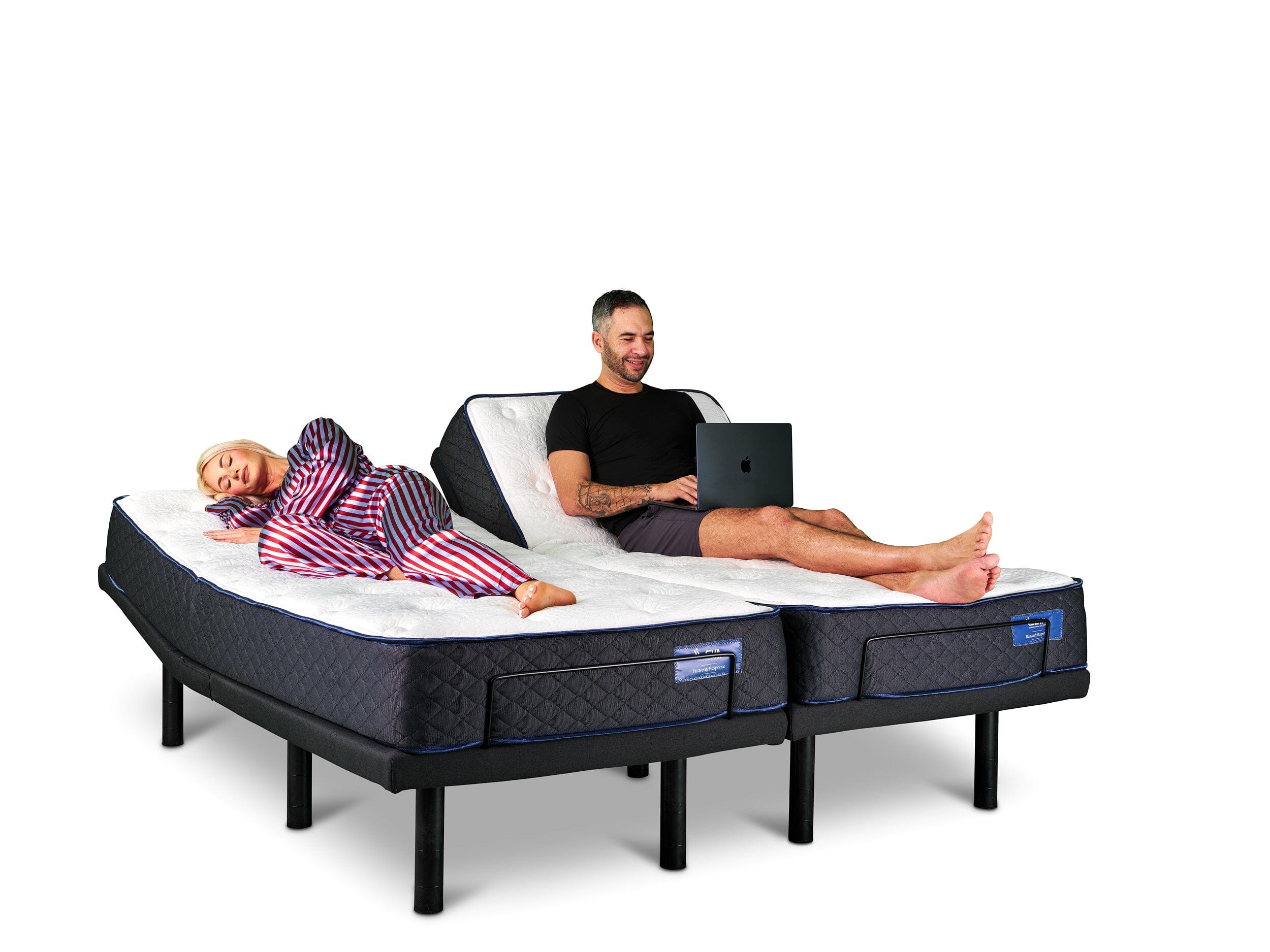
Leva Sleep’s split adjustable bases are built for couples who share a bed but have different sleep needs. Available in Split King and Split Queen configurations, each side of the base operates independently. One partner can elevate the head for snoring relief while the other keeps a flat or preferred position. Whisper-quiet German motors keep adjustments, whether manual or automatic, from adding mechanical noise that often disrupts sleep with lower-grade adjustable bases.
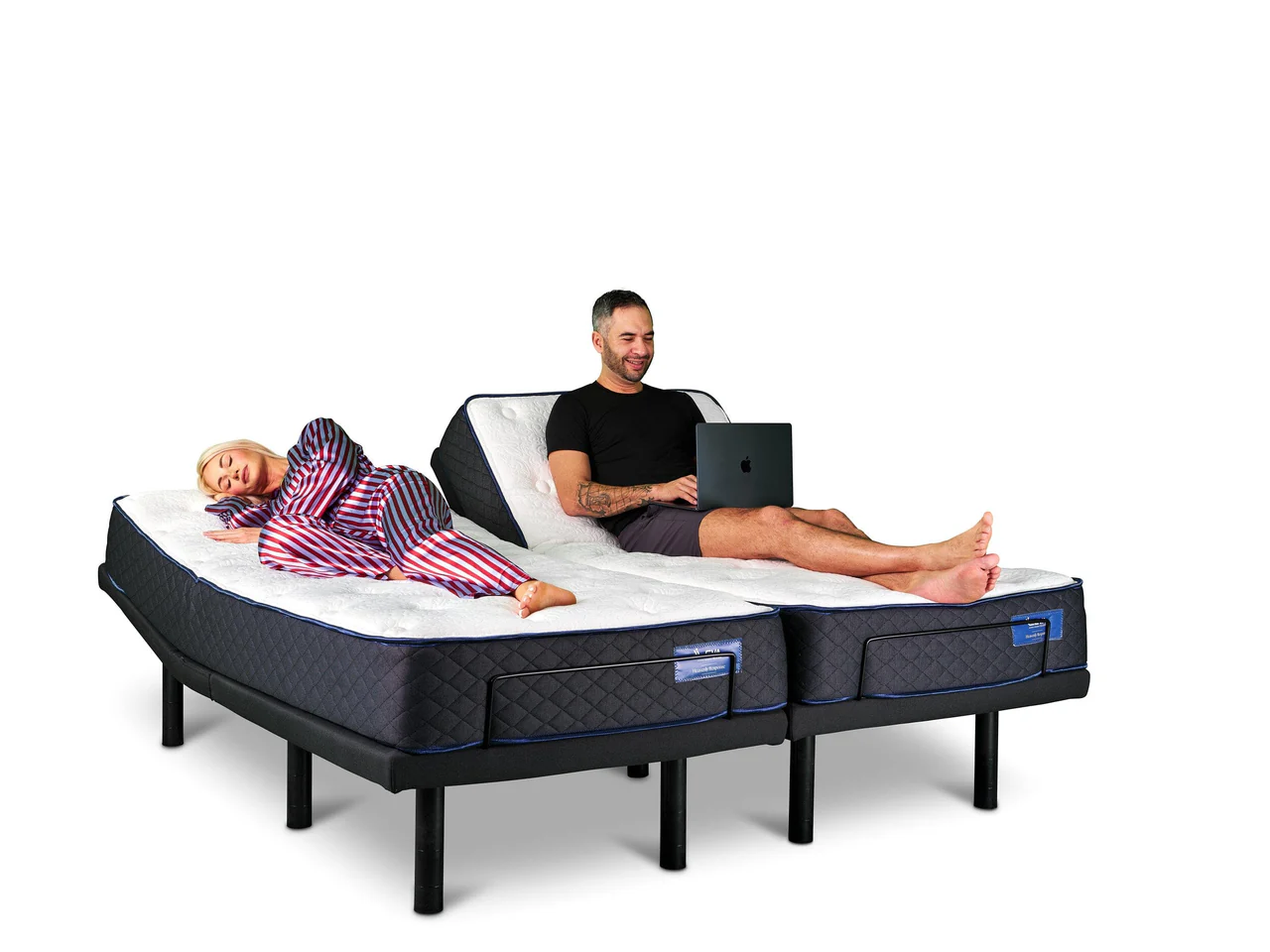
Leva’s spring 2026 anti-snore mode advances positional therapy by automating it. The system detects snoring through the base and then makes small, targeted changes to the head elevation on the snoring partner’s side. These changes occur without waking the wearer or asking them to press a button. The non-snoring partner’s side stays at their chosen position. All settings run through the Leva Sleep app, which also supports custom sleep positions, vibrating alarms, and AI-powered sleep tracking for ongoing refinement.
One practical challenge with any adjustable base involves keeping bedding in place during elevation changes. Leva addresses this with specialized bedding, including fitted sheets with deep pockets and extra elastic, duvet clips, and mattress protectors. These pieces work with elevated base positions and help prevent sheets from pulling loose during the night.
Decision Guide: When to Choose a Mouthpiece vs Positional Therapy
Use these criteria to match your situation with the right approach:
- Choose a mouthpiece if snoring is mild, the wearer breathes comfortably through the nose, the wearer has no history of TMJ issues, and the partner sleeps deeply enough that short-term side effects are unlikely to wake them.
- Choose positional therapy with an adjustable base if the snoring partner is a mouth breather, either partner has jaw or dental concerns, mouthpiece compliance has failed in the past, the couple wants to stay in the same bed, or snoring has started to strain the relationship.
- Consult a sleep specialist if snoring comes with gasping, observed apnea events, or heavy daytime sleepiness, because these signs may point to obstructive sleep apnea that needs clinical evaluation beyond mouthpieces or positional therapy alone.
Frequently Asked Questions
Which is better for couples, SnoreRx or ZQuiet?
SnoreRx and ZQuiet both use mandibular advancement to reduce snoring, yet they differ in fit and adjustability. ZQuiet requires no fitting process, so couples can test it quickly, but its one-size design may not hold the jaw at the ideal angle for every user. SnoreRx offers boil-and-bite customization and 1 mm incremental adjustment, which usually creates a more precise fit and better long-term comfort. For couples, the key issue is which device the snoring partner will wear consistently without creating new disturbances. SnoreRx’s more tailored fit often leads to fewer mid-night removals and less restless repositioning, which helps both partners.
Does ZQuiet really stop snoring?
ZQuiet can reduce snoring for users whose snoring comes from the tongue or soft palate partially blocking the airway during sleep. By holding the lower jaw forward, it creates more space in the throat and reduces tissue vibration. It does not work for every snorer. People whose snoring stems from nasal obstruction, or who rely on mouth breathing, often see limited benefit. Consistent nightly use also matters, and that can be difficult when jaw soreness and drooling appear during the first several weeks. ZQuiet does not address the positional side of snoring, so some users report better results when they combine it with head elevation.
What is the highest rated anti-snoring mouthpiece for couples?
No single mouthpiece ranks highest for all couples because the most effective device depends on the snoring partner’s anatomy, breathing pattern, and tolerance for the adjustment period, along with the non-snoring partner’s sensitivity to secondary disruptions. Among the three devices discussed here, VitalSleep’s front breathing port makes it more accommodating for mouth breathers, which describes many snorers. SnoreRx’s adjustability makes a comfortable long-term fit more likely. Couples should focus on the device the snoring partner can wear every night without significant discomfort, because an abandoned mouthpiece offers no benefit to either person.
Can positional therapy replace mouthpieces long-term?
For positional snorers, whose snoring worsens when lying flat and improves with head elevation, positional therapy with an adjustable base can serve as a long-term primary solution without any device in the mouth. It requires no nightly compliance ritual, causes no jaw soreness or drooling, and supports both partners at once. For snorers with more complex airway anatomy or diagnosed obstructive sleep apnea, positional therapy works best as a complement to medical treatment rather than a full replacement. Leva Sleep’s split adjustable bases with the 2026 anti-snore mode focus on couples where positional snoring is the main issue and a device-free, shared-bed solution is the goal.
Conclusion: Choosing a Snoring Solution That Works for Both Partners
ZQuiet, SnoreRx, and VitalSleep each offer a path to reduced snoring for the right wearer under the right conditions. For couples, the evaluation must include both people. Jaw soreness, drooling, mid-night device removal, and the daily effort of mouthpiece use all affect the partner who shares the bed. When these secondary disruptions outweigh the benefit of quieter breathing, or when the snoring partner is a mouth breather or struggles with compliance, mouthpieces often fall short for the couple as a unit.
Leva Sleep’s split adjustable bases, with the automatic anti-snore mode launching this spring, provide a device-free alternative that addresses snoring through body position. This approach does not ask either partner to wear anything, endure a difficult adjustment period, or sleep in separate rooms.
Transform your sleep with Leva Sleep by visiting the La Jolla showroom or shopping online today.