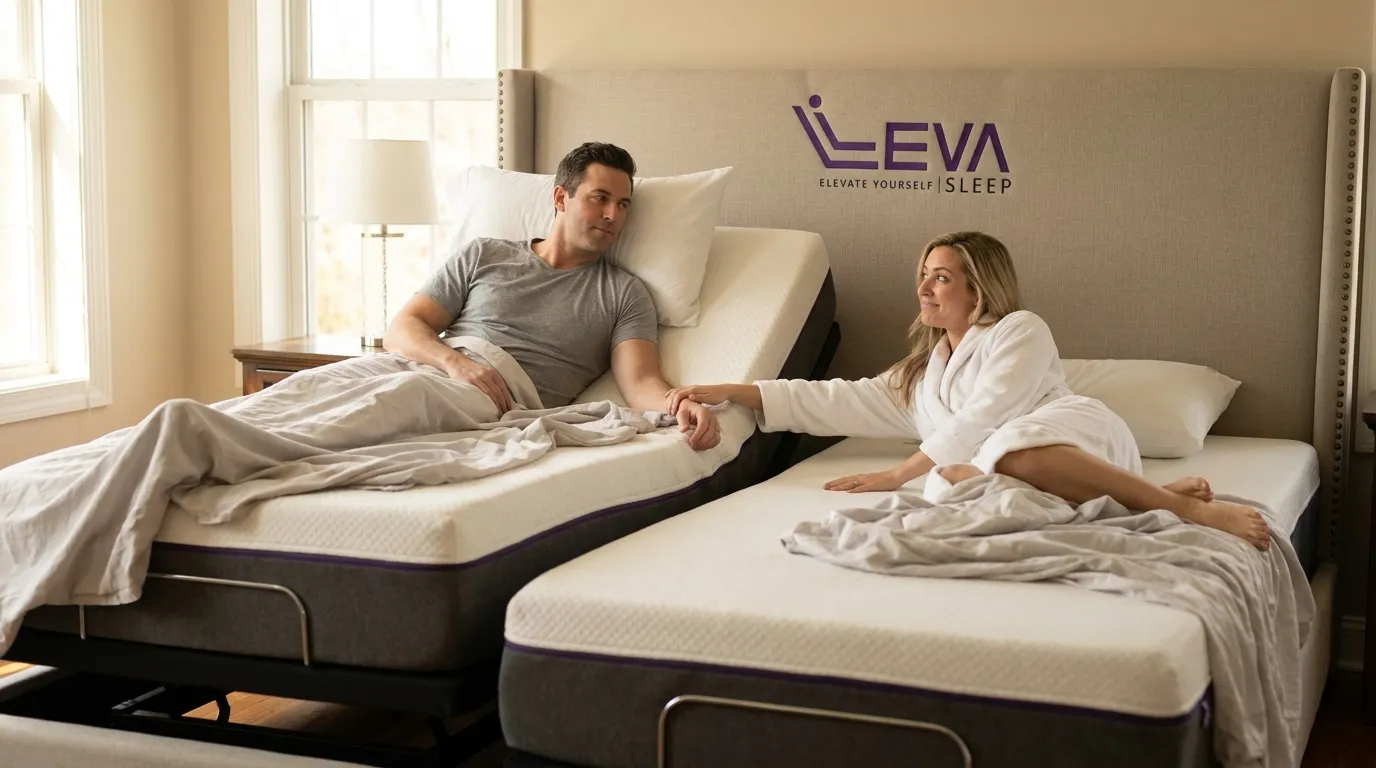
Written by: Matthew Timmins, Founder and Managing Director, Leva Sleep
Key Takeaways for Couples Sharing a Split King
- Split king adjustable beds give each partner independent comfort but often create a center gap that disrupts physical closeness.
- Common complaints include mattress drift, sheet slippage, motor noise, and ongoing maintenance that can affect long-term satisfaction.
- Practical solutions like foam bridge connectors, grip pads, specialized bedding, and quiet motors reduce these issues while preserving adjustability.
- Premium engineering features such as rigid connector rails and whisper-quiet motors address complaints at the source instead of relying only on add-ons.
- Leva Sleep offers purpose-built split king systems with integrated solutions and white-glove service to help couples maintain both comfort and closeness. Explore their split king collection.
Evaluating Complaints by Impact on Intimacy
-
The Center Gap
“The split between the beds creates a gap that prevents us from getting close at all. It's only been two months and it's negatively affecting our marriage.” — Reddit user on r/nectarsleep
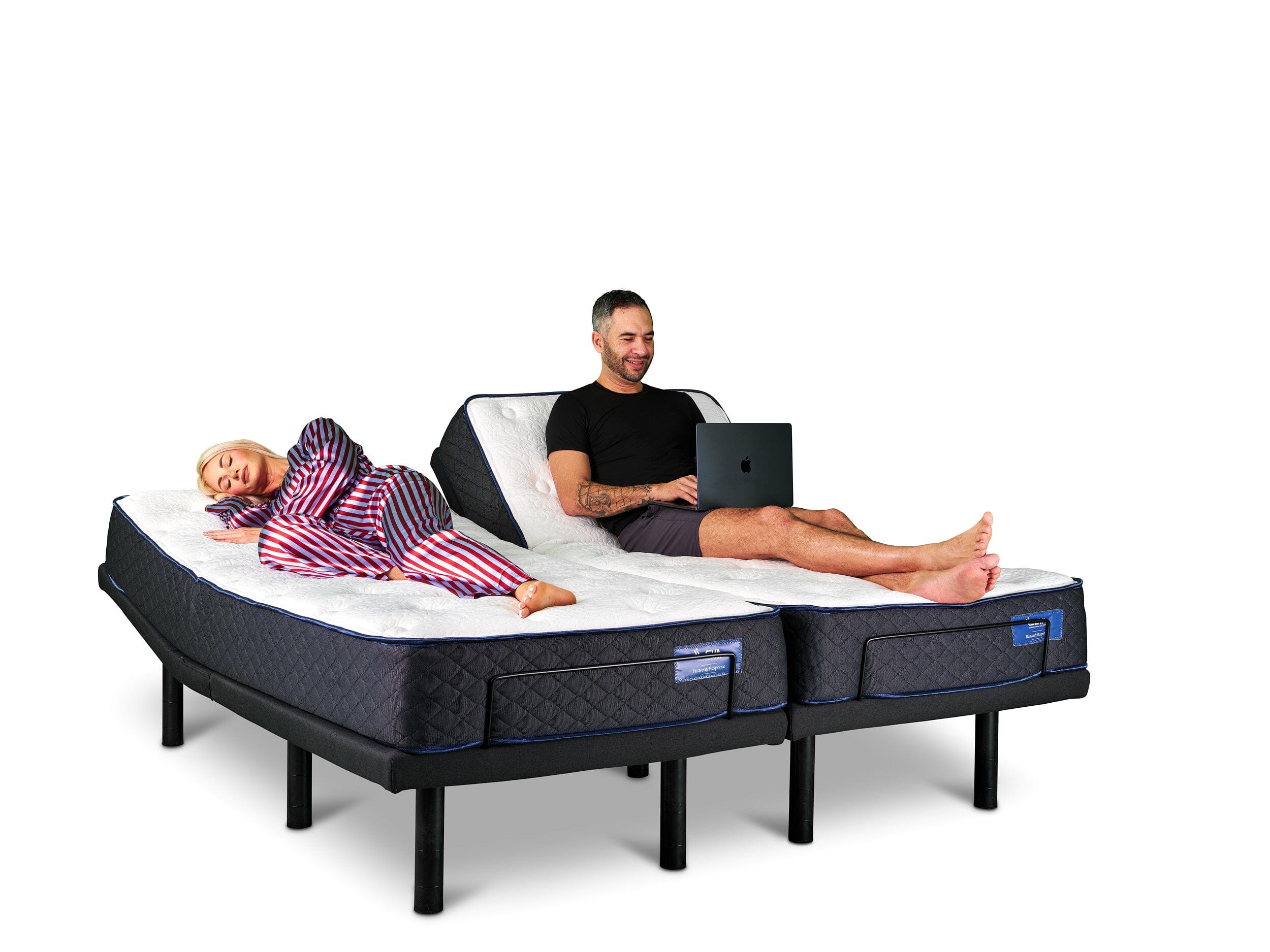
The center gap is frequently cited as a top concern for intimacy, with industry professionals describing the 2–4 inch gap as the single biggest complaint and 60% of couples finding it intolerable for maintaining physical closeness. This gap becomes even more problematic during use because the two Twin XL mattresses flex and bend separately when bases articulate independently, pulling apart as each side adjusts.
Practical fixes include:
- A removable foam bridge connector (2–3 inches wide, full bed length, attaching with straps or Velcro)
- A 3-inch-or-thicker king-sized mattress topper spanning both halves
- An adjustable base with a rigid connector rail system that keeps lateral drift consistent
A foam bridge connector is especially effective for side sleepers who share the center of the bed, because the gap is more noticeable for side sleepers than for back sleepers. Leva Sleep's purpose-built connecting straps and integrated base designs address this at the engineering level instead of relying solely on aftermarket accessories.
Mattress Drift and Sliding
“The mattresses tend to shift side to side over weeks of use, requiring monthly realignment.” — owner reports on split king frames
Mattress movement is more pronounced on split king setups because each side moves independently, which increases the lateral forces that push mattresses apart. When the head or foot section rises, gravity pulls the mattress toward the floor, causing it to slide away from the backrest.
The most effective fix combines a rubber grip pad between the mattress and base with a retainer bar at the foot end. This pairing resolves most sliding cases at a total cost of $50–$120. Memory foam and latex mattresses also grip adjustable foundations better than innerspring models because of their weight and surface texture. Leva Sleep's mattresses, including all-foam and hybrid pocket coil models, are engineered specifically for adjustable base compatibility, which reduces drift from the first night.
Sheet Slippage
“It is one of those practical details people do not think about until the first night.” — Talia, showroom specialist at Mattress Miracle
Raising the head or foot section bends the mattress and pulls sheets from the corners, and standard sheets almost always pop off at the foot corners when the foot is elevated. A single king fitted sheet bunches at the center seam because it is designed for one continuous surface, not two articulating Twin XL mattresses.
The correct bedding approach uses two Twin XL fitted sheets with full-perimeter elastic and deep pockets (15–21 inches), paired with a single king flat sheet or duvet cover on top. Full-perimeter elastic maintains grip when the mattress flexes, while corner-only elastic fails because tension is applied at only four points. Leva Sleep designs its fitted sheets with extra elastic and deep pockets specifically for adjustable bases, which removes the need for improvised solutions.
Motor Noise
“No one wants to be disturbed by loud whirring or clanking when adjusting the bed, especially if your partner makes small tweaks to their side.” — Sleepopolis lab testing
Research suggests that intermittent noise events can disrupt deep slow-wave sleep and REM sleep when they occur regularly throughout the night. Budget adjustable bases frequently exceed this threshold. Premium brands produce noticeably quieter motors than budget options, with price directly correlating to reduced noise levels.
The ideal noise level for an adjustable base motor is below 45 dBA, comparable to gentle rainfall, and many premium bases operate in the 35–40 dBA range. Leva Sleep's whisper-quiet German motors are engineered to operate within this range, so a partner adjusting their side at 2 a.m. does not become a sleep disturbance. App-based micro-adjustments further reduce the need for manual repositioning during the night.
Maintenance and Setup Complexity
Beyond the immediate concerns of noise and movement, split king systems introduce a longer-term challenge: ongoing maintenance. Split king systems require periodic attention, including checking power cords and sync cables, dusting motors, applying silicone lubricant to pivot points if squeaking develops, and realigning the two bases after extended use. Each of these tasks is minor in isolation, but their cumulative frequency creates an ongoing maintenance burden that erodes satisfaction over time, especially for couples who expected a plug-and-sleep experience.
The most effective mitigation is professional setup from the outset. Leva Sleep's white-glove delivery service includes trained professionals who handle assembly, leg-height adjustment, product tutorials, and real-time calibration, which removes the guesswork that leads to long-term mechanical issues. Proper initial alignment significantly reduces the frequency of subsequent maintenance.
Gap Solutions Compared for Real-World Use
The table below compares the three most common gap solutions by their effectiveness, impact on adjustability, and cost. This overview helps you choose an approach that balances closeness with independent comfort.
Solution Gap Addressed Effect on Independent Adjustability Typical Cost Foam bridge connector (2–3 in. wide, full length, strap/Velcro attachment) Fills center gap; removable for full independent use None when removed; minimal when installed $30–$60 King-sized mattress topper (3 in.+ thick, spanning both halves) Bridges gap; works best in zero-gravity or TV-watching positions Moderate, limits radically different nightly positions Varies by material; typically $80–$300+ Integrated base with rigid connector rail system Minimizes lateral drift; keeps gap consistent rather than widening None, each side still articulates independently Included in premium base price Any solution substantial enough to fully eliminate the gap limits the independent adjustability that makes split kings valuable, so the practical goal is minimizing the gap to a level couples find acceptable rather than eliminating it entirely. An integrated base with a connector rail system addresses drift at the engineering level and pairs most effectively with a removable foam bridge for couples who want the option of a unified surface.
When Split King Fixes Are Not Enough: Considering a Split Queen
For some couples, the split king's footprint itself becomes the limiting factor. Couples in smaller bedrooms or guest rooms may find that a split king's 76-inch width is impractical regardless of gap solutions. A Split Queen configuration, which uses two Twin mattresses on independent adjustable bases within a queen footprint, delivers the same independent adjustability in a more space-conscious format.
Leva Sleep is one of the few providers building Split Queen systems to customer specifications, which makes this a viable alternative for couples who want personalized comfort without the footprint of a king. The trade-off is a narrower sleeping surface per person, which suits some couples and not others. A showroom visit allows both partners to evaluate the difference directly.
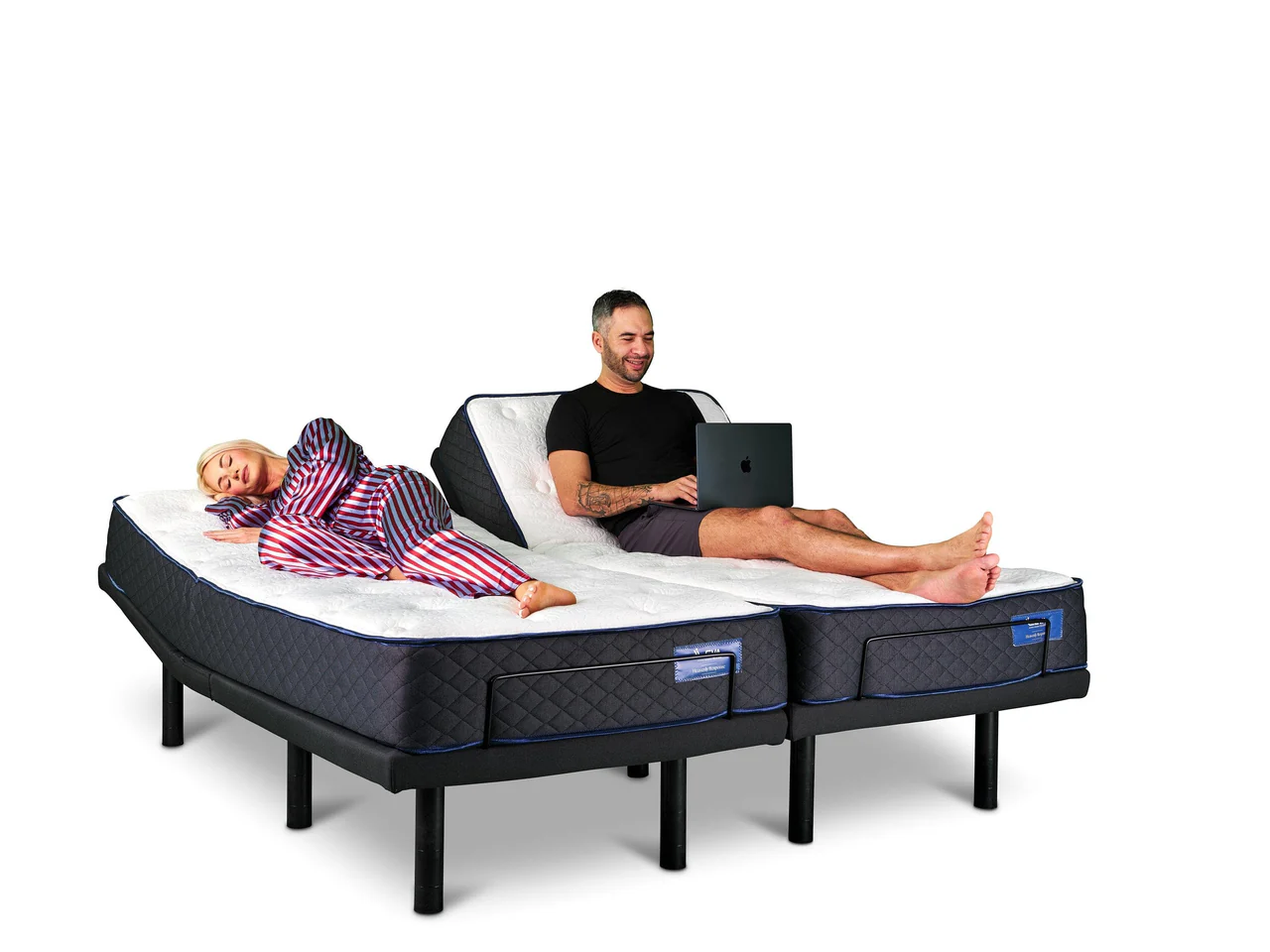
Heavenly Response Split Queen Adjustable Bed Answering Your Questions About Split King Adjustable Beds
Can you still cuddle with a split king?
Yes, but the experience requires intentional accommodation. As discussed earlier, the center gap widens during articulation, which makes spontaneous cuddling less seamless than on a unified mattress. A removable foam bridge connector or a king-sized mattress topper spanning both halves creates a more unified surface for couples who want to meet in the middle. Choosing an adjustable base with a rigid connector rail system also keeps the gap consistent rather than allowing it to widen over time. Many couples find that the gap becomes less noticeable after the first week of use, particularly for back sleepers who naturally stay toward their own side.
What are the disadvantages of a split king adjustable bed?
The primary disadvantages are the center gap, mattress drift during independent articulation, sheet slippage that requires specialized bedding, motor noise on lower-quality bases, and the ongoing maintenance of two independent mechanical systems. Bedding costs are also higher, because split king setups require two Twin XL fitted sheets plus a king flat sheet or duvet, with purpose-built sets typically costing more than standard king bedding. For couples in smaller rooms, the 76-inch width may also be a constraint. Most of these disadvantages are addressable through premium engineering, purpose-built accessories, and professional setup, but they remain real considerations that couples should evaluate before purchasing.
How do I stop my split king sheets from coming off?
Use two Twin XL fitted sheets with full-perimeter elastic, not corner-only elastic, and a pocket depth of at least 15–18 inches. Pair them with sheet straps, which are elastic bands with clips that cross underneath the mattress, for additional grip during articulation. A single king flat sheet or duvet cover on top creates a unified appearance. Sheets that incorporate a small percentage of spandex or elastane in the fabric provide additional stretch to accommodate position changes without the fitted corner popping off.
Is motor noise a real problem with split king adjustable beds?
It depends on the base. As noted earlier, premium motors operate well below the 45 dBA threshold that can disrupt sleep. The key difference is that budget bases often exceed this level, while premium bases stay in the whisper-quiet range. The noise profile also matters, because a low hum is less disruptive than a higher-pitched whir at the same decibel level. Evaluating motor noise in person, in a quiet showroom environment, is the most reliable way to assess whether a specific base will be tolerable for light sleepers.
Do I need special mattresses for a split king adjustable bed?
Yes. Traditional innerspring mattresses with rigid border wire are incompatible with adjustable bases and will not flex correctly, which accelerates both mattress damage and sliding. Memory foam, latex, and hybrid mattresses with flexible coil systems are the appropriate choices. Memory foam and latex grip adjustable foundations better than innerspring models, which reduces drift during independent articulation. Mattress thickness also matters for sheet compatibility, because mattresses 14–18 inches thick require deep pocket sheets (extra-deep for 18+ inches) to maintain a secure fit on adjustable beds throughout the full range of adjustment.
How to Choose an Adjustable System That Protects Closeness
The five complaints above, center gap, mattress drift, sheet slippage, motor noise, and maintenance complexity, are not inevitable features of split king ownership. They are engineering and accessory problems with engineering and accessory solutions. The key is identifying which design features address these problems at the source rather than relying on aftermarket fixes. When evaluating a split king adjustable system, the criteria that most directly protect intimacy work together as an integrated system.
- A rigid connector rail system that keeps lateral drift consistent rather than progressive
- Motors rated at or below 40 dBA with a low-hum rather than high-pitched profile
- App-based micro-adjustment capability that reduces the frequency of audible motor activation at night
- Purpose-built bedding with full-perimeter elastic and deep pockets designed for adjustable base articulation
- Mattress materials, such as memory foam or flexible hybrid designs, that grip the base and minimize sliding
- Professional setup that ensures correct initial alignment of both bases
Start with the mechanical foundation through a rigid connector rail that prevents the gap from widening over time. Then add quiet operation with low-dBA motors so one partner can adjust without waking the other. App-based micro-adjustments further reduce nighttime disruptions by enabling small, precise position changes.
Couples who also want anti-snore positioning, lumbar support, or temperature regulation for each side independently should confirm that these features are available per side rather than as a single shared control. Addressing snoring, movement, and schedule conflicts can help couples increase their sleep time, which creates meaningful recovery for couples whose shared-bed disruptions have accumulated into chronic fatigue.
Leva Sleep's split king and split queen systems are built around these criteria, with whisper-quiet German motors, app-controlled independent adjustability, purpose-built bedding accessories, and white-glove setup included as a cohesive system rather than an afterthought. With over 25,000 customers and 15–20 adjustable base models available, the La Jolla showroom offers couples the opportunity to evaluate motor noise, gap management, and mattress compatibility in person before committing.