Written by: Matthew Timmins, Founder and Managing Director, Leva Sleep
Key Takeaways for Back-Pain-Friendly Leg Elevation
- Leg elevation on an adjustable base decompresses the lumbar spine by tilting the pelvis and creating a 90-90 hip-knee angle that flattens the lower back against the mattress.
- Doctors and physical therapists endorse zero-gravity positioning because it reduces spinal pressure by up to 75 percent and improves morning stiffness for chronic back-pain sufferers.
- Split bases with independent foot motors let each partner fine-tune leg elevation without disturbing the other, which suits couples with different pain levels.
- Quiet German-engineered motors under 45 dB and compatible mattresses with proper thickness and edge construction are essential for effective, partner-friendly leg elevation.
- Evaluate split bases with independent foot motors and German-engineered quiet operation at Leva Sleep.
Featured Snippet: Ideal Knee-Bend Angle for Lumbar Decompression
Research shows hips and knees flexed at 90° or foot elevation of 15–20° flattens the lower back against the mattress, increasing intervertebral space and reducing pressure on lumbar discs.
Experience precision leg elevation at Leva Sleep’s La Jolla showroom or online.
1. Best Adjustable Bed Settings for Lower Back Pain
The most clinically referenced position for lumbar decompression is the 90-90 configuration, with hips and knees each bent at 90 degrees. This posture flattens the lower back against the mattress surface and decompresses nerve roots exiting the lumbar spine. On an adjustable base, you can approximate this by raising the foot section 15–20 degrees and the head section 10–15 degrees. This creates a slight hip pocket that takes tension off the psoas muscles and lower lumbar discs.
Biomechanical research on supine lumbar traction adds more detail. Flexing the hips from 45° to 60° increases laxity at L5-S1, from 60° to 75° targets L4-L5, and from 75° to 90° addresses L3-L4. The foot-elevation angle you need depends on which lumbar segment feels most symptomatic.
Use this simple sequence when you test a base in-store or at home:
- Start with the foot section at 15 degrees and the head at 10 degrees. This starting point approximates the clinical 90-90 position for many body types.
- Raise the foot section in 5-degree increments until the lower back makes full contact with the mattress. This contact signals that your lumbar curve has flattened.
- Confirm the lumbar neutral point by checking that the lower back touches the mattress completely. This point often feels like gentle support rather than pressure.
- Hold the position for 10–20 minutes and track whether symptoms ease, stay the same, or worsen. This check tells you whether the angle truly helps your pain.
- Consult a physician or physiotherapist before using elevated positioning for acute or post-surgical pain. Medical guidance matters when symptoms are new or severe.
2. Clinical Guidance on Adjustable Beds for Back Pain
The American Academy of Sleep Medicine recommends slightly raising the head and knees to ease lower back strain. Clinical data shows that this type of positioning can cut waking pain in chronic sufferers by nearly half. Many patients find that a small change in angle creates a noticeable change in morning stiffness.
Dr. Harish Chafle, Senior Consultant and Sleep Disorders Specialist at Gleneagles Hospitals, reports that zero-gravity positioning reduces 75% of spinal pressure versus flat lying. Physical therapists following APTA clinical guidelines recommend zero-gravity positioning for degenerative disc disease and chronic lower back pain because it elevates the knees slightly above the heart and distributes body weight evenly.
Orthopedic physical therapist Karena Wu recommends a 120-degree angle between the thighs and torso with the knee resting at 20 degrees. Orthopedic spine surgeon Nitin Bhatia, M.D., at UCI Health, recommends adjustable beds with leg elevation for people experiencing swelling and pain in the legs. Adjustable bases provide supportive care rather than a cure. Orthopedic specialists generally recommend not remaining in any single reclined position for more than 30 minutes. Alternating positions or standing briefly helps prevent problems from prolonged static posture.
3. Adjustable Bed Positioning for Sciatica Relief
The zero-gravity position, with the head elevated to 15 degrees and feet raised above heart level, reduces pressure on the sciatic nerve by opening space in the lower vertebrae. For sciatica, physical therapists often recommend leg elevation in a reclined position to relieve pressure on the piriformis muscle and reduce radiating pain down the back of the thigh. For sciatica specifically, the 90-90 position described earlier also supports the pelvis in a way that eases tension along the nerve path.
Use these steps when you test leg-elevation angles for sciatica relief:
- Begin with the zero-gravity preset if the base offers one, then fine-tune foot elevation in 5-degree increments to find your comfort window.
- Place calves fully supported so hips and knees approach 90-degree angles and hold for 10–20 minutes. This support reduces strain on the hamstrings and lower back.
- Note whether radiating leg pain diminishes, stays the same, or worsens. Worsening signals the need for medical evaluation before you continue.
- Confirm the base has an independent foot motor so you can adjust the angle without moving the head section. Independent control helps you fine-tune relief at night.
The zero-gravity position puts the spine in a slightly flexed position, opening the spinal canal and reducing nerve compression; many spinal stenosis patients report significant pain reduction when sleeping in this position compared to lying flat. Severe or worsening sciatica still requires physician evaluation. Positional relief supports treatment but does not replace it.
4. Leg-Elevation Range: What the Numbers Really Mean
Leg-elevation specifications help you predict how well a base can reach therapeutic angles. Published data shows that many dual-motor bases reach at least the 15–20 degree range needed for basic lumbar decompression. Some models extend higher, which can help with swelling and more advanced flexion targets.
Entry-level single-motor bases typically lack an independent foot motor entirely, so they cannot provide targeted lumbar decompression. Prioritize bases with a dedicated foot motor and a clearly stated elevation range. When a manufacturer lists only “varies by model,” ask for specific degree values before you buy.
5. Split Adjustable Bases for Couples with Back Pain
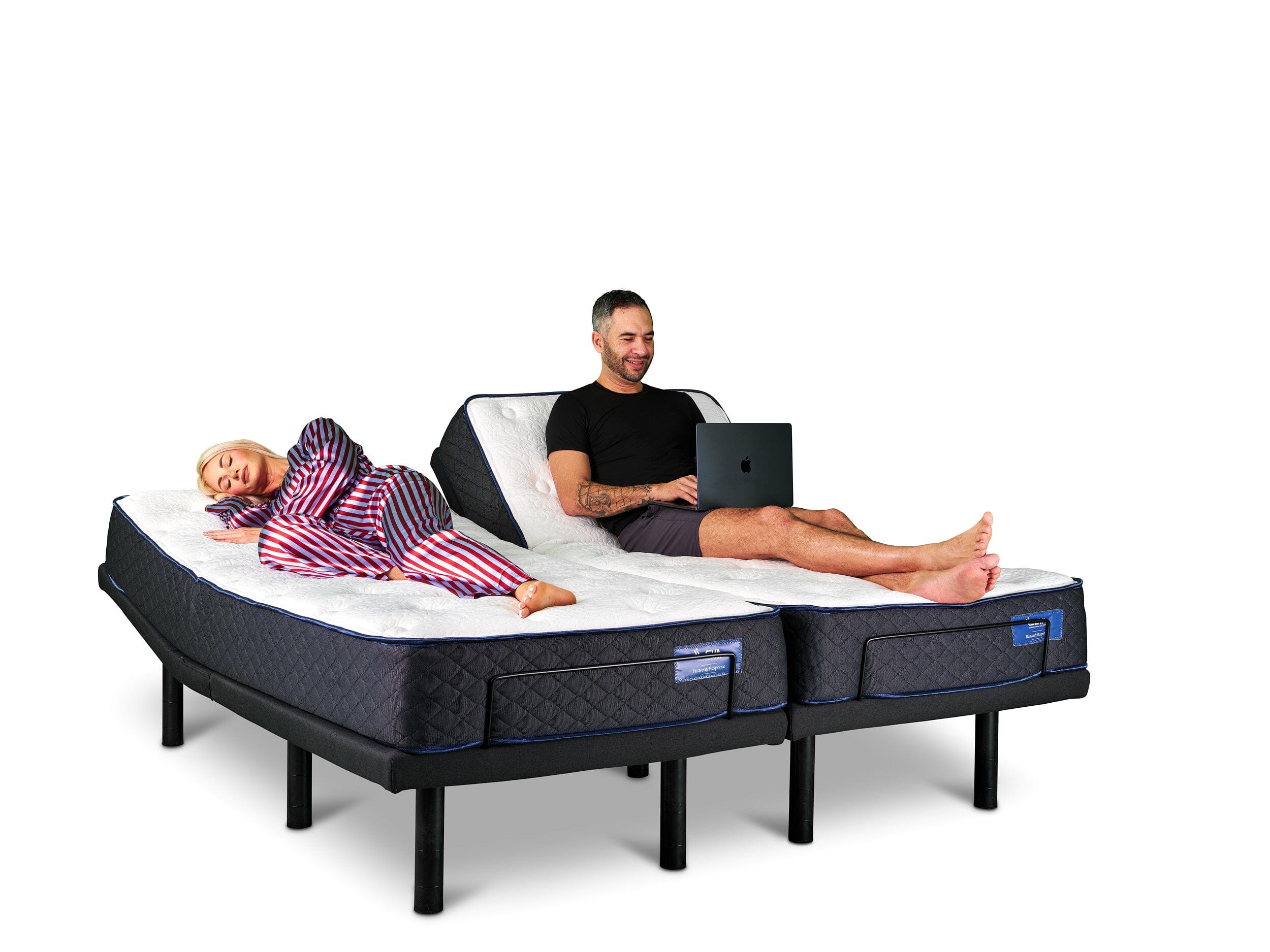
Split King adjustable bases are popular in the adjustable bed market because they give each partner independent control. Split King adjustable bases allow couples to adjust leg elevation on each side, so partners with different pain levels can personalize positioning without disturbing each other.
A Split King uses two Twin XL bases placed side by side. Each Twin XL base in a split king configuration carries its own weight rating, and each runs its own foot motor. Leva Sleep also offers a Split Queen configuration, which delivers the same independent control in a smaller footprint and is built to customer specifications.
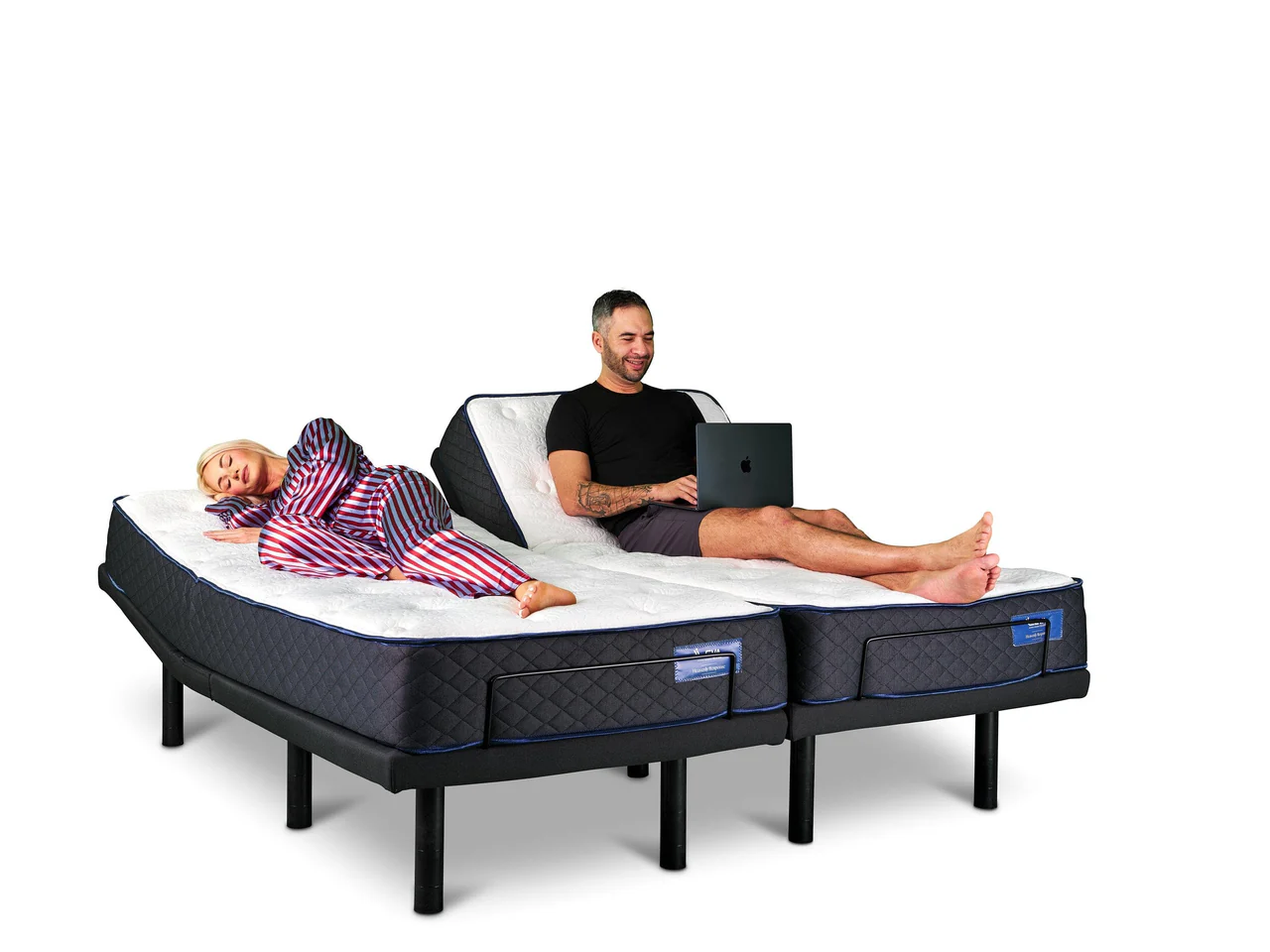
Focus on these criteria when you evaluate a split base for couples:
- Independent foot motors on each side, not a shared motor with a split mattress.
- An app or remote control that lets one partner adjust without reaching across the bed.
- A center gap management system, such as a connector bar or fill strip, to keep the two bases together overnight.
- Mattress retention bars at the foot of each base to prevent sliding during elevation.
6. Motor Noise and Partner Disturbance in Real Use
Motor noise often becomes the main complaint in adjustable base reviews. Budget adjustable bases often produce 50–60 dB of motor noise during operation, which can disrupt sleep and undermine the value of nighttime leg elevation adjustments. Many top models operate in the 35–40 dB range, comparable to gentle rainfall or a refrigerator hum, which most partners tolerate well.
Levels under 40 dB are quiet enough to adjust the foot section without waking a partner. Quality adjustable bases use brand-name motors such as Okin and operate below 45 dB. German-engineered motors run cooler under load and resist wear on internal gears, which is why Leva Sleep treats whisper-quiet German motors as a core engineering specification.
When you evaluate a base for noise, follow this sequence:
- Request a decibel specification from the manufacturer and treat ratings above 45 dB with caution.
- Test the foot motor specifically, since head motors often run quieter because they carry less load.
- Watch how quickly the motor reaches full foot elevation, because faster cycles shorten your total noise exposure.
- Ask whether the motor brand is disclosed, since unbranded motors in budget bases can develop noise over time as components wear.
7. Mattress and Bedding Compatibility for Elevated Positions
The best foot motor still fails if the mattress cannot flex with it. Traditional innerspring mattresses with interconnected coil systems are broadly incompatible with adjustable bases because the coil grid is engineered for rigidity, not articulation. Memory foam, latex, and most hybrid mattresses with pocketed coils are compatible with adjustable bases for leg elevation.
Check these compatibility details before you purchase:
- Thickness: Most base manufacturers specify a maximum mattress height between 12 and 14 inches for full articulation warranty coverage.
- Edge construction: Foam-encased perimeters handle articulation better than steel-rod borders that can dig into the base mechanism.
- Latex specifics: A single molded latex core 12 or more inches thick can resist bending at the hinge point with enough force to stress the motor. Split-layer latex constructions flex more reliably.
- Manufacturer certification: Manufacturer certification is the most reliable signal of mattress compatibility with adjustable bases.
- Bedding: Standard fitted sheets often pop off elevated bases. Deep-pocket sheets with reinforced elastic and duvet clips designed for split bases prevent this issue, and Leva Sleep designs all bedding accessories specifically for adjustable bases.
Explore Leva Sleep’s adjustable bases with certified mattress compatibility.
Frequently Asked Questions
Do doctors actually recommend adjustable beds for back pain, or is that just marketing?
Medical professionals across several specialties recommend adjustable positioning for specific back conditions. The American Academy of Sleep Medicine endorses slight head and knee elevation to ease lower back strain. Orthopedic physical therapist Karena Wu recommends a 120-degree thigh-torso angle with the knee at 20 degrees for lower-back pain sufferers. Orthopedic spine surgeon Nitin Bhatia, M.D., at UCI Health, recommends leg elevation for patients with leg swelling and pain. Physical therapists following APTA clinical guidelines recommend zero-gravity positioning for degenerative disc disease and chronic lumbar strain. The consistent caveat across all sources is that adjustable positioning provides supportive care and improves comfort but does not treat the underlying condition. Anyone with acute, post-surgical, or worsening pain should consult a physician before adopting a new sleep position.
How quiet should an adjustable base motor be so it does not wake my partner?
The practical threshold for partner-safe operation is below 45 decibels. Premium 2026 models operate in the 35–40 dB range, roughly equivalent to a quiet refrigerator hum or gentle rainfall. Budget bases frequently produce 50–60 dB, which is loud enough to wake a light sleeper. When you evaluate a base, ask the manufacturer for a specific decibel rating for the foot motor, not just the head motor, which typically carries less load and runs quieter. German-engineered motors from brands such as Okin or Logicdata set the benchmark for quiet, long-cycle operation. Leva Sleep’s adjustable bases use whisper-quiet German motors as a standard specification, not an upgrade.
What is the difference between a Split King and a Split Queen, and which is better for couples with different pain levels?
A Split King consists of two Twin XL adjustable bases placed side by side, each with independent head and foot motors, creating a king-size sleep surface where each partner controls their own elevation. A Split Queen uses two narrower bases to achieve a queen-size footprint with the same independent-control benefit, a configuration that is rare in the market and one that Leva Sleep builds to customer specifications. For couples where one partner needs significant leg elevation for lumbar decompression or sciatica relief and the other prefers a flatter position, either split configuration removes the need for compromise. The Split Queen suits smaller bedrooms or couples who want to stay closer together. The Split King offers more individual surface area. Both configurations require compatible mattresses on each side and a center connector to prevent gap separation during the night.
What is the return policy and delivery experience I should expect from a premium adjustable base retailer?
Return policies on adjustable bases vary significantly. Large-format bases are expensive to return, so you should evaluate the policy before purchase. Look for a minimum 30-night sleep trial, clear instructions on how to initiate a return, and clarity on whether the retailer handles pickup or requires you to arrange freight shipping. Delivery experience matters as well. A base delivered in boxes and left at the door creates a complex self-assembly burden for a heavy, multi-component product. Leva Sleep offers white-glove delivery for a fee, where trained professionals deliver to the bedroom, assemble the base and mattress, adjust leg heights, provide a product tutorial, and remove the old bed. This end-to-end service particularly helps couples managing back pain who cannot safely handle heavy components themselves.
What price range should I expect for a split adjustable base with independent leg elevation?
Entry-level single-motor bases that elevate only the head start around $800–$1,200 for a queen. Mid-range dual-motor bases with independent foot elevation, the minimum specification for therapeutic leg positioning, typically run $1,200–$2,000 for a queen. Split King configurations with two independent bases, whisper-quiet motors, programmable presets, and app control usually fall in the $2,000–$4,000+ range depending on features such as lumbar support, massage, and anti-snore modes. Leva Sleep positions its systems at 30–50% below comparable luxury competitors by designing and assembling locally and selling direct-to-consumer, which delivers premium engineering at a meaningfully lower price point than brands sold through traditional retail channels.
Schedule a personalized fitting at Leva Sleep’s La Jolla location.