Written by: Matthew Timmins, Founder and Managing Director, Leva Sleep
Key Takeaways for Couples Dealing With Snoring
- Nasal devices like strips and dilators only help when snoring stems from nasal obstruction, while most chronic snoring starts in the throat.
- Five clear signs, such as back-position snoring or breathing pauses, indicate nasal devices will likely fail and a positional solution is needed.
- Head-to-head reviews show limited real-world couple success with Breathe Right, Mute, Intake, Nas-Air, and Rhinomed Turbine once adaptation or throat-based causes appear.
- Positional therapy using head elevation reduces gravity-driven airway collapse more effectively than nasal-only interventions for most snorers.
- Leva Sleep split adjustable bases give couples independent, quiet, app-controlled elevation plus an automatic anti-snore mode. Explore split base options to stop the nightly disruption.
5 Signs Nasal Devices Will Not Solve Your Snoring
Before spending money on another device, decide whether nasal intervention is even the right category of solution. These five red flags indicate nasal devices will not solve your snoring problem:
- Snoring continues when your nose is clear. If snoring does not ease when nasal congestion clears, nasal-only solutions are unlikely to help, because the obstruction is downstream.
- The snore sounds fluttery or buzzy rather than nasal. A fluttery, buzzy snore signals lax throat or palate muscles, which no nasal strip can reach.
- Snoring is loudest when sleeping on the back. Many habitual snorers snore predominantly in the supine position, where gravity pulls the tongue and soft palate backward. That pattern reflects a positional, not nasal, problem.
- Gasping, choking, or breathing pauses occur during sleep. Cleveland Clinic identifies these symptoms as indicators of obstructive sleep apnea, a condition nasal devices are not cleared to treat.
- Daytime fatigue, morning headaches, or dry mouth persist. These symptoms suggest throat-level airway collapse that requires professional evaluation, not an over-the-counter strip.
Nasal Dilators for Couples Snoring: Head-to-Head Reviews
1. Breathe Right Extra Strength Nasal Strips
Breathe Right strips are the most widely recognized external nasal dilator on the market. The adhesive band lifts the nasal sidewalls and reduces nasal resistance. Studies have shown snoring reduction in snorers with nasal obstruction. For snorers whose issue is purely nasal, this product offers a reasonable first step. Cost runs roughly $0.32–$0.68 per strip for Breathe Right Extra Strength Nasal Strips.
Couple Reality Check: Partners report initial relief that often plateaus within two to four weeks as the body adapts or as the snorer shifts to mouth breathing. Because strips are single-use, cost accumulates quickly. When throat-based snoring is the underlying cause, partners describe no meaningful change in nighttime awakenings.
2. Mute Nasal Dilator
Mute is an internal stenting device that sits inside the nostrils and props open the nasal valve. Some head-to-head airflow studies show that internal nasal dilators provide nasal-valve support. Rhinomed, Mute’s manufacturer, reports that in its own user trials, the majority of users experienced reduced snoring and improved breathing. Independent clinical validation of those specific figures remains limited. Mute is reusable for approximately 10 nights per device.
Couple Reality Check: Users whose snoring is nasal in origin report moderate improvement. Partners of throat-based snorers report little to no change. Comfort varies significantly by nasal anatomy, and some users discontinue use within the first week due to discomfort.
3. Intake Breathing Nasal Dilator
Intake uses an external adhesive frame that attaches to the bridge of the nose and pulls the nostrils open laterally. The company claims a different mechanical action than traditional strips. The device is marketed primarily toward athletes but has gained traction in the snoring category. A 2022 meta-analysis examined objective running performance metrics with nasal dilators generally, which contextualizes the athletic claims. No independent peer-reviewed RCT specific to Intake’s snoring outcomes appears in the available literature.
Couple Reality Check: Intake’s per-unit cost is higher than Breathe Right. Partners evaluating this device should apply the five signs above before purchasing. Without a nasal-obstruction component, the mechanical action provides no benefit to snoring reduction.
4. Nas-Air Internal Nasal Dilator
Nas-Air is a medical-grade internal dilator with clinical backing. A study published in Acta Biomedica found that Nas-Air increased the minimum cross-sectional area of the nasal valve, improved airflow, and reduced snoring intensity. ENT specialists cite this study when recommending internal dilators as a non-invasive first-line option. The device is reusable and available in multiple sizes.
Couple Reality Check: Clinical evidence is the strongest of the five devices reviewed here, but the benefit remains confined to snorers with a documented nasal-valve obstruction component. Nasal dilators do not cure underlying conditions such as obstructive sleep apnea or anatomical abnormalities. Couples where the snoring partner has already been evaluated by an ENT and confirmed nasal-valve narrowing will see the best results.
5. Rhinomed Turbine
The Rhinomed Turbine is a sport-focused internal dilator that has crossed into the sleep market. Like Mute, also a Rhinomed product, it stents the nasal passage open. Both external adhesive strips and internal stenting devices are FDA 510(k)-cleared for temporary relief of nasal congestion and breathing difficulties. The Turbine’s design is stiffer than Mute and is generally considered less comfortable for all-night wear.
Couple Reality Check: Couples who have already tried Mute without success are unlikely to see different results from the Turbine, because the mechanism is similar. The stiffer frame increases the likelihood of early discontinuation.
Why Most Snoring Starts in the Throat, Not the Nose
The pattern across all five devices reveals a common limitation: each works only when nasal obstruction is the root cause. This narrow effectiveness exists because obstructive sleep apnea and the majority of chronic snoring are most often driven by collapse at the throat level, including the soft palate, tongue base, and surrounding tissues, rather than the nose. The nose filters and humidifies air, but the critical narrowing that produces the snoring sound typically occurs further down the airway.
Research indicates that while nasal blockage and OSA frequently coexist, nasal treatment focuses on symptoms and therapy tolerance. In practical terms, clearing the nose can reduce snoring intensity in some cases, but it does not address the structural collapse that causes the airway to vibrate.
Head elevation can reduce gravity-driven airway collapse. Elevating the torso to 12° produces a 7% snoring reduction according to one in-home intervention study. This is the mechanism that positional therapy, and specifically adjustable bed bases, targets directly.
How Married Couples Use Positional Therapy to Sleep Together Again
The relationship cost of unresolved snoring is substantial. According to Sleep Foundation 2024 research, 75% of people with snoring partners report that it impacts their sleep quality, and 77% say it affects their overall well-being. Mayo Clinic research indicates that partners lose at least one hour of sleep per night due to snoring, which equals more than two weeks of waking hours per year. Nasal devices address none of this when the snoring is throat-based.
Positional therapy changes the equation for both partners simultaneously. A 2025 Frontiers in Medicine meta-analysis found that sleep positional therapy produced a significant reduction in AHI and reduces snoring in position-dependent snorers.
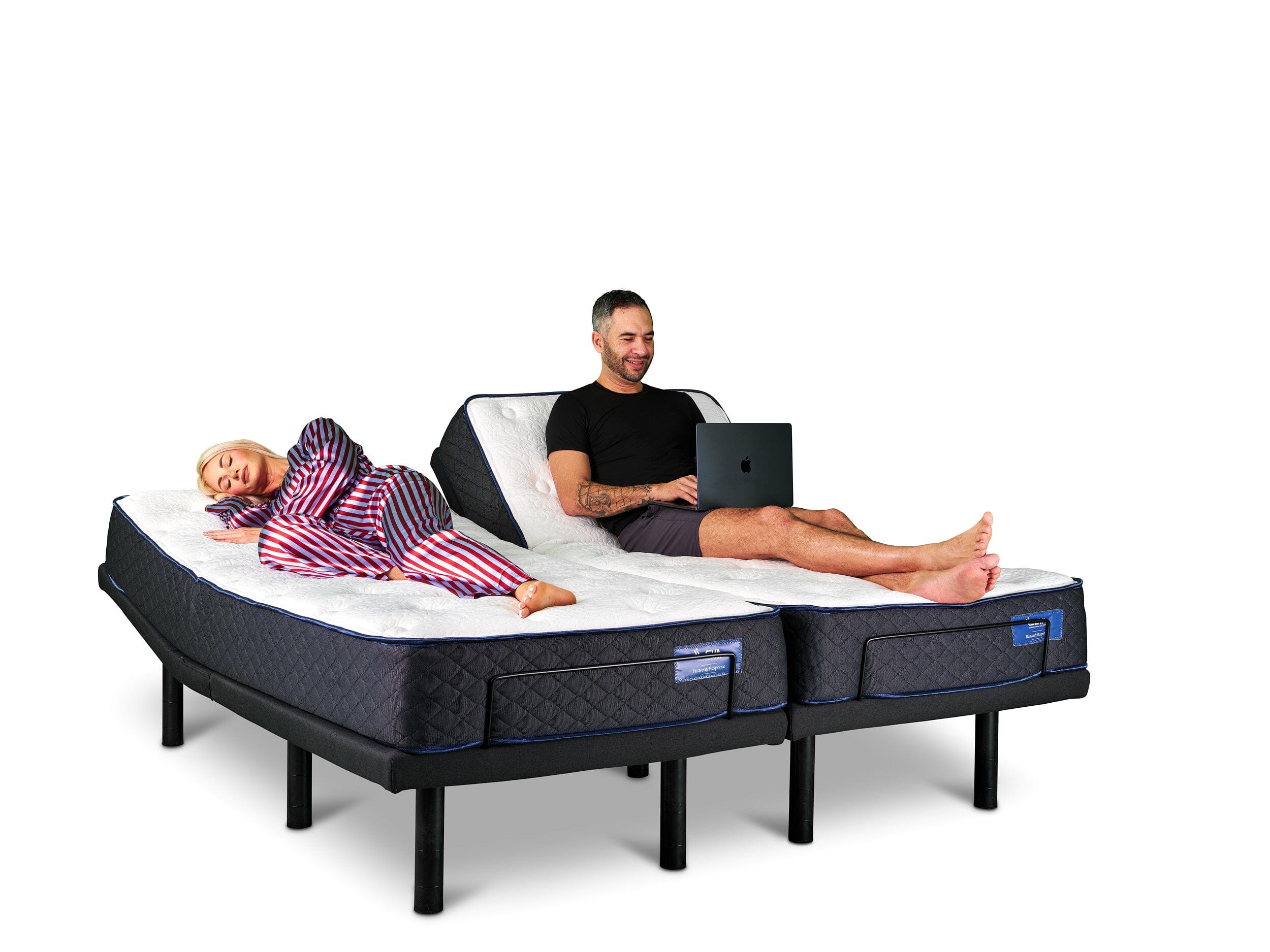
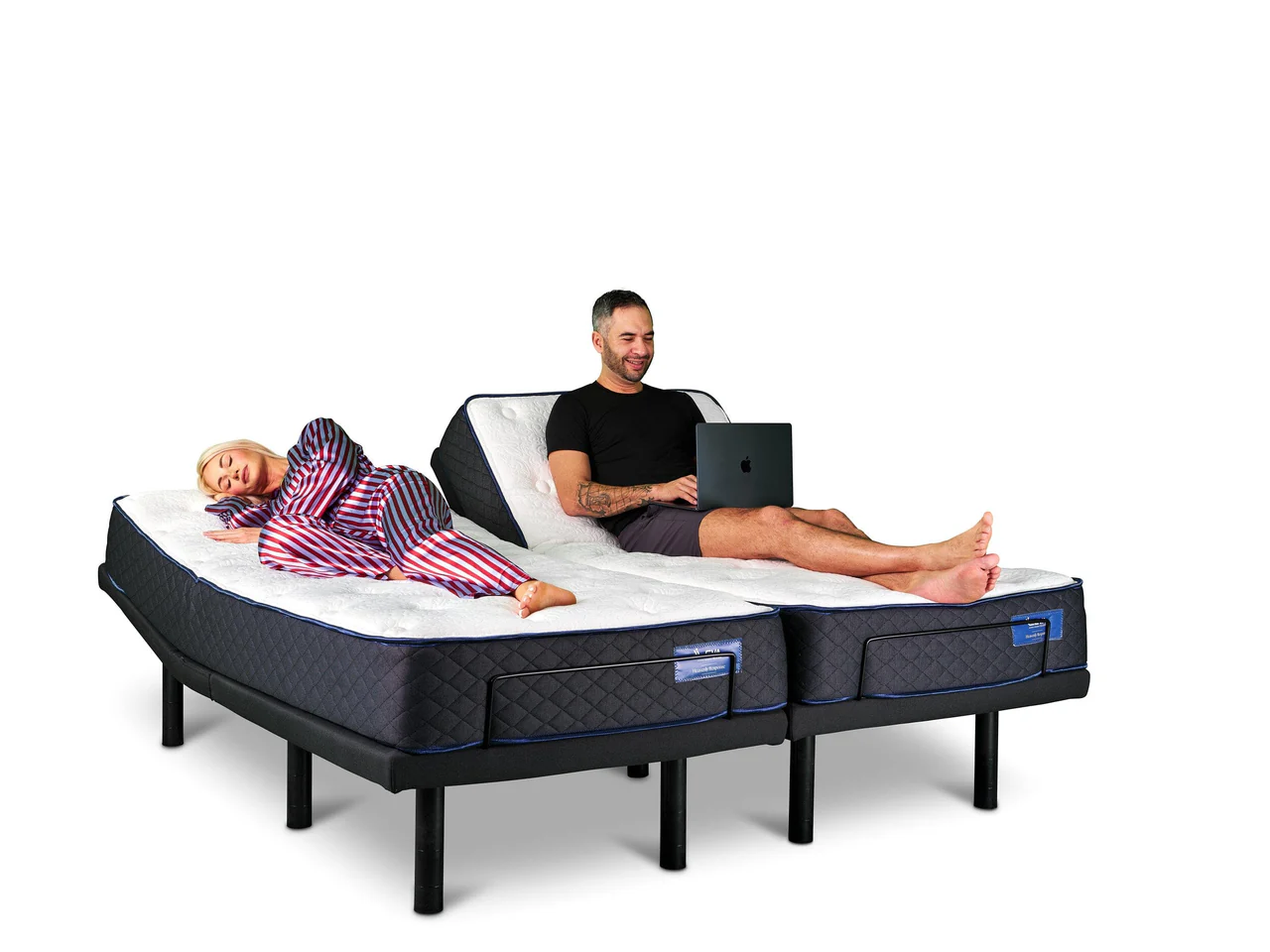
Leva Sleep’s split adjustable bases are engineered specifically for couples navigating this problem. Each side of the bed operates independently via whisper-quiet German motors and the Leva Sleep app, allowing each partner to set their own head and foot elevation, massage intensity, and sleep position without disturbing the other. A spring 2026 anti-snore mode detects snoring and makes micro-adjustments to the head of the bed to reduce airway collapse, automatically, without either partner waking up. Experience these features in person at our La Jolla showroom.
Comparison Table: Nasal Devices vs Split Adjustable Bases
| Device | Claimed Airflow Benefit | Reported Couple Outcome | Notes |
|---|---|---|---|
| Breathe Right Extra | Reduces nasal resistance via external nasal-wall lift | Short-term snoring reduction in nasal-obstruction snorers, no meaningful AHI improvement in OSA patients | Single-use, cost accumulates, ineffective for throat-based snoring |
| Mute Nasal Dilator | Internal nasal-valve stenting, manufacturer-reported user improvement in breathing | Internal dilators can provide nasal-valve support in airflow studies, comfort-dependent adherence | Reusable about 10 nights, independent RCT data limited for this specific product |
| Nas-Air | Increases minimum nasal cross-sectional area and improves airflow | Studies have shown reduced snoring intensity, benefit limited to nasal-valve obstruction cases | Strongest independent clinical evidence of the five, does not treat OSA |
| Intake Breathing | Lateral nasal-wall opening via external adhesive frame | No independent peer-reviewed RCT on snoring outcomes identified, a 2022 meta-analysis examined objective performance metrics with nasal dilators generally | Higher per-unit cost, primarily athletic positioning |
| Leva Sleep Split Adjustable Base | Head elevation 7–45° reduces gravity-driven airway collapse | 7% snoring reduction at 12° elevation (Chen 2022 study), independent per-side control addresses both partners simultaneously | Spring 2026 anti-snore mode, whisper-quiet German motors, app-controlled |
When Snoring Signals You Should See a Doctor
Certain symptoms indicate that snoring requires professional medical evaluation before any device, nasal or otherwise, is used. Consult a sleep medicine specialist or ENT if any of the following apply:
- The breathing pauses and gasping described in sign 4 above
- The persistent morning symptoms mentioned in sign 5
- High blood pressure, mood changes, or difficulty concentrating alongside snoring
- Loud snoring present nearly every night
- Snoring that has worsened over time or is accompanied by restless sleep
- Lifestyle changes and nasal devices have failed to produce any improvement
Frequently Asked Questions
Can nasal strips actually stop my partner’s snoring?
Nasal strips can reduce snoring when the primary cause is nasal obstruction from congestion, allergies, or a narrow nasal valve. Clinical evidence supports this for a specific subset of snorers. However, the majority of chronic snoring originates at the throat level, where the soft palate and tongue base collapse during sleep. In those cases, nasal strips do not address the source of the sound and produce little to no improvement. The five signs listed above offer a practical way to determine which category applies before purchasing any device.
How does partner snoring affect a relationship long-term?
Partner snoring erodes sleep and relationship quality over time. Partners of chronic snorers lose at least one hour of sleep per night, which impairs mood, cognitive function, emotional regulation, and physical health. Research links chronic sleep deprivation from a partner’s snoring to increased irritability, reduced intimacy, lower sexual satisfaction, and higher rates of relationship breakdown. One British survey found that 47% of recently divorced respondents cited snoring or sleep disorders as a contributing factor. The non-snoring partner often develops bedtime anxiety, dreading the moment the snoring begins, which itself disrupts sleep onset even before the snoring starts.
What is positional therapy for snoring, and how does it differ from nasal devices?
Positional therapy addresses snoring by changing the physical orientation of the airway during sleep. Gravity pulls the tongue and soft palate backward when a person lies flat on their back, so elevating the head and torso reduces that collapse. A 2025 Frontiers in Medicine meta-analysis found that positional therapy can reduce snoring in many position-dependent snorers. Nasal devices, by contrast, act only at the nasal valve and have no effect on throat-level obstruction. For couples, split adjustable bases offer the additional advantage of independent control, so each partner adjusts their own side without disturbing the other.
Is a split adjustable base the same as sleeping in separate beds?
A split adjustable base keeps couples in the same bed while giving each partner independent control. Two mechanisms sit within a single bed frame, allowing each partner to elevate their head, adjust their foot position, or activate massage settings independently. Both partners remain in the same bed, maintaining physical closeness and the sleep-quality benefits associated with co-sleeping. This distinction matters, because research shows that bed-sharing is associated with increased REM sleep and sleep-stage synchronization, benefits that are lost when couples move to separate rooms. A split base is designed to preserve those benefits while eliminating the snoring disruption that drives couples apart.
Do Any Snoring Devices Actually Work?
Some devices work well for the right type of snoring. Nasal devices help when nasal obstruction is the documented cause. For the majority of couples dealing with throat-based or positional snoring, the evidence consistently points toward elevation and positional therapy as the more effective intervention. Find your solution at Leva Sleep, whether you visit the La Jolla showroom or shop online.
Conclusion: Move Beyond Nasal Devices to Real Relief
The path most couples follow, strips then dilators then frustration, is predictable because nasal devices are sold broadly but work narrowly. When snoring is throat-based or positional, the solution has to match the source. Leva Sleep’s split adjustable bases address airway mechanics for both partners simultaneously, without compromise, without noise, and without separate bedrooms. Start with Leva Sleep and end the cycle of failed nasal devices.