Written by: Matthew Timmins, Founder and Managing Director, Leva Sleep
Key Takeaways for Couples with Back Pain
- Many couples in their 40s and 50s struggle with nightly sleep conflicts from different firmness needs, snoring, and chronic back pain.
- Sleep Number beds let each partner adjust firmness with air chambers, but they do not provide independent lumbar elevation and can create pump noise.
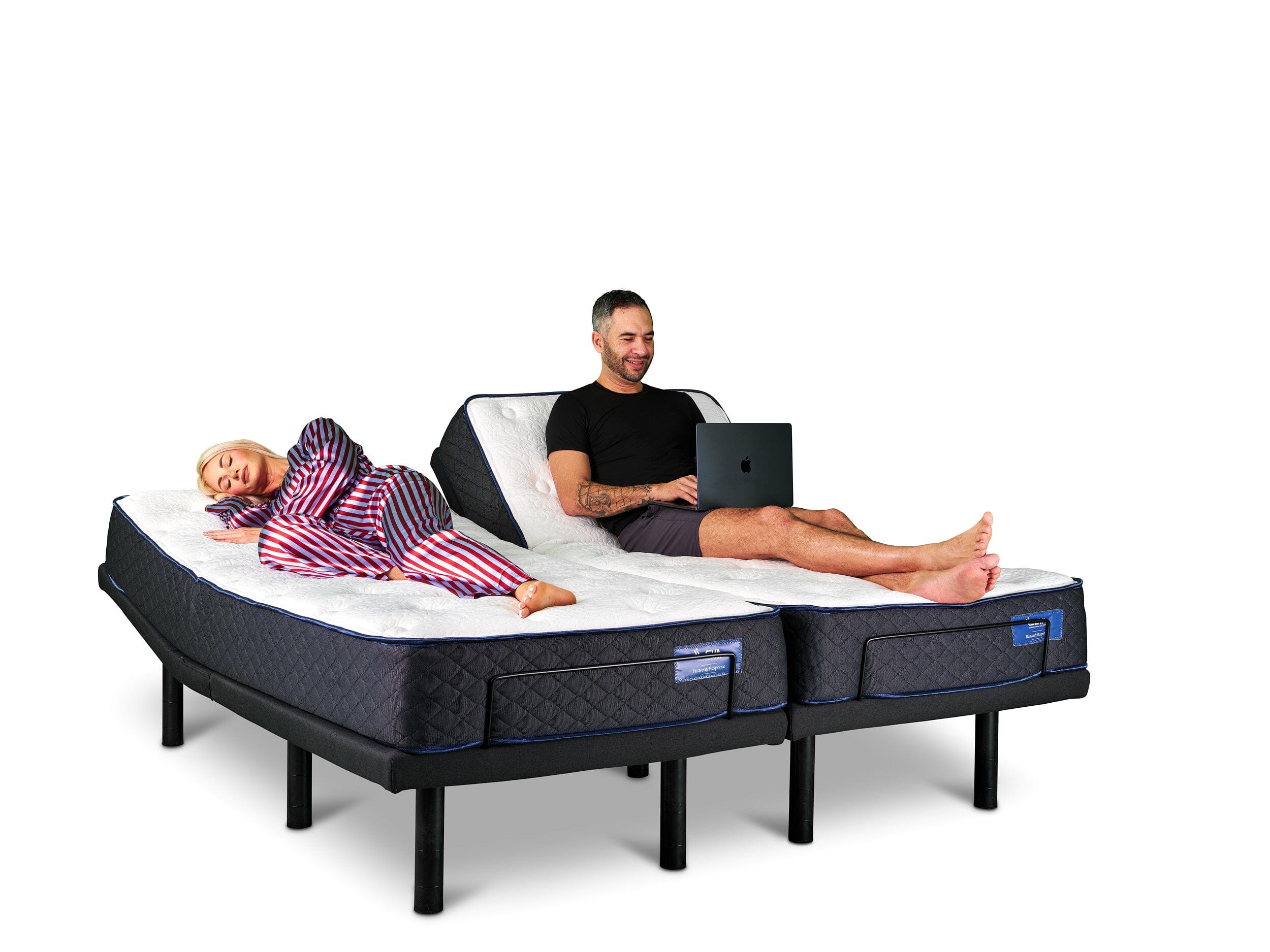
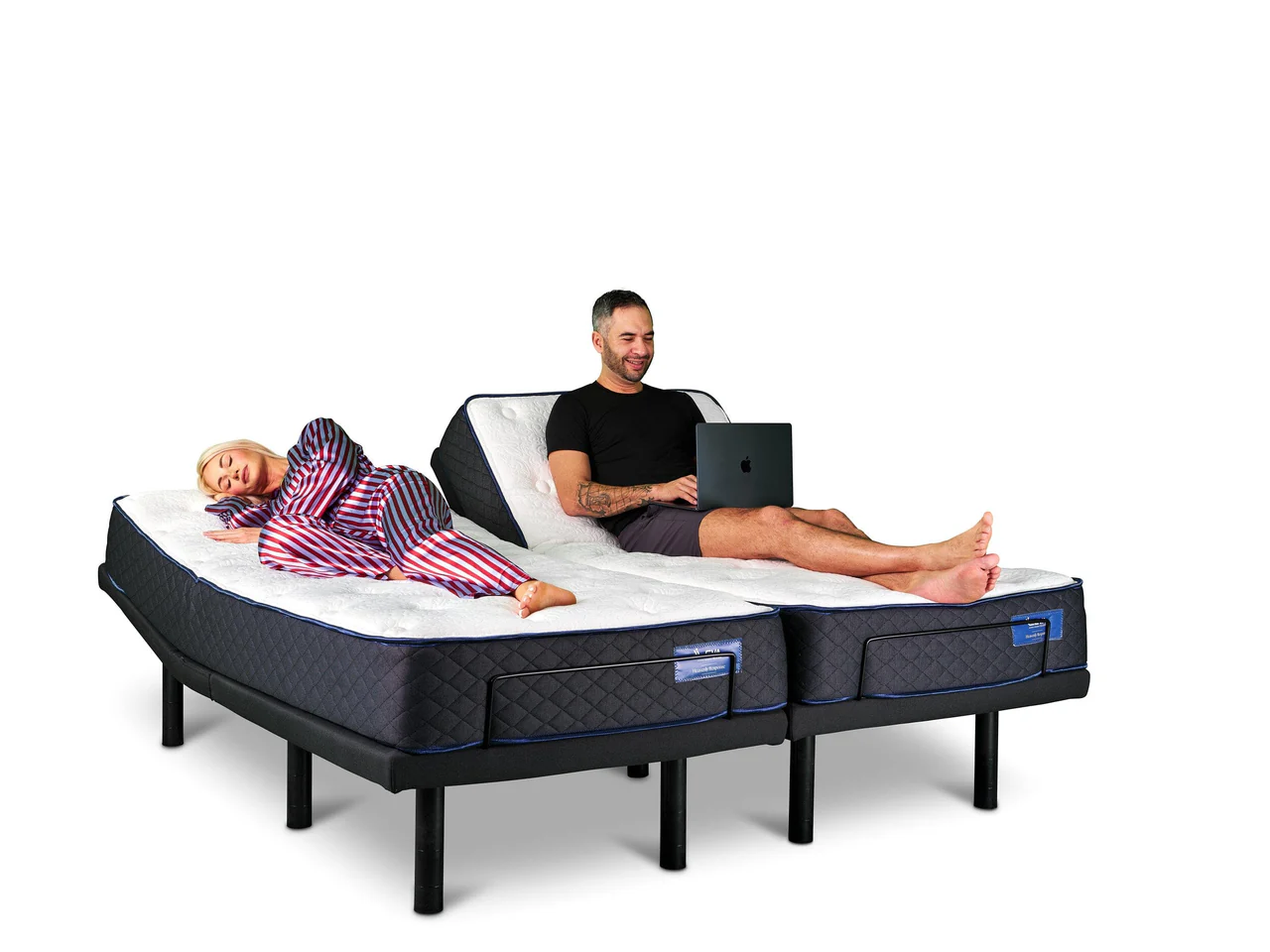
- Split adjustable bases with separate head, foot, and lumbar controls give targeted spinal decompression and positional support that air-chamber systems cannot match.
- Head-of-bed elevation and zero-gravity positioning on split systems can reduce lumbar disc pressure by up to 25% and ease mild sleep apnea symptoms.
- Leva Sleep offers whisper-quiet, lumbar-focused split adjustable systems at 30–50% less than competitors. Explore Leva’s premium split systems at direct-to-consumer pricing to find relief tailored for both partners.
How Sleep Number Beds Perform for People with Back Pain
Sleep Number’s air-chamber technology lets each partner choose a firmness number, which changes surface feel. For people with back pain, firmness adjustment alone does not replace true positional support. Air-chamber systems do not independently elevate the head, knees, or lumbar region, which are the three adjustments orthopedic and sleep medicine specialists most often recommend for spinal decompression.
Operational drawbacks also affect comfort. Airbed compressor noise is audible during firmness adjustments and can disturb a sleeping partner, and auto-correct pumps run briefly every few days to address minor pressure loss. Adjustable air-chamber beds carry higher upfront costs and potential long-term maintenance needs, including pump or chamber servicing, and pump replacements for Sleep Number models cost $150–$400 plus labor. For couples whose main complaint is back pain rather than firmness mismatch alone, these trade-offs make air-chamber systems only a partial solution.
Best Mattress Setup for Couples with Back Pain and Different Firmness Needs
Given the limitations of air-chamber systems for back pain, the most effective solution category for couples with differing needs is the split adjustable sleep system. This setup combines two independent adjustable bases, usually two Twin XL units in a king footprint, compatible mattresses, and purpose-designed bedding. It differs from both traditional flat mattresses and air-chamber smart beds because it focuses on body positioning, not just surface feel.
Key components of a complete split adjustable sleep system include:
- Independent adjustable bases with separate head, foot, and lumbar controls for each partner
- Compatible mattresses, such as all-foam, latex, or pocketed-coil hybrid models, that flex safely at elevation angles
- Specialized bedding with deep-pocket fitted sheets and extra elastic that stays in place during position changes
- App or remote control for quiet, independent adjustments without waking the other partner
Split king adjustable beds continue to grow in popularity in the North American adjustable bed market. The global adjustable beds and mattress market is projected to grow from USD 10.1 billion in 2026 to USD 25.7 billion by 2036, which reflects broad consumer recognition that positioning matters as much as surface comfort.
How a Split King Adjustable Base Supports Back Pain Relief
Elevating the legs 15–30 degrees on an adjustable base decompresses lumbar vertebrae by reducing gravitational load, and clinical research shows this can lower lumbar intervertebral disc pressure compared to flat sleeping. The zero-gravity position, with head and knees elevated together, builds on that effect. This position achieves the disc pressure reduction mentioned earlier by evenly distributing body weight and gently decompressing intervertebral discs.
For snoring and mild sleep apnea, head-of-bed elevation has consistent support in clinical research. Souza et al. (2017) found that 7.5° head-of-bed elevation reduced OSA severity by 31.8% on average in patients with mild to moderate OSA. Multiple studies show that head-of-bed elevation can reduce apnea and hypopnea events.
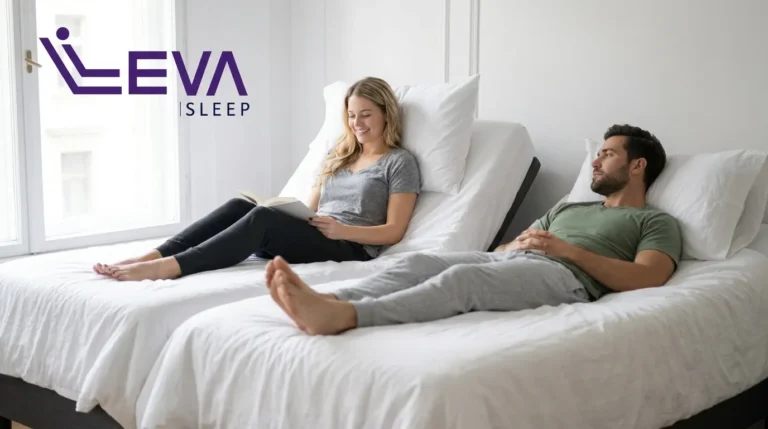
The split configuration lets one partner use these benefits without forcing changes on the other. Adjustable bed frames allow precise, independent head-of-bed elevation on one side only, so one partner can use anti-snore positioning while the other remains flat. Karena Wu, P.T., D.P.T., recommends the zero-gravity position for lower back pain because it reduces pressure on the backbone and pelvis. Individuals with spinal fusion or osteoporosis should consult a physician before using an adjustable base.
Less Expensive Sleep Number Alternative with Targeted Lumbar Support
The table below compares four systems across criteria that matter to couples with back pain. The comparison shows that air-chamber systems focus on firmness adjustment, while split adjustable bases add independent lumbar elevation and quiet operation that better support spinal decompression and partner comfort. All data points come from publicly available sources cited inline, and no proprietary scoring has been applied.
| System | Firmness Adjustment Method | Independent Lumbar Elevation | Noise Level | Couple Compatibility & Delivery |
|---|---|---|---|---|
| Sleep Number 360 | Per-side air-chamber firmness (app-controlled) | Not available, firmness only with no positional elevation | Pump cycles audibly during adjustments and auto-corrects every few days | Proprietary base required, pump replacement $150–$400 |
| Saatva Solaire | 50 per-side firmness settings via vulcanized rubber air chambers | Not available as a standard feature, requires separate adjustable base | Air compressor audible during firmness changes | White-glove delivery available, premium price point |
| iSense | Per-side air-chamber firmness adjustment | Available when paired with a compatible adjustable base, sold separately | Pump cycling noise during adjustments | Standard delivery, base compatibility varies by model |
| Leva Sleep | Independent per-side positioning via split adjustable base (head, foot, lumbar) | Dedicated lumbar control zone on premium models, zero-gravity preset | Whisper-quiet German motors, brushless DC technology | In-house white-glove delivery and setup, 30–50% less than comparable competitors |
Experience Leva’s whisper-quiet lumbar control in person at the La Jolla showroom or configure your split system online.
Practical Considerations When Choosing a Split Adjustable System
Couples make better decisions when they review a few practical factors before purchasing a split adjustable system.
- Room dimensions: A split king needs a room large enough for a 76″ × 80″ footprint plus clearance for base articulation. A split queen at 60″ × 80″ fits smaller rooms and is a configuration that few retailers stock as a standard option.
- Budget: Quality split adjustable systems typically range from $3,000 to $6,000 for base plus mattresses. Within that range, split king systems usually cost more than standard king adjustable bases because they require additional motors and independent electronics for each side.
- Health conditions: Anyone with heart or respiratory issues should consult a doctor before using an adjustable base, since certain angles may affect breathing or circulation. Individuals with spinal fusion or osteoporosis also need physician guidance.
- Motor noise: Premium adjustable bases with brushless DC motors operate at 30–40 decibels, roughly the volume of a whisper, while budget AC-motor bases reach 50–60 decibels, similar to normal conversation. For couples where one partner is a light sleeper, motor noise specification becomes a critical evaluation point.
- Mattress compatibility: Mechanical split adjustable bases work with memory foam, latex, and pocketed-coil hybrid mattresses but are generally incompatible with traditional interconnected innerspring or Bonnell and offset coil mattresses.
- Delivery and setup: Large adjustable bases usually require professional installation. White-glove delivery that includes old bed removal, assembly, height adjustment, and a product walkthrough reduces setup errors and helps the system perform correctly from the first night.
- Partner preferences: Both partners should test the system together. Differences in preferred head elevation, lumbar support intensity, and massage settings are easier to identify during an in-person demonstration than through online configuration alone.
Frequently Asked Questions
Will the motors on a split adjustable base wake my partner at night?
Premium split adjustable bases use brushless DC motors that operate at about 30–40 decibels, similar to a whisper or quiet library. At that volume, most nighttime adjustments will not wake a sleeping partner. Budget models with AC motors can reach 50–60 decibels, which is closer to normal conversation and more likely to cause disturbance. When you evaluate a base, ask for the motor’s decibel rating and request a live showroom demonstration so you can hear the noise level yourself.
How long does a quality split adjustable base last, and what upkeep does it need?
Quality mechanical adjustable bases typically last 8–15 years with normal use. The most common maintenance issue is a wired remote connection plug loosening over time rather than motor failure. A 10-year warranty is standard on quality models. Air-chamber systems often have a shorter expected service life before pumps, hoses, or chambers need service, and pump replacements add extra cost. When you compare systems, review what the warranty covers, since frame, motor, and electronics may have different terms.
Can a split adjustable base reduce snoring without using a CPAP machine?
As noted in the clinical evidence above, head-of-bed elevation has consistent support for reducing snoring and apnea events in mild to moderate positional obstructive sleep apnea. A split adjustable base lets one partner elevate their head independently without changing the other side. This positional approach does not replace CPAP therapy for moderate to severe sleep apnea, and anyone with a diagnosed sleep disorder should consult a physician before relying on positional therapy alone.
Will a split king adjustable base work with my current bed frame and furniture?
Most split king adjustable bases are freestanding and do not require a traditional bed frame, although many can pair with compatible platform frames. The two Twin XL bases sit side by side and may drift apart over time without a connecting strap, so confirm that feature before purchase. Headboard compatibility varies by model. During a showroom visit or pre-purchase consultation, share your room dimensions and existing furniture details so the retailer can confirm fit and suggest any needed accessories.
Is a split adjustable system worthwhile if only one partner has back pain?
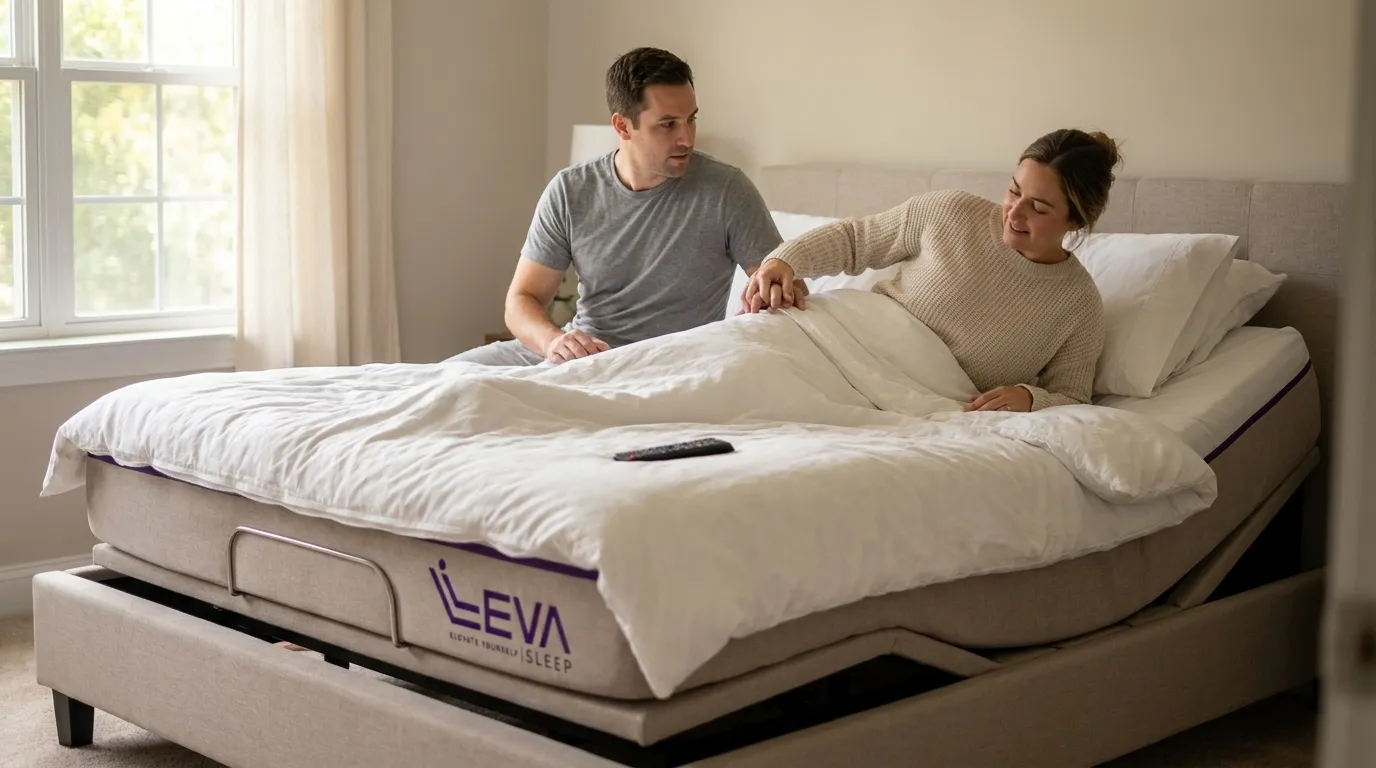
A split configuration still benefits both partners even when only one has back pain. The partner without back pain can keep a flat sleeping surface if preferred, while the partner with back pain uses independent head, foot, and lumbar elevation. Features such as zero-gravity positioning, anti-snore elevation, and massage remain available to each side independently. Couples where only one partner has a medical need are among the most common buyers of split adjustable systems because the split design removes the need for compromise.
Conclusion: Choosing a Shared Sleep Setup That Supports Back Pain Relief
Chronic back pain peaks in adults aged 50–54 and often disrupts couples’ shared sleep through snoring, movement, and different firmness needs. Poor sleep then worsens pain, which further harms sleep. Air-chamber smart beds address firmness but not positioning, and traditional flat mattresses address neither. Split adjustable sleep systems target the root problem by giving each partner independent control over head, foot, and lumbar elevation, which are the positions orthopedic and sleep medicine specialists most consistently recommend for spinal decompression and airway support.
When you compare options, look closely at motor noise levels, lumbar elevation availability, mattress compatibility, warranty terms, and the delivery and setup experience. The right system is the one both partners can evaluate together, ideally during an in-person demonstration that allows real-time position testing.
Leva Sleep has spent eight years, and served more than 25,000 customers, building split adjustable sleep systems specifically for couples facing these challenges. With 15–20 adjustable base models, American-made mattress options, whisper-quiet German motors, and in-house white-glove delivery, Leva offers a level of specialization that general mattress retailers rarely match at the cost advantage detailed in the comparison above. Schedule your personalized split system consultation at Leva’s La Jolla showroom or explore the full range of adjustable bases online.