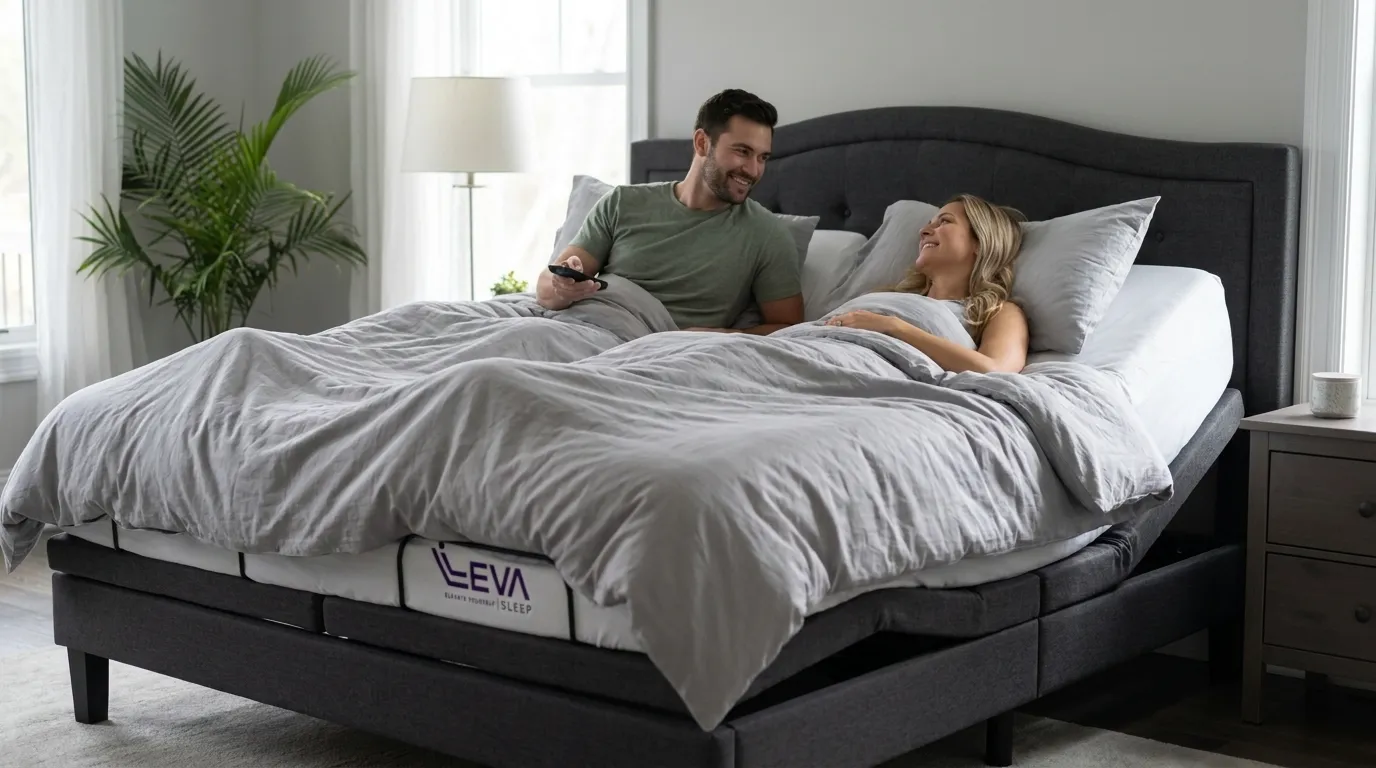
Written by: Matthew Timmins, Founder and Managing Director, Leva Sleep
Key Takeaways for Couples in 2026
- Modern sleep technology in 2026 falls into two main types: passive trackers that record data and active systems that physically adjust the sleep environment in real time.
- Couples facing snoring, firmness mismatch, chronic pain, or temperature differences benefit most from solutions that actively intervene rather than simply document sleep issues.
- Split adjustable base systems are the only category that simultaneously addresses comfort, positioning, snoring, and independent per-side control for both partners.
- Temperature-regulating systems and wearables each solve specific problems but usually need pairing with other technologies to fully address multiple sleep challenges.
- Leva Sleep offers premium split adjustable base systems with independent app control, whisper-quiet motors, and white-glove service. Explore the full range of adjustable models to find the system that matches your needs.
How to Evaluate Smart Sleep Technology in 2026
Couples can compare any sleep technology more confidently by using a clear set of criteria.
- Comfort and support: The system should address spinal alignment, pressure relief, and individual firmness needs.
- Adjustability and personalization: Each partner should be able to configure their side independently.
- Noise and motion: The system should operate quietly and avoid disturbing the other sleeper.
- Health impact: The technology should target a specific concern such as snoring, apnea, back pain, or temperature dysregulation.
- Aesthetics: The setup should integrate into a modern bedroom without looking clinical.
- Service experience: Delivery, setup, and ongoing support should be clearly defined and easy to access.
Mapping personal priorities to these criteria before shopping helps couples avoid paying for features that do not solve their real sleep problems.
Four Key Sleep Tech Categories for Couples
Temperature-regulating systems use water circulation or phase-change materials to control the thermal environment of each side of the bed. Systems such as the Eight Sleep Pod and ChiliPad use independent water-circulation zones, so partners can program different temperature curves throughout the night. A 2026 Loughborough University study found that a cooling mattress topper increased average total sleep time by 19 minutes and reduced time to fall asleep by 10 minutes in an overheated bedroom. These systems address thermal mismatch directly but do not resolve positional issues, snoring caused by airway collapse, or firmness differences.
Wearables and biofeedback devices include products such as Oura Ring, WHOOP, Garmin, and Apollo Neuroscience. They track heart rate variability, sleep stages, and movement. Apollo’s technology has delivered millions of automated sleep interventions, and engaged users often gain extra minutes of sleep per night. Wearables provide data and some behavioral nudges but do not physically change the sleep surface or address a partner’s snoring.
Smart environment controls include connected lighting, white noise machines, and app-integrated thermostats that work together to shape the bedroom environment. Platforms such as Sleeptracker-AI via IFTTT and Sleep as Android automate lights, temperature, and sound based on detected sleep cycles. These tools complement other categories but rarely resolve the core physical problems couples face in a shared bed.
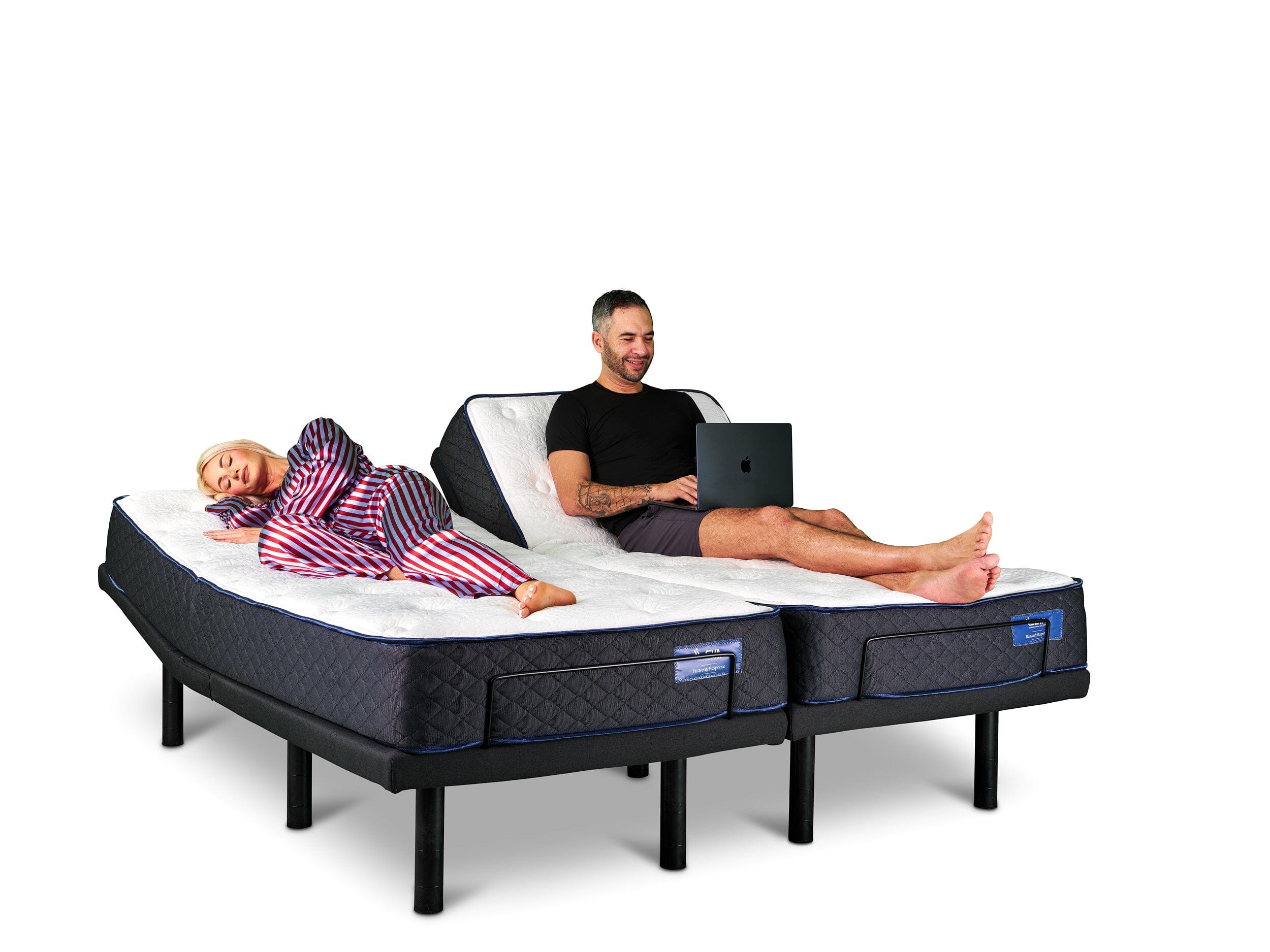
Split adjustable base technology combines mechanical positioning, embedded biometric sensing, and app-controlled automation in one integrated system. Ergomotion vice president Nicole Slinger describes adjustable bases as addressing zero-gravity positioning for back pain or acid reflux and anti-snore presets that automatically adjust head elevation. Each partner controls their side independently. This makes split adjustable bases the only category that simultaneously addresses firmness, positioning, snoring, and, when paired with a compatible temperature pad, thermal comfort.
Head-to-Head Comparison of Modern Sleep Technologies
Now that each category is defined, a side-by-side comparison shows how they perform against the criteria couples care about most. This view highlights which technologies solve multiple problems at once and which focus on a single issue.
| Criterion | Temperature-Regulating Systems | Wearables / Biofeedback | Smart Environment Controls | Split Adjustable Base Systems |
|---|---|---|---|---|
| Comfort & Pain Relief | Addresses thermal discomfort, no positional support | Tracks discomfort patterns, no physical intervention | Improves ambience, no direct effect on pressure points | Zero-G preset elevates head and legs to reduce pressure points and improve circulation |
| Partner Compatibility | Independent dual-zone temperature control per side | Individual device, no shared-bed benefit | Room-level settings, limited per-partner control | Couples using split king adjustable beds often report improved sleep quality |
| Snoring & Airway Support | No direct airway intervention | Some devices detect snoring, no physical response | May mask noise with sound, does not open airway | Automated snore response raises head approximately 12 degrees without waking either partner |
| Temperature Control | Clinically demonstrated sleep-time gains in overheated environments (see Loughborough study above) | Skin-temperature biofeedback devices show ISI improvement in small trials | Adjusts room temperature, less precise per partner | Compatible with add-on heating and cooling pads for per-side thermal control |
| Technology & App Integration | App-controlled temperature curves, limited smart-home integration | AI-driven interventions with 17 peer-reviewed studies for Apollo platform | Integrates lights, thermostat, and sound into automated routines | App-controlled micro-adjustments, sleep scoring, auto anti-snore, Zero-G, no wearable required |
| Setup & Daily Use | Topper or pad installation, nightly fill or charge depending on model | Worn nightly, requires charging, data reviewed via app | One-time device setup, then mostly automatic | Professional installation recommended, app or remote control, no nightly maintenance |
| Long-Term Reliability | Water-circulation components need periodic maintenance | Battery and sensor degradation over 2–4 years is typical | Electronics lifespan similar to other smart-home devices | Adjustable bed frames market growing at 7.8% annually through 2033, reflecting durable residential demand |
Key observations from the comparison:
- Temperature-regulating systems excel at thermal mismatch but need a separate solution for snoring or positional pain.
- Wearables generate rich data but provide no direct physical change to the sleep surface.
- Smart environment controls enhance the bedroom setting but rarely solve core physical issues on their own.
- Verlo Mattress president Bobby Cleveland projects that adjustable bases will become the standard rather than an upgrade in sleep systems.
- Split adjustable bases remain the only single category that addresses comfort, positioning, snoring, and partner independence at the same time.
Couples whose primary problem is temperature alone may find a cooling system sufficient. Couples dealing with two or more issues, such as snoring plus firmness mismatch or back pain plus temperature difference, often find that split adjustable base technology brings those solutions together in one integrated system.
Real-World Sleep Tech Scenarios for Couples
Different sleep problems align with different technology features, and real examples make those trade-offs clearer.
Chronic back pain: Positional elevation is the primary need. Ergomotion’s Zero-G preset automatically lifts the head and legs to align the spine, elevate the knees, reduce pressure points, and improve circulation. A split base allows the partner with pain to use Zero-G while the other sleeps flat.
Snoring partner: Automated head elevation is the most evidence-supported intervention for positional snoring. TEMPUR Sleeptracker-AI combines Smart Snore Position, which elevates the head, with Smart Snore Pulse, a gentle vibration. If snoring persists 30 minutes after elevation, vibration activates only on the snoring partner’s side. On a split base, the non-snoring partner remains undisturbed.
Post-surgery recovery: Elevated positioning reduces pressure on surgical sites and improves circulation. Adjustable bases allow precise head and leg angles that a flat mattress cannot provide. The recovering partner can change position with a remote or app instead of physical effort.
Differing temperature preferences: Mild skin-temperature manipulation has been shown to increase slow-wave sleep and reduce wakefulness. A split adjustable base paired with a dual-zone temperature pad delivers independent thermal control while couples remain in the same bed.
Athletic recovery: Ergomotion’s DawnHouse adjustable base tracks vital signs and is fully compatible with Garmin and Samsung health ecosystems, so athletes can correlate sleep data with training load. Zero-G positioning reduces overnight muscle tension and joint compression.
Practical Value, Trade-Offs, and Ownership Experience
Every sleep technology category involves trade-offs that go beyond the initial purchase price.
- Learning curve: App-controlled bases and smart mattresses require initial setup and profile configuration. The Global Wellness Institute has noted a rise in “orthosomnia,” where obsessive focus on sleep tracking metrics becomes a source of sleep anxiety. Simpler interfaces with clear coaching usually serve most users better than complex data dashboards.
- Maintenance: Water-circulation cooling systems need periodic cleaning and refilling. Wearables require regular charging. Adjustable bases with whisper-quiet motors typically have low maintenance needs.
- Delivery and setup: Large integrated systems benefit from professional installation so the base, mattress, and accessories work correctly together.
- Lifespan: Non-wearable sleep monitors are projected to expand at a 16.04% CAGR through 2035, which reflects durable long-term residential investment patterns.
- Health changes: A system chosen for back pain today should also support future needs such as post-surgery recovery or airway management. High adjustability becomes a long-term asset.
Guided Decision Framework for Couples
This simple checklist helps couples match their primary sleep challenge to the right technology category. Start by identifying the single issue that disrupts sleep most often for you or your partner.
- Primary problem: overheating or temperature mismatch only → A temperature-regulating cooling system addresses this directly. Pairing it with a split adjustable base adds flexibility if other issues appear later.
- Primary problem: sleep data and behavioral coaching → A wearable or biofeedback device provides detailed tracking. Pairing it with smart environment controls or a cooling system can compound the benefit.
- Primary problem: snoring, airway, or positional pain → A split adjustable base with automated anti-snore and Zero-G positioning targets these issues through physical adjustment.
- Primary problem: two or more of the above simultaneously → A split adjustable base system with an integrated temperature pad and app control can address all issues from one platform.
- Shared priority: staying in the same bed → Any solution must offer independent per-side control. Only split adjustable bases deliver mechanical independence for both position and firmness.
Leva Sleep specializes exclusively in split adjustable base systems. The company offers 15 to 20 adjustable models, compared to the 3 to 5 typically found at standard retailers. Systems include independent app-controlled settings per side, whisper-quiet German motors, tailored bedding accessories designed for adjustable bases, and white-glove delivery and setup. Couples whose checklist points to a split adjustable system can visit Leva’s La Jolla showroom to test the full range in person.
Frequently Asked Questions
What is the difference between a smart mattress and a split adjustable base?
A smart mattress embeds sensors and sometimes air chambers or temperature controls directly into the mattress. It provides data and limited firmness adjustment within a flat or near-flat surface. A split adjustable base is a motorized foundation that elevates the head and foot of each side of the bed independently. This enables positional changes such as Zero-G or anti-snore elevation that a mattress alone cannot provide.
The two technologies work well together. A compatible mattress placed on a split adjustable base combines surface comfort with full positional control. Leva Sleep designs its mattresses specifically to flex and function correctly on adjustable bases, which many standard mattresses are not engineered to do.
Can a split adjustable base actually reduce snoring without a CPAP machine?
For individuals whose snoring stems from body positioning rather than structural airway obstruction, elevating the head of the bed opens the airway and can reduce or eliminate positional snoring. Automated anti-snore systems on modern adjustable bases detect snoring through embedded sensors and raise the head a precise number of degrees without waking either partner.
This approach does not replace medical treatment for diagnosed obstructive sleep apnea, which requires evaluation by a physician. For mild positional snoring, one of the most common couple sleep complaints, head elevation is a well-established intervention. Leva Sleep’s systems include anti-snore positioning, and an automated anti-snore mode that detects snoring and makes micro-adjustments is part of the product roadmap.
Will two separate mattresses on a split base create a gap in the middle of the bed?
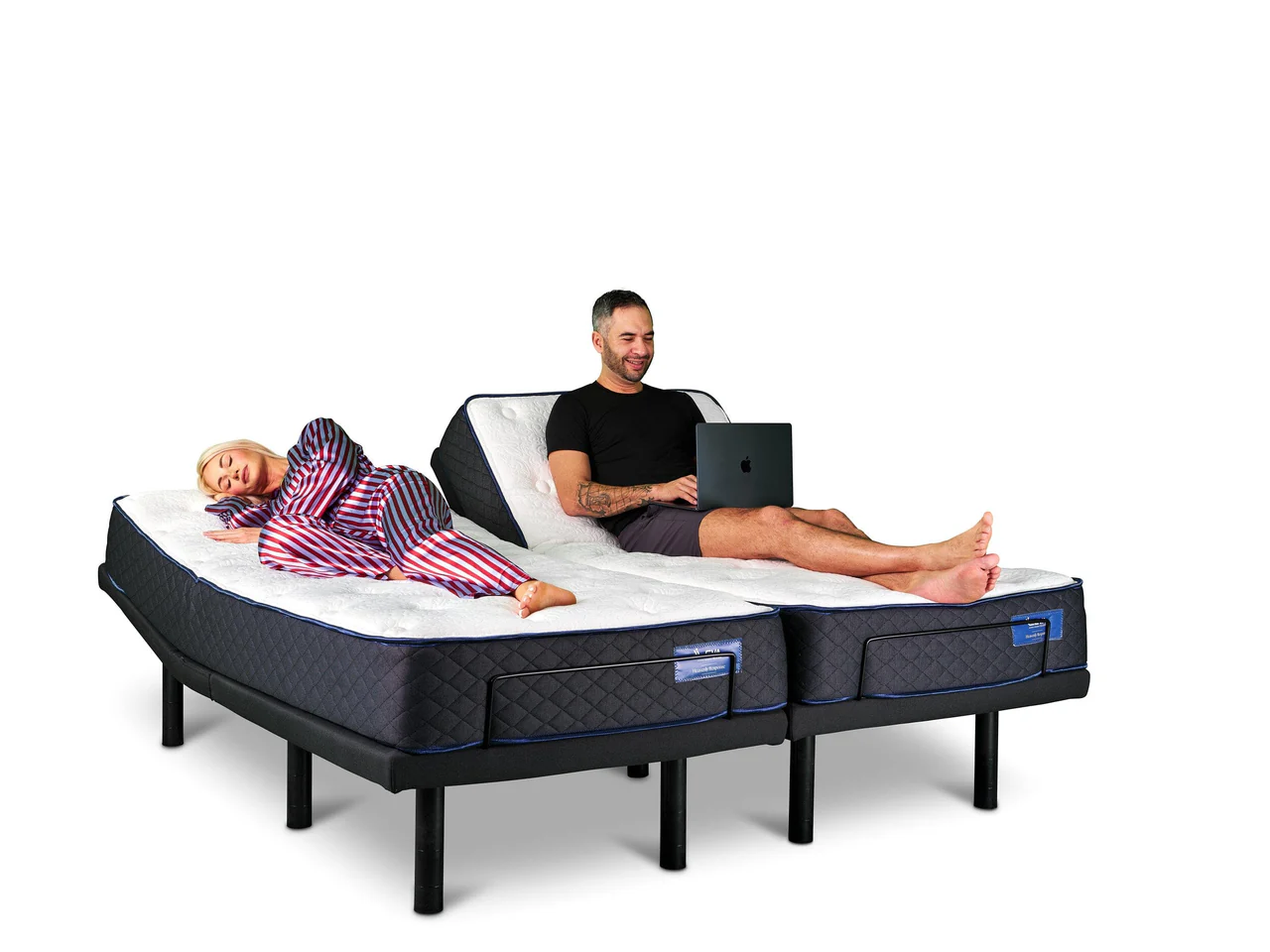
A split king configuration uses two Twin XL mattresses side by side on a shared frame, which creates a small seam at the center. Couples can manage this with a mattress bridge pad placed over the seam. Many consider this a worthwhile trade-off for the independent positional control each partner gains.
Leva Sleep also offers a Split Queen configuration, a less common format that provides split adjustability in a more space-conscious footprint. The company designs all bedding accessories, including fitted sheets with extra elastic and duvet clips, specifically to accommodate the movement and seam of split adjustable systems.
How noisy are adjustable base motors, and will they wake my partner?
Motor noise is a common complaint about some entry-level adjustable bases sold as add-ons at general mattress retailers. Premium adjustable bases use precision-engineered motors designed for quiet operation. Leva Sleep’s systems use whisper-quiet German motors, and position changes are gradual and smooth rather than abrupt.
Automated features such as anti-snore elevation are engineered to operate without disturbing the non-snoring partner. This design focus supports the primary use case of keeping both partners asleep while one receives an adjustment.
Is a split adjustable base worth the investment compared to buying separate beds?
Separate beds eliminate partner disturbance entirely but also remove physical closeness, which research links to relationship quality and stress reduction. A split adjustable base allows both partners to maintain independent sleep environments, including different positions, firmness levels, and temperature settings when paired with a dual-zone thermal pad, while still sharing one bed.
The long-term value calculation should include the cost of two separate bed setups, the relationship impact of sleeping apart, and the health cost of ongoing sleep disruption. Leva Sleep’s direct-to-consumer model prices its systems at 30 to 50 percent below comparable luxury competitors, which makes the investment more accessible for many couples.
Conclusion: Matching Sleep Technology to Your Relationship
Modern sleep technology in 2026 spans wearables, temperature systems, smart environment controls, and split adjustable bases. For couples managing snoring, pain, firmness mismatch, or temperature differences while staying in the same bed, split adjustable base technology covers the widest range of problems from a single integrated platform.
Use the decision framework above to match your specific challenges to the right category. Then evaluate products against the criteria that matter most for your relationship and health goals, such as comfort, independence, and long-term adaptability.
Ready to address your specific sleep challenges? Start with Leva’s expert consultation.