Written by: Matthew Timmins, Founder and Managing Director, Leva Sleep
Key Takeaways
- Alcohol reduction and dietary changes deliver the fastest partial improvement for alcohol-triggered snoring, often within one to two weeks.
- Nasal saline rinses and sprays are low-risk, inexpensive first-line options that resolve symptoms in up to 30% of congestion-driven cases within six weeks.
- Weight loss and oropharyngeal exercises produce meaningful snoring reduction but require three to six months of consistent effort before results are clear.
- Side-sleeping and powered head elevation address positional snoring most effectively, yet manual methods are unreliable because sleepers revert to their backs unconsciously.
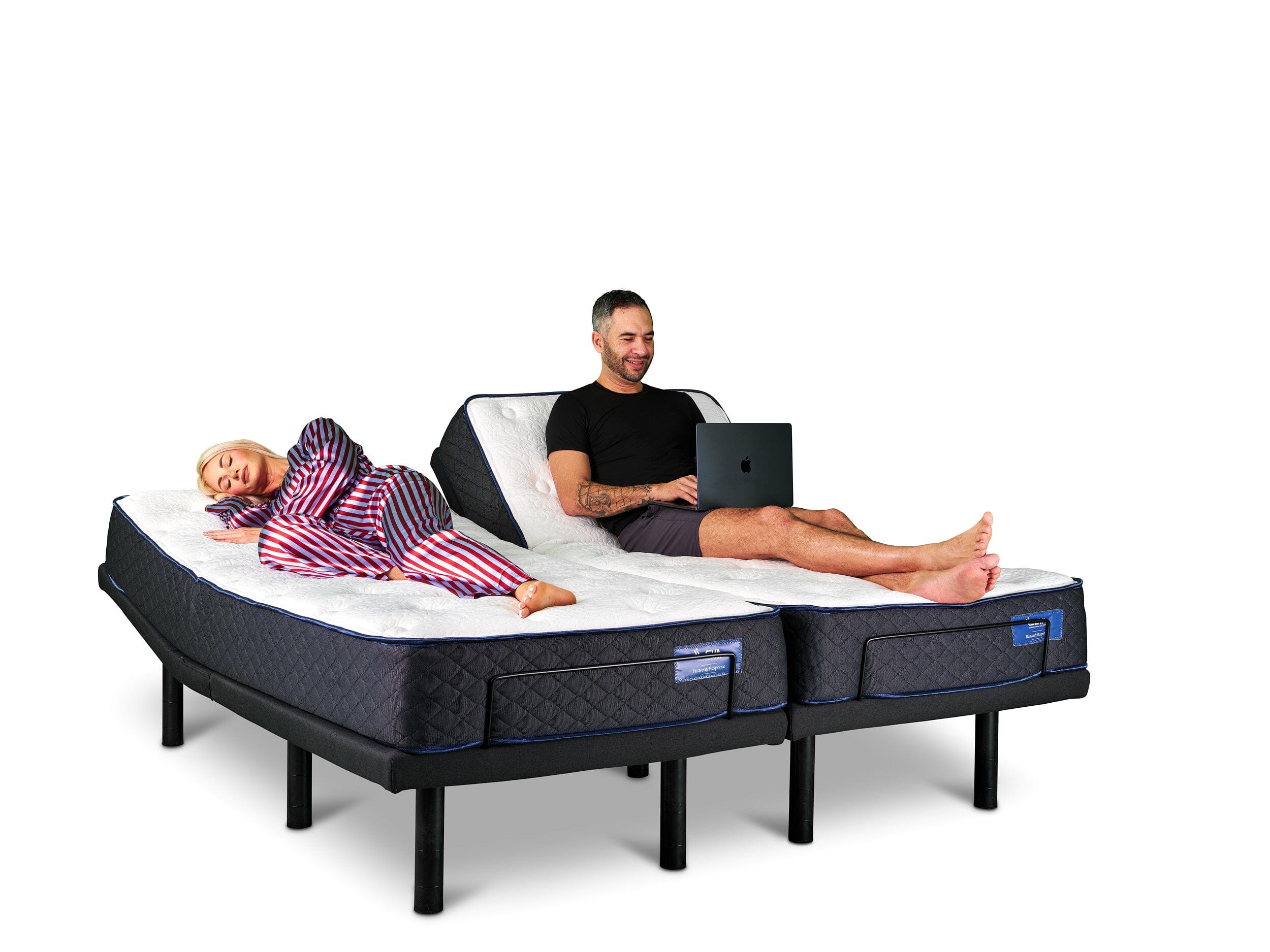
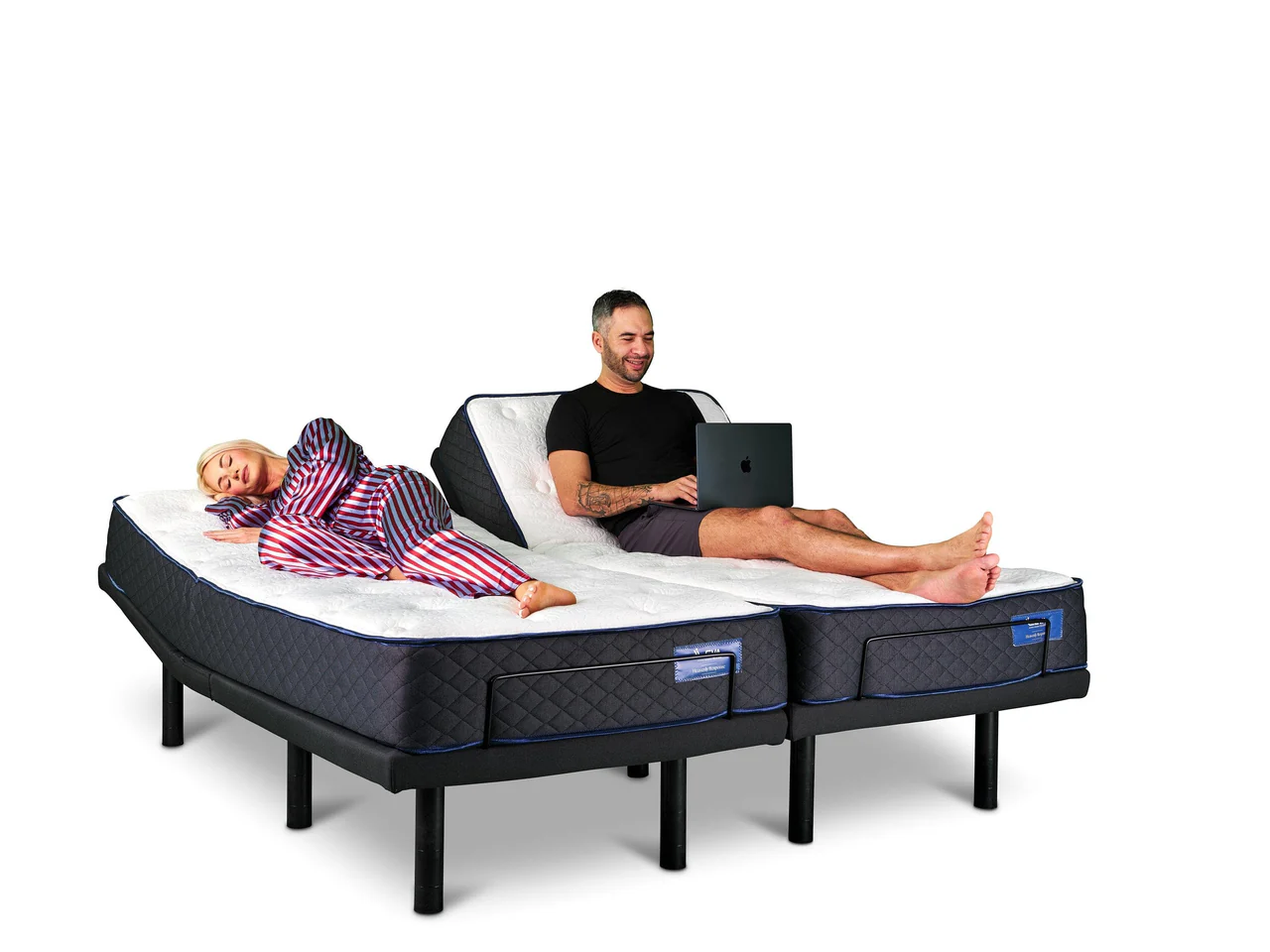
- Leva Sleep’s Split King and Split Queen adjustable bases with anti-snore mode provide the only automatic, partner-specific solution that maintains elevation all night, so each partner can sleep in their preferred position while snoring is actively managed. Shop now at Leva Sleep.
Six Remedies at a Glance
The six remedies below reflect the most common and clinically supported approaches couples use to reduce snoring, arranged roughly from lifestyle changes to structural, technology-based solutions.
- Alcohol reduction and dietary changes
- Nasal saline rinses and sprays
- Weight loss and body composition changes
- Throat and oropharyngeal exercises
- Side-sleeping and manual positional therapy
- Adjustable-base head elevation (powered positional therapy)
The Six Remedies in Detail
1. Alcohol Reduction and Dietary Changes
Forum users frequently identify alcohol as the most immediate and controllable snoring trigger. The mechanism is well-documented. Alcohol relaxes the muscles of the upper airway, which increases the likelihood of collapse and vibration during sleep. Multiple systematic reviews and meta-analyses confirm that alcohol consumption significantly increases snoring and obstructive sleep apnea severity, worsens nocturnal oxygen desaturation, and increases respiratory event duration. Even low-to-moderate intake, such as one to two drinks for women and one to three for men near bedtime, is associated with measurable worsening of obstructive breathing parameters. The effect is most pronounced when alcohol is consumed within 30 minutes of sleep.
Diet beyond alcohol also plays a role. Some analyses have suggested that consumption of processed meats may be associated with increased risk of obstructive sleep apnea and snoring. Forum users who cut evening alcohol and reduced processed food intake typically report noticeable improvement within one to two weeks. That timeline is the fastest of any remedy in this guide.
Anonymized forum reports from 2025–2026 threads illustrate both the speed and the limits of this approach. One user wrote: “Stopped drinking wine with dinner for two weeks. My wife said the snoring dropped by half immediately.” Yet even rapid responders often hit a ceiling. Another user noted: “Cutting alcohol helped but didn’t eliminate it, I still snored on my back even sober.” This pattern reveals the core trade-off. Alcohol reduction addresses one trigger without correcting underlying airway anatomy or sleep position, so positional snorers usually see improvement rather than full resolution.
2. Nasal Saline Rinses and Sprays
Nasal congestion narrows the upper airway and forces mouth breathing, which increases snoring intensity and bed-partner disturbance. Saline rinses and sprays are recommended as a first-line medical treatment to clear mucus and irritants, and many patients report better breathing comfort and reduced snoring after treating nasal obstruction, even when apnea-hypopnea index improvement remains inconsistent across studies.
The most compelling recent clinical evidence comes from pediatric populations, yet the mechanism applies broadly. The MIST+ randomized clinical trial published in JAMA Pediatrics in 2026 found that once-daily intranasal saline resolved obstructive sleep-disordered breathing symptoms in nearly 30% of participants during a six-week run-in phase, and that continued saline performed statistically equivalently to intranasal corticosteroids in the remaining cases. Lead author Gillian Nixon, MD, stated, “We think this should make intranasal saline the first-line treatment for these symptoms.” Forum users report a similar pattern. Saline is cheap, low-risk, and produces results within days for congestion-driven snoring, but has little effect when the airway issue is structural or positional rather than inflammatory.
One Reddit user from a 2025 thread wrote: “Neti pot every night before bed, game changer for allergy season snoring.” A SleepApnea.org member noted: “Saline spray helped my wife’s snoring in winter but did nothing in summer when her allergies weren’t active.” Together these comments highlight a clear limitation. Saline addresses congestion-driven snoring specifically. When snoring persists in the absence of nasal blockage, the cause often lies in structural factors like excess tissue in the airway itself.
For snorers whose congestion remedies have reached their limit, explore Leva Sleep’s adjustable bases designed for positional relief.
3. Weight Loss and Body Composition Changes
Excess weight, particularly fat deposited around the neck and tongue, physically narrows the airway during sleep. Penn Medicine researchers using MRI scans on 67 obese adults with obstructive sleep apnea identified reduction in tongue fat as a primary mechanism behind breathing improvement after weight loss. A neck circumference larger than 17 inches in men or 16 inches in women is a recognized risk factor for OSA because excess fat loads the airway.
A 2022 dose-response analysis in the Journal of Clinical Sleep Medicine found that weight loss correlates with reduction in the apnea-hypopnea index, and Harvard Health data indicate OSA remission rates of 20–40% after sustained weight loss of 10% or more when baseline AHI is below 30 events per hour. Forum users who pursued structured weight loss, usually through caloric reduction and increased activity, report meaningful snoring reduction at the three-to-six-month mark. The most dramatic improvements appear in those who were significantly overweight at baseline.
A 2025 Reddit thread user shared: “Lost 25 pounds over five months. Snoring went from every night to maybe twice a week.” Another noted: “Weight loss helped but I still snore when I’m on my back, position still matters even after losing weight.” These experiences underline the trade-off. Weight loss is a long-term intervention with compounding health benefits, yet it does not provide immediate relief for a partner losing sleep tonight and often does not eliminate positional snoring.
4. Throat and Oropharyngeal Exercises
Oropharyngeal exercises are structured daily movements that target the tongue, soft palate, and throat muscles to strengthen the upper airway and reduce its tendency to collapse during sleep. The clinical evidence base is substantial. The Ieto et al. 2015 randomized trial found that three months of daily oropharyngeal exercises reduced snoring frequency by 36% and total snoring power by 59%, with bed partners independently confirming quieter nights. The Guimaraes et al. 2009 RCT of 31 adults with moderate OSA showed that three months of daily exercises reduced the apnea-hypopnea index from 22.4 to 13.7 events per hour.
A randomized controlled trial found that three months of oropharyngeal exercises produced reductions in snoring loudness, frequency, and daytime sleepiness, while the sham-exercise control group showed no significant improvement. A systematic review and meta-analysis published in the European Archives of Oto-Rhino-Laryngology found that myofunctional therapy can reduce snoring.
Forum users describe the commitment required as the primary barrier. A 2025 SleepApnea.org member wrote: “Eight minutes of tongue exercises every morning for three months, my partner says I’m about 60% quieter.” Another noted: “I started strong but dropped off after six weeks. Partial results, not consistent.” The trade-off centers on adherence. Exercises require daily practice for eight to twelve weeks before meaningful results emerge, and gains diminish if the routine is abandoned. They work best for mild-to-moderate snoring and do not address positional triggers on their own.
If daily exercise routines feel unsustainable, discover how Leva Sleep’s automatic elevation solves positional snoring without ongoing effort.
5. Side-Sleeping and Manual Positional Therapy
Sleeping on the back allows the tongue and soft palate to fall toward the posterior pharyngeal wall, which partially obstructs the airway. Side-sleeping removes that gravitational load. Up to 75% of patients with obstructive sleep apnea have the positional type triggered by back-sleeping, for which side-sleeping can improve symptoms. The 2026 Pavlov randomized controlled trial presented at the ATS International Conference found that positional therapy led to long-term behavior changes, with more than two-thirds of participants continuing side-sleeping and maintaining OSA control even a year after stopping active treatment.
Clinical practice guidelines for adult obstructive sleep apnea recommend positional therapy for patients with position-dependent OSA. Lead researcher Irene Cano-Pumarega, MD, PhD, stated, “Our findings suggest that positional therapy could represent a first-line treatment option for a substantial proportion of patients with positional OSA.” She added, “This represents a fundamental shift from device-dependent therapy to a potentially self-maintained therapeutic effect.”
Forum users report rapid results when positional snoring is the primary driver. A 2026 Reddit thread user wrote: “Tennis ball sewn into the back of a shirt, crude but it worked for two months until I got used to side-sleeping.” When manual methods are maintained, results can be dramatic. One user shared: “Body pillow behind my husband’s back cut the snoring by 80% the first night.” Yet this highlights the core limitation of manual positional therapy. Pillows shift, body pillows fall away, and back-sleeping resumes unconsciously. The remedy is clinically validated but mechanically unreliable over a full night without a structural solution.
6. Adjustable-Base Head Elevation (Powered Positional Therapy)
Powered head elevation provides a structural, permanent evolution of manual positional therapy. Elevating the head of the bed by even a few degrees shifts the airway geometry, reduces gravitational collapse of soft tissue, and maintains that position throughout the night without relying on the sleeper’s unconscious compliance. Powered head elevation builds on the positional therapy principles validated in the Pavlov trial but removes the consistency problem that limits manual methods.
Leva Sleep’s Split King and Split Queen adjustable bases extend this principle with an anti-snore mode arriving spring 2026. The system detects snoring and makes automatic micro-adjustments to the head of the bed. Operation remains whisper-quiet, app-controlled, and independent for each partner. One side of the bed can elevate without disturbing the other, so both partners stay in the same bed with personalized comfort.
Forum users who have used adjustable bases for positional snoring consistently describe it as the remedy that finally removed the problem from the relationship rather than just managing it. A 2025 SleepApnea.org thread member wrote: “Adjustable base at 15 degrees, first full night of sleep my wife has had in three years.” Another noted: “Every other remedy helped a little. The adjustable base just solved it.” The trade-off compared to free remedies is cost, yet couples who have already cycled through the list above frequently describe the investment as a straightforward decision.
What Users Say Worked vs. Didn’t
The table below brings together forum experiences and clinical findings for all six remedies so you can compare timelines, success patterns, and limitations side by side and match them to your situation.
| Remedy | Typical Timeline to Results | Forum-Reported Success Pattern | Primary Limitation | Best For |
|---|---|---|---|---|
| Alcohol reduction | 1–2 weeks | Rapid partial improvement for alcohol-triggered snoring | Does not address structural or positional causes | Snorers whose symptoms worsen with evening drinking |
| Nasal saline rinses/sprays | Days to 1 week | Effective for congestion-driven snoring (see MIST+ results above) | No effect when snoring is positional or structural | Allergy- or congestion-related snoring |
| Weight loss | 3–6 months | Significant improvement in sleep-disordered breathing with weight loss | Long timeline, positional snoring often persists | Overweight snorers with high neck circumference |
| Throat exercises | 8–12 weeks of daily practice | 36–59% reduction in snoring frequency and power at 3 months | High adherence requirement, gains reverse if stopped | Mild-to-moderate snoring with good daily discipline |
| Manual side-sleeping | Immediate when maintained | Up to 75% of OSA patients are positional, side-sleeping improves symptoms | Position reverts unconsciously during sleep | Confirmed positional snorers, short-term relief |
| Adjustable-base head elevation | First night | Consistently described as the most complete solution for positional snoring in couple-focused threads | Upfront investment, requires compatible mattress | Couples seeking a permanent, tech-enabled, no-compromise solution |
Frequently Asked Questions
Are natural snoring remedies safe to try without seeing a doctor first?
Most of the remedies in this guide, including alcohol reduction, nasal saline, dietary changes, throat exercises, and positional adjustments, carry minimal risk and are appropriate to try independently. However, snoring that is accompanied by witnessed breathing pauses, gasping, excessive daytime sleepiness, or morning headaches may indicate obstructive sleep apnea, a condition that requires medical evaluation. If any of those symptoms are present, a sleep study should precede or run alongside any self-managed remedy. Natural remedies do not replace diagnosis when clinical signs are present.
How long should a couple try a remedy before concluding it is not working?
The effective trial period depends on the remedy. Alcohol reduction and nasal saline typically produce noticeable changes within one to two weeks. If there is no improvement by that point, the snoring is likely not driven by those triggers. Throat exercises require a minimum of eight to twelve weeks of daily practice before a fair assessment is possible. Weight loss requires three to six months of sustained effort. Positional changes, whether manual or via an adjustable base, tend to produce results on the first night they are correctly implemented, which creates the fastest feedback loop of any remedy in this guide.
Can a partner’s snoring be addressed without disrupting the other partner’s sleep position or comfort?
Forum users frequently describe this as their central challenge, and it is the specific problem Leva Sleep’s Split King and Split Queen adjustable bases are engineered to solve. Each side of the bed operates independently, so the snoring partner’s head can be elevated automatically through the anti-snore mode without changing the other partner’s position, firmness setting, or temperature. Both partners remain in the same bed with fully individualized sleep environments. No other remedy in this guide offers that level of couple-specific customization.
Does sleeping on your side actually stop snoring, or just reduce it?
For positional snorers, estimated at up to 75% of people with obstructive sleep apnea, side-sleeping can produce dramatic reductions and sometimes eliminates snoring entirely on nights when the position is maintained. The clinical challenge is that most people revert to back-sleeping unconsciously during the night, which explains why manual positional aids like body pillows and tennis-ball shirts produce inconsistent results over a full sleep cycle. Powered head elevation via an adjustable base addresses this by maintaining the beneficial airway geometry automatically, regardless of what position the rest of the body is in.
When should someone stop trying natural remedies and seek professional help?
Natural remedies work well as a first-line response to primary snoring, which means snoring without other symptoms. Professional evaluation becomes necessary when snoring is accompanied by observed apneas, choking or gasping sounds, significant daytime fatigue despite adequate sleep time, difficulty concentrating, or morning headaches. These signs may indicate obstructive sleep apnea, which carries cardiovascular and metabolic health risks if left untreated. A board-certified sleep physician can order a home sleep test or in-lab polysomnography to establish a diagnosis and guide treatment, which may include positional therapy, oral appliances, CPAP, or a combination of approaches.
Conclusion
Across 2025 and 2026 forum threads, one pattern appears consistently. Couples who find lasting relief from snoring almost always arrive at positional change as the decisive factor. Alcohol reduction, saline, weight loss, and throat exercises each address a specific contributing variable. Positional elevation addresses the underlying airway geometry that makes snoring possible in the first place and does so immediately, every night, without requiring the snoring partner to maintain a conscious behavior change.
Leva Sleep’s Split King and Split Queen adjustable bases with anti-snore mode represent the practical endpoint of that forum-validated insight. A whisper-quiet, app-controlled system detects snoring and makes automatic micro-adjustments to the head of the bed, independently for each partner, so both people stay in the same bed and wake up rested. With more than 25,000 customers served and eight years of adjustable-base specialization, Leva translates what forum users have been discovering on their own into a precision-engineered sleep experience. Explore Leva Sleep’s adjustable bases to turn positional insight into consistent, restorative sleep.