
Written by: Matthew Timmins, Founder and Managing Director, Leva Sleep
Key Warranty Lessons Before You Buy a Smart Bed
- Smart bed systems mix parts with very different lifespans. Air chambers often last 8–15 years, while electronics and control boards usually fail much sooner.
- Most major smart-bed warranties move from full coverage to prorated or excluded terms after year one or three. Motors and electronics then receive limited protection.
- Stains, improper foundations, and weight-limit violations are the most common reasons sagging claims are denied, even when a real defect exists.
- Electronics obsolescence is a growing risk. Over 621,000 semiconductor components reached end-of-life in 2025, often without notice, which can make future repairs impossible even with a warranty.
- Leva Sleep addresses these gaps with split-base independent warranties, in-house white-glove service, and regionally stocked replacement parts. Explore Leva’s warranty coverage to protect your investment.
How Long Smart Bed Motors and Moving Parts Usually Last
Motor quality determines how long an adjustable base actually works, not how long the frame survives. Quality actuators can run for many years, while budget motors wear out faster under heavier loads. Massage motors usually carry shorter warranties but can last several years with moderate use. Remotes and control boxes often need replacement over time because of normal wear, power issues, or accidental damage.
| Component | Stated Warranty (Typical) | Real-World Lifespan | Full Replacement vs. Prorated |
|---|---|---|---|
| Drive motors / actuators (mid-range base) | 2–10 years depending on tier | Varies by quality and use | Full yr 1–3, then prorated or excluded yr 4+ on most brands |
| Remote / control box | 1–3 years | Varies by use | Full yr 1–2, then excluded after yr 3 on most plans |
| Massage motors | 1–2 years | Varies with use | Full yr 1 only on most plans |
| Steel frame | 10–25 years or limited lifetime | Often long lasting | Full or prorated, and frames rarely fail |
A longer motor warranty signals better build quality than a long frame warranty, because frames almost never fail. Treat motor warranty length as your primary durability signal when comparing systems.
What a 10-Year Mattress Warranty Usually Covers
Warranty length functions mainly as a marketing number. A customer with a 20-year warranty may find the prorated terms mean paying more for a replacement than a new mattress costs. Coverage applies only to manufacturing defects, not comfort changes, normal softening, or impressions shallower than the stated threshold.
| Brand / Product | Stated Warranty | Full-Coverage Window | Sagging Threshold / Key Exclusions |
|---|---|---|---|
| Sleep Number (2026 portfolio) | 10 years (standard); 15-year limited warranty on Climate360 | Not publicly detailed by component | Stains void coverage; air chamber and electronics terms not itemized publicly |
| Tempur-Pedic mattress (post-Oct 2022) | 10 years full replacement | 10 years non-prorated | Sagging must exceed 1–1.5 inches unloaded; stains void coverage |
| Avocado mattress | 25 years | 10 years full; yr 11 owner pays 50%+ of original price | Stains, improper foundation, mold, normal wear excluded |
| Saatva Solaire | Lifetime | Not publicly itemized by component | Standard stain and misuse exclusions apply |
How Sagging Coverage Really Works in Smart Bed Warranties
Sagging coverage creates the most confusion in mattress warranties. A warranty requiring a 1.5-inch body impression for coverage is meaningfully weaker than one covering impressions of 0.75 inches. That difference often decides whether a real-world claim succeeds. Brands measure impressions without any weight on the mattress, so a visible sleeping groove that disappears when unloaded may not qualify.
The most common denial reason does not involve depth. Any visible stain can provide grounds for rejection, even when sagging is severe. Additional denial triggers include:
- Using an incompatible foundation, such as slats spaced more than 3 inches apart
- Moisture or liquid damage, even if unrelated to the defect
- Removing the law tag from the mattress
- Burns, tears, or post-delivery physical damage
Sleep Number Bed Warranty Details for 2026 Buyers
Sleep Number relaunched its full product portfolio on March 23, 2026, with all mattresses carrying a 10-year limited warranty. The Climate360 model carries a 15-year limited warranty. Sleep Number does not publicly itemize component-level coverage terms, so air chamber, pump, and electronics durations remain unclear in public documents and direct comparison with competitors becomes difficult. The Total Encasement Mattress Cover does not include the 10-year Stain Protection Limited Mattress Warranty that the Total Protection Mattress Pad carries, which directly affects stain-related claims.
Tempur-Pedic Smart Base Warranty Structure Explained
Tempur-Pedic’s current TEMPUR-Ergo Smart Base carries a 25-year limited warranty for models purchased from October 1, 2022 onward. The headline number hides a critical structure, because coverage for electronics, drive motors, and massage motors becomes limited after the initial years. The breakdown works as follows:
- Year 1: Full parts and labor, including all electronics and motors
- Years 2–3: Replacement parts covered for electronics and motors, while the owner pays all labor, shipping, and transportation
- Years 4–25: Prorated mechanical parts only; owners should confirm specific terms for electronics, drive motors, and massage motors
Weight limits also shape coverage. Tempur-Pedic power bases support up to 650 lbs each for Twin, Twin Long, Double, Queen, and Split/Dual CA King bases. Exceeding these limits voids the warranty entirely.
Electronics Obsolescence and App Support End-of-Life
Warranty fine print covers only part of the electronics risk. According to lifecycle intelligence firm Z2Data, advanced semiconductors now face shorter life cycles. In 2025 alone, 621,909 electronic components reached end-of-life, a 150,000-part increase from two years prior, and 52% were discontinued without any manufacturer product change notification.
Smart bed owners face a specific problem from this trend. The control board or wireless module in a bed purchased today may become unrepairable within several years, not because the motor failed, but because the replacement chip no longer exists. A single PCB redesign can cost thousands of dollars in engineering charges alone, which no consumer warranty absorbs. App-dependent features such as sleep tracking, anti-snore automation, and remote adjustment also remain vulnerable. When a manufacturer ends software support, those features stop functioning even if the hardware still works.
Real Owner Troubleshooting and Common Failure Patterns
Failure patterns reported by owners on forums like TalkBeds follow a predictable sequence. Control boxes and remotes usually fail first, often from power surges or battery corrosion. Actuator slowdown or stalling tends to appear next, followed by massage motor failure. Common scenarios include:
- Motor died after 4 years: This occurs most often on budget bases near maximum weight ratings. Exceeding weight limits and dust buildup around motors act as primary accelerants. Fix: verify surge protection is in place and confirm the base stays within its rated capacity.
- Warranty denied for sagging: An owner submits a claim for a visible body impression, which the brand denies because a small stain appears on the cover. Fix: install a waterproof protector from night one and document any defect with photographs before filing.
- App stopped working mid-warranty: A firmware update breaks Bluetooth pairing, and the manufacturer offers no repair path. Fix: confirm the brand’s software support commitment in writing before purchase.
- Remote replacement cost more than expected: An out-of-warranty control box replacement is quoted at $150–$300 by the manufacturer. Fix: use a compatible surge protector and store the remote in a fixed location to reduce drop damage.
What Leva Sleep Covers That Many Brands Leave Out
Leva Sleep’s warranty and service model targets the gaps that leave many smart bed owners exposed after year three.
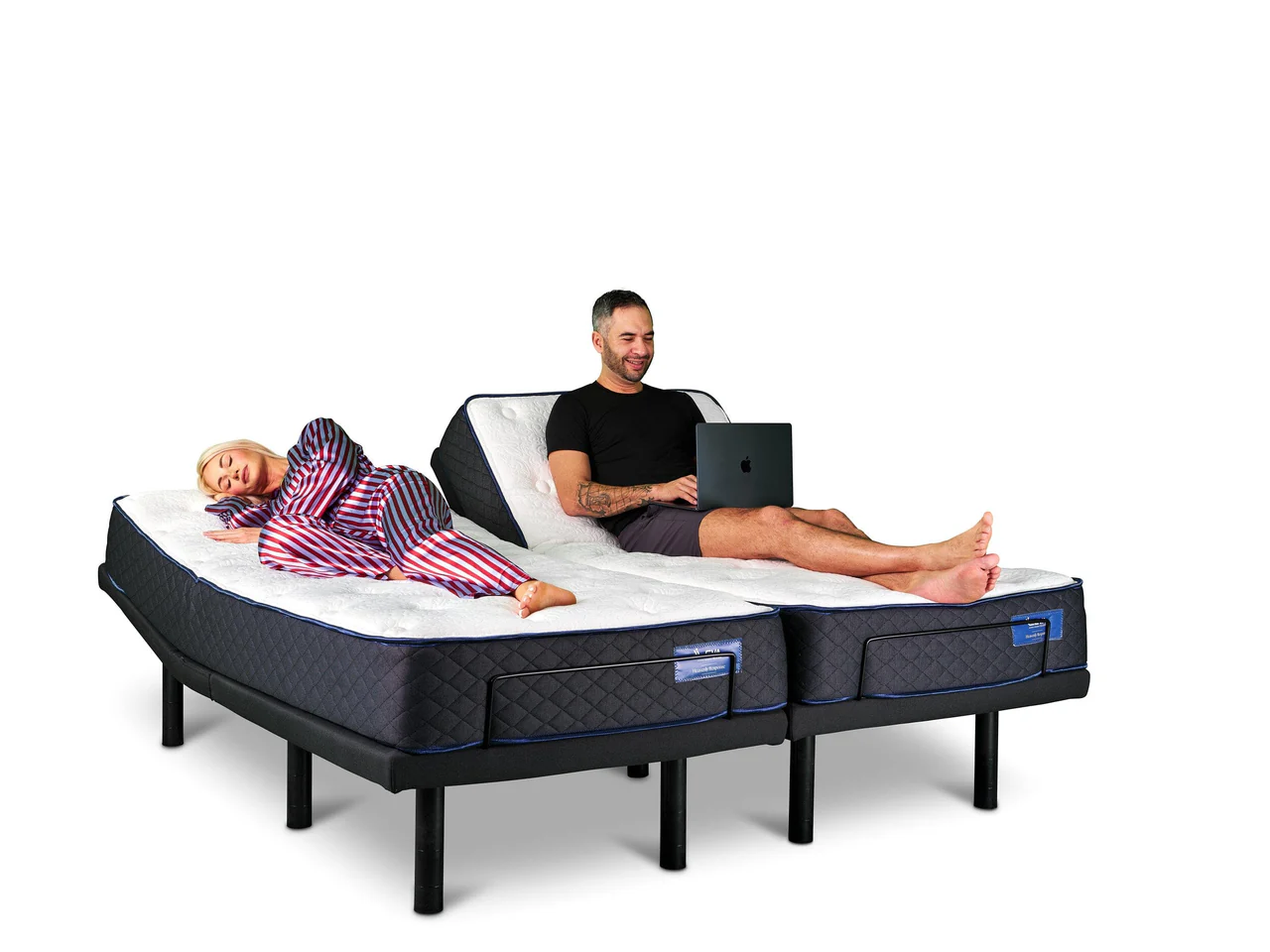
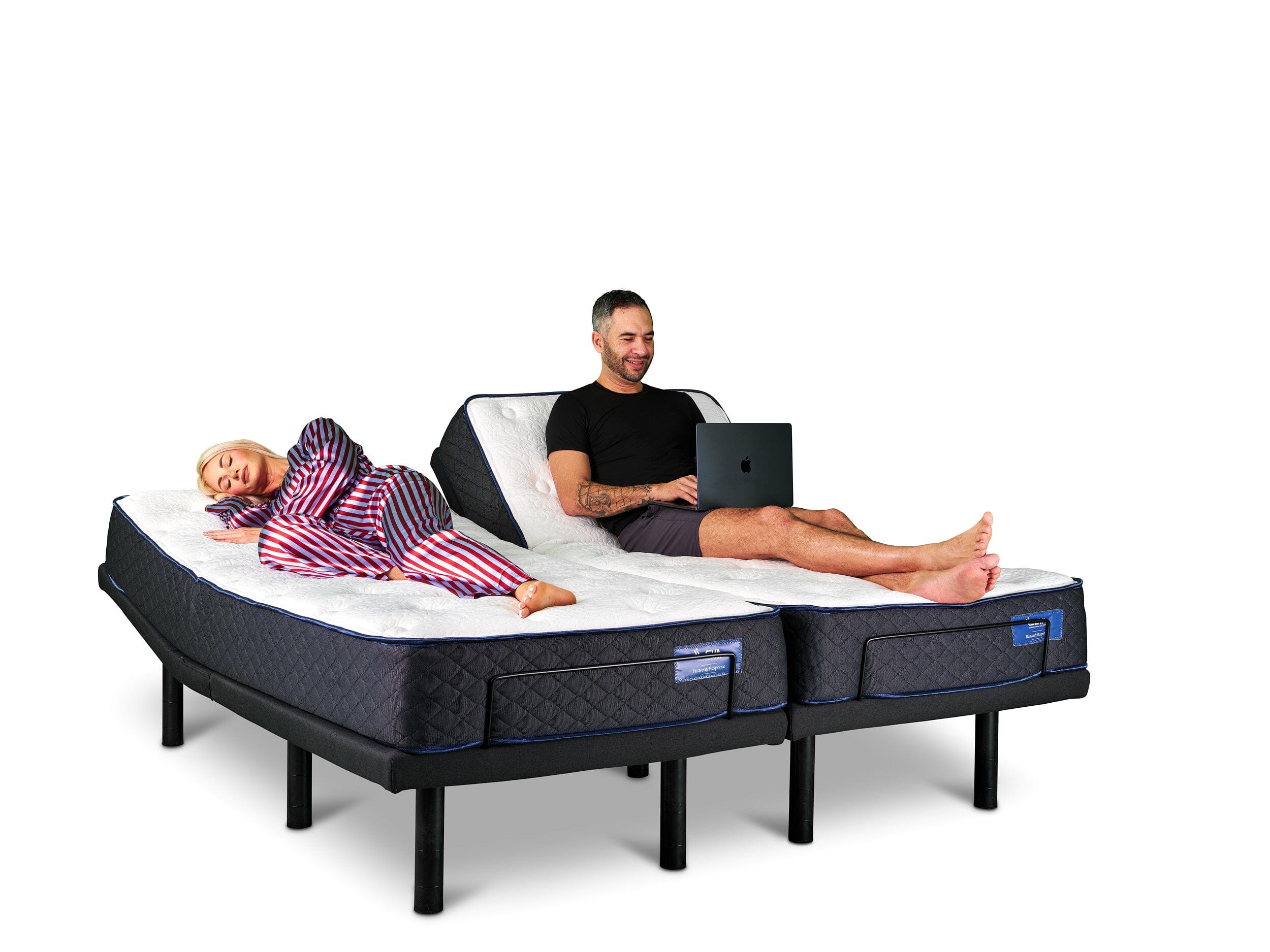
- Split-base warranty coverage: Leva’s Split King and Split Queen systems provide independent warranty coverage for each side. One partner’s component failure does not require replacing the entire system, which improves value compared with single-base configurations.
- In-house white-glove service: Leva manages delivery, setup, and service with trained in-house professionals instead of third-party contractors. This structure reduces labor and logistics disputes that often arise when warranty service is outsourced.
- Replacement-part availability: Leva’s vertically integrated model and regional assembly in Southern California keep replacement components sourced and stocked locally. This approach lowers the obsolescence risk that affects brands dependent on long global semiconductor supply chains.
- Couple-focused configuration: With 15 to 20 adjustable base models, compared with the 3 to 5 found at many standard retailers, Leva matches each partner’s needs independently. This range includes Split Queen configurations that many competitors do not offer.
Visit Leva’s La Jolla showroom to see split-base configurations in person, or shop online today.
Smart Bed Warranty Fine-Print Checklist
Use this checklist as a step-by-step guide while you read any smart bed warranty. Each point builds on the last to show your real long-term cost.
- Identify the exact year when coverage shifts from full replacement to prorated, and calculate the owner’s cost at year 5 and year 10. This baseline shows your likely out-of-pocket expense.
- After you know when proration begins, confirm which components, including electronics, motors, control box, and massage motors, are excluded after the full-coverage window ends, since these parts fail most often.
- Check the weight limit per side and confirm it accommodates both partners plus the mattress, because exceeding this limit can void coverage even when a defect exists.
- Verify whether any stain, regardless of cause, voids the mattress warranty, and decide whether you need a waterproof protector from day one.
- Confirm the warranty is non-transferable and requires proof of purchase from an authorized reseller, which affects secondhand or floor-model purchases.
- Ask whether surge protection is required to maintain coverage, and whether the brand sells a compatible unit that meets this requirement.
- Request the brand’s written software support commitment for app-dependent features, so you know how long connected functions will remain active.
- Confirm whether service is performed by in-house technicians or third-party contractors, since this difference often affects response time and accountability.
Conclusion and Next Steps for Smart Bed Shoppers
Smart beds generally last 8 to 15 years, yet the electronics and motors that make them “smart” often lose meaningful protection after year 3 on major brands. Frames outlast everything, while control boards and actuators fail first. Sagging claims are routinely denied on technicalities such as stains, improper foundations, and weight overages that do not relate to the defect itself. With semiconductor lifecycles shortening across the industry, the replacement parts for today’s smart beds may not exist in five years regardless of what the warranty promises.
Couples investing $2,000 to $8,000 in a sleep system deserve transparent, component-level coverage instead of a headline number that dissolves in the fine print. Leva Sleep’s split-base warranty structure, in-house white-glove service, and regional parts availability are designed for that level of clarity and support.
See how Leva’s warranty structure protects your investment — visit the La Jolla showroom or shop online.
Frequently Asked Questions
What is the difference between a full-replacement and a prorated smart bed warranty?
A full-replacement warranty means the manufacturer repairs or replaces a defective component at no cost to the owner for the entire stated term. A prorated warranty means the owner pays an increasing percentage of the replacement cost as the product ages. In practice, most smart bed warranties provide full coverage only for the first one to three years, then shift to prorated terms or exclude electronics and motors entirely. By the time a motor or control board fails at year five or six, the prorated reimbursement may cover less than half the replacement cost, and in some structures, the owner pays more than a new component would cost at retail.
Does a stain really void a mattress warranty?
Most major mattress brands reserve the right to deny warranty claims if any stain is visible on the mattress surface, even when the stain does not cause the defect. A sagging mattress with a small water stain from a spilled glass can be denied on that basis alone. The practical solution is to install a waterproof mattress protector from the first night of use and to document any structural defect with dated photographs before filing a claim.
Why do smart bed electronics fail before the warranty expires?
Smart bed electronics such as control boards, wireless modules, and app-connected sensors use consumer-grade semiconductors with average product lifecycles of 4 to 7 years. Component manufacturers discontinue parts on their own schedules, independent of the bed manufacturer’s warranty commitments. When a replacement chip is no longer produced, the bed manufacturer cannot repair the unit even if it remains under warranty. Power surges, dust accumulation around motor housings, and exceeding weight limits all accelerate failure. Using a surge protector, keeping the base within its rated weight capacity, and confirming the brand’s software support timeline in writing before purchase provide the most effective protection.
What should couples specifically look for in a split-base warranty?
Couples using a Split King or Split Queen configuration should confirm that each side of the base carries independent warranty coverage. If both sides share a single warranty, a failure on one side may require replacing or servicing the entire system. Couples should also verify that the weight limit applies per side rather than as a combined total, because per-side limits are typically lower and easier to exceed. Independent app controls, independent motor warranties, and access to in-house service technicians, rather than third-party contractors, further determine whether warranty service remains practical when a failure occurs.
How does Leva Sleep’s service model differ from standard mattress retailers?
Most mattress retailers treat adjustable bases as secondary add-ons and outsource delivery and service to third-party logistics providers. Leva Sleep controls the full experience in-house. Design, regional assembly, white-glove delivery, setup, and ongoing service are all handled by Leva’s own team. This vertical integration means that when a component needs service, the same organization that built and delivered the system handles the repair, which removes the coordination gaps between manufacturer, retailer, and service contractor that often delay or complicate warranty claims. Leva also stocks replacement parts regionally in Southern California, which shortens lead times when parts would otherwise need to be sourced internationally.