Written by: Matthew Timmins, Founder and Managing Director, Leva Sleep
Key Takeaways for Snorers and Their Partners
- eXciteOSA is an FDA-cleared tongue-stimulation device for mild OSA and snoring, but real-world adherence is only 54% in a 2026 veteran cohort, far below earlier trial claims.
- Side effects are generally mild and temporary, yet the device requires a strict 20-minute daily protocol for six weeks with no flexibility for travel or missed sessions.
- Cost exceeds $1,000 upfront plus recurring mouthpiece replacements, and neither commercial insurance nor Medicare provides coverage.
- Positional therapy via head elevation offers comparable AHI reductions for position-dependent OSA without daily protocols, consumables, or prescriptions.
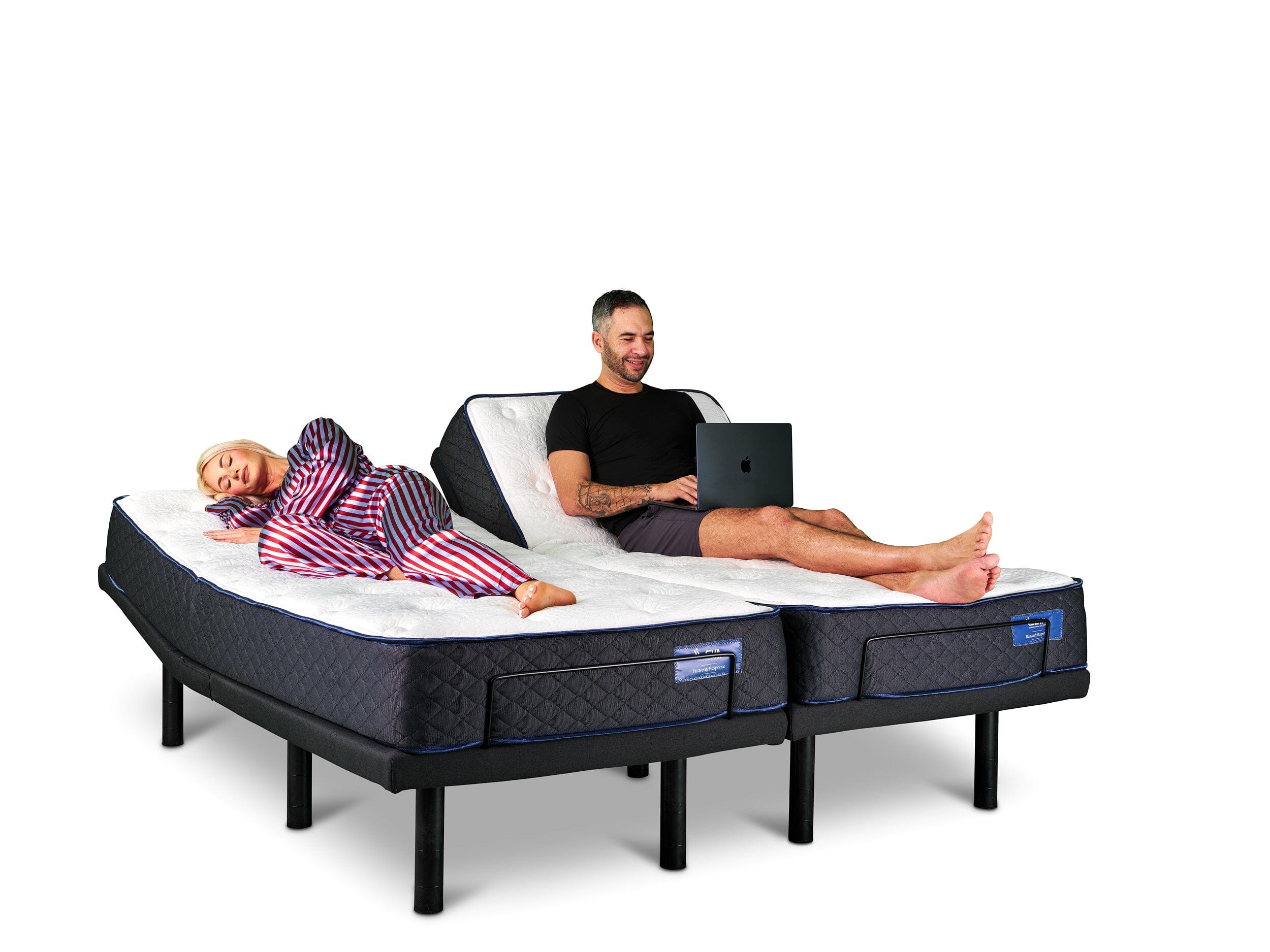
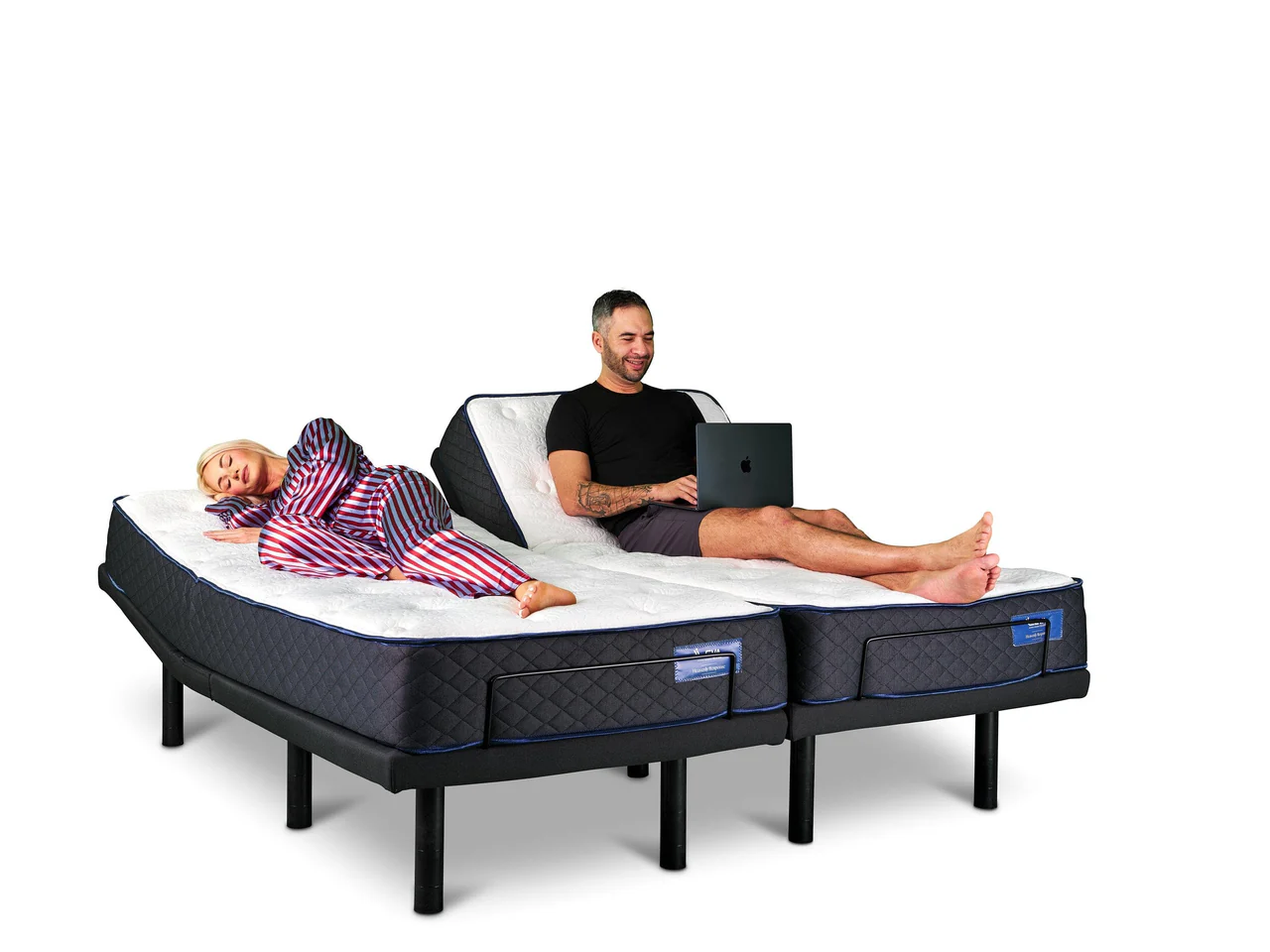
- Leva Sleep split adjustable bases deliver a one-time, non-prescription solution with independent head elevation and an automatic anti-snore mode. Explore Leva Sleep’s split adjustable bases to see how independent elevation works for couples.
How Well eXciteOSA Works in Real Life
The most rigorous real-world data available comes from a 2026 cohort study of veterans prescribed transoral neuromuscular electrical stimulation for mild OSA that found 42% of patients never completed Phase 1. Phase 1 adherence in the same cohort reached only 54%, which sits substantially below the 80–90% adherence reported in earlier manufacturer-sponsored efficacy trials.
A 2026 network meta-analysis of non-surgical OSA treatments found that positional therapy can achieve meaningful AHI reductions versus control, comparable to oral appliance therapy. The same analysis ranked positional therapy highly among non-surgical options for oxygen desaturation index (ODI) improvement. Positional therapy is not a neuromuscular stimulation device, yet this comparison shows that simpler, lower-commitment approaches can produce clinically meaningful results for position-dependent OSA, which affects roughly 50–70% of OSA patients.
The eXciteOSA evidence base itself remains limited. Several assessments note concerns regarding study quality, risk of bias, lack of blinding, and absence of long-term comparative data. Given these uncertainties, many patients weigh eXciteOSA against lower-commitment options that already have stronger comparative evidence.
eXciteOSA Side Effects and Oral Health Risks
Side effects documented in eXciteOSA studies and consistent with the broader oral appliance literature are generally temporary. Most users report resolution within the first few weeks of use. Documented effects include:
- Temporary tongue tingling or mild discomfort during stimulation sessions
- Excess salivation during or after device use
- Metallic taste associated with electrical stimulation
- Jaw discomfort, particularly during early adaptation
The broader intraoral device literature notes that some patients experience complications such as jaw pain, permanent bite changes, or TMJ symptoms that require coordinated management between a dentist and sleep physician. These more serious outcomes appear more commonly with mandibular advancement devices than with tongue stimulators, yet the shared anatomy still warrants awareness and monitoring.
How Legitimate Is eXciteOSA as a Medical Device?
eXciteOSA holds FDA clearance as a Class II device, which means it met a predicate-device standard rather than undergoing the full clinical trial process required for Class III devices. That distinction matters when evaluating insurer and health technology assessor conclusions. The existing evidence base has not yet met the standard of including robust comparison groups and evaluating long-term safety and efficacy.
Real User Complaints from 2025–2026
User sentiment on platforms including Reddit and Trustpilot shows recurring themes that the clinical literature does not fully capture. Common complaints reported by users in 2025–2026 include:
- “Miss a day and you have to restart” – the 6-week daily protocol leaves no flexibility for travel or illness without resetting progress
- Mouthpiece hardware failures reported as early as 6 months into use, which require replacement purchases
- Bluetooth and app connectivity failures that interrupt session tracking and device control
- Difficulty reaching customer support for warranty or replacement issues
These complaints align with the 2026 Saccomanno et al. systematic review finding that patient compliance is a major determinant of neuromuscular therapy efficacy, with barriers including motivation, time commitment, and dropout from perceived limited benefit.
eXciteOSA Cost, Coverage Gaps, and Long-Term Expense
The eXciteOSA device carries an initial retail price exceeding $1,000. The mouthpiece component, which contacts the tongue and delivers stimulation, requires periodic replacement, and manufacturers recommend quarterly replacement. These replacement costs add to the overall expense over time, depending on the replacement schedule and any accessory purchases.
Standard commercial insurance does not cover eXciteOSA, and Medicare likewise excludes the device from coverage. This coverage gap leaves patients paying out-of-pocket or attempting to use FSA or HSA funds, which may be allowed under some plan rules with a physician’s letter of medical necessity, but approval is not guaranteed.
By comparison, Leva Sleep split adjustable bases represent a one-time investment with no recurring consumable costs, no daily protocol, and no prescription requirement. Compare Leva Sleep’s one-time investment to ongoing device costs by visiting the La Jolla showroom or shopping online.
Who Should Avoid eXciteOSA?
The following conditions disqualify a patient from eXciteOSA use based on device labeling and clinical guidance. Patients should review this checklist with a physician before purchasing:
- Implanted cardiac pacemaker or defibrillator
- Metal implants in the head, neck, or oral cavity
- Pregnancy
- Moderate-to-severe OSA (AHI above 30 events per hour), because the device is indicated only for mild OSA and primary snoring
- Active mouth ulcers, oral infections, or recent oral surgery
- Epilepsy or seizure disorders
eXciteOSA vs Adjustable Bed for Snoring in Couples
The table below compares eXciteOSA with a Leva Sleep split adjustable base across four dimensions relevant to couples evaluating non-CPAP snoring solutions. All figures are drawn from cited sources.
| Dimension | eXciteOSA | Leva Sleep Split Adjustable Base |
|---|---|---|
| Daily Protocol | 20 minutes daily for 6 weeks | No daily protocol, app-controlled position adjustment at bedtime |
| 12-Month Cost | Initial cost plus periodic mouthpiece replacements, generally not covered by insurance | One-time base investment, no consumables or recurring fees |
| Real-World Adherence | 54% phase 1 adherence in 2026 veteran cohort | No adherence protocol required, passive positional benefit during normal sleep |
| Airway Positioning | Neuromuscular tongue muscle training, no physical airway opening during sleep | Independent head elevation per partner, positional therapy ranked highly for ODI improvement among non-surgical options |
The protocol burden difference is significant. eXciteOSA’s daily 20-minute requirement affects long-term adherence, while passive positional solutions remove that variable entirely. Total cost of ownership also diverges after year one because eXciteOSA requires recurring mouthpiece replacements, while the adjustable base remains a one-time purchase.
Leva Sleep split adjustable bases feature whisper-quiet German motors, independent head and foot elevation controls for each partner, app-controlled micro-adjustments, and an anti-snore mode that detects snoring and makes subtle positional changes automatically. White-glove delivery includes in-room setup, product tutorials, and old bed removal. No prescription is required, and both partners retain full independent control of their side of the bed.
Frequently Asked Questions
How positional therapy compares with neuromuscular stimulation for mild OSA
Positional therapy works by preventing the supine sleep position that causes the tongue and soft palate to collapse into the airway. It is most effective for position-dependent OSA, where the supine AHI is at least twice the lateral AHI, a pattern present in roughly half to two-thirds of OSA patients. Neuromuscular stimulation devices like eXciteOSA work differently. They train tongue muscle tone during waking hours with the goal of reducing airway collapsibility during sleep.
Both approaches target mild OSA and primary snoring, but positional therapy requires no daily protocol, no consumable replacements, and no prescription. A 2026 network meta-analysis found positional therapy produced AHI reductions comparable to oral appliance therapy and ranked highly among non-surgical options for oxygen desaturation index improvement. Neuromuscular stimulation has a smaller and lower-quality evidence base, with real-world adherence falling far short of trial claims, as noted earlier.
Whether adjustable beds can replace prescription snoring devices for couples
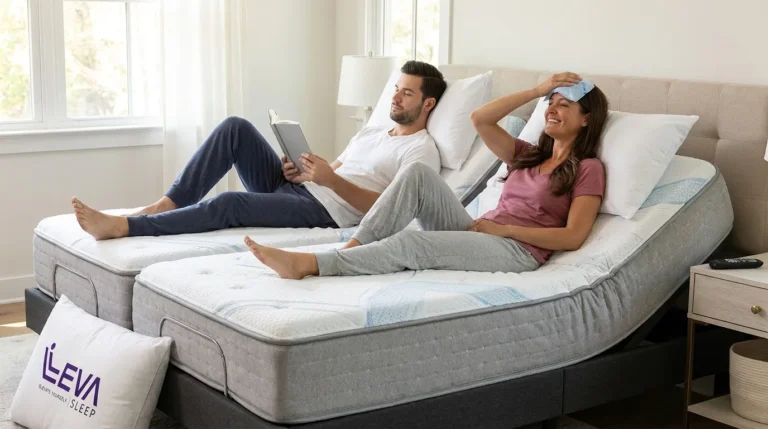
For couples where snoring is driven primarily by supine sleep position, an adjustable base that elevates the head of the snoring partner’s side can meaningfully reduce airway obstruction without any prescription, protocol, or recurring cost. Leva Sleep split adjustable bases allow each partner to set independent head elevation, so the non-snoring partner is not affected.
This approach does not replace a clinical evaluation for moderate-to-severe OSA, where CPAP or surgical options remain the standard of care. For mild OSA and primary snoring in position-dependent sleepers, however, a split adjustable base represents a lower-commitment, non-prescription option that keeps both partners in the same bed. Couples should confirm with a physician whether their snoring is position-dependent before relying solely on positional approaches.
What 2026 data shows about adherence to positional therapy
A long-term randomized trial analysis published in 2026 found that more than two-thirds of positional therapy responders maintained AHI control one year after discontinuing active treatment. Neuromuscular stimulation studies have not replicated this durability finding. A 2026 network meta-analysis confirmed positional therapy’s effectiveness is comparable to oral appliance therapy for position-dependent OSA.
By contrast, the 2026 veteran cohort study of transoral neuromuscular stimulation reported only 54% adherence during the initial 6-week daily-use phase, and the 2026 Saccomanno et al. systematic review identified motivation, time commitment, and perceived limited benefit as the primary drivers of dropout from neuromuscular and myofunctional protocols. Passive positional solutions, including adjustable base head elevation, eliminate the adherence variable because they function during normal sleep without any user action.
Decision Checklist for Choosing Between eXciteOSA and a Split Base
Use the following criteria to evaluate which approach fits your situation. Neither option replaces a formal sleep study for suspected moderate-to-severe OSA.
- Snoring severity: Primary snoring or mild OSA (AHI under 15) keeps both options relevant. Moderate-to-severe OSA makes eXciteOSA contraindicated, so patients should consult a sleep physician about CPAP or hypoglossal nerve stimulation.
- Position dependence: If snoring worsens on your back, positional therapy via head elevation directly targets the problem. If snoring occurs in all positions, neuromuscular training may address underlying muscle tone, but evidence quality remains low.
- Daily protocol tolerance: If a 20-minute daily device session for 6 weeks feels realistic given your schedule and travel habits, eXciteOSA is worth evaluating with a physician. If consistency is a concern, a passive solution like a split adjustable base removes that variable entirely.
- Budget: eXciteOSA involves initial and ongoing replacement costs with no insurance coverage. A Leva Sleep split adjustable base is a one-time investment with no consumables.
- Staying in the same bed: Both options allow couples to share a bed. Leva Sleep’s split configuration means each partner controls their own side independently, which addresses snoring without disrupting the non-snoring partner’s position or comfort.
- Contraindications: Review the eXciteOSA contraindication checklist above. Pacemakers, metal implants, pregnancy, and moderate-to-severe OSA all disqualify a patient from device use. Adjustable bases carry no equivalent medical contraindications for healthy adults.
Ready to eliminate the protocol burden? Find your Leva Sleep split base and start tonight.