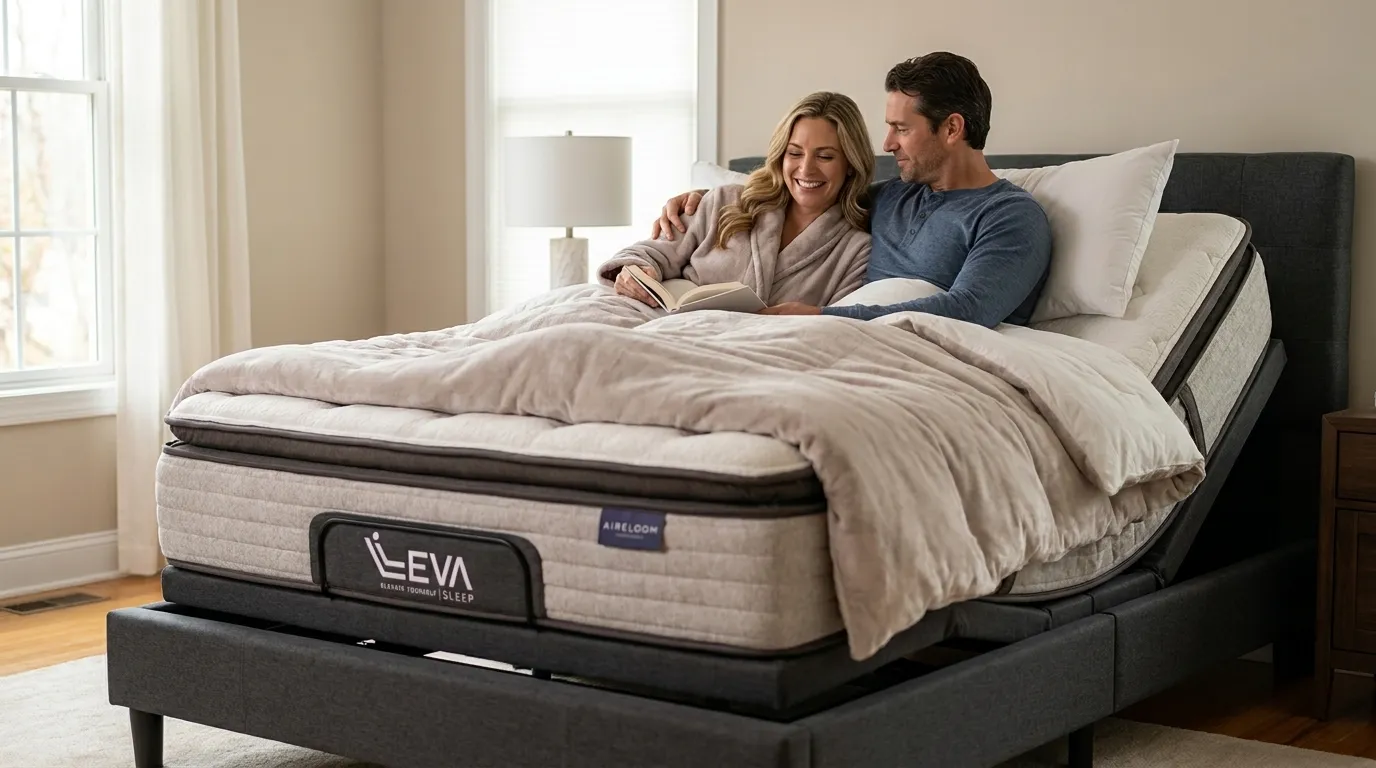
Written by: Matthew Timmins, Founder and Managing Director, Leva Sleep
Key Durability Insights for Aireloom Owners
- Aireloom mattresses typically deliver 9–12 years of comfortable use, with firmer models outlasting plush pillow-tops because foam compresses more slowly.
- The coil system rarely fails first. Plush foam comfort layers and foam edge encasement are the main durability weak points.
- Skipping rotation, using weak foundations, or placing heavier sleepers on one side accelerates asymmetric sagging within 3–6 years.
- Leva Sleep split adjustable bases redistribute nightly compression, reduce edge loading, and extend mattress life while resolving partner-comfort conflicts.
- Preview Leva Sleep’s adjustable systems online or visit the La Jolla showroom to see them in person.
The Problem: Early Aireloom Sagging for Health-Focused Couples
Poor sleep affects pain levels, mood, and long-term health. The National Sleep Foundation links sleep surface degradation to measurable increases in back pain and sleep fragmentation, and those effects compound nightly. For couples who invested $3,000–$6,000 in a premium Aireloom mattress, seeing visible body impressions within three to five years feels like both a financial and physical setback. Reddit threads and owner review forums in 2025–2026 describe plush-top Aireloom models softening faster than expected, while firmer configurations hold up considerably longer. Many couples report the same pattern: the mattress feels great for two to three years, then one side sags because one partner is heavier or sleeps in the same position every night.
That asymmetric wear pattern appears across many hybrid brands, not just Aireloom. Failure to rotate a mattress every three to six months doubles the compression load on the primary sleep zone. This accelerates body impressions in foam and hybrid constructions. Most couples never rotate, skip a protector, and place the mattress on a foundation that does not properly support a premium hybrid. The combination shortens the mattress’s comfortable lifespan.
Talk with Leva Sleep about pairing your Aireloom with the right adjustable base in-store or online.
Inside Aireloom Construction: Why Plush Tops and Foam Edges Wear Faster
Aireloom mattresses use a pocketed coil support core, which is inherently durable. A quality pocketed coil system using tempered 14–15 gauge steel maintains support for 10–15 years under normal use. The coil system is rarely the first component to fail. The weak points are the foam comfort layers above it and the foam edge encasement surrounding it.
Plush pillow-top configurations stack multiple layers of low-to-medium density polyfoam and memory foam directly beneath the quilted cover. Low-density polyfoam (<1.5 PCF) may degrade in 3–5 years, compared with 8–10+ years for high-density models. When those upper layers compress unevenly, sleepers feel sagging even if the coil system remains structurally sound. Foam edge encasement, used in most Aireloom models to create a full sleep surface to the perimeter, experiences the same compression fatigue. Edge collapse from perimeter coils or foam encasement is common in hybrid mattresses and gradually shrinks the usable sleep surface. Heavier sleepers speed up this process.
Do Aireloom Mattresses Sag Easily?
Aireloom mattresses resist sagging better than many mass-market hybrids, yet they still experience foam-layer compression like all pillow-top designs. Owner reports from 2025–2026 forums and verified retailer reviews show a clear pattern. Plush and ultra-plush Aireloom models often develop noticeable body impressions between years three and six when used on weak foundations or without rotation. Firm and luxury-firm Aireloom configurations usually show first signs of softening between years seven and ten, which matches the broader hybrid durability range. Hybrid mattresses that combine pocketed coil cores with foam comfort layers typically last 8–12 years. The Aireloom coil system generally holds up, while the quilted foam layers above it sometimes fall short of that timeline in plush builds.
Foundation choice plays a major role. Broken slats or platform beds with gaps exceeding 3 inches allow foam and coil layers to sag between support points, which mechanically stresses areas that would otherwise age more slowly. Owners who placed Aireloom mattresses on slatted frames with wide gaps reported faster sagging across models and firmness levels.
How Long Aireloom Mattresses Last by Collection and Firmness
Comfortable lifespan varies by collection and firmness tier. The table below highlights how lifespan, failure mode, and key durability factors change across Aireloom designs. Individual results still depend on body weight, foundation quality, rotation habits, and use of a mattress protector.
| Aireloom Collection / Firmness Tier | Reported Comfortable Lifespan | Primary Failure Mode | Key Durability Factor |
|---|---|---|---|
| Plush / Ultra-Plush Pillow-Top | approximately 7–10 years | Foam comfort layer compression; body impressions | Low-to-medium density upper foam layers |
| Luxury Firm / Firm Pillow-Top | approximately 9–12 years | Edge foam encasement softening | Higher-density transition foam; coil gauge |
| Tight-Top / Extra-Firm | approximately 10–12 years | Coil fatigue in high-load zones after year 10 | Minimal foam above coil system |
| Latex-Hybrid Configurations | 10-year warranty | Cover wear; latex oxidation without protector | Natural latex comfort layer density and purity |
Warranty Limits Compared to Real-World Aireloom Wear
Aireloom mattresses carry limited warranties that usually cover body impressions deeper than a defined threshold. Impressions of 1.5 inches or less are generally treated as normal wear under Aireloom policy. Owner forum reports from 2025–2026 describe a recurring frustration. Impressions that look obvious and feel disruptive often fall outside warranty coverage. Owners also report warranty denial when the mattress sits on a foundation not approved by the manufacturer. Proper mattress support on a suitable frame or foundation is often required to keep a warranty valid. The gap between what owners view as a failed mattress and what qualifies for replacement remains a consistent pain point for premium mattress buyers.
The Solution: How Leva Sleep Adjustable Bases Protect Aireloom Mattresses
Leva Sleep split adjustable bases target the three structural vulnerabilities that shorten Aireloom mattress life. These vulnerabilities are uneven compression from fixed sleep positions, edge loading from sitting on the perimeter, and inadequate foundation support. When the head or foot of the base elevates, the compression zone shifts slightly away from the primary sleep position. This spreads nightly wear across a broader surface area and counters the asymmetric body impressions seen on flat foundations.
Edge support improves because sleepers on an adjustable base usually position themselves closer to the center of the mattress. This reduces nightly load on the foam edge encasement. Reinforced center support addresses high-load sleeping areas and is one meaningful part of durability design. An adjustable base that encourages central positioning works with that engineering instead of against it.
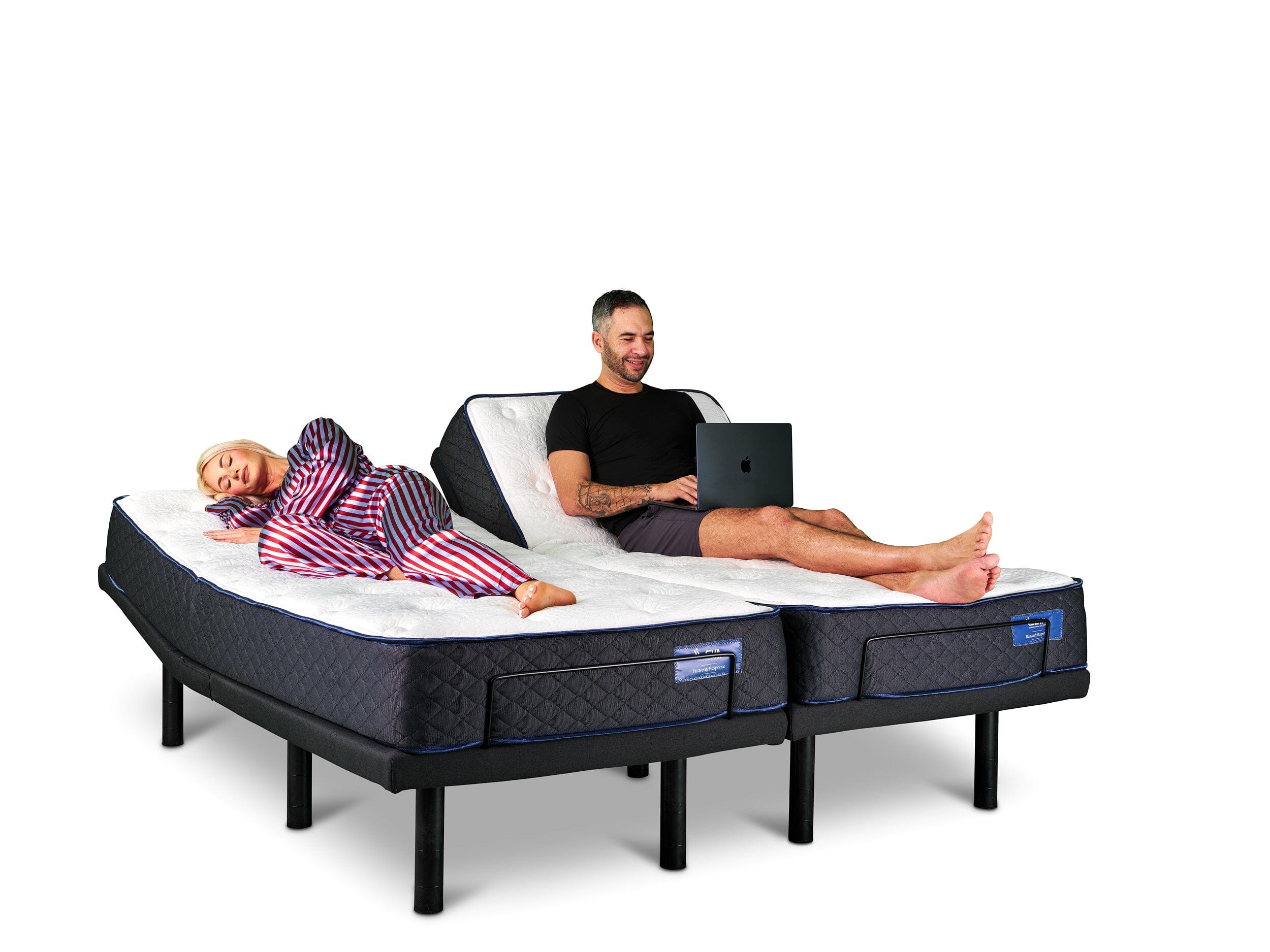
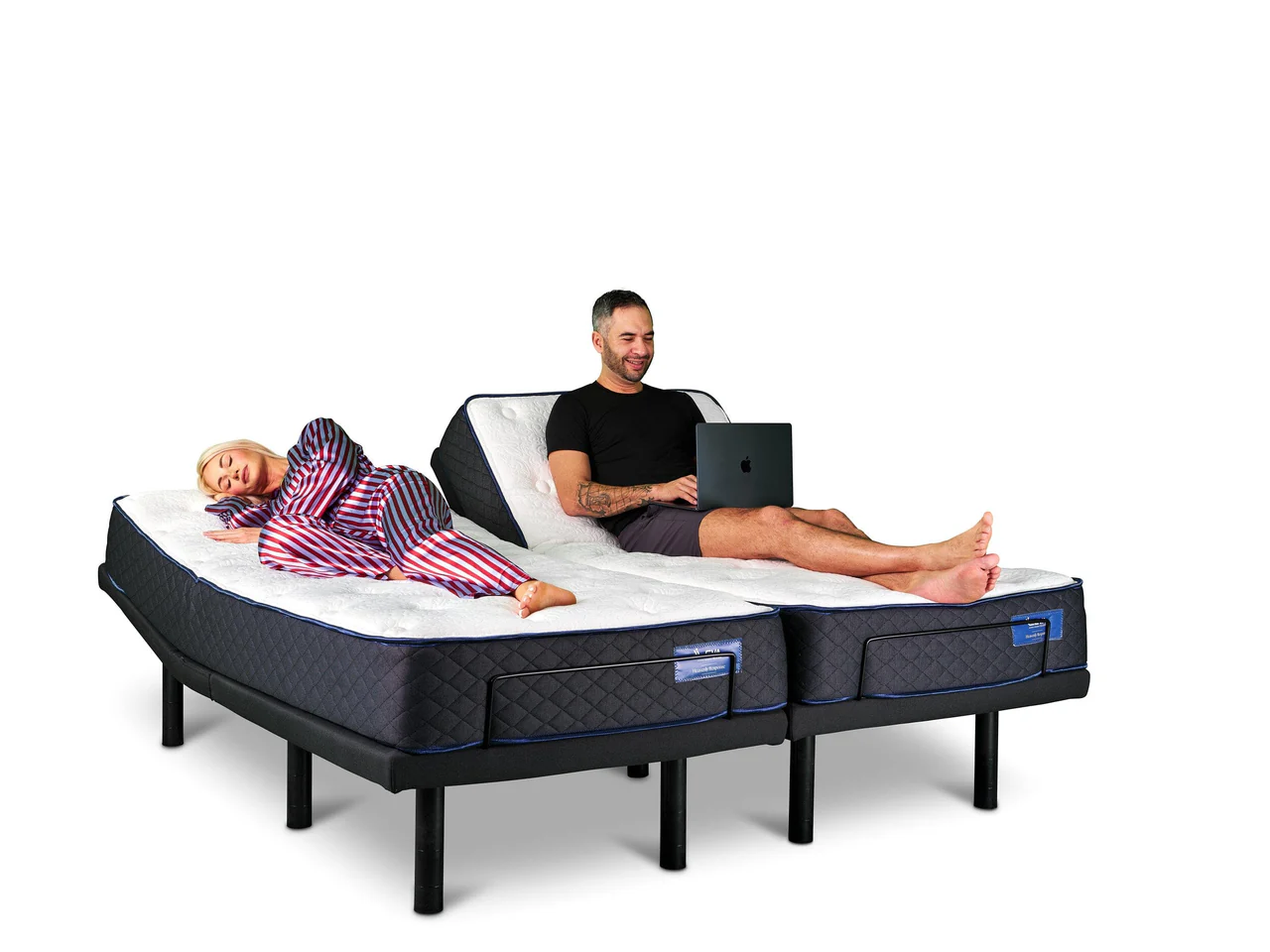
For couples, Leva Sleep split king and split queen configurations provide independent head and foot elevation, massage, and positioning controls for each side. One partner can elevate the head to reduce snoring or manage acid reflux while the other sleeps flat. Each side can also use a different firmness, which removes the need for a single compromise mattress. This system reduces the partner-conflict dynamic that pushes couples toward early replacement or separate beds. Leva Sleep has helped over 25,000 customers improve sleep through adjustable systems designed for these exact issues, with 15–20 adjustable base models instead of the 3–5 options common at general mattress retailers.
Care-Protocol Checklist for Maximum Aireloom Longevity
This care protocol reflects research-backed maintenance practices that extend hybrid mattress life.
- Use a waterproof, breathable mattress protector from day one. Combining a waterproof protector, rotation, and proper foundation support can extend mattress life by 2–4 years according to mattress care sources.
- Rotate 180 degrees (head to foot) every three months for the first year, then every three to six months. As noted earlier, skipping rotation concentrates all wear on a single zone. Do not flip single-sided pillow-top models.
- Verify foundation compatibility. Avoid slatted frames with gaps wider than three inches, which were identified earlier as a sagging risk. Leva Sleep adjustable bases provide a continuous, articulating support surface that removes this concern.
- Control room humidity. High humidity shortens mattress life by accelerating foam degradation and encouraging mold growth. Maintain 30–50% relative humidity and use a dehumidifier in humid climates.
- Deep-clean twice per year. Vacuum the mattress surface and seams with an upholstery attachment. Spot-clean stains promptly with cold water and enzyme-based cleaners, using minimal moisture.
- Launder sheets weekly and the mattress protector monthly to limit dust mites and reduce moisture transfer into the mattress surface.
- Avoid sitting on the mattress edge repeatedly. Concentrated edge loading speeds foam encasement compression, which is the most common failure mode in Aireloom plush configurations.
Latex Mattresses: The Durability Benchmark and Leva’s System Approach
Owners who want maximum mattress longevity without the softening risk of plush foam layers often consider all-latex constructions. Natural latex mattresses show the longest lifespan among mainstream types at 12–15+ years, with service records indicating strong resistance to body impressions. Natural latex is commonly described as retaining its feel for 15–25 years, outperforming high-density memory foam in impression resistance.
All-latex designs still leave some issues unresolved. They do not automatically solve partner-conflict problems, edge support concerns, or positioning needs related to medical conditions. Leva Sleep’s integrated approach pairs durable mattress options, including latex-hybrid configurations in its curated US lineup, with split adjustable bases that address structural and relational sleep challenges at the same time. Replacing a sagging Aireloom with a latex hybrid on a Leva adjustable base closes both the durability gap and the partner-comfort gap in one coordinated system.
Frequently Asked Questions
Do Aireloom mattresses sag more than other premium hybrid mattresses?
Aireloom mattresses sag at rates similar to other premium hybrids in the same firmness category. Plush and ultra-plush configurations develop body impressions earlier than firm or tight-top models because the foam comfort layers above the coil system are thicker and softer. As established, the coil system holds up well; foam layers are the weak point. The primary sagging risk comes from the foam layers and foam edge encasement, which is a shared structural trait across most luxury pillow-top hybrids. Firm Aireloom models on proper foundations with consistent rotation typically perform well for eight to eleven years before noticeable softening.
Can an adjustable base void my Aireloom mattress warranty?
Warranty compatibility depends on the specific Aireloom model and the adjustable base. Most modern Aireloom hybrid mattresses work with adjustable bases, but owners should confirm details with the retailer before purchase. Leva Sleep’s team specializes in pairing Aireloom mattresses with compatible adjustable base configurations and can explain warranty implications during a consultation. Using an adjustable base that provides continuous, even support across the mattress surface is generally safer than slatted foundations with wide gaps, which are a documented cause of premature sagging and warranty denial.
How does a split adjustable base help couples with different firmness preferences?
A split king or split queen adjustable base divides the sleep surface into two independent zones, each with its own mattress and base controls. Each partner selects a firmness that matches their body weight, sleep position, and comfort preference. Head and foot elevation, massage intensity, and positioning are controlled independently through the Leva Sleep app. One partner can elevate the head to reduce snoring or manage reflux while the other sleeps flat. This arrangement removes the compromise of a single shared firmness and reduces motion transfer when one partner moves at night.
What foundation does Leva Sleep recommend for an Aireloom mattress?
Leva Sleep recommends pairing Aireloom mattresses with a compatible adjustable base that provides a continuous, solid support surface across the full footprint. Slatted frames with gaps wider than three inches are a documented cause of accelerated sagging in hybrid mattresses and can void manufacturer warranties. Leva Sleep adjustable bases are engineered to deliver even support across the articulating surface, which protects coil and foam layers from the stress created by unsupported spans. White-glove delivery and setup include verification that the base, mattress, and frame components are correctly configured before the team leaves.
Is Leva Sleep’s anti-snore feature a replacement for a CPAP machine?
Leva Sleep’s anti-snore positioning mode gently elevates the head of the bed to help open airways and reduce snoring. This feature improves comfort but does not function as a medical device and does not replace CPAP therapy for diagnosed obstructive sleep apnea. Customers with a clinical sleep apnea diagnosis should consult their physician before changing their treatment plan. For couples where snoring is the main disruptor without a formal apnea diagnosis, head elevation through an adjustable base offers a practical, non-invasive option that many Leva Sleep customers report as helpful.
Conclusion: Build a Sleep System That Protects Your Aireloom
Aireloom mattresses are well-engineered premium hybrids with durable coil systems and high-quality materials. Their main durability vulnerability lies in the foam comfort layers and foam edge encasement in plush configurations, which compress unevenly under fixed sleep positions on flat foundations. Firm and tight-top models on proper foundations with consistent maintenance often reach ten to twelve years of comfortable use. Plush configurations on weak foundations without rotation can show meaningful softening in three to six years.
Long-term success comes from a complete sleep system, not a mattress alone. That system must address foundation quality, compression distribution, edge support, and partner-comfort conflicts together. Leva Sleep split adjustable bases extend Aireloom mattress life by redistributing nightly wear, provide independent positioning for each partner, and deliver elevation benefits that flat mattresses cannot match. With the customer base and expertise described above, Leva Sleep offers focused guidance for couples who want to protect their mattress investment and sleep better together.
Schedule a visit to Leva Sleep’s La Jolla showroom or explore adjustable-base packages online today.