
Written by: Matthew Timmins, Founder and Managing Director, Leva Sleep
Key Takeaways About Medicare and Adjustable Beds
- Medicare Part B covers only narrow hospital beds classified as durable medical equipment when a physician documents medical necessity under CMS National Coverage Determination 280.7.
- Queen-size retail adjustable bases sold for comfort or lifestyle are explicitly excluded from Medicare coverage, regardless of any prescription.
- Medicare-covered hospital beds are provided on a rental basis after the 2026 Part B deductible of $283, with beneficiaries responsible for 20% coinsurance.
- Three disqualifying factors, including size, purpose, and HCPCS coding, prevent standard queen adjustable bases from meeting Medicare’s DME definition.
- Couples seeking a luxury Split Queen adjustable system can explore private-pay options through Leva Sleep’s direct-to-consumer showroom and online store.
How Medicare Decides Which Adjustable Beds It Will Cover
Medicare Part B covers hospital beds as DME for home use when they are medically necessary and prescribed by a doctor. Coverage ties directly to medical need, not comfort or convenience. Medicare defines DME as equipment that is primarily and customarily used to serve a medical purpose, among other conditions specified in 42 CFR 414.202, even when a physician writes a prescription for it.
2026 Part B Costs for a Covered Hospital Bed
The 2026 Medicare Part B annual deductible is $283. After that deductible is met, Original Medicare pays 80% of the approved amount with no annual out-of-pocket maximum. Hospital beds are provided on a rental basis under Medicare guidelines. The table below breaks down the specific cost components a beneficiary will encounter when obtaining a covered hospital bed in 2026.
| Cost Item | Amount | Notes |
|---|---|---|
| Annual Deductible | $283 | Must be met before Medicare pays |
| Medicare Share (after deductible) | 80% | Of Medicare-approved amount |
| Beneficiary Coinsurance | 20% (varies by bed type) | Medigap Plan G covers this share |
Adjustable Hospital Bed Types Medicare Will Pay For
Medicare Part B covers fixed-height, variable-height, semi-electric, and heavy-duty bariatric hospital beds under specific HCPCS codes when the beneficiary meets medical necessity criteria in Local Coverage Determination L33820. A commonly covered configuration is the semi-electric hospital bed, which allows motorized adjustment of the head and foot.
CMS does not cover total-electric hospital beds. Consumer adjustable bases, including queen-size retail models with massage, zero-gravity presets, USB ports, or app control, are explicitly excluded from Medicare coverage as comfort items, even when prescribed by a physician. A queen-size retail adjustable base fails Medicare’s DME definition on the grounds of purpose. Coverage for hospital beds is grounded in clinical positioning need, not lifestyle comfort.
Step-by-Step Process to Get a Hospital Bed Through Medicare
Beneficiaries must follow a specific sequence to obtain a Medicare-covered hospital bed. For certain hospital bed HCPCS codes on CMS’ Required Face-to-Face Encounter and Written Order Prior to Delivery List, a face-to-face physician visit documenting the medical need must occur before delivery. A written order must then specify the bed type and reason, and the bed must come from a Medicare-enrolled supplier that accepts assignment.
The process in order:
- Schedule a face-to-face visit with a Medicare-enrolled physician to document the qualifying condition.
- Obtain a written order specifying the exact bed type and clinical justification before the bed is delivered.
- Locate a Medicare-approved supplier using the Medicare equipment supplier search tool and confirm the supplier accepts assignment.
- Confirm the supplier is enrolled in Medicare so the beneficiary’s cost is limited to the deductible and 20% coinsurance.
- Begin the rental period under Medicare guidelines.
Medical-Necessity Checklist and Documentation You Will Need
Medicare documentation requirements for hospital beds emphasize the need for complete and accurate records to support claims. Assembling complete records before submission reduces denial risk significantly.
Required documentation includes:
- A physician chart note explicitly connecting the clinical condition to the bed requirement. A diagnosis alone is insufficient.
- Documentation that the head of the bed must be elevated more than 30 degrees most of the time, or that frequent repositioning is required, or that traction equipment attaches only to a hospital bed.
- A face-to-face encounter within the prior six months for certain bed codes. Codes E0290, E0301, and E0304 require a Written Order Prior to Delivery.
- For a fully electric bed, additional documentation justifying the electric height function, such as severe caregiver back limitation.
- For a bariatric bed, weight documentation confirming the patient exceeds 350 pounds.
- Supplier enrollment confirmation showing the DME supplier is enrolled in Medicare and accepts assignment.
How Medicare Advantage Plans Handle Hospital Beds
Medicare Advantage plans must cover hospital beds at least to the same extent as Original Medicare, though supplier networks and cost-sharing structures may differ. Advantage enrollees should pay close attention to plan rules.
- Some Medicare Advantage plans may require prior authorization for durable medical equipment, which adds processing time before delivery.
- Plan-specific copays replace the standard 20% coinsurance used in Original Medicare, so actual out-of-pocket costs vary by plan.
- Supplier network restrictions may limit which DME providers a beneficiary can use without paying out-of-network rates.
- Prior authorization requirements for hospital beds, if any, vary by plan and configuration.
Why Medicare Will Not Cover a Standard Queen Adjustable Base
Three structural reasons explain why a queen adjustable base sold at retail does not qualify for Medicare coverage, regardless of the buyer’s medical history.
Size: Medicare-covered hospital beds are manufactured to meet clinical specifications. Queen-size beds do not correspond to any covered HCPCS code.
Purpose: A queen adjustable base with massage, zero-gravity presets, and app control is designed for comfort and lifestyle. These features do not meet the medical-purpose standard described earlier and therefore do not fit the DME classification.
Coding: As noted earlier, these consumer bases fail Medicare’s DME definition and lack valid HCPCS billing codes. Without a valid HCPCS code, no claim can be submitted or approved.
CMS guidance further specifies that head-of-bed elevation of less than 30 degrees does not usually require a hospital bed. The mild elevation most retail adjustable bases provide therefore does not meet the clinical threshold for coverage.
Private-Pay Split Queen Options When Medicare Will Not Help
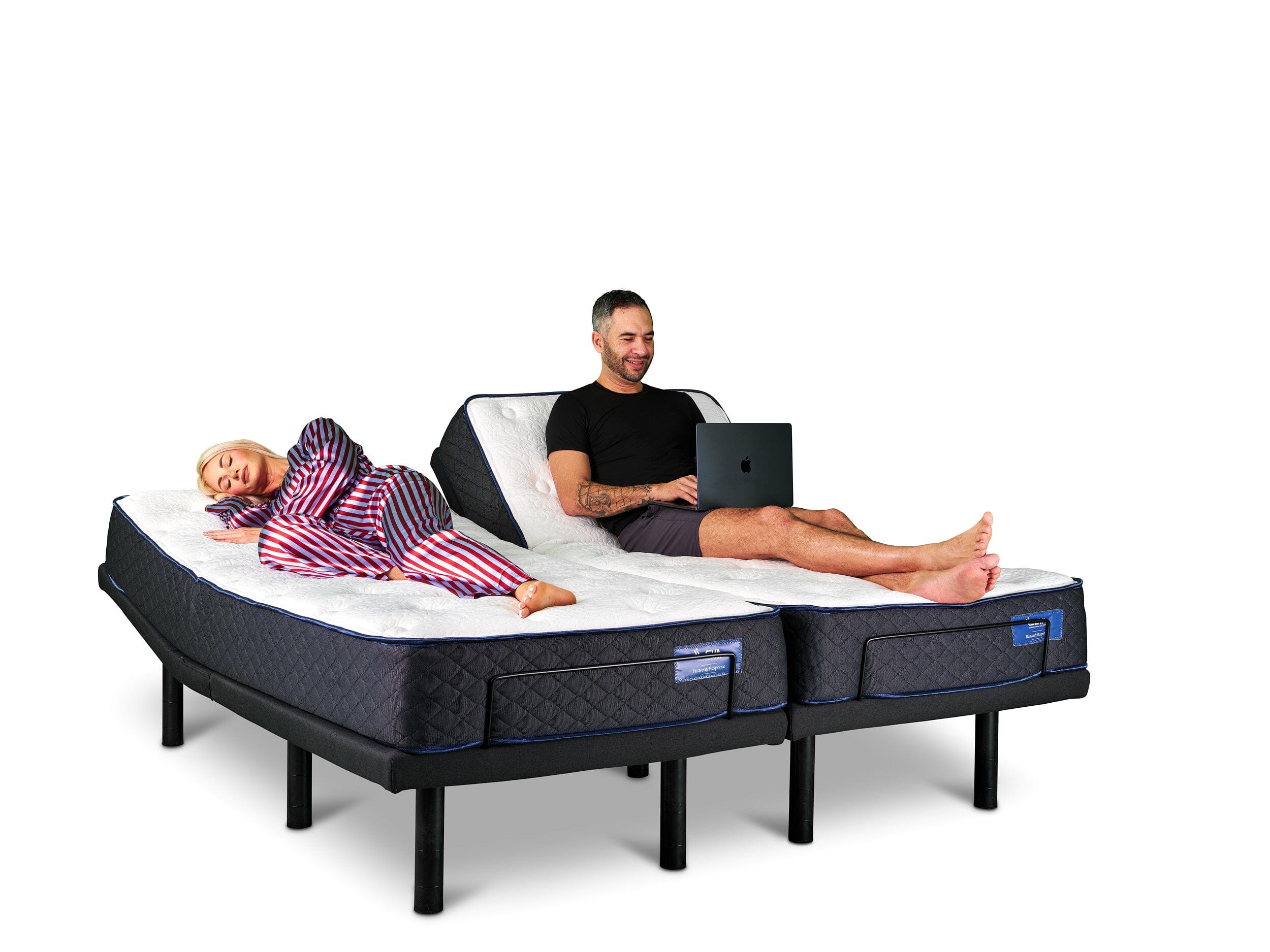
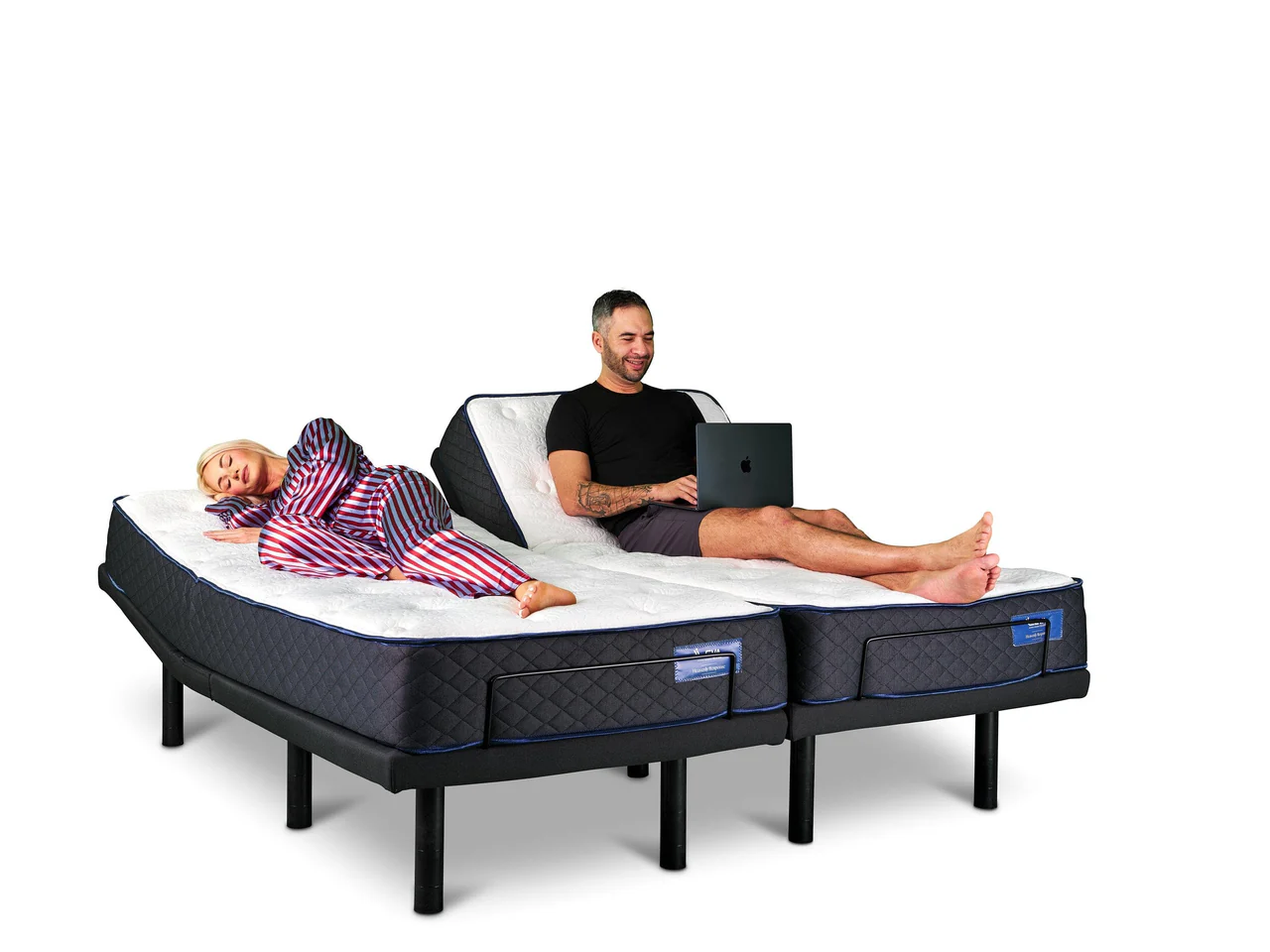
Couples who do not qualify for Medicare’s hospital-bed benefit, or who want a solution that looks like luxury furniture rather than clinical equipment, have a direct alternative in Leva Sleep’s Split Queen adjustable systems.
When evaluating a private-pay adjustable base, consider the following criteria:
- Independent side control: Each partner should be able to set head and foot elevation, massage intensity, and firmness without affecting the other side.
- Motor quality: Whisper-quiet motors prevent sleep disruption during position adjustments.
- App integration: Bluetooth app control allows custom sleep positions, vibrating alarms, and anti-snore micro-adjustments from a smartphone.
- Mattress compatibility: The base should pair with mattresses engineered specifically for adjustable frames, not standard flat-bed mattresses.
- Delivery and setup: White-glove delivery by trained professionals ensures correct assembly, height adjustment, and a full product tutorial.
Leva Sleep’s Split Queen adjustable bases address every criterion above. With German motors meeting the quality standards above, full app control, independent side settings, and professional in-home setup, Leva’s systems are built for couples navigating different comfort needs, sleep apnea, joint pain, or post-surgical recovery. The design avoids the clinical appearance of a hospital bed. Leva offers 15–20 adjustable models compared to the 3–5 found at standard retailers, and prices run 30–50% below comparable luxury competitors by eliminating middlemen.
Explore Leva Sleep’s Split Queen adjustable bases with independent controls and white-glove delivery.
Decision Flowchart: Checking Whether Medicare Covers Your Adjustable Bed
This text-based flowchart helps you determine your coverage status before contacting a supplier.
- Has a Medicare-enrolled physician documented a specific clinical need for body positioning that an ordinary bed cannot provide?
- No → Medicare will not cover the bed. Proceed to private-pay options.
- Yes → Continue to Step 2.
- No → Medicare will not cover the bed. Proceed to private-pay options.
- Yes → Continue to Step 3.
- No (for example, a queen-size retail base) → Medicare will not cover the bed. Proceed to private-pay options.
- Yes → Submit documentation and written order, then begin the rental period.
Frequently Asked Questions
Will Medicare pay for a queen size adjustable bed?
No. Medicare does not pay for consumer-grade adjustable beds but may cover medically necessary adjustable hospital beds as durable medical equipment under Part B. Medicare Part B covers hospital beds as durable medical equipment only when a physician documents a specific clinical need such as head elevation greater than 30 degrees, frequent repositioning, or the use of traction equipment. Queen-size retail adjustable bases do not correspond to any covered HCPCS billing code and are classified as comfort items rather than medically necessary equipment. Couples seeking a queen-size adjustable system will need to purchase one privately. Leva Sleep specializes in Split Queen adjustable bases with independent controls for each partner, whisper-quiet motors, and white-glove delivery.
Does Medicare cover adjustable beds for sleep apnea?
Not directly. Sleep apnea by itself may not qualify a beneficiary for a Medicare-covered hospital bed. Medicare’s coverage criteria require documented need for body positioning that an ordinary bed cannot provide, such as head elevation greater than 30 degrees for severe congestive heart failure or chronic pulmonary disease, not simply elevation to reduce snoring or mild sleep apnea symptoms. A physician would need to document a specific clinical condition that meets Medicare’s positioning threshold. Even then, the covered bed would be a narrow hospital-bed configuration, not a queen-size retail adjustable base. For couples managing sleep apnea or snoring who want a luxury solution, Leva Sleep’s adjustable bases include anti-snore positioning that gently elevates the head to help open airways, without the clinical appearance of a hospital bed.
What are Medicare approved adjustable bed suppliers?
Medicare-approved adjustable bed suppliers are DME suppliers enrolled in Medicare who accept assignment. They agree to bill Medicare directly and limit the patient’s cost to the annual Part B deductible and 20% coinsurance. These suppliers carry hospital-bed configurations, including fixed-height, variable-height, semi-electric, and bariatric models, that correspond to covered HCPCS codes. Beneficiaries can locate enrolled suppliers using the Medicare equipment supplier search tool at Medicare.gov. Patients should confirm that the supplier accepts assignment before agreeing to any rental or purchase, because non-participating suppliers can charge above the Medicare-approved amount. Retail mattress stores and luxury sleep brands like Leva Sleep are not Medicare DME suppliers. They serve customers purchasing adjustable bases privately outside the Medicare benefit.
What happens if I need an adjustable bed but do not qualify for Medicare coverage?
Beneficiaries who do not meet Medicare’s medical-necessity criteria, or who want a queen-size system, app-controlled features, or a bed that integrates into a modern bedroom, pay for the system privately. Private-pay adjustable bases are not subject to Medicare’s size, coding, or documentation restrictions, so buyers can select from a full range of configurations including Split Queen systems with independent side controls. Leva Sleep offers financing options and a direct-to-consumer pricing model that runs 30–50% below comparable luxury competitors. White-glove delivery includes professional setup, height adjustment, and a product tutorial, which removes the complexity typically associated with large-item purchases.
Conclusion: Choosing Between Medicare Coverage and Private-Pay Comfort
The answer to “does Medicare cover a queen adjustable bed for home” is no. Medicare Part B covers hospital beds as DME only when a physician documents a specific clinical need, the bed is a narrow hospital-bed configuration supplied by a Medicare-enrolled DME provider, and the equipment meets the criteria in CMS National Coverage Determination 280.7. Queen-size retail adjustable bases, regardless of their health benefits, fall outside every element of that definition.
Patients who believe they may qualify for a Medicare-covered hospital bed should consult a physician to determine whether their condition meets the clinical threshold and request a face-to-face visit to generate the required documentation. They can then use the Medicare supplier search tool to identify an enrolled DME supplier that accepts assignment.
When Medicare does not apply, or when a sleep system that combines medical-grade positioning with luxury design is the goal, Leva Sleep’s Split Queen adjustable bases provide independent control, whisper-quiet motors, app integration, and white-glove delivery in a system built for couples.
Schedule a showroom visit or browse Leva Sleep’s full adjustable base collection online.