Written by: Matthew Timmins, Founder and Managing Director, Leva Sleep
Key Takeaways from 2026 Adjustable Bed Owners
- Reddit owners most often cite motor noise, wall-hugging failure, and sheet slippage as the top frustrations after six months.
- Brushed DC or AC motors operating at 35–60 dB often cause nighttime disturbances, while brushless DC motors under 30 dB keep adjustments quiet.
- Wall-hugger mechanisms tend to fail when low-grade actuators or rollers wear out, but premium frames with verified cycle testing maintain reliable glide.
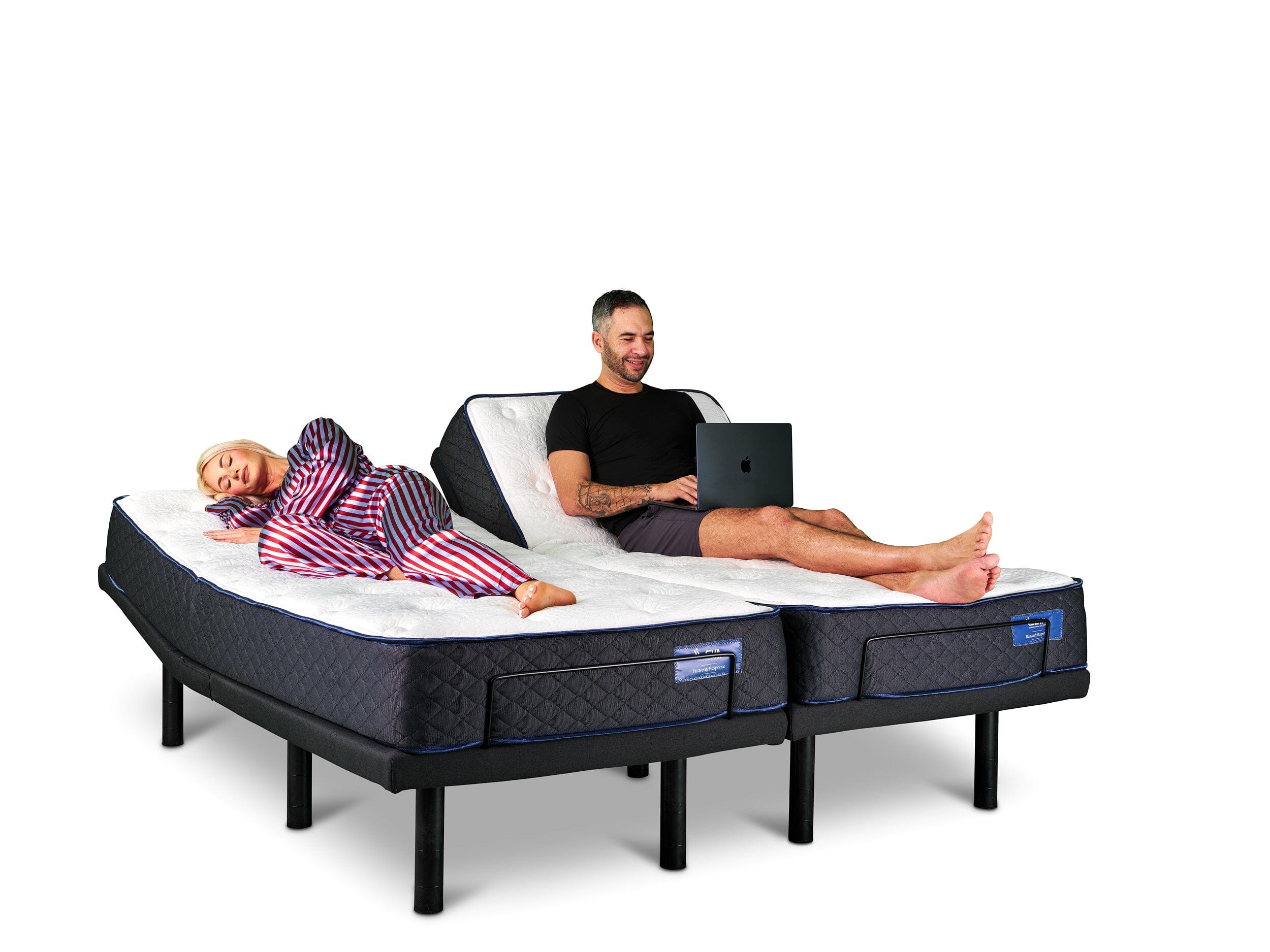
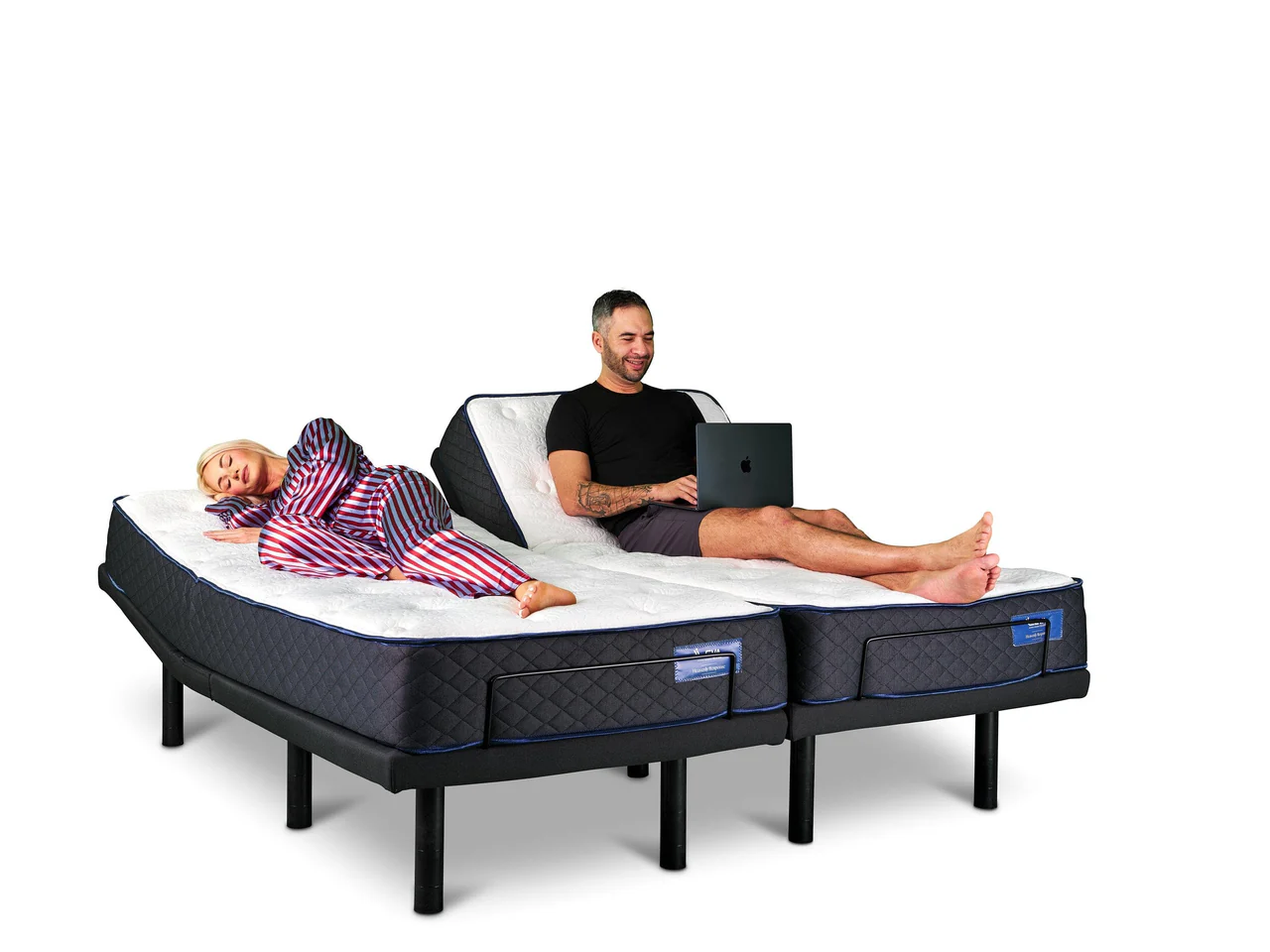
- Split bases with independent controls and app-based anti-snore modes reduce partner conflict and snoring disruption without waking either sleeper.
- Leva Sleep’s whisper-quiet German motors, synchronized wall-hugger glide, and white-glove delivery address every major complaint, and you can shop Leva Sleep today to experience the difference.
Real Downsides Owners Report with Adjustable Beds
Most owners describe a similar set of downsides: motor noise that wakes a light-sleeping partner, wall-hugging failure that pushes the user away from the nightstand, and incompatibility with existing mattresses or bed frames. Many also mention a learning curve for app or remote controls and a higher upfront cost compared with a flat platform bed. Delivery complexity and the need for a nearby power outlet appear less often, but they still show up as recurring concerns.
2026 Owner Complaint Heatmap
To quantify which issues matter most to real owners, the following table aggregates the five most frequently cited complaints from 2026 Reddit threads. Frequency counts reflect the approximate number of distinct posts or comments referencing each issue across the surveyed threads.
| Complaint | Representative Owner Quote (2026 Reddit) | Approximate Frequency | Root Cause |
|---|---|---|---|
| Motor noise waking partner | “Every time I adjust at 2 a.m. the motor sounds like a garage door opener.” | High (most cited) | AC motors on adjustable beds can reach 50-60 dB while brushed DC motors can operate at 35 dB |
| Wall-hugging failure | “After six months the glide stopped working and now I’m a foot away from my lamp.” | High | Degraded components in the wall-hugging mechanism |
| Sheets popping off during elevation | “Standard fitted sheets last about one night before they’re on the floor.” | Moderate-High | Standard sheet pocket depth insufficient for articulating geometry |
| Partner conflict over single-zone control | “She wants zero-G, I want flat — we fight about it every night.” | Moderate | Single-zone base without split independent control |
| Poor delivery and setup experience | “They left the base in the driveway. I had to figure out assembly alone.” | Moderate | Third-party logistics without white-glove capability |
Adjustable Bed Problems After 6 Months
Many 2026 Reddit owners report smooth operation at purchase, followed by increasing noise and structural creaking by the six-month mark. One owner wrote: “The motor was silent when new. Now every adjustment wakes my wife up. I’m starting to regret the whole thing.”
The mechanical cause is well documented. Brushed DC motors and budget AC motors can produce noticeable noise, and structural noise from metal joints develops over time as bolts loosen and pivot points dry out. Research published in the Journal of Sound and Vibration shows that exposure to 40 dBA low-frequency noise can produce subjective sleep disturbance. Even a mid-tier motor can therefore create a real sleep problem rather than a minor annoyance.
Leva Sleep addresses this at the engineering level. Its bases use whisper-quiet German brushless DC motors, which operate under 30 dB, roughly the volume of a whisper mentioned in the heatmap data. Maintenance guidance for any adjustable base includes tightening bolts every six months and applying silicone-based lubricant to pivot points annually to preserve quiet operation over time.
Wall-Hugging Glide: When It Works and When It Fails
A 2026 Reddit thread on r/Mattress drew over 200 comments after one owner posted: “The wall-hugger feature worked great for three months. Now the glide is stuck and I have to lean forward to reach my phone. Total waste of money.”
Wall-hugger technology works by allowing the base to glide rearward as the head section elevates, which helps keep the user close to the nightstand. Failure becomes more likely when the carriage system uses lower-quality components that wear quickly. Premium wall-hugger frames use robust linear actuators and sturdy steel construction tested through repeated articulation cycles under load.
When evaluating any wall-hugger base, ask the retailer for the actuator specifications, the roller material, and the cycle-test documentation. These three data points reveal whether the mechanism can sustain repeated use under load. Without this documentation, you are buying on faith rather than evidence. Leva Sleep’s split bases are engineered to high standards, and its in-house white-glove delivery team verifies glide function at setup, which catches any issues immediately instead of weeks later.
Side-by-Side Verdict Grid for Common Bed Setups
| Feature | Traditional Flat Bed | Basic Adjustable Base | Leva Split Adjustable System |
|---|---|---|---|
| Motor noise | None (no motor) | 35-60 dB (brushed DC or AC) | under 30 dB (brushless DC) |
| Partner independence | None, shared surface | Single zone; one setting for both | Independent controls per side; Split Queen and King available |
| Wall-hugging | Not applicable | Varies, often absent or under-rated | Synchronized glide; robust components |
| Delivery and setup | Standard retail or box delivery | Often third-party logistics, assembly by owner | In-house white-glove: bedroom delivery, assembly, height adjustment, tutorial, old-bed removal |
| Mattress compatibility | Any mattress type | Memory foam, latex, hybrid; not traditional innerspring | Curated all-foam and hybrid pocket-coil mattresses designed for articulation; frame compatibility verified before purchase |
| Anti-snore capability | None | Manual head elevation only | App-based anti-snore mode (spring 2026): detects snoring, makes micro-adjustments automatically |
Best Adjustable Bed Setup for Couples with Snoring
One of the most upvoted 2026 Reddit posts on r/Sleep reads: “My husband’s snoring was destroying my sleep. We tried every pillow and position. The only thing that actually helped was elevating his head independently without waking him up to do it.”
The medical basis for this pattern is established. The Sleep Foundation and Cleveland Clinic list head elevation among practical ways to reduce snoring because a gentle incline helps keep the upper airway open. The Mayo Clinic states that snoring is caused by air vibrating relaxed throat tissue and is often associated with obstructive sleep apnea. Elevation functions as a positional aid rather than a clinical treatment, and the Mayo Clinic advises seeing a doctor when loud snoring comes with gasping, choking, breathing pauses, morning headaches, or daytime exhaustion.
Leva Sleep’s spring 2026 app-based anti-snore mode removes the manual step. The system detects snoring through the app and makes micro-adjustments to the head of the snoring partner’s side of the split base without waking either sleeper. Because the base is split, the non-snoring partner’s side remains completely undisturbed.
What Doctors Say About Adjustable Beds and Positioning
Medical sentiment toward adjustable bases is broadly supportive for specific conditions, with consistent caveats about scope. Side sleeping can help keep the airway open and reduce snoring, and head elevation complements that positional strategy. Many chiropractors support adjustable bases because they allow sleepers to maintain healthier spinal alignment and can help relieve back pain. Slight leg elevation reduces pressure on the lumbar spine, and head elevation can benefit acid reflux and circulation.
The consistent medical caveat is that adjustable positioning functions as a comfort and symptom-management tool. Elevated sleeping position is a form of positional therapy that can moderately improve obstructive sleep apnea measures compared with no treatment, but it is less effective than CPAP and is not a substitute for prescribed medical therapy. Leva Sleep’s positioning reflects this guidance. Its systems are designed to improve comfort and reduce symptoms, and the company directs customers with diagnosed sleep apnea to work with their physicians alongside any positional solution.
Real-World Adjustable Bed Use Cases from Reddit
The following scenarios represent the most common ownership situations described in 2026 Reddit threads. Each includes a feature checklist to verify before purchasing any adjustable base.
Scenario 1: Couple with one snoring partner
- Verify the base offers independent head elevation per side.
- Confirm anti-snore mode availability and whether it requires a subscription.
- Check that motor noise is rated at or below 40 dB to avoid waking the non-snoring partner during adjustments.
Scenario 2: One partner with lower back pain, one without
- Confirm lumbar support control is available and adjustable independently.
- Verify the mattress is foam or hybrid, and refer to the comparison table above for innerspring incompatibility details.
- Ask whether the retailer verifies mattress-to-base compatibility before delivery.
Scenario 3: Couple in a smaller bedroom needing a Split Queen
- Measure inside width, inside length, and interior rail height of any existing frame before ordering, because many adjustable bases are not returnable once delivered.
- Confirm the retailer offers Split Queen, not just Split King, with independent controls.
- Verify leg-height adjustability for comfortable bed entry.
Scenario 4: Post-surgery recovery requiring elevated positioning
- Confirm head and foot elevation ranges meet physician recommendations.
- Verify zero-clearance or low-profile leg options if bed height must remain accessible.
- Ensure white-glove delivery includes height adjustment at setup, not just drop-off.
Total Value, Learning Curve, and Practical Tradeoffs
Adjustable bases carry a learning curve. Most owners report that finding preferred positions takes one to two weeks of nightly experimentation. App-controlled systems shorten this period by saving custom positions, but they still require initial Bluetooth pairing and occasional firmware updates.
Maintenance remains low but not zero. Tightening bolts every six months and applying silicone-based lubricant to pivot points annually helps maintain quiet operation. On hard floors, rubber or felt pads under each leg absorb vibration and reduce sound reflection.
Lifespan depends heavily on actuator quality and cycle-test ratings. Premium frames undergo rigorous continuous articulation cycle testing under full load. Ask any retailer for the cycle-test documentation before purchasing. Health needs also change over time. A base purchased for snoring may later need to accommodate post-surgery recovery or acid reflux management, so adjustability range matters more than any single preset position.
Power access remains a practical constraint. Adjustable bases require a nearby power outlet, which can limit bed placement options in some bedrooms. Confirm outlet location relative to your intended bed position before ordering.
Decision Matrix for Choosing an Adjustable Base
| Top Priority | Second Priority | Recommended Evaluation Step |
|---|---|---|
| Eliminating partner snoring disruption | Independent side control | Test anti-snore mode in-store, and confirm split-base configuration and app availability before purchase. |
| Quiet nighttime adjustments | Long-term reliability | Request motor dB rating in writing, ask for cycle-test documentation, and verify brushless DC motor type. |
| Wall-hugging function | Delivery and setup quality | Ask for actuator load rating and roller material, and confirm white-glove delivery includes glide-function verification at setup. |
| Mattress and frame compatibility | Return policy | Measure inside width, length, and rail height of the existing frame, confirm retailer verification of compatibility before delivery, and clarify return terms in writing. |
| Back pain or medical positioning | Lumbar and leg elevation range | Bring a physician’s elevation recommendation to the showroom, and test lumbar control independently from head elevation. |
Frequently Asked Questions
What are the most common adjustable bed problems after 6 months of ownership?
The most frequently reported issues after six months are increasing motor noise, structural creaking from loosened bolts and dry pivot points, wall-hugging glide failure, and fitted sheets that no longer stay in place as the mattress geometry shifts with use. Motor noise problems typically trace back to brushed DC or AC motors that were already operating near the threshold for sleep disturbance at purchase. Structural noise is largely preventable with semi-annual bolt tightening and annual silicone lubrication of pivot points. Wall-hugging failure in budget bases usually reflects issues with the glide mechanism that wear faster than premium alternatives. Leva Sleep addresses the motor issue at the engineering level with whisper-quiet German brushless DC motors and designs all bedding accessories, including deep-pocket fitted sheets with extra elastic, specifically for articulating bases.
Is a wall-hugging adjustable base worth the extra cost?
For most users who keep a nightstand, lamp, phone charger, or water glass within arm’s reach, a wall-hugger base justifies the premium. Without it, elevating the head section pushes the user forward and away from the nightstand, which creates a practical disruption every time an adjustment occurs. The value depends entirely on the quality of the carriage system. A wall-hugger base with lower-quality components may fail over time, as 2026 Reddit threads repeatedly document. When evaluating any wall-hugger base, ask for the actuator load rating, the roller material, and the cycle-test documentation. A base that cannot provide these figures is unlikely to sustain reliable glide function over years of use.
Can an adjustable bed actually reduce snoring, or is that just marketing?
Head elevation has a legitimate physiological basis for reducing positional snoring. The Sleep Foundation and Cleveland Clinic both list head elevation as a practical strategy because a gentle incline helps keep the upper airway open. As noted earlier, snoring results from airway tissue vibration, and positional changes can reduce this effect. The important distinction is that elevation functions as a positional aid, not a medical treatment. Elevated sleeping position is a form of positional therapy that can moderately improve obstructive sleep apnea measures compared with no treatment, but it is less effective than CPAP and is not a substitute for prescribed medical therapy. For couples where one partner’s positional snoring disrupts the other’s sleep without a diagnosed apnea condition, a split adjustable base with independent head elevation, along with Leva Sleep’s spring 2026 app-based anti-snore mode that makes automatic micro-adjustments, represents a meaningful, evidence-supported solution.
Will my existing mattress work with an adjustable base?
Compatibility depends on mattress type and existing bed frame dimensions. Memory foam, latex, and hybrid pocket-coil mattresses are generally compatible because they flex with the base. Traditional innerspring mattresses with rigid coil systems typically do not bend properly and can be damaged by articulation. For existing bed frames, the critical measurements are inside width at the narrowest point between side rails, inside length from headboard to footboard, and interior lip or rail height. Antique, non-standard, or high-lip frames may not accommodate an adjustable base without modification. Because many adjustable bases are not returnable once delivered, verifying compatibility before purchase is essential. Leva Sleep’s specialists confirm mattress and frame compatibility as part of the pre-purchase process and design their own mattresses specifically for use with adjustable bases.
What should couples look for when choosing between a Split Queen and Split King?
The primary consideration is bedroom size and whether the couple wants to share a single mattress surface or have two fully independent mattresses side by side. A Split King consists of two Twin XL mattresses on independent bases, providing maximum independence but a visible center seam. A Split Queen, which Leva Sleep offers as a specialty configuration, provides the benefits of independent control in a more space-conscious footprint, making it practical for bedrooms where a King-sized setup feels too large. Both configurations allow each partner to set their own elevation, massage, and firmness preferences without affecting the other side. Couples should also confirm that the split configuration includes fully independent app or remote controls per side, not just a shared remote with zone selection, which still requires one partner to initiate adjustments for the other.
How does white-glove delivery differ from standard adjustable bed delivery, and does it matter?
Standard delivery for adjustable bases typically means a third-party logistics carrier drops the components at the door or, at best, inside the front entrance. Assembly, leg-height adjustment, Bluetooth pairing, and disposal of the old bed are left entirely to the owner. For a system that weighs several hundred pounds and requires precise setup to function correctly, including wall-hugging glide verification and leg-height calibration for entry comfort, this creates a significant risk of improper installation that only becomes apparent weeks later. White-glove delivery, as offered by Leva Sleep for a fee, means trained professionals deliver to the bedroom, complete full assembly, adjust leg heights to the customer’s preference, pair and demonstrate the app, and remove the old bed. For a product where setup errors directly affect long-term mechanical performance, the difference is material rather than cosmetic.