Written by: Matthew Timmins, Founder and Managing Director, Leva Sleep
Key Takeaways for Couples With Back Pain
- Flat luxury mattresses like Aireloom and Vispring cannot customize firmness or elevation per partner, so couples with different bodies often compromise.
- Medium-firm support reduces back pain for many people, yet one flat surface rarely delivers the right firmness for two sleepers at once.
- Adjustable elevation, especially zero-gravity positioning, can ease conditions like lumbar stenosis in ways no flat mattress can match.
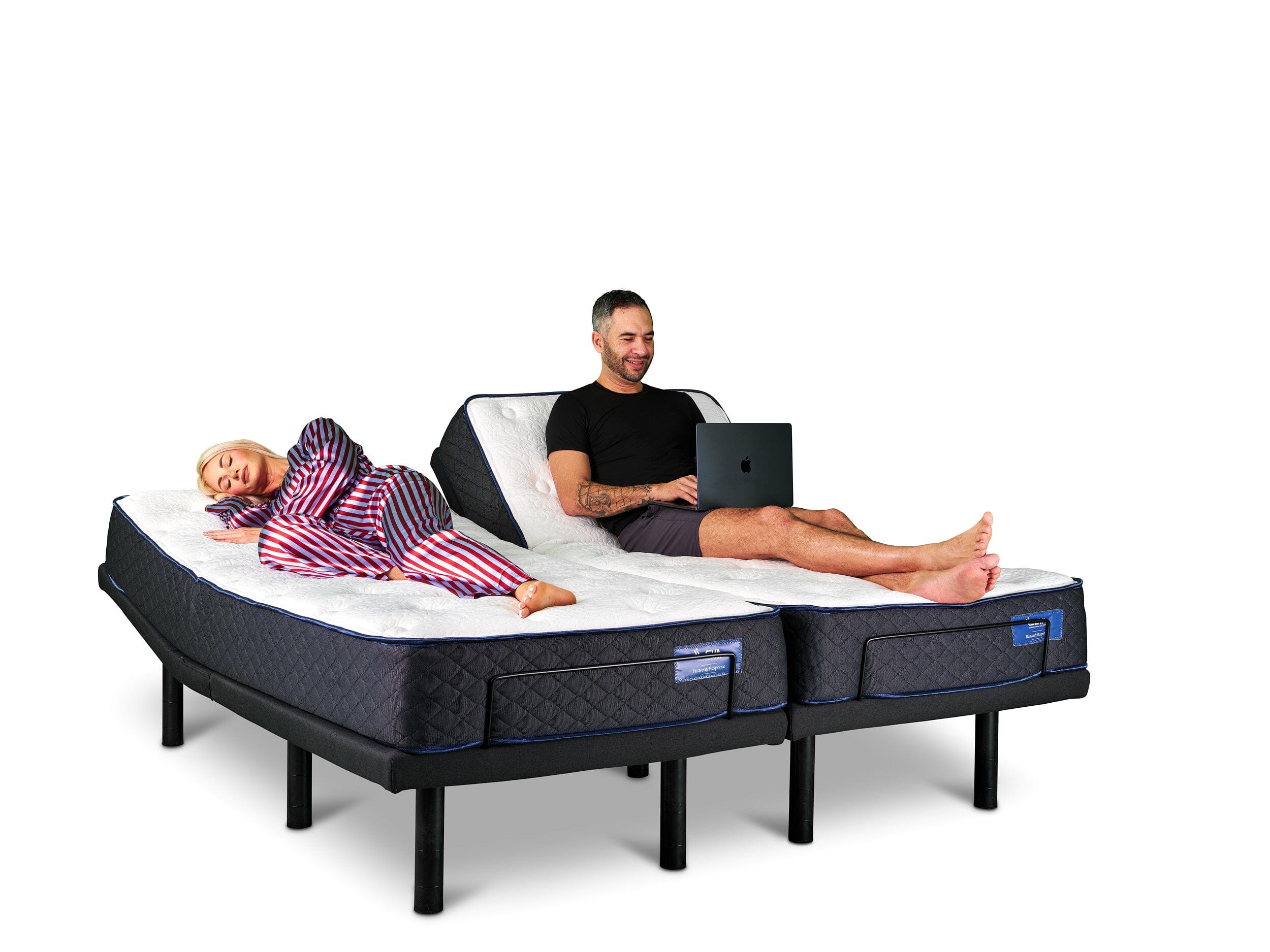
- Leva Sleep split adjustable systems give each partner independent control over firmness, elevation, lumbar support, and anti-snore positioning.
- For couples seeking targeted back-pain relief, explore Leva Sleep’s split adjustable systems built specifically for shared beds and chronic pain.
The Core Issue: Flat Luxury Mattresses and Spinal Alignment
Medium-firm support has strong clinical backing for many back-pain sufferers. A 2003 randomized controlled trial in The Lancet with 313 adults who had chronic non-specific low back pain found that medium-firm mattresses reduced pain in bed, pain on rising, and disability compared with firm mattresses. Medium-firm foam mattresses can work well for non-specific low back pain, yet outcomes vary widely, and personalized firmness fitting consistently outperforms broad, one-size-fits-all recommendations.
The practical challenge for couples is that “medium-firm” changes with body weight. A heavier side sleeper sinks more deeply into the comfort layer than a lighter sleeper, so a labeled medium-firm (6 on a 1–10 scale) feels softer and bottoms out faster. When partners differ significantly in weight or sleep position, a single flat surface cannot deliver the correct firmness for both people at the same time. A split-king setup with two twin XL mattresses lets each person choose a different firmness level and avoids this conflict.
Flat mattresses also fail when elevation becomes part of pain management. Adults with lumbar spinal stenosis often benefit from a slightly softer mattress that allows lumbar flexion combined with a zero-gravity adjustable base, which keeps the hips and knees flexed all night. No flat mattress, regardless of price or materials, can reproduce that therapeutic position.
Brand Snapshots: Aireloom, Vispring, and Leva Split Adjustable Systems
Aireloom is a California luxury brand dating to 1940. Craftspeople hand-tuft the mattresses and use natural fills such as cashmere, silk, and wool over tempered steel innerspring systems. Firmness options range from plush to firm, and the brand sits at the upper end of the American luxury market. Aireloom mattresses are flat, single-sided or double-sided depending on the model, and they are not engineered for articulating adjustable bases.
Vispring is a British brand founded in 1901 and credited with inventing the pocket spring. Its mattresses use hand-nested pocket springs with natural fills including Shetland wool, horsetail, and cotton. Vispring offers firmness from soft to extra firm and sells mainly through specialist retailers. Like Aireloom, Vispring builds flat mattresses that are not compatible with articulating bases.
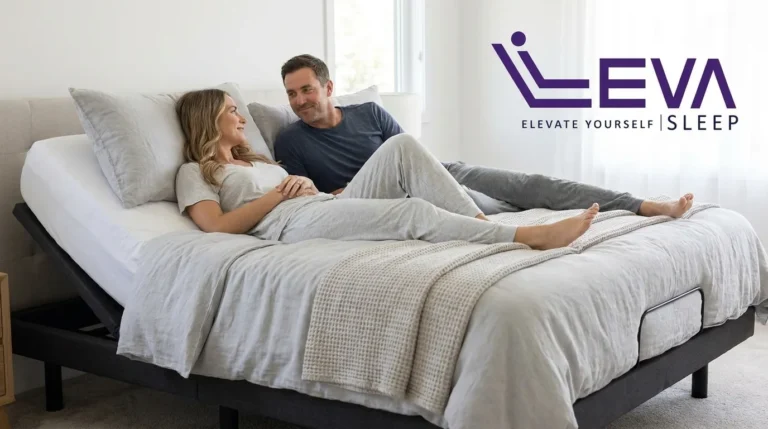
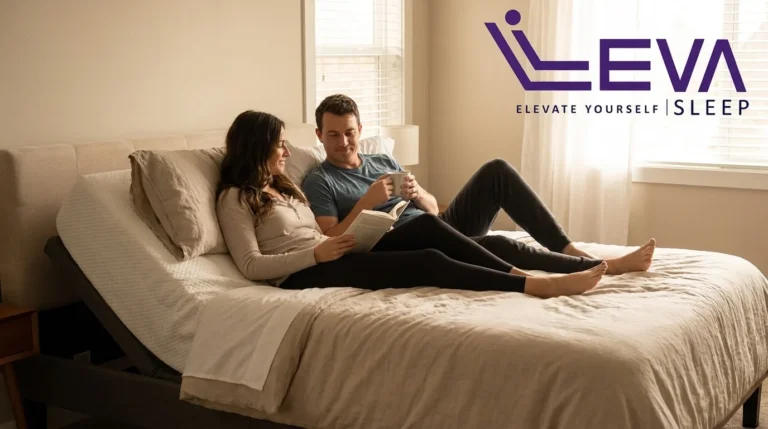
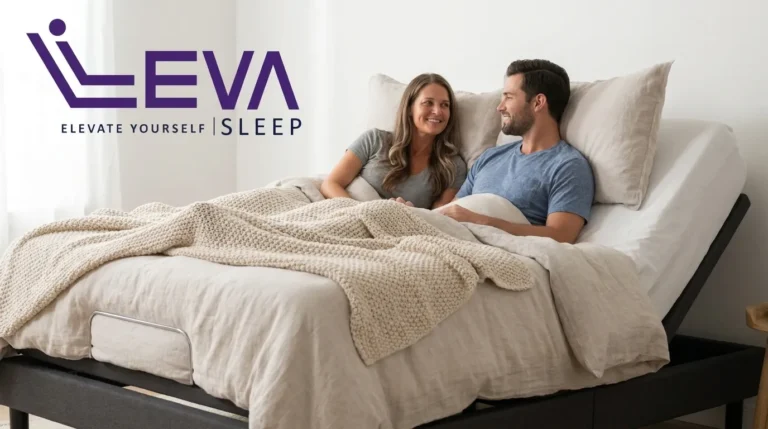
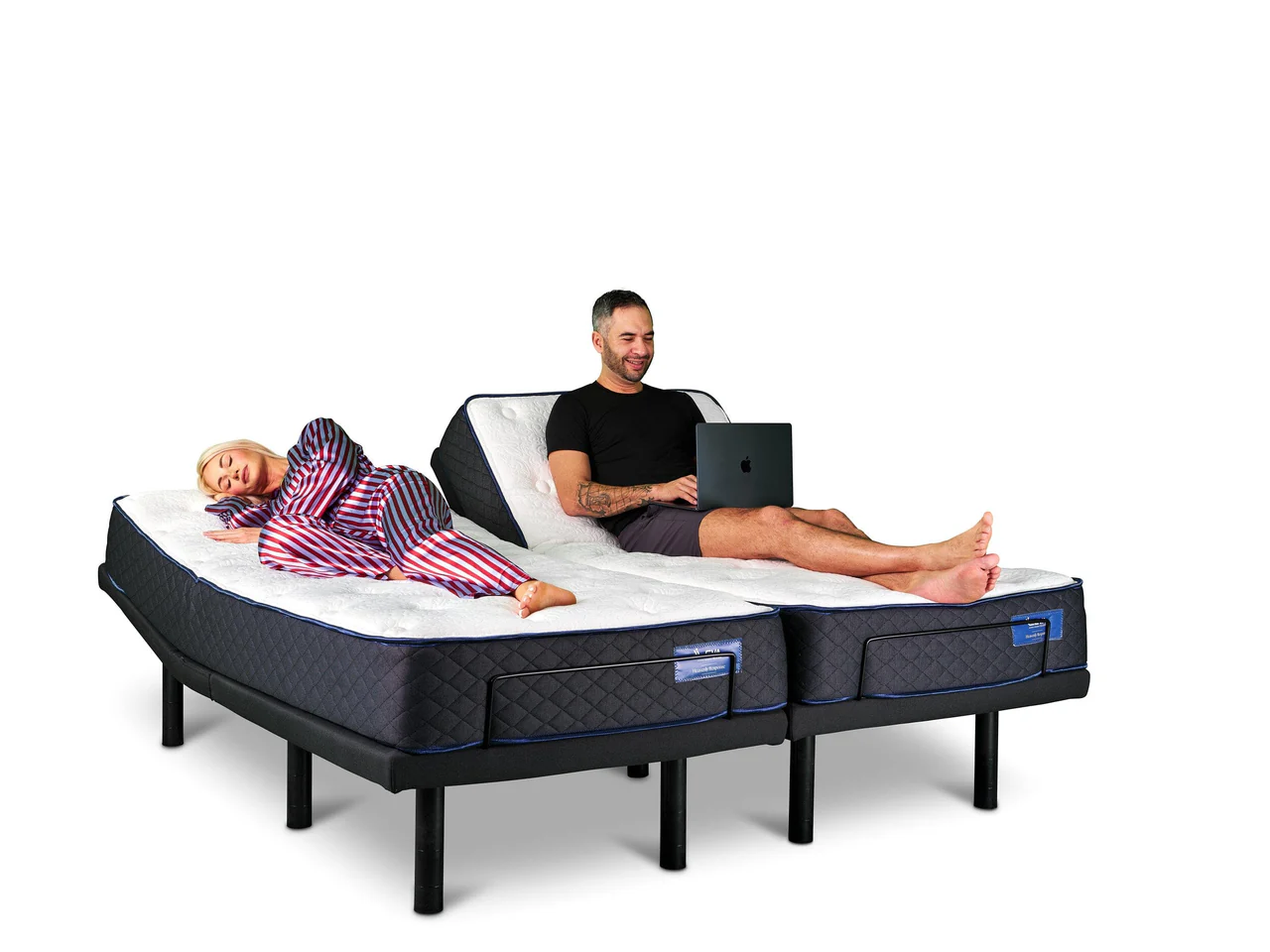
Leva Sleep split adjustable systems combine purpose-built adjustable bases with mattresses designed to flex with the base. Customers can choose all-foam or hybrid pocket-coil constructions. Split King and Split Queen formats give each partner an independent twin XL surface with its own motor, elevation control, lumbar support, and firmness setting. Leva uses whisper-quiet German motors controlled through a dedicated app. The company designs and assembles its systems domestically and provides white-glove delivery and setup.
Comfort and Pain Relief: How Each Option Supports Your Back
The table below compares Aireloom, Vispring, and Leva across core comfort and support factors. All data points come from cited sources. When product-specific data is not available, the comparison reflects evidence for that construction type.
| Criteria | Aireloom | Vispring | Leva Split Adjustable |
|---|---|---|---|
| Spinal alignment approach | Fixed firmness, natural-fill innerspring, no position adjustment | Fixed firmness, high-count pocket spring, no position adjustment | Adjustable elevation and per-side firmness, zero-gravity positioning available |
| Pressure relief for side sleepers | Natural fills contour at shoulder and hip, cannot be tuned per partner | High pocket-spring count allows some contouring, cannot be tuned per partner | Comfort layer selected per side, head and foot elevation reduce joint pressure independently |
| Weight-based firmness customization | Single firmness across full surface, heavier partner compresses deeper and changes effective firmness | Single firmness across full surface, same weight-compression limitation | Each side configured independently, partners over 230 lb can choose firm (7–8) while lighter partners choose medium (5–6) |
| Lumbar support | Passive support based on mattress construction only | Passive support, zoned spring tension in some models | Active lumbar motor adjusts lower-back support in real time |
| Elevation for medical conditions | Not available | Not available | Head and foot elevation, zero-gravity position builds on the relief discussed above for lumbar stenosis, anti-snore mode available |
Mattresses that are too firm can create pressure above 30 mmHg at the shoulders, hips, and pelvis, which reduces blood flow and causes frequent micro-arousals. These sleep disruptions worsen daytime pain perception in people with chronic back pain. Aireloom and Vispring both offer firm models that may cross this threshold for lighter or side-sleeping partners, and flat construction gives no way to correct this other than replacing the mattress.
Partner Compatibility and Adjustability in Everyday Life
The shared surface on a flat mattress creates the biggest structural problem for couples. Imagine one partner is a 185-pound back sleeper who needs a firm 7/10 surface and the other is a 130-pound side sleeper who needs a medium-soft 4–5/10 surface. No single flat mattress can satisfy both people. The couple either compromises and accepts suboptimal support for at least one partner, or they buy separate mattresses and live with a gap down the middle.
Several common situations highlight where flat mattresses struggle:
- One partner snores and needs head elevation to open the airway, while the other dislikes elevation and sleeps better flat.
- One partner has hip bursitis and needs a softer surface at the hip, while the other has lumbar stenosis and needs a firmer, slightly elevated surface.
- Partners have a large weight difference, so the heavier partner bottoms out on a surface the lighter partner finds comfortably supportive.
- One partner runs hot and needs airflow through the mattress, while the other sleeps cold and prefers insulating natural fills.
Leva’s split adjustable layout solves each of these scenarios directly. Each side of the bed functions as its own sleep system. The Leva app lets partners save custom positions, set vibrating alarms that do not wake the other side, and activate anti-snore mode, which makes small head-elevation changes when snoring is detected, without disturbing the partner.
Technology, Setup, and Day-to-Day Use
Noise and motion transfer: Innerspring mattresses with interconnected coils perform poorly for motion isolation because a coil grid links both sides of the bed and transmits movement across the surface. Vispring’s high-count pocket springs reduce this effect, and Aireloom’s hand-tufting adds some damping, yet both still pass motion across the shared surface. Hybrid mattresses that combine pocketed coils with foam or latex comfort layers can approach the motion isolation of all-foam designs while keeping a responsive feel. Leva’s split bases remove cross-partner motion transfer at the base level because the surfaces are physically separate.
Delivery and setup: Aireloom and Vispring usually arrive through specialist retailers that may offer white-glove delivery, although the experience depends on the dealer. Leva manages its own delivery from start to finish. Trained teams bring the system to the bedroom, assemble it, adjust leg heights, walk through a product tutorial, and remove the old bed. This direct control reduces the inconsistency that often appears with third-party delivery services.
Maintenance: Natural-fill mattresses such as Vispring need periodic rotation and, for some models, professional re-tufting to keep wear even. Aireloom’s hand-tufted builds have similar maintenance needs. Leva’s mattresses are engineered for articulating bases and do not require rotation routines that conflict with adjustable-base use.
Long-Term Reliability and Overall Value
A well-maintained pocket sprung mattress typically lasts 8–10 years, and Vispring’s pocket springs place it near the durable end of that range. Aireloom’s tempered steel innerspring systems show similar longevity in the support core. Comfort layers often soften before support layers fail in multi-layer designs, which affects both brands.
This lifespan aligns with the 7–10 year average noted by Sleep Foundation experts. Most high-quality mattresses fall within that window when used by average-weight sleepers and maintained properly.
This compression effect is particularly pronounced for heavier sleepers over 230 pounds. They experience faster wear in comfort layers and coils. All three options feel this impact, yet adjustable systems can partially offset it by redistributing pressure through elevation changes instead of relying only on the mattress surface.
Real-World Scenarios and How to Choose
Four common scenarios show where each option fits best:
- Single sleeper, average weight, no medical conditions: Aireloom or Vispring can provide excellent comfort. A flat luxury mattress makes sense when there is no partner compatibility issue and no clinical need for elevation.
- Couple with similar firmness preferences and no chronic pain: Either flat option can work, although motion isolation deserves careful testing if one partner moves a lot at night.
- Couple with different firmness needs or a large weight difference: A split adjustable system is the structurally correct choice. A flat mattress forces compromise that leaves at least one partner unsupported.
- One or both partners with chronic back, hip, or shoulder pain, snoring, or a medical elevation recommendation: A split adjustable system addresses the clinical need directly. A flat mattress, even a very high-end one, cannot.
Use this checklist to connect your situation to the right format:
- You and your partner differ substantially in weight → Split adjustable
- Either partner snores or has sleep apnea → Split adjustable
- A doctor has recommended elevated sleep positioning → Split adjustable
- You have different firmness preferences → Split adjustable
- You are a single sleeper with no chronic pain and no elevation need → Flat luxury mattress may be enough
See how Leva’s split adjustable systems solve firmness and elevation conflicts for couples.
Frequently Asked Questions
Does Aireloom cause lower back pain?
Aireloom mattresses do not automatically cause lower back pain, yet they can contribute under certain conditions. The brand offers several firmness levels, and choosing the wrong one for your body weight and sleep position is the most common problem. A firmer Aireloom model may create hip and shoulder pressure points for lighter side sleepers, while a softer model may let the lumbar spine sag for heavier back sleepers. Because Aireloom mattresses are flat and offer no adjustable elevation or per-side firmness control, couples who need different feels on each side often find that at least one partner sleeps on a mismatched surface. Over time, that mismatch can show up as morning lower back stiffness or hip pain. The issue usually comes from the lack of customization rather than from a defect in the mattress itself.
How does Vispring firmness by weight affect back pain?
Vispring does not publish a detailed weight-based firmness chart, yet general clinical guidance for flat mattresses still applies. Sleepers under 130 pounds usually align best on softer surfaces, around 3–5 on a 1–10 scale, because they compress the mattress less and need more contouring at the shoulders and hips. Sleepers between 130 and 200 pounds often do well on medium-firm surfaces, around 6–7. Sleepers over 200 pounds typically need firmer support, around 7–8, to keep the hips from sinking through the comfort layer and creating lateral spinal curvature. Vispring’s firmness labels, from soft through extra firm, should be evaluated against these weight-based benchmarks during an in-store fitting. The practical limitation is format: Vispring, like all flat mattresses, applies one firmness across the entire surface, so partners in different weight categories cannot both get a perfect match.
What mattress is comparable to Aireloom for couples?
Vispring is the closest international comparison to Aireloom in terms of natural-fill luxury construction. Both brands use high-count pocket springs, hand-finished builds, and premium natural materials. For couples, the more meaningful comparison looks at flat luxury mattresses versus split adjustable systems. Leva Sleep pairs premium mattresses, including hybrid pocket-coil designs, with split adjustable bases that give each partner independent control over firmness, elevation, and lumbar support. This setup addresses the central limitation of flat luxury mattresses for couples, which is the inability to customize each side. Couples who have tried Aireloom or Vispring and still see one partner struggling should consider whether the real issue is the mattress quality or the flat format itself.
Do Aireloom or Vispring mattresses sag after five years?
Quality mattresses should not show significant sagging or deep body impressions within the first five years. Aireloom and Vispring both use high-quality pocket spring systems that resist compression longer than budget innerspring designs. Vispring’s pocket springs rank among the most durable in the industry. A well-maintained pocket sprung mattress lasts 8–10 years on average. Aireloom’s tempered steel innerspring systems show similar durability in the support core. The comfort layers present the more likely wear point for both brands. Natural fills such as wool, silk, and cashmere compress and shift over time, which can create uneven surface feel even when the spring core remains sound. Periodic rotation and, for some Vispring models, professional re-tufting help manage this. Heavier sleepers should reassess mattress performance every 5–6 years because higher body weight speeds up comfort-layer wear across all brands.
Which mattresses do chiropractors recommend for chronic back pain in 2026?
Orthopedic and sleep medicine specialists often recommend medium-firm mattresses for chronic back pain. These surfaces let the hips and shoulders sink slightly while supporting the spine’s natural curve. The clinical evidence base points to a firmness range of about 5.6–7 on a 1–10 scale as a strong starting point for many people with back pain. Hybrid mattresses that combine foam or latex comfort layers with pocketed coil support cores are frequently preferred because they blend spinal support, pressure relief, cooler sleep, and better edge support than many all-foam designs. For couples, many practitioners now also suggest adjustable bases. Elevation adjustments, especially zero-gravity positioning, reduce pressure on the lumbar spine and joints in ways a flat mattress cannot match at any firmness. The ideal mattress for any person still depends on body weight, sleep position, and the underlying cause of pain, so personalized fitting at a specialist showroom usually beats broad brand-based advice.
Conclusion: Matching Your Mattress to Health and Relationship Needs
Aireloom and Vispring showcase real craftsmanship at the top of the flat mattress market. For a single sleeper with no chronic pain and no medical need for elevation, either brand can deliver an excellent sleep surface. The trade-off appears when two people with different bodies, pain patterns, and sleep positions share that surface. A flat mattress, even a very refined one, applies one firmness and one elevation to both partners at once. That limitation comes from the format, not from poor quality.
Leva Sleep’s split adjustable systems solve the format problem directly. Each partner controls their own side, including firmness, head elevation, foot elevation, lumbar support, and anti-snore positioning. The mattresses are built for adjustable bases, the motors run quietly, and Leva’s team handles delivery and setup. For couples living with chronic back, hip, or shoulder pain, or simply the reality that two people rarely sleep the same way, the split adjustable format resolves conflicts that no flat mattress can touch.