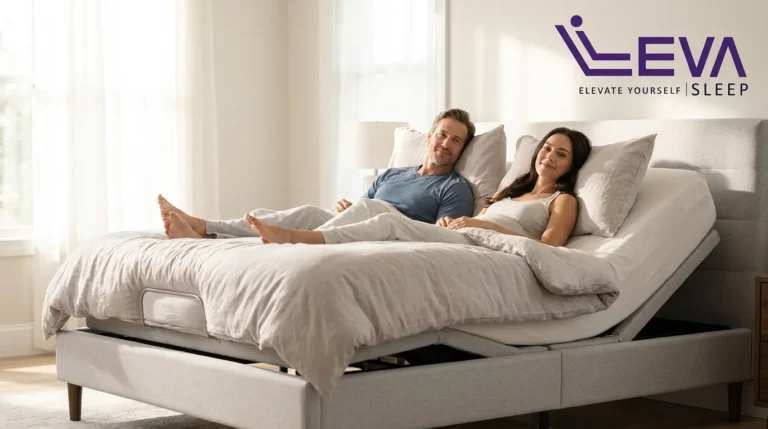
Step 2: Decide Between Split and Shared Adjustable Configurations
The configuration choice shapes how much independence each partner has every night. It determines whether you can control your own side or must share one set of settings. Once you commit to a shared adjustable base, you cannot add independent controls later without replacing the entire system. The table below outlines the primary trade-offs.
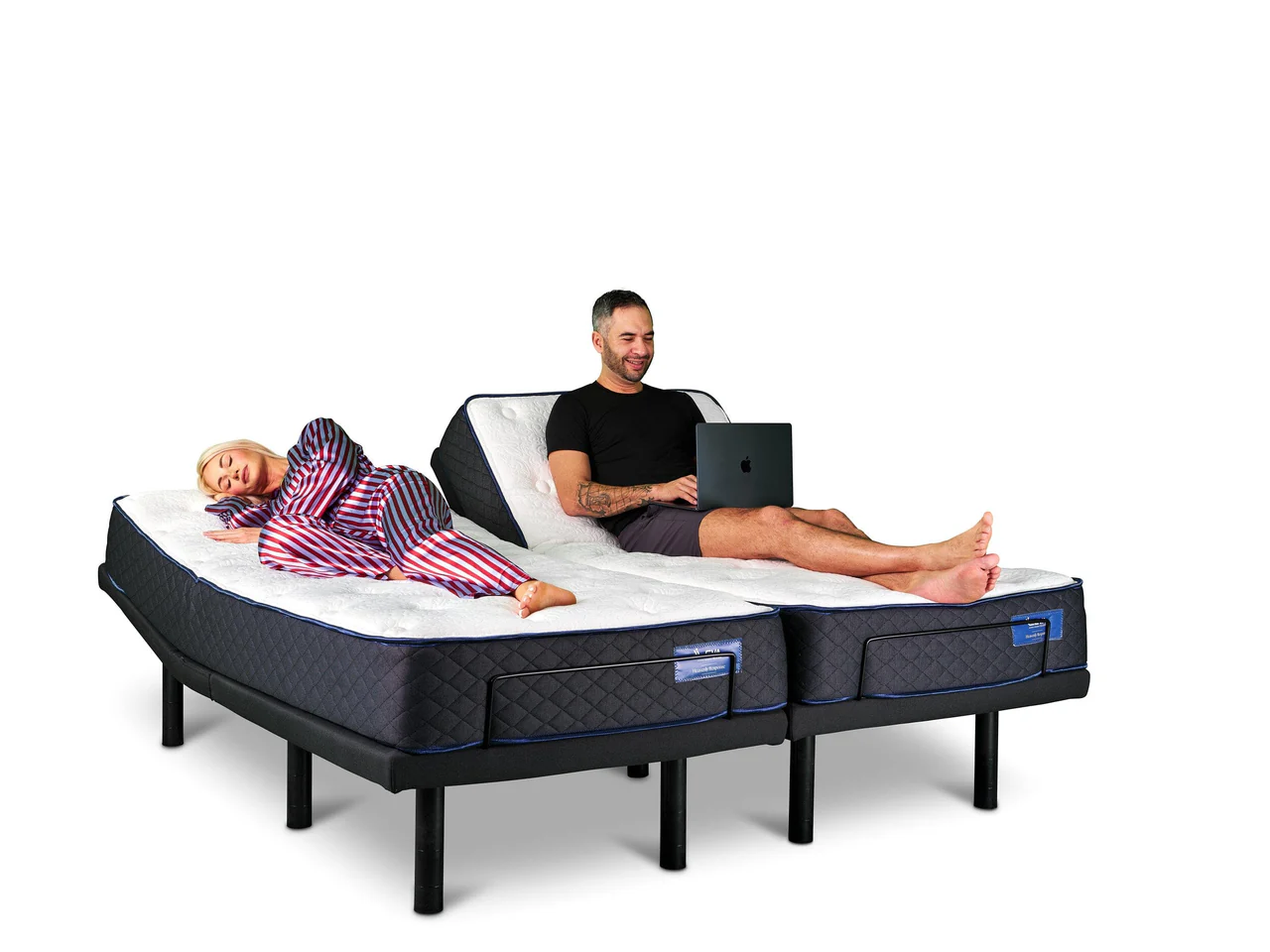
Pro Tip: Couples with significant weight differences, opposite firmness preferences, or one partner who snores habitually gain the most from a split configuration. Split king systems allow each partner to independently elevate the head by 20 to 45 degrees, which can significantly alleviate snoring and acid reflux. Leva Sleep is one of the few specialists offering a Split Queen, which suits couples who want independent control in a standard queen-size bedroom.
Step 3: Match Mattress Thickness and Flexibility to Your Base
The sweet spot for mattress thickness on adjustable bases is 10–12 inches, and mattresses should generally stay under 14–15 inches. Thinner mattresses may not provide enough cushioning, while models exceeding 14 inches resist bending and can strain the base motors. Research highlights the need for sufficient comfort layers to maintain pressure relief.
Mattress Height
Adjustable Base Compatibility
Best For
Under 10 in
Variable
Depends on specific construction
10–12 in
Optimal, smooth articulation
Side sleepers under 200 lbs; back or stomach sleepers
12–14 in
Good, if specifically designed for adjustable bases
Side sleepers over 200 lbs; couples with weight differences
Over 14 in
Poor, resists bending and risks motor damage
Not recommended for adjustable bases
Foam and hybrid constructions usually work well with adjustable bases because memory foam and latex flex easily. Among hybrids, pocketed-coil systems inherit this flexibility because each coil moves independently. Traditional innerspring or Bonnell coil systems use interconnected coils that resist bending and can deform under repeated articulation. For couples using a split configuration, both mattresses must meet these flexibility requirements, and matching heights on both sides keeps the center seam even.
Common Mistakes:
Selecting a mattress over 14 inches without confirming manufacturer certification for adjustable base use
Using a traditional innerspring mattress with Bonnell coils, which can deform under repeated articulation
Mismatching mattress heights in a split configuration, which can create an uneven surface at the center seam
Step 4: Balance Motion Isolation with Edge Support
Couples who wake from partner movement need strong motion isolation. Memory foam typically delivers excellent motion isolation, which keeps movement on one side from traveling across the bed. Pocketed-coil hybrids generally score very well because each coil compresses independently. Traditional innerspring mattresses often perform worst for motion isolation and rarely suit couples with movement sensitivity.
Motion isolation reduces movement transfer but cannot solve different sleep schedules or firmness preferences without dual-zone control technology. Beyond movement transfer, couples should also evaluate edge support as the second dimension of physical independence on a shared surface. Reinforced perimeter foam prevents roll-off and makes it easier for either partner to sit on the edge without compressing the mattress unevenly. During a showroom visit, each partner should lie near their own edge and test stability separately.
Step 5: Check Independent Controls, App Features, and Anti-Snore Support
A split adjustable base only works well for couples when the control system supports independent use. Use this checklist when evaluating any adjustable base:
Independent head and foot elevation controls for each side
Whisper-quiet motor operation, since loud motors disrupt the non-adjusting partner
Smartphone app control with saved position presets for each partner
Anti-snore mode or head elevation capability of at least 20 to 45 degrees
Lumbar support adjustment for lower back relief
Vibrating alarm or gentle wake function that does not disturb the other partner
Bluetooth connectivity and wireless remote backup
Elevating the head four inches may ease breathing and encourage the tongue and jaw to move forward, which reduces airway narrowing. As noted in Step 2, the 20–45 degree elevation range recommended by Dr. Guo uses gravity to improve body positioning. Leva Sleep’s whisper-quiet German motors and app-controlled anti-snore positioning deliver this therapeutic angle without waking the non-snoring partner.
Step 6: Confirm Bedding Works with Adjustable Movement
Standard bedding often fails on adjustable bases once the head or foot lifts. Conventional fitted sheets pop off at the corners, duvets bunch unevenly, and remotes end up on the floor. Couples should confirm these bedding details before purchase:
Deep-pocket fitted sheets: Choose sheets with at least 15–18 inches of pocket depth and reinforced elastic around the full perimeter, not only the corners.
Split-king or split-queen sheet sets: Each mattress in a split configuration needs its own fitted sheet. A single king sheet will not stay secured across two independently moving surfaces.
Duvet clips or separators: When partners elevate to different angles, a single duvet shifts toward the lower side. Clips or a split duvet system keep coverage balanced for both partners.
Remote pockets or side caddy attachments: Wireless remotes and smartphones need accessible storage that moves with the base.
Mattress protectors: Protectors must flex with the mattress without bunching at the pivot points.
Leva Sleep designs all bedding accessories specifically for adjustable bases, including fitted sheets with extra elastic, duvet clips, and remote pockets. These details remove the frustration of standard bedding that fails within weeks of use.
Step 7: Weigh Delivery, Setup, Warranty, and Long-Term Costs
The purchase price of a split adjustable system represents only one part of total cost. Hidden costs often appear in setup and removal, long-term durability, and limited selection. Couples should evaluate the following before committing.
Delivery model: Curbside or “bed in a box” delivery leaves assembly, old mattress removal, and setup entirely to the buyer, which can add hours of labor and disposal fees. White-glove delivery includes in-room setup, height adjustment, product tutorial, and old bed removal, which removes these time and cost burdens.
Warranty coverage: Confirm that the mattress warranty permits use with an adjustable base, since some manufacturers void coverage on adjustable frames. Verify the base motor warranty separately, because motor replacement can cost several hundred dollars per side if not covered.
Mattress lifespan: Compatible mattress-plus-adjustable-base systems may extend mattress lifespan compared to flat-bed use by spreading pressure more evenly and slowing foam compression or coil fatigue.
Price benchmarking: Leva Sleep’s direct-to-consumer model and local assembly remove middleman markups, delivering premium split adjustable systems at 30–50% less than comparable luxury competitors.
Specialist vs. generalist retailer: General mattress retailers typically stock 3–5 adjustable base models, which can force couples to compromise on features or fit. Leva Sleep carries 15–20 models, giving enough selection depth to match a split configuration to each couple’s medical, positional, and budget needs.
Frequently Asked Questions
Is it safe to use an adjustable base every night?
Yes. Adjustable bases are designed for nightly use and are not inherently harmful to the body. The key is choosing a mattress and base combination that supports proper spinal alignment in both flat and elevated positions. Individuals with specific medical conditions such as severe spinal stenosis or certain post-surgical restrictions should ask a physician to confirm that elevated sleeping positions are appropriate before regular use.
How long does it take to adapt to an adjustable mattress?
Most sleepers adapt to a new adjustable sleep system within two to four weeks. The adjustment period often runs shorter for people moving from a worn or unsupportive mattress, because the body responds quickly to better pressure relief and alignment. Couples learning independent elevation settings usually spend the first week testing different head and foot angles before settling on preferred positions.
Can a split system really improve our relationship?
Sleep quality directly affects mood, patience, and emotional regulation. When one partner’s snoring, movement, or firmness preference forces the other into poor sleep night after night, fatigue and frustration build over time. A split adjustable system removes that nightly conflict by giving each partner full control over their own sleep environment. Couples who both sleep well consistently report greater daytime energy, reduced irritability, and a stronger sense of connection.
What mattress thickness works best on an adjustable base for couples?
As covered in Step 3, the 10–12 inch range provides the best balance of comfort layer depth and articulation flexibility for most couples. Within that range, side sleepers under 200 pounds need at least 10 to 12 inches for adequate shoulder and hip pressure relief. Heavier sleepers or couples with significant weight differences often benefit from 12 to 14 inches, provided the mattress is specifically designed and certified for adjustable base use. In a split configuration, both mattresses should be the same height to prevent a ridge or slope at the center seam.
Conclusion: Choose a System That Lets Both of You Sleep Well
Choosing an adjustable mattress as a couple works best as a clear seven-step process. Map each partner’s sleep profile, select the right split or shared configuration, verify mattress thickness and flexibility, evaluate motion isolation and edge support, confirm independent controls and anti-snore features, audit bedding compatibility, and compare total cost of ownership including delivery and warranty. Each step removes a variable that might otherwise force one partner to compromise.
A split adjustable system with whisper-quiet independent controls, a certified-compatible mattress in the 10–14 inch range, and purpose-built bedding can address firmness differences, snoring, motion transfer, and temperature needs at the same time. This approach lets both partners sleep comfortably in the same room without sacrificing their individual preferences.