Written by: Matthew Timmins, Founder and Managing Director, Leva Sleep
Key Takeaways
- Split adjustable bed systems let each partner control head, foot, firmness, and temperature settings independently, which removes most sleep compromises.
- Key considerations include center gaps between mattresses, sheet slippage during movement, motor noise levels, and higher overall costs compared to standard beds.
- Post-surgery recovery and conditions like back pain or mild sleep apnea benefit from features such as zero-gravity positioning, lumbar support, and quiet motors.
- Split Queen configurations from specialty makers provide independent control for couples in smaller bedrooms where a full Split King will not fit.
- Leva Sleep offers premium split adjustable systems with anti-snore automation and custom options; shop Leva Sleep today to find your ideal setup.
Real-World Downsides of Adjustable Beds for Couples
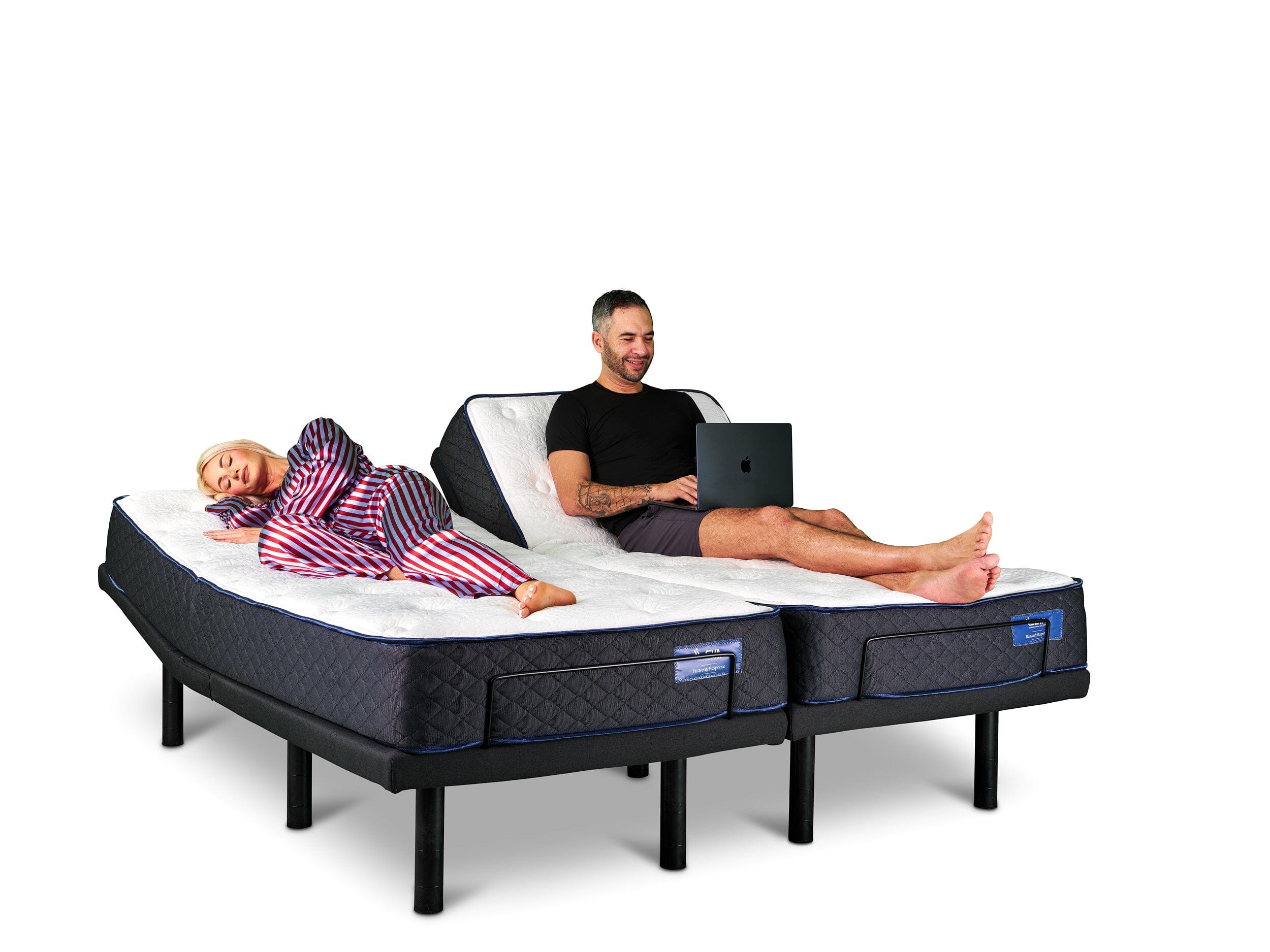
Adjustable beds carry real trade-offs worth understanding before purchasing. Split configurations create a center gap between the two mattresses, which affects comfort for couples who prefer an unbroken shared surface. This physical separation also complicates bedding choices, because standard fitted sheets frequently pop off corners during articulation. Deep-pocket sheets or sheets with suspender straps are recommended to keep everything in place as the base moves.
Beyond the mattress and sheets, the base mechanism introduces its own challenges. Basic adjustable bases often use loud motors that disrupt sleep during position changes, so motor noise becomes a primary quality metric when evaluating any system. Traditional innerspring mattresses with interconnected coils are generally incompatible with adjustable bases unless the manufacturer explicitly states otherwise. Finally, split systems cost more than standard kings because they require two independent motorized bases and two separate mattresses rather than a single unit. Understanding these friction points upfront allows buyers to select systems and accessories that neutralize them.
Best Adjustable Bed Setup After Hip Surgery
Post-surgical recovery often requires elevated leg positioning to reduce swelling and relieve pressure on the hip joint. Adjustable bases address this directly by allowing precise foot elevation without stacking pillows, which tend to shift during sleep. Joint pain and musculoskeletal conditions are among the most common reasons adults seek positional sleep interventions.
When evaluating a system for post-surgical use, prioritize very quiet motors that will not disturb a partner during nighttime adjustments. Look for a lumbar support feature that maintains spinal alignment as the foot section rises, and a wall-glide mechanism that keeps the sleeper centered near the nightstand as the head section elevates. Mattress thickness matters here, and mattresses 10–12 inches thick provide the optimal balance of flexibility and support for adjustable bases, which becomes especially important when the base must articulate repeatedly during recovery. A split configuration is particularly valuable after surgery because the recovering partner can adjust position frequently without waking the other.
Choosing Between Split Queen and Split King for Smaller Rooms
A Split King consists of two Twin XL mattresses, each 38″ × 80″, placed on independent bases for a total footprint of 76″ × 80″, which matches a standard King. A Split Queen divides a Queen footprint of 60″ × 80″ into two 30″ × 80″ independent sides. Most adjustable bed retailers do not offer Split Queen configurations, so this option remains rare for couples in smaller bedrooms or apartments where a full King footprint is impractical.
Leva Sleep builds Split Queen systems to customer specifications, which extends independent-control benefits to rooms that cannot accommodate a King. Split King configurations using two separate Twin XL mattresses on independent bases deliver superior motion isolation because movement on one side does not transfer to the other, and the same principle applies to Split Queen setups. For couples prioritizing space efficiency without sacrificing independent control, the Split Queen becomes the most practical path, and Leva’s custom-build capability is a meaningful differentiator in this category.
Stopping Sleep Divorce While Sharing One Bed
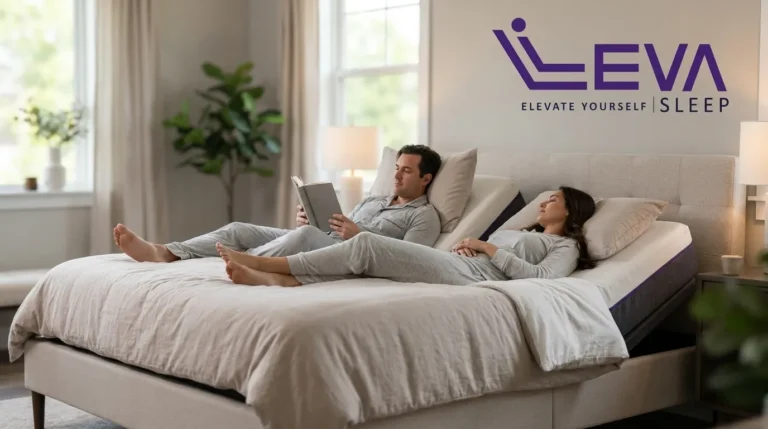
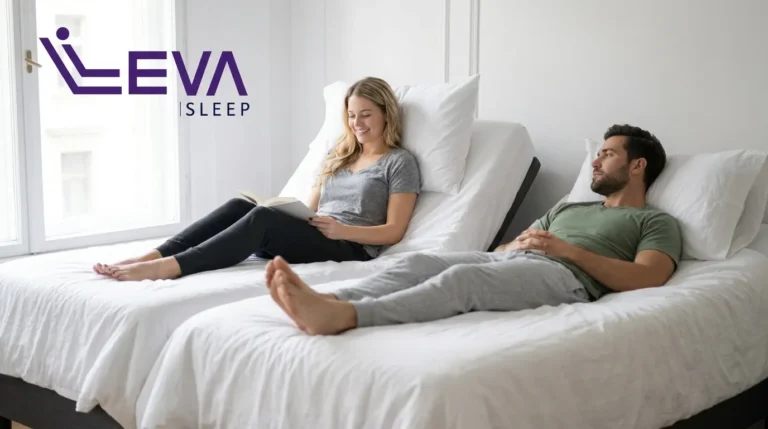
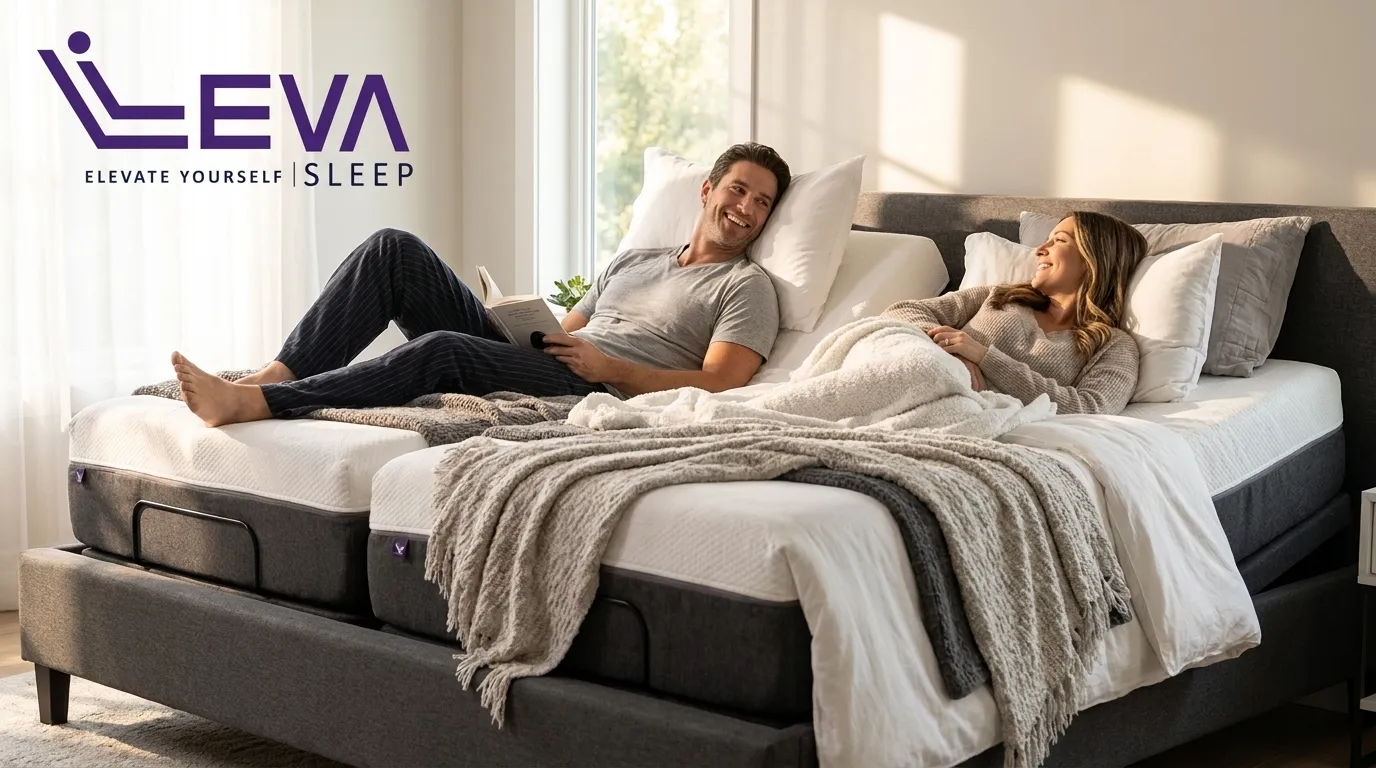
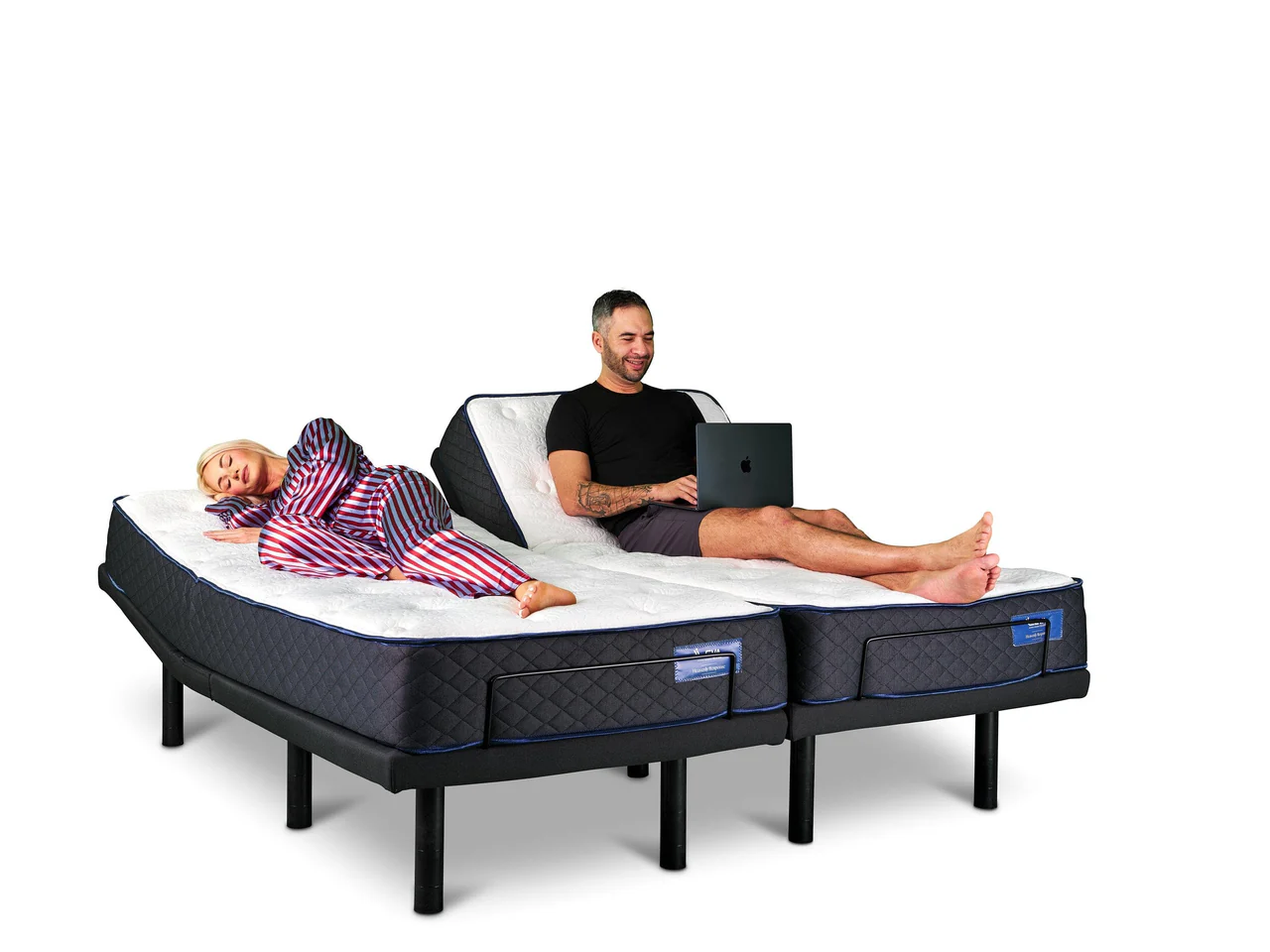
Sleep divorce, which refers to partners sleeping in separate rooms to avoid mutual disturbance, has become a common response to snoring, movement, and incompatible comfort preferences. The underlying problem usually reflects a mismatch between both partners and a flat, one-size-fits-all sleep surface rather than a mismatch between the partners themselves. A split adjustable system resolves this by giving each person independent control of position, temperature, and firmness while keeping both in the same bed.
Sleep disturbances between co-sleeping partners are well-documented contributors to daytime fatigue and relationship strain. Leva Sleep’s 2026 anti-snore mode detects snoring through the base and makes micro-adjustments to the head of the snoring partner’s side, which can reduce airway obstruction without requiring the other partner to intervene. Combined with dual-zone temperature regulation and independent massage settings, a split system turns a shared bed from a source of conflict into a personalized sleep environment for both people.
Essential Adjustable Bed Features for Couples
Zero-gravity positioning elevates the head and legs simultaneously to distribute body weight evenly across the sleep surface, which reduces pressure on the lumbar spine and lower limbs. Elevated head positioning has documented relevance for managing obstructive sleep apnea and reducing airway collapse during sleep. Wall-glide, also called zero-clearance technology, moves the base forward as the head section rises, keeping the sleeper’s head near the headboard and nightstand instead of sliding toward the center of the room.
Lumbar control adds a third articulation point in the lower-back zone, which allows independent support adjustment that zero-gravity alone cannot provide. Pillow-tilt adds a small hinge at the very top of the head section, angling the pillow area independently to reduce neck strain during elevated sleeping. Dual-zone temperature regulation, delivered through a heating and cooling pad integrated into each side, addresses one of the most common couple conflicts, where one partner sleeps hot while the other sleeps cold.
A fully functional premium base should also include integrated USB charging and under-bed lighting as standard expectations in mid-range and premium tiers. Leva Sleep’s higher-end bases include all of these features, controlled through a Bluetooth app that stores custom sleep presets for each partner. With these essential features defined, the following comparison helps identify which luxury systems deliver them at the best value.
Side-by-Side Comparison of Luxury Split Adjustable Systems
The table below compares key features and approximate 2026 price ranges for leading luxury split adjustable systems. All price data is drawn from cited sources or brand-published figures. Because motor noise ratings, warranty lengths, and delivery policies vary by configuration and region, those factors are addressed in prose below the table rather than reduced to a single comparable figure.
| Brand / System | Key Features | Approx. 2026 Price Range (Split King Bundle) | Notes |
|---|---|---|---|
| Leva Sleep Split King / Split Queen | Quiet German motors, 2026 anti-snore mode, lumbar control, pillow-tilt, dual-zone temperature, app control, 15–20 base models, Split Queen available | 30–50% below comparable luxury competitors | White-glove delivery available; US-made mattress options; Split Queen built to spec; direct-to-consumer pricing |
| Tempur-Pedic TEMPUR-Ergo | Snore detection, zero-gravity, app control, Tempur material mattresses | High-end showroom systems reach $4,000–$5,000+ | Mattress and base sold as integrated system; limited base model selection at most retailers |
| Saatva Adjustable Base Plus | Zero-gravity, lumbar support, massage, app control | Premium tier; full retail pricing through brand direct | No Split Queen option publicly listed; white-glove delivery included |
| Sleep Number 360 Smart Bed | Air-chamber firmness adjustment, SleepIQ tracking, partner-independent control | Premium tier; proprietary mattress required | Firmness via air chambers rather than foam or coils; proprietary ecosystem limits mattress choice |
| Ghostbed Adjustable Base | Zero-gravity, massage, USB ports, under-bed lighting | Mid-range; distributed through Costco and online | Broad distribution model; fewer specialized features than premium tier; limited split configurations |
| Purple Base with PowerBase | Zero-gravity, massage, app control, compatible with Purple Grid mattresses | Mid-to-premium tier | Best paired with Purple mattresses; split options available in King only |
On motor noise, luxury systems with German-engineered motors, such as those used by Leva Sleep, operate at near-silent levels during adjustment, which offers a clear advantage over basic bases where audible motor sounds can wake a partner. On delivery, Leva Sleep’s white-glove service includes bedroom delivery, full assembly, leg-height adjustment, product tutorial, and old-bed removal. Most competitors either charge separately for white-glove service or offer threshold delivery only.
Fixing Sheet Slippage, Noisy Motors, and Delivery Problems
Sheet slippage ranks as the most frequently cited frustration among new adjustable bed owners. Standard fitted sheets can pop off corners during base movement; deep-pocket sheets or sheets with suspender straps are recommended, and Split King setups require two Twin XL fitted sheets. Leva Sleep designs its own bedding line specifically for adjustable bases, with extra-deep elastic, duvet clips that maintain separation when partners are at different angles, and side remote pockets integrated into the fitted sheet.
Motor noise is addressed at the engineering level, because Leva’s quiet German motors are selected to avoid the mechanical grinding common in entry-level bases. Delivery damage and poor setup are reduced through Leva’s in-house white-glove service, which uses trained professionals rather than third-party freight carriers. The team adjusts leg heights on-site, walks customers through the app, and removes the old bed, which contrasts sharply with “bed in a box” drop-ship models that leave assembly to the customer.
Neutral Evaluation Checklist for Split Adjustable Systems
Cost: Compare total system cost, including base, mattress, bedding, and delivery, not base price alone. As noted earlier, the dual-base architecture drives higher upfront costs. Leva Sleep’s direct-to-consumer model delivers 30–50% savings versus full retail luxury competitors.
Durability: With proper care, a quality split adjustable system can last a decade or more. Ask about load ratings, because a quality base should support 650–850 lbs combined to handle mattress, bedding, and sleepers without overworking the motors.
Aesthetics: Evaluate whether the base integrates with your bedroom furniture or looks clinical. Consider leg style, upholstery, and how the base appears when elevated.
Power and features: Confirm that zero-gravity, lumbar control, pillow-tilt, anti-snore automation, and dual-zone temperature are included rather than treated as optional upgrades. Confirm the mattress falls within the optimal thickness range discussed earlier.
Warranty and returns: Check that the mattress warranty explicitly covers adjustable-base use, because many warranties are voided when an improper foundation is used. Confirm the trial period covers both the base and mattress as a system, not just one component.
Partner testing: Both partners should test the system simultaneously, ideally in a showroom, to evaluate gap comfort, independent adjustment ease, and app usability before purchasing.
How Common Are Sleep Disturbances for Couples?
Sleep disturbances between co-sleeping partners are well-documented in sleep medicine literature. Snoring affects a significant portion of adults and ranks among the leading causes of partner-reported sleep disruption, which contributes to daytime fatigue, mood changes, and relationship tension. Studies published through the National Institutes of Health indicate that shared sleep environments frequently result in one or both partners experiencing fragmented sleep due to movement, noise, or incompatible thermal preferences.
The practical consequence is that a meaningful percentage of couples either already sleep in separate rooms or are considering it. Split adjustable systems directly address the root causes, including positional snoring, movement transfer, and temperature conflict, without requiring partners to separate.
How Zero-Gravity Positioning Helps Back Pain and Mild Sleep Apnea
Zero-gravity positioning elevates the head and legs simultaneously to approximate the posture astronauts use during launch, which distributes body weight across a larger surface area and reduces concentrated pressure on the lumbar spine. For back pain, this position reduces compressive load on intervertebral discs and can relieve the morning stiffness associated with sleeping flat.
For mild sleep apnea and snoring, elevating the head section, even modestly, helps keep the airway open by reducing the gravitational pull on soft palate tissue that causes airway collapse during sleep. Leva Sleep’s 2026 anti-snore mode automates this response, because the base detects snoring and makes micro-adjustments to the head elevation without requiring the sleeper or their partner to wake up and intervene manually. For moderate to severe sleep apnea, positional therapy typically works alongside medical treatment rather than replacing it, so a physician should guide the complete care plan.
Ensuring Mattress and Bedding Compatibility with Split Bases
Mattress compatibility depends on three factors, which include material flexibility, construction type, and thickness. Memory foam and latex are the most compatible materials because they flex naturally with base articulation. Modern hybrid mattresses with individually pocketed coils also work well. Traditional innerspring mattresses with interconnected Bonnell coils are generally incompatible and should be avoided.
For thickness, 10–12 inches provides the optimal balance of flexibility and support. Mattresses under 8 inches may lack adequate support, while those over 14 inches often become too rigid to articulate effectively. For a Split King, two Twin XL mattresses are required, one per base.
For bedding, standard fitted sheets frequently slip during articulation, so deep-pocket sheets with extra elastic or suspender straps are necessary. Leva Sleep designs its entire bedding line specifically for adjustable bases, including fitted sheets with reinforced elastic, duvet clips, and integrated remote pockets, which removes the need to source compatible bedding separately.
Expected Costs for Luxury Split Systems in 2026
High-end split adjustable systems at luxury showrooms can reach $4,000–$5,000 or more for a complete bundle in 2026. Entry-level queen adjustable frames start around $349–$899 for a single base without a mattress. The total cost of a split system, which includes two independent bases, two compatible mattresses, specialty bedding, and white-glove delivery, will typically exceed a standard king setup because of the dual-motor architecture and independent mattress requirement.
Leva Sleep’s direct-to-consumer model, which eliminates retail middlemen and assembles systems locally, delivers comparable luxury features at 30–50% below full retail competitors such as Tempur-Pedic and Saatva. When evaluating cost, calculate the full system price including delivery and bedding, then divide by the expected lifespan of 10 or more years with proper maintenance. The per-year cost of a well-built split system often ends up lower than repeatedly replacing incompatible flat mattresses.
Conclusion: Matching an Adjustable System to Your Relationship
The best luxury adjustable bed for couples with different sleep needs gives both partners genuine independence without sacrificing the experience of sharing a bed. The evaluation criteria remain clear, including quiet motors, zero-gravity and lumbar control, 2026 anti-snore automation, dual-zone temperature regulation, compatible mattresses in the 10–12 inch range, purpose-built bedding, and white-glove delivery that removes every setup burden.
Global adjustable bed market projections for 2033 vary across reports, with estimates including $16.24 billion, $14.6 billion, and $10.2 billion, which reflects how broadly couples are recognizing that a flat, static bed no longer meets modern sleep needs. Leva Sleep addresses every major friction point in this category, including Split Queen availability for smaller rooms, 15–20 base models versus the 3–5 found at general retailers, US-made mattress options, and a 30–50% cost advantage over comparable luxury brands.
The La Jolla showroom allows both partners to test independent controls, gap comfort, and app usability simultaneously before committing, which remains the most reliable way to confirm a split system works for both people. Find your ideal split adjustable system at Leva Sleep’s showroom or shop the full collection online today.