Written by: Matthew Timmins, Founder and Managing Director, Leva Sleep
Key Takeaways
- Split-configuration smart adjustable beds let elderly couples control head and foot elevation independently, so neither partner has to compromise on sleep position for snoring, sleep apnea, or joint pain.
- Key evaluation criteria for 2026 models include independent motor control per side, quiet operation, safety features such as adjustable leg height and backup batteries, Medicare eligibility, and a smooth delivery and setup experience.
- Leva Sleep offers a rare Split Queen option alongside Split King configurations, with German motors, 2026 anti-snore mode, app control, and in-home setup tailored for senior couples.
- Medicare Part B covers only basic semi-electric hospital beds from approved DME suppliers; advanced smart adjustable beds with app or anti-snore features usually do not qualify for standard coverage.
- For personalized guidance on the best smart adjustable bed for elderly couples, explore Leva Sleep’s Split Queen and Split King options with white-glove delivery included.
Comparison Table: Five Models at a Glance
The following table compares five leading split adjustable bed models across features that matter most for elderly couples. Focus on split configuration options, safety and noise specifications, and Medicare or delivery details to see which model fits your household.
| Model | Split Options | Key Safety & Noise Features | Medicare / Delivery |
|---|---|---|---|
| Leva Sleep Split Queen / Split King | Split Queen (unique U.S. offering) & Split King, fully independent controls per side | Leva Sleep’s Split Queen and King systems use whisper-quiet German motors operating at 20-40 decibels, adjustable leg height 3–12 in., under-bed LED lighting available, 2026 anti-snore mode | Not a DME supplier, in-home setup available for a fee, old bed removal |
| Saatva Adjustable Base Plus | Split King, independent head/foot per side | Lumbar support, wireless remote, wall-hugging design | Not Medicare-approved, scheduled in-home delivery |
| Tempur-Pedic TEMPUR-Ergo | Split King, independent per side | SleepTracker AI snore detection, app control, wall-hugging | Not Medicare-approved, retailer delivery varies |
| Sleep Number Climate360 | Split (dual-chamber), independent per side | Biometric tracking, dual-zone temperature, responsive air adjustment | Not Medicare-approved, in-home setup available |
| Ergomotion 700 Series | Split King, independent per side | Backup battery, under-bed LED lighting, wall-hugging design | Not Medicare-approved, available through specialty retailers |
Note: Medicare Part B covers only basic semi-electric hospital-grade adjustable beds from approved DME suppliers. Smart adjustable beds with advanced features generally do not qualify for standard Medicare coverage. See the Medicare section below for full details.
Split King vs. Split Queen Explained
Before you compare specific models, understand how split king and split queen configurations affect bedroom space and independent control.
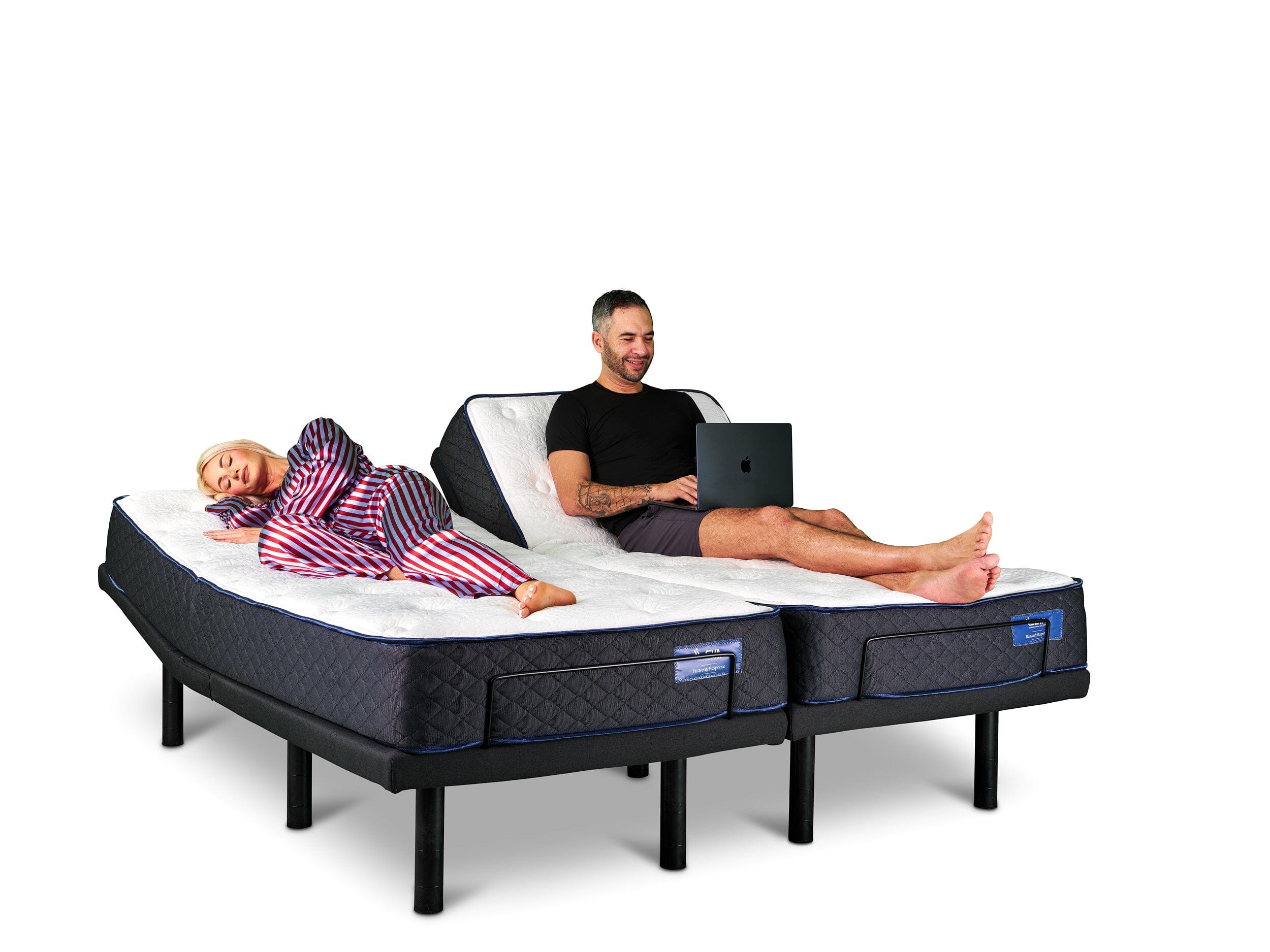
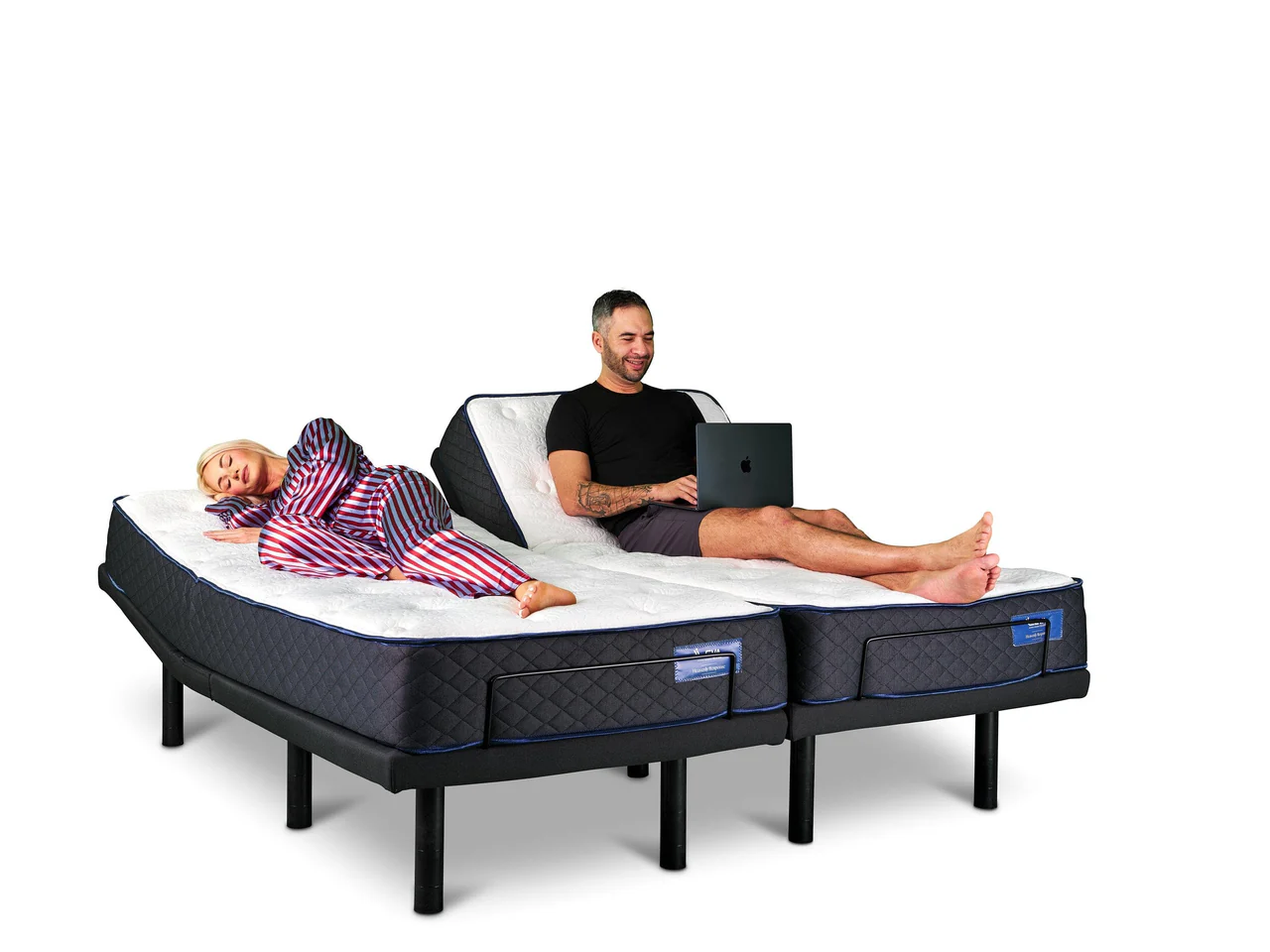
A split king uses two Twin XL bases placed side by side, each with fully independent head elevation, foot elevation, massage, and other settings. One partner can raise their head 15 degrees for snoring reduction while the other sleeps flat, with no motion transfer between sides. The trade-off is a center seam between the two Twin XL mattresses and more complex bedding requirements. The practical solution uses two Twin XL fitted sheets with a shared king-size duvet on top.
A Split Queen follows the same principle in a smaller footprint and suits couples in rooms where a king-size frame feels crowded. Leva Sleep is one of the only U.S. providers offering a Split Queen built to customer specifications. This option fills a gap that otherwise forces most shoppers to accept a full queen with no independent control or upsize to a king they do not need.
Medicare Coverage and Documentation Tips
Original Medicare Part B covers basic semi-electric adjustable beds as durable medical equipment (DME) when a physician certifies medical necessity. The physician must document that a condition makes it difficult to get in or out of bed, move around in bed, or sleep. Coverage applies to the bed frame only, not the mattress, and the bed must come from a Medicare-approved supplier. After the Part B deductible, Medicare pays 80% of the approved amount and the beneficiary pays the remaining 20%.
Medicare does not cover luxury or full-electric adjustable beds with features such as app control, advanced massage, or zero-gravity positioning. Some Medicare Advantage (Part C) plans may extend coverage for medically necessary adjustable beds, so beneficiaries need to verify in-network supplier requirements directly with their plan.
To pursue Medicare coverage, follow these steps in order:
- Obtain a written Certificate of Medical Necessity from a treating physician documenting the qualifying condition. This document forms the foundation of any DME claim.
- Before purchasing, confirm the supplier is enrolled in Medicare as a DME provider at CMS.gov, because Medicare will not reimburse purchases from non-approved vendors.
- Request an Advance Beneficiary Notice (ABN) if the supplier believes Medicare may deny the claim. This step clarifies cost liability before purchase rather than after delivery.
- Keep all physician notes, diagnoses, and prescription records in a dedicated file. Medicare audits DME claims and may request documentation months after the initial purchase.
- If you are enrolled in Medicare Advantage (Part C) instead of Original Medicare, contact your specific plan to verify coverage, since benefits and in-network supplier rules differ by plan and change annually.
Senior-Specific Safety Checklist for Adjustable Beds
Women age 70+ who sleep fewer than five hours face increased risk of falls and fractures, and older adults who do not sleep well are more likely to experience nighttime falls. These risks make a safety-focused checklist essential when you evaluate any adjustable bed for a senior.
- Transfer height: Adjustable leg height should allow the mattress surface to sit at the ADA-recommended 20–23 inches from floor to mattress top for safe independent transfers. Leva Sleep bases offer 3–12 inch leg height adjustment.
- Assist rails: Half-length rails sized within FDA Hospital Bed System Dimensional Guidance limits (gaps below 4.75 inches in Zones 1–3) reduce entrapment risk while supporting transfers.
- Under-bed lighting: LED lighting illuminates the floor at night without harsh overhead glare, which reduces fall risk during nighttime bathroom trips. This matters because nocturia affects up to 80% of older adults.
- Backup battery: A backup battery returns the base to flat during a power outage, so a senior is not stranded in an elevated position.
- Quiet motors: Motors operating at approximately 54 dB(A) allow nighttime position changes without exceeding WHO nighttime sound targets that increase awakening risk in older adults.
- Voice or app control: Voice-command controls support hands-free adjustments for users with arthritis, limited grip strength, or tremors.
- Wall-hugging design: This design keeps nightstands within reach when the head is elevated and prevents seniors from needing to stretch or stand to access medications or phones.
Drawbacks of Adjustable Beds and Practical Fixes
Standard adjustable beds present several drawbacks that affect elderly users more than younger sleepers. Noisy motors disrupt the lighter sleep stages common in older adults, so look for bases with motors rated at or below 54 dB(A). A center seam in split configurations can bother couples who sleep near the middle, and a mattress topper across both sides softens that seam.
Bedding incompatibility appears when fitted sheets pop off during elevation. Deep-pocket sheets with reinforced elastic, designed for adjustable bases and included in Leva Sleep’s accessory line, solve this problem. Higher upfront cost is real, yet chronic pain, sleep divorce, or separate bedrooms also carry long-term financial and emotional costs. Complex setup discourages use, so Leva Sleep’s delivery and setup service removes this barrier for seniors.
Mattress and Bedding Compatibility for Adjustable Bases
Only certain mattresses flex safely on an adjustable base. All-foam and hybrid pocket-coil mattresses form the two compatible categories. Traditional innerspring mattresses with interconnected coils resist bending and can void warranties when used on an adjustable base.
Body weight is the primary determinant of how a mattress surface performs for an individual, so a single compromise mattress often fails couples with different support needs. Split configurations with independently chosen mattresses per side address this mismatch. Leva Sleep’s U.S. lineup includes American-made mattresses from Airloom, Diamond Mattress, Helix, and Tempur-Pedic, all vetted for adjustable base compatibility.
Temperature Regulation for Couples with Different Thermal Needs
Temperature mismatch frequently drives couples to poor shared sleep. Split adjustable bases help by allowing each side to use independent temperature-regulating bedding or a heating and cooling pad calibrated per partner.
Leva Sleep’s systems integrate a heating and cooling pad as an optional accessory, so one partner can sleep cool while the other sleeps warm without crossover effect. This flexibility particularly benefits post-menopausal women and older men, whose thermoregulation often changes with age.
Best Adjustable Bed for Couples Who Share a Room
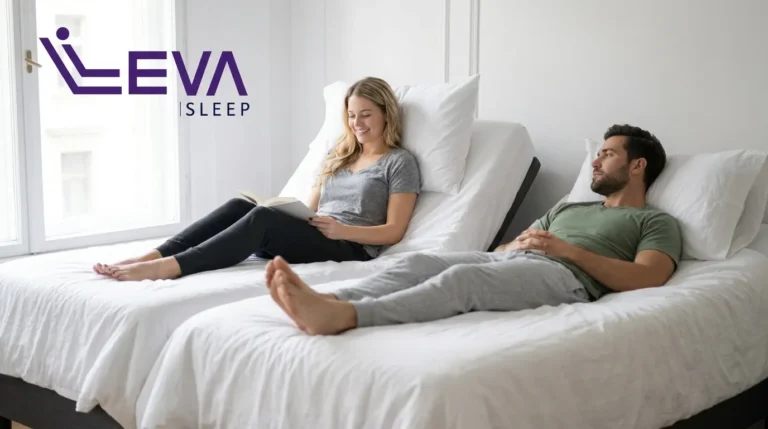
Independent control without sacrificing closeness defines the ideal adjustable bed for couples. A split king or split queen with separate motors, separate remotes or app profiles, and strong motion isolation meets this standard.
Motion on one Twin XL mattress does not transfer to the other side in a properly configured split setup, so one partner can adjust position at 2 a.m. without waking the other. For couples where one partner snores, a base with automatic anti-snore detection, such as Leva Sleep’s 2026 anti-snore mode, makes micro-adjustments to head elevation without requiring the snoring partner to wake up and reposition.
Best Adjustable Bed Features for an 80 Year Old
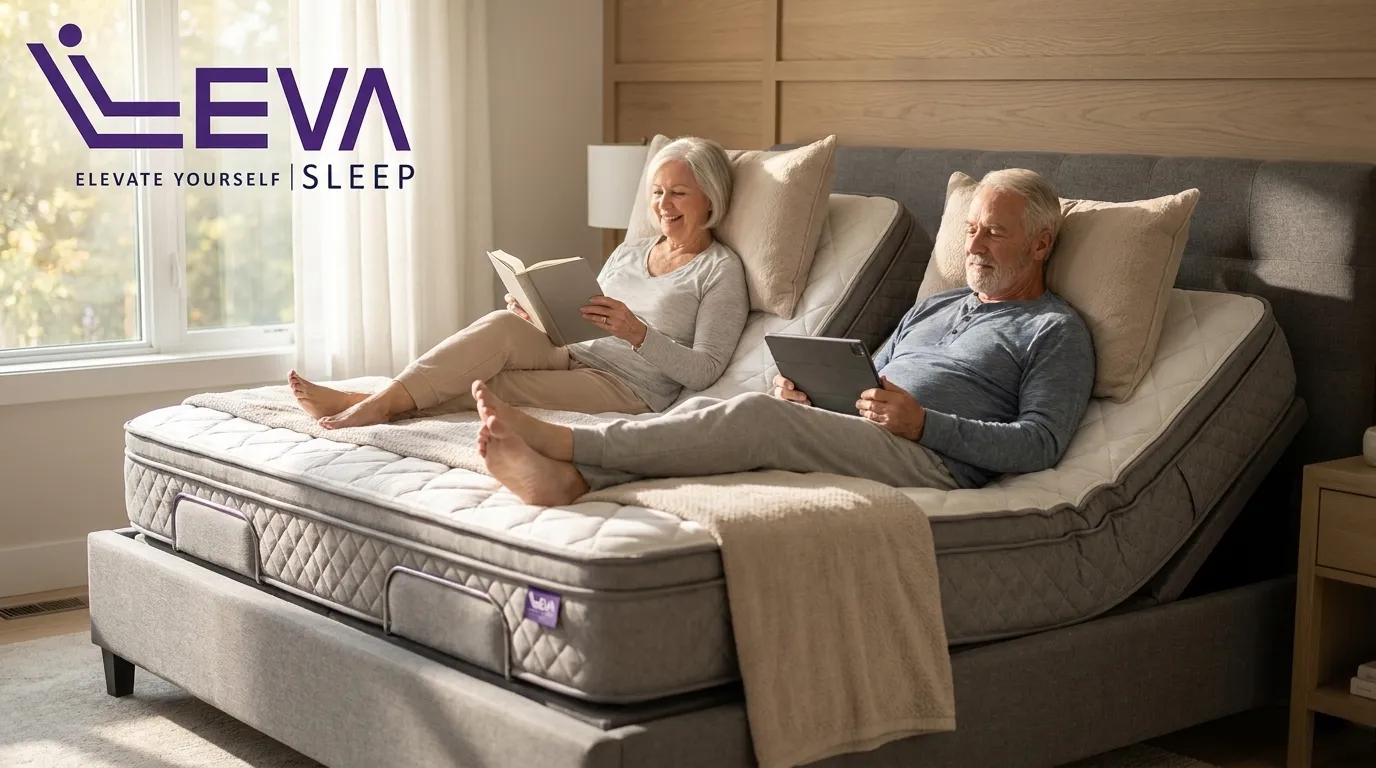
At age 80, safety, ease of use, and medical compatibility outrank every other factor. An adjustable base benefits both upper and lower body positioning, provides sleep apnea relief, and reduces back pain as people age.
For an 80-year-old, the non-negotiable features include adjustable leg height that meets the transfer standard discussed earlier, a backup battery, under-bed lighting, a simple control interface such as a large-button remote or voice control, and quiet motors that protect fragile sleep. Adults 65+ are at high risk for sleep apnea, so head elevation capability becomes medically relevant rather than a comfort perk. Leva’s delivery and setup service removes the physical and logistical burden that might otherwise make a premium adjustable bed inaccessible to an older buyer living alone or with a similarly aged partner.
Frequently Asked Questions
What is the best adjustable bed for seniors?
The best adjustable bed for a senior combines independent split-side control, whisper-quiet motors, adjustable leg height that reaches 20–23 inches from floor to mattress surface, under-bed LED lighting, a backup battery, and a simple control interface. For couples, a Split King or Split Queen configuration lets each partner set their own head and foot elevation, massage intensity, and temperature without disturbing the other.
Leva Sleep’s Split Queen and Split King systems meet these criteria and add a 2026 anti-snore mode that makes automatic micro-adjustments to head elevation when snoring is detected. The included setup service removes the assembly burden that makes many adjustable beds impractical for seniors purchasing without caregiver assistance.
Does Medicare pay for adjustable beds for seniors?
Original Medicare Part B covers basic semi-electric adjustable beds classified as durable medical equipment when a physician certifies medical necessity. Coverage applies to the bed frame only, not the mattress, and the purchase must come through a Medicare-approved DME supplier. After the Part B deductible, Medicare pays 80% of the approved amount.
Medicare does not cover smart adjustable beds with features such as app control, zero-gravity positioning, anti-snore detection, or advanced massage. Some Medicare Advantage (Part C) plans may offer broader coverage, so beneficiaries should contact their specific plan to confirm eligibility, in-network supplier requirements, and annual benefit limits before purchasing.
What are the disadvantages of adjustable beds for seniors?
The main disadvantages include higher upfront cost compared to a flat bed, motor noise that can disrupt light sleepers, a center seam in split configurations that some users notice when sleeping near the middle, bedding incompatibility when standard fitted sheets are used, and complex setup if professional help is not included. For seniors specifically, a base that cannot reach the 20–23 inch transfer height creates a fall risk during bed entry and exit.
These disadvantages are manageable. Quiet motors rated at approximately 54 dB(A) address noise. Deep-pocket elastic sheets designed for adjustable bases improve bedding fit. Adjustable leg height supports safer transfers. Professional in-home setup simplifies assembly.
What type of bed is good for an 80 year old?
An 80-year-old benefits most from an adjustable base paired with a compatible all-foam or hybrid pocket-coil mattress. The adjustable base allows head and foot elevation to relieve pressure on arthritic joints, reduce snoring and sleep apnea symptoms, and improve circulation, all of which become more common with age.
The mattress should be medium to medium-firm to support spinal alignment without creating pressure points at the hips and shoulders. Safety features such as adjustable leg height, under-bed lighting, a backup battery, and a simple remote or voice control matter as much as comfort features at this life stage. A split configuration is strongly recommended for couples because it removes the need for either partner to compromise their medically appropriate sleep position.