Written by: Matthew Timmins, Founder and Managing Director, Leva Sleep
Key Takeaways
- Millions of couples lose sleep when one partner snores and the other lies awake, which strains health and relationships.
- Two main paths exist: masking devices like Ozlo Sleepbuds that block sound for the listener, and positional therapy like split adjustable bases that reduce snoring at its source.
- Comfort, nightly ease of use, and whether both partners benefit should guide the choice between in-ear masking and whole-bed adjustment.
- Head elevation with an adjustable base opens the airway more effectively than pillows alone and can reduce snoring while improving comfort for both partners.
- Leva Sleep’s split adjustable bases provide independent control, shared benefits, and root-cause snoring reduction. Explore Leva Sleep solutions today to protect your relationship and sleep quality.
The Problem: Masking Snoring vs. Fixing the Cause
Bed partners of heavy snorers are up to three times more likely to have difficulty falling or staying asleep and two times as likely to feel tired and drowsy during the day. That cumulative sleep debt strains patience, communication, and physical health, and “sleep divorce” discussions are increasingly common among couples in their 40s, 50s, and 60s.
Sleep medicine physician Abhinav Singh, MD, MPH, FAASM, explains the risk clearly: “Snoring is like potholes on a road. Frequently seen but never good for any car. If you repeatedly hit them, the car will eventually need repairs.”
Two intervention categories exist. Masking devices, such as earplugs, white-noise machines, and in-ear sleepbuds like Ozlo, create an acoustic buffer for the non-snoring partner. Positional therapy, including head elevation, side-sleeping aids, and split adjustable bases, targets the mechanical cause of snoring: airway narrowing during sleep. The Sleep Foundation recommends addressing snoring at the source through positional changes before relying solely on sound masking. Masking functions as a coping strategy, while positional therapy works as a corrective approach.
Understanding these differences sets the stage, but nightly comfort and usability determine which solution couples actually stick with over time.
Comfort and Partner Compatibility in Daily Life
Comfort across a full night of sleep decides whether a couple uses a solution consistently or abandons it after a few nights.
Ozlo Sleepbuds: in-ear experience
- Worn inside the ear canal throughout the night.
- Combine passive noise isolation with audio masking such as white noise, pink noise, or guided audio.
- Comfort depends entirely on ear canal fit, and some users report discomfort after several hours.
- Only the non-snoring partner benefits, while the snoring partner’s sleep remains unchanged.
- Do not alter the shared physical sleep environment.
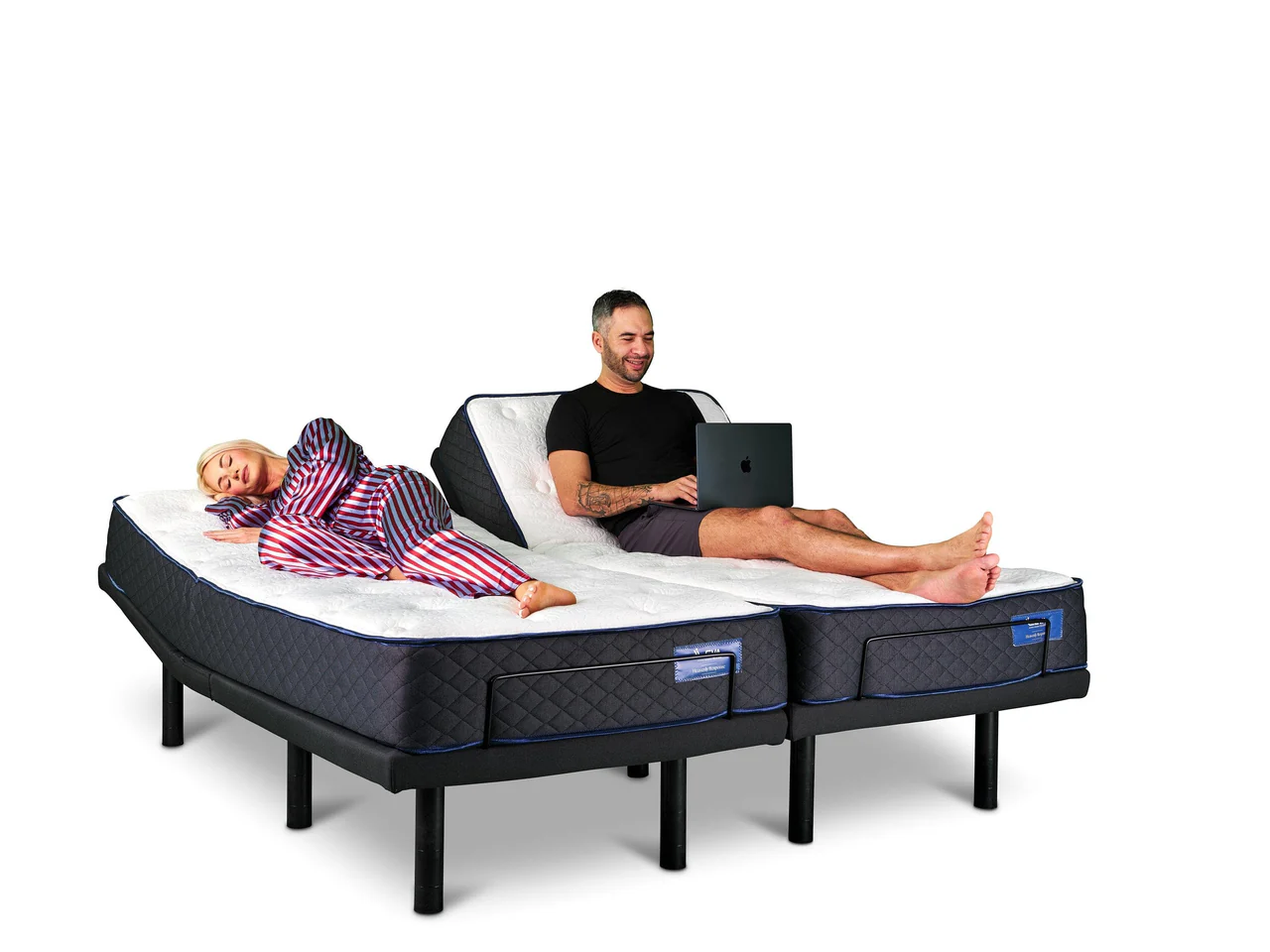
Leva Sleep Split Adjustable Base: whole-body experience
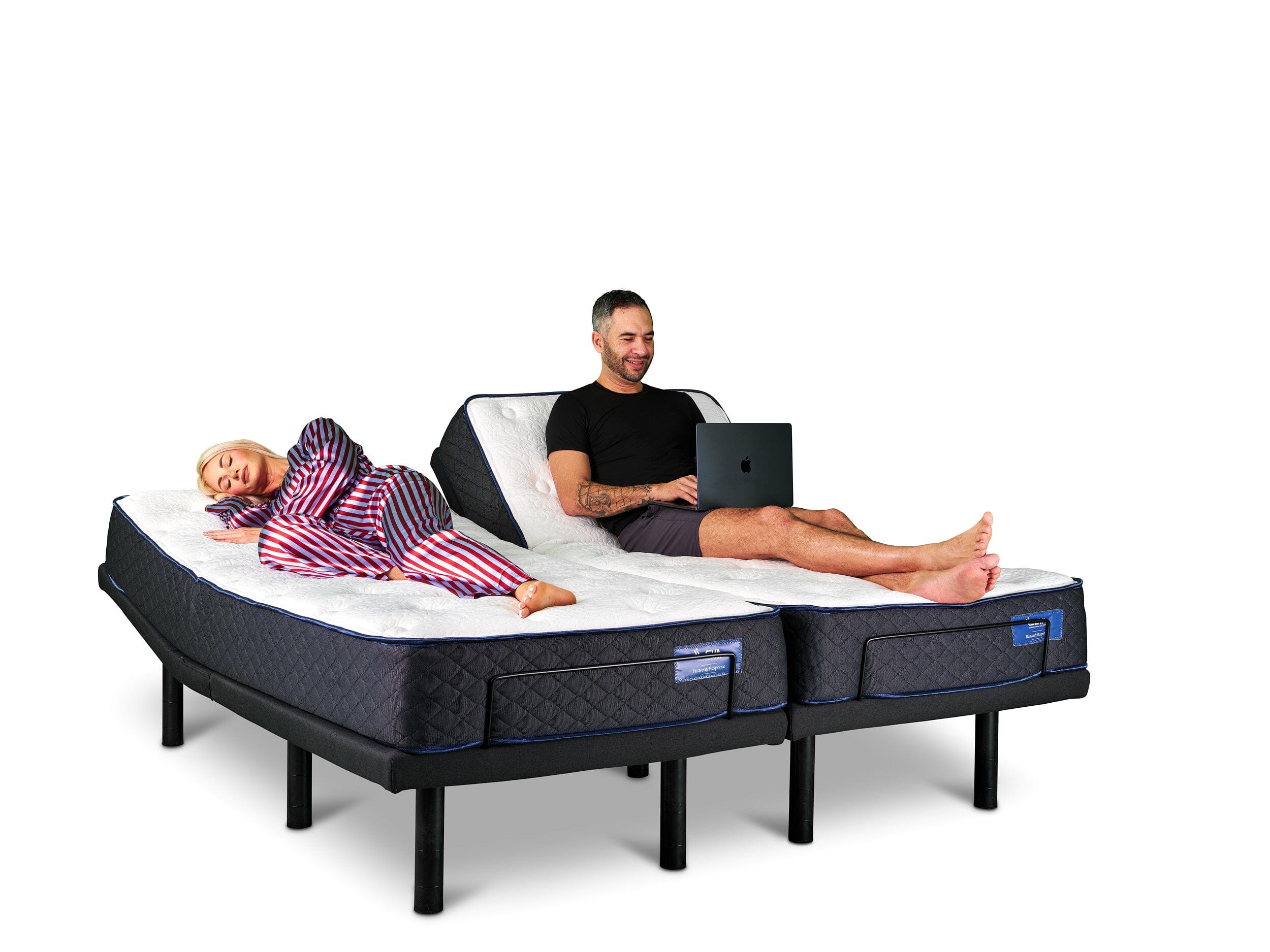
- Each partner controls their own side independently through an app or remote.
- Available in Split King and the uniquely space-efficient Split Queen configuration.
- Head and foot elevation adjust in real time without disturbing the other side.
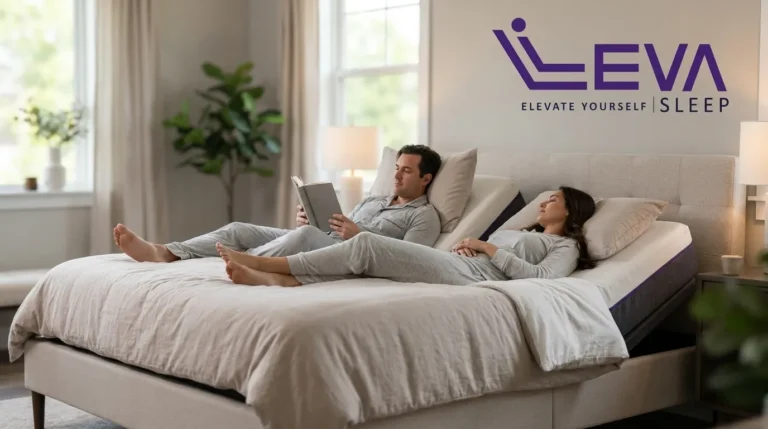
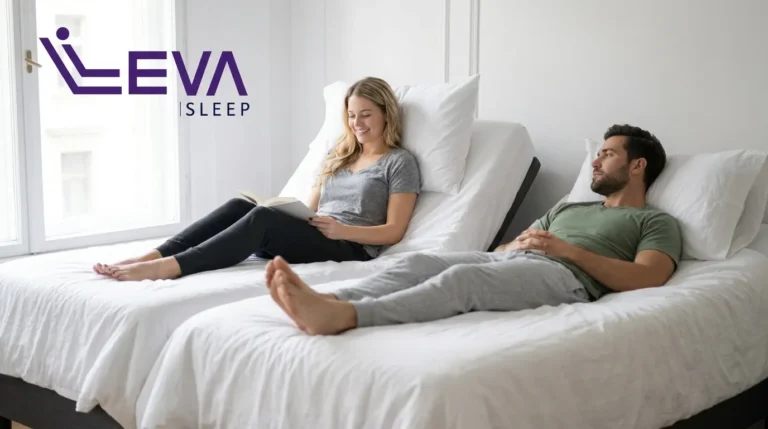
- Both partners benefit at once, with the snorer repositioned and the non-snorer free to choose their own ideal position.
- Require no wearable devices, so comfort becomes passive once each side is set.
How Each Option Actually Reduces Snoring
The Sleep Foundation notes that elevating the head during sleep opens the airway and can reduce snoring and specifically cautions against using a higher pillow alone, because neck bending promotes friction and allows snoring to continue. A properly angled adjustable base avoids this problem by raising the entire upper body from the hips upward.
Adjustable bed frames help reduce snoring by allowing sleepers to raise the upper body, which prevents the airway from collapsing during sleep. An in-home product intervention study cited by the Sleep Foundation found that sleeping with the head elevated can reduce the severity of snoring.
| Criterion | Ozlo Sleepbuds (Masking) | Leva Sleep Split Base (Positional) | Evidence Basis |
|---|---|---|---|
| Mechanism | Audio masking for non-snorer | Head elevation reduces airway collapse | SleepApnea.org |
| Who benefits | Non-snoring partner only | Both partners independently | SleepApnea.org |
| Snoring addressed at source? | No | Yes, positional airway opening | Sleep Foundation |
| Limitation | Loud snoring can exceed masking capacity | Requires compatible mattress | SleepApnea.org |
Leva Sleep plans to introduce an anti-snore mode that detects snoring and makes micro-adjustments to the head of the bed automatically, shifting positional therapy from manual to responsive without requiring the snorer to wake up or intervene.
Technology and Nightly Habits
Ozlo Sleepbuds
- Provide up to 10 hours of battery life on a full charge, which covers a typical night.
- Use a companion app to deliver audio content such as white noise, pink noise, nature sounds, and guided sleep audio.
- Require nightly charging and consistent in-ear placement before sleep.
- Do not change the physical sleep environment or body position.
Leva Sleep Split Adjustable Base
- Uses whisper-quiet German motors so position changes rarely wake a partner.
- Offers a Leva Sleep app with full Bluetooth control, custom position presets, vibrating alarms, and a planned anti-snore detection mode.
- Provides adjustable lumbar support, pillow tilt, and foot elevation on each side.
- Works with Leva’s purpose-built accessories, including deep-pocket fitted sheets with extra elastic, duvet clips for split-position use, and remote pockets designed for adjustable bases.
- Includes AI-powered sleep tracking on higher-end models, which enables real-time micro-adjustments.
A 2022 prospective study found that noise-masking earbuds improved reported sleep quality and reduced tension among shift workers, which confirms that masking technology offers genuine short-term relief. Many couples still benefit from pairing that relief with a structural solution that improves body position and shared comfort.
Long-Term Value and Everyday Practicalities
Long-term value depends on both upfront cost and how often a couple needs to replace or maintain a solution. Ozlo Sleepbuds involve an initial device purchase plus potential replacement costs for ear tips and, over time, battery degradation that can require a full device replacement. The non-snoring partner also carries the nightly responsibility of inserting and charging the device.
A Leva Sleep Split King or Split Queen adjustable base functions as a one-time infrastructure investment, and Leva’s business model aims to stretch the value of that purchase. Leva’s direct-to-consumer approach removes retail markups and delivers premium engineering at 30–50% less than comparable luxury competitors. This cost advantage extends into the installation experience, where white-glove delivery includes bedroom setup, old-bed removal, product tutorials, and real-time height adjustments for an added fee, which removes the logistical burden for the household. Local design and assembly further strengthen the value by supporting consistent quality control and direct post-purchase support instead of third-party service chains.
Bundled mattress-plus-frame systems reduce compatibility problems for couples because the mattress and frame are engineered to function together. Leva’s mattresses, including all-foam and hybrid pocket-coil options made in the United States, are designed exclusively for adjustable bases, which prevents sheet-popping and mattress-sliding issues that often appear with mismatched components.
Real-World Couple Scenarios with Leva vs. Ozlo
Chronic back pain: One partner needs lumbar support and slight leg elevation to relieve lower-back pressure. Ozlo Sleepbuds provide no positional benefit. A Leva split base allows independent lumbar and foot elevation on the affected side while the other partner sleeps flat.
Differing firmness needs: One partner prefers a firm surface, while the other needs more pressure relief for hip pain. Earbuds cannot address either requirement. Leva’s Split Queen or Split King pairs each side with an independently selected mattress.
Mild sleep apnea: Positional interventions such as head elevation are recommended as a first-line approach before escalating to medical devices. A Leva base with anti-snore head elevation supports the airway directly, while earbuds do not change airway mechanics.
Temperature mismatch: One partner sleeps hot and the other sleeps cold. Ozlo Sleepbuds have no thermal function. Leva’s system integrates a heating and cooling pad so each partner can set a personal sleep temperature.
Decision Matrix: Matching Solutions to Your Priorities
Use the following criteria and rate each from 1 (low priority) to 5 (high priority) to see which solution fits your household best:
- Reducing snoring at the source — favors a split adjustable base.
- Immediate, low-setup relief for the non-snoring partner — favors an in-ear masking device.
- Both partners sleeping comfortably without wearables — favors a split adjustable base.
- Independent firmness and position control per side — favors a split adjustable base.
- Managing a secondary condition (back pain, acid reflux, mild apnea) — favors a split adjustable base.
- Lowest possible upfront cost — compare current device pricing against likely three-year replacement cycles.
- Staying in the same bed and maintaining closeness — favors a split adjustable base.
Couples who rate positional and dual-benefit criteria highest usually find that a split adjustable base addresses more of their combined needs. Couples seeking a low-commitment, immediate stopgap may still find short-term value in masking devices while they evaluate longer-term options.
Frequently Asked Questions
Can Ozlo Sleepbuds completely block a partner’s snoring?
Ozlo Sleepbuds use passive noise isolation and audio masking to reduce the perceived volume of snoring. Very loud snoring can exceed the blocking capacity of in-ear devices, and masking audio may not work for every sleeper. The device improves the listener’s experience but does not change the snoring itself.
How does head elevation in an adjustable bed reduce snoring?
When the upper body is elevated, gravity helps keep the tongue and soft palate from collapsing backward into the airway. This reduces the tissue vibration that produces snoring sounds. A properly angled adjustable base raises the body from the hips upward, which works more effectively than a higher pillow that can bend the neck and worsen airway restriction.
What is a Split Queen adjustable base and who is it for?
A Split Queen adjustable base divides a standard Queen-size bed into two independently controlled halves. Each partner can adjust head elevation, foot elevation, lumbar support, and massage settings without affecting the other side. This configuration suits couples in smaller bedrooms who want independent adjustability without moving to a King-size footprint. Leva Sleep offers this configuration built to customer specifications.
Is a split adjustable base a viable alternative to a CPAP machine for snoring?
For mild snoring caused by positional airway narrowing, head elevation through an adjustable base can meaningfully reduce snoring severity. A split adjustable base does not replace a CPAP machine prescribed for diagnosed obstructive sleep apnea. Couples where one partner has sleep apnea should consult a sleep medicine physician. An adjustable base can complement medical treatment by improving sleep position but cannot substitute for prescribed therapy in clinical cases.
What should couples look for when evaluating adjustable bed systems for snoring?
Key criteria include independent per-side control so neither partner’s adjustment disturbs the other, whisper-quiet motors that avoid waking a partner during position changes, and a mattress engineered for adjustable bases to prevent sliding or sheet displacement. App-based control supports subtle nighttime adjustments, and anti-snore detection features can respond automatically. Couples should also check whether the system addresses secondary needs such as back pain, temperature regulation, or differing firmness preferences, since a split adjustable base can solve several sleep problems at once.
Conclusion: Choose the Path That Protects Your Relationship
The evaluation framework across comfort, mechanics, technology, long-term value, and real-world scenarios points to a clear conclusion for most couples. Masking devices like Ozlo Sleepbuds provide short-term acoustic relief for one partner, while split adjustable bases address the mechanical cause of snoring for both partners at the same time. When the goal is to stay in the same bed, protect long-term sleep health, and avoid the conditions that push couples toward sleep divorce, positional therapy through a split adjustable base offers the more comprehensive solution.
Leva Sleep has spent more than eight years and 25,000 customer relationships refining this outcome, creating a sleep system where two people with different bodies, needs, and challenges can share a bed and both wake up restored. With 15 to 20 adjustable base models, US-made mattresses, purpose-built accessories, and white-glove delivery, Leva provides a complete system rather than a single component.