Written by: Matthew Timmins, Founder and Managing Director, Leva Sleep
Key Takeaways
- Many couples lose sleep to snoring, restless legs, and motion transfer, so a compatible split adjustable mattress system supports better shared rest.
- Articulation compatibility, independent firmness control, and strong motion isolation create the mechanical foundation for any mattress used on an adjustable base.
- Temperature regulation, edge support, and hinge-zone reinforcement reduce common partner conflicts and support long-term durability under repeated bending.
- Specialized bedding accessories and clear warranty language protect your investment and prevent problems that standard sheets or incompatible setups can cause.
- Leva Sleep offers expertly matched Split Queen and Split King configurations designed for adjustable bases. Shop online or visit the La Jolla showroom today to experience the difference.
1. Matching Mattress Flexibility to Adjustable Base Movement
An adjustable base bends at the head and foot zones, sometimes at both at once. Mattresses that are too firm to flex properly create resistance that strains the motor system, while mattresses that are too thick generate mechanical load that accelerates wear on both the base and the mattress itself. These stresses can cause premature failure of components that are expensive to replace.
Start with the manufacturer’s stated thickness limit for the base. Most adjustable bases perform best with mattresses between 10 and 14 inches. Next, examine the internal construction. Individually pocketed coils or high-density foam flex more easily than a rigid interconnected spring grid. Then check the cover material. Stretch-knit fabric moves with the mattress instead of fighting each bend. These three factors determine whether the mattress can bend repeatedly without developing stress points that reduce comfort and support over time. Consider a couple where one partner elevates the head to 45 degrees nightly for acid reflux. A non-compatible mattress can develop permanent creasing at the hinge zone within months.
2. Independent Firmness Control for Each Partner
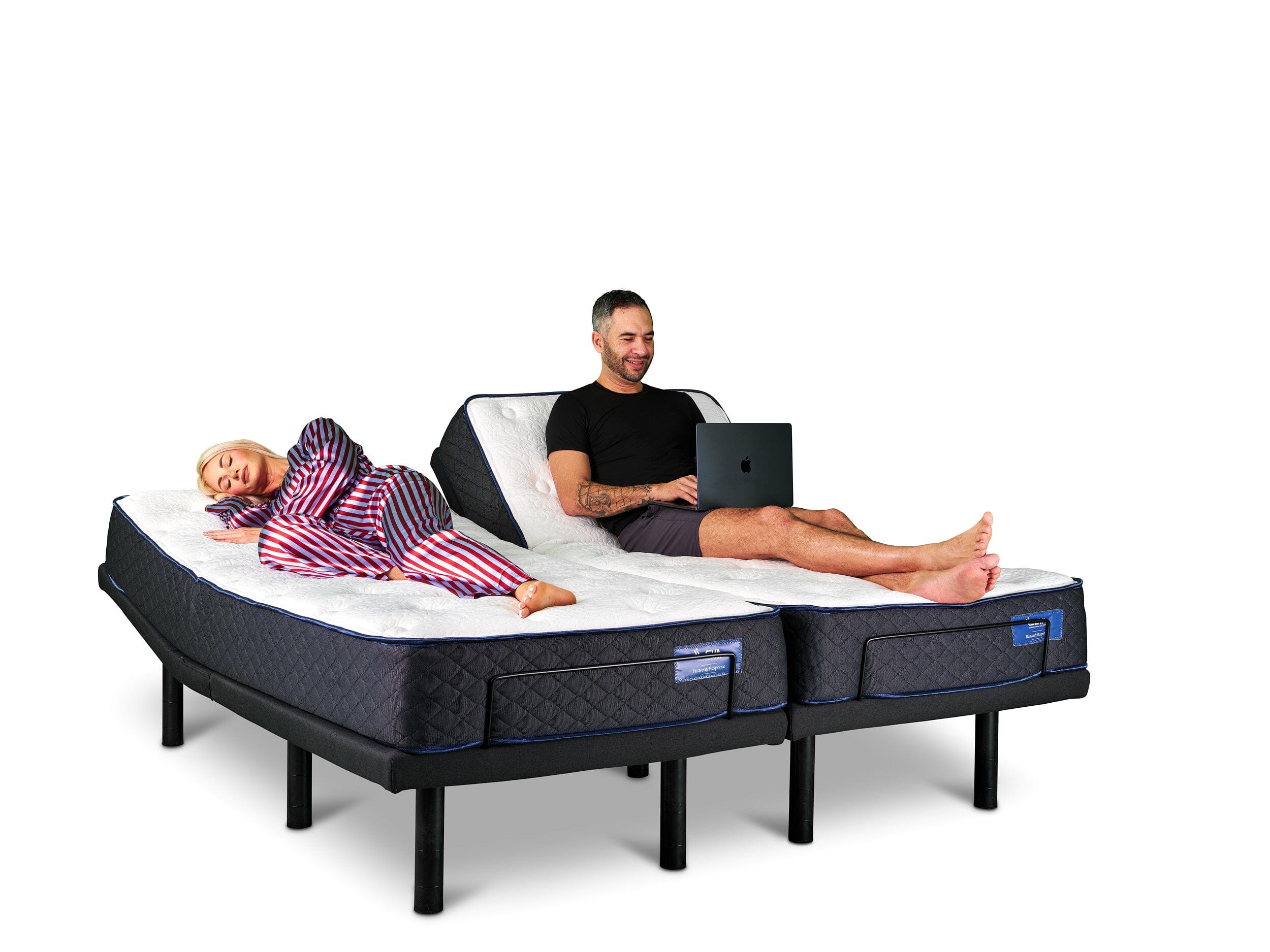
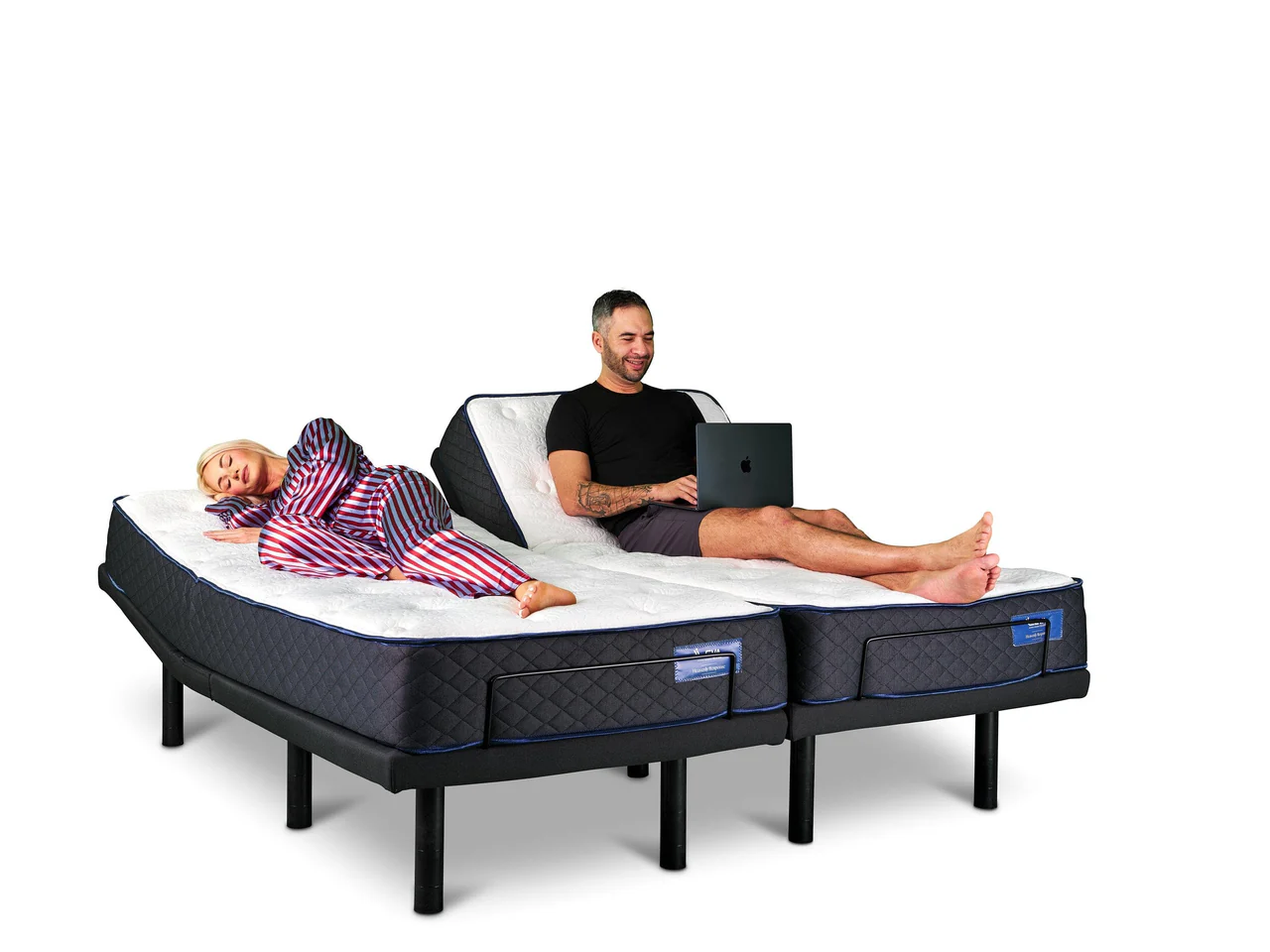
Split king adjustable setups use two Twin XL mattresses, so each sleeper can choose a different firmness level or material such as memory foam, latex, hybrid, or adjustable air. This structure creates the foundation of an effective adjustable firmness mattress for couples because each side functions as a separate sleep surface.
Ask whether the retailer allows mismatched firmness pairing on the same order. One side might use a firm hybrid while the other uses a plush all-foam design. Confirm that the base uses independent motors without a mechanical link between sides. High-density memory foam and latex provide consistent support and pressure relief more reliably than air beds that depend on pumps and sensors. Imagine one partner recovering from hip replacement surgery who needs a medium-firm surface with slight leg elevation. The other partner prefers a plush feel at zero incline. A split configuration with independently chosen mattresses supports both needs without compromise.
3. Motion Isolation That Keeps Partner Movement Quiet
Strong motion isolation helps many couples avoid separate bedrooms. All-foam constructions usually absorb movement more effectively than hybrid models. Modern hybrid mattresses with individually wrapped coils reduce motion transfer significantly compared to traditional innerspring beds, although they still allow slightly more movement than quality all-foam designs.
Test motion isolation in the showroom. Press firmly on one side of the mattress while your partner watches a glass of water on the other side. Minimal ripple signals strong isolation. On an adjustable base, this test matters even more because articulation can amplify vibration when the mattress lacks effective damping layers. Excessive partner movement often pushes couples to consider separate sleeping arrangements, which shows why motion isolation is essential for shared beds.
Criteria one through three create the mechanical foundation of a compatible sleep system. Leva Sleep’s Split Queen and Split King configurations are engineered around all three at once. Explore split configurations designed for independent motion control at the La Jolla showroom or online.
4. Temperature Regulation for Two Different Sleepers
Hot flashes and night sweats affect 75–85% of women during menopause and frequently interrupt sleep, often forcing bedding changes that wake a partner. Temperature differences between partners create one of the most persistent sources of nighttime conflict in shared beds. This tension can increase in split king adjustable setups when both sides use identical materials that trap or hold heat in the same way.
Look for mattresses that use open-cell foam or gel-infused layers that move heat away from the body instead of storing it. Ask whether the retailer offers a compatible active cooling or heating pad that works with the base. Passive materials alone may not help when partners have very different temperature needs. Confirm that any temperature accessory operates independently on each side. Leva Sleep’s systems support individual temperature-regulating pads for each mattress, so one partner can sleep cool while the other uses a warming setting without mechanical or thermal crossover.
5. Edge Support and Hinge-Zone Strength on Adjustable Bases
Edge support on an adjustable mattress keeps sleepers from rolling toward the gap between split mattresses and protects the hinge zone where the base bends most. Pocket spring and hybrid mattress designs built for adjustable bases work well because individually wrapped coils at the perimeter resist compression without forming a rigid grid that fights articulation.
Check edge support by sitting and pressing down firmly on the mattress edge. A well-reinforced edge should compress only one to two inches. Ask the manufacturer whether the hinge zone uses a dedicated transition layer, such as a softer foam channel, that lets the mattress fold without stressing coils or foam. High-density all-foam mattresses with zoned density also perform well. These models use firmer foam at the perimeter and more flexible foam at the center. A couple using nightly zero-gravity positioning will flex the hinge zone thousands of times each year. Only reinforced constructions maintain their profile and comfort across a multi-year warranty period.
Edge support and hinge-zone integrity are the points where generic mattresses most often fail on adjustable bases. Leva Sleep’s curated mattress lineup is chosen specifically for long-term articulation performance. See reinforced-edge models in person at the La Jolla showroom or browse the full collection online.
6. Bedding Accessories Built for Split Adjustable Systems
A split adjustable setup creates bedding challenges that standard sheets and duvets rarely handle well. When two mattresses move independently, a conventional fitted sheet often lacks the depth and stretch to stay anchored. A standard duvet can bunch at the center gap or slide off the elevated side. These issues interrupt sleep and reduce the value of the adjustable system underneath.
A split king sheet set designed for adjustable bases includes two Twin XL fitted sheets plus a king-size top sheet and pillowcases. Check that the fitted sheets have deep pockets of at least 18 inches and reinforced elastic that wraps the full perimeter, not just the corners. Duvet clips that anchor the comforter to each mattress separately keep the cover from following one side’s elevation while leaving the other partner uncovered. Leva Sleep designs its bedding suite, including fitted sheets, mattress protectors, duvet clips, and remote pockets, specifically for articulating bases so every piece works as part of a coordinated system.
7. Warranty Protection and Professional Installation
Warranty language often hides compatibility rules that only appear when a claim is denied. Many manufacturers void coverage when a mattress sits on a base that is not listed as compatible or when visible hinge-zone deformation appears. This exclusion can apply even when the deformation comes from normal articulation on an unapproved base. Before you buy, read the warranty sections labeled “improper use” and “foundation requirements,” and confirm in writing that your specific adjustable base model qualifies.
Professional setup strengthens the protection that a good warranty provides. As noted in the compatibility discussion, using an incompatible mattress risks voiding coverage, even when damage results from normal articulation on an unapproved base. A trained technician can install the system, align the mattress with the hinge points, and set leg height for healthy spinal positioning. This process reduces the chance of installation-related problems that could affect coverage. Leva Sleep’s white-glove delivery service includes setup, height calibration, a full product tutorial, and old-bed removal so the system performs as intended from the first night.
Frequently Asked Questions
What mattress thickness works best on an adjustable base?
The optimal range is 10 to 14 inches, as discussed earlier. Mattresses below 10 inches may not include enough comfort layers for pressure relief. Mattresses above 14 inches can create enough resistance at the hinge zone to strain the motor over time. Always check the thickness range listed in your base documentation, and confirm that the mattress manufacturer explicitly approves use on adjustable frames before you purchase.
Will using a non-recommended mattress void my warranty?
Yes, in many situations. Most mattress warranties include a foundation or base compatibility clause. If the mattress develops sagging, hinge-zone deformation, or cover damage while on an unapproved base, the manufacturer can deny the claim. The safest path is to purchase the mattress and base from the same specialist retailer, such as Leva Sleep, where compatibility is confirmed at the point of sale and documented in your purchase record.
Do adjustable beds make noise that disrupts sleep?
Entry-level adjustable bases often produce noticeable motor noise. Basic models use single-motor systems with audible mechanical operation that can wake a light sleeper during position changes. Premium bases, including those in Leva Sleep’s lineup, use whisper-quiet German motors engineered for near-silent movement. When you evaluate a base, request a live demonstration through the full elevation range, not just a partial lift, so you can hear the true noise level under load.
Can an adjustable bed help with snoring or sleep apnea?
Head elevation can reduce snoring for many sleepers. Raising the head slightly shifts the tongue and soft palate forward, which can reduce airway obstruction. Sleep specialist Michael J. Breus, Ph.D., notes that anti-snore presets that slightly elevate the head relieve airway pressure and move the tongue forward. For diagnosed obstructive sleep apnea, positional therapy that includes head elevation may reduce apnea events in position-dependent cases. CPAP remains the standard treatment for moderate to severe OSA. Anyone with a diagnosed sleep disorder should consult a physician before relying on positional adjustment as a primary treatment.
When should a couple consult a physician before purchasing an adjustable bed?
Couples should speak with a physician if either partner has diagnosed obstructive sleep apnea, spinal fusion, osteoporosis, heart disease, or a respiratory condition. Orthopedic spine surgeon Nitin Bhatia, M.D., recommends upper-body elevation for GERD or sleep apnea and leg elevation for swelling and leg pain, but notes that improper positioning can worsen some spinal conditions. A physician can suggest specific elevation angles that a Leva Sleep specialist can then program into the base presets.
The Complete Framework and How to Use It
The seven criteria above move from foundational to advanced. Articulation compatibility and independent firmness control determine whether a mattress can function on an adjustable base at all. Motion isolation and temperature regulation address the most common sources of partner sleep disruption. Edge support and hinge-zone reinforcement influence long-term durability. Specialized bedding accessories complete the functional system. Warranty language and professional setup protect the investment.
Identify the two criteria that most closely match your current sleep problem, such as partner movement, temperature conflict, or a medical positioning need. Use those criteria as your primary filter while you compare options. A system that excels on your top two criteria and meets solid standards on the remaining five can deliver a noticeable improvement from the first night.
Leva Sleep has spent more than eight years and over 25,000 customer installations refining this integrated approach, from mattress selection and base engineering to bedding accessories and white-glove setup. Schedule a consultation at the La Jolla showroom or start your order online to experience the complete system.