Written by: Matthew Timmins, Founder and Managing Director, Leva Sleep
Key Takeaways for Couples Losing Sleep to Snoring
- Snoring disrupts both partners, with non-snorers waking an average of 21 times per hour and facing higher health risks from chronic sleep loss.
- Most snoring solutions, including nasal strips, mouthpieces, and positional aids, demand nightly effort from one or both partners and add friction to already strained relationships.
- Split adjustable bases with automated anti-snore elevation are the only option that removes nightly compliance while keeping couples in the same bed on independent surfaces.
- Anti-snore mode uses sensors and quiet motors to make small head adjustments that open the airway without waking either partner or transferring motion.
- Leva Sleep delivers a complete couple-focused system with app-controlled anti-snore mode, Split King and Split Queen options, and white-glove delivery. Shop now at Leva Sleep to reclaim restful nights together.
The Problem: Snoring That Damages Health and Relationships
Snoring affects both people in the bed, not just the snorer. That chronic disruption, which can mean 21 wake-ups per hour for the non-snoring partner, carries measurable health consequences. Sleep deprivation is associated with increased risks of high blood pressure, type 2 diabetes, coronary heart disease, and stroke. Research suggests people with sleep problems develop cardiovascular disease earlier than healthy sleepers.
Beyond the physical toll, ongoing sleep disturbance from snoring leads to irritability, fatigue, and resentment that erodes communication, intimacy, and overall relationship satisfaction. Any solution that demands nightly effort from one or both partners adds friction to an already strained dynamic. The right solution removes that friction entirely and protects both health and connection.
See how Leva Sleep's split adjustable bases keep couples together without compromise
How Couples Can Sleep When One Partner Snores Loudly
Four categories of solutions exist for couples dealing with loud snoring: over-the-counter aids, wearable devices, positional therapy, and automated adjustable bases. The key differentiator is compliance burden, meaning how much nightly effort each solution requires from one or both partners.
Over-the-counter nasal strips and sprays
- Compliance burden: Nightly application required by the snorer.
- Positional effectiveness: Nasal strips are generally less effective for snoring that originates deeper in the throat or is related to sleep apnea. Benefit stays limited to nasal-passage congestion.
- Partner disturbance: No reduction in bed movement or noise if the root cause is in the throat.
- Durability: Single-use consumable with ongoing cost.
Wearable mouthpieces and mandibular advancement devices (MADs)
- Compliance burden: Nightly fitting, cleaning, and wearing required by the snorer.
- Positional effectiveness: MADs are effective at reducing snoring by moving the lower jaw forward to open the airway, but only when worn consistently.
- Partner disturbance: No reduction in bed movement, so the partner still absorbs vibration through the mattress.
- Durability: Custom-fitted devices require periodic replacement. Over-the-counter versions may need more frequent replacement.
Positional aids (trainer belts, tennis ball technique, anti-snore pillows)
- Compliance burden: Nightly setup required. Positional therapy options include a snore-reducing trainer belt, placing a tennis ball under the snorer's back, or using a head-positioning anti-snoring pillow.
- Positional effectiveness: For people with positional OSA, sleeping on their side can help reduce breathing disruption events compared to sleeping on their back. However, the tennis ball technique produces lower long-term adherence because the discomfort can itself disrupt sleep quality.
- Partner disturbance: Moderate, because physical discomfort devices can cause the snorer to shift and wake, which disturbs the partner.
- Durability: Low-cost, but inconsistent adherence limits real-world value.
Split adjustable bases with anti-snore elevation
- Compliance burden: Zero nightly effort, since the base adjusts automatically.
- Positional effectiveness: Head-of-bed elevation opens the airway passively. HelpGuide.org recommends a split king adjustable bed, which allows each partner to independently adjust their sleeping position to an incline that may relieve snoring.
- Partner disturbance: Whisper-quiet motors and independent split sides keep the non-snoring partner's surface stable.
- Durability: Multi-year engineered systems with manufacturer support.
How Snoring Pushes Couples Toward Separate Rooms
Snoring often pushes couples into separate beds or rooms, and the data is consistent. Snoring can result in partners sleeping in separate rooms, a choice that may help protect sleep but can feel emotionally distancing for some couples. Sleeping in separate rooms may help some couples short term, but it can reduce emotional and physical intimacy and leave the snorer feeling lonely or unfairly punished.
Relationship expert Robyn Alesich notes that most couples assume relationship problems stem from communication or stress, but rarely consider that sleep incompatibility is the underlying cause. Sleep deprivation from a partner's snoring can affect heart health, mental wellbeing, concentration, memory, emotion regulation, libido, and can worsen depressive symptoms.
The separate-rooms pattern is predictable and well documented. The non-snoring partner tries earplugs, then white noise, then relocates to the guest room, which protects sleep but reduces emotional and physical intimacy and can leave the snorer feeling isolated or unfairly punished. Resentment builds when one partner feels they have tried every coping tool while the snorer does not take action. A solution that requires no ongoing action from either person breaks this cycle.
Explore split configurations that let you sleep together again
Anti-Snoring Devices That Work in Real Bedrooms
Several categories show genuine clinical support, yet lab effectiveness and real-world couple compliance differ. When evaluating any anti-snoring device, consider whether it requires nightly setup, whether it disturbs the non-snoring partner, whether it addresses the mechanical cause of snoring such as airway collapse, tongue position, or sleep posture, and whether it remains effective after six months of use.
CPAP therapy is highly effective at eliminating snoring caused by obstructive sleep apnea. CPAP delivers pressurized air to keep airways open, though it can take time to adjust to and many people find the adjustment period difficult without a confirmed sleep apnea diagnosis. The mask, hose, and machine also occupy shared bedroom space and produce ambient noise that affects both partners.
GLP-1 medications represent an emerging non-device option. Zepbound (tirzepatide), FDA-approved for moderate-to-severe OSA in adults with obesity, produces up to 20% weight loss and at least 25 fewer breathing interruptions per hour, with up to 50% of adults symptom-free after one year. Unlike nightly devices, this systemic intervention requires no compliance burden from either partner once treatment begins, although it does require medical supervision and is only appropriate for patients who meet specific clinical criteria.
Mandibular advancement devices show consistent evidence for mild-to-moderate snoring but require nightly compliance from the snorer and do nothing to improve the partner's sleep environment.
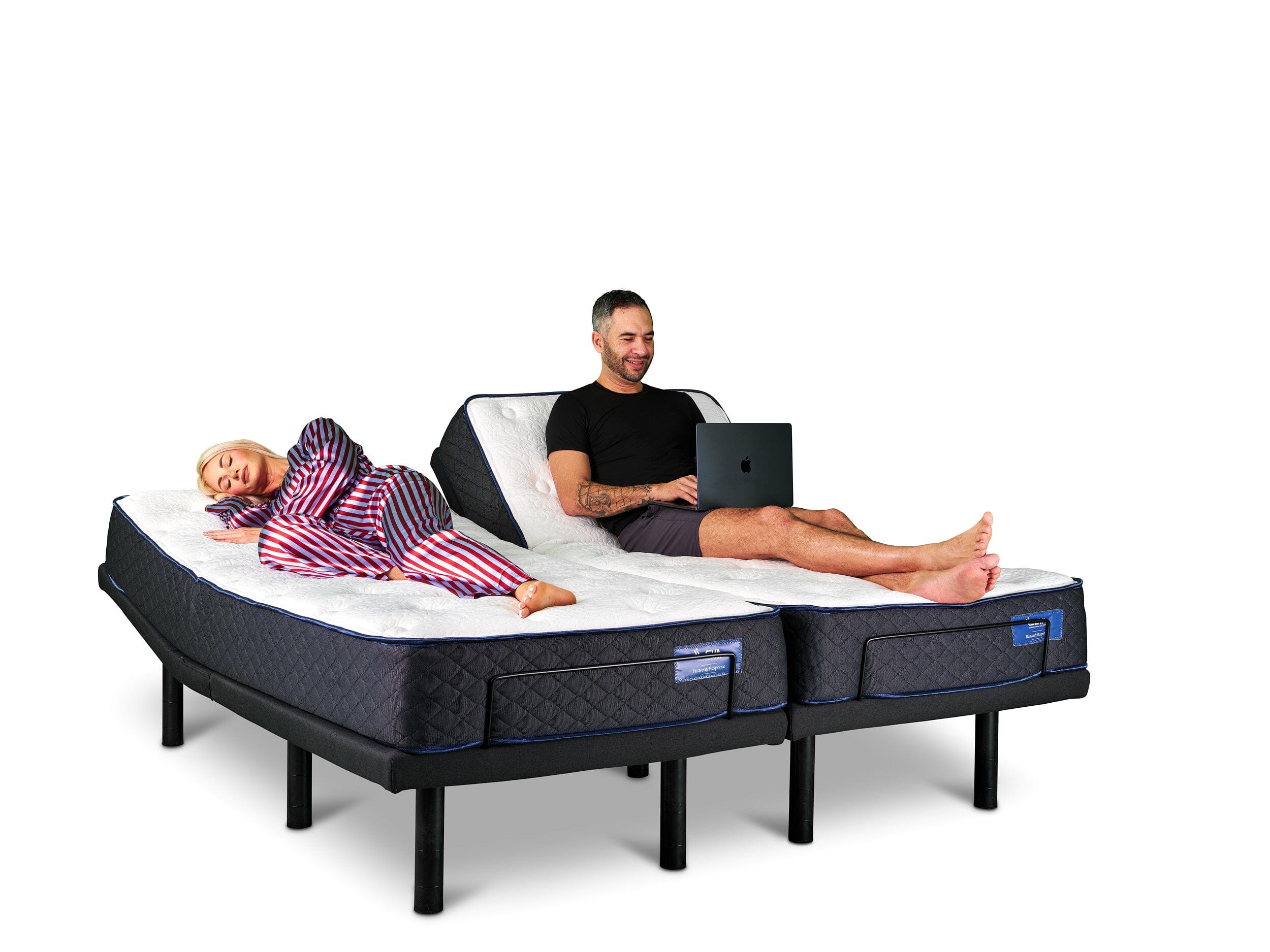
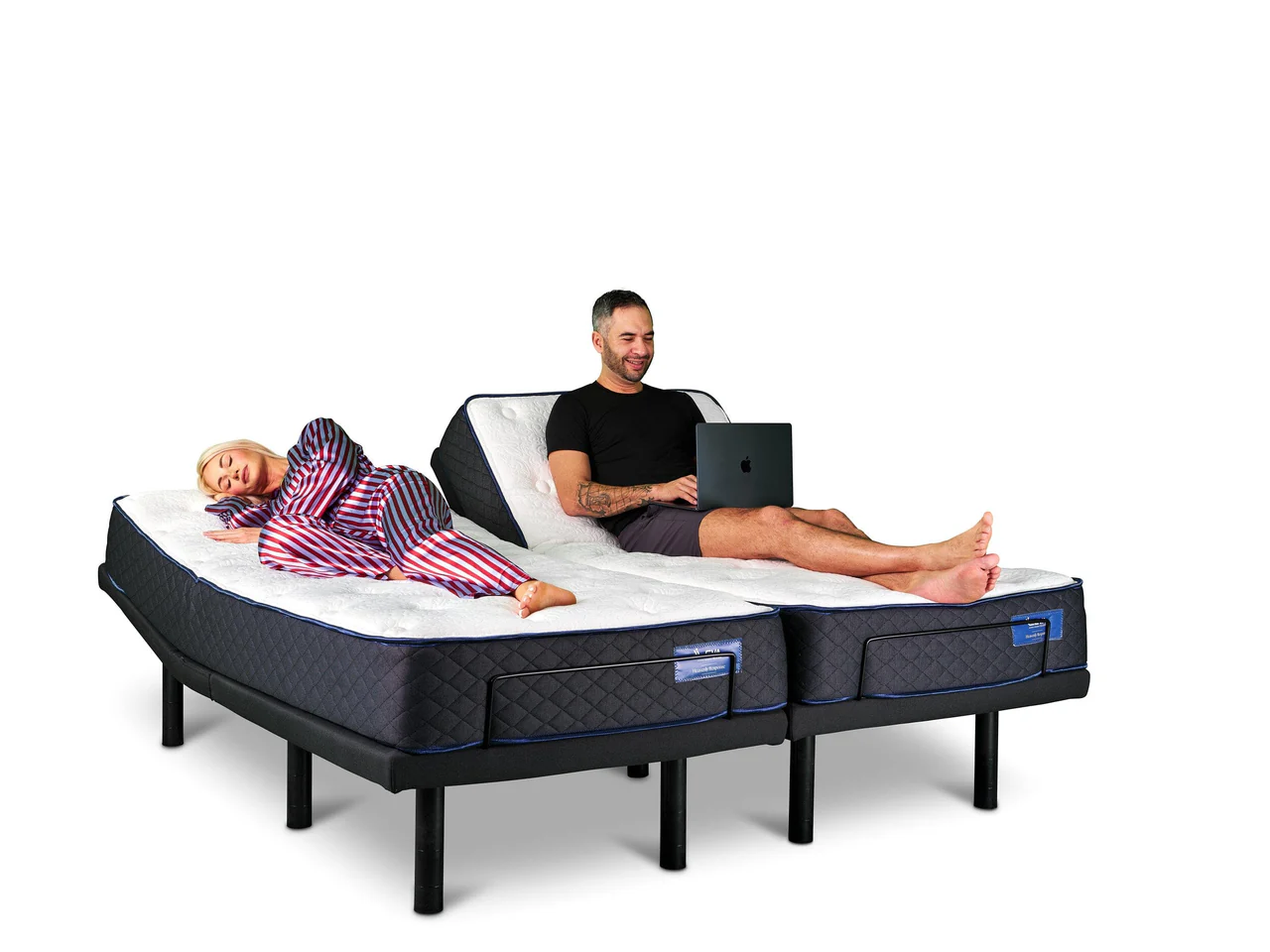
Split adjustable bases with anti-snore positioning address the mechanical cause of airway collapse during back-sleeping through passive head elevation. No device is worn. No nightly setup is required. Both partners' sides operate independently, so the non-snoring partner's sleep surface stays stable during adjustments.
How Adjustable Bed Anti-Snore Mode Works for Couples
Anti-snore mode on a modern adjustable base detects snoring through a sensor and then automatically makes small head-elevation adjustments on the snorer's side of the bed. The elevation gently shifts the airway into a position that reduces soft-tissue collapse, which is the primary mechanical cause of snoring, without waking the sleeper or disturbing the partner.
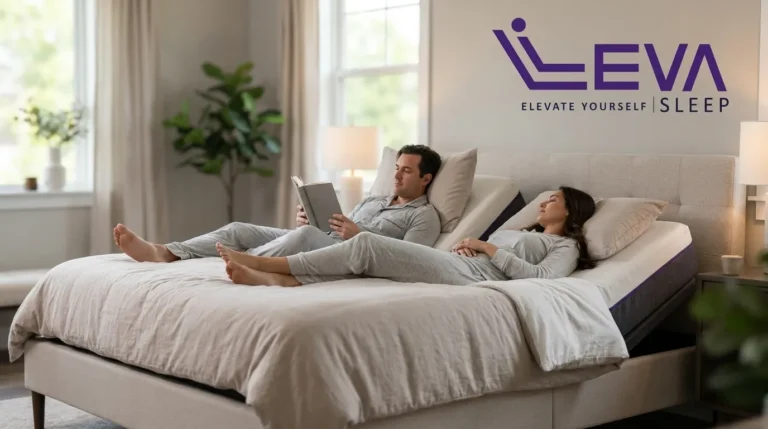
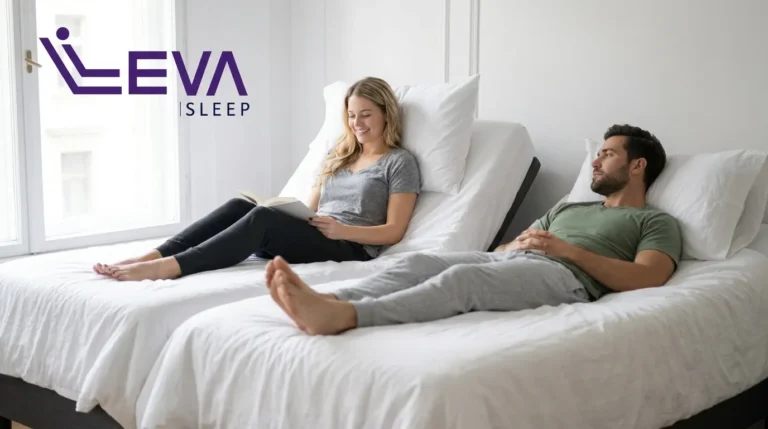
Leva Sleep's anti-snore mode, arriving in 2026, operates through the Leva Sleep app via Bluetooth. The system detects snoring and initiates subtle head-of-bed elevation on the snorer's independent split side only. The whisper-quiet German motors used in Leva's bases keep the adjustment imperceptible to the non-snoring partner. Because the Split King and Split Queen configurations give each partner a fully independent surface, no motion transfers during the adjustment.
Compared to wearable MADs, which require the snorer to remember to insert a device each night, anti-snore mode removes nightly action. Compared to positional trainer belts, which create physical discomfort to force side-sleeping, anti-snore elevation works with the body rather than against it. Compared to CPAP, there is no mask, no hose, and no machine on the nightstand.
Working together as a team to address snoring improves the quality of the relationship bond and helps both partners sleep better. A system that removes the compliance burden from both partners is the most team-friendly option available.
Decision Guide: Matching Your Situation to a Snoring Solution
Use the following framework to identify which category fits your specific situation and your relationship dynamics.
Mild snoring, no diagnosed sleep apnea, snorer is highly motivated: A custom-fitted MAD or consistent positional therapy may be sufficient. Evaluate whether the snorer will realistically maintain nightly compliance after six months.
Moderate snoring, partner is losing significant sleep, snorer has tried and abandoned wearables: A split adjustable base with anti-snore elevation is the logical next step. It removes the compliance variable entirely and improves the partner's sleep environment at the same time.
Loud snoring with suspected sleep apnea, doctor has recommended evaluation: A sleep study is the appropriate first step. A split adjustable base can complement CPAP therapy or serve as a standalone solution for positional apnea. Leva Sleep's systems accommodate medical positioning needs without looking clinical.
Couple is already discussing separate rooms: A split adjustable base is the only category that keeps both partners in the same bed while giving each an independent, personalized sleep surface. Separate rooms solve the snoring problem but introduce intimacy and relationship costs.
Space constraints (smaller bedroom): Leva Sleep offers a Split Queen configuration, a rare format in the adjustable base market, that delivers independent split-side control in a more space-conscious footprint.
Total Value and Long-Term Benefits for Couples
Total cost of a snoring solution includes more than the purchase price. Custom MADs require replacement every one to three years and dental follow-up. Nasal strips are a recurring consumable. CPAP machines require ongoing supply purchases, cleaning, and machine replacement. Positional belts and pillows are low-cost but carry low adherence, so the problem often resurfaces.
A split adjustable base functions as a durable, multi-year system. Leva Sleep's bases use whisper-quiet German motors and are built to withstand years of nightly use. The white-glove delivery service, available for a fee, includes professional setup, old bed removal, leg-height adjustment, and a full product tutorial. There is no assembly burden on the customer, and the system is ready the day it arrives.
Leva Sleep also designs all bedding accessories specifically for adjustable bases. Fitted sheets have deep pockets and extra elastic that stay in place during elevation. Duvet clips maintain separation when each side rests at a different angle. Mattress protectors are engineered for flex. The result is a complete, integrated system rather than a base paired with incompatible standard bedding.
As health needs change, whether that means managing acid reflux, recovering from surgery, or addressing new joint pain, an adjustable base adapts. A mouthpiece does not.
Experience white-glove delivery and a complete sleep system built for couples
Frequently Asked Questions About Adjustable Bases and Snoring
Is an adjustable base actually better than a flat bed for snoring?
For snoring caused by airway collapse during back-sleeping, head elevation directly addresses the mechanical cause. A flat bed offers no positional variation once you fall asleep. An adjustable base allows the head to stay elevated throughout the night, and with anti-snore mode, that elevation adjusts automatically in response to detected snoring. A flat bed cannot provide either of those benefits.
Will the anti-snore adjustment wake my partner?
On a split adjustable base, each side operates independently. When the anti-snore mode makes a small adjustment to the snorer's side, the non-snoring partner's surface does not move. Leva Sleep's bases use whisper-quiet German motors, so the sound of the adjustment stays below normal bedroom noise levels. This creates a clear advantage over single-base systems where any adjustment affects both sleepers.
Does Leva Sleep offer a Split Queen, or only Split King?
Leva Sleep offers both Split King and Split Queen configurations. The Split Queen is a relatively rare format in the adjustable base market and is built to customer specifications. It provides the same independent-side control as the Split King in a smaller footprint, which suits couples in rooms where a King-size bed is not practical.
Can a split adjustable base replace a CPAP machine?
A split adjustable base is not a medical device and does not replace a CPAP machine in cases of diagnosed moderate-to-severe obstructive sleep apnea. For mild positional snoring or positional sleep apnea, head-of-bed elevation can reduce the frequency and severity of breathing disruptions. Couples where one partner has a confirmed sleep apnea diagnosis should follow their physician's guidance. Leva Sleep's systems are compatible with CPAP use and can complement medical therapy by providing optimal positioning.
What should I look for when comparing adjustable base brands for snoring?
Confirm whether the anti-snore feature operates automatically or requires manual activation each night. Check whether the base is a true split configuration with independent motors on each side or a single base with a shared surface. Ask about motor noise levels, since loud motors defeat the purpose of a quiet adjustment. Verify that the mattress paired with the base is designed to flex with elevation rather than resist it. Finally, review the delivery and setup experience, because a base that arrives unassembled and requires self-installation adds friction to an already complex purchase.
Conclusion: Why Split Adjustable Bases Stand Out for Couples
Every snoring solution category has a clear use case. Nasal strips help with nasal congestion. MADs help motivated snorers with mild-to-moderate airway issues who will maintain nightly compliance. CPAP treats diagnosed obstructive sleep apnea. None of these options, however, treats the couple's sleep environment as a shared system, and all place ongoing compliance burden on one or both partners.
A split adjustable base with automated anti-snore positioning is the only category that removes nightly effort from both partners, keeps the couple in the same bed, gives each person an independent sleep surface, and adapts passively to changing health needs over time. For couples already discussing separate rooms, it offers a direct path back to sleeping together without compromise.
Leva Sleep has spent over eight years and more than 25,000 customer relationships engineering this exact solution. The systems include Split King and Split Queen configurations, whisper-quiet motors, app-controlled anti-snore mode, purpose-built bedding, and white-glove delivery that handles every detail from setup to old bed removal.