Written by: Matthew Timmins, Founder and Managing Director, Leva Sleep
Key Takeaways for Couples Dealing With Snoring
- Shared-bed snoring solutions must support two different bodies, sleep positions, and comfort needs without forcing either partner to compromise.
- Traditional pillows, including wedge, contoured, smart, and hybrid designs, only manage airway issues at the head and neck and cannot provide independent whole-body elevation for couples.
- Pillows wear down over time, rely on manual one-time adjustments, and cannot react to position changes during the night.
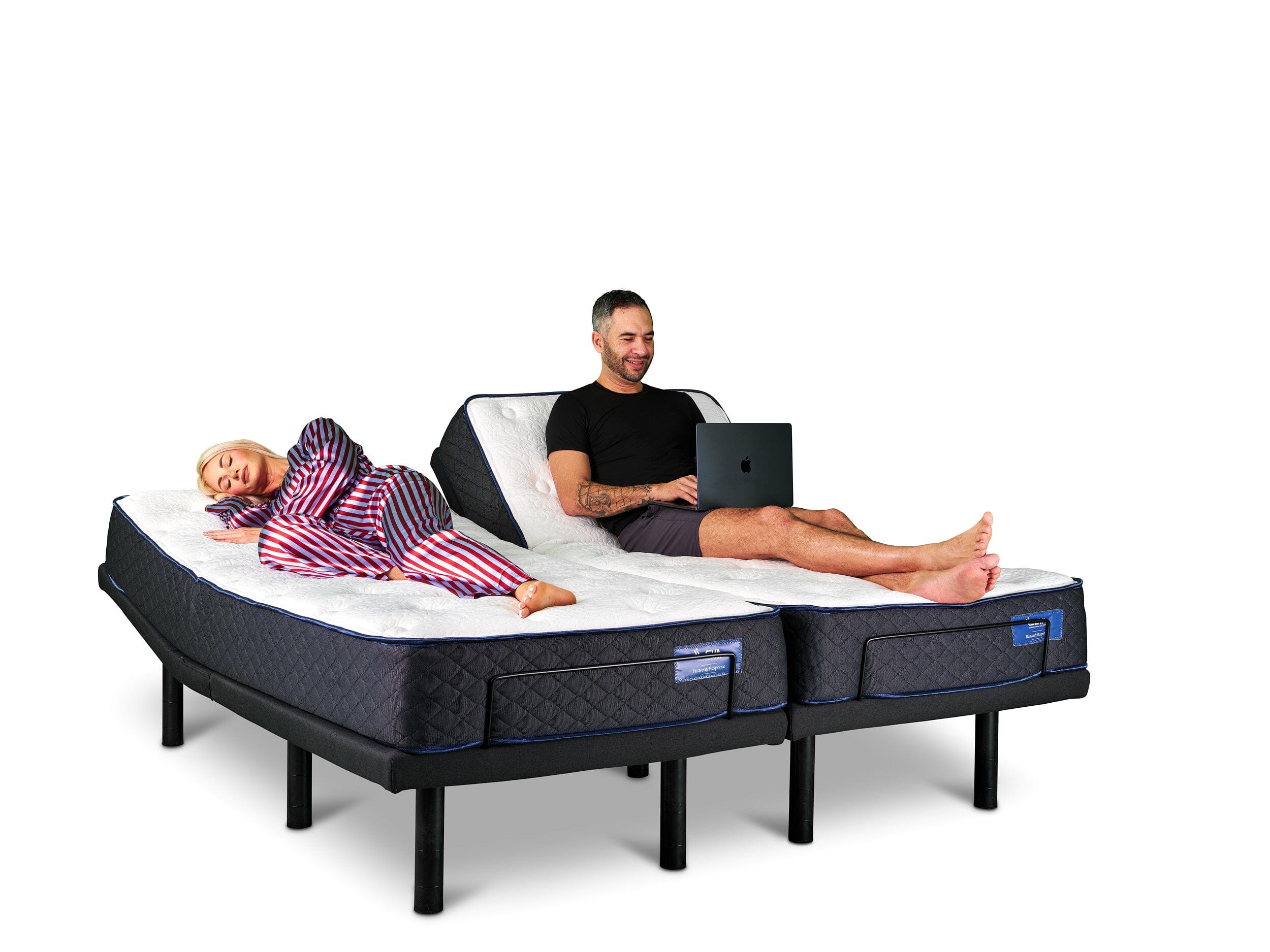
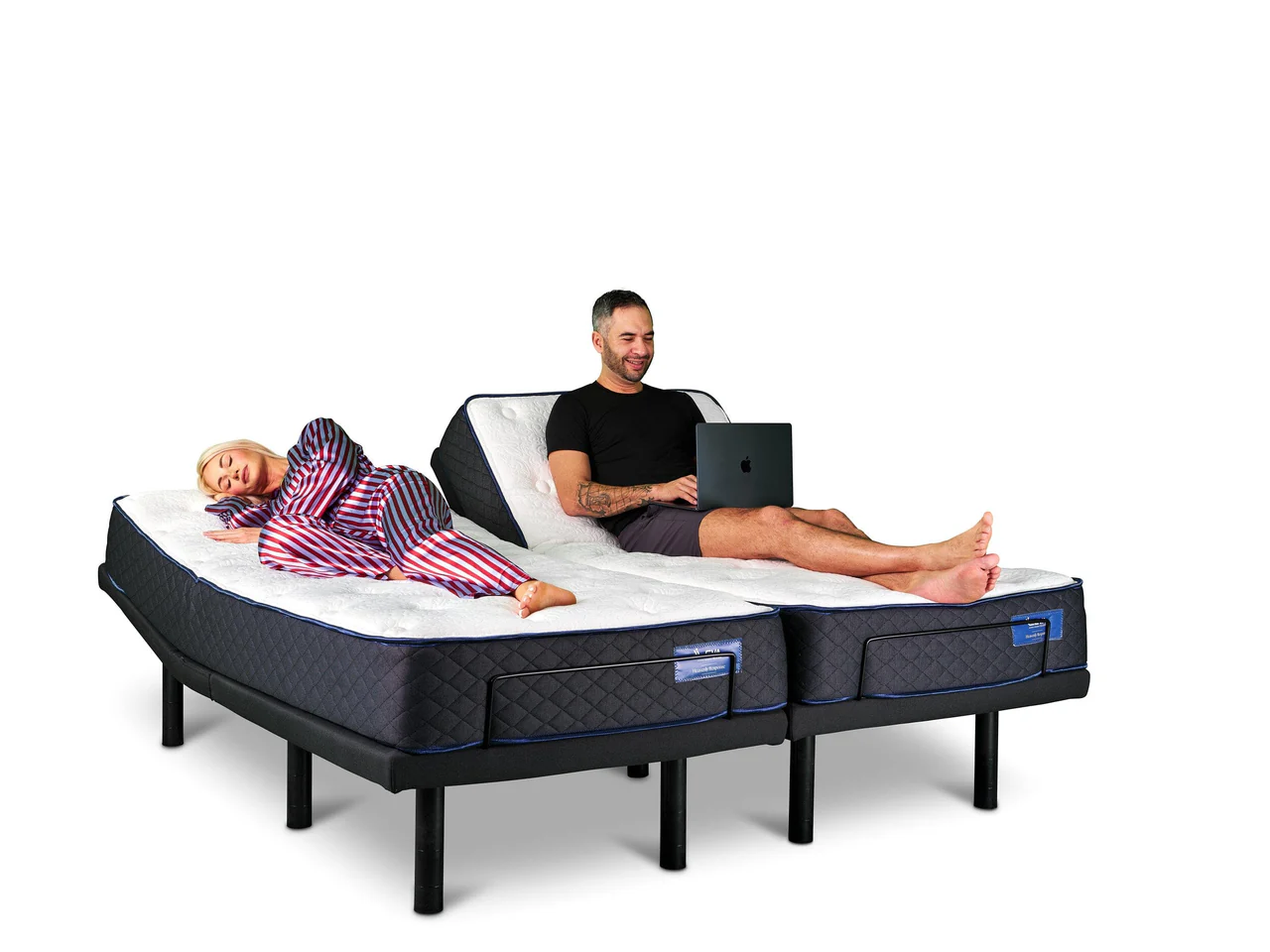
- Split adjustable bases give each partner fully independent head, foot, and lumbar control, with minimal motion transfer, so both can fine-tune their own sleep setup.
- Leva Sleep’s split adjustable bases with the upcoming spring 2026 anti-snore mode create an integrated system where couples share one bed while each partner manages snoring, comfort, and temperature independently — shop Leva Sleep today.
How We Evaluate Snoring Solutions for Couples
Snoring solutions for couples must balance individual comfort with shared-bed dynamics. Comfort and support describes whether the product keeps each sleeper’s head, neck, and spine aligned for their body type and preferred position. Because partners often differ in size and sleep style, adjustability and personalization looks at whether each person can change elevation, loft, or firmness on their own side.
That independence only works when partner compatibility is preserved, meaning one partner’s adjustment does not disrupt the other. Noise and motion transfer then measures whether changes during the night wake or disturb the person next to you.
Health impact focuses on documented effects on snoring, mild obstructive sleep apnea (OSA), acid reflux, and cardiovascular risk from chronic sleep loss. Durability covers loft loss, material compression, and how performance holds up over years. Finally, delivery and setup experience reflects how easy the system is to install, use, and maintain with ongoing support.
See how Leva’s split bases address each of these criteria
How Different Anti-Snoring Pillow Types Perform for Couples
Wedge pillows elevate the upper torso at angles between 20 and 45 degrees using firm triangular foam. Wedge pillows lift the entire upper torso, creating a stable incline that helps keep airways open throughout the night without requiring perfect positioning, according to sleep physician Dustin Cotliar, MD, MPH. However, a wedge pillow can worsen sleep apnea for side sleepers by forcing them onto their back during the night, according to board-certified sleep medicine physician Dr. Avinesh Bhar. For couples where one partner sleeps on their side and the other on their back, a single wedge pillow cannot serve both. Multi-component wedge systems such as the MedCline Shoulder Relief System are bulky on the bed and can be troublesome for couples who share a sleep surface.
Contoured side-sleeper pillows use cervical cutouts or shoulder channels to support lateral alignment. Side sleepers over 230 pounds or with broad shoulders usually need firmer, higher-loft pillows, while back sleepers tend to prefer medium loft and stomach sleepers often need a soft, thin pillow or none at all, which creates direct conflicts when partners differ in body type or preferred position.
Smart anti-snore pillows rely on vibration or inflation to nudge position changes when snoring is detected. These products react to positional snoring but cannot lift the upper body or change the mattress surface. Anti-snore pillows help most when snoring is positional; if snoring is severe, a pillow alone will probably not help, according to Andrew E. Colsky, founder of the National Sleep Center.
Hybrid loft pillows with adjustable fill let users add or remove shredded latex or foam to change height. Adjustable-fill pillows allow customization of loft and firmness for head and neck support, according to clinical psychologist Leah Kaylor. However, adjustments are manual and static, so they cannot react to position changes during the night. When one partner adjusts their pillow, it does not affect the other, but it also cannot provide whole-body elevation or lumbar support.
Why Pillows Alone Cannot Solve Shared-Bed Snoring
All pillow types above manage airway position only at the head and neck. Pillows usually bend the neck more than they raise the whole upper body, creating a crunched posture instead of a smooth incline. For couples managing acid reflux along with snoring, this distinction matters. Raising the upper body during sleep may help prevent acidic fluid from entering the esophagus, per guidance from the National Institute of Diabetes and Digestive and Kidney Diseases, but neck-only elevation does not reliably achieve that effect.
Pillows also change as they age. If a pillow thins over time, its loft and support can shift, which affects airway positioning and snoring control. For couples with different body types, no single pillow works for every type of snoring, because pillows must match individual head shape, shoulder width, and sleep position to maintain alignment and reduce airway pressure. One shared pillow solution that satisfies two people with different needs does not exist within the pillow category. Couples need a different class of product.
The relationship impact is significant. Poor sleep from snoring can lead to irritability, resentment, and impatience that escalate into conflict and damage the relationship, according to family dispute resolution practitioner Naomi Doyle of Relationships Australia NSW. Partners of snorers had measurably worse sleep that improved when the snoring was treated, according to a Mayo Clinic Proceedings study.
Explore adjustable base solutions designed for couples
Why Adjustable Bases Give Couples Independent Elevation
An adjustable bed lets users lift the upper body to relieve snoring by reducing pressure on the airway, serving as an alternative to pillows for testing inclined positions. Unlike pillows, a split adjustable base raises the entire upper body along a smooth incline. This mirrors the geometry that research in the Journal of Clinical Sleep Medicine found significantly improved OSA severity at just 7.5 degrees of elevation without disrupting sleep architecture.
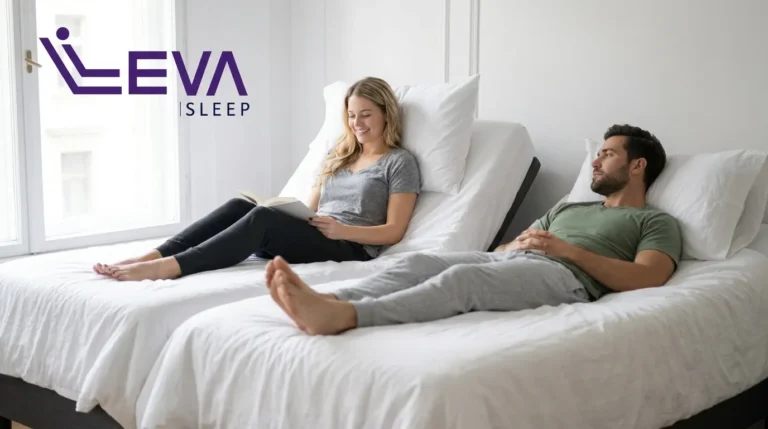
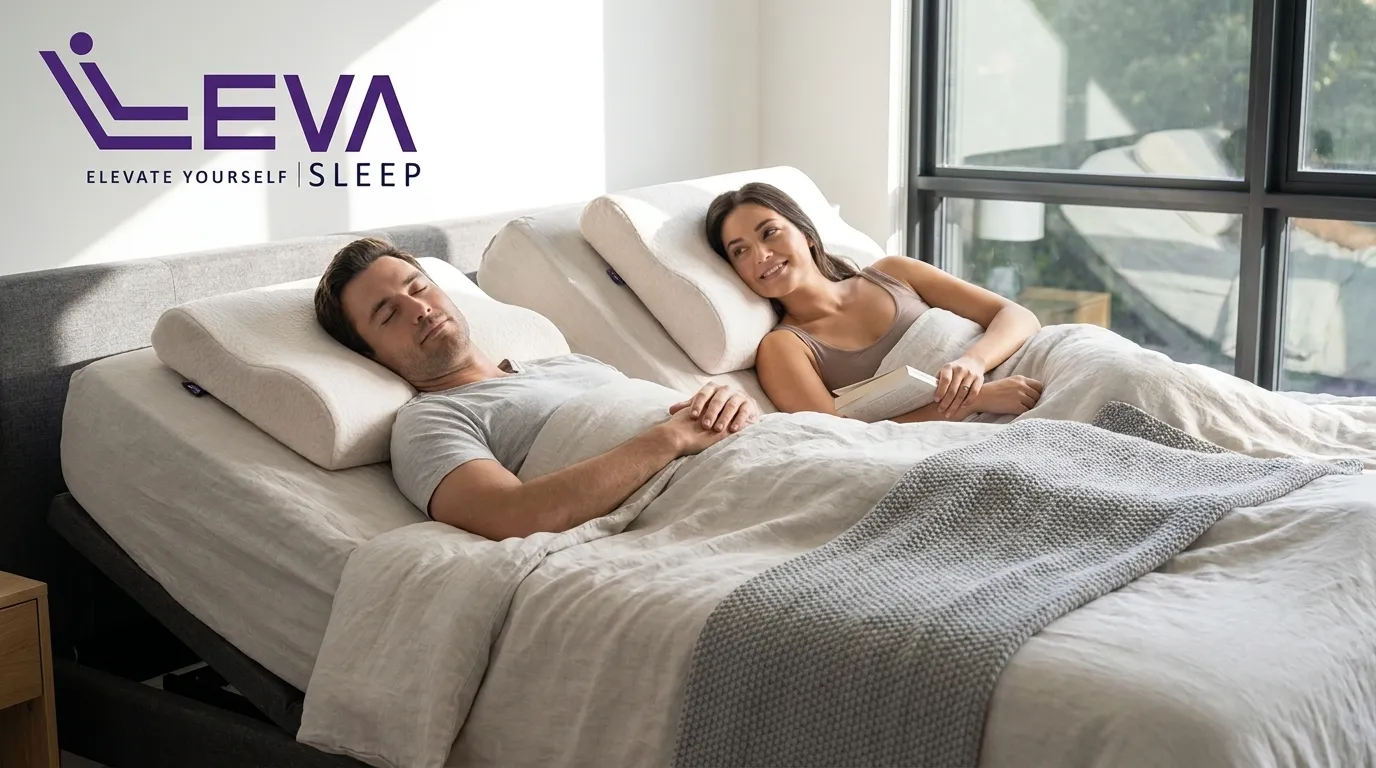
The key benefit for couples is independent control. Sleeping on an incline using a non-split adjustable bed may disrupt a bed partner’s sleep; guidance for shared beds favors separately adjustable sides. A split base removes this trade-off. Each side adjusts on its own, so one partner can elevate the head to open airways while the other stays flat or changes position for lumbar comfort.
Leva Sleep Split Adjustable Bases and 2026 Anti-Snore Mode
Leva Sleep offers Split King and Split Queen configurations, and Split Queen remains rare in the adjustable base market. Each side features independent head and foot elevation, lumbar control, pillow tilt, and whisper-quiet German motors. The Leva Sleep app provides full Bluetooth control with custom saved positions and vibrating alarms that avoid waking a partner.
Leva Sleep’s anti-snore mode, scheduled for spring 2026, detects snoring and makes small head-of-bed adjustments that can reduce or stop snoring. The system reacts during the night instead of relying on the snorer to set a position before sleep. These micro-adjustments occur without waking either partner. Paired with AI-powered sleep tracking and a heating and cooling pad for per-side temperature control, the 2026 Leva system tackles snoring, firmness differences, temperature gaps, and back or joint pain from one coordinated platform.
Leva’s white-glove delivery service includes in-room setup, leg-height adjustment, a full product walkthrough, and removal of the old bed. Every mattress paired with a Leva base is made in Canada, and Leva’s curated US lineup includes California-made brands such as Airloom, along with Helix Sleep, Diamond Mattress, and legacy luxury brands.
Configure your split adjustable base with anti-snore mode
Comparison Table: Pillows vs. Split Adjustable Bases
| Criteria | Wedge & Contoured Pillows | Smart & Hybrid Loft Pillows | Leva Split Adjustable Bases |
|---|---|---|---|
| Comfort & Support | Wedge pillows may not suit side or stomach sleeping; loft changes as material compresses over time | Adjustable fill customizes loft and firmness but cannot provide lumbar or foot elevation | Independent head, foot, and lumbar elevation per side, quiet motors, compatible with foam and hybrid mattresses |
| Adjustability & Personalization | Fixed shape with no in-night adjustment | Manual fill changes, one-time settings, no automated response | App-controlled per-side positions, spring 2026 snoring-detection micro-adjustments, saved custom profiles |
| Partner Compatibility | Multi-component wedge systems are bulky and awkward for couples sharing a bed | Each partner uses their own pillow, no cross-side interference, no shared-surface coordination | Fully independent sides in Split Queen and Split King; one partner’s changes do not affect the other |
| Noise & Motion Transfer | No mechanical noise, but repositioning can disturb a partner | Smart pillows use vibration alerts that may wake a partner; manual changes stay quiet | Whisper-quiet German motors with micro-adjustments tuned to avoid waking either partner |
| Health Impact | Wedge pillows help back sleepers with mild positional OSA; not a CPAP replacement for moderate to severe OSA | Most useful for positional snoring; not enough for severe snoring or OSA | 7.5-degree elevation significantly improved OSA severity in Journal of Clinical Sleep Medicine research, while also helping with reflux, joint pain, and snoring |
| Durability | Loft and support shift as pillows thin, which alters airway positioning | Adjustable fill can be topped up, but outer shell still wears | Engineered frame and motors built for long-term use, with no loft loss |
| Delivery & Setup | Ships in standard packaging with self-setup | Ships in standard packaging with self-setup | White-glove in-room delivery and setup, leg-height adjustment, product tutorial, and optional old bed removal |
Answers to Common Questions About Snoring and Shared Beds
How to share a bed with someone who snores
Effective shared-bed strategies focus on the airway obstruction that causes snoring instead of masking the sound. Side sleeping reduces the chance that the tongue and soft tissues collapse into the airway. For the snoring partner, modest upper-body elevation can meaningfully lower airway resistance. For the non-snoring partner, independent elevation or lumbar support improves their own sleep without forcing the snorer to change position immediately.
Earplugs and white noise can soften the noise but do not address health risks or repeated awakenings. A split adjustable base lets both partners shape their own sleep environment at the same time, which removes the need for either person to sacrifice comfort.
Do couples split up because of snoring?
Snoring itself does not end relationships, but the sleep deprivation it causes can strain them over time. Chronic sleep loss raises irritability, lowers patience, and reduces the emotional capacity couples need to handle conflict. Relationship researchers link nightly sleep-wake alignment between partners with better daily marital interactions. When snoring disrupts that alignment, the effects accumulate.
Sleeping separately can improve sleep for both partners, yet the impact on intimacy depends on how couples communicate and structure that choice. Couples who treat the snoring directly through elevation, positional therapy, or medical care have a better chance of protecting both sleep quality and closeness than couples who only move to separate rooms.
Best pillow for snoring and sleep apnea couples
No single pillow type suits both partners when snoring or mild sleep apnea is present, because pillow choice depends on body type, shoulder width, sleep position, and snoring pattern. Wedge pillows give consistent upper-body elevation for back sleepers but can work against side sleepers. Contoured cervical pillows support side alignment but do not lift the torso. Hybrid adjustable-fill pillows offer flexible loft for one person but cannot react to position changes during the night.
For couples with different needs, the pillow category cannot meet elevation, alignment, and independence requirements at the same time. A split adjustable base paired with well-fitted pillows for each partner’s position covers those gaps. If snoring includes breathing pauses, gasping, or daytime fatigue, a physician should evaluate for obstructive sleep apnea before any product decision.
Buying Checklist for Couples Choosing a Snoring Solution
- Snoring on one or both sides: Prioritize independent head elevation and automated snoring detection. Confirm whether the snoring partner sleeps on their back or side before choosing any elevation tool.
- Temperature differences: Look for per-side heating and cooling. A split base with a compatible temperature-regulating pad removes the need for separate blankets or constant thermostat changes.
- Back, hip, or knee pain: Check that lumbar support and foot elevation can be controlled separately on each side. Pillow-based setups do not offer lumbar control.
- Space constraints: Consider a Split Queen for split adjustability in a smaller footprint than a Split King, a format Leva Sleep offers while many competitors do not.
- Noise sensitivity: Test motor sound levels before buying any adjustable base. Whisper-quiet motors represent a measurable specification, so ask for decibel ratings or in-showroom demonstrations.
- Setup and support: Confirm whether delivery includes in-room assembly, height adjustment, and a walkthrough. Self-assembling a split adjustable base can be a significant project.
Decision Guide: Balancing Relationship Health and Sleep Health
Couples comparing snoring solutions weigh short-term cost against long-term results. Pillows cost less and feel low-commitment, yet evidence shows their benefits stay limited to specific positions, body types, and mild positional snoring. They cannot adapt to two people at once and lose performance as they compress. A split adjustable base requires a larger upfront investment but addresses snoring, reflux, joint pain, temperature differences, and comfort preferences through one system that each partner controls independently.
The relationship impact deserves equal weight. Ongoing sleep deprivation from a partner’s snoring harms mood, patience, and connection. Addressing the source of disruption, rather than working around it, offers a more durable path to better sleep and a stronger relationship.
Couples in the San Diego area can test 15 to 20 adjustable base models at Leva Sleep’s La Jolla showroom, a selection that exceeds typical mattress retailers. Staff provide guidance on pairing bases with mattresses and accessories designed for adjustable systems. Visit the La Jolla showroom or shop Leva Sleep online
Frequently Asked Questions
What is the difference between a split queen and a split king adjustable base?
A split queen adjustable base divides a queen-size surface into two independently adjustable halves, each with its own controls. A split king does the same for a king-size surface. The main difference is footprint. A split queen fits bedrooms where a king-size bed feels too large, which helps couples in smaller spaces keep full independent adjustability. Leva Sleep is one of the few providers offering a split queen configuration built to customer specifications, while many manufacturers focus only on split king formats. Both sizes let each partner set head and foot elevation, lumbar support, and massage without affecting the other side.
Can an adjustable base replace a CPAP machine for sleep apnea?
An adjustable base does not replace CPAP therapy for moderate to severe obstructive sleep apnea and does not qualify as a medical device. CPAP remains the standard treatment at those severity levels. For mild positional sleep apnea, where symptoms worsen on the back, head-of-bed elevation can reduce apnea severity as a complementary measure. Research shows that modest upper-body elevation can improve OSA metrics without harming sleep architecture.
Leva Sleep’s anti-snore mode, planned for spring 2026, targets positional snoring and mild airway narrowing through automated micro-adjustments, not diagnosed sleep apnea. Anyone with breathing pauses, gasping, or marked daytime fatigue should see a physician before relying on positional aids as a primary approach.
How does Leva Sleep’s anti-snore mode work?
Leva Sleep’s anti-snore mode uses integrated sensors to detect snoring and automatically adjusts head elevation on the affected side only. The Leva Sleep app manages these settings and logs sleep data over time. For a deeper explanation of detection and adjustment, see the anti-snore mode section above.
What bedding works with a split adjustable base?
Standard fitted sheets often pull loose when the head or foot of an adjustable base rises. Leva Sleep designs bedding accessories specifically for adjustable systems, including deep-pocket fitted sheets with reinforced elastic that stay in place through large elevation changes. Duvets include clips that keep the two halves separated when partners choose different angles, which prevents bunching or sliding. Mattress protectors use flexible, stretchy materials for smooth movement.
Using conventional bedding on a split base is one of the most common frustrations for couples who buy from general retailers. Leva’s integrated accessory line removes that issue from day one.