Written by: Matthew Timmins, Founder and Managing Director, Leva Sleep
Key Takeaways
- Zero-gravity bases elevate the head 30–40 degrees and raise the knees to hip level. This position mimics astronaut posture, reduces lumbar disc compression, and can ease chronic back pain.
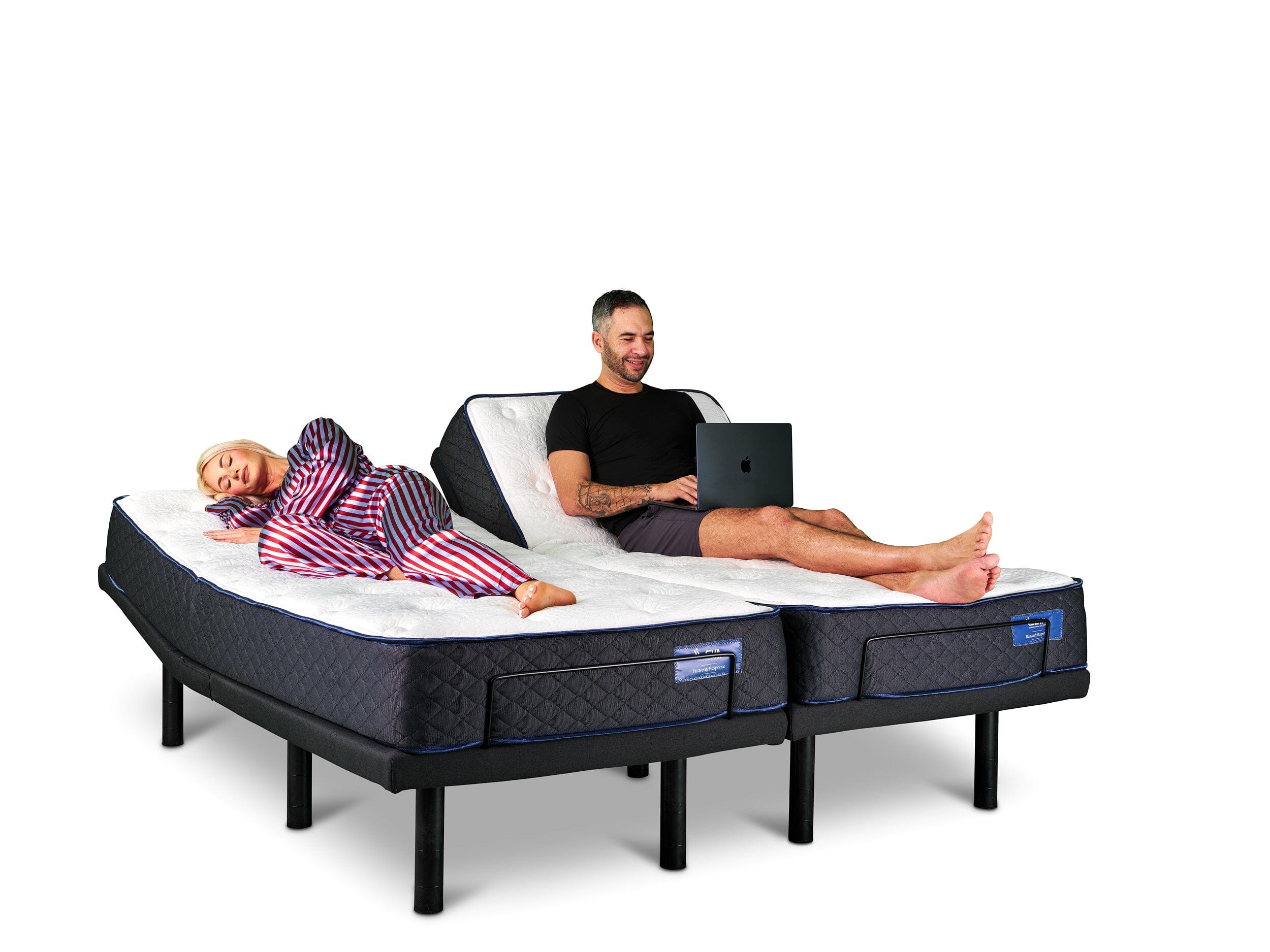
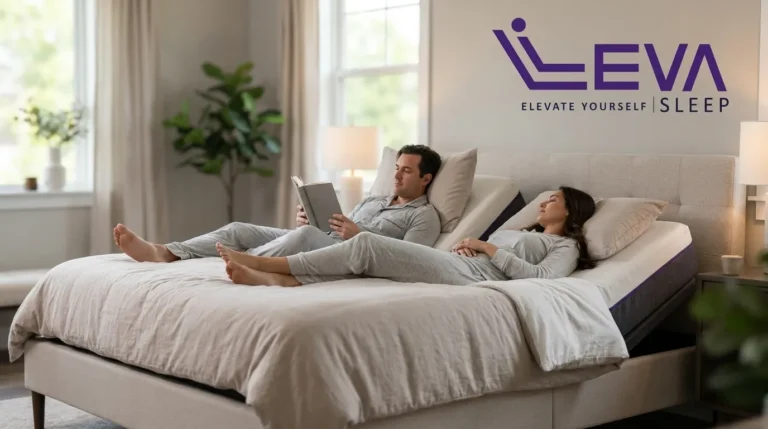
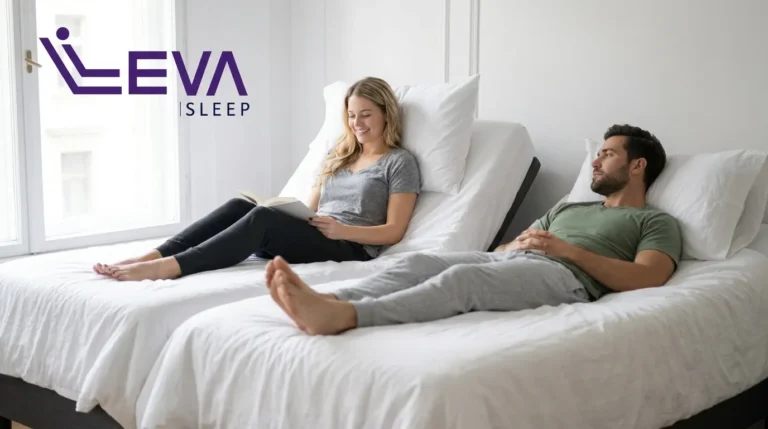
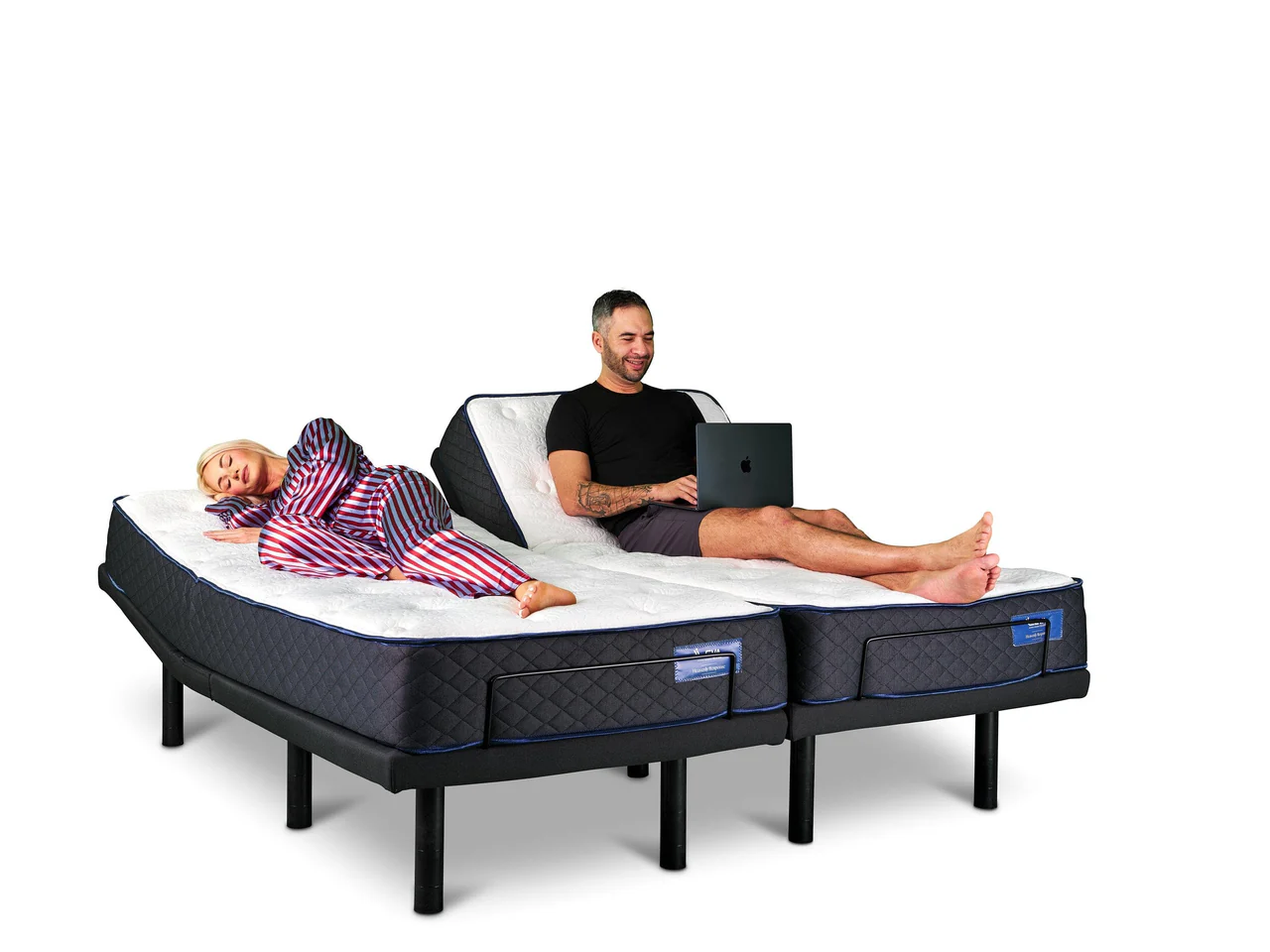
- Split zero-gravity systems let couples keep independent therapeutic angles, so neither partner has to compromise on comfort or pain relief.
- Dedicated lumbar support motors, programmable presets, app controls, and AI tracking support consistent, long-term back-pain management.
- Medium-firm hybrid or all-foam mattresses usually pair best with zero-gravity bases. Most people need 2–4 weeks to feel fully comfortable sleeping elevated all night.
- Explore Leva Sleep zero-gravity bases to compare split systems designed for back-pain relief with whisper-quiet motors and customizable presets.
How Zero Gravity Decompresses the Spine and Relieves Back Pain
Zero-gravity positioning reduces compressive loading on the lumbar discs compared with lying flat, which can ease herniated disc pain and general lumbar strain. Elevating the head 30–40 degrees and the knees to hip height changes how gravity acts on the spine.
The mechanism is straightforward. Hip flexion shortens the psoas muscle, which reduces the forward pull on the lumbar vertebrae. This shift decreases pressure on the discs and surrounding structures.
Research on astronauts in microgravity shows that removing gravitational load allows the spine to decompress. Back-pain sufferers can benefit from a similar effect at home. Replicating even part of this unloading every night can reduce morning stiffness and improve mobility.
- Check that a base reaches a true 30–40-degree head elevation, not just a slight incline
- Confirm independent knee articulation so you can fine-tune hip flexion to your symptom level
- Look for smooth, continuous adjustment instead of fixed steps to allow precise positioning
- Verify that a zero-gravity preset is programmable and recallable with one button or app tap
Back-Pain-Focused Features: Lumbar Support, Presets, and App Controls
Beyond achieving the right elevation angles, the base must maintain healthy spinal alignment throughout the night. Spinal alignment support that maintains natural lumbar lordosis without flattening or over-arching is the most important base feature for managing disc-related pain. An independent lumbar zone, powered by its own motor, inflates or adjusts a pad beneath the lower back and fills the gap that forms under the lumbar curve during elevation.
App-based control supports consistent therapeutic use, not just convenience. With Bluetooth app control, you can save multiple positions, such as zero gravity for sleep onset, a slightly flatter angle for deep sleep, and a more elevated setting for morning stretching. You can then switch between them quietly without disturbing a partner.
Higher-tier models in 2026 add AI-powered sleep tracking that triggers small automatic adjustments based on movement or snoring events. These micro-adjustments help maintain alignment and comfort as your body shifts during the night.
- Prioritize bases with a dedicated lumbar support motor, not only head and foot articulation
- Confirm that zero-gravity and anti-snore presets are saveable and accessible through the app
- Check whether the app supports independent dual-zone control for split configurations
- See if AI sleep tracking is included or requires an extra subscription
- Review massage zone options, since separate upper back, lumbar, and leg zones are more therapeutic than a single full-bed vibration
Real-World Adaptation to Sleeping in Zero Gravity All Night
Most adults who have slept flat for years need an adaptation period before zero-gravity positioning feels natural for a full night. Testing reclined positions with pillows for at least two weeks before purchasing helps you gauge relief and gives your body time to adjust. The same approach applies after delivery. Using the same therapeutic angles every night accelerates adaptation compared with changing positions frequently.
Side sleepers face a specific challenge because full zero-gravity positioning is designed for back sleeping. Rotating to a side position while the base is elevated can create lateral spinal flexion and new pressure points. To address this, a pillow tilt motor that adjusts the head section independently of the upper back lets side sleepers lower the overall elevation while keeping enough knee lift to decompress the lumbar spine. This transitional angle reduces lumbar load without forcing a fully supine posture.
- Plan for a 2–4 week adaptation window before deciding whether the position works for you
- Use programmable presets to keep angles consistent each night during adaptation
- If you are a side sleeper, test bases with a pillow tilt motor for independent head adjustment
- Confirm that the base allows gradual, quiet repositioning during the night without waking a partner
Mattress Types That Work Best with Zero-Gravity Bases
Hybrid pocketed-coil mattresses usually work well with adjustable bases because the individually wrapped coils flex without damage during repeated position changes. All-foam mattresses also articulate effectively when the foam density is high enough to maintain lumbar support under compression at elevated angles. Innerspring mattresses with interconnected coils are generally incompatible and can be damaged by repeated flexion.
For herniated disc pain, pairing a zero-gravity adjustable base with a medium-firm hybrid mattress rated around 6–7 out of 10 on a firmness scale can reduce disc loading and nerve compression. Leva Sleep’s US-assembled mattresses are built for adjustable bases and come in both all-foam and hybrid pocket-coil designs.
- Confirm that the mattress is explicitly rated as adjustable-base compatible by the manufacturer
- Target a medium-firm feel (about 6.5–7 out of 10) for lumbar disc conditions unless your specialist advises otherwise
- Avoid interconnected innerspring or euro-top constructions that resist bending
- Verify that split mattresses for split bases use the same core construction on both sides for consistent support
Top Adjustable Base Models Compared for Back-Pain Features
The table below outlines user-focused evaluation criteria across several adjustable base categories. Each column reflects a feature set that buyers should confirm directly with each brand before purchasing, since specifications can change.
| Feature Criterion | Leva Sleep Split Base | Sleep Number FlexFit | Saatva Adjustable Base+ | Ghostbed Adjustable | Tempur-Pedic ERGO | Mattress Firm Adjustable |
|---|---|---|---|---|---|---|
| Independent lumbar support motor | Yes, dedicated zone | Confirm with brand | Confirm with brand | Not advertised | Yes, on select tiers | Confirm with brand |
| Zero-gravity programmable preset | Yes, app + remote | Yes | Yes | Yes | Yes | Confirm with brand |
| Motor noise level | Whisper-quiet German motors | Confirm with brand | Confirm with brand | Confirm with brand | Confirm with brand | Confirm with brand |
| Split Queen availability | Yes, proprietary offering | Not standard | Not standard | Not offered | Not standard | Not standard |
| Anti-Snore Mode (2026) | Yes, spring 2026 launch | Confirm with brand | Not advertised | Not advertised | Yes, select models | Not advertised |
| AI sleep tracking | Yes, higher-tier models | Yes, SleepIQ | Not advertised | Not advertised | Yes, ERGO Smart | Not advertised |
Buyers should confirm current feature availability directly with each brand, since product lines evolve. Compare Leva Sleep zero-gravity bases for full details on split configurations and motor specifications.
Doctor-Recommended Guidance for Back Pain and Sciatica
Orthopedic and physical therapy guidance emphasizes that reducing compressive load is essential, but maintaining natural lumbar lordosis throughout the night is equally important. A responsive adjustable base supports safe nighttime position changes without trapping the user or causing painful transitions, which is critical for people with disc herniations who must reposition during sleep.
For sciatica, elevating the knees can reduce tension on the sciatic nerve by decreasing stretch on the piriformis and hamstring complex. Patients recovering from lumbar surgery or managing spinal stenosis should consult their surgeon before choosing elevation angles, since post-operative protocols differ.
- Discuss target elevation angles with your physician or physical therapist before programming presets
- Confirm that the base allows gradual, incremental adjustment instead of abrupt position changes
- For sciatica, prioritize independent knee elevation with fine-grained angle control
- Verify that the base’s weight capacity supports both partners in a split configuration
- Ask whether the brand offers a trial period long enough to assess benefit, ideally at least 30 nights
Budget vs. Premium Smart Zero-Gravity Beds
Entry-level adjustable bases usually provide head and foot elevation, a basic remote, and one or two preset positions. They rarely include independent lumbar support, app control, or true split configurations. For back-pain sufferers who share a bed, these gaps matter because one partner’s therapeutic angle can force the other into the same position.
Premium bases, including Leva Sleep’s split systems, add whisper-quiet motors, dedicated lumbar zones, pillow tilt motors, app-based dual-zone control, and newer features such as Anti-Snore Mode and AI sleep tracking. Leva Sleep’s direct-to-consumer model offers these features at roughly 30–50% below many luxury-tier competitors by removing retail markups, with optional white-glove delivery and setup.
- At any budget, confirm that independent split control is available before ruling out a model
- Review motor noise specifications, since decibel ratings or “whisper-quiet” certifications matter for mid-sleep adjustments
- Check whether lumbar support comes from a mechanical base zone or only from mattress firmness
- Factor in mattress compatibility costs, because a base that needs a proprietary mattress increases total system price
- Compare warranty terms on motors and frames separately, since coverage often differs
Next Steps for Choosing a Zero-Gravity Base
Choosing a zero-gravity adjustable base for chronic back pain means matching clinical needs such as lumbar decompression, knee elevation, and lordosis maintenance with real-world features like split control, quiet motors, and app-based presets. Leva Sleep’s split zero-gravity systems are designed to meet these criteria, with 15–20 adjustable models, US-assembled mattresses, and a La Jolla showroom where both partners can test positions before buying. Transform your sleep with Leva Sleep by visiting the La Jolla showroom or shopping online today.
Frequently Asked Questions
What is the best zero-gravity angle for lower back pain and sciatica relief?
A head elevation of 30–40 degrees combined with knee elevation to about hip height creates the classic zero-gravity position that reduces lumbar disc compression. For sciatica, the knee elevation piece matters most because it reduces tension along the sciatic nerve pathway. The exact angle that feels best varies by anatomy and condition severity, so a base with continuous, fine-grained adjustment instead of fixed steps lets you dial in what works for your body. People recovering from surgery or managing acute disc herniations should ask a physical therapist or orthopedic specialist for a target angle before programming presets.
Can couples with different back pain needs use one adjustable base?
A standard single adjustable base moves as one unit, so both partners share the same elevation angle. Split King and Split Queen setups solve this by pairing two independent bases side by side, each with its own motor, remote, and app control. Leva Sleep’s split systems let one partner sleep in a therapeutic zero-gravity position for lumbar decompression while the other remains flat or chooses a different elevation. This arrangement removes the most common reason couples stop using adjustable bases: one partner’s therapeutic need overriding the other’s comfort.
How long does it take to adapt to sleeping in zero gravity all night?
Most adults who have slept flat for years require the adaptation period discussed earlier. The key accelerator is consistency. Your body adapts faster when it experiences the same pressure distribution and joint angles every night, which is why programming a preset and using it without variation works better than experimenting with new positions each evening. Testing the approximate angle with stacked pillows for two weeks before purchasing an adjustable base also helps you understand how your muscles and joints respond to the posture.
Which mattress works best with a zero-gravity adjustable base for back pain?
Medium-firm hybrid pocket-coil mattresses and all-foam mattresses with adequate density are usually the most compatible choices for zero-gravity adjustable bases. Hybrid models flex at the coil level without structural damage during repeated articulation, while all-foam models follow the base’s contour across the elevation range. Interconnected innerspring mattresses and rigid pillow-top designs resist bending and can fail prematurely on an adjustable base. For disc-related conditions, a medium-firm feel of about 6.5–7 on a 10-point scale balances lumbar support with pressure relief at elevated angles. Leva Sleep’s mattresses are designed and assembled specifically for adjustable bases in both all-foam and hybrid versions.
Are whisper-quiet motors important for couples using zero-gravity bases for back pain?
Motor noise directly affects whether mid-sleep therapeutic adjustments feel usable. If repositioning the base wakes a partner, many people avoid changing positions, which reduces the benefit of having a programmable base. Whisper-quiet motors, such as the German-engineered motors in Leva Sleep’s systems, let both partners adjust their side of a split base at any time without disrupting the other’s sleep. For back-pain sufferers who may need to shift positions several times a night, quiet operation functions as a core requirement rather than a luxury feature.