Written by: Matthew Timmins, Founder and Managing Director, Leva Sleep
Key Takeaways for Couples Considering a Smart Bed
- Smart adjustable beds use embedded biometric sensors, linear actuators, and wireless connectivity to detect sleep issues and automatically adjust each side of the bed in real time.
- Independent split-base systems address common couple conflicts by allowing separate control of firmness, elevation, lumbar support, and temperature for each partner.
- Core components include ballistocardiographic or piezoelectric sensors, whisper-quiet German motors, and app-based connectivity that enable precise, low-noise repositioning.
- Automated anti-snore head elevation and climate control features respond to snoring and temperature differences without waking either sleeper.
- Experience these engineering advantages firsthand by exploring Leva Sleep’s smart bed systems at levasleepusa.com.
The Problem: One Bed, Two Very Different Sleepers
Couples sharing a traditional flat mattress face a structural problem: one surface cannot simultaneously meet two different sets of needs. One partner may require a firmer surface for lumbar support while the other needs pressure relief at the hips and shoulders. Snoring often disrupts the lighter sleeper. Temperature preferences diverge as well. Over time, these conflicts can produce chronic sleep deprivation, daytime fatigue, and in many cases, separate sleeping arrangements, a pattern sometimes called “sleep divorce.”
Couples who understand how smart bed systems work can evaluate products on engineering merit instead of marketing language. Knowing which sensors drive which adjustments, how quietly motors operate, and whether each side of the bed can be controlled independently often determines whether a purchase solves the problem or adds new frustrations. See these engineering details firsthand at Leva Sleep’s La Jolla showroom.
How a Smart Bed Responds in Real Time
- Biometric detection: Sensors embedded in the mattress or base continuously monitor heart rate, respiration rate, and body movement throughout the night.
- Data processing: An onboard microprocessor or cloud-connected algorithm analyzes the incoming data to identify sleep stage, detect snoring vibrations, or flag restlessness.
- Motor activation: When a threshold is crossed, such as a snoring event or a shift into light sleep, the system sends a signal to the relevant linear actuator.
- Position change: The actuator extends or retracts to raise the head, elevate the legs, or apply lumbar pressure, and completes the repositioning in seconds.
- Feedback loop: Sensors continue monitoring after the adjustment to confirm whether the intervention resolved the event. If not, a secondary micro-adjustment is triggered.
This five-step cycle depends on three core hardware categories working together: sensors that detect biometric signals, actuators that execute physical movements, and connectivity modules that enable app control and data logging.
Core Components: Sensors, Actuators, and Connectivity
Sensor Types That Track Sleep Without Wearables
- Ballistocardiographic (BCG) mats that detect micro-vibrations from heartbeats and breathing without skin contact
- Piezoelectric strips that register movement and respiratory effort through pressure changes
- Microphones or accelerometers positioned to detect snoring vibrations
- Pulse oximetry modules in premium systems that track blood oxygen saturation
Linear Actuators That Move the Bed Precisely
Linear actuators provide precise height, tilt, and backrest adjustments and form the core mechanical function that enables position changes. Complex movements such as simultaneous tilt, recline, and height changes require multiple actuators that synchronize their motion. This multi-actuator design also creates the engineering basis for independent positioning in split-base systems. Leva Sleep’s bases implement this approach with whisper-quiet German motors paired with dedicated lumbar and pillow-tilt actuators, which minimizes mechanical noise during nighttime adjustments.
Connectivity Modules for Apps and Data
- Bluetooth Low Energy (BLE) for short-range app communication
- Wi-Fi modules for cloud-based sleep data logging and remote control
- Voice-assistant integration in select systems
Biometric Tracking and Sleep Staging Logic
Consumer smart beds use non-contact sensor arrays to estimate sleep stages without requiring wearables. Heart rate variability, respiration rhythm, and movement frequency each correlate with distinct sleep stages: wakefulness, light NREM, deep NREM, and REM. The onboard algorithm assigns a probable stage every 30-second epoch and uses that classification to decide whether an adjustment is appropriate.
Triggering a motor during confirmed deep sleep carries a higher disruption risk than during light sleep. Well-engineered systems weight their intervention thresholds accordingly and only adjust when the benefit outweighs the chance of waking the sleeper.
Once the system determines that an adjustment is warranted, it must carry out that change through one of two mechanical approaches.
Automated Position and Firmness Changes
Two primary mechanisms drive automated adjustments in consumer smart beds. Air-chamber systems use a pump to inflate or deflate discrete zones within the mattress, which changes surface firmness without moving the base. Motor-driven actuator systems physically reposition the base platform by raising the head section, elevating the legs, or applying lumbar curvature to change body posture.
Anti-snore head elevation is the most clinically relevant automated adjustment for couples. Elevating the head by as little as 7–10 degrees shifts the soft palate forward and reduces airway collapse, the mechanical cause of most positional snoring.
Temperature and Climate Control for Each Partner
Temperature regulation systems operate independently of the positioning actuators. Water-based systems circulate temperature-controlled water through a thin pad layered over the mattress surface and allow precise degree-level adjustments. Air-based systems use a forced-air unit to push heated or cooled air through a perforated pad.
In split configurations, each side runs its own thermal circuit, so one partner can sleep at 68°F while the other maintains 74°F. Leva Sleep integrates a heating and cooling pad into its sleep system, which enables individual-zone temperature control without a shared thermostat compromise.
App Control and Customization for Couples
Smartphone applications serve as the primary interface for manual control and profile management. A well-designed app allows each partner to save named position presets such as Zero-G, anti-snore, reading, and flat, then recall them with a single tap. Scheduling features can shift the bed automatically to a wake-up position before an alarm sounds.
Partner-specific profiles store independent head elevation, leg elevation, lumbar intensity, and massage settings so switching between users requires no manual reconfiguration. The Leva Sleep app provides full control over these parameters via Bluetooth, including vibrating alarm functions that wake one partner without disturbing the other. Download the Leva Sleep app and explore partner-specific controls.
Split-Base Independent Control and Anti-Snore Micro-Adjustments
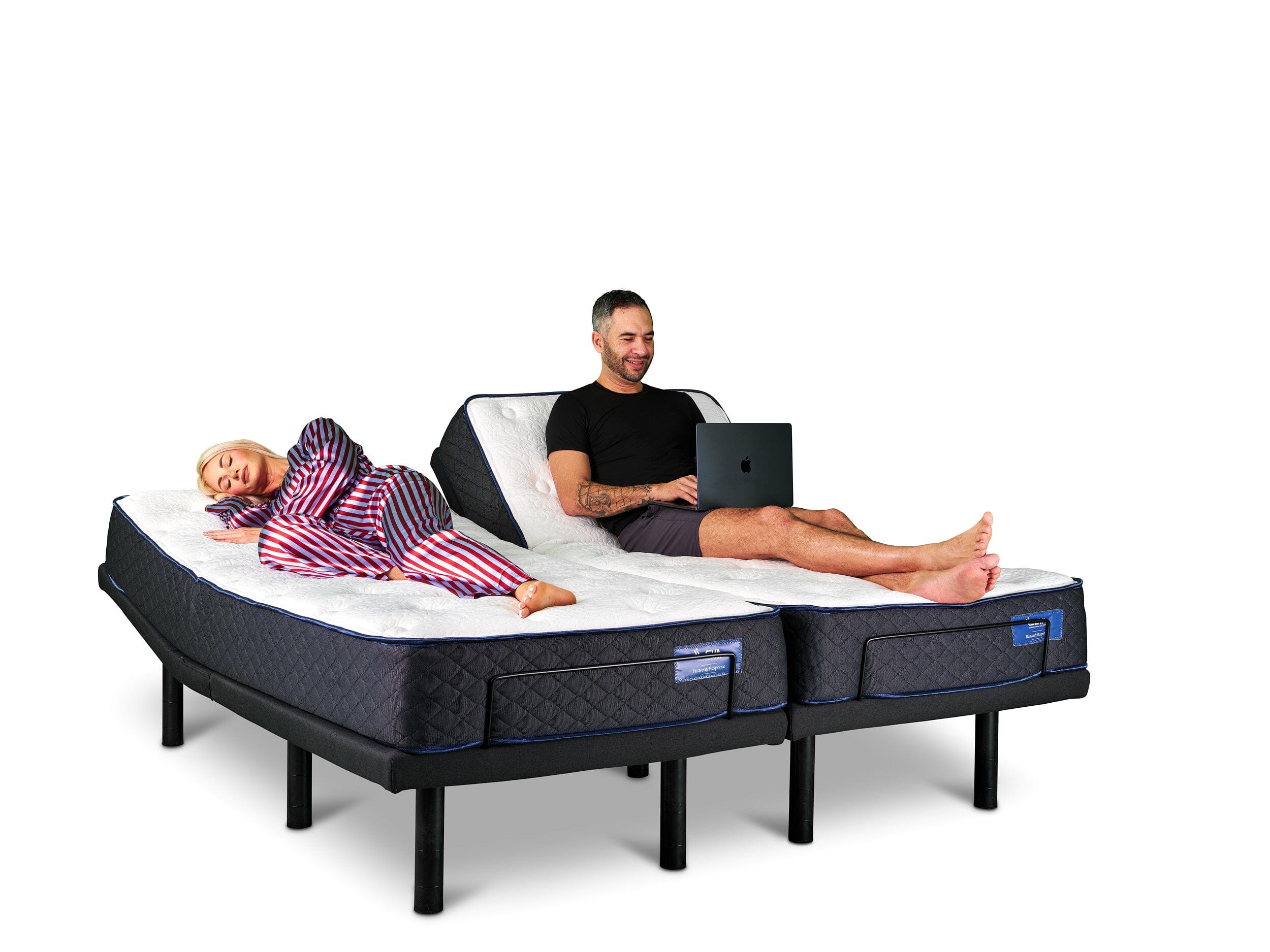
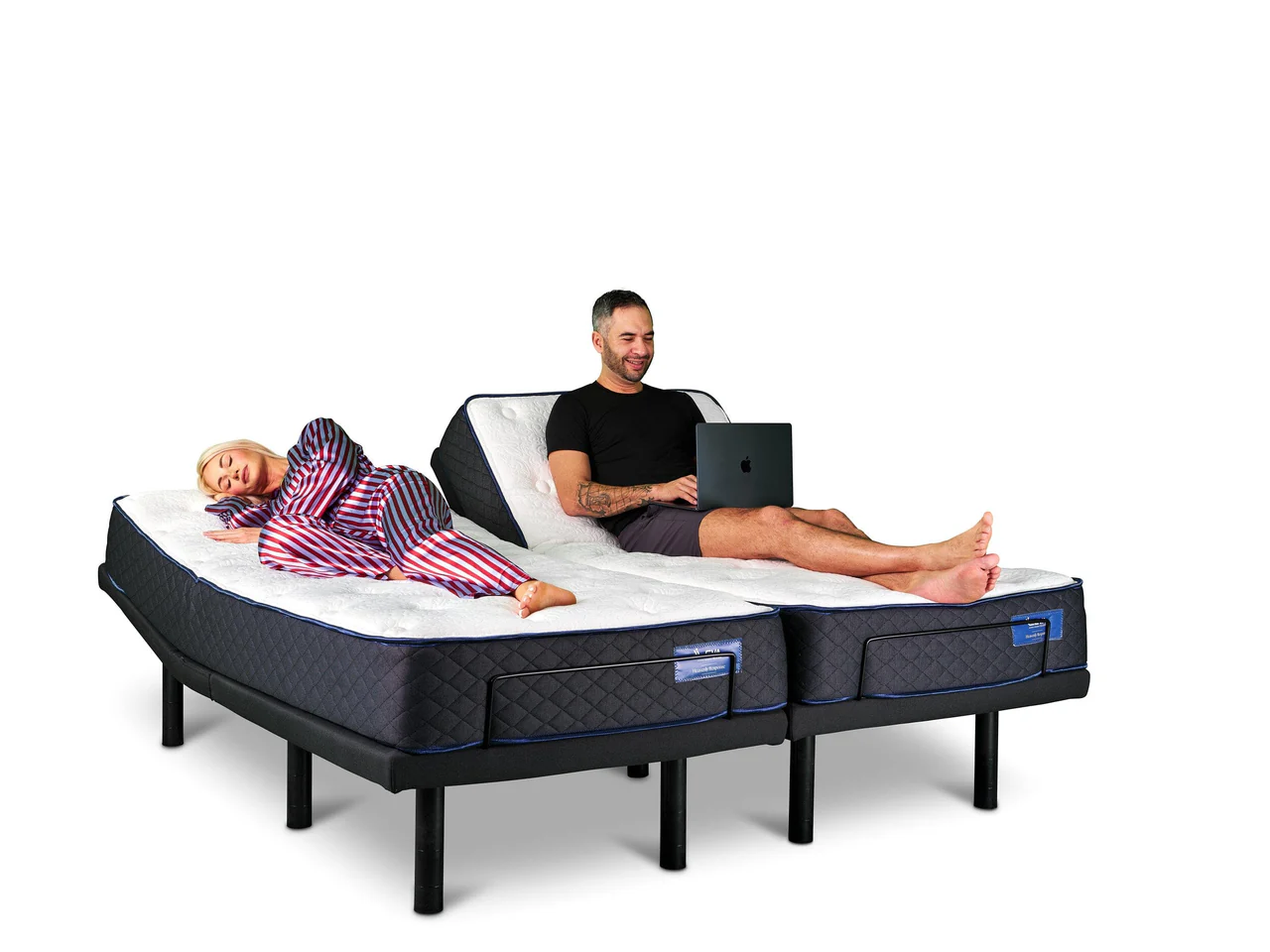
A Split King configuration divides a standard King mattress into two Twin XL surfaces, each resting on its own independently motorized base. A Split Queen, a configuration Leva Sleep offers built to customer specifications, applies the same principle to a Queen footprint. This approach makes independent control available in smaller bedrooms while preserving individual motion and snore management.
Comparison of Smart Bed Types
| Type | Independent Side Control | Biometric Sensors | App Integration |
|---|---|---|---|
| Hospital / clinical adjustable bed | No (single-patient design) | No (manual operation) | No |
| Basic consumer adjustable base | Available in split configurations, no automation | No | Limited or none |
| Advanced smart adjustable base | Yes, in split configurations | Yes, heart rate, blood oxygen, snore detection | Yes, automatic adjustment algorithms and climate features |
| Mattress-only smart bed (sensor layer, no base motor) | No positional adjustment | Yes, sleep tracking only | Yes, data reporting, no actuation |
Downsides and Practical Considerations
Motor noise: Even whisper-quiet actuators produce some mechanical sound during repositioning. Couples evaluating systems should ask for decibel ratings or request an in-person demonstration before purchasing.
Data privacy: Biometric data collected by cloud-connected beds, including heart rate, respiration, and movement patterns, is transmitted to manufacturer servers. Buyers should review the privacy policy and data-retention terms before purchase.
Cost: Advanced smart adjustable bases result in higher price points and greater technological complexity than basic adjustable frames. Split configurations double the motor and sensor count, which increases the base cost further.
Adaptation period: Sleeping on an articulating surface feels unfamiliar for the first one to two weeks. Most users report full adaptation within 30 nights.
Troubleshooting complexity: The added software, sensors, and integration layers in smart adjustable bases increase the potential troubleshooting and compatibility burden compared with standard adjustable bases. Choosing a brand with dedicated technical support and a clear warranty policy reduces this risk.
Frequently Asked Questions
How does a smart bed work?
A smart bed uses embedded sensors, typically pressure-sensitive mats or piezoelectric strips, to monitor heart rate, breathing, and movement throughout the night. An onboard processor analyzes this data to identify sleep stages or disruptive events such as snoring. When a threshold is met, the system activates a linear actuator to reposition the head or foot of the bed or adjusts air-chamber firmness without requiring the sleeper to wake. A companion smartphone app allows manual control, preset positions, and partner-specific profiles. In split-base systems like those offered by Leva Sleep, each side of the bed operates its own independent set of motors and sensors.
Are there any downsides to smart beds?
The main considerations are cost, data privacy, motor noise, and adaptation time. Smart adjustable bases cost significantly more than standard frames because of the sensor arrays, actuators, and connectivity hardware involved. Biometric data is often stored on manufacturer servers, so buyers should review privacy policies before purchase. Motor noise during automatic adjustments can be a concern, although premium systems use engineered motors to minimize sound. Most users also need two to four weeks to adjust to sleeping on an articulating surface. Evaluating warranty terms and the availability of technical support helps reduce long-term reliability concerns.
Can smart beds help with sleep apnea?
Smart adjustable beds can help manage mild positional sleep apnea and snoring by elevating the head of the bed, which shifts the soft palate forward and reduces airway collapse. This feature does not provide a medical treatment and does not replace a physician-prescribed CPAP device for diagnosed obstructive sleep apnea. For couples where one partner snores or experiences mild airway obstruction in a flat position, automated head elevation, such as the anti-snore mode available in Leva Sleep’s spring-2026 systems, can meaningfully reduce nighttime disruptions. Anyone with a diagnosed sleep disorder should consult a physician before relying on positional adjustment as a primary intervention.
Conclusion: Engineering Details That Matter for Better Sleep
Smart adjustable bed systems combine biometric sensors, precision linear actuators, and wireless app control to deliver real-time, independent positioning for each partner. The five-step response loop of detection, processing, activation, adjustment, and feedback runs continuously through the night and addresses snoring, pressure, and temperature without manual intervention. Split-base configurations extend this capability to couples and give each side full autonomy over elevation, firmness, lumbar support, and climate.
Leva Sleep’s whisper-quiet German motors, lumbar and pillow-tilt actuators, and forthcoming spring-2026 anti-snore mode represent concrete engineering implementations of these principles, with local assembly enabling the pricing advantage mentioned earlier. Compare Leva Sleep’s pricing and local assembly advantage.