Written by: Matthew Timmins, Founder and Managing Director, Leva Sleep
Key Takeaways
- The GhostBed adjustable base can reduce mild positional snoring by elevating the head 10–30 degrees, but its single-unit design moves both sides at once.
- Independent split configurations matter for couples, because one partner can elevate while the other stays flat without disruption.
- Head elevation helps back sleepers with positional snoring most; side sleepers and people with OSA gain limited benefit and should seek medical care.
- Leva Sleep offers split Queen and King bases with whisper-quiet motors, app control, and a per-side sensor-driven anti-snore mode planned for spring 2026.
- Explore snoring-focused adjustable bases for couples at Leva Sleep and find a setup that supports both partners.
Why GhostBed Shows Up Early In Your Research
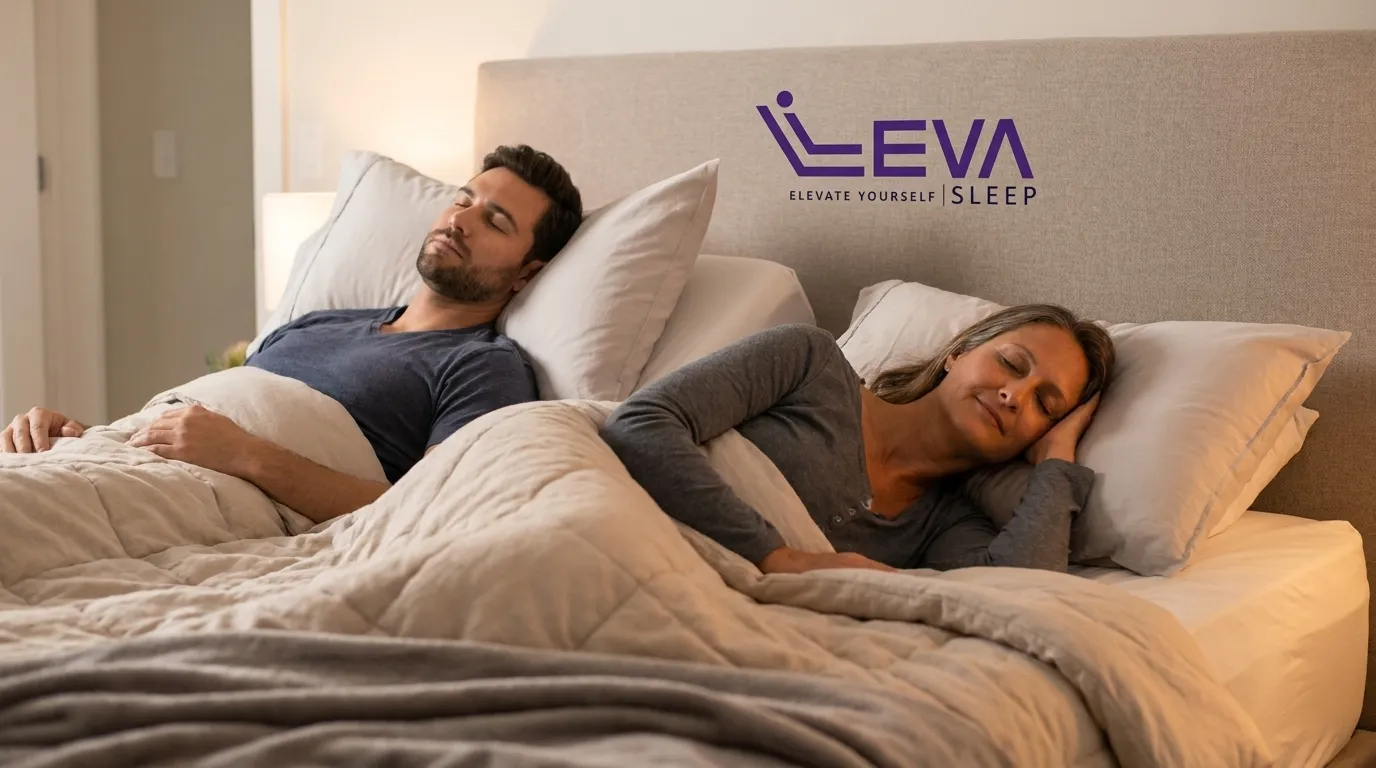
GhostBed runs broad advertising campaigns through major retail partners, including Costco, so many couples see the brand early in their search. The appeal is clear: one product that promises snoring relief at a familiar price point. Those ads rarely address the couple dynamic. Chronic snoring affects breathing and strains relationships. When one partner’s sleep is repeatedly fragmented, the result can be daytime fatigue, reduced patience, and, in many homes, separate bedrooms. An adjustable base only solves snoring if it also protects the non-snoring partner’s sleep.
How Adjustable Bases Change Snoring
Clinical research and sleep experts agree that positional therapy is one of the most effective non-invasive treatments for habitual snoring. Elevating the head and torso uses gravity to keep soft tissues in the throat from collapsing into the airway, which reduces the vibrations that create snoring sounds. Most sleep specialists recommend a head elevation of 10 to 30 degrees, with 20 to 30 degrees as the target range for moderate to heavy snorers, or roughly 4 to 6 inches of lift.
This mechanism has clear limits. Raising the head of an adjustable bed may help keep the airway open and reduce obstructive sleep apnea (OSA) symptoms, but an adjustable bed should not replace proper medical care. Side sleepers gain less benefit from head elevation than back sleepers, because the positional effect on airway geometry is weaker when lying on one’s side.
GhostBed Adjustable Base: What It Actually Does
GhostBed’s adjustable base includes a preset anti-snore position that lifts the head to a fixed angle when you activate it. This preset changes position only; it does not treat the underlying sleep disorder. The feature can still reduce noise for some back sleepers with positional snoring.
The more significant limitation for couples is configuration. GhostBed’s standard adjustable base operates as a single unit. When the anti-snore preset activates, or when the snoring partner adjusts their position, the entire sleeping surface moves. The non-snoring partner elevates whether they want to or not. Reviewers report that GhostBed motors operate quietly and smoothly during adjustments, with no notable consumer complaints about audible noise.
When GhostBed Works For Snoring Relief
A GhostBed adjustable base works best when the snorer mainly sleeps on their back, the snoring is positional rather than OSA-driven, and both partners like similar sleep angles. In that situation, a single-unit elevation preset can reduce snoring without creating major conflict for the couple.
The base is less effective when the snorer sleeps mostly on their side, when one partner has diagnosed OSA that needs medical treatment, or when the partners have very different comfort preferences. In those cases, a single-unit base forces a compromise that often leaves one partner uncomfortable or still disrupted.
Couple-Specific Challenges With Single-Unit Bases
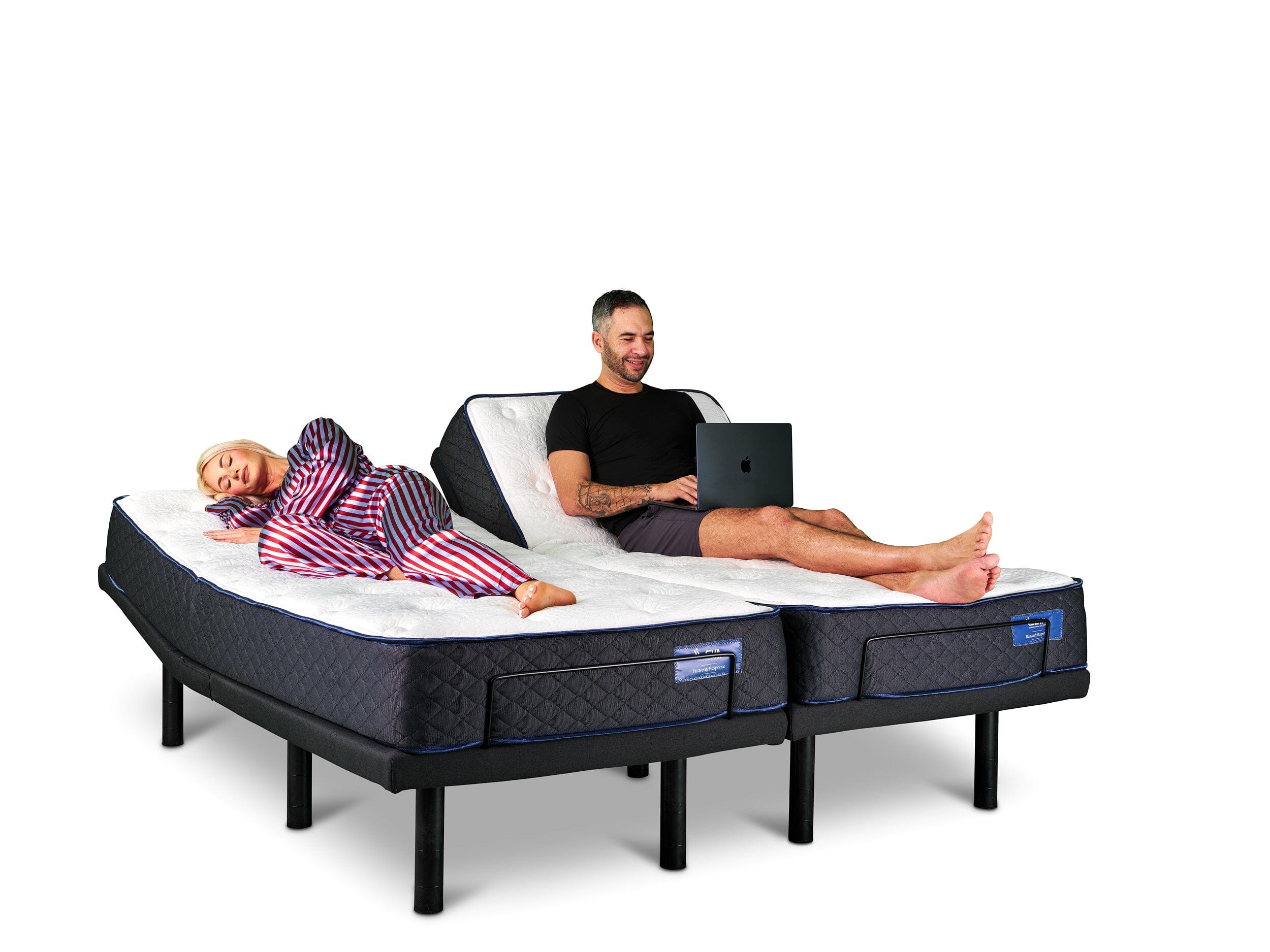
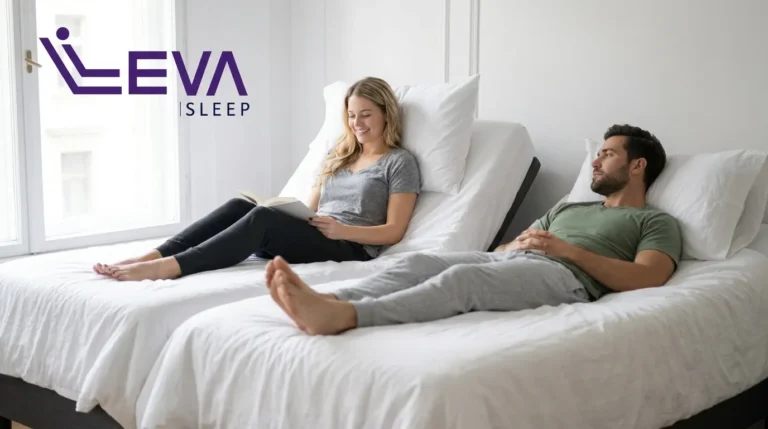
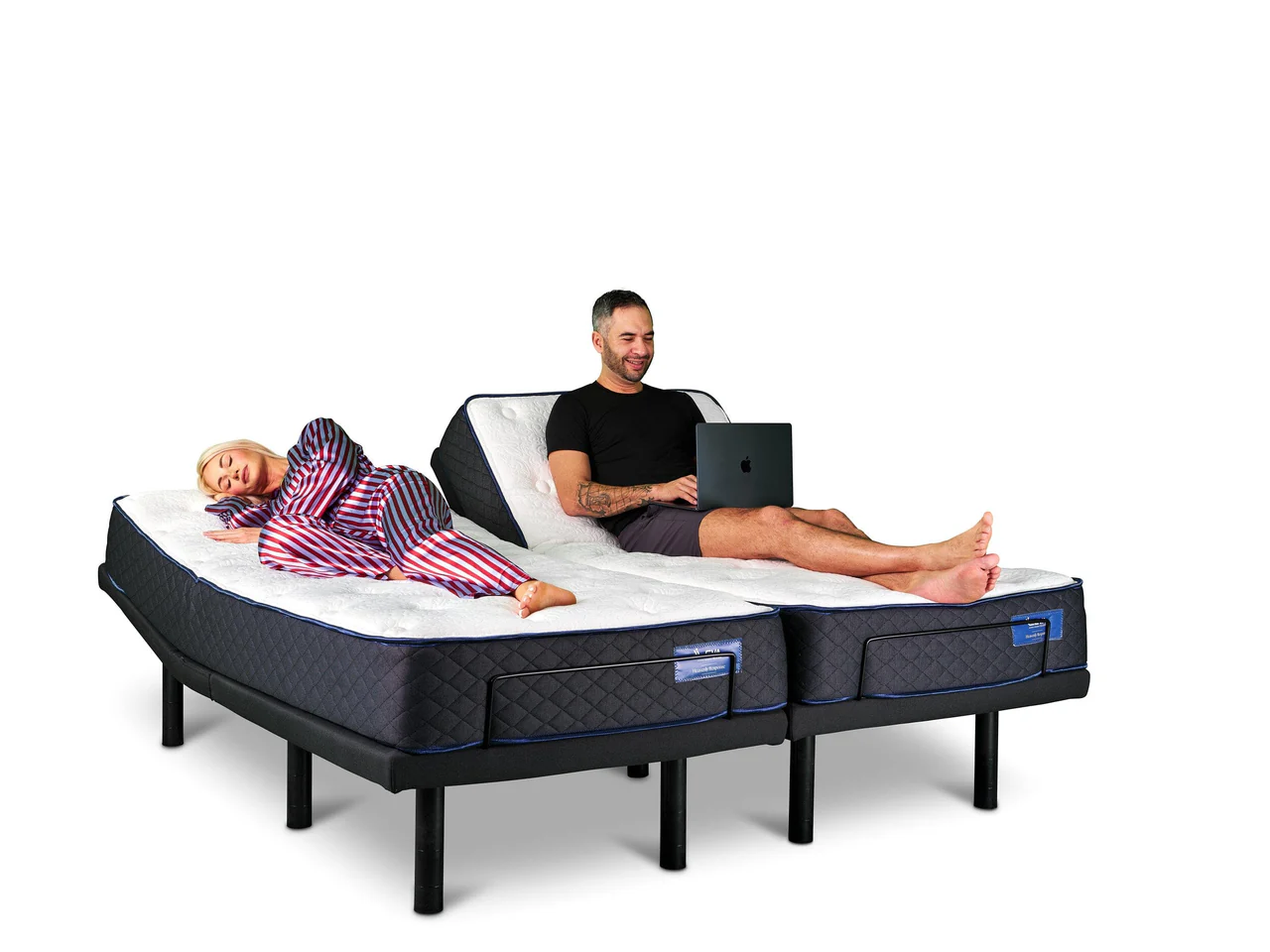
A split king adjustable bed with independent sides allows the snorer to sleep at an incline while the non-snorer remains flat or chooses a different angle, which avoids shared positioning that disrupts the partner. Separate mattresses on a split adjustable base also improve motion isolation, so one partner feels less of the other’s tossing and turning.
These benefits are not minor conveniences. For couples where one partner is a light sleeper, the difference between a single-unit base and a split configuration can decide whether the adjustable base truly solves the snoring problem or simply moves the disruption. Leva Sleep’s split configurations address this issue directly by giving each partner independent control.
How Leva Sleep Designs For Couples
Leva Sleep’s split Queen and King adjustable bases give each partner independent control over head elevation, foot elevation, lumbar support, and pillow tilt. The Leva Sleep app manages all adjustments through Bluetooth, so you can make small changes without reaching for a physical remote in the dark. Motors use whisper-quiet German engineering, which responds directly to common noise complaints with basic adjustable bases.
An anti-snore mode planned for spring 2026 will use integrated sensors to detect snoring and make automatic micro-adjustments to the head of the bed on the snoring partner’s side only. The other side of the split base stays still. This design solves the core problem of single-unit anti-snore presets that move both partners. Leva also designs bedding accessories such as deep-pocket fitted sheets with extra elastic, duvet clips, and remote pockets specifically for adjustable bases, which reduces the frustration of sheets pulling free during elevation cycles.
White-glove delivery, available for a fee, includes in-room setup, leg height adjustment, a full product walkthrough, and removal of the old bed. Leva carries 15–20 adjustable base models, compared to the 3–5 models typically found at general mattress retailers, and its mattresses are made in the United States.
Real-World Scenarios Where Leva Helps
Four common situations highlight the differences. A couple where one partner snores and the other is a light sleeper benefits most from a split base with independent anti-snore positioning. The snorer elevates, the non-snorer stays flat, and neither partner’s adjustment affects the other.
A post-surgery patient who needs sustained head or leg elevation benefits from precise app-controlled positioning and lumbar support that a preset-only system cannot match. A couple where one partner has chronic lower back pain benefits from independent lumbar control, which single-unit bases usually lack. A couple with different temperature preferences benefits from Leva’s compatibility with split temperature-regulating bedding, which addresses a disruption that head elevation alone cannot fix.
Buying Checklist For Snoring-Focused Adjustable Bases
Use a clear sequence when you evaluate any adjustable base for snoring relief. Start with configuration, because this sets the foundation for couple compatibility. Decide whether the base offers independent split operation or moves the entire surface with one adjustment.
Once you confirm that independent operation is possible, look at motor noise. Even the best configuration fails if adjustments wake your partner. Ask for a live demonstration at the highest elevation speed, since that setting makes noise most obvious.
After noise, review the anti-snore mode. Check whether it works per side or as a single unit, and whether it uses sensors or manual triggers. Then confirm mattress compatibility. Make sure the mattress is designed to flex with the base, because standard innerspring mattresses often resist articulation.
Next, clarify delivery and setup. Ask whether setup is included, whether the team adjusts leg height, and whether they remove the old bed. Finally, examine the warranty and return policy. Adjustable bases contain mechanical parts, so a minimum two-year motor warranty and a reasonable trial period are practical expectations.
GhostBed vs. Leva Sleep Feature Comparison
| Feature | GhostBed | Leva Sleep | Notes |
|---|---|---|---|
| Configuration | Single-unit base | Split Queen & Split King | Independent sides prevent partner disruption during adjustments |
| Anti-snore mode | Preset elevation | Per-side sensor-driven mode (spring 2026) | Sensor-based detection elevates head when snoring is detected |
| Motor noise | Reviewers describe GhostBed motors as quiet and smooth during adjustments, with no notable consumer noise complaints. | Whisper-quiet German motors | Noise level strongly affects light-sleeping partners |
| Lumbar & pillow tilt | Not standard | Included on higher-end models | Relevant for back pain relief and precise airway positioning |
| App control | GhostBed SmartBed uses direct companion app control; its adjustable bases rely on physical remotes. | Bluetooth app with custom positions | App allows silent micro-adjustments without a physical remote |
| Delivery & setup | Standard shipping | White-glove in-room setup (fee) | Includes leg height adjustment, tutorial, and old bed removal |
| Mattress origin | GhostBed mattresses are manufactured in the USA and Canada with domestic and imported materials. | Made in the United States | Leva mattresses are designed specifically for adjustable base articulation |
Frequently Asked Questions
Does elevating the head of an adjustable bed actually reduce snoring?
As discussed earlier, the 10 to 30 degree elevation range uses gravity to keep airways more open. This approach works best for positional snoring, which worsens when someone lies flat. It is less effective for snoring caused by obstructive sleep apnea, nasal blockage, or habitual side sleeping. An adjustable base changes position but does not correct the anatomy or physiology that drives many snoring problems.
Is a GhostBed adjustable base suitable for couples with different sleep preferences?
GhostBed’s standard adjustable base operates as a single unit, so any elevation change affects both partners at the same time. For couples who prefer similar angles, this setup can work. For couples where one partner wants elevation and the other prefers to sleep flat, or where partners have different firmness, lumbar, or temperature needs, a single-unit base creates ongoing compromise. A split adjustable base with independent controls offers a more practical path for couples with different preferences.
Can an adjustable base replace a CPAP machine for sleep apnea?
No. An adjustable base cannot replace medically prescribed treatment for obstructive sleep apnea. Head elevation can reduce the frequency or intensity of positional snoring and may lessen mild OSA symptoms, but it does not correct the structural airway changes that cause moderate to severe OSA. Anyone with diagnosed sleep apnea should follow their physician’s treatment plan, which may include CPAP therapy, oral appliances, or surgery. An adjustable base can complement medical treatment by improving comfort and positioning.
How loud are adjustable base motors, and does noise matter for snoring relief?
Motor noise matters a great deal when the goal is to reduce sleep disruption. If an anti-snore adjustment wakes the non-snoring partner, the base has simply traded one disruption for another. Basic adjustable bases often use motors that produce clear mechanical noise during elevation cycles, especially at higher speeds. Whisper-quiet motors, such as the German-engineered units in Leva Sleep’s systems, operate at a much lower noise level, so mid-sleep adjustments are less likely to disturb anyone. Always request a live demonstration at full elevation speed before you buy.
What is the difference between a split king and a standard king adjustable base for snoring?
As noted in the couple-specific challenges section, a standard king adjustable base moves as one unit, while a split king uses two Twin XL bases that operate independently. For snoring, this independence lets the snoring partner elevate to the recommended angle while the non-snoring partner remains flat. The setup removes the forced compromise of single-unit systems. Motion isolation also improves on a split configuration, because each mattress half moves on its own and transfers less movement between partners.
Choosing The Right System For Your Snoring Pattern
GhostBed’s adjustable base offers a useful starting point for positional snoring relief in couples who share similar sleep angle preferences. Its single-unit design remains the main constraint, because one partner’s adjustment always moves both sides.
For couples who need independent control, quiet operation, and per-side anti-snore features, a split adjustable system provides a more complete answer. Leva Sleep’s split Queen and King configurations, whisper-quiet German motors, app-controlled micro-adjustments, and upcoming per-side anti-snore mode address the key failure points of single-unit bases. The white-glove setup and purpose-built bedding accessories round out a system designed from the ground up for couples.
Before you purchase any adjustable base for snoring relief, review configuration independence, motor noise at full speed, anti-snore mode behavior, mattress compatibility, and the delivery and setup experience. Applying these criteria will help you find a system that matches both your snoring pattern and your relationship’s sleep dynamics.