Written by: Matthew Timmins, Founder and Managing Director, Leva Sleep
Key Takeaways
- Couples with different sleep temperatures need true dual-zone control that heats one side and cools the other without changing firmness or elevation.
- Only split adjustable bases with integrated heating and cooling pads let each partner control temperature, firmness, elevation, and anti-snore positioning from a single app.
- Water-based pod systems and active-breeze foam mattresses manage temperature but do not provide elevation and often require subscriptions or lock you into one mattress type.
- Leva Sleep systems stand out for quiet German motors, no recurring subscription fees, optional white-glove delivery, and support for different mattress firmness on each side.
- Couples ready to stop compromising on sleep can visit Leva Sleep today to explore split adjustable bases with integrated dual-zone temperature control.
How This Comparison Evaluates Smart Beds
Every category in this guide is evaluated against the same eight criteria so comparisons stay fair and practical.
- Comfort and support: Mattress construction, pressure relief, and spinal alignment capability.
- Adjustability and personalization: Independent control of elevation, firmness, and lumbar support per side.
- Dual-zone temperature performance: Whether each partner can set and maintain a different temperature independently.
- Noise and motion: Motor sound levels during adjustment and vibration transfer between sides.
- Durability: Expected component lifespan and failure points for mechanical and thermal systems.
- Aesthetics: How well the system blends into a modern bedroom instead of looking like clinical equipment.
- Health impact: Anti-snore positioning, elevation for acid reflux or apnea, and circulation support.
- Service and delivery: Setup experience, ongoing support, and total ownership cost including subscriptions.
Four Smart Bed Categories Competing in 2026
Four distinct product categories compete in 2026, each trading off temperature precision, elevation capability, mattress flexibility, and long-term cost. This breakdown helps you match a category to your main sleep conflicts before comparing specific brands.
Pod-style water-based systems (e.g., Eight Sleep Pod 5 Ultra) use a water-circulating hub to heat or cool a mattress cover. Temperature control is precise, but the hub needs maintenance, water refills, and a recurring subscription for full feature access. The mattress itself has fixed firmness and does not adjust in elevation.
Air-chamber smart beds (e.g., Sleep Number Climate360) combine air-pressure firmness adjustment with a built-in airflow layer for temperature modulation. Both firmness and temperature are independently controllable per side, but the system is proprietary and requires Sleep Number’s own mattress.
Active-breeze foam systems (e.g., Tempur-Pedic TEMPUR-ActiveBreeze) push air through a foam mattress to move heat away from the body. The effect is passive cooling rather than active heating or cooling to a specific temperature. Elevation adjustability stays limited unless you buy a separate adjustable base.
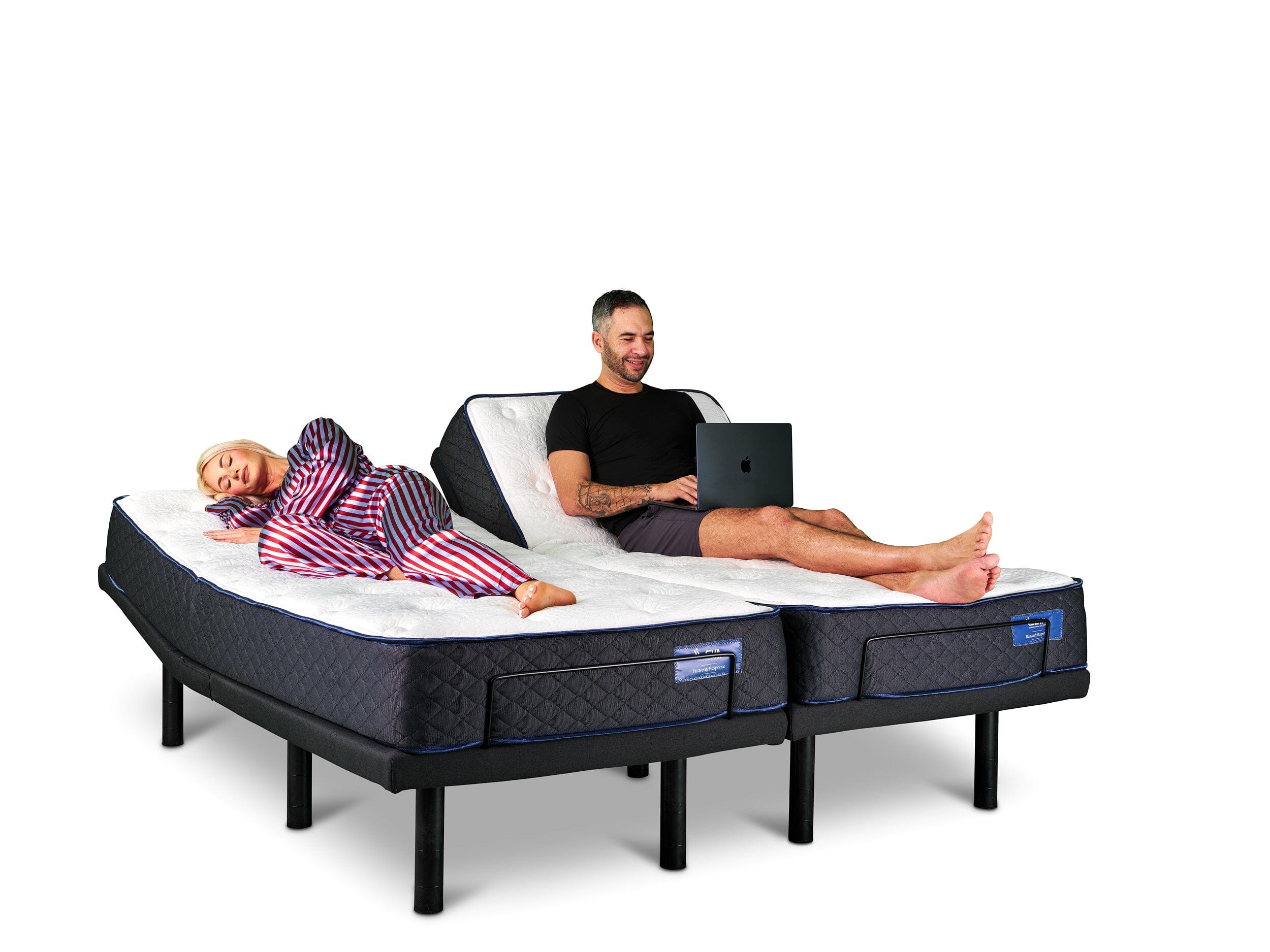
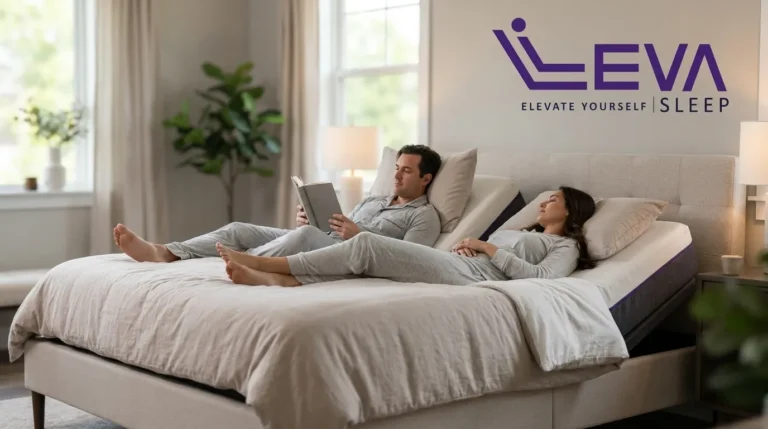
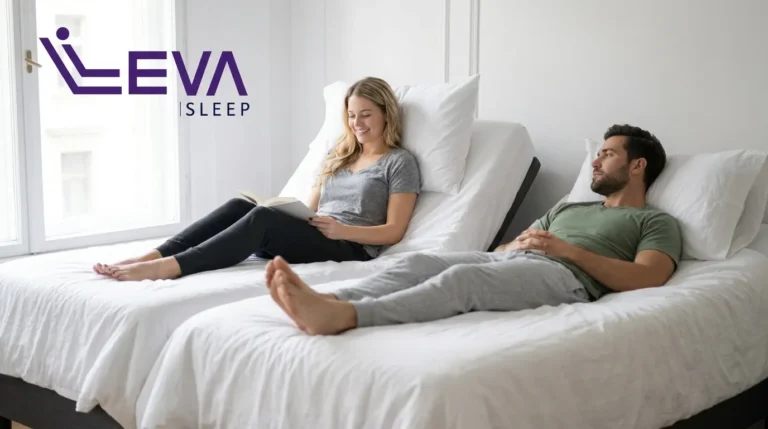
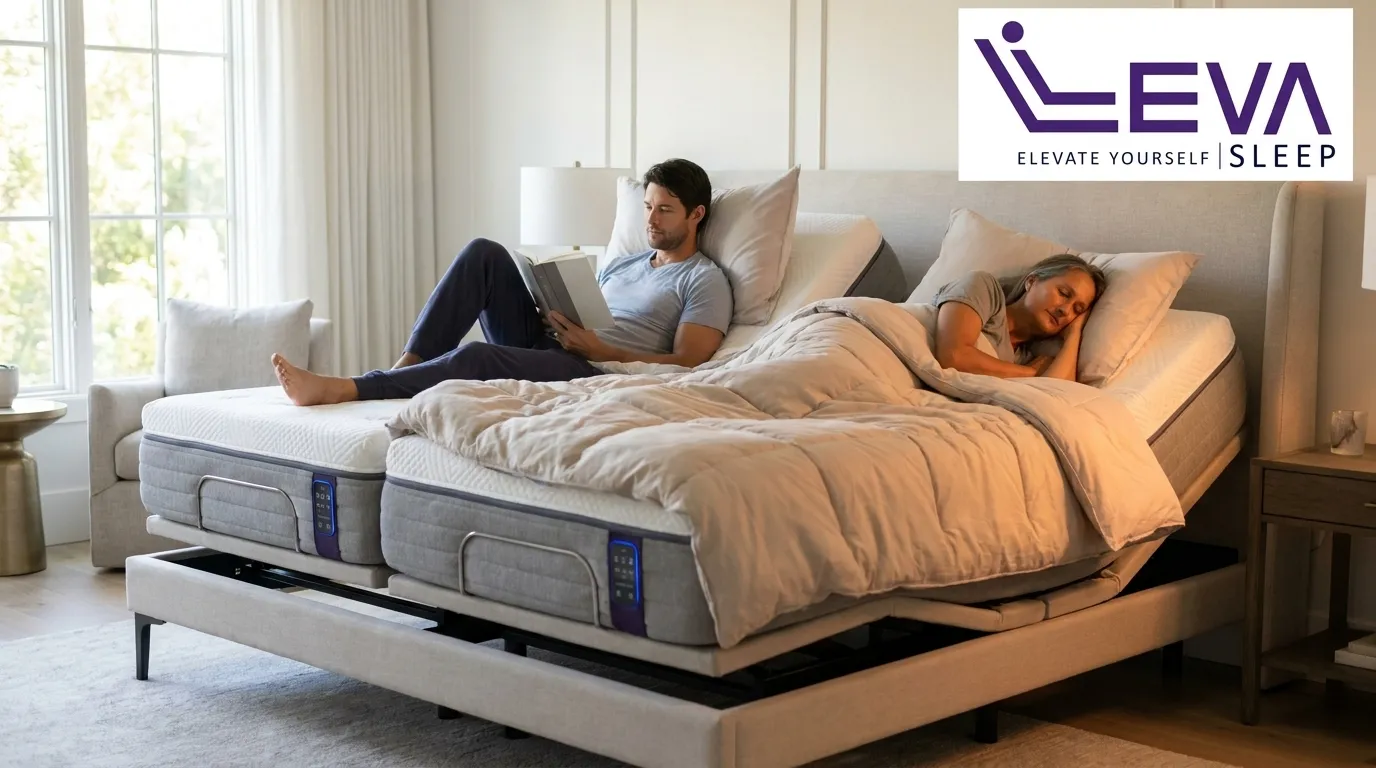
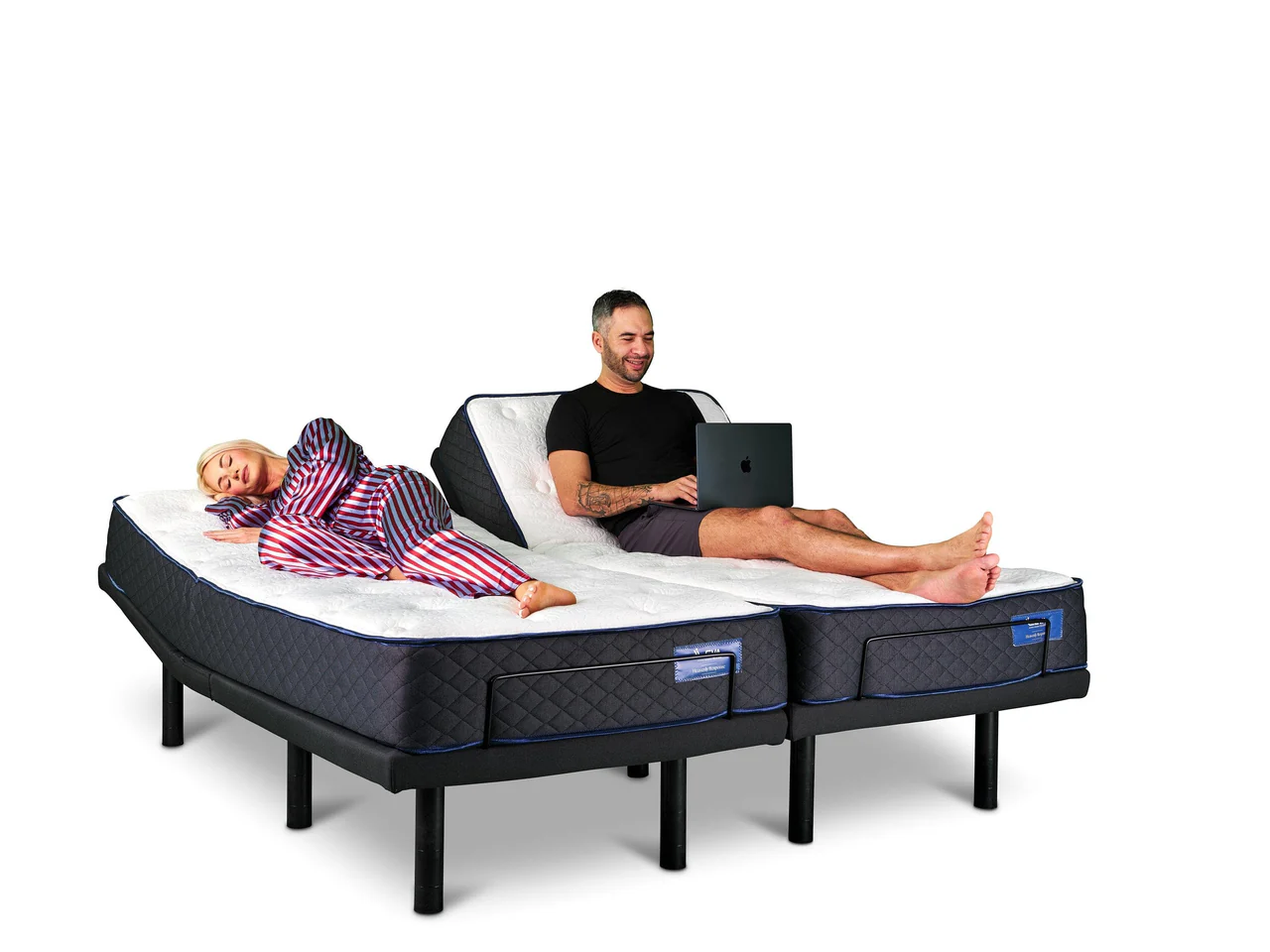
Split adjustable bases with integrated heating and cooling pads (e.g., Leva Sleep) pair an independently adjustable base on each side with a dedicated thermal pad per partner. Each side controls elevation, firmness, massage, and temperature independently through a single app. The mattress is not proprietary, and no subscription is required.
Comfort and Temperature Regulation for Each Category
Comfort and temperature performance depend on whether the system actively heats and cools or simply moves heat away, and whether each side operates independently.
- Water-based systems: Provide precise active heating and cooling to a set degree per side. The mattress cover acts as the thermal layer, so overall comfort depends on the pod’s proprietary foam construction underneath.
- Air-chamber systems: Combine firmness and airflow in one platform. Temperature modulation is real but relies on air movement instead of a dedicated heating or cooling element, which limits the range of temperatures.
- Active-breeze foam: Moves ambient air through the mattress to reduce heat buildup. This helps hot sleepers but does not actively warm a cold sleeper’s side.
- Split adjustable with integrated pads: Uses a dedicated heating and cooling pad on each side that works independently of the mattress construction. Couples can choose different mattress firmness levels on each side while still controlling temperature separately.
The key decision point for comfort and temperature is whether each partner can set a specific temperature target instead of relying only on general cooling.
Partner Compatibility and Independent Control
True independence means one partner’s temperature, elevation, and firmness changes do not affect the other side. Water-based and active-breeze systems achieve temperature independence but share a single mattress construction, which forces both partners to accept the same firmness level. Air-chamber systems solve the firmness issue with adjustable air bladders, yet the thermal layer is built into one proprietary platform, so couples cannot choose different mattress types on each side. Split adjustable bases with integrated pads separate the thermal layer from the mattress, which lets each partner pick a different mattress while still controlling temperature, elevation, massage intensity, and lumbar support independently through a single app interface.
Adjustability, Health Impact, and Positioning
Elevation and anti-snore positioning directly affect health outcomes, and only adjustable bases provide these features. Water-based pod systems and active-breeze foam systems do not include elevation adjustment as a standard feature. Air-chamber systems include limited head elevation capability that helps somewhat with snoring and reflux. Split adjustable bases offer full head and foot elevation, lumbar support, pillow tilt, and an anti-snore mode that detects snoring and makes small head adjustments to help open airways. For couples managing acid reflux, sleep apnea, post-surgery recovery, or chronic hip and knee pain, independent elevation on each side becomes a clinically meaningful advantage.
Technology, Apps, and Subscription Models
Technology features and subscription models shape both daily use and long-term cost of ownership. Water-based systems require a subscription for AI sleep coaching, automatic temperature scheduling, and health data access because the software layer is monetized separately from the hardware. Air-chamber systems include app control with some tracking features, and advanced analytics may require a membership tier depending on the model. Active-breeze foam systems provide app control for airflow scheduling with no subscription, although tracking remains limited because the system lacks sensors for detailed sleep analysis. Split adjustable bases from Leva Sleep include full app control via Bluetooth for custom sleep positions, vibrating alarms, anti-snore adjustments, and integrated heating and cooling pad management with no recurring subscription fees. AI-powered sleep tracking with real-time micro-adjustments is included as part of the Leva Sleep system.
Noise, Motion, and Everyday Use
Noise during adjustment and motion transfer between sides affect how well couples sleep through the night. Water-based systems run a pump continuously or on a schedule, which creates low-level ambient noise. Air-chamber systems use air pumps for firmness changes that are clearly audible during adjustment. Active-breeze systems rely on a fan motor that operates throughout the night and adds a constant hum. Split adjustable bases use quiet motors for elevation changes that are brief and low in volume, and motion transfer is lower in split configurations because each side rests on a separate base. Couples who are sensitive to sound or movement should request a live demonstration or in-home trial before committing.
Long-Term Reliability, Aesthetics, and Overall Value
Long-term value depends on mechanical complexity, subscription costs, and how the bed looks in your space. Water-circulating systems add plumbing components that need periodic maintenance, water treatment, and eventual hub replacement, while subscriptions accumulate over a five- to ten-year ownership period. Air-chamber systems rely on proprietary bladders and pumps that owners cannot service themselves. Active-breeze foam systems have fewer moving parts, yet the fan motor still acts as a long-term wear component. Split adjustable bases with integrated pads contain mechanical components in the base motors and thermal elements in the pads, and both are serviceable and replaceable independently.
Leva Sleep’s direct-to-consumer model delivers comparable or higher feature sets at roughly 30–50% lower cost than leading competitors, with no subscription required and optional white-glove delivery and setup. The bases are designed as furniture-quality pieces that integrate into modern bedrooms instead of resembling medical equipment.
Real-World Scenarios Where Features Matter
Different sleep temperatures: One partner runs hot, the other cold. A split adjustable base with independent heating and cooling pads on each side is the only category that actively heats one side and cools the other at the same time without changing mattress firmness or elevation.
Snoring partner: Anti-snore positioning that gently elevates the head to open airways appears only in adjustable base systems. Water-based and active-breeze systems do not offer elevation.
Chronic back or hip pain: Independent lumbar support and leg elevation on each side let the affected partner find a pressure-relieving position without forcing the other partner into the same setup.
Post-surgery recovery: Medical positioning needs often change week to week. An adjustable base with app-controlled elevation presets allows precise, repeatable positioning without manual effort.
Athletic recovery: Mild leg elevation to reduce overnight swelling combined with active cooling for exercise-induced body heat becomes practical only when temperature and elevation are independently controllable per side.
Total Cost, Setup Experience, and Room Fit
Learning curves and setup experiences differ by category. App-controlled systems need initial time for position presets and temperature schedules, yet daily use becomes simple after that. Maintenance for water-based systems is the most involved, with periodic water changes and hub cleaning. Bed-in-a-box brands usually ship components for self-assembly, while Leva Sleep’s white-glove service delivers to the bedroom, assembles the full system, adjusts leg heights, provides a product walkthrough, and removes the old bed.
Over a ten-year lifespan, a subscription-free system with durable motors and replaceable pad components usually delivers a lower total cost than a subscription-dependent platform with proprietary hardware. Split Queen and Split King configurations from Leva Sleep also fit smaller master bedrooms where a standard Split King feels too wide.
Practical Checklist for Choosing Your System
This checklist turns the eight evaluation criteria into simple starting points so you can narrow the field quickly.
- Temperature is the only conflict: Any dual-zone thermal system helps, but split adjustable bases also prepare you for future elevation needs.
- Snoring or sleep apnea is a factor: An adjustable base with anti-snore positioning is required, since water-based and active-breeze systems do not provide elevation.
- Different firmness preferences: Only split adjustable bases allow each partner to select a different mattress on their side.
- Medical positioning is current or likely: An adjustable base is the only medically relevant option in this comparison.
- Subscription costs are a concern: Remove water-based systems from consideration and review air-chamber tiers carefully. Leva Sleep’s subscription-free model, described earlier, removes this cost entirely.
- White-glove setup matters: Leva Sleep is the only provider in this guide offering in-house professional delivery and setup as a standard service option.
- Aesthetics and bedroom integration: Leva Sleep systems are designed as furniture-quality pieces that blend into modern decor instead of looking clinical.
Frequently Asked Questions
How does dual-zone temperature control actually work in a split adjustable bed?
In a split adjustable base system with integrated heating and cooling pads, each side of the bed has its own dedicated thermal pad that sits between the mattress and the fitted sheet. Each pad connects independently to the system’s climate controls, which allows one partner to set a warming temperature while the other sets a cooling temperature. The two zones do not share a thermal circuit, so adjusting one side has no effect on the other. Control runs through a smartphone app that also stores preset temperature schedules for different nights or seasons.
Do I need a subscription to use all the features of a Leva Sleep system?
No. Leva Sleep’s split adjustable systems, including app control, anti-snore positioning, heating and cooling pad management, AI-powered sleep tracking, and custom position presets, are available without a recurring subscription fee. Some competing platforms place advanced features like automatic temperature scheduling or detailed sleep analytics behind a paid membership tier. With Leva Sleep, the full feature set is included with the system purchase.
How loud are the motors during elevation adjustments?
Leva Sleep’s adjustable bases use motors engineered to minimize sound during elevation changes. Adjustments are brief and low in volume, which makes them suitable for use while a partner is asleep. This contrasts with older or entry-level adjustable bases that can produce noticeable mechanical noise during movement. If noise is a priority concern, visiting the La Jolla showroom to hear the motors in person is the most reliable way to evaluate this before purchasing.
What sizes are available for split adjustable configurations?
Leva Sleep offers both Split King and Split Queen adjustable bases. Split King is the most common configuration and fits a standard King-size bed frame. Split Queen is a less common but important option for couples in smaller master bedrooms who want independent control without the footprint of a King. Leva Sleep is one of the few providers that builds Split Queen configurations to customer specifications, which makes it a practical solution for rooms where a Split King is too wide.
Can a split adjustable base help with snoring without a CPAP machine?
Elevating the head of the bed gently opens the airway by shifting the position of the tongue and soft palate, which can reduce or eliminate mild snoring and some symptoms of mild sleep apnea. Leva Sleep’s anti-snore mode detects snoring through the system and makes automatic micro-adjustments to the head elevation on the snoring partner’s side without waking either partner. This is not a medical treatment and does not replace a physician’s recommendation for moderate to severe sleep apnea, but it offers a meaningful non-invasive option for couples dealing with snoring-related sleep disruption.
Conclusion: Why Split Adjustable Systems Lead for Couples
The four categories in this guide each solve part of the couples’ sleep conflict problem. Water-based pod systems deliver precise active temperature control but no elevation and rely on ongoing subscriptions. Air-chamber systems combine firmness and temperature adjustment in one proprietary platform. Active-breeze foam systems address heat but not cold and provide no elevation. Split adjustable bases with integrated heating and cooling pads are the only category that independently addresses temperature, firmness, elevation, anti-snore positioning, and lumbar support per partner, without a subscription and with an available white-glove delivery option. For couples in Southern California ready to stop compromising on sleep, Leva Sleep’s systems offer the most complete and flexible solution available in 2026.