
Written by: Matthew Timmins, Founder and Managing Director, Leva Sleep
Key Takeaways
-
Many couples stop using adjustable bases when remotes fail or apps feel outdated. A clear smart-upgrade plan restores modern control without replacing the whole bed.
-
Begin with a compatibility audit that covers mattress type, motor voltage, frame clearance, and warranty status. This audit shows which upgrade tier is safe and realistic.
-
Decide between a non-invasive Bluetooth IR relay kit and an OEM control-box swap. Avoid third-party boxes that typically void major-brand warranties.
-
Follow your base brand’s pairing steps for app and voice control. Split-king setups need two relay kits, which prevents the most common and costly DIY mistake.
-
When hardware limits or missing features block meaningful upgrades, compare those costs with a new integrated system from Leva Sleep.
How to Upgrade to a Smart Adjustable Bed Base
-
Run a full compatibility check. Confirm that your mattress is rated for adjustable bases. Foam, latex, and most hybrid pocket-coil mattresses flex well. Traditional innerspring mattresses with rigid border rods usually do not. Measure frame clearance. Most standard smart relay kits require 40–50 mm (about 1.6–2 inches) of depth to fit in electrical wall boxes. Note the motor voltage, because relay kits are voltage-specific. Outcome: a written compatibility profile that shows which upgrade tier works for your base.
Audit warranty implications before touching any hardware. Tempur-Pedic and most major manufacturers have specific warranty terms that change when you repair or modify the base. Safe paths include Bluetooth-to-IR bridge devices that sit outside the base and mimic remote signals without touching internal wiring. Risky paths include splicing into motor control boards or replacing OEM control boxes with third-party units. Outcome: a clear decision on whether the base is still in a warranty-sensitive period.
Choose between a smart relay and a full control-box swap. A smart relay, also called a Bluetooth IR bridge or RF-to-app adapter, plugs into an existing remote receiver port or sits externally. It adds app and voice control while leaving internal components untouched. A full OEM control-box swap uses the manufacturer’s authorized service to replace the entire electronics module with a Wi-Fi-enabled version. Only select brands offer this option. Third-party control-box replacements void warranties (see FAQ for details). Outcome: a cost-matched upgrade path that fits your warranty status.
Execute app and voice integration for your base brand. Popular adjustable base brands such as Leggett & Platt, Ergomotion, Reverie, Serta Motion, and Tempur-Ergo publish compatibility lists for smart-home integration. Most follow the same pattern. Download the manufacturer app or a compatible third-party app. Pair via Bluetooth within 30 feet of the base. Link to Amazon Alexa or Google Home through the app’s “Works With” settings. Assign clear room and device names. Test all preset positions such as Zero Gravity, Anti-Snore, and Flat with voice commands before you call the setup finished. Outcome: confirmed app and voice control across all saved positions.
Address split-king and independent-side setups. A split-king configuration uses two Twin XL bases that operate independently. Each base needs its own relay or control module. Buying a single kit for a split-king setup is the most common and most expensive DIY error. Verify that both bases run the same firmware version before pairing. Mismatched firmware causes sync failures in couples’ preset modes. Split-queen configurations are less standardized, so confirm relay compatibility with the manufacturer before you purchase. Outcome: both sides of the bed operate independently inside one app interface.
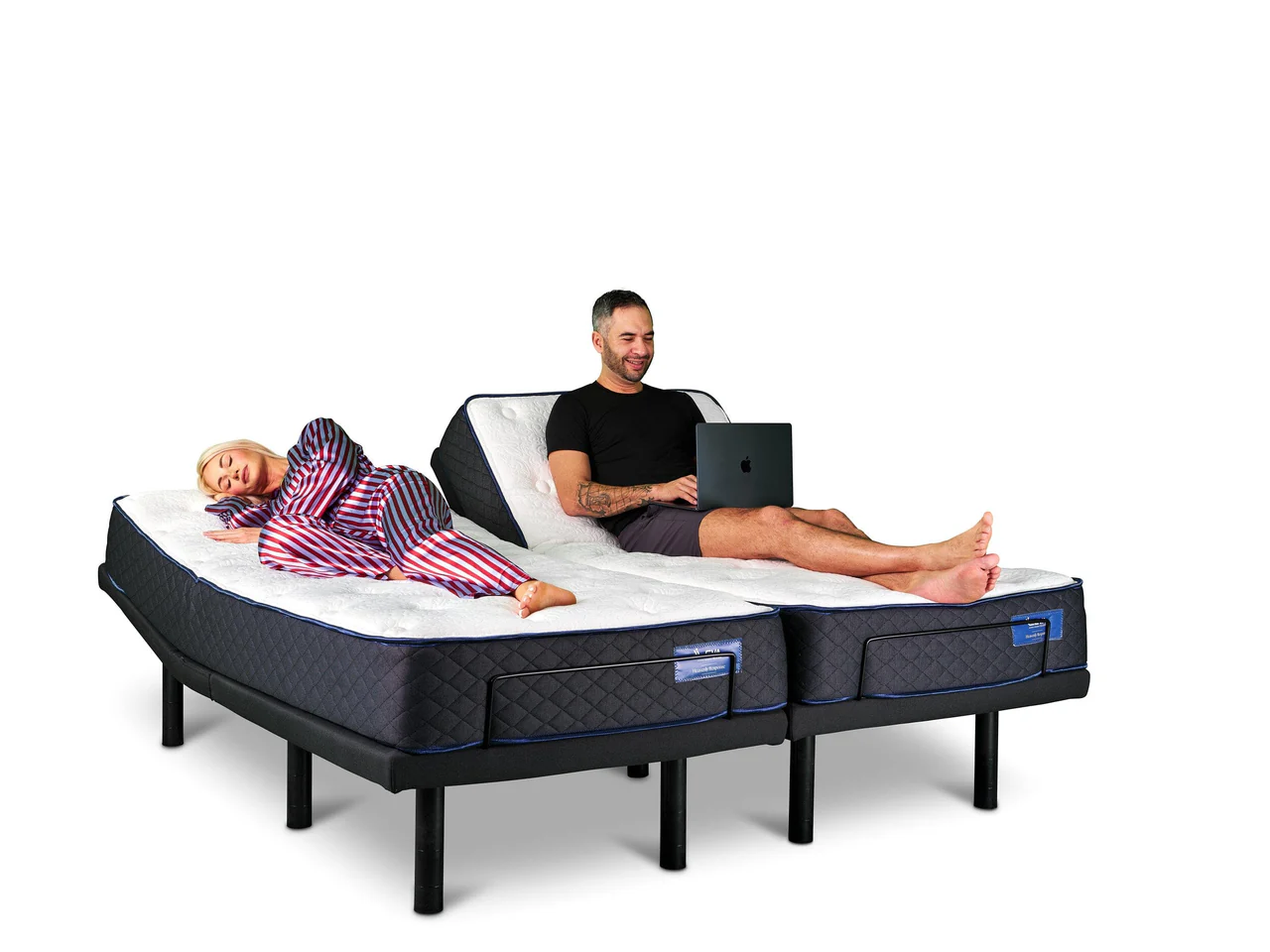
Heavenly Response Split Queen Adjustable Bed Allow for mattress settling and install non-slip solutions. After the first week of elevated use, foam and hybrid mattresses compress slightly at flex zones. This compression can cause the mattress to creep toward the foot of the base, which strains the flex hinge and reduces support. To prevent this movement, install a non-slip mattress retainer bar. Most bases include a foot bracket, and aftermarket versions run $20–$40. Use fitted sheets with deep pockets and reinforced elastic designed for adjustable bases, which hold tension even when the base elevates. Outcome: a stable mattress and bedding that stay in place through full elevation cycles.
Apply the upgrade-versus-replacement decision matrix. Evaluate four criteria. First, check base age. If the base is more than seven years old, motor replacement costs may exceed its value. Second, review the feature ceiling. Relay kits cannot add lumbar support, pillow tilt, or anti-snore detection when the base lacks those motors. Third, listen for noise. Smart controls cannot repair a worn or grinding motor. Fourth, total the cost. If the relay plus any needed repairs approaches 60% of a new integrated system’s price, replacement usually delivers better long-term value. Outcome: a documented go or no-go decision with clear cost justification.
Common DIY Upgrade Mistakes
Several predictable errors drive up costs and frustration during smart upgrades. Many people purchase a relay kit before confirming motor voltage compatibility. Others buy one kit for a split-king when two units are required. Some assume app control can add features the base’s motors cannot perform. Many skip the warranty audit on a base that still has electronics coverage. A final common mistake involves installing third-party control boxes while assuming warranty language will not be enforced.
Pro Tips for Smoother Setup
Capture your base’s current firmware version with a screenshot before any pairing attempt. Some app updates push firmware changes that reset saved positions. Label each side’s relay with a permanent marker during split-king setup so you do not swap remotes during troubleshooting. Keep the original OEM remote as a backup. Smart relays depend on power and Bluetooth range, and a physical remote remains the most reliable fallback.
When to Stop and Call a Professional
Recognize the warning signs that DIY work is no longer safe or cost-effective. Stop if the base is still under manufacturer warranty and any internal access is required. Pause if the motor produces grinding or irregular sounds before you start the upgrade. Do not proceed if the control board shows burn marks or corrosion. Avoid DIY work on proprietary closed-system models, such as certain Sleep Number and Tempur-Ergo units, that do not expose a standard remote receiver port. In these situations, contact the manufacturer’s authorized service network or consult a specialist retailer such as Leva Sleep.
Upgrade Cost Comparison
The table below compares typical costs and limits for relay kits, OEM swaps, and full replacement systems. Use it to see where your current base sits against a new integrated option.
Upgrade Path
Approximate Cost (Queen)
Approximate Cost (Split King)
Key Limitation
Bluetooth IR Smart Relay Kit
Varies by brand
Varies by brand (two units required)
Cannot add motors or hardware features the base lacks
OEM Authorized Control-Box Swap
Varies by brand + labor
Varies by brand + labor
Available for select brands only, does not add new motors
New Leva Sleep Integrated System
Full replacement, includes white-glove delivery and setup
For reference, Tempur-Pedic adjustable bases with more complete feature sets often start around $1,599, while a Nectar Premier Adjustable Base in queen with app control, massage, and preset positions costs $749. These figures establish the market floor for evaluating relay upgrade costs. Once you understand that baseline, you can judge whether a relay kit or a new integrated system delivers better value.
Measuring Your Upgrade’s Success
Once your smart controls are installed and working, the next step is confirming that the upgrade improves your sleep. A DIY smart upgrade only counts as successful when it produces measurable sleep gains. Track three metrics over two weeks after the upgrade. First, log the number of nighttime awakenings in a notes app as soon as you wake. Second, ask your partner to rate noise and movement disturbance from 1 to 5 each morning. Third, rate morning pain for the lower back, hips, and shoulders from 1 to 10. Compare week-one averages with week-two averages. If awakenings do not drop and pain scores do not improve, the base’s mechanical limits, not the control interface, likely cause the problem, and a full system evaluation makes sense.
Advanced Options for King and Split-King Owners
King and split-king households can layer in more advanced integrations after basic app control works reliably. Temperature-regulated bedding pads, which connect independently of the base’s control system, can sit on each side of a split-king. This setup helps partners who sleep at different temperatures. These pads run through their own apps and do not touch base firmware, so they remain neutral for warranty purposes.
While temperature control can be added independently, other advanced features cannot. AI-driven options such as automatic snore detection and micro-adjustment need embedded sensors that talk directly to the motor controller. Relay kits cannot retrofit those capabilities into an older base. Leva Sleep’s anti-snore mode, arriving in 2026, illustrates a feature that requires a purpose-built integrated system rather than an aftermarket add-on. For many king-size households where partners have distinct needs, a full integrated system often delivers more value per dollar than a series of partial retrofit upgrades.
Frequently Asked Questions
Will adding a smart relay kit void my adjustable base warranty?
Warranty impact depends on the relay type and how it connects. External Bluetooth IR bridge devices that plug into the existing remote receiver port or operate via infrared signal without touching internal wiring are generally considered non-invasive and do not change the base’s factory configuration. Any modification that involves opening the control box, splicing wires, or replacing internal components usually voids coverage on major-brand warranties. Always read your specific warranty documentation before you buy any upgrade hardware, and contact the manufacturer if the connection method is unclear.
Can I add lumbar support or anti-snore detection to my existing base through a smart upgrade?
No. Smart relay kits and control-box swaps add an interface layer such as app control, voice commands, and preset recall. They cannot create physical capabilities the base does not already have. Lumbar support requires a dedicated lumbar motor. Anti-snore detection needs embedded microphones or vibration sensors connected to the motor controller. If your base lacks these motors and sensors from the factory, no software or relay upgrade will add them. These features only come with a new integrated system that includes the required hardware from the ground up.
How long does it typically take to adapt to sleeping on an elevated adjustable base?
Most people adapt to a new sleep position within one to two weeks. The first few nights in Zero Gravity or an elevated head position can feel unfamiliar, especially for long-term stomach sleepers. Start with a modest 10–15 degree head elevation and increase gradually over several nights to reduce discomfort. Morning stiffness in the neck or shoulders during the first week is common and usually fades as the body adjusts to the new spinal alignment. If discomfort continues beyond two weeks, consult a physician or physical therapist before you keep using higher elevations.
Is a split-king setup worth the additional cost and complexity for couples?
For couples with clearly different sleep preferences, a split-king often justifies the extra cost. Examples include different firmness needs, one partner elevating for snoring or acid reflux while the other sleeps flat, or large differences in body weight. The additional cost covers two separate bases, two control systems, and usually two Twin XL mattresses. The main tradeoff is a center gap between the mattresses, which a split-king mattress bridge pad can reduce. For couples with similar preferences, a standard king with a single smart upgrade may be enough.
What should I look for when deciding between upgrading my base and buying a new integrated system?
Start with the age and mechanical condition of your current base. A base older than seven years with worn motors or audible grinding is a weak candidate for smart controls. Next, list every feature you want, such as lumbar support, anti-snore positioning, app control, temperature integration, and whisper-quiet motors. Then mark which of those features your current base can support through an upgrade. If more than two desired features require hardware your base does not have, the combined cost of partial upgrades will likely approach or exceed the price of a purpose-built integrated system. Leva Sleep’s showroom consultations walk through this comparison with no obligation.
Conclusion
Smart control upgrades work well for adjustable bases that are mechanically sound, within a reasonable age range, and outside a sensitive warranty window. The seven-step checklist above guides you from compatibility checks through post-upgrade measurement so you can make confident decisions. When a base has reached its feature ceiling, or when your wish list includes hardware that cannot be retrofitted, a new integrated system from a specialist often delivers more features, better comfort, and a longer useful life. Explore Leva Sleep’s integrated systems by visiting the La Jolla showroom or shopping online.