Written by: Matthew Timmins, Founder and Managing Director, Leva Sleep
Key Takeaways for Couples Choosing a Smart Bed
- Poor sleep from snoring, temperature differences, or firmness mismatches strains relationships, and standard bedding rarely fixes these issues.
- Smart beds that connect with Alexa, Google Home, or Home Assistant can run routines for lighting, temperature, and independent per-side positioning.
- The eight criteria in this guide – ecosystem compatibility, split independence, anti-snore depth, noise levels, API openness, price-to-value, delivery, and support – give couples a clear way to compare options.
- Leva Sleep’s split bases provide independent motors, quiet operation, and open-platform integration at prices significantly below closed-ecosystem competitors.
- Explore Leva Sleep’s smart split bases at the La Jolla showroom or shop online.
8 Criteria for Evaluating Smart Beds That Integrate With Home Automation
1. Ecosystem Compatibility Across Your Smart Home
A smart bed delivers real value only when it works smoothly with the rest of your home. Smart home compatibility spans physical, network, and application layers, so a bed that connects to Alexa may still fail to trigger a Google Home routine or appear in Home Assistant without extra workarounds. Confirm native support, not just a companion app, for every platform you already use.
The emerging Matter standard reduces this friction across platforms. Matter-certified devices allow Alexa, Google Home, and Home Assistant to control the same device without cloud bridging. A Matter controller and sometimes a Thread border router are still required. Ask each vendor whether their base is Matter-certified or relies on a proprietary cloud bridge.
2. Split-Bed Independence for Each Partner
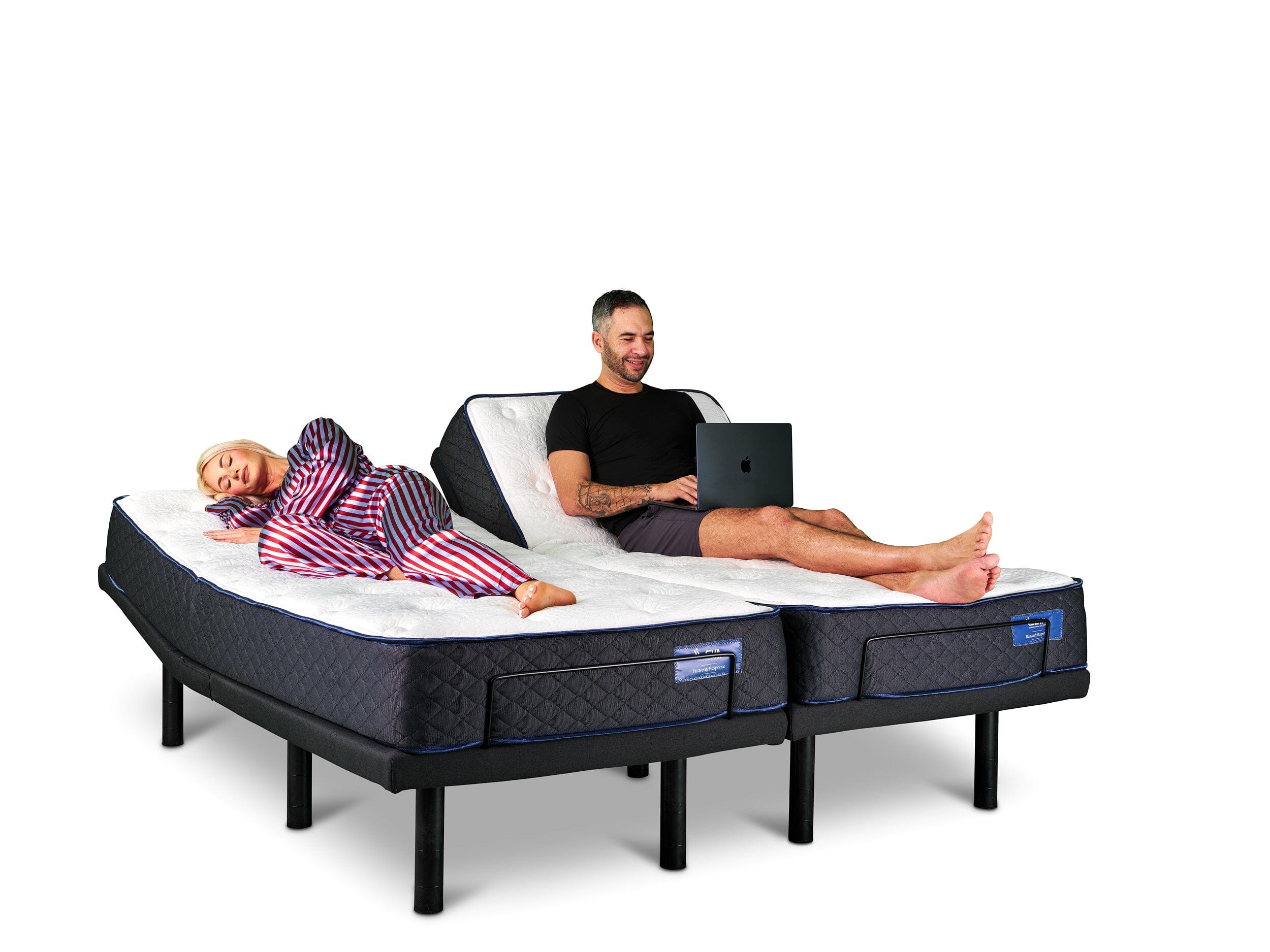
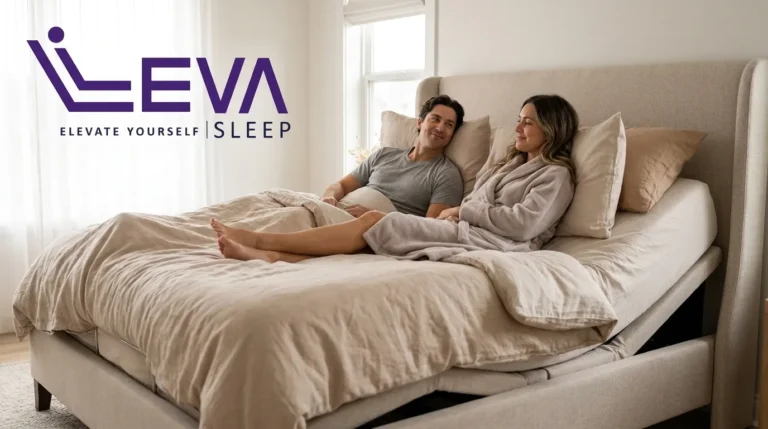
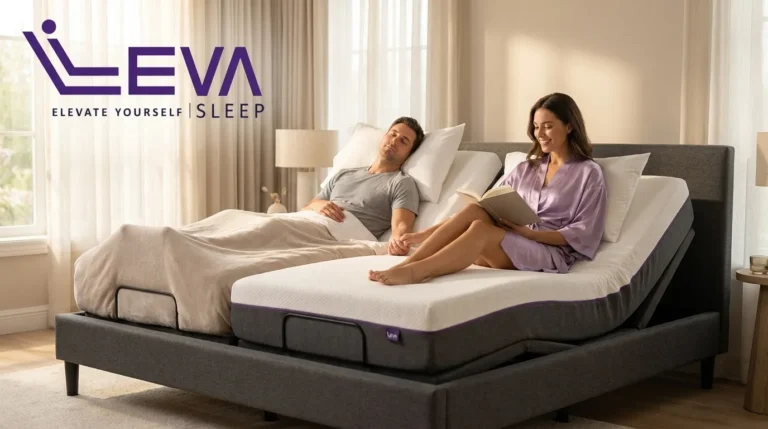
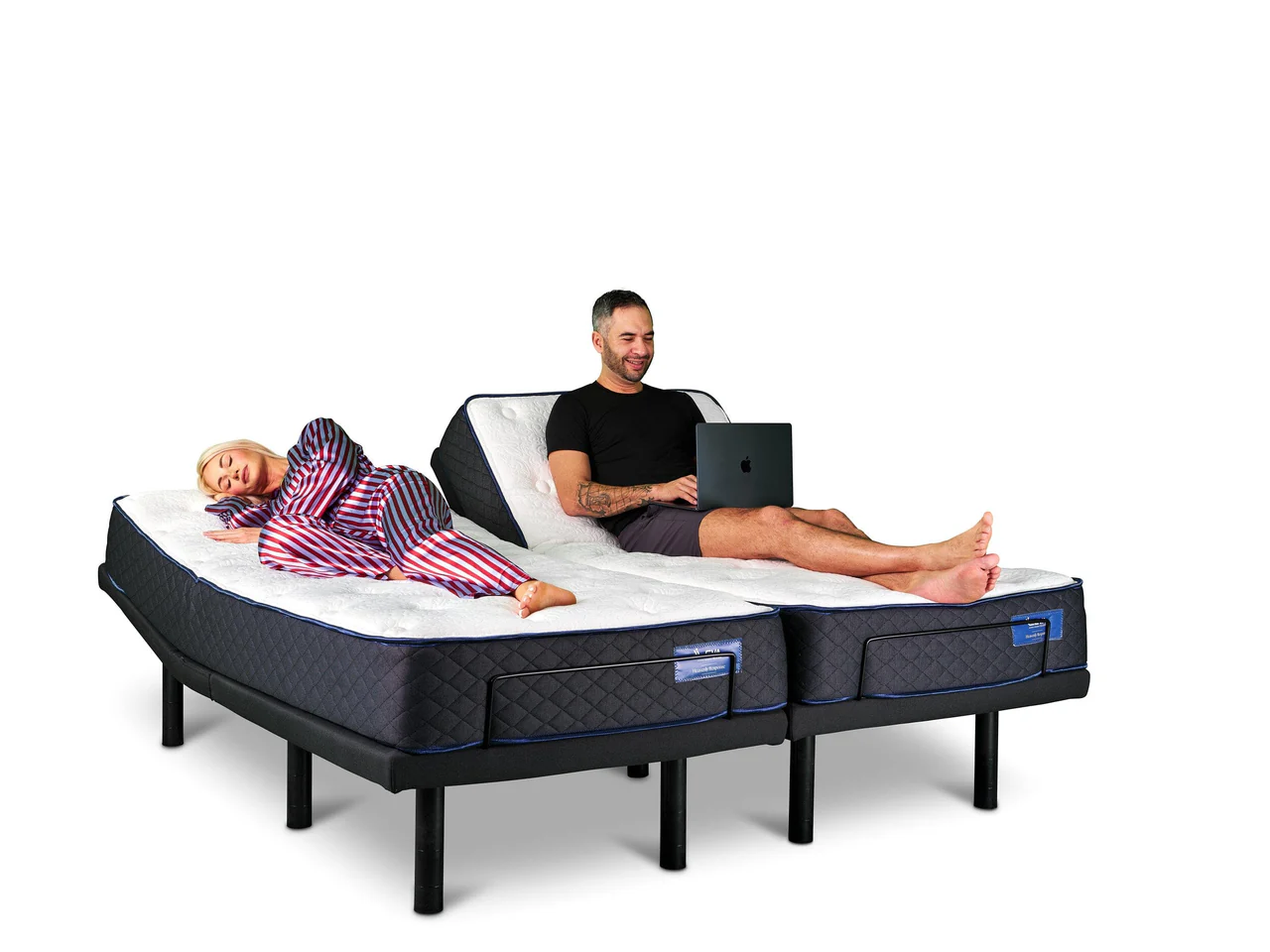
Split configurations let each partner choose different firmness levels and positions without compromise. This independence is the foundation for couples with different sleep needs. A single-unit base with one motor cannot provide true independence, no matter how advanced its app appears.
Leva Sleep’s Split Queen and Split King bases use independent motors on each side, controlled through the Leva Sleep app. This setup matters especially for couples in smaller rooms. The Split Queen is a rare option that delivers split independence without requiring a king-sized footprint.
3. Anti-Snore Automation Depth and Control
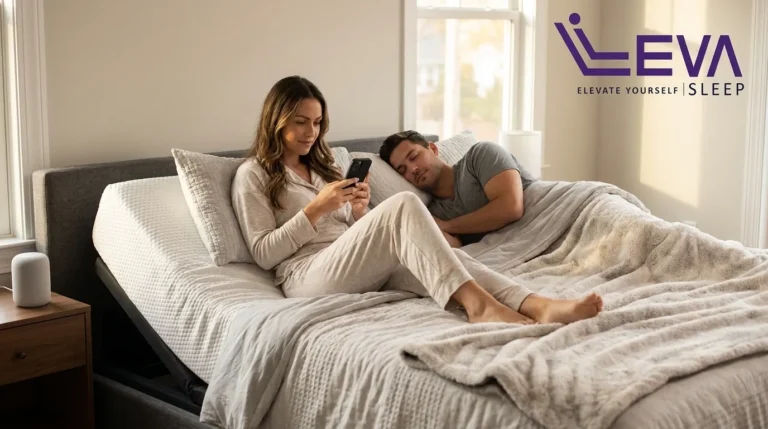
Anti-snore features vary from a simple preset angle to sensor-driven micro-adjustments. The most capable systems detect snoring acoustically or through wearable data and then raise the head on the snoring partner’s side only. The other side stays undisturbed. Check whether the anti-snore response is manual, scheduled, or truly reactive.
Leva Sleep’s anti-snore mode is designed to detect snoring and adjust the head of the bed automatically. For Home Assistant users who want a custom routine, the following YAML automation shows how to trigger a head raise when snoring is detected, which illustrates the level of control an open API can provide:
automation: - alias: "Anti-Snore Head Raise" trigger: platform: state entity_id: binary_sensor.snore_detected to: "on" action: service: script.raise_head_side_a data: angle: 7
Voice command equivalent: “Alexa, raise the head of my side to anti-snore position.”
The first three criteria focus on the core problem for couples: independent control and reactive snoring response. If a bed fails on any of these, the remaining features become secondary. Explore Leva Sleep’s split bases with independent motors and anti-snore automation at the La Jolla showroom or online.
4. Noise Levels During Nighttime Adjustments
The next three criteria – noise, API openness, and price – separate beds that look impressive in a showroom from beds that work reliably in a real smart home over many years.
Motor noise often becomes a hidden dealbreaker. A base that grinds or clicks during a 2 a.m. adjustment undermines the benefit of automation. Cloud-dependent architectures can add latency to every command, but mechanical noise feels immediate and physical. Ask vendors for decibel ratings or request an in-showroom demonstration with weight on the bed.
Leva Sleep’s bases use whisper-quiet German motors that are engineered to reduce acoustic disruption. Quiet operation matters most when automation routines run while you sleep. An anti-snore adjustment at 3 a.m. should not wake the partner it is meant to help.
5. API Openness for Deeper Automation
The “Works with Alexa” badge confirms only basic on/off control and status reporting. It does not promise local control, full attribute access, or smooth cross-platform use. An open API or local REST endpoint lets Home Assistant and similar platforms read and write all device attributes, such as head angle, foot angle, massage intensity, and lumbar position, without relying on the manufacturer’s cloud.
Fragmented ecosystems slow smart home development by forcing multiple control interfaces. Open-platform beds avoid this problem and deliver stronger long-term value. Ask vendors to share API documentation before you commit.
6. Price-to-Integration Value for Smart Features
Premium closed-ecosystem beds from brands like Sleep Number or Bryte bundle proprietary sensors and apps into a single high price. The Sleep Number Climate360 offers per-side temperature and position control, yet its ecosystem remains closed, so automation depth stays limited to what Sleep Number’s app exposes.
Leva Sleep prices its split bases 30–50% below comparable competitors by removing retail middlemen and pairing the bases with U.S.-made mattresses from brands such as Airloom and Helix. This combination delivers open-ecosystem integration at a price that does not force a choice between smart-home depth and mattress quality.
Criteria 4 through 6 highlight which beds stay quiet, connect openly, and justify their price over years of daily use. See how Leva Sleep’s open-platform bases provide whisper-quiet operation and API access at the La Jolla showroom or online.
7. Delivery Experience and Professional Setup
An adjustable base with split motors, lumbar controls, and app connectivity requires careful setup. Problems such as misaligned split sections, incorrect leg height, or unpaired Bluetooth can persist for the life of the bed. White-glove delivery by trained technicians prevents these issues.
At the price point mentioned earlier, Leva Sleep’s in-house white-glove delivery service includes bedroom placement, full assembly, leg-height adjustment, app pairing, a product walkthrough, and removal of the old bed. This approach clearly differs from “bed in a box” brands that ship via freight and leave all setup tasks to the customer.
8. Lifespan, Firmware, and Long-Term Support
More manufacturers now support cross-platform standards like Matter to reduce friction over time. Even with these standards, firmware updates, app shutdowns, and cloud deprecations still create real risks for closed-ecosystem beds. A base that depends entirely on a manufacturer’s cloud server turns into a standard adjustable base the day that server goes offline.
Review warranty terms, motor replacement policies, and whether the base keeps manual or local-network control if cloud services end. Leva Sleep has operated for more than eight years and served over 25,000 customers, which provides a track record that newer direct-to-consumer brands cannot yet match.
Ecosystem Compatibility Comparison Across Smart Bed Architectures
The table below compares how different smart bed architectures perform across major platforms. Matter-certified bases offer the broadest native support, while proprietary ecosystems such as Sleep Number limit automation to their own apps.
| Platform | Native Alexa Support | Native Google Home Support | Home Assistant Support | HomeKit Support |
|---|---|---|---|---|
| Matter-certified bases | Yes (via Matter controller) | Yes (via Matter controller) | Yes (via Matter controller) | Varies by device |
| Cloud-bridged bases | Partial (basic on/off) | Partial (basic on/off) | Via custom integration | Rarely |
| Proprietary-only bases (e.g., Sleep Number) | App-only ecosystem | App-only ecosystem | Limited/unofficial | No |
Vendor Lock-In vs. Open Platforms in Daily Use
This comparison shows how closed and open ecosystems differ in real-world performance. Open platforms usually deliver faster responses, deeper automation, and lower long-term risk.
| Attribute | Closed Ecosystem | Open/Local Platform |
|---|---|---|
| Command latency | Higher (cloud-routed) | Under 100 ms (local hub) |
| Automation depth | Limited to vendor app features | Full attribute access via API |
| Cross-platform risk | High (fragmented ecosystems) | Low (Matter/open standards) |
| Cloud dependency | High (server uptime risk) | Low (local processing) |
People Also Ask
Are smart beds worth it for couples?
Split configurations let each partner choose different firmness levels, temperatures, and positions without compromise. This setup addresses the most common source of shared-bed frustration. For couples where one partner snores, runs hot, or needs elevation for a medical condition, a split smart base removes the tradeoff between comfort and closeness. The value depends on whether the bed’s automation features stay open or remain locked to a proprietary app.
What is the best smart bed for snoring automation?
The strongest snoring automation combines acoustic or wearable-based snore detection with independent per-side head elevation. A bed that raises both sides at once does not solve snoring and instead creates a shared disruption. Check whether the anti-snore response is reactive through sensors or manual through presets, and confirm that it works on one side at a time. Leva Sleep’s anti-snore mode, arriving spring 2026, is designed to detect snoring and make micro-adjustments to the affected partner’s side only.
Are there any downsides to smart beds?
Cloud-dependent architectures add latency and server-uptime risk, and fragmented ecosystems can require multiple control interfaces. Setup is more complex than a standard flat bed, especially for split configurations with independent motors. Proprietary ecosystems can become obsolete if the manufacturer shuts down cloud services. Choosing open-platform bases, professional white-glove setup, and vendors with proven operational history reduces these downsides.
Frequently Asked Questions
Is it safe to sleep on an adjustable base every night?
Adjustable bases are built for nightly use. The key safety factor is pairing the base with a mattress designed for articulation, since standard innerspring mattresses can wear out when flexed repeatedly. Leva Sleep designs all-foam and hybrid pocket-coil mattresses specifically for adjustable bases.
How much does a split adjustable base with smart-home integration typically cost?
Split bases with basic app control and fully featured models with quiet motors, lumbar control, anti-snore modes, and open-ecosystem integration span a wide price range. Leva Sleep prices its split bases 30–50% below comparable closed-ecosystem competitors by selling direct-to-consumer without retail markup.
What are the setup steps for connecting a smart base to Home Assistant?
First, confirm that the base exposes a local API, REST endpoint, or supports Matter. Second, install the matching Home Assistant integration or custom component. Third, map device attributes such as head angle, foot angle, massage, and lumbar to Home Assistant entities. Fourth, build automations that use those entities as action targets. Fifth, test each routine manually before enabling sleep-time triggers. If the base is cloud-only, a cloud polling integration can still work but will respond more slowly.
When should a couple consult a physician before purchasing a smart adjustable base?
Consult a physician if either partner has diagnosed sleep apnea, uses a CPAP machine, has had recent spinal surgery, or experiences chronic back or joint pain. A physician or physiotherapist can suggest specific elevation angles and positions that the adjustable base should match. Leva Sleep’s team can apply physician-recommended position settings during the white-glove setup visit.
Does Leva Sleep offer a Split Queen, and why does it matter?
Yes. The Split Queen is a rare configuration in the adjustable base market. While Split King is common and requires a king-sized bedroom, the Split Queen delivers the same per-side independence in a queen footprint. This option extends the split-bed benefits described earlier to couples in standard-sized bedrooms who do not want to give up split functionality.
Conclusion: Choosing a Smart Bed That Fits Your Home and Routine
The eight criteria in this guide – ecosystem compatibility, split independence, anti-snore depth, noise levels, API openness, price-to-integration value, delivery experience, and lifespan – create a complete framework for couples evaluating smart beds. No product excels on every point without tradeoffs, yet those tradeoffs become clear when you apply the criteria step by step.
A practical way to begin is with one automation routine. Set up a bedtime scene that adjusts both sides to preferred positions, dims the lights, and sets the thermostat. From there, you can add anti-snore triggers, wake-up routines, and temperature schedules over time. The bed that supports this progression without forcing a proprietary ecosystem or waking you with a loud motor at 3 a.m. is the one worth bringing home.
Compare Leva Sleep’s smart split bases, visit the La Jolla showroom, or start your order online.