Written by: Matthew Timmins, Founder and Managing Director, Leva Sleep
Key Takeaways for Couples Sharing a Bed
- Three technology categories, anti-snore elevation, dual-zone climate control, and motion-isolating split bases, target the main causes of sleep divorce before couples resort to separate rooms.
- Adjustable bases with head elevation reduce snoring by decreasing upper airway collapsibility and promoting sinus drainage, which helps partners stay together in one bed.
- Split King and Split Queen bases provide independent temperature zones and motion isolation, which eliminates thermostat disputes and partner movement disturbances.
- Lower-cost options like wedge pillows and zoned toppers offer partial relief, but full split adjustable systems deliver independent elevation, automated snore detection, and complete dual-zone control.
- Leva Sleep’s Split King and Split Queen systems integrate all three solutions with whisper-quiet motors and app-controlled presets. Shop Leva Sleep today to protect your shared sleep.
Adjustable Bases That Help Snoring Couples Stay in One Bed
A snoring partner causes bedmates to lose an average of 1–2 hours of sleep per night. Over weeks and months, that sleep loss builds into chronic fatigue, emotional friction, and sometimes the decision to sleep in separate rooms.
The mechanism behind elevation therapy is straightforward. Raising the head of the bed, such as 7.5° or 30° HOBE, decreases upper airway collapsibility and helps keep the airway open during sleep. Different elevation angles can reduce snoring to different degrees. Elevation also promotes sinus drainage, which addresses congestion as a secondary snoring trigger.
These effects explain why specific base features matter for snoring relief. When you evaluate an adjustable base for a snoring partner, focus on criteria that support consistent, quiet elevation.
When evaluating an adjustable base for snoring relief, consider the following criteria:
- Whether the base offers a dedicated anti-snore preset or automated detection mode.
- The maximum head elevation angle and whether it reaches at least 20–30 degrees for moderate snoring.
- The loudness of the motors during adjustment, since noisy movement can wake a light sleeper.
- Availability in a split configuration so the non-snoring partner’s side remains undisturbed.
- Whether the paired mattress flexes without resistance at the elevation angles you require.
Explore Leva Sleep’s anti-snore adjustable bases at the La Jolla showroom or online.
Split King and Split Queen Bases for Temperature and Motion Conflicts
Elevation can calm snoring, but couples often face other disruptors that push them toward separate rooms. Temperature disagreement affects about 75% of American couples, and men and women often prefer different bedroom sleep temperatures. Partner motion also matters, since movement transfer can cause more arousals per hour and reduce shared-bed sleep efficiency.
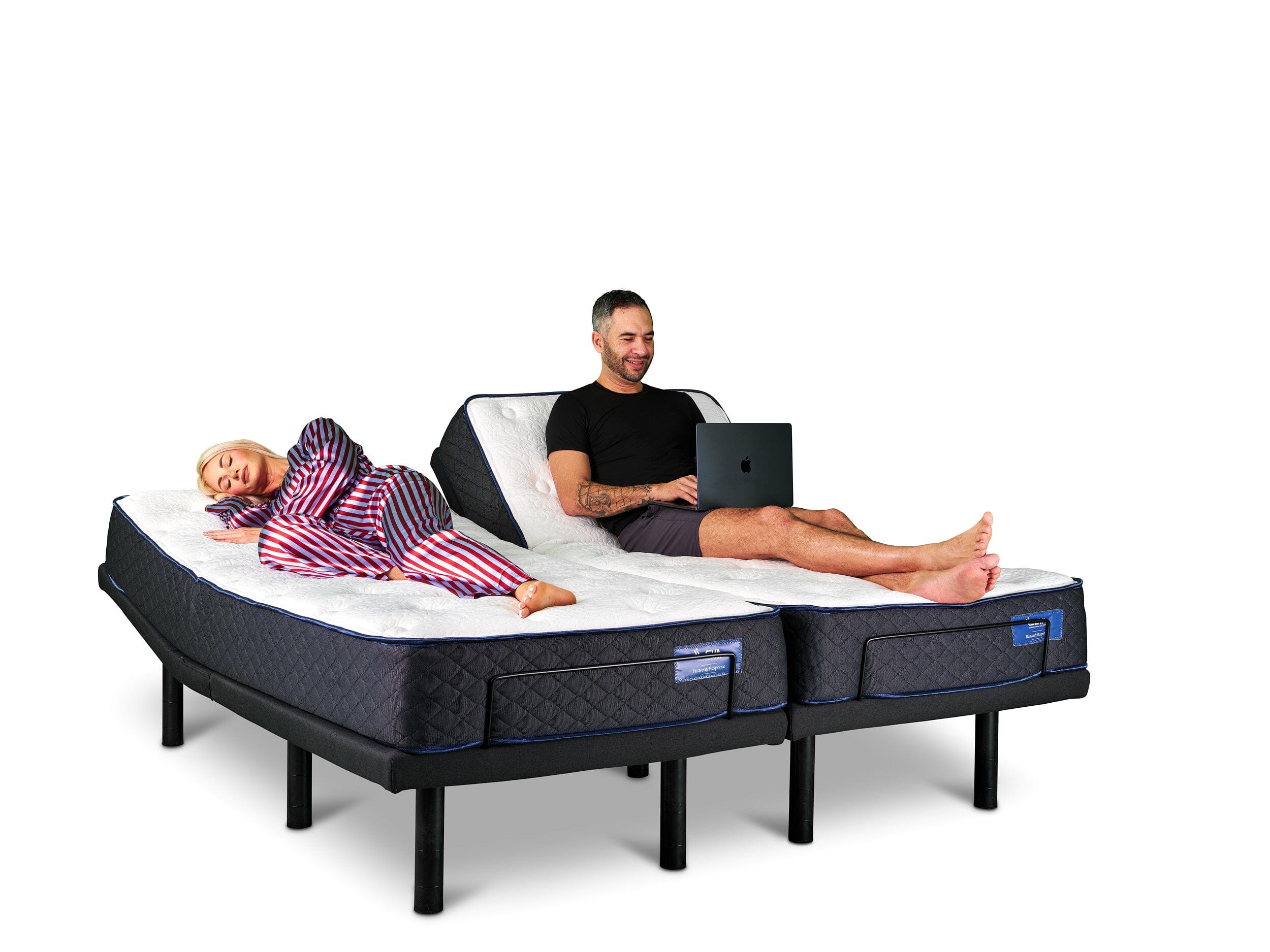
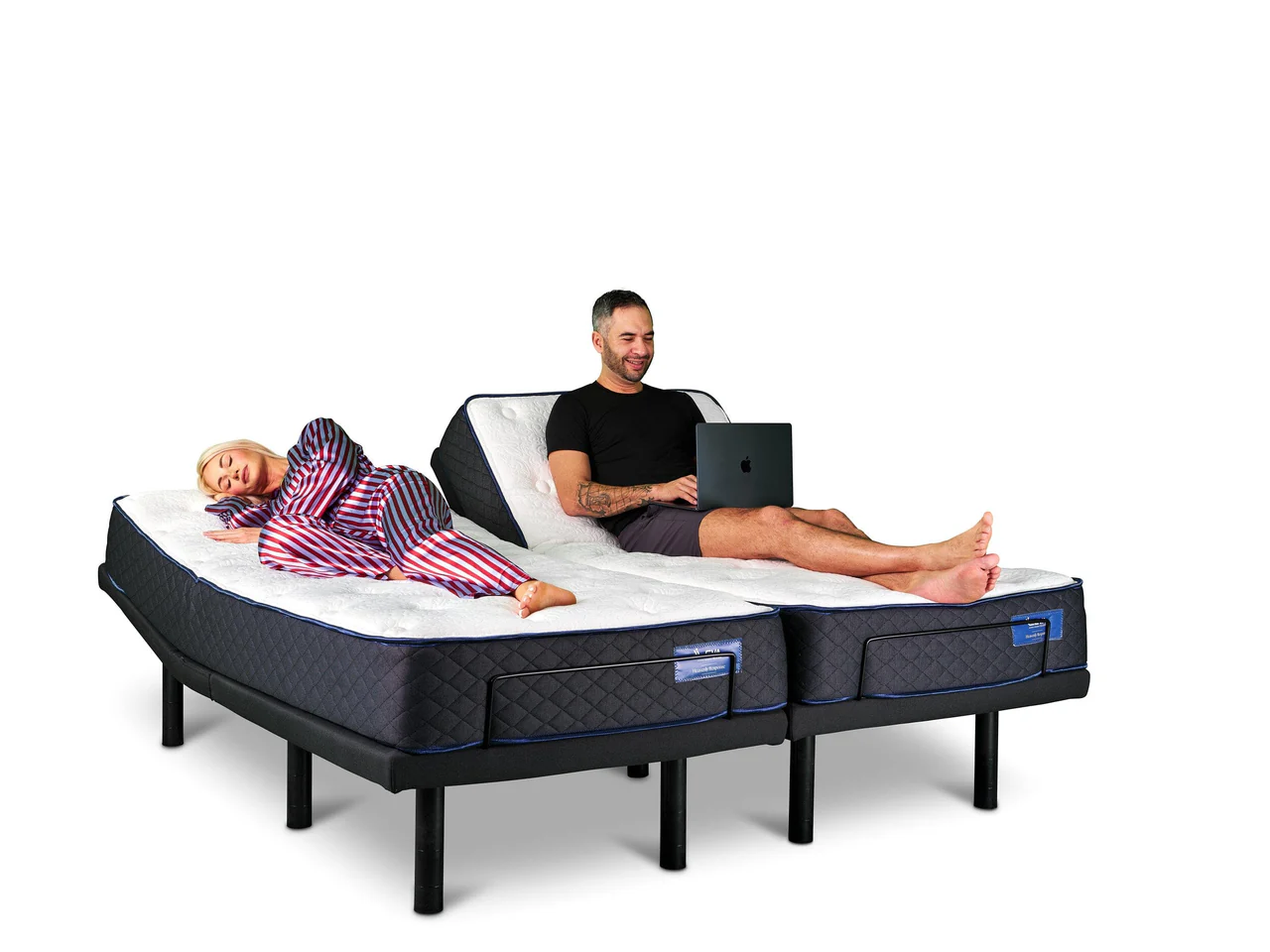
A Split King or Split Queen adjustable base addresses both problems through two independent mechanisms. Each side gains its own climate and its own motion response, so one partner’s needs do not override the other’s comfort.
Dual-zone climate control assigns each side of the bed its own temperature setting. Systems that integrate a heating and cooling pad, like those compatible with Leva Sleep’s adjustable bases, circulate air independently beneath each sleeper. This setup removes the nightly negotiation over thermostat settings. Each partner selects a preferred temperature through the Leva Sleep app without affecting the other side.
Motion-isolating split bases physically separate the two sleep surfaces at the center of the bed. Pocketed coil hybrids and all-foam mattresses isolate motion significantly better than innerspring or continuous coil mattresses. Pairing either construction with a split base eliminates cross-transfer entirely. One partner’s 3 a.m. position change does not register on the other side.
Leva Sleep offers both Split King and Split Queen configurations. The Split Queen is a rare option in the market and provides split-base benefits in a smaller footprint. Each side operates independently for elevation, massage intensity, and temperature. Couples can control each side through the app or a dedicated remote.
When evaluating a split adjustable base for temperature and movement conflicts, consider:
- Whether the base offers fully independent controls for each side, including elevation, massage, and temperature.
- Availability of a Split Queen if a King footprint does not fit the bedroom.
- Which mattress constructions are compatible and whether the retailer offers paired mattresses designed to flex with the base.
- Whether the app allows each partner to save personal presets without overwriting the other’s settings.
- How the gap between split sides is managed and whether the system includes a center fill or connector to reduce a noticeable seam.
Budget-Friendly Options and When to See a Physician
Some couples start with lower-cost tools before moving to a full Split King system. Positional wedge pillows that elevate the head 10–15 degrees offer a budget-friendly starting point for mild snoring. Temperature-regulating mattress toppers with separate zones provide an entry-level alternative to integrated climate control. These options address symptoms partially but do not provide independent elevation, automated snore detection, or full dual-zone control like a purpose-built adjustable base.
Medical evaluation remains essential before you attribute chronic snoring or breathing disruptions solely to sleep position. Obstructive sleep apnea affects more than 32% of U.S. adults, and positional elevation, while helpful for snoring, does not replace a clinical diagnosis. Medical guidelines recommend an evaluation before beginning OSA treatment. If a partner’s snoring includes gasping, witnessed apneas, or excessive daytime sleepiness, a sleep study is the appropriate first step. CPAP therapy is highly effective for diagnosed OSA, and adjustable base elevation can complement, not replace, prescribed treatment.
Adjustable Base Buying Checklist for Couples
| Criterion | What to look for | Leva Sleep feature | General market alternative |
|---|---|---|---|
| Mattress compatibility | Mattress must flex to at least 20–30° without resistance or damage to internal components. | All-foam and pocketed coil hybrids designed specifically for Leva adjustable bases; pocketed coils isolate motion better than innerspring. | Standard mattresses sold separately, with compatibility at base elevation angles not guaranteed. |
| Delivery and setup | White-glove in-room setup, old bed removal, product tutorial, and leg-height adjustment. | In-house white-glove delivery team, with setup, tutorial, and old bed removal included for a fee. | Curbside or threshold delivery common, with self-assembly required for most bed-in-a-box brands. |
| Warranty and support | Manufacturer warranty on base motors and frame, plus direct brand support without third-party intermediaries. | Direct-to-consumer brand with specialist support from adjustable base experts across 15–20 models. | Warranty handled through a general retailer, where adjustable bases are often treated as add-ons with limited specialist knowledge. |
| Noise levels | Motor noise during adjustment should not wake a light sleeper. Anti-snore micro-adjustments must operate without disturbing either partner. | Whisper-quiet German motors, with anti-snore mode that executes micro-adjustments silently. | Motor noise varies widely, and basic adjustable bases at general retailers are frequently cited for disruptive motor sounds. |
Decision Framework for Matching Problems to Solutions
Couples make better investments when they match the primary sleep disruptor to the technology most likely to resolve it. Use this framework to move from problem to solution in a clear sequence.
- Primary disruptor: snoring. Start with a Split King or Split Queen base that includes an anti-snore preset or automated detection mode. The snoring partner elevates their side to 10–30 degrees while the other side remains flat, which keeps both partners in one bed. Before you invest in elevation technology, rule out diagnosed OSA with a physician.
- Primary disruptor: temperature conflict. If snoring is not the main issue but thermostat battles are, prioritize a split base with integrated dual-zone climate control or a compatible heating and cooling pad. Each partner then controls their side independently through the app.
- Primary disruptor: partner movement. When motion transfer wakes one partner, select a split base paired with an all-foam or pocketed coil hybrid mattress. Physical separation of the two sleep surfaces eliminates cross-transfer entirely.
- Multiple disruptors present. Couples who face snoring, temperature conflict, and partner movement at the same time benefit most from a fully featured Split King or Split Queen system with anti-snore mode, dual-zone temperature control, and independent elevation. Leva Sleep’s systems are engineered specifically for this combined scenario.
Frequently Asked Questions
Is sleeping in an elevated position on an adjustable base safe for long-term use?
For most adults, sleeping with the head elevated 10–30 degrees on an adjustable base is safe and often helpful for spinal alignment, acid reflux reduction, and airway openness. Individuals with specific spinal conditions, recent surgery, or cardiovascular concerns should consult a physician before they adopt a significantly elevated sleep position. Leva Sleep’s adjustable bases allow incremental angle changes, so couples can start at a low elevation and adjust gradually instead of moving to a steep incline immediately.
How long does it take to adapt to sleeping on a split adjustable base?
Most couples adapt to a split adjustable base within one to three weeks. The initial adjustment period involves finding preferred elevation angles, massage settings, and temperature zones for each side. Leva Sleep’s app allows both partners to save personal presets, which shortens nightly setup time and speeds up the adaptation process. The center of a split base can feel slightly different from a unified surface, and Leva’s systems include design features that minimize any perceptible gap between the two sides.
Can an adjustable base replace a CPAP machine for sleep apnea?
No. An adjustable base is not a medical device and cannot replace CPAP therapy for diagnosed obstructive sleep apnea. Head elevation on an adjustable base can reduce positional snoring and mild airway obstruction. OSA still requires a clinical diagnosis through a sleep study and treatment prescribed by a physician. CPAP remains the most effective treatment for moderate to severe OSA. Adjustable base elevation can complement prescribed therapy, for example by making CPAP use more comfortable at a slight incline, but it does not substitute for professional medical care.
What is the difference between a Split Queen and a Split King adjustable base?
A Split King consists of two Twin XL mattresses side by side on two independent bases, totaling 76 inches wide, which matches the width of a standard King. A Split Queen consists of two smaller independent bases totaling 60 inches wide, matching standard Queen dimensions. Split Queens are significantly rarer in the market and work better for couples who want independent sleep controls but have a bedroom that cannot accommodate a King footprint. Leva Sleep is one of the few providers that builds Split Queen systems to customer specifications, with the same independent elevation, massage, and temperature controls available in the Split King configuration.
How does Leva Sleep’s anti-snore mode work, and does it wake the snoring partner?
Leva Sleep’s anti-snore mode, available in 2026 models, detects snoring acoustically and triggers micro-adjustments to the head of the snoring partner’s side of the base. The adjustments are gradual enough that neither the snoring partner nor their bedmate wakes from the movement. The whisper-quiet German motors in Leva bases operate below the threshold that would cause a micro-arousal in a light sleeper. Couples can also set manual anti-snore presets through the Leva Sleep app if they prefer a fixed elevation angle instead of automated detection.
Conclusion: Using Technology to Stay in the Same Bed
31–35% of U.S. couples have tried sleeping apart, and many reach that point after years of snoring, temperature fights, and motion conflicts. The solutions outlined in this guide give couples a practical path to stay together in one bed. Snoring often responds to 10–30 degree head elevation and automated anti-snore detection. Temperature conflicts ease when each partner controls an independent climate zone. Partner movement stops transferring when a split base physically separates the two sleep surfaces.
Leva Sleep’s Split Queen and Split King systems integrate these capabilities into a single, app-controlled platform, supported by whisper-quiet German motors, mattresses engineered for adjustable bases, and in-house white-glove delivery. For couples who suspect sleep apnea rather than positional snoring, a physician evaluation remains the essential first step before any technology solution.