Written by: Matthew Timmins, Founder and Managing Director, Leva Sleep
Key Takeaways
- Any flat, rigid, non-sagging base that meets the slat-gap rule can support an Aireloom mattress and maintain warranty coverage. No proprietary Aireloom foundation is required.
- Before buying a new foundation, confirm that your current base passes all six checklist items: slat spacing ≤3 inches, proper slat dimensions, flat surface, center support on larger sizes, rigid (not sprung) slats, and no structural damage.
- An inadequate base risks both warranty denial and faster mattress sagging, so replacing a non-compliant foundation or old box spring protects long-term performance.
- Adjustable bases are compatible with Aireloom hybrids and can reduce snoring, ease GERD symptoms, and improve circulation for many sleepers.
- Compare your existing base against the checklist with a Leva Sleep specialist at the La Jolla showroom or online before you commit to any new foundation purchase.
Aireloom Foundation Standards You Can Actually Use
Aireloom mattresses use premium hybrid constructions that combine foam comfort layers with an innerspring core. That build needs a firm, even surface for proper support. Manufacturer guidance varies by brand: Serta requires slat gaps of 2 inches or less for hybrid mattresses, while Purple allows up to 3.5 inches. A center support leg is essential for Queen and larger bed frames with slats to prevent bowing and ensure even mattress support.
Use this checklist to evaluate any existing base before you purchase a replacement:
- Slat spacing is no greater than 3 inches, with 2 inches preferred for hybrid constructions.
- Each slat is at least 2 inches wide and approximately 0.75 inches thick. A 1-inch thickness is recommended for sleepers over 200 pounds to prevent bowing that effectively widens gaps over time.
- The surface is completely flat with no visible sag or broken slats.
- Queen, King, and California King frames include a center support rail running head to foot with at least one leg touching the floor.
- Slats are solid and rigid, not sprung or flexible. Solid rigid slats made from pine, birch, or eucalyptus provide consistent firm support for hybrid mattresses.
- The frame shows no bowing, cracking, or structural damage.
If every item on that list is satisfied, the current base is acceptable and no replacement is required. If one or more items fail, the base creates both a warranty risk and a performance risk, so a replacement becomes the safer choice.
Aireloom Warranty Rules and Foundation Risk
Aireloom does not publish its full warranty text in a publicly indexed FAQ, but its requirements match the industry standard. All major premium mattress manufacturers exclude warranty coverage for damage linked to improper support. Stearns & Foster, for example, excludes coverage for damage associated with an improper bed frame, foundation, or adjustable base. Brands such as Amerisleep and Saatva set similar rules around slat-gap limits and center support on larger sizes.
The practical risk of an inadequate base falls into two categories. Manufacturers photograph the support surface during warranty claims and deny coverage when gaps exceed specifications, even when the mattress itself is not defective. Using a mattress on a support system with slat gaps wider than 3 inches also accelerates premature sagging and stretching of mattress layers, which shortens mattress life.
An old box spring creates a specific and common problem. Placing hybrid mattresses on box springs, especially hollow modern versions, provides inadequate center support, accelerates sagging, and may void the manufacturer’s warranty. A traditional box spring does not meet the rigid, non-yielding standard that premium hybrid mattresses require.
How Adjustable Bases Work With Aireloom Mattresses
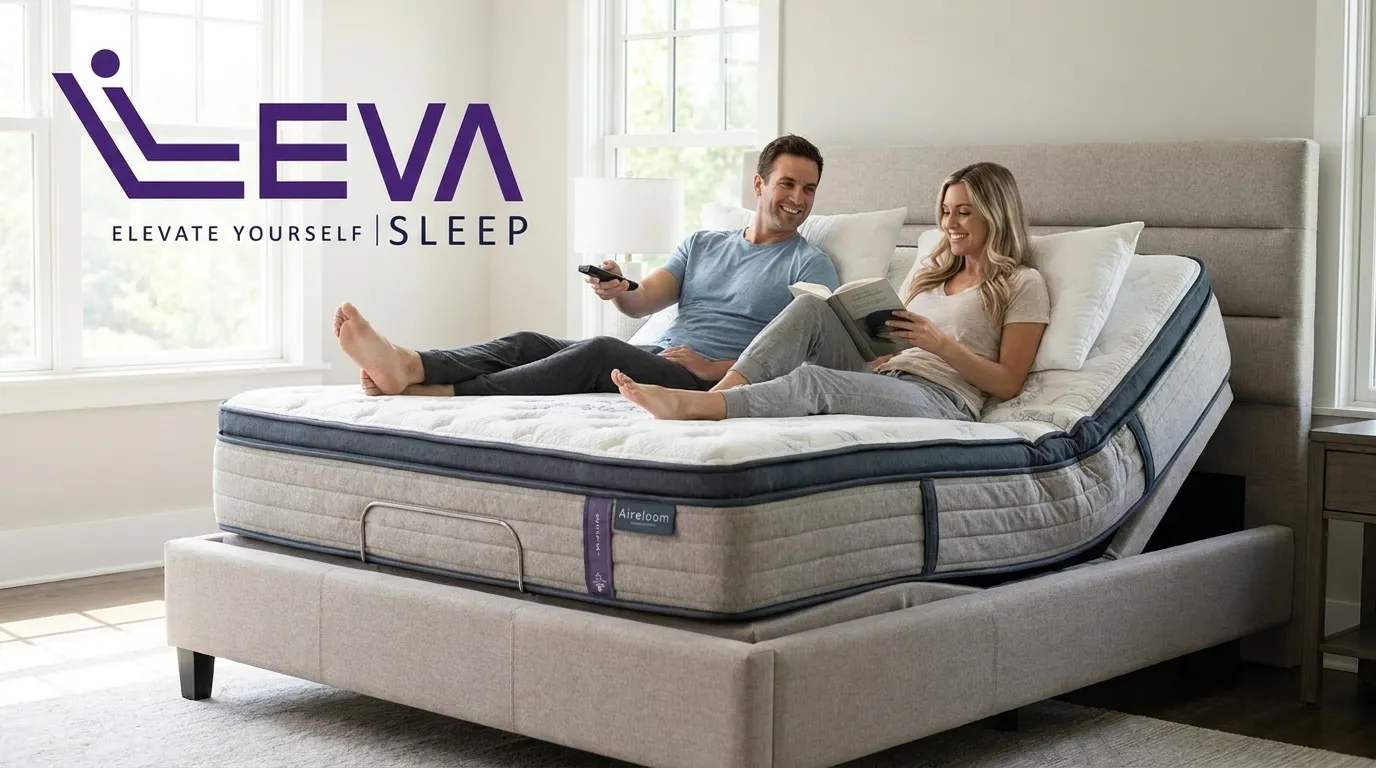
A quality adjustable base satisfies the same rigid, non-sagging platform standard as a flat foundation. Modern adjustable bases use engineered platforms that maintain rigid support at every articulation point whether the head, foot, or both are raised. Aireloom’s hybrid construction, which combines foam comfort layers with a pocketed coil system, works well on adjustable bases because memory foam, latex, and pocketed coil hybrid mattresses flex freely on adjustable bases, while traditional Bonnell or offset coil innerspring mattresses resist flex.
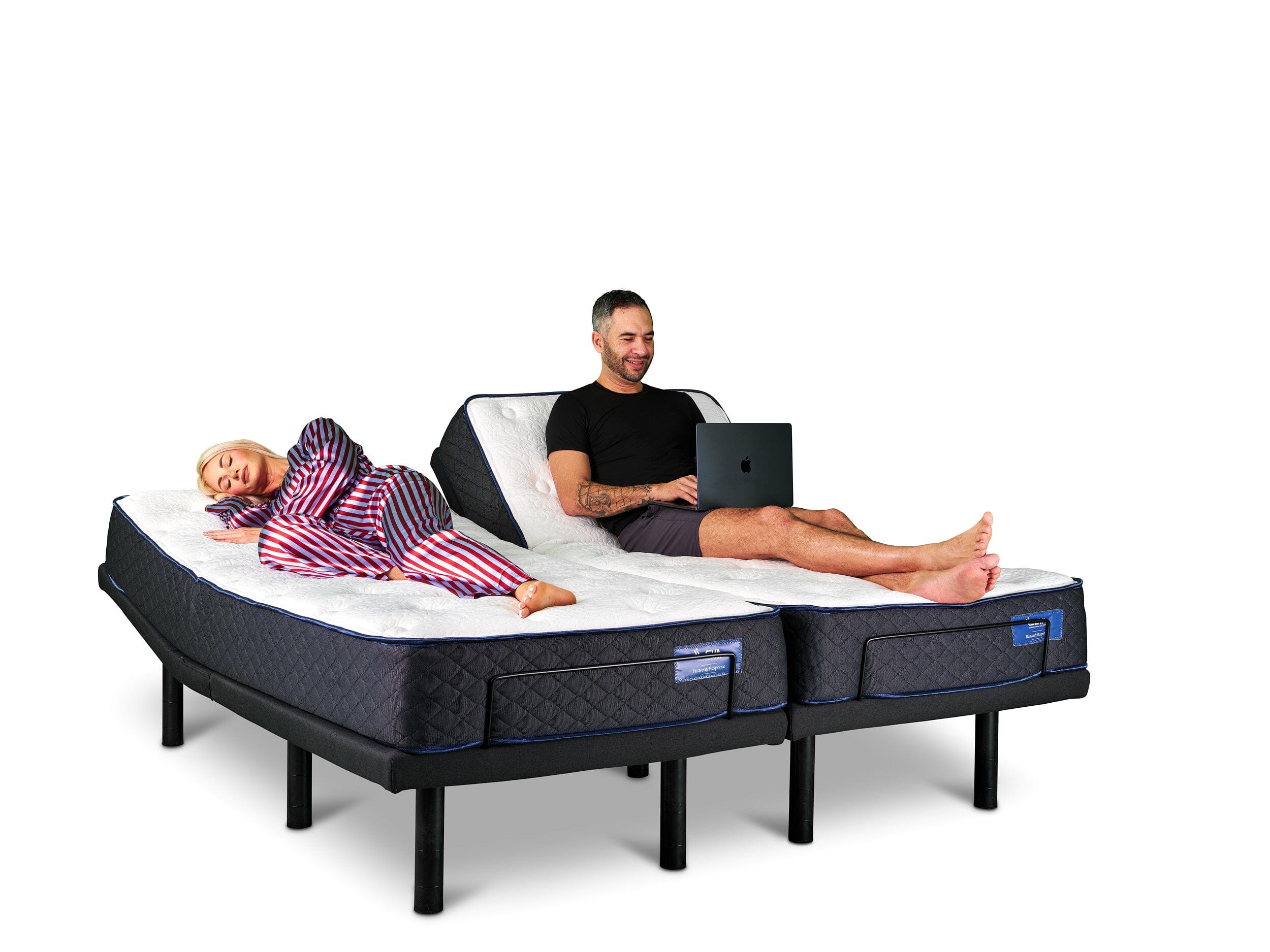
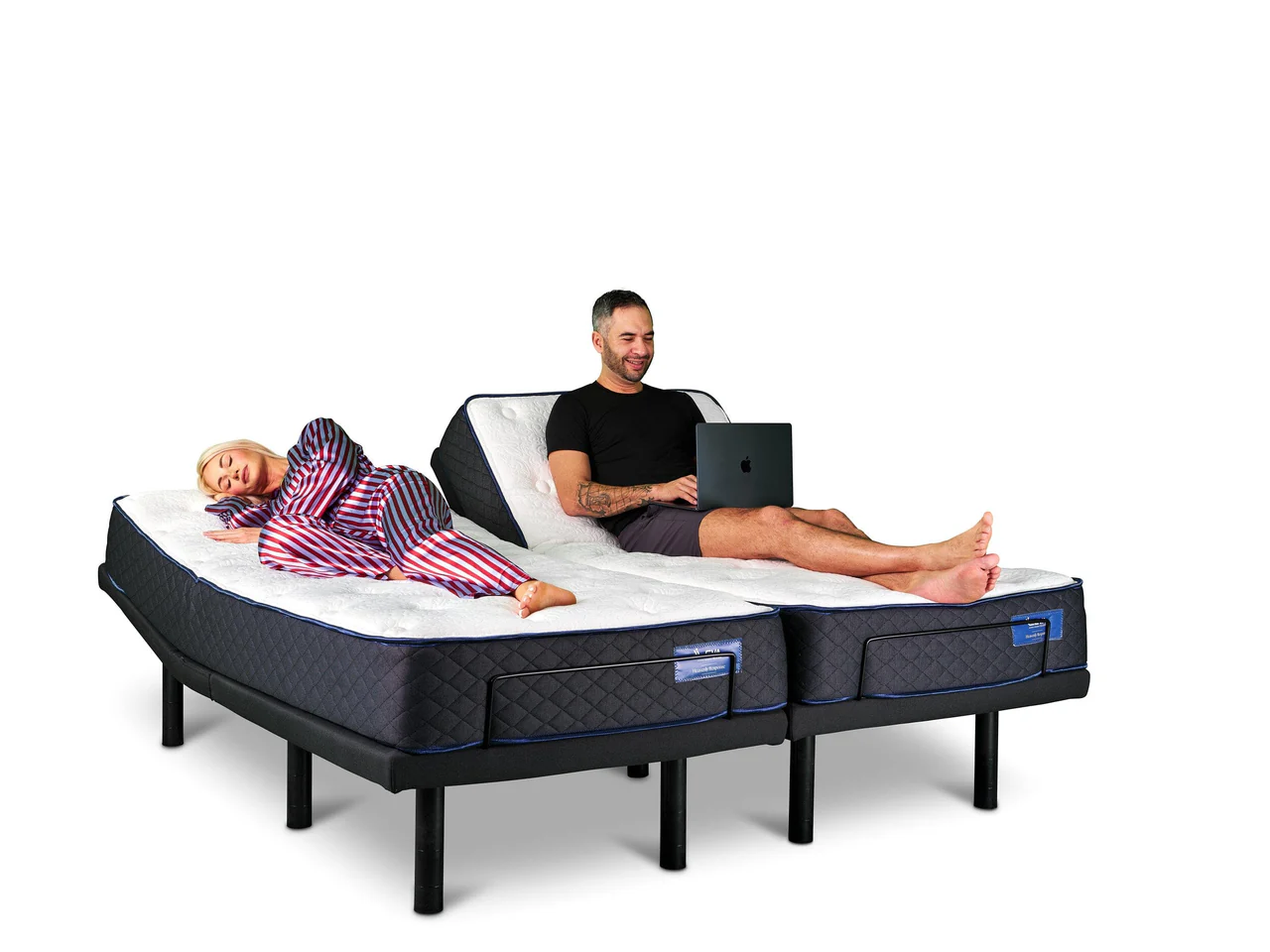
A split-king adjustable system pairs two Twin XL bases side by side under a king-size Aireloom. Each partner can adjust head and foot elevation independently without disturbing the other side. That configuration meets the flat, rigid platform requirement when both sides are level and adds independent positioning when elevated.
The clinical case for adjustable positioning is well documented. Elevating the head of an adjustable bed can reduce symptoms of GERD and heartburn, may help keep airways open to reduce snoring and obstructive sleep apnea symptoms, and elevating the legs can support circulation and reduce swelling from edema. The zero-gravity position, which elevates both head and knees simultaneously, reduces lumbar spine compression by distributing body weight more evenly and lowering mechanical load on intervertebral discs.
Leva Sleep’s adjustable bases use whisper-quiet German motors and full app control with custom sleep position memory. Split configurations include the rare Split Queen for smaller rooms. White-glove delivery includes professional setup, leg-height adjustment, a product tutorial, and removal of the old base.
Choosing Between a Traditional Foundation and an Adjustable Base
The right foundation choice depends on cost, current health needs, partner compatibility, and long-term usability.
Cost: A quality flat platform foundation for a king-size bed typically costs $200–$600 at retail. A premium adjustable base in the same size usually runs $1,500–$4,000 depending on features, while Leva Sleep’s direct-to-consumer model prices its systems about 30–50% below comparable retail competitors.
Health needs: A flat foundation works when both partners sleep comfortably without positional health concerns. An adjustable base becomes the better choice when either partner manages snoring, mild sleep apnea, acid reflux, lower back pain, hip or knee pressure, or post-surgical recovery positioning. Always consult a physician or sleep specialist before using adjustable positioning to manage a diagnosed medical condition.
Partner compatibility: A flat foundation offers no independent adjustment. A split adjustable system allows each partner to set a different head and foot elevation, which addresses a common source of sleep conflict in couples without requiring separate beds.
Long-term usability: Quality adjustable bases typically last 8–15 years, or 10–20 years with proper care, while most mattress foundations last 7–10 years. Most buyers make this upgrade once and often do so at a stage of life when positional sleep benefits matter most.
Frequently Asked Questions
Does using a non-Aireloom foundation void the warranty?
No. Aireloom’s warranty, like those of other premium mattress brands, is tied to structural performance standards, not brand exclusivity. Any base that is flat, rigid, non-sagging, and meets the slat-gap requirement satisfies the warranty’s support criteria. Keep documentation of the base you use, including purchase receipts and photos, in case a warranty claim requires proof of the support surface.
Is my old box spring safe to use under an Aireloom mattress?
Almost certainly not, for the reasons covered earlier. Box springs flex under load and do not provide the rigid, non-yielding surface Aireloom hybrids need. Replace a box spring with a solid platform, a properly spaced slatted frame, or a compatible adjustable base.
How do I fix a slatted frame with gaps that are too wide?
Several retrofit options restore compliant support without replacing the entire frame. Adding extra slats to bring spacing to 3 inches or less usually costs about $20–$40 in materials. A 1-inch bunkie board placed over existing slats runs about $50–$80 and creates a solid surface. A sheet of ¾-inch plywood cut to mattress dimensions costs about $30–$50 and achieves a similar result. Any of these options can bring a non-compliant frame into warranty-safe territory, but start with a structural inspection of the frame itself, checking for bowing, cracking, and center leg integrity.
Can a split-king adjustable base work under a standard king Aireloom mattress?
Yes. A split-king configuration uses two Twin XL adjustable bases placed side by side. When both sides are set flat, the combined surface functions as a single rigid platform identical in dimension to a standard king frame. Each side can then be elevated independently. Confirm with your Aireloom retailer that the specific model you own is a flex-compatible hybrid, because pocketed coil constructions handle adjustable articulation well, while older Bonnell coil designs may not.
What does Leva Sleep’s white-glove delivery include, and how does it work in San Diego?
Leva Sleep’s white-glove delivery service, available for a fee, covers delivery to the bedroom and full assembly of the adjustable base and mattress. The team adjusts leg height to an ergonomically recommended finished bed height, provides a product tutorial covering app setup and position programming, and removes the old base through donation or recycling. The service is available throughout the San Diego region, with the La Jolla showroom serving as the local hub for in-person consultations and live demonstrations before purchase.
When should I consult a physician before using an adjustable base for sleep apnea or snoring?
Head elevation on an adjustable base can reduce snoring and mild obstructive sleep apnea symptoms by shifting the position of the soft palate and tongue to open the airway. This positional approach does not replace a clinical diagnosis or prescribed treatment such as CPAP therapy. Consult a sleep physician or pulmonologist if snoring is accompanied by witnessed apnea episodes, daytime fatigue, morning headaches, or a prior sleep study diagnosis. A physician can confirm whether positional therapy is appropriate as a standalone measure or as a complement to existing treatment.
Your Next Step With Your Aireloom Foundation
The decision framework for your Aireloom foundation stays simple. Start by running the slat-spacing checklist against your current base. If it passes every point, you can keep what you have and avoid the cost of a new foundation.
If the base fails any item, you will need a new support system. At that point, compare a flat platform replacement with an adjustable base and decide which better serves your household’s health and comfort needs over the next decade.
When either partner manages snoring, back pain, reflux, or differing sleep preferences, an adjustable base from a specialist usually delivers more long-term value than a flat foundation at a similar total cost of ownership.