Written by: Matthew Timmins, Founder and Managing Director, Leva Sleep
Key Takeaways for Couples Comparing GhostBed and Leva Sleep
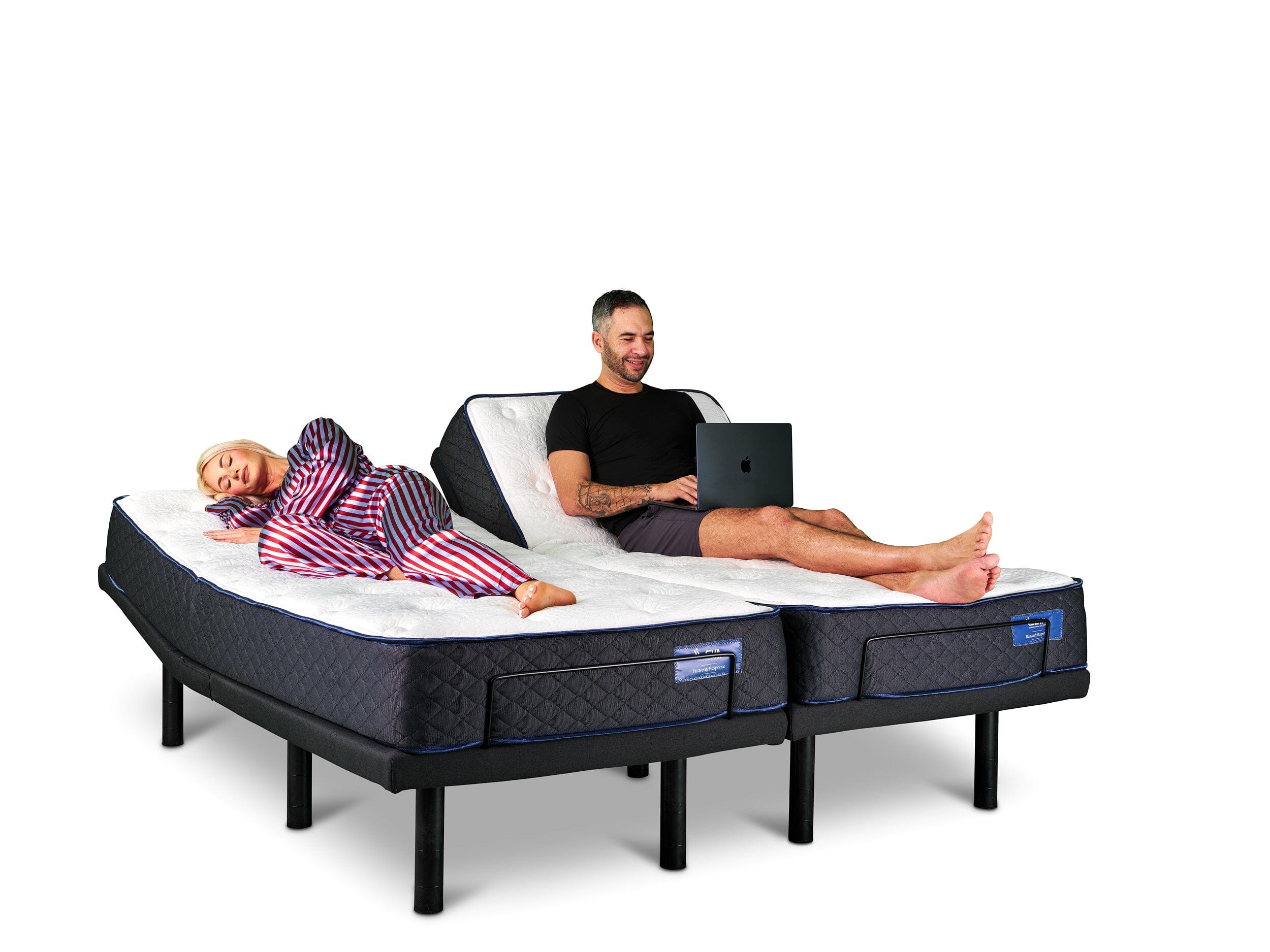
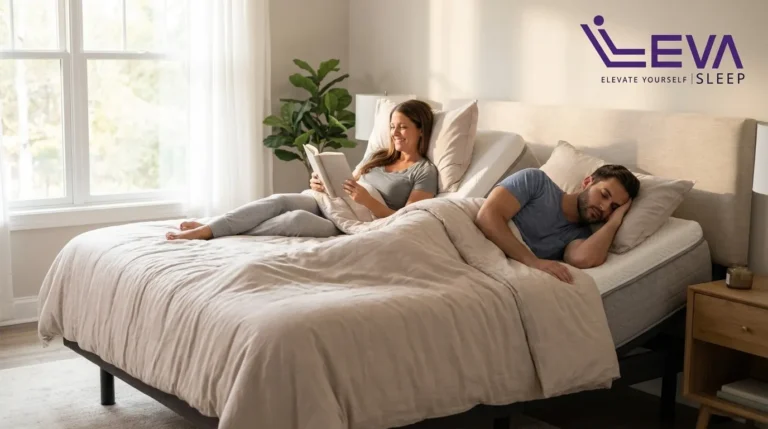
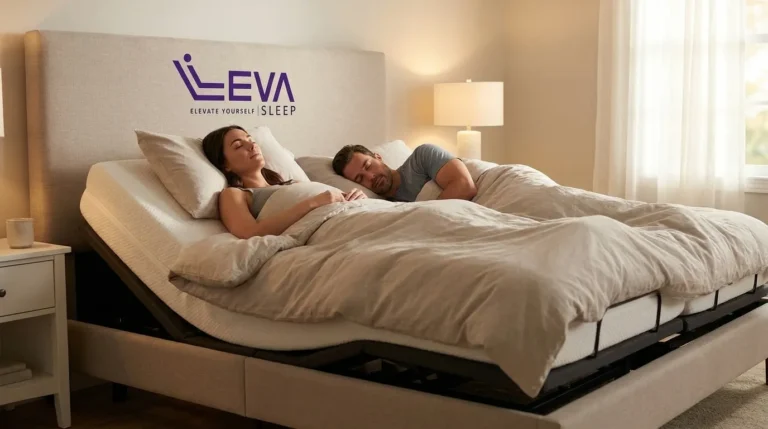
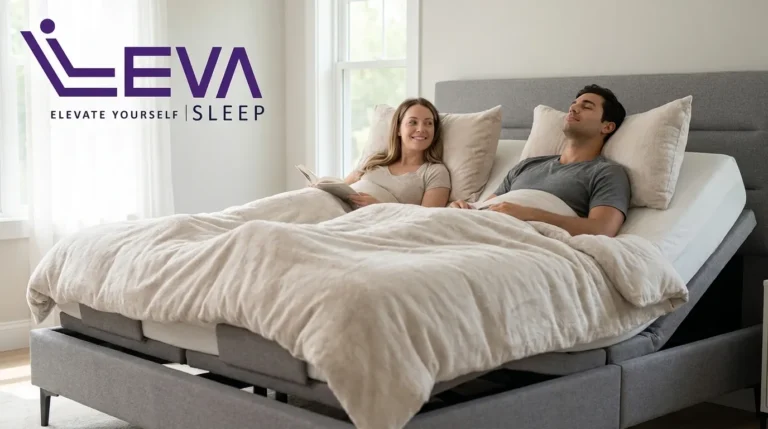
- Split-king adjustable bases end sleep compromise by giving each partner independent control over head, foot, and firmness.
- Leva Sleep’s German-engineered motors run whisper-quiet below 45 dBA, and its app-controlled anti-snore mode gently elevates the head without waking a partner.
- Leva Sleep’s split-queen configurations fit smaller bedrooms while still delivering independent positioning and firmness on each side.
- White-glove delivery, US-made mattresses, and 30–50% lower markup than luxury competitors position Leva Sleep as a high-value specialist alternative to mass-market bundles like GhostBed.
- See how Leva Sleep’s split-king and split-queen systems address real couple sleep issues at levasleepusa.com.
The Problem Keeping Couples From Sharing a Bed
Shared sleep is under measurable strain for American couples. A UK Biobank analysis found that habitual snoring is common among middle-aged adults, with higher rates among men, and prevalence climbs steadily through the 50s and 60s. The downstream effect on bed partners is significant: a Mayo Clinic study found that bed partners lost about an hour of sleep per night due to a snoring spouse, with treatment significantly increasing sleep quantity and quality.
Sleep separation already affects more than a third of adults. A 2023 AASM Sleep Prioritization Survey of 2,005 U.S. adults found that 35% of American adults have opted for a sleep divorce, occasionally or consistently sleeping in a separate room from their partner. The rate peaks among adults aged 35–44 at 39%. The four most cited reasons are snoring or sleep-disordered breathing, chronotype incompatibility, temperature differences, and movement or restless legs syndrome.
Physical pain compounds the problem and often affects only one partner. Dr. Raj Dasgupta, a quadruple board-certified physician in pulmonary, sleep, internal, and critical care medicine, stated in 2024: “An adjustable base is a great way to tweak your sleep setup, since it can help align the spine and take pressure off the joints. It can also help keep airways open by elevating your upper body, which may reduce snoring and ease mild sleep apnea symptoms.”
This dual benefit, which targets both respiratory and musculoskeletal issues, connects directly to broader pain management. Orthopedic surgeon John Hinson, MD, noted that “the zoned support of adjustable beds can help decrease pain for many orthopedic and spine conditions,” and that adjustable bases can also decrease insomnia, improve gastrointestinal issues including acid reflux, reduce leg swelling, and improve independence for those with mobility issues.
A flat mattress cannot address these variables independently for two people. A split-king or split-queen adjustable system provides a structural solution that removes forced compromise between partners.
Choosing Between Split Queen and Split King for Your Room
Room dimensions, per-person sleeping width, and base compatibility determine whether a split queen or split king works better for a couple.
| Criterion | Split Queen | Split King |
|---|---|---|
| Per-side dimensions | 30″ × 80″ | 38″ × 80″ |
| Combined footprint | 60″ × 80″ (standard queen) | 76″ × 80″ (standard king) |
| Minimum room size | Smaller bedrooms; existing queen base compatible | 12′ × 12′ recommended |
| Mattress availability | Less common; fewer manufacturer options | More common; wider selection |
Split queen configurations suit couples in smaller bedrooms or those with an existing queen adjustable base who want independent firmness or positioning without requiring king-size space. Leva Sleep is one of the few US specialists that builds split-queen systems to customer specifications, which stands out in a market where most brands offer only split-king configurations.
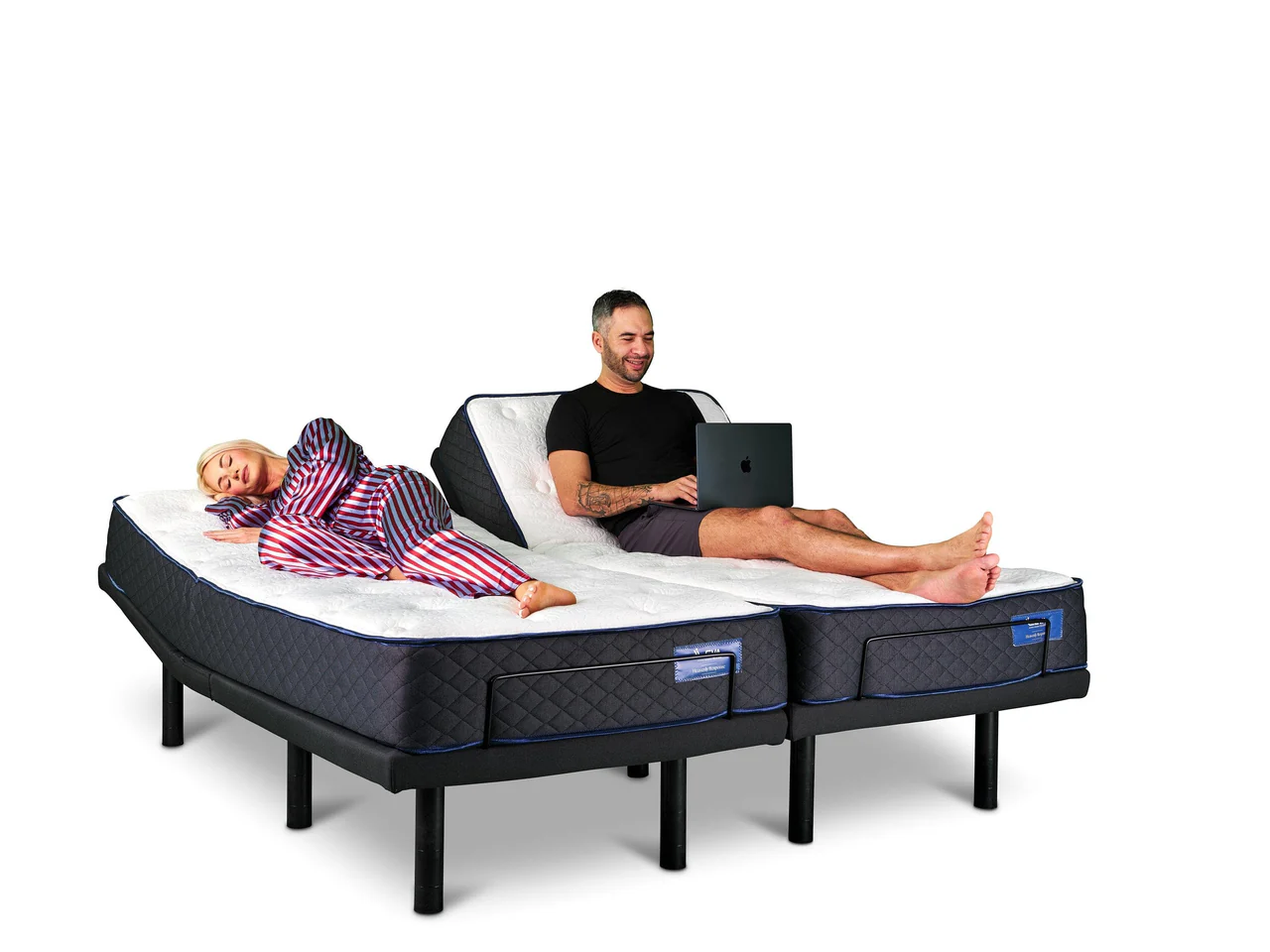
When partners’ firmness preferences differ by more than about three points on a 10-point scale, a split king is the most reliable solution, as a single mattress forces too many compromises. For couples with that level of divergence and sufficient room space, the split king provides the clearest path to long-term comfort.
Comfort, Support, and Adjustability: GhostBed vs Leva Sleep
Comfort, support, and adjustability determine whether an adjustable system can actually solve a couple’s sleep issues. GhostBed’s publicly documented bundle features appear below alongside Leva Sleep’s verified product specifications.
| Criterion | GhostBed | Leva Sleep |
|---|---|---|
| Independent head/foot control | Available on split-king bundle | Available on split king and split queen, app-controlled |
| Lumbar support | Not prominently featured in standard bundle | Dedicated lumbar control motor on higher-end bases |
| Pillow tilt | Not listed as standard feature | Pillow tilt motor included on select models |
| Mattress origin | Manufactured in the USA and Canada, using domestic and imported materials | Mattresses made in the United States |
These positioning features align with what sleep medicine specialists recommend. Dr. Dasgupta recommends adjustable bases specifically because “this flexibility allows you to find comfort, reducing pressure points in your back, hips or shoulders. Elevating the head or legs keeps your spine aligned, alleviates any muscle strain, and reduces pain symptoms of arthritis or sciatica by improving circulation and reducing swelling.” Leva’s lumbar control and pillow tilt motors directly support this range of positioning needs in a single integrated system.
Noise, Motion, and Health Impact for Light-Sleeping Couples
Motor noise strongly affects couples because one partner often adjusts position at different hours than the other.
| Criterion | GhostBed | Leva Sleep |
|---|---|---|
| Motor origin and noise level | Not specified as German-engineered; noise level not independently published | Whisper-quiet German motors; targets sub-45 dBA operation |
| Anti-snore mode | Standard preset elevation; no automated snore detection documented | App-controlled anti-snore mode with micro-adjustments to head elevation |
| Motion isolation between sides | Split-king base provides side independence | Split king and split queen both provide full side independence |
Sleepopolis’ 2026 testing identified below 45 dBA as the threshold for whisper-quiet motor operation, with many premium models falling in the 35–40 dBA range, comparable to gentle rainfall or a refrigerator hum. Motor noise ranks among the most important specs for adjustable beds because a noisy midnight adjustment can be genuinely disruptive to a partner who goes to bed earlier or later.
Research suggests that elevating the head of the bed may help reduce obstructive sleep apnea symptoms, and people who snore or have mild sleep apnea sometimes see a noticeable reduction in snoring intensity with the head elevated, since it can help keep airways more open.
Delivery, Warranty, and Long-Term Value in 2026
Real value in an adjustable bed extends beyond sticker price and includes delivery quality, warranty structure, and long-term durability.
| Criterion | GhostBed | Leva Sleep |
|---|---|---|
| Delivery model | Standard carrier delivery; sold through Costco and online channels | In-house white-glove delivery: bedroom setup, height adjustment, tutorial, old bed removal |
| Price positioning vs. comparable luxury tier | Mass-market bundle pricing | 30–50% lower markup than top comparable competitors |
| Adjustable model selection | Limited bundle configurations | 15–20 adjustable models versus 3–5 at standard retailers |
| Mattress manufacturing | Manufactured in the USA and Canada, using domestic and imported materials | Mattresses made in the United States; local assembly |
Reputable brands typically offer a warranty in the 10–25 year range on the frame and a shorter 1–3 year warranty on electrical components like the motor and control box. Buyers should confirm the exact split between structural and electrical coverage before purchasing any system. Modern adjustable bases weigh 150–200 lbs for a queen size, making them difficult to move once installed and requiring professional handling for relocation. This combination of weight and complexity creates a strong case for white-glove delivery from the start.
Three Real-World Couple Scenarios and How Split Systems Help
The following scenarios show how specific sleep problems map to split-king adjustable features. They represent common customer situations rather than individual case studies.
Scenario 1: The Snoring Partner
One partner snores habitually and wakes the other multiple times per night. Objective sensor measurement found 45% of participants snored on more than 5% of monitored nights, indicating self-report underestimates prevalence by approximately 25–30%. A split-king system with an app-controlled anti-snore mode allows the snoring partner’s head to be gently elevated without disturbing the other side, so both partners stay in the same bed.
Scenario 2: Chronic Back and Hip Pain
One partner has lower back pain and needs slight knee elevation, while the other sleeps comfortably flat. People with chronic lower back pain often find real relief from sleeping with knees slightly elevated on an adjustable base, which reduces pressure on the lumbar spine compared to lying fully flat. This is precisely where independent side control becomes essential, because the pain-affected partner can use zero-gravity positioning while the other side remains flat, so neither person has to compromise.
Scenario 3: Differing Firmness Preferences
One partner needs a plush surface for shoulder pressure relief, while the other requires a firm surface for stomach sleeping. When one partner needs soft support for side sleeping and the other needs firm support for stomach sleeping, a split king configuration using two Twin XL mattresses is the only solution that fully satisfies both needs without compromise. Leva’s split-queen option addresses the same problem for couples whose bedroom cannot accommodate a king footprint.
Frequently Asked Questions
How loud are the motors on a premium adjustable base, and will they wake my partner?
Motor noise ranks among the most evaluated specs in the adjustable bed category. Premium systems use DC motors that produce a low hum during adjustment, generally described as comparable to gentle household background noise. Budget bases can produce a noticeably louder hum or buzz that may wake a sleeping partner, particularly during late-night or early-morning adjustments. When evaluating any base, look for independently verified decibel ratings rather than manufacturer descriptions alone. Leva Sleep’s systems use German-engineered motors specifically selected for low-noise operation and tuned to stay below the 45 dBA whisper-quiet threshold discussed earlier.
What warranty should I expect on a split-king adjustable base?
Adjustable base warranties usually follow a tiered structure. The structural steel frame carries the longest coverage, commonly 10–25 years, while electrical components such as motors, control boxes, and wireless remotes carry shorter coverage of 1–3 years. These electrical parts are the most likely to require service over time. Before purchasing, confirm the exact warranty split between structural and electrical coverage, and verify whether the warranty is honored through the manufacturer directly or through a third-party service network. Leva Sleep’s vertically integrated model means the same team that built and delivered the system also handles warranty service.
Can an adjustable base genuinely help with snoring and mild sleep apnea?
Head elevation changes the angle of the airway and reduces the soft-tissue collapse that causes snoring and contributes to mild obstructive sleep apnea. As discussed earlier, research suggests that head-of-bed elevation may help reduce obstructive sleep apnea symptoms. The anti-snore preset on premium bases typically raises the head 10–15 degrees. This feature does not replace a physician-prescribed CPAP for diagnosed moderate-to-severe sleep apnea, but it offers a meaningful, non-invasive option for couples dealing with snoring or mild breathing disruption. Leva Sleep’s app-controlled anti-snore mode automates this adjustment without requiring the snoring partner to wake up.
What is the difference between white-glove delivery and standard carrier delivery for an adjustable base?
Standard carrier delivery places the product at the door or inside the home and leaves assembly, setup, and old-bed removal to the customer. Given the substantial weight mentioned earlier and the need for precise positioning, leg-height calibration, and pairing with the app and remote, setup can feel daunting. White-glove delivery, as offered by Leva Sleep for a fee, includes transport to the bedroom, full assembly, leg-height adjustment, a product tutorial, and removal of the old bed through donation or recycling. For a system of this size and complexity, the difference in setup experience is substantial.
Is a split queen available, and who is it right for?
A split queen consists of two 30″ × 80″ halves that together form a standard 60″ × 80″ queen footprint. It delivers the same independent control as a split king, including separate firmness, separate elevation, and separate app settings, in a smaller room footprint. It suits couples whose bedroom cannot accommodate a king-size setup, or those who already own a queen adjustable base and want to upgrade without changing the frame. Split queen remains significantly less common in the market than split king, with fewer manufacturers offering compatible mattresses. Leva Sleep builds split-queen systems to customer specifications, which positions it as one of the few US specialists with this configuration available.
Conclusion: Why Leva Sleep Stands Apart From GhostBed
GhostBed serves buyers who want a widely available, advertised bundle with standard presets and straightforward ordering. It offers a functional entry point into adjustable sleep for couples who share similar needs and do not require specialized configurations.
Leva Sleep focuses on couples who have identified specific problems such as snoring, back or hip pain, mismatched firmness, or the early stages of sleep divorce. Its systems are engineered to solve these issues without added noise, forced compromise, or a generic setup experience. These differentiators, which range from motor engineering to delivery model, address the core pain points described earlier: snoring disruption, mismatched firmness needs, space constraints, and the complexity of setup. At 30–50% lower markup than comparable luxury-tier competitors, Leva delivers specialist-grade solutions without requiring couples to choose between their relationship and their sleep quality.
For couples aged 35–70 navigating the real health and relationship costs of poor shared sleep, the decision centers on whether a mass-market bundle is sufficient or a vertically integrated specialist system better fits their needs. See how Leva Sleep’s vertically integrated approach delivers specialist-grade engineering at 30–50% lower markup than luxury competitors.