Written by: Matthew Timmins, Founder and Managing Director, Leva Sleep
Key Takeaways on HGNS and Positional Therapy
- Hypoglossal nerve stimulation (HGNS) uses electrical impulses to keep the airway open without a CPAP mask, offering a surgical path for patients who cannot tolerate CPAP.
- Two FDA-approved HGNS systems are available in 2026: Inspire (distal implant) and Genio (proximal implant with external patch), and each has distinct candidacy and coverage rules.
- Drug-induced sleep endoscopy (DISE) confirms airway collapse patterns, and patients with complete concentric palatal collapse do not qualify for HGNS.
- Adjustable elevation systems provide a non-invasive, immediately accessible alternative that supports positional therapy for the many OSA patients whose symptoms worsen when sleeping supine.
- Leva Sleep adjustable bases offer a surgery-free starting point for CPAP-intolerant adults exploring positional therapy, and you can explore adjustable elevation options without surgery or pre-authorization.
How HGNS Works and Current 2026 Devices
HGNS basics: what the therapy actually does
HGNS systems deliver synchronized electrical pulses to the hypoglossal nerve, which controls tongue protrusion. This stimulation keeps the tongue and surrounding soft tissue from collapsing into the airway during sleep. Two primary device architectures exist in the U.S. market in 2026. Distal systems such as Inspire use an implanted pulse generator, a sensing lead, and a stimulation cuff around the nerve. Proximal or external-power systems such as Genio use a surgically implanted electrode array powered by an external, disposable adhesive patch worn on the chin each night.
FDA-approved HGNS devices available in 2026
Inspire remains the most widely studied distal HGNS device. Systematic reviews have shown that Inspire can produce meaningful AHI and ODI reductions, and it currently has the strongest evidence base among evaluated systems. Genio, the proximal system from Nyxoah, uses bilateral stimulation without internal leads or respiratory sensing and has demonstrated high adherence and a favorable safety profile in studies. Transcutaneous electrical stimulation devices, which deliver stimulation through the skin without any implant, remain under investigation for broader OSA indications and are not yet standard of care.
Candidacy Criteria and the DISE Requirement
Coverage criteria and who typically qualifies in 2026
Palmetto GBA LCD L38276 sets the Medicare coverage standard with specific criteria for age, AHI, BMI, and event types. Premera’s March 2026 medical policy addresses coverage for Inspire in adults and classifies Genio as investigational under its current policy. FDA indications also include a BMI ceiling for device labeling, which payers use alongside their own medical policies.
Why DISE is required before HGNS
LCD L38276 requires drug-induced sleep endoscopy (DISE) to confirm suitable airway collapse patterns before coverage is approved. During DISE, the clinician sedates the patient to simulate sleep and uses a flexible scope to visualize airway collapse patterns. Patients who exhibit complete concentric palatal collapse are poor HGNS candidates because stimulation cannot adequately address that collapse pattern. The performing provider must be certified through the manufacturer’s second-opinion service, which standardizes how DISE findings are interpreted.
Factors that disqualify a patient from HGNS
Absolute contraindications under LCD L38276 include various medical conditions and specific thresholds for BMI, apnea types, heart failure, pulmonary disease, and other factors. Even among patients who meet these baseline criteria, outcomes vary by risk profile. A single-center retrospective cohort study found that response rates ranged from higher in the lowest-risk group to lower in the highest-risk group based on neck circumference, BMI, AHI, and comorbidities.
Outcomes Data and Real-World Adherence
HGNS impact on AHI and daytime sleepiness
The THN3 randomized controlled trial published in CHEST enrolled participants with moderate-to-severe OSA and reported substantial AHI reductions at 24 and 36 months. Meta-analyses of HGNS have found consistent reductions in AHI and improvements in Epworth Sleepiness Scale scores, which indicates better daytime alertness for many treated patients.
Real-world adherence and durability of benefit
Post-market Inspire cohort data have reported response rates, adherence, and ESS reductions in routine clinical practice. The STAR trial series for Inspire showed long-term success with sustained AHI reduction over several years. The THN3 trial also confirmed that therapeutic responses achieved at one year persisted through three years, and most participants completed the 36-month follow-up, which supports the durability of HGNS benefits.
Common side effects and complication rates
Across HGNS studies, the most common adverse events were mild and transient, including perception of stimulation, tongue sores, and incision pain. Serious events such as device malfunction occurred in a minority of cases. Serious surgical complications with Inspire implantation occur infrequently according to clinical studies, although any surgery carries some risk.
Cost, Recovery, and Insurance Realities
Typical HGNS costs in 2026
The total cost of Inspire therapy ranges from $30,000 to $40,000, which covers the device, surgery, and follow-up care. CMS assigned CPT code 64568 for the Genio implant to New Technology APC 1580 with hospital outpatient department facility reimbursement set at approximately $45,000 per implant, effective January 1, 2026. These figures describe facility and device costs and do not reflect each patient’s final out-of-pocket amount.
Insurance coverage patterns in 2026
Medicare, Veterans Affairs, and most U.S. commercial insurers cover Inspire for eligible patients with moderate-to-severe OSA who cannot benefit from CPAP. Nyxoah reported a 100% prior authorization approval rate for Genio implants through July 2026. Out-of-pocket costs vary significantly by plan. Some patients report $0 out of pocket after meeting deductibles, while others pay up to their plan maximum.
Recovery timeline and follow-up care
Inspire surgery is an outpatient procedure taking approximately 2.5 hours with two small incisions, and most patients are discharged the same day or within a few days. Device activation usually occurs one month post-surgery after initial healing. CPT 64582 carries a 90-day global period, which means follow-up care within that window is bundled into the surgical fee. Battery replacement is typically required about every 10–11 years for Inspire HGNS. CMS added six new HCPCS codes effective January 1, 2026 (C8007–C8012) to support billing for implantation, revision, and removal of hypoglossal nerve neurostimulators that do not require a separate distal respiratory sensor electrode, which affects how providers bill but not how the device functions.
Non-Surgical Neuromodulation via Head Elevation
How head elevation changes airway mechanics
As noted earlier, positional OSA affects a majority of patients and often worsens when they sleep on their back. Elevating the head and torso shifts gravitational forces on the tongue and soft palate, which reduces the tendency for airway collapse. The Pavlov study presented at the 2026 ATS International Conference found that after six months of positional therapy, more than two-thirds of patients with positional OSA continued controlled side-sleeping behavior without any active treatment, and this effect persisted one year after stopping therapy. Irene Cano-Pumarega, MD, PhD, pneumologist and head of the sleep unit at Ramón y Cajal Hospital, Madrid, stated: “Positional therapy was not only effective, comparable to CPAP, but also better tolerated, supporting its role as a valuable alternative for patients who struggle with CPAP adherence.”
How Leva Sleep adjustable bases support positional therapy
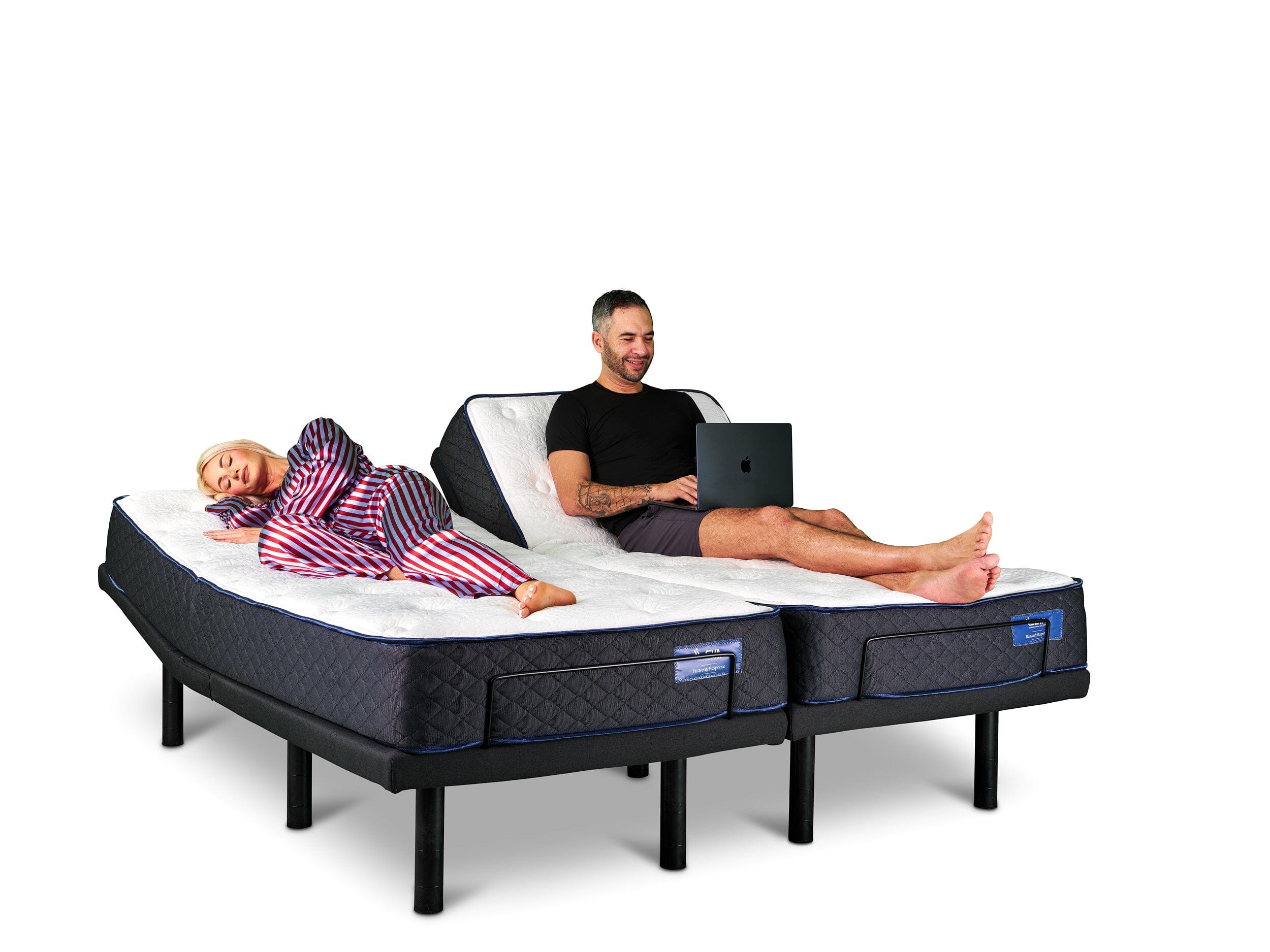
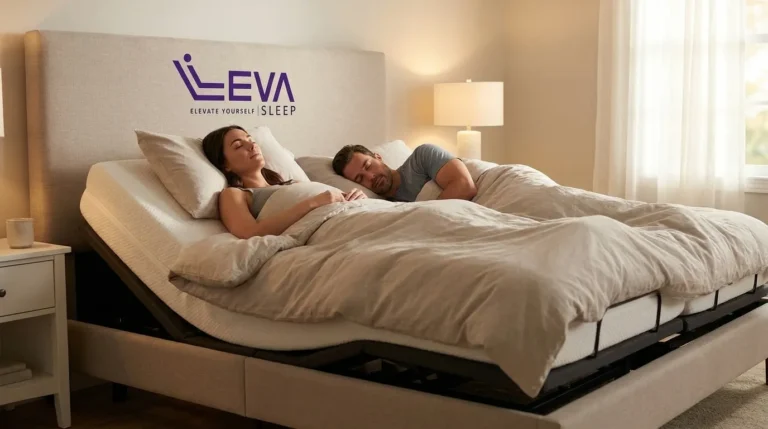
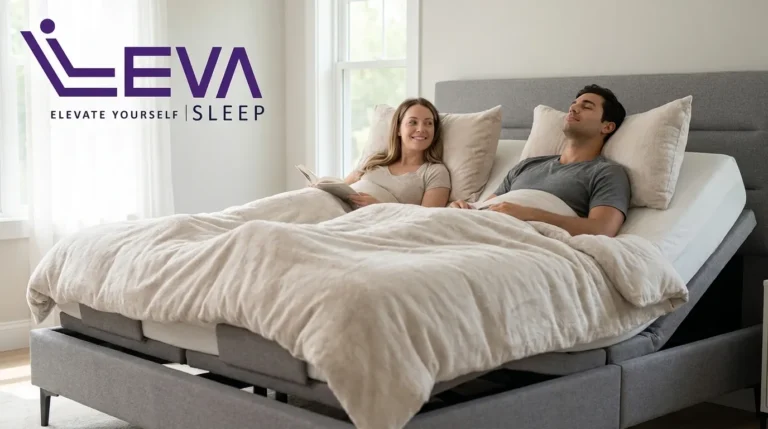
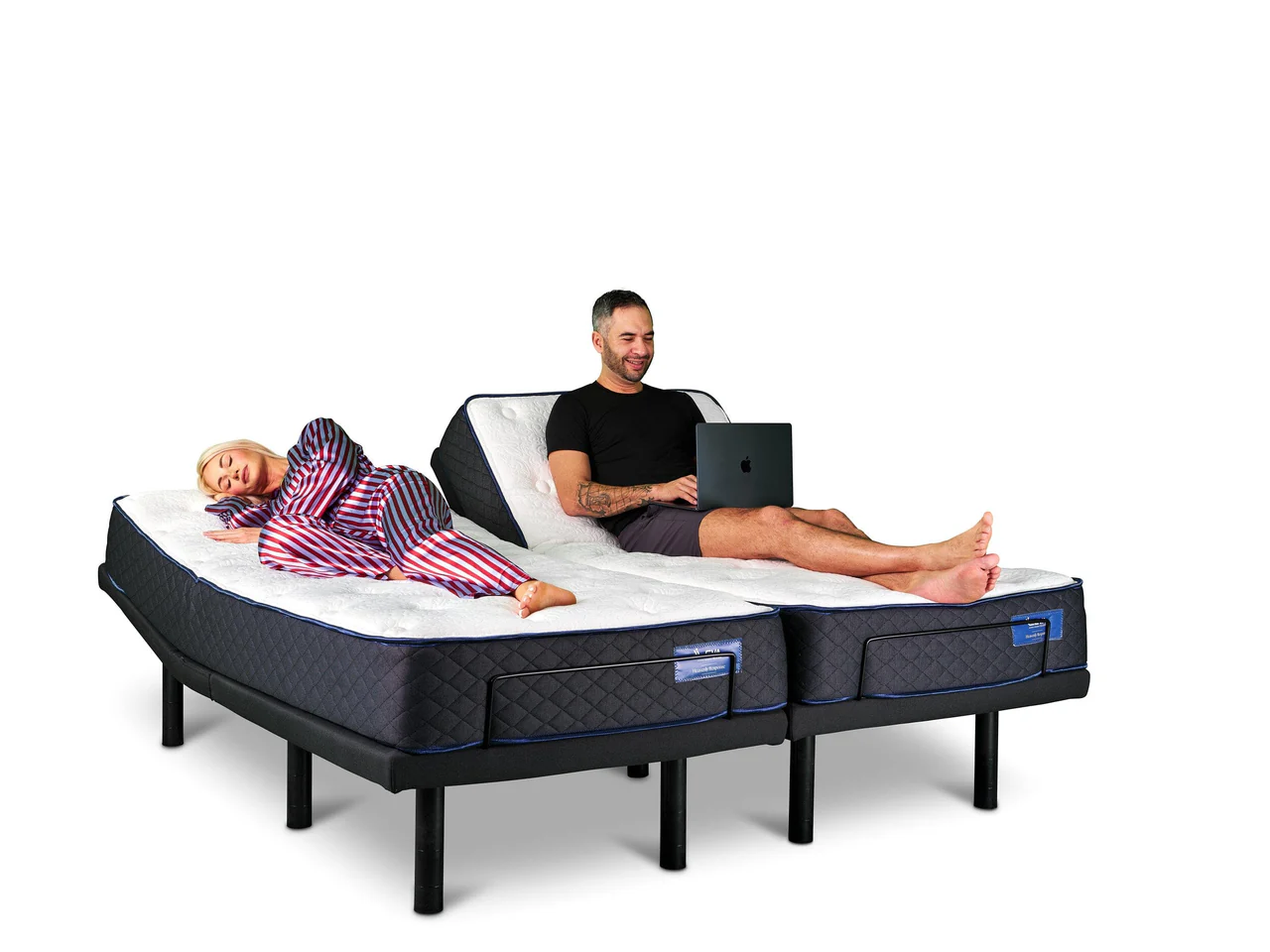
Leva Sleep’s split adjustable bases allow independent elevation of the head and torso for each partner, which enables nightly micro-elevation without requiring the other partner to change position. Each side of a Split King or Split Queen base operates independently via the Leva Sleep app, which controls head elevation, foot elevation, lumbar support, and anti-snore positioning. The anti-snore mode detects snoring and makes micro-adjustments to the head of the bed automatically. Whisper-quiet German motors help ensure adjustments do not disturb a sleeping partner. Because the system requires no surgery, anesthesia, recovery period, or insurance pre-authorization, it represents an accessible first step for CPAP-intolerant adults who want to evaluate positional therapy before pursuing an implant evaluation.
Decision Framework for CPAP-Intolerant Patients
How the main options compare for 2026
The following table compares invasiveness, efficacy, adherence, and long-term cost across four primary options for CPAP-intolerant patients in 2026. It highlights the tradeoff between permanent surgical implants and non-invasive approaches such as adjustable elevation systems that patients can start immediately.
See how Leva Sleep’s adjustable bases compare to surgical options in the table above.
Practical sequencing for CPAP-intolerant adults
Patients evaluating their options should consider four factors: severity of OSA (AHI), BMI, willingness to undergo surgery, and whether a bed partner’s sleep quality is also a priority. Patients with AHI above 65, BMI above 35, or complete concentric palatal collapse on DISE are not HGNS candidates under current criteria and should discuss other options with their sleep physician. Patients who meet HGNS candidacy criteria but prefer to avoid surgery first can evaluate adjustable elevation therapy as an initial step, particularly if their OSA has a positional component. The 2026 ATS Pavlov study data support positional therapy as a first-line option for a substantial proportion of patients with positional OSA. Patients who do not achieve adequate control through positional approaches can then pursue formal HGNS evaluation without having delayed their care meaningfully. Any treatment decision for moderate-to-severe OSA requires oversight from a board-certified sleep physician, and many patients can start with positional therapy before committing to surgery.
Frequently Asked Questions
Can I get a hypoglossal nerve stimulator if I failed DISE?
No. Complete concentric collapse at the soft palate level on drug-induced sleep endoscopy is a disqualifying finding under both Medicare LCD L38276 and major commercial payer policies including Premera’s 2026 policy. Patients who fail DISE are not candidates for HGNS implantation under current coverage criteria. These patients may still benefit from positional therapy, myofunctional therapy, oral appliances, or other non-surgical approaches discussed with their sleep physician.
Does insurance cover hypoglossal nerve stimulation for the Genio device?
Coverage for Genio varies by payer. Medicare established facility reimbursement C-codes for Genio-style systems effective January 2026, and Nyxoah reported a 100% prior authorization approval rate through July 2026. However, Premera’s March 2026 policy classifies Genio as investigational, which means patients with Premera coverage may face denials. Patients should verify their specific plan’s policy before proceeding and work with their surgeon’s billing team to navigate prior authorization.
How does an adjustable bed help with sleep apnea if it is not a medical device?
Adjustable sleep systems address positional obstructive sleep apnea by elevating the head and torso, which reduces gravitational collapse of the tongue and soft palate. The 2026 ATS Pavlov study found that more than two-thirds of patients with positional OSA maintained controlled sleep behavior for one year after stopping active positional therapy. Leva Sleep’s adjustable bases provide nightly, app-controlled head elevation along with anti-snore positioning that makes automatic micro-adjustments when snoring is detected. These systems are not FDA-cleared medical devices for OSA treatment and do not replace physician-supervised care, but they offer a non-invasive, immediately accessible option for patients exploring positional approaches before or alongside medical evaluation.
What BMI disqualifies a patient from HGNS in 2026?
As discussed in the candidacy section, BMI limits vary by payer and device labeling, and thresholds often fall between 32 and 40 kg/m². Patients near these limits should confirm the specific BMI requirement with their insurer and sleep physician before pursuing evaluation.
Can both partners benefit from a Leva Sleep adjustable base if only one has sleep apnea?
Yes. Leva Sleep’s Split King and Split Queen configurations provide fully independent controls for each side of the bed. The partner with sleep apnea or snoring can elevate their head and activate anti-snore positioning, while the other partner maintains a flat or preferred position. Each side has independent lumbar support, foot elevation, massage, and temperature settings. This design directly addresses a common reason couples consider separate beds: one partner’s sleep needs disrupting the other’s rest.