Written by: Matthew Timmins, Founder and Managing Director, Leva Sleep
Key Takeaways
- Smart beds use embedded pressure, biometric, and vibration sensors to detect position changes, snoring, and pressure imbalances without wearables.
- Independent air chambers and zone valves adjust firmness on each side in real time while keeping the partner’s side stable.
- Snore-response systems filter vibration frequencies, enforce cooldown periods, and gently elevate the head to reduce snoring without waking either sleeper.
- Leva Sleep bases pair whisper-quiet German motors with per-side temperature control and lumbar/pillow tilt for silent, targeted adjustments.
- Experience automatic comfort adjustments firsthand at the Leva Sleep La Jolla showroom or explore the full range of smart bases at Leva Sleep.
How Pressure and Biometric Sensors Detect Sleep Changes
How pressure sensors detect position changes: Pressure and biometric sensors sit in thin, flexible layers within or beneath the mattress surface. These elements continuously measure force, vibration, and heat patterns from the sleeping body. The system converts those physical signals into data streams that an onboard processor can interpret without any wearable device on the sleeper.
The sensor layer in a smart bed typically combines several transduction technologies that work in parallel.
- Resistive and capacitive pressure arrays. Flexible pressure sensor matrices integrated into sleep surfaces often rely on resistive and capacitive principles, with sensor counts varying across systems.
- Ballistocardiography (BCG) sensors. BCG sensors implemented as piezoelectric films detect micro-vibrations from heartbeat, breathing, and movement. This pattern allows measurement of heart rate and respiratory rate through vibration signatures.
- Thermistors and humidity sensors. Thermistors measure body and ambient temperature while humidity sensors monitor moisture levels to support climate control decisions.
- Accelerometers. Accelerometers track micro-movements and vibration for sleep-stage detection alongside the pressure and BCG layers.
- Multimodal fusion systems. Research published in the IEEE Sensors Journal combined long-wave infrared sensors, depth sensors, and pressure sensors. The study supported in-bed pose estimation by fusing data through a generative model and a graph-based neural network.
Diagram description — Sensor Layer Cross-Section: A cutaway view of a mattress shows, from bottom to top, the base foam layer, a thin flexible pressure-sensor sheet with a grid of resistive nodes, a BCG piezoelectric film layer, the comfort foam layer, and the sleep surface. Arrows indicate signal paths from each sensor type to a central hub at the bed’s edge.
Air Chambers and Zone Valves for Targeted Firmness Changes
The sensor data feeds directly into the air-chamber system, which then adjusts firmness in specific areas of the bed. Smart mattress firmness zones explained: Air-chamber systems use sealed pneumatic bladders segmented into independent zones, each connected to a valve and a pump. When sensor data indicates a pressure imbalance, the processor opens or closes the relevant valve to add or release air in that zone. The system changes local firmness within seconds while leaving adjacent zones unchanged.
The mechanical chain from sensor signal to firmness change involves several components.
- Independent air chambers per side. Sleep Number’s DualAir architecture places one independent chamber per side, allowing each partner’s firmness to be set and maintained separately.
- Multi-zone pneumatic actuators. Bryte’s system uses up to 90 individual foam-wrapped pneumatic air modules arranged across 16 independent zones (8 per sleeper). This layout enables targeted adjustments such as softening under the hip while maintaining firmer lumbar support.
- Zone valves and pump control. Sleep Number’s external Firmness Control System pump inflates or releases air in each chamber throughout the night, maintaining the user-selected firmness setting as body position changes.
- High-resolution zone mapping. DeRUCCI’s T11 Pro/T11+ smart mattress uses 18 flexible support airbags with 23 sensors for real-time adjustments across 5 zones in under 0.01 seconds.
- Adjustment frequency contrast. Bryte beds can perform frequent micro-adjustments for each sleeper during the night. Sleep Number systems typically adjust in response to more noticeable position changes.
Diagram description — Zone Valve Schematic: A top-down bed outline is divided into labeled zones (head-left, shoulder-left, hip-left, leg-left, and mirrored right-side zones). Each zone connects via a line to a valve symbol, which connects to a central pump unit. A legend distinguishes inflate, deflate, and hold states.
Position and Snore Triggers That Start Adjustments
Air chambers and motors need clear trigger logic so they know when to act. Position and snore triggers rely on specific signal thresholds defined by intensity, duration, and pattern. The bed’s algorithm must confirm these thresholds before issuing an adjustment command. This process helps the system respond to genuine sleep events instead of brief, inconsequential movements.
The trigger detection sequence operates through several stages.
- Vibration frequency filtering for snoring. The Sleeptracker-AI algorithm monitors for specific vibration frequencies associated with snoring while breathing. It distinguishes snoring from ordinary bed movement and sends a response command only when it detects patterns of intense and sustained snoring instead of reacting to every brief disturbance.
- Cloud-based pattern analysis. Detection occurs in the cloud and the response is sent later to the bed processor. This built-in delay reduces overreaction to transient movement.
- Cooldown enforcement. If both Smart Snore Position and Smart Snore Pulse are enabled, Smart Snore Position first raises the head of the bed after detecting intense sustained snoring. Smart Snore Pulse then waits 30 minutes before vibrating the bed if snoring continues.
- Head elevation response. Tempur-Pedic’s Sleeptracker-AI technology in Ergo Smart Bases automatically raises the head of the bed approximately 12 degrees. This response aims to reduce snoring in otherwise healthy individuals whose snoring is caused by body positioning, without waking the user or partner.
- Split-base independence. For dual-user setups on split bases, independent processors and side-specific sensors allow separate tracking and responses without cross-disturbance between partners.
Diagram description — Trigger Decision Tree: A flowchart starts at “Vibration detected” and branches to “Meets snore frequency threshold?” Yes leads to “Duration sustained?” Yes leads to “Issue head-elevation command.” No at either branch returns to “Continue monitoring.” A separate branch from “Duration sustained?” leads to “Enforce 30-min cooldown.”
Temperature Control and Base Elevation Working Together
Temperature and base elevation integration coordinates thermal regulation hardware with motorized base articulation. A single control system can manage surface temperature per side and head or foot elevation angle based on biometric and environmental sensor data.
The integrated control layer manages several subsystems.
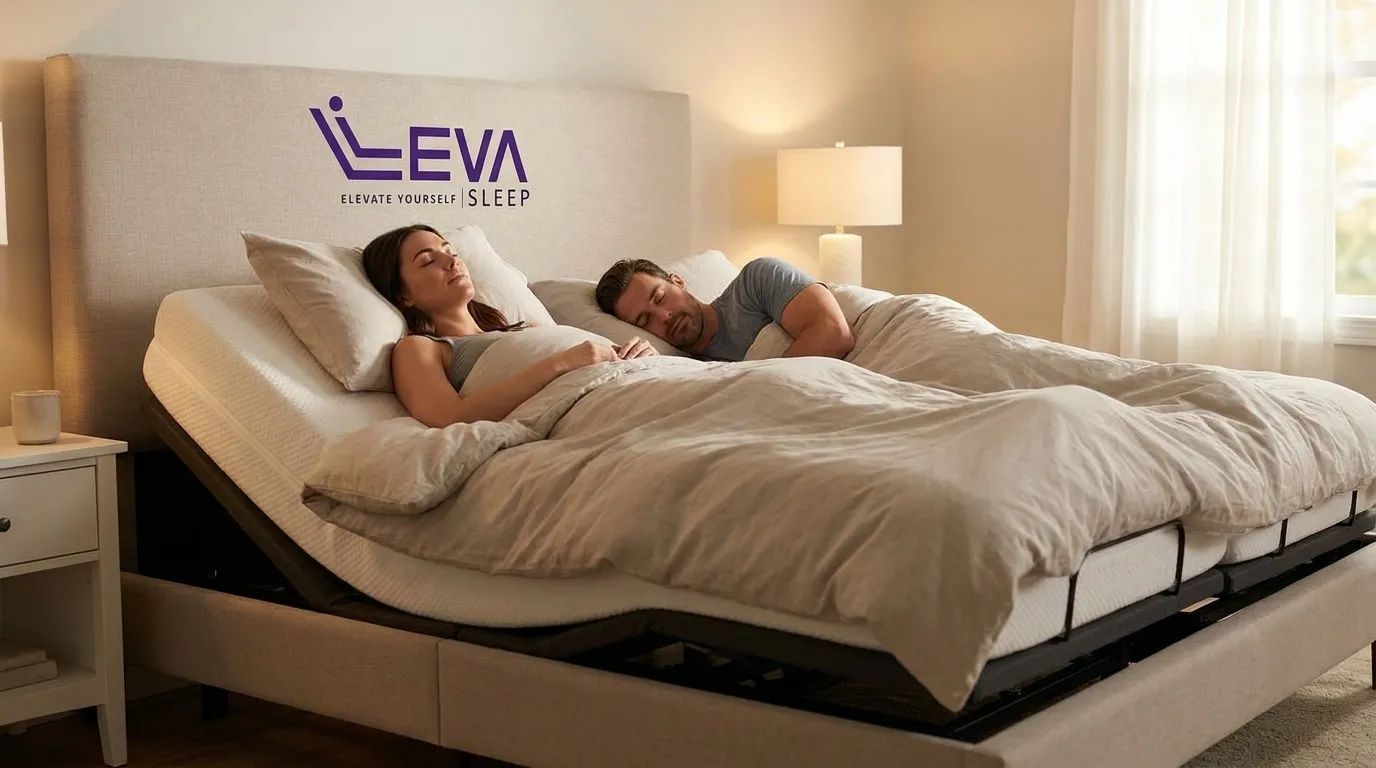
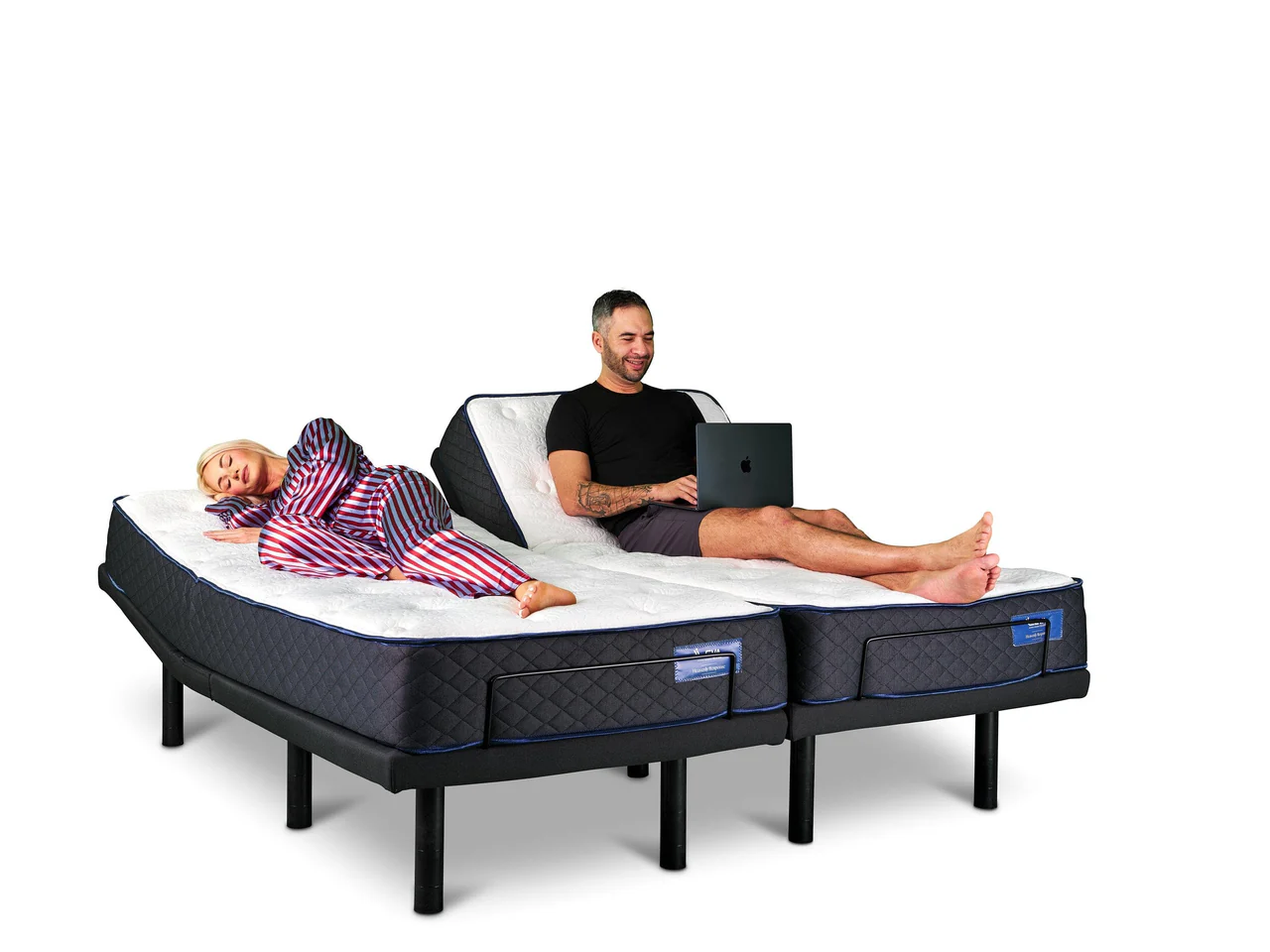
- Per-side thermal regulation. Leva Sleep systems let each partner create an independent thermal environment through split adjustable bases and compatible temperature-regulating bedding. This setup addresses the common situation where one partner sleeps hot and the other sleeps cool.
- Head elevation for airway management. Head elevation can help reduce positional snoring, and automated elevation often proves more effective than manual partner intervention.
- Foot elevation for circulation and pressure relief. Motorized bases allow independent foot articulation to reduce lower-limb pressure and support conditions such as acid reflux and post-surgery recovery, as physicians often recommend for elevated sleeping positions.
- Lumbar and pillow tilt motors. Leva Sleep’s higher-end bases include a dedicated lumbar control motor for precise lower back support and a pillow tilt motor for head and pillow adjustment. These motors operate independently of the main head and foot elevation motors.
- App-unified control. Smart bed sensor systems connect via Bluetooth Low Energy to a local hub, which communicates to the cloud via Wi-Fi. A single app interface can then coordinate elevation, temperature, and firmness commands at the same time.
Diagram description — Integration Architecture: A block diagram shows three columns: Sensors (BCG, thermistor, pressure array), Processor/Hub (BLE receiver, AI algorithm, cloud sync), and Actuators (head motor, foot motor, lumbar motor, thermal pad, air pump). Bidirectional arrows connect the processor to each actuator, and unidirectional arrows run from sensors to the processor.
How Subtle Automatic Adjustments Feel at Night
Automatic beds can correct comfort issues without waking you when their adjustments stay subtle. Adjustment subtlety depends on three engineering parameters: resolution, response time, and acoustic output. Systems that balance all three can complete corrections without crossing the arousal threshold of a sleeping person.
Evaluating subtlety works best when you look at each parameter independently.
- Response time benchmark. Technical analyses argue that effective Active Pressure Relief systems must adjust firmness within seconds of detecting pressure changes. One-hour adjustment cycles are too slow to prevent pressure-related sleep disruption.
- Acoustic output requirement. Audible adjustment during sleep defeats the purpose of automatic intervention. Effective Active Pressure Relief systems therefore require silent operation to avoid waking the sleeper.
- Pump noise as a known limitation. Sleep Number smart beds produce mechanical noise from the air pump during firmness adjustments, which can be a practical limitation for light sleepers.
- Whisper-quiet motor design. Leva Sleep’s adjustable bases use whisper-quiet German motors that minimize acoustic disruption during elevation and position changes. This design directly addresses the noise complaints commonly associated with basic adjustable beds.
- Quiet mode for snore response. Tempur-Ergo Smart Bases include QuietMode to support quiet operation during automatic adjustments such as Snore Response.
Because acoustic output varies significantly across brands and models, buyers should verify noise levels firsthand. When evaluating any smart bed for noise, ask the retailer to demonstrate a live adjustment cycle in a quiet room and request the motor’s decibel rating in writing before purchasing.
Diagram description — Noise and Speed Matrix: A 2×2 grid has axes labeled “Adjustment Speed” (slow to fast, left to right) and “Acoustic Output” (loud to silent, bottom to top). Quadrant labels read: top-right = “Optimal: fast and silent,” top-left = “Silent but slow,” bottom-right = “Fast but disruptive,” bottom-left = “Avoid.”
Side-by-Side Brand Comparison
| Feature | Sleep Number (360 / FlexFit) | ReST Bed | Leva Sleep |
|---|---|---|---|
| Sensor type | Internal DualAir pressure sensors (SleepIQ strip) | Embedded pressure-sensing foam layer with zone mapping | Biometric and pressure sensors integrated with app-controlled split base; anti-snore vibration detection |
| Adjustment speed | Approximately once per hour at night; initial entry adjustment within minutes | Continuous zone adjustments responding to pressure changes | Real-time micro-adjustments via whisper-quiet German motors; anti-snore mode responds to sustained snore detection |
| Noise level | Audible pump noise noted as a limitation for light sleepers | Low-noise pneumatic system; specific decibel ratings not publicly published | Whisper-quiet German motors; designed to operate below sleep-arousal threshold |
| Couple-specific features | Independent DualAir chambers per side; FlexFit bases add head elevation | Independent 5-zone control per side; app-based per-partner profiles | Split King and Split Queen with independent elevation, massage, firmness, and temperature per side; anti-snore mode; app control with custom sleep positions and vibrating alarms |
Limitations and Ongoing Maintenance for Smart Beds
Automatic adjustment systems still carry mechanical, electronic, and calibration limits that affect long-term reliability. Some setups also require periodic user maintenance to keep sensor readings accurate and adjustments consistent over the product’s lifespan.
Prospective buyers should evaluate the following categories before purchasing.
- Air leak susceptibility. Because they involve multiple components, hoses, and electronics, air-chamber beds may be susceptible to air leaks or technical glitches over time.
- Recalibration requirements. The Sleep Number Climate360 does not require monthly recalibration. Baselining is performed as needed with the bed empty to improve tracking accuracy.
- Sensor cable integrity. Accurate Snore Response detection depends on correct smart bed setup. Damaged sensor pads or crushed or ripped sensor cables can impair performance.
- Durability benchmarks. Many Sleep Number mattresses have received high marks in durability testing and include extended limited warranties.
- Sleep apnea scope. Automatic snore detection systems are tuned to respond only when the snore pattern is strong enough to justify intervention, so they function as snoring management tools rather than obstructive sleep apnea treatments. Individuals with diagnosed obstructive sleep apnea should consult a physician before substituting positional adjustment for prescribed therapy.
When evaluating reliability, ask retailers for warranty terms in writing and confirm whether sensor components are field-replaceable. Request documentation of the recalibration schedule required to maintain automatic adjustment accuracy.
Diagram description — Maintenance Checklist Timeline: A horizontal timeline spans 12 months with labeled markers. Month 1 shows “Initial calibration and sensor cable inspection,” Month 3 shows “App firmware update check,” Month 6 shows “Air hose connection inspection,” and Month 12 shows “Full recalibration cycle.” Each marker includes a brief action description.
Real Couple Scenario: A Night With Automatic Adjustments
This real couple scenario shows the full sensor-to-actuator sequence from the moment a sleep event occurs until the system returns to standby. The walk-through illustrates how each component described in earlier sections supports an uninterrupted night for both partners.
Consider a couple where Partner A snores and prefers a softer surface, while Partner B sleeps lightly and needs a firmer feel.
- 11:00 p.m. — Setup. Each partner opens the Leva Sleep app and sets independent elevation angles, firmness preferences, and temperature targets for their side of the Split King base. The system records baseline biometric data within the first 10 minutes of lying down.
- 1:15 a.m. — Snore trigger detected. The algorithm detects sustained, high-intensity vibration frequencies consistent with snoring and confirms that the pattern meets the intervention threshold before issuing a command. Partner A’s side of the base then gently elevates the head section.
- 1:17 a.m. — Snoring subsides. The head returns to the preset angle. A 30-minute cooldown prevents further intervention unless snoring resumes at threshold intensity. Partner B remains undisturbed because the split base moves only Partner A’s side.
- 3:40 a.m. — Position change detected. Partner B rolls from back to side. Pressure sensors detect the shift in weight distribution, and the system adjusts Partner B’s zone support to maintain spinal alignment in the new position.
- 6:30 a.m. — Morning summary. The app displays a sleep report for each partner independently, including snore events, position changes, and estimated sleep stages, without sharing one partner’s data on the other’s screen.
Diagram description — Couple Scenario Timeline: A dual-lane horizontal timeline (Lane A = Partner A, Lane B = Partner B) spans 11 p.m. to 7 a.m. Labeled events appear on the relevant lane: snore detection and head elevation on Lane A at 1:15 a.m., a cooldown period marked with a bracket, a position-change adjustment on Lane B at 3:40 a.m., and a morning report icon at 6:30 a.m.
Frequently Asked Questions
Are smart bed automatic adjustments safe for people with sleep apnea?
Automatic positional adjustments, particularly head elevation, can reduce snoring caused by airway obstruction from body position in otherwise healthy individuals. These systems are not medical devices and do not replace prescribed therapies such as CPAP for diagnosed obstructive sleep apnea. Anyone with a confirmed sleep apnea diagnosis should consult their physician before modifying or substituting their current treatment plan. Leva Sleep’s anti-snore mode is designed to address positional snoring and improve comfort for both partners, not to treat clinical sleep-disordered breathing.
How long does it take to adapt to a smart adjustable base?
Most sleepers report an adaptation period of one to two weeks as the body adjusts to sleeping on an articulating surface. During this time, the system also gathers enough biometric data to refine its adjustment patterns. It is normal to experiment with elevation angles and firmness settings through the app during this period. Leva Sleep’s white-glove delivery includes a product tutorial that walks both partners through initial setup, custom position programming, and app configuration, which shortens the learning curve compared with self-assembly alternatives.
Will automatic adjustments disturb my partner when they activate?
On a properly configured split base, adjustments to one side do not mechanically move the other side. The key variables are motor noise and mattress motion transfer. Leva Sleep’s bases use whisper-quiet German motors designed to operate below the acoustic threshold that would rouse a sleeping person. When evaluating any smart bed for partner disturbance, request a live demonstration of an automatic adjustment cycle in a quiet environment and ask specifically whether the snore-response elevation is audible from the non-adjusting side.
What maintenance does a smart adjustable base require?
Maintenance requirements vary by system but generally include periodic app firmware updates, inspection of air hose connections and sensor cables for wear or crimping, and recalibration cycles to reset pressure baselines. Some air-chamber systems require monthly recalibration procedures. Leva Sleep recommends reviewing the specific maintenance schedule for your chosen base model at the time of purchase. Confirm that sensor components are field-replaceable under the warranty terms so a single failed component does not require full system replacement.
Can each partner control their side independently without affecting the other?
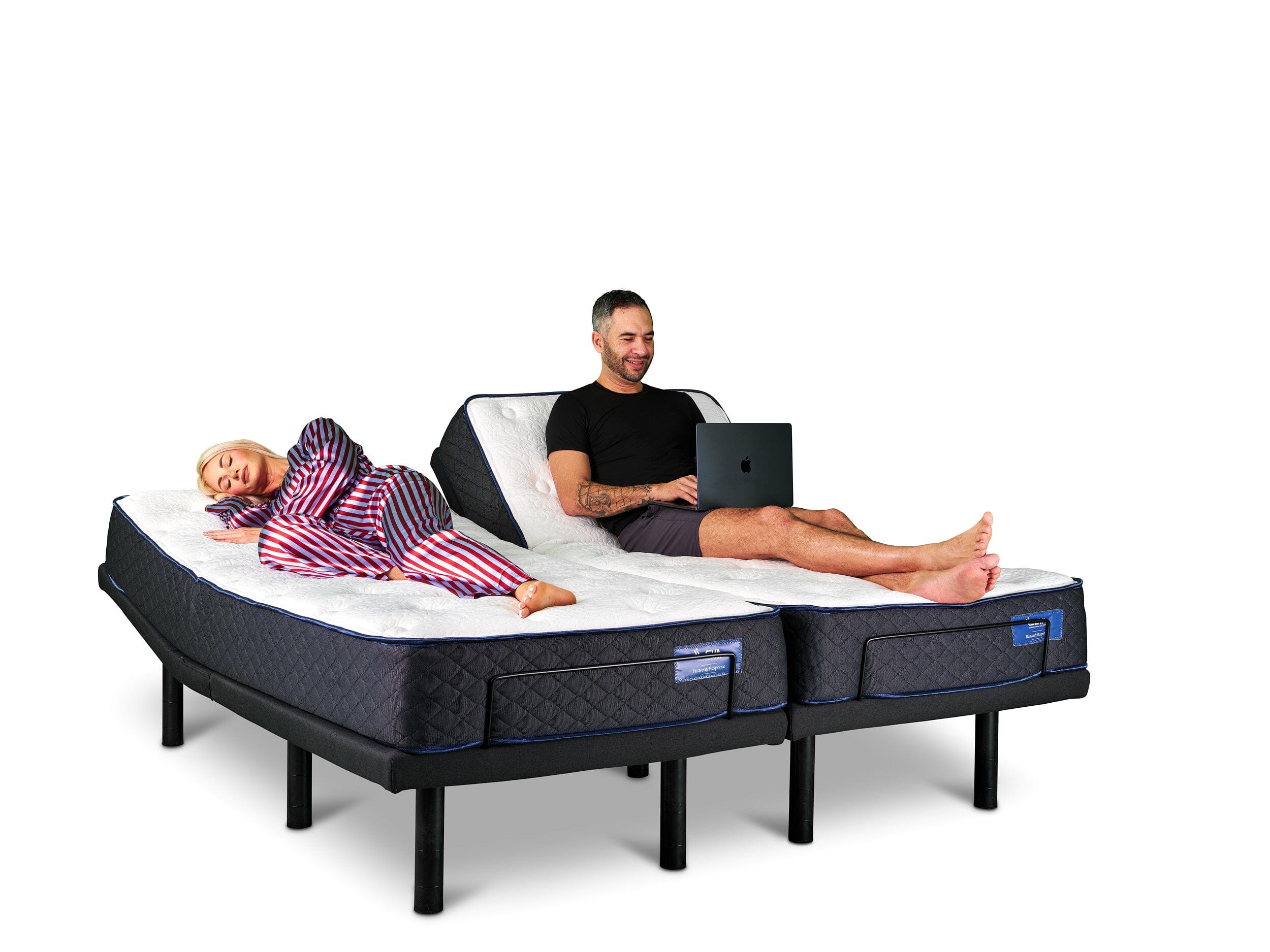
Yes, on a Split King or Split Queen configuration. Each side operates as a mechanically independent unit with its own motor, air system where applicable, and app profile. One partner can elevate their head for reading while the other lies flat. One can activate a massage program while the other sleeps undisturbed. Leva Sleep’s Split Queen is a particularly uncommon configuration in the market, offering split adjustability in a smaller footprint for bedrooms where a Split King is not practical. Independent temperature-regulating bedding can be added to each side to further individualize the sleep environment.