Written by: Matthew Timmins, Founder and Managing Director, Leva Sleep
Key Takeaways
- Adjustable beds create a zero-gravity position that reduces spinal pressure and supports natural alignment, which doctors often recommend for back pain relief.
- Slight knee elevation helps decompress the lumbar spine and sciatic nerve, giving targeted relief for sciatica and spinal stenosis.
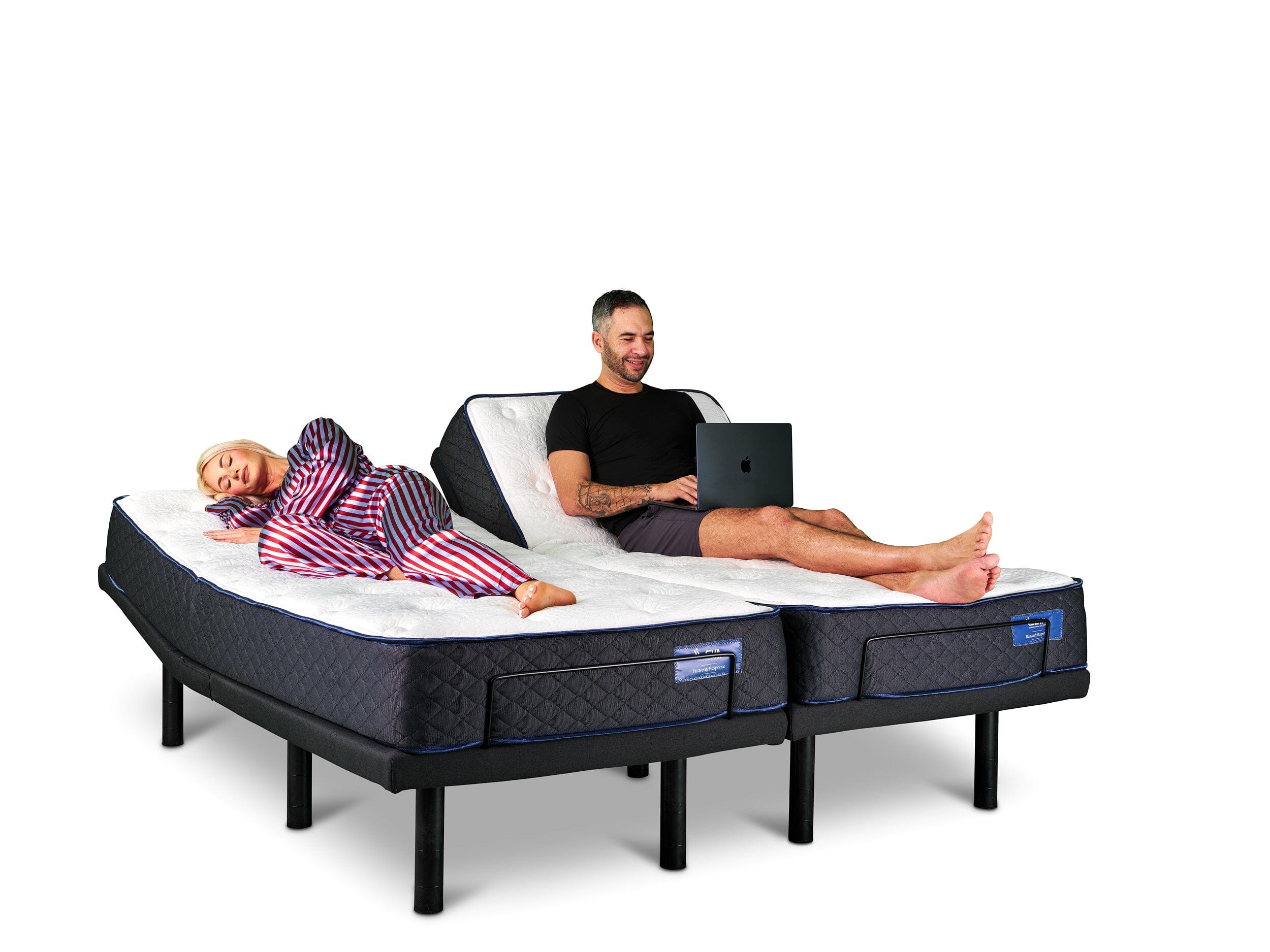
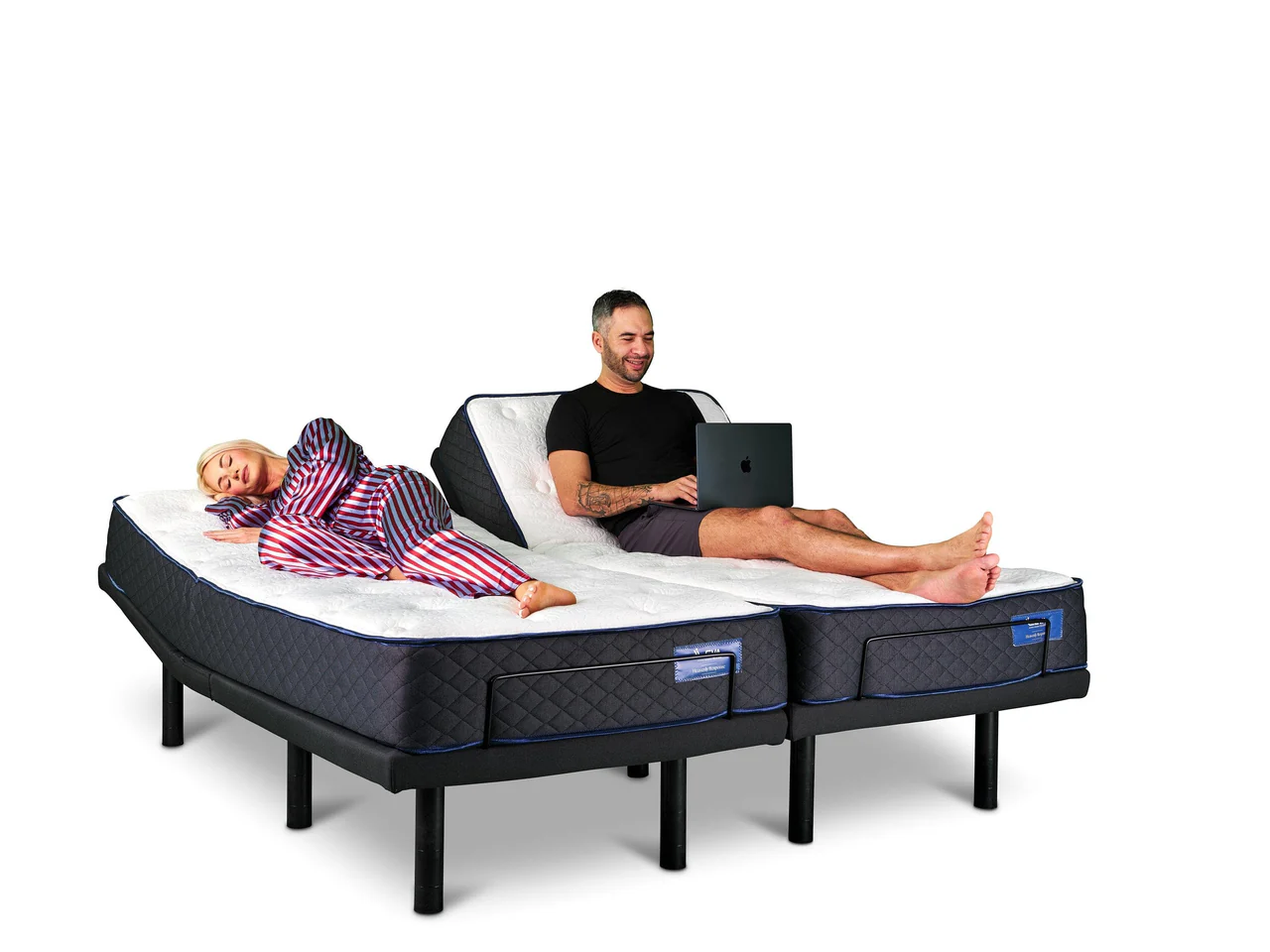
- Split adjustable beds let couples customize positions independently so different comfort needs do not disrupt each other’s sleep.
- Clinical research shows adjustable bases can improve sleep quality and reduce lower back pain compared with flat beds.
- Ready for doctor-guided relief? Explore Leva Sleep’s split systems for personalized back pain support today.
The Back Pain and Sleep Pattern Link Doctors Emphasize
Poor sleep posture often triggers problems that continue long after you get out of bed. When you lie flat, the spine loses its natural curves, which increases pressure on the hips, shoulders, and lower back. Muscles then work harder to keep you stable, and that extra effort can create tension and inflammation that follow you through the day.
Research confirms that back sleeping supports spinal alignment and is associated with lower back pain prevalence, while stomach sleeping strains the lumbar area and raises risk. Even people who sleep on their backs on a flat mattress can feel pressure build in the lower spine over the night.
This pressure problem becomes more pronounced with age. Adults between 35 and 70 face age-related changes in disc height, muscle flexibility, and joint mobility, so proper spinal support becomes more critical. Arthritis, past injuries, and degenerative conditions add to the challenge, and many people find that traditional flat beds no longer meet their changing sleep needs.
Couples often deal with extra complications when one partner’s pain causes frequent position changes that disturb both sleepers. Medical issues such as sleep apnea commonly appear alongside back pain and often require elevated sleeping positions that flat beds cannot provide. Leva Sleep’s systems adapt to these changing needs with precise, comfortable positioning.
Why Doctors Point Back Pain Patients to Adjustable Beds
Doctors recommend adjustable beds for back pain because these systems change how your body loads the spine during sleep. The foundation is zero-gravity positioning, which elevates the head and legs in a way inspired by NASA research. Orthopedic specialists report that this position can reduce pressure on the spine by distributing body weight more evenly and easing compression on spinal structures.
This same elevation principle helps with specific conditions such as sciatica and spinal stenosis. Slight knee elevation creates gentle hip flexion and lumbar unloading that decompresses the lumbar spine, reduces tension along the sciatic nerve pathway, and decreases nerve irritation. Many patients feel relief as soon as they move from a flat surface to this supported position.
Leg elevation above heart level also supports circulation. When blood returns from the legs more easily, swelling in the lower extremities can decrease, which may lessen stiffness that aggravates back pain.
Advanced adjustable beds add focused lumbar support on top of these core benefits. Targeted lower back elevation helps you fine-tune your natural spinal curve and ease pressure on specific problem areas instead of relying on a single flat surface.
Head elevation offers another medical advantage. Raising the head gently opens the airway and can reduce snoring that often appears with back pain and sleep apnea, which improves sleep quality for both partners. Clinical research also shows that adjustable bases can reduce back pain, which confirms these mechanisms in real-world use.
Doctor-Recommended Adjustable Bed Positions for Back Pain
Doctors often suggest a few specific adjustable bed positions, and you can test these at home to see what feels best.
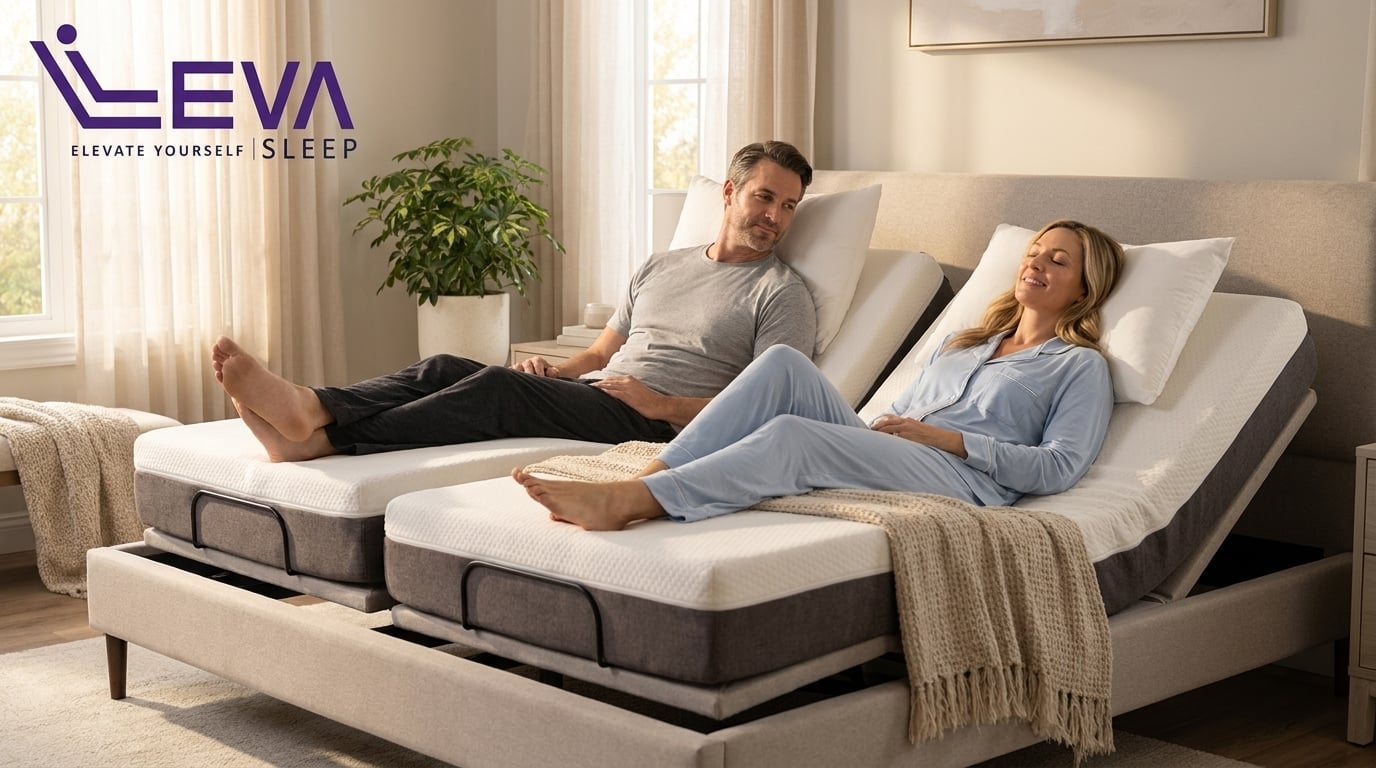
Zero-Gravity Position: Elevate the head about 30 to 45 degrees and the knees about 15 to 30 degrees to create spinal decompression. This position achieves the neutral spinal alignment discussed earlier and reduces pressure on the lower back.
Knee Elevation for Sciatica: Use the sciatic nerve decompression mechanism described above as your guide. Start with 15 to 20 degrees of knee elevation and adjust slowly until you find a level that eases your symptoms without strain.
Anti-Snore Position: Raise the head about 10 to 15 degrees to reduce airway obstruction while keeping the spine supported. This position helps people whose back pain worsens when snoring or sleep apnea interrupts deep sleep.
Split Positioning for Couples: Independent controls let each partner choose a position that matches their body and condition. One person might use zero-gravity positioning for general back pain, while the other prefers mild head elevation or extra knee lift.
Leva Sleep’s app-controlled systems include preset positions based on these medical guidelines. Split controls help both partners reach their ideal setup at the same time without disturbing each other.
How Leva Split Systems Compare to Flat and Basic Adjustable Beds
| Feature | Flat Beds | Basic Adjustables | Leva Split Systems |
|---|---|---|---|
| Noise Level | Silent | Often loud motors | Whisper-quiet German motors |
| Split Control | None | Limited options | Independent app control |
| Price vs. Competitors | Lower initial cost | High markup | 30–50% less than premium brands |
Research suggests that medium-firm mattresses with adjustable positioning can help provide pain relief. Leva Sleep pairs precision-engineered bases with US-made mattresses built for adjustable use, which supports both comfort and long-term durability.
Adjustable Beds, Back Health, and Medicare Coverage
Proven Benefits: Clinical research shows improvements in lower back pain and sleep quality when people switch to supportive sleep systems that allow proper positioning.
Potential Drawbacks: Adjustable beds usually cost more upfront than traditional frames and flat mattresses. Leva Sleep helps offset this by offering premium features at prices that are typically 30 to 50 percent lower than comparable brands.
Medicare Coverage: Medicare Part B may cover adjustable beds as durable medical equipment when a doctor prescribes them for conditions that need specific positioning to ease pain or improve spinal alignment. Qualifying conditions can include arthritis and chronic back pain that respond to precise positioning.
Best Practices: Begin with gentle elevation angles and make small changes as your body adapts. Combining an adjustable base with a supportive mattress often works better than using either one alone. Visit Leva’s La Jolla showroom or explore online to feel these differences in person.
Real-World Relief With Leva Sleep’s Doctor-Guided Features
A randomized trial published in The Lancet found that medium-firm mattresses were more likely to improve pain in bed and on rising. Leva Sleep builds on this evidence with split adjustable systems that address the unique challenges couples face when one or both partners have back pain. Each person can personalize their position without resorting to separate beds.
Advanced features such as lumbar control, pillow tilt, and anti-snore presets give you targeted relief that aligns with common medical recommendations. These tools help you move from trial-and-error guessing to repeatable, comfortable positions.
FAQ: Adjustable Beds for Back Pain
What is the best adjustable bed position for lower back pain?
The zero-gravity position works well for many people with lower back pain. Elevate the head about 30 to 45 degrees and raise the knees about 15 to 30 degrees. This setup reduces pressure on spinal discs and encourages neutral alignment. Leva Sleep’s app includes medical preset options so you can fine-tune your angle gradually.
Do adjustable beds help with sciatica?
Adjustable beds often provide meaningful relief for sciatica. Knee elevation flexes the hips, eases load on the lumbar spine, and reduces tension along the sciatic nerve. Because you can change positions throughout the night, you can respond to flare-ups instead of staying stuck on a flat surface.
Will Medicare cover an adjustable bed for back pain?
Medicare Part B may cover an adjustable bed as durable medical equipment when a doctor prescribes it as medically necessary to address your specific pain or alignment condition. Your physician must document how the bed supports your treatment plan. Coverage usually starts as a rental for 13 months, and ownership then transfers to you.
Can couples with different back pain needs share one adjustable bed?
Couples with different needs can share a split adjustable bed comfortably. Each partner controls their own side, so one person can choose zero-gravity positioning while the other focuses on knee elevation for sciatica or mild head lift for snoring. Leva Sleep specializes in split Queen and King setups with whisper-quiet motors that protect both partners’ sleep.
Are there disadvantages to sleeping on an adjustable bed?
The main tradeoffs are higher initial cost and a short adjustment period while your body gets used to new positions. Most people adapt within one to two weeks. Leva Sleep’s quiet motors and smooth, gradual movement help avoid the noise and abrupt shifts that can bother users of basic adjustable beds.
Conclusion and Next Steps for Better Sleep
Doctors recommend adjustable beds for back pain because these systems correct poor spinal alignment during sleep. Zero-gravity positioning, targeted elevation, and customizable lumbar support work together to provide relief that flat beds rarely match.
Couples with different comfort needs or medical conditions benefit from split adjustable systems that let each person sleep in a position that suits their body. Explore Leva Sleep’s La Jolla showroom or shop online today to start building a more supportive sleep setup.