Written by: Matthew Timmins, Founder and Managing Director, Leva Sleep
Key Takeaways
-
Use the 10-3-2-1 rule together as a couple: no caffeine 10 hours, food 3 hours, work 2 hours, and screens 1 hour before bed to support healthy circadian rhythms.
-
Keep a consistent sleep schedule and create a shared bedroom environment around 65-68°F, dark, and quiet to reduce disruptions from snoring or movement.
-
Follow the 3-3-3 rule, schedule exercise earlier in the day, hydrate throughout the day, and avoid screens during wind-down to support deeper, more restorative sleep.
-
Prioritize side sleeping and gentle head elevation to ease snoring, pain, and mild apnea while supporting spinal alignment.
-
Move to split adjustable bases for independent positioning, and explore Leva Sleep’s anti-snore technology at the La Jolla showroom or online to tailor sleep for both partners.
Quick Preview: 12 Natural Strategies for Better Couple Sleep
These 12 strategies work together as a step-by-step system for couples. Tips 1–4 build your basic sleep habits, tips 5–8 fine-tune your daily routine and bedroom environment, and tips 9–12 focus on advanced positioning solutions that address snoring, pain, and different comfort needs. You can start with the basics and add more advanced steps as your sleep improves.
-
1. Master the 10-3-2-1 Rule for Sleep
-
2. Stick to a Consistent Sleep Schedule
-
3. Keep Your Bedroom Cool, Dark & Quiet (65-68°F)
-
4. Use the 3-3-3 Rule for Sleep
-
5. Time Exercise for Sleep Efficiency
-
6. Optimize Environment with Positioning
-
7. Hydrate Smartly & Eat Sleep Foods
-
8. Wind-Down with No Screens
-
9. How to Sleep Fast in 5 Minutes (Japanese Trick)
-
10. Side Sleeping for Snoring & Pain Relief
-
11. Use Elevation to Open Airways & Relieve Pain
-
12. Upgrade to Split Adjustable Positioning
1. Master the 10-3-2-1 Rule for Sleep
The 10-3-2-1 rule gives couples a simple shared structure for winding down. Avoid caffeine 10 hours before bed, food 3 hours before, work 2 hours before, and devices 1 hour before sleep. This timing helps regulate your circadian rhythm, which makes it easier to fall asleep and stay asleep. Couples benefit when both partners follow the same pattern, because you move into “sleep mode” together and reinforce each other’s habits. Start with the easiest step and agree on a caffeine cutoff time, such as avoiding coffee after noon if you sleep at 10 PM. This shared rule reduces the chance that one partner lies awake while the other falls asleep quickly.
2. Stick to a Consistent Sleep Schedule
Consistent bed and wake times keep your body clock steady and make sleep more predictable. Maintaining consistent sleep and wake times strengthens your circadian rhythm, improving sleep quality and daytime alertness. Couples who align their schedules reduce disruptions from late arrivals, lights turning on, or early alarms. When partners go to bed and wake at very different times, each person’s movement and noise can interrupt the other’s sleep. Track your sleep with a wearable or app, find your natural rhythm, then gradually adjust so your schedules fall within about 30 minutes of each other.
3. Keep Your Bedroom Cool, Dark & Quiet (65-68°F)
A cool, dark, and quiet bedroom helps both partners reach deeper sleep. Cooler temperatures between 65-68°F promote melatonin production and deeper sleep stages. Darkness tells your brain to release sleep hormones, and steady sound levels prevent fragmented sleep. For couples dealing with snoring, white noise machines or earplugs can soften disruptive sounds without forcing separate rooms. Blackout curtains and eye masks block outside light that might bother the non-snoring partner. When one person sleeps hot and the other sleeps cold, separate temperature controls or adjustable sleep systems allow each to stay comfortable without waking the other.
4. Use the 3-3-3 Rule for Sleep
The 3-3-3 rule fine-tunes your evening routine so your body is ready for rest. Stop eating 3 hours before bed, finish exercise 3 hours before sleep, and practice 3 minutes of deep breathing before lying down. This timing gives digestion a chance to settle and lets your body temperature return to baseline. The breathing piece activates your parasympathetic nervous system and signals relaxation. Couples can turn this into a shared ritual by practicing together. Try the 4-7-8 technique, where you inhale for 4 counts, hold for 7, and exhale for 8, and use it as a calm, connecting moment before sleep.
5. Time Exercise for Sleep Efficiency
Exercise timing affects how easily you fall asleep and how deeply you rest. Vigorous morning exercise increases time spent in NREM stage 2 sleep, which supports recovery and next-day alertness. Physical activity also influences your internal clock, so late intense workouts can make it harder to wind down. Couples can support each other by planning joint morning walks or afternoon workouts that end at least 3 hours before bedtime. When both partners follow a similar exercise schedule, they tend to feel sleepy at the same time and enjoy more stable sleep patterns.
6. Optimize Your Shared Sleep Environment with Positioning
Positioning and mattress choice play a major role in how much couples disturb each other at night. Motion isolation is key for couples, as one partner’s movements can significantly disturb the other’s sleep. Traditional flat mattresses often force one to compromise on firmness and support, even when partners have very different needs. Memory foam usually absorbs motion better than innerspring systems, which helps, but it still treats the bed as one surface. Independent positioning for each partner offers a more complete solution. When each person can adjust their side for spinal alignment and pressure relief, both sleep comfortably without transferring movement across the bed.
7. Hydrate Smartly & Eat Sleep-Supportive Foods
Smart hydration supports sleep for both partners by balancing daytime intake with nighttime comfort. The National Academies recommend 3.7 liters daily for men and 2.7 liters for women, with 20% coming from water-rich foods like watermelon, cucumber, and leafy greens. Meeting this daily target matters, yet timing matters just as much. Consuming 280 mL of water immediately before bedtime can prolong REM sleep latency and increase nocturia, which can wake both partners. Focus on steady hydration from morning through late afternoon, include water-rich foods with meals, then taper fluids about 2 hours before bed. This approach supports overall health while reducing overnight bathroom trips and sleep interruptions.
8. Wind-Down Together Without Screens
A screen-free wind-down hour helps your brain and body shift into sleep mode. Light exposure before bedtime suppresses melatonin onset and shortens melatonin duration. Blue light from phones, tablets, and TVs signals daytime to your brain and delays sleepiness. Couples can protect their sleep by setting a shared screen curfew 1 hour before bed. Replace scrolling with calming activities such as reading side by side, gentle stretching, or quiet conversation. These habits build intimacy while supporting natural melatonin production. If screens are unavoidable on some nights, use amber lighting or blue light-blocking glasses to reduce the impact.
9. How to Sleep Fast in 5 Minutes (Japanese Trick)
This Japanese-inspired approach combines calm breathing with supportive body positioning to help you fall asleep faster. The method pairs the 4-7-8 breathing technique with side sleeping, which supports the body’s natural alignment. Side sleeping supports spinal alignment, aids digestion, reduces snoring and mild sleep apnea, and improves circulation. Lie on your side, practice 4-7-8 breathing, and let your muscles relax with each exhale. Couples can use this together by settling into comfortable side positions that do not crowd each other. Adjustable pillows or adjustable bases can fine-tune head and shoulder support so both partners stay relaxed.
10. Side Sleeping for Snoring & Pain Relief
Side sleeping offers couples a practical way to reduce snoring and ease pressure-related pain. Left-side sleeping is particularly beneficial for digestion, helping keep stomach acid from flowing back into the esophagus. As described in the Japanese technique above, side sleeping also supports alignment and can lessen mild snoring and apnea. For couples where one partner snores, encouraging side sleeping often improves rest for both people. Proper support remains essential, because unsupported side sleeping can strain the neck, shoulders, or lower back. Independent firmness and positioning control lets the snoring partner maintain a stable side posture while the other partner chooses their own ideal feel.
11. Use Elevation to Open Airways & Relieve Pain
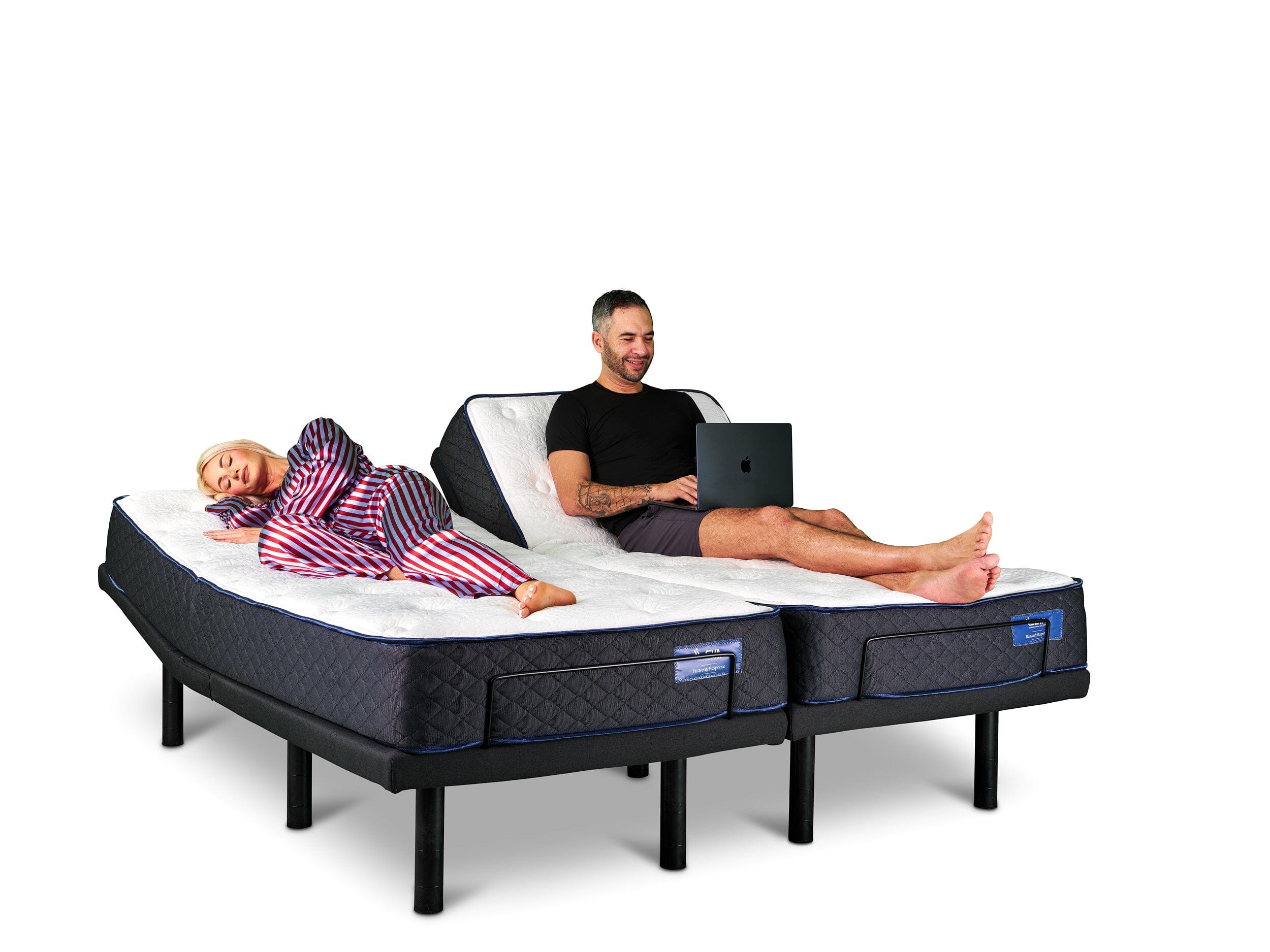
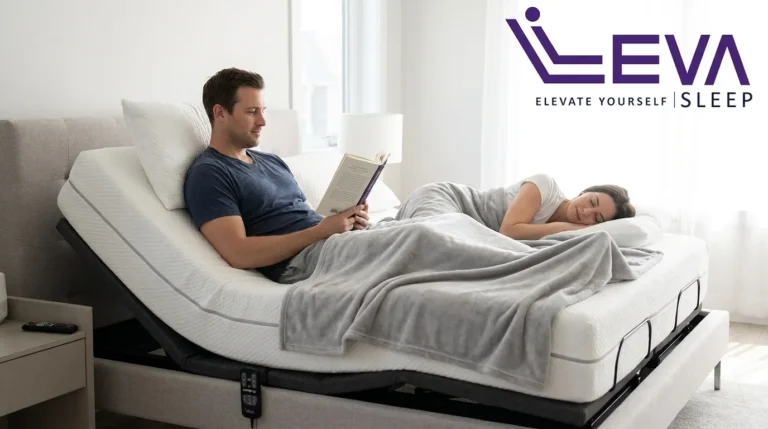
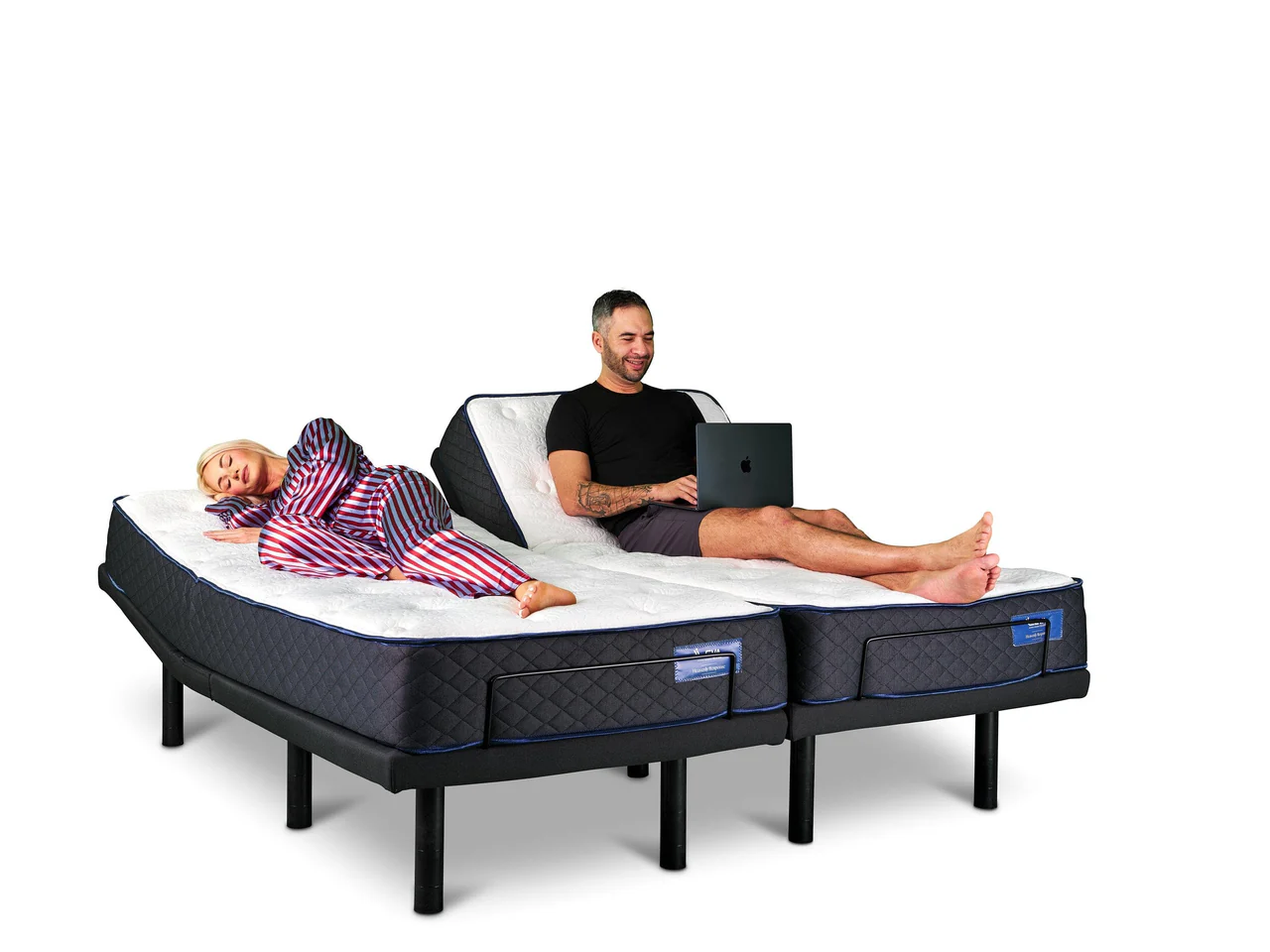
Gentle head elevation can reduce snoring and mild sleep apnea symptoms in a natural way. Raising the upper body slightly helps open the airway and improves airflow without masks or oral devices. This position can also ease pressure on the lower back and support circulation. Couples often face a challenge when one person benefits from elevation and the other prefers lying flat. Traditional beds force a shared position, which means someone compromises. Split adjustable systems solve this by allowing one partner to sleep with the head elevated while the other remains flat, so both stay comfortable and supported.
12. Upgrade to Split Adjustable Positioning (Leva’s Best Natural Solution)
Split adjustable bases give couples a long-term, natural way to personalize sleep without separate beds. These systems remove the compromises of flat mattresses by letting each partner control their own side. Leva Sleep’s adjustable bases feature whisper-quiet German motors, app-controlled positioning, and anti-snore technology launching in 2026. Each partner can fine-tune firmness, elevation, massage, and temperature while still sharing one bed. The integrated app lets you track sleep scores and adjust positions over time as your needs change.
Frequently Asked Questions
Can adjustable positioning naturally fix snoring?
Yes, gentle head elevation can reduce snoring by improving airflow through the upper airway. Leva Sleep’s anti-snore mode detects snoring patterns and makes small, automatic adjustments to help keep the airway more open. This approach offers a drug-free option that avoids masks or mouthpieces for many people with mild snoring. Elevation works with gravity so the tongue and soft tissues fall away from the airway opening instead of blocking it.
What’s the best solution for couples with different sleep needs?
Split Queen and King adjustable bases give each partner independent control while still sharing one frame. One side can elevate for snoring relief or reflux support while the other stays flat. Each person can also customize firmness, massage, and temperature settings. This setup removes the need to compromise on one mattress feel and helps both partners wake up more rested.
How do the costs and benefits compare to other sleep solutions?
A quality adjustable system from Leva Sleep delivers value over many years of nightly use. Better positioning can improve sleep quality, reduce pain, and support healthier relationships by cutting down on nighttime disruptions. These benefits build over time and often outweigh the ongoing costs of temporary fixes such as medications, repeated pillow experiments, or separate sleep setups. When you compare the impact of chronic poor sleep with a one-time investment in a supportive system, the long-term return becomes clear.
Are adjustable beds safe for people with pain or sleep apnea?
Adjustable positioning is commonly recommended by doctors for conditions such as sleep apnea, acid reflux, and chronic pain. Leva Sleep’s systems are designed and assembled in the US with safety and comfort in mind. Gentle elevation can help reduce apnea events for some users, and targeted support can ease pressure on joints and the lower back. Always consult your healthcare provider for specific medical guidance, then use adjustable settings to match their recommendations.
How do I get started with better sleep positioning?
You can begin by trying adjustable positioning in person and asking questions about your specific needs. Visit Leva Sleep’s La Jolla showroom to experience different setups and talk with sleep experts about your snoring, pain, or comfort concerns. Their team can demonstrate how split adjustable systems work for couples with different preferences. You can also review models and features online to narrow down which system fits your space, budget, and goals before you buy.
Conclusion
These 12 natural strategies give couples a clear path from basic sleep hygiene to advanced positioning solutions. Start with two or three simple habits, such as consistent bedtimes, a cooler bedroom, or smarter hydration, and build from there. When you are ready, consider adjustable positioning to address snoring, pain, and different comfort needs without separate beds. Better sleep for both partners supports stronger relationships, steadier energy, and a higher quality of daily life.