Written by: Matthew Timmins, Founder and Managing Director, Leva Sleep
Key Takeaways
- Back sleeping with knee support maintains neutral spine alignment and reduces pressure on hips, shoulders, and lower back.
- Side sleeping with a pillow between the knees prevents lumbar rotation and supports lower back pain and sciatica relief.
- Fetal and yearner positions target herniated discs, upper back pain, and shoulder pain while preserving natural spinal curves.
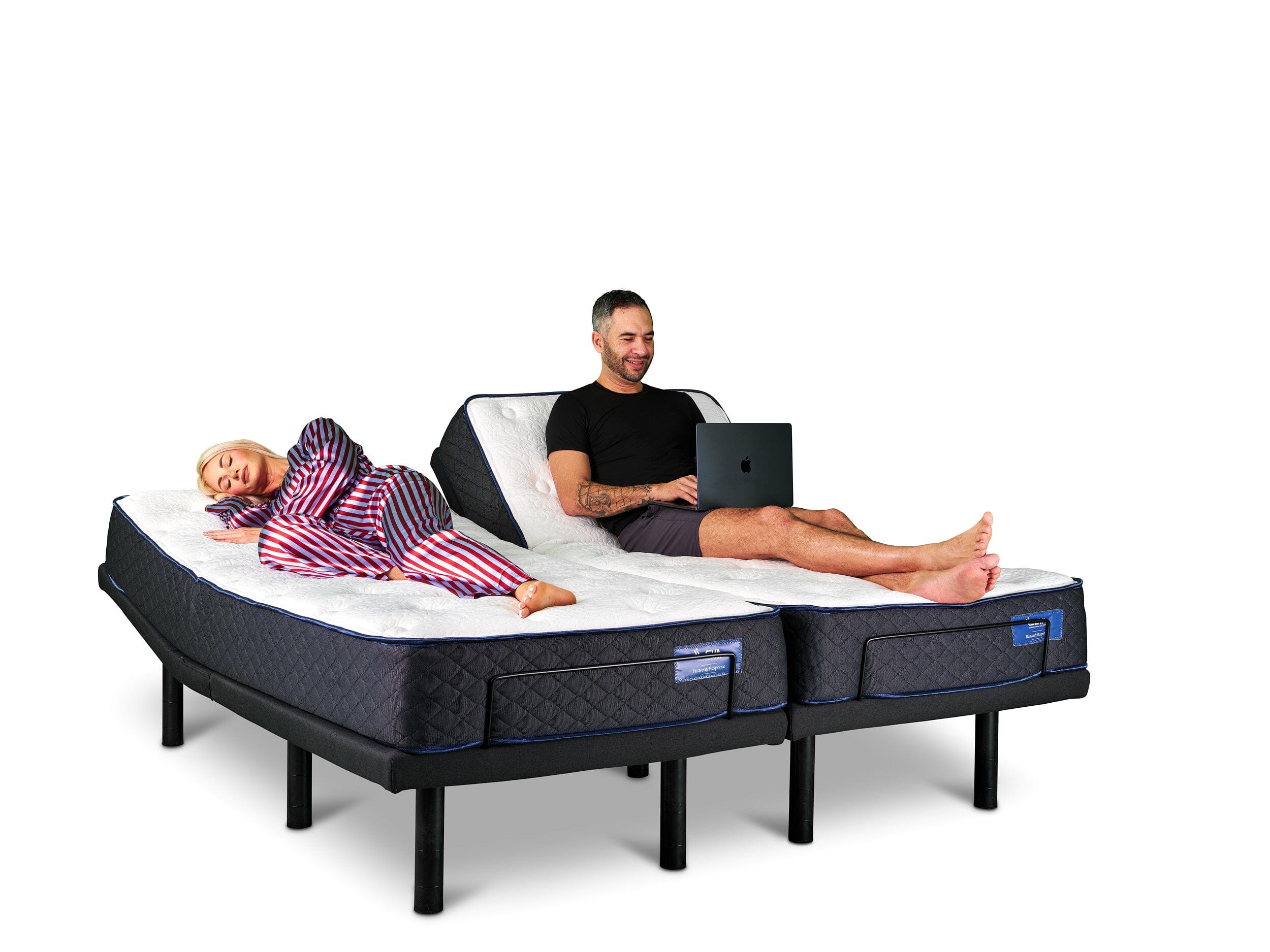
- Split adjustable bases give couples independent control over head, foot, and lumbar support for personalized comfort.
- Avoid stomach sleeping to reduce neck strain and spinal misalignment; discover Leva Sleep’s split adjustables for effortless pain-free sleep.
7 Evidence-Based Sleep Positions for Pain Relief
1. Back Sleeping for Neutral Spine Alignment
Back sleeping supports the spine’s natural S-curve when you use the right pillows and mattress. This position spreads your body weight evenly and reduces pressure on hips and shoulders. It also keeps your neck in line with your spine.
Place a pillow under your knees to support the natural curve of your lower back. Use a supportive head pillow that keeps your head level with your spine, not tilted forward or backward. These two pillows work together to maintain neutral alignment from neck to tailbone. Most people feel better with a slight head elevation that also supports easier breathing.
Split adjustable bases work especially well for back sleepers by allowing independent zero-gravity positioning, with both head and feet slightly elevated. The upcoming anti-snore mode can detect snoring and make small head adjustments. App controls let you save your favorite positions so you can return to them with one tap.
2. Side Sleeping with Knee Support for Lower Back Pain
Side sleeping with a pillow between your knees reduces rotation in the lumbar spine. This setup stops the top leg from dropping forward, which would rotate the pelvis and twist the lower spine.
Lie on your side with a firm pillow between your knees so your thigh bones stay parallel to the mattress. This stacks your hips correctly and keeps your spine neutral. A pillow between the knees helps keep the pelvis steadier and reduces twisting through the lower spine, which is especially helpful for people with sciatica.
Leva’s split bases let each partner adjust their side independently, including lumbar support for precise lower back positioning. The pillow tilt motor fine-tunes head position while you maintain a straight, supported spine all night.
3. Fetal Position for Herniated Disc and Upper Back Relief
The fetal position means lying on your side with your knees drawn toward your chest. This posture gently opens the spaces between vertebrae and can ease pain from herniated discs. You also gain the alignment benefits of side sleeping.
Curl up on your side with bent knees, but avoid tucking into a tight ball. A tight curl can restrict breathing and strain your neck. Place a pillow between your knees and use a head pillow that keeps your neck neutral. Switch sides during the week to avoid muscle imbalances.
An adjustable base improves this position by allowing small changes to head elevation and leg height. Independent controls let your partner keep their preferred setup while you adjust to find the level of elevation that best eases disc pressure.
Ready for pain-free nights? Leva’s white-glove setup delivers personalized comfort for both partners.
4. Elevated Legs Position for Hip and Knee Pressure Relief
Elevating your legs above heart level improves circulation and reduces swelling in your feet and lower legs. This position also takes pressure off hip and knee joints, which helps people with arthritis or circulation issues.
Lie on your back and place pillows under your calves and feet so your legs rest 6 to 12 inches above your heart. Keep your lower back in contact with the mattress and use a supportive head pillow. Use this position for shorter sessions during the night rather than as your only all-night posture.
Split adjustable bases make leg elevation simple with separate foot controls on each side. Partners can choose different leg heights while still setting their own head positions for comfort.
5. Semi-Reclined Position for Snoring and Mild Sleep Apnea
A semi-reclined position with head elevation between 30 and 45 degrees helps keep airways open. This angle can reduce snoring and mild sleep apnea symptoms by using gravity to limit soft tissue collapse in the throat. At the same time, you can maintain a healthy spinal curve.
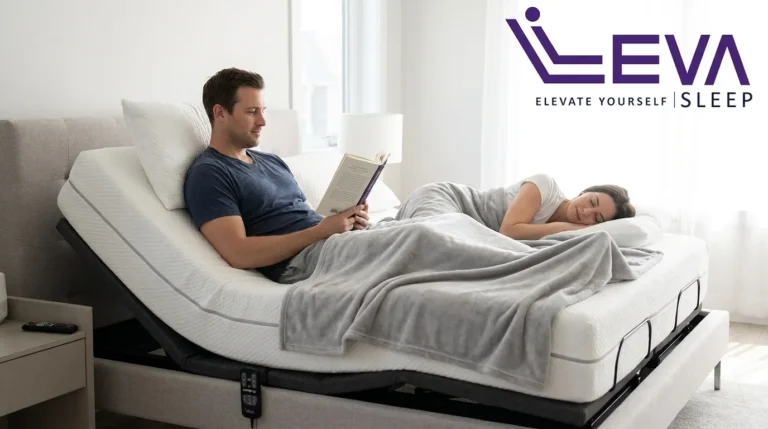
Raise your head and upper torso with multiple pillows or an adjustable base to create a smooth, gradual incline. Avoid sharp angles that bend the neck. Keep your neck from hyperextending and consider a pillow under your knees to support the lower back.
Leva’s 2026 anti-snore mode detects snoring patterns and makes subtle head adjustments to improve airway position. With split controls, only the snoring partner needs elevation while the other can stay flat or choose a different angle.
6. Yearner Side Position for Shoulder and Upper Back Comfort
The yearner position means side sleeping with both arms extended forward. This posture can reduce pressure on the shoulder joint while preserving the spinal benefits of side sleeping. It spreads arm weight more evenly than a traditional side posture.
Lie on your side with arms extended forward at shoulder height and place a pillow between your knees for hip alignment. Sleep on the shoulder that feels less painful. Use a head pillow that fills the space between your shoulder and neck so your head does not tilt.
An adjustable base lets you fine-tune your torso angle to ease shoulder pressure while keeping your spine straight. Independent controls allow each partner to dial in shoulder comfort without affecting the other’s position.
7. Leva-Optimized Split Setup for Couples
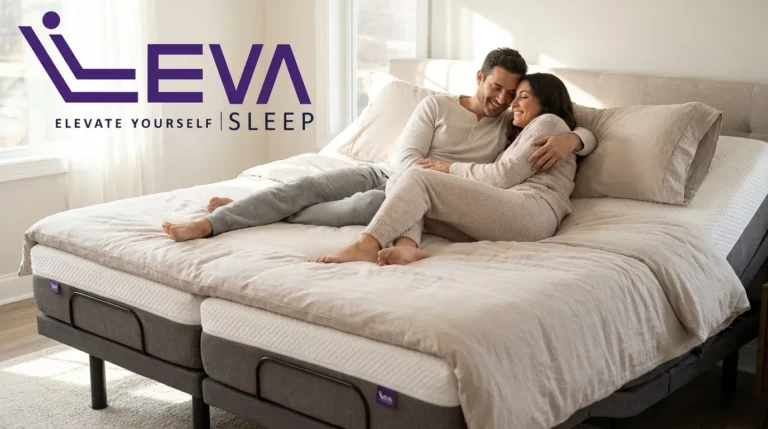
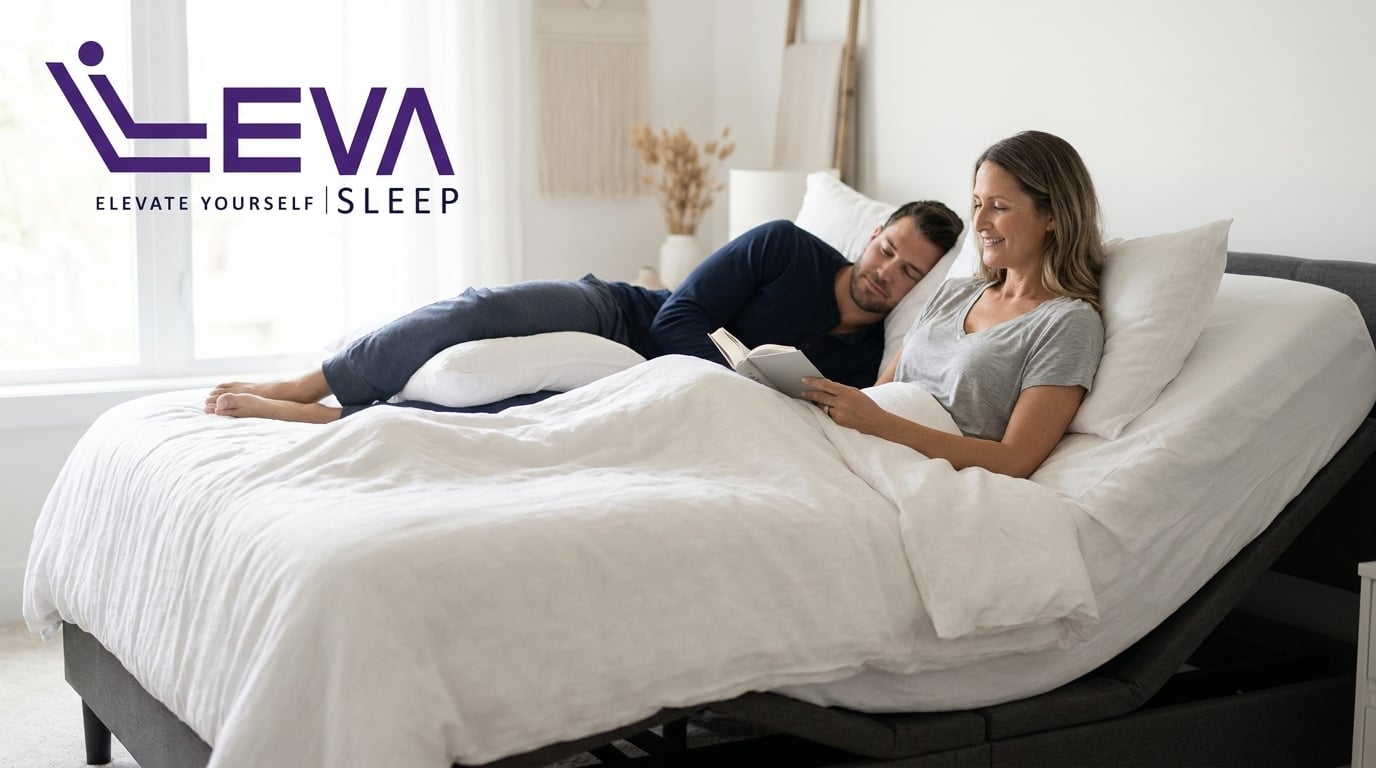
A Leva-optimized split configuration lets couples share a bed while still addressing individual pain and comfort needs. Each partner can choose a different position and still stay close.
Each person selects a preferred posture from the positions above and then adjusts head, lumbar, and foot settings for personal comfort. App presets store these combinations so you can return to them quickly during the night.
Split Queen and King setups provide full independence with quiet motors that avoid waking your partner. Features such as massage, temperature control, and anti-snore detection work separately on each side. Couples can stay in the same bed while still getting targeted pain relief.
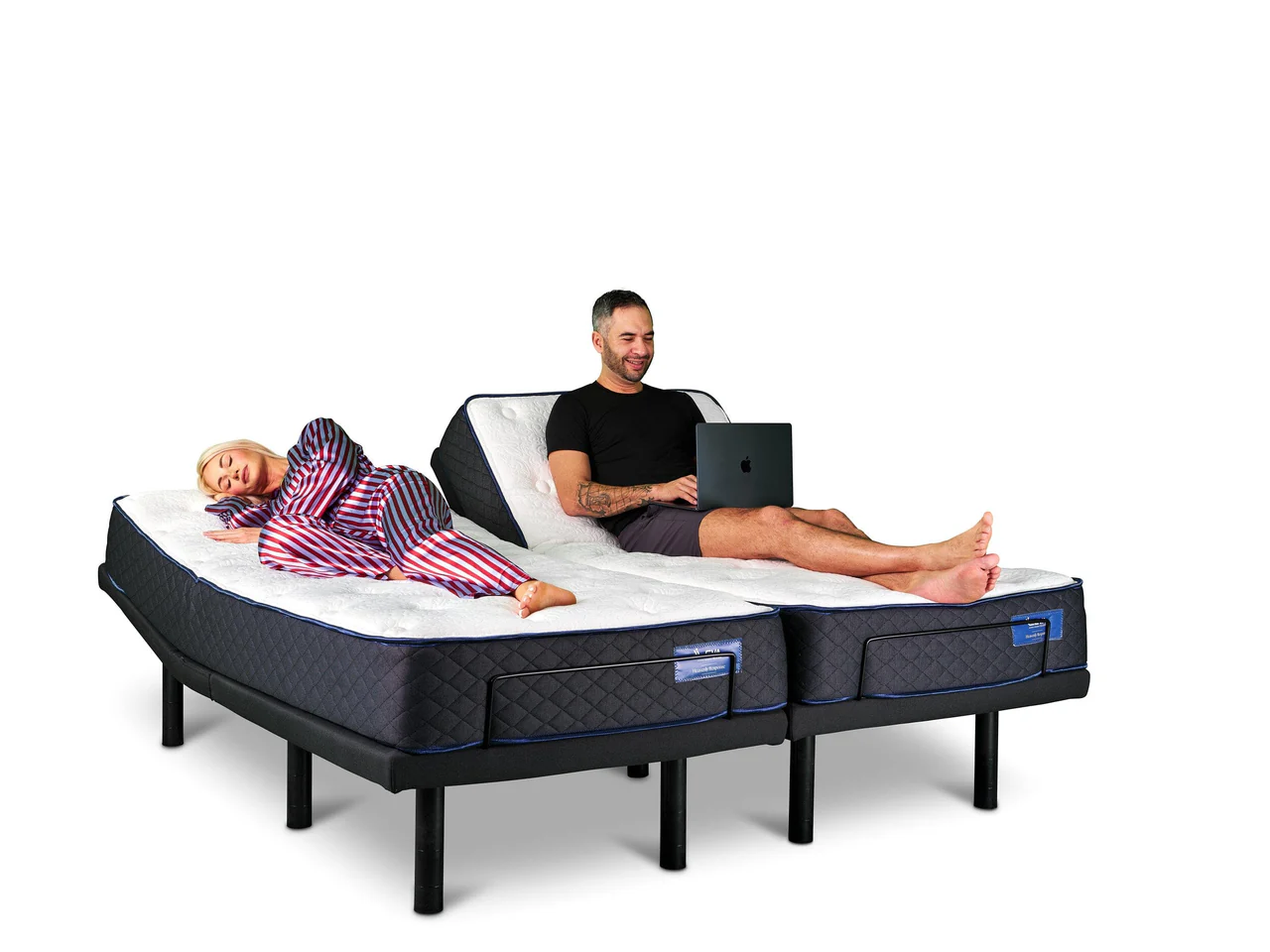
Transform your relationship with sleep by exploring Leva’s split adjustable systems.
Why Stomach Sleeping Aggravates Lower Back Pain
Stomach sleeping forces the neck into extreme rotation and misalignment and creates hyperlordosis that increases pressure on cervical vertebrae. This strain leads to morning stiffness, headaches, and long-term neck pain. At the same time, the position flattens the natural curve of the mid-back and over-arches the lower back, which causes muscle tension and uneven spinal loading.
Pressing the face into the pillow can also restrict breathing. Even with thin pillows or extra pelvic support, stomach sleeping remains the least favorable position for spinal health and chronic pain.
Choosing Left or Right Side for Better Sleep
Both left and right side sleeping support healthy spinal alignment when you use a knee pillow and good head support. Left side sleeping may slightly benefit heart function and digestion. Right side sleeping can feel better for some people with certain heart conditions.
The priority is consistent knee support and regular side changes to avoid muscle imbalances. Split adjustable bases make these changes easy with app controls that shift positions smoothly during the night.
Sleeping Positions That Ease Sciatica
For people with sciatic nerve pain, the side-sleeping setup described earlier becomes even more important. As mentioned in the side-sleeping position above, keeping a pillow between the knees stabilizes the pelvis, which helps limit nerve compression. The fetal position can also gently decompress the spine and reduce pressure on the sciatic nerve.
Avoid stomach sleeping and side sleeping without knee support, since both can increase sciatic irritation. Gentle leg elevation while back sleeping can also help by reducing pressure on the lower spine.
Upper Back Pain Relief with Back and Side Positions
Back sleeping with a properly sized pillow supports neutral alignment in the upper spine. Side sleeping in the yearner position with arm support can reduce strain in the shoulders and upper back. Stomach sleeping tends to create excessive upper back stress and strong neck rotation, so avoid it when possible.
Semi-reclined positions with gradual head elevation can also ease upper back pressure while preserving natural spinal curves. Adjustable bases allow small, precise changes so you can find the angle that best relieves your upper back pain.
Frequently Asked Questions
Can adjustable beds actually fix chronic pain?
Adjustable beds do not cure chronic pain, but they can improve sleep quality and reduce pain-related awakenings. Better positioning supports spinal alignment and pressure relief so your body can rest and recover more effectively. Leva Sleep has helped over 25,000 customers improve sleep quality through personalized positioning.
What is the best sleep setup for couples with different needs?
Split adjustable bases work well for couples who have different comfort preferences, pain issues, or sleep disorders. Each partner controls head elevation, lumbar support, leg height, and even temperature on their own side. Split Queen and King sizes keep couples close while still allowing full customization.
Are elevated sleep positions safe for sleep apnea?
Head elevation between 30 and 45 degrees can help many people with mild sleep apnea and snoring and may reduce reliance on CPAP. Always talk with your healthcare provider before changing your sleep apnea treatment plan. Adjustable bases provide smooth, comfortable elevation that keeps airways open while maintaining spinal alignment.
How can I transition to new sleep positions?
Begin with short trials of new positions and use supportive pillows to make the change easier. App-controlled adjustable bases simplify this process by letting you test different angles and save what feels best. Most people adjust to new positions within one to two weeks of consistent practice.
Are adjustable beds worth it compared to traditional mattresses?
For people with chronic pain, sleep disorders, or partners with different needs, adjustable beds often deliver strong value. Better alignment and pressure relief can mean deeper sleep and less pain. Leva Sleep offers premium adjustable systems at 30 to 50 percent less than many comparable competitors, which makes advanced sleep technology more accessible.
Conclusion: Move Toward Pain-Free Sleep with Leva
The right sleep position, combined with thoughtful elevation and support, can turn painful nights into restorative rest. These seven positions give you research-backed options for easing pain and improving spinal alignment, whether you face chronic back pain, sciatica, sleep apnea, or general discomfort.
Couples who refuse to accept poor sleep or separate beds can use Leva Sleep’s split adjustable systems to create a shared yet personalized sleep space. Start with one or two positions that match your main pain points, then use Leva’s technology to fine-tune your setup.
Transform your sleep with Leva Sleep by visiting the La Jolla showroom or shopping online today.