Written by: Matthew Timmins, Founder and Managing Director, Leva Sleep
Key Takeaways
-
Create a cool, dark, and quiet bedroom so your body can follow natural sleep cycles and couples experience fewer wake-ups.
-
Keep a strict sleep schedule, cut screens and caffeine 6 hours before bed, and follow the 3-3-3 rule to steady circadian rhythms.
-
Add melatonin-rich foods like tart cherries and kiwi, plus gentle anti-snore strategies, to improve sleep without relying on medication.
-
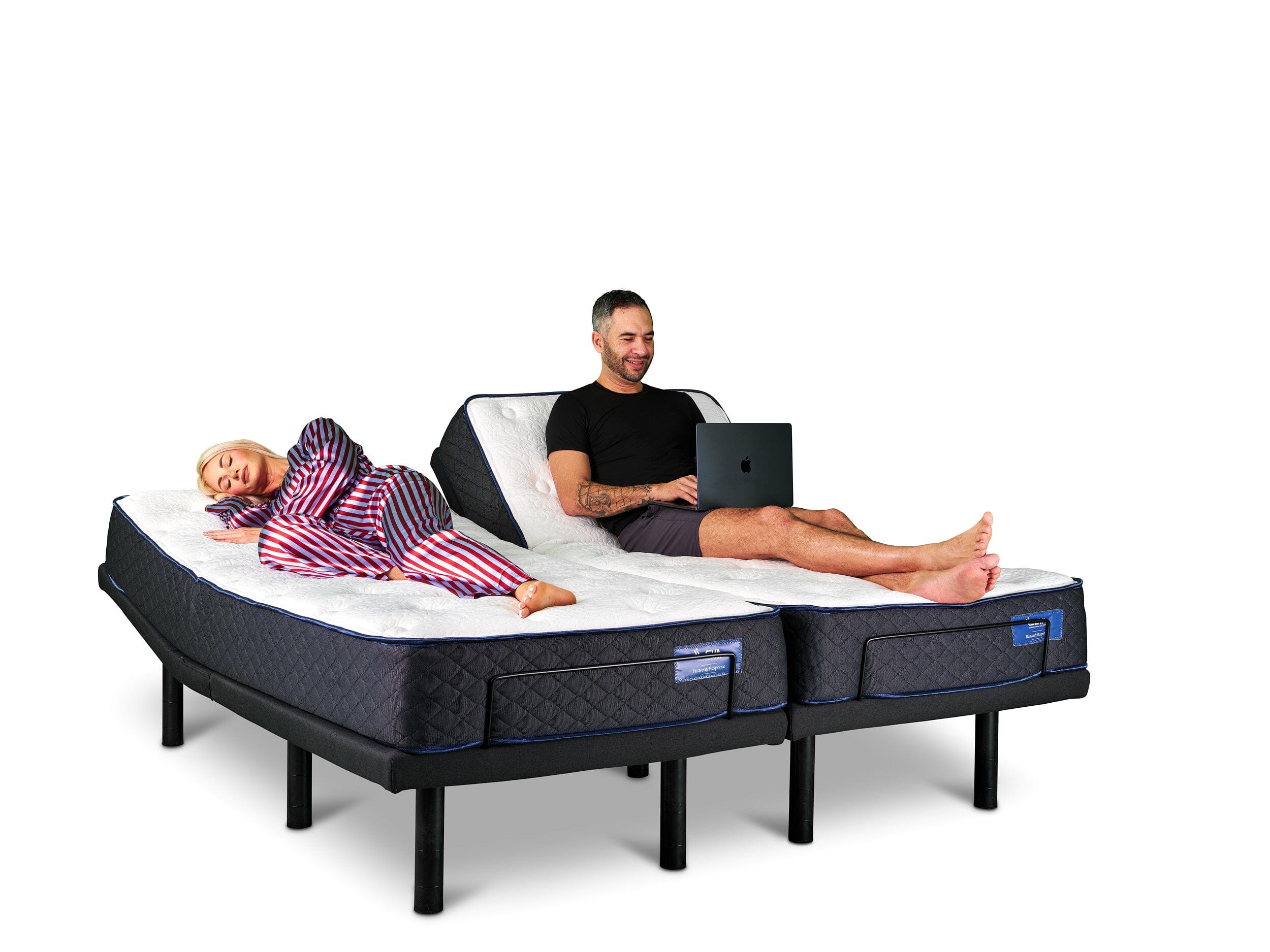
Use split adjustable bases for independent elevation, anti-snore settings, and temperature control so each partner sleeps comfortably.
-
Enjoy white-glove setup with Leva Sleep’s delivery team and visit Leva Sleep for adjustable systems tailored to your shared sleep needs.
12 Steps to Drastically Improve Sleep Quality at Home
This 12-step plan moves from simple bedroom changes to advanced adjustable technology that solves complex couple sleep issues.
-
1. Optimize bedroom environment
-
2. Establish strict sleep schedule with 20-minute rule
-
3. Eliminate screens and caffeine 6 hours pre-bed
-
4. Implement 7 quick environment fixes
-
5. Master the 3-3-3 rule for sleep
-
6. Eat melatonin-rich fruits and vegetables
-
7. Apply natural anti-snore remedies and supplements
-
8. Elevate for pain relief and spinal alignment
-
9. Solve couple conflicts with split adjustable bases
-
10. Activate anti-snore mode and apnea solutions
-
11. Regulate temperature with advanced accessories
-
12. Complete seamless setup with white-glove delivery
Your 12-Step Sleep Upgrade Guide
1. Optimize Bedroom Environment
Small environmental tweaks can dramatically improve how long and how deeply you sleep. The CDC recommends making sure your bedroom is at a comfortable temperature, eliminating light sources, and reducing noise levels for better sleep conditions. The table below highlights four key environmental factors and how each one affects your body during sleep.
|
Factor |
Optimal Range |
Impact on Sleep |
|---|---|---|
|
Temperature |
Comfortable |
Supports natural body cooling |
|
Humidity |
30-50% |
Prevents respiratory irritation |
|
Noise Level |
Quiet |
Reduces sleep fragmentation |
|
Light Exposure |
Complete darkness |
Maintains melatonin production |
Put this into practice by installing blackout curtains, using a white noise machine, and adjusting thermostat settings. Couples can agree on shared preferences or use split-zone climate control when temperature comfort levels differ.
2. Establish Strict Sleep Schedule + 20-Minute Rule
Mayo Clinic research demonstrates that consistent sleep-wake times regulate circadian rhythms. Track sleep efficiency with a simple app or journal so you can see how regular timing changes your rest. The 20-minute rule reduces sleep anxiety by asking you to get out of bed if you cannot fall asleep within 20 minutes.
Couples should synchronize bedtimes when possible while still respecting individual chronotypes. To find a workable shared schedule, track sleep patterns for two weeks and note when both partners feel sleepy and wake refreshed. Once you identify that window, keep the same timing every day, including weekends, to strengthen circadian rhythm regulation.
3. Eliminate Screens/Caffeine 6hrs Pre-Bed
Harvard Medical School studies show that blue light exposure suppresses melatonin production, and caffeine’s approximately 5 to 6-hour half-life can delay sleep even when you drink it in the early afternoon. Use the sleep tracking you started in Step 2 to see how removing screens and caffeine affects how quickly you fall asleep.
Create a device-free bedroom and set a personal caffeine cutoff about 6 hours before bed. When partners have different caffeine tolerances, follow the schedule of the more sensitive partner so you protect shared sleep timing and reduce evening tension.
4. 7 Quick Environment Fixes for Faster Wins
Simple upgrades can remove hidden irritants that keep you from sleeping soundly. Focus on these quick fixes:
-
Replace mattresses older than 7-8 years
-
Use hypoallergenic bedding materials
-
Install air purifiers for allergen reduction
-
Position beds away from external noise sources
-
Remove electronic devices with standby lights
-
Ensure proper ventilation for air circulation
-
Use aromatherapy with lavender or chamomile scents
These foundational changes create a healthier, calmer sleep environment. However, environmental upgrades alone cannot solve chronic pain, sleep apnea, or major differences in partner comfort preferences. For couples who still struggle after making these changes, advanced positioning solutions often provide the next level of relief.
5. Master the 3-3-3 Rule for Sleep
The 3-3-3 rule sets a clear evening structure: stop eating 3 hours before bed, end work 3 hours before bed, and spend 3 minutes in mindful wind-down. Research shows that late-night eating can disrupt circadian rhythms and digestion.
Implementation starts with planning dinner timing so you meet the 3-hour food cutoff, which then supports work boundaries that protect the same window. These boundaries create space for a consistent pre-sleep routine, such as stretching, breathing exercises, or light reading. For couples, coordinating meal schedules and honoring each other’s wind-down preferences keeps sleep timing aligned. Continue your sleep tracking to see how this rule changes your overall sleep quality.
6. Eat Melatonin-Rich Fruits/Veggies
Food choices during the day can gently support your body’s melatonin production at night. Researchers from the University of Chicago Medical Center and Columbia University found in a 2025 study that eating more fruits, vegetables, and whole grains during the day is linked to better sleep quality the same night. Use your existing sleep logs to notice how your rest changes as you add these foods.
Prioritize tart cherries, bananas, kiwi fruit, and leafy greens that naturally support sleep. Complex carbohydrates boost tryptophan uptake, increasing melatonin and serotonin levels for deeper sleep, so include whole grains in your evening meals.
7. Natural Anti-Snore Remedies + Supplements
Gentle, non-invasive strategies can reduce snoring before you consider medical devices. The Office of Dietary Supplements April 2026 Vitamin Verdict recommends increasing consumption of magnesium-rich foods like leafy greens, nuts, fruits, and dark chocolate to improve mood and sleep and suggests supplements mainly when a deficiency exists.
Try elevating the head, using nasal strips, and practicing throat exercises that strengthen airway muscles. When snoring continues to disturb both partners, mechanical positioning through an adjustable base usually provides more reliable relief than behavioral changes alone.
8. Elevate for Pain Relief/Spinal Alignment
Adjustable positioning can ease chronic pain and support spinal alignment in ways a flat mattress cannot match. A 2017 study of 52 patients with mild to moderate obstructive sleep apnea found that elevating the head of the bed by 7.5 degrees reduced the apnea-hypopnea index from 15.7 to 10.7 events per hour, a 31.8% improvement. Different elevation angles target specific issues, as shown below.
|
Elevation Angle |
Primary Benefit |
Condition Addressed |
|---|---|---|
|
7.5-15 degrees |
Airway opening |
Mild sleep apnea, snoring |
|
15-30 degrees |
Pressure relief |
Hip, shoulder, knee pain |
|
30-45 degrees |
Spinal alignment |
Lower back pain, acid reflux |
Leva Sleep’s adjustable bases offer precise angle control with whisper-quiet motors so each partner can find a comfortable position without waking the other.
9. Solve Couple Conflicts with Split Queen/King
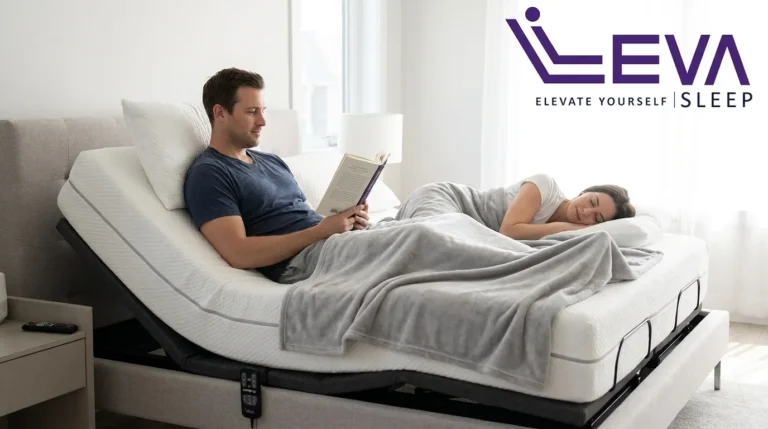
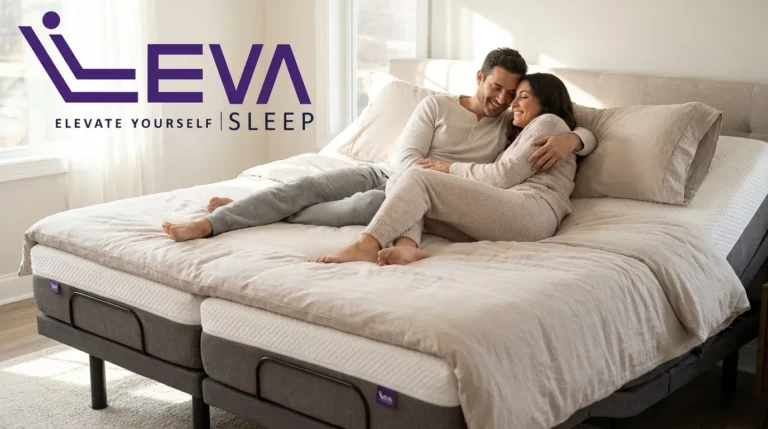
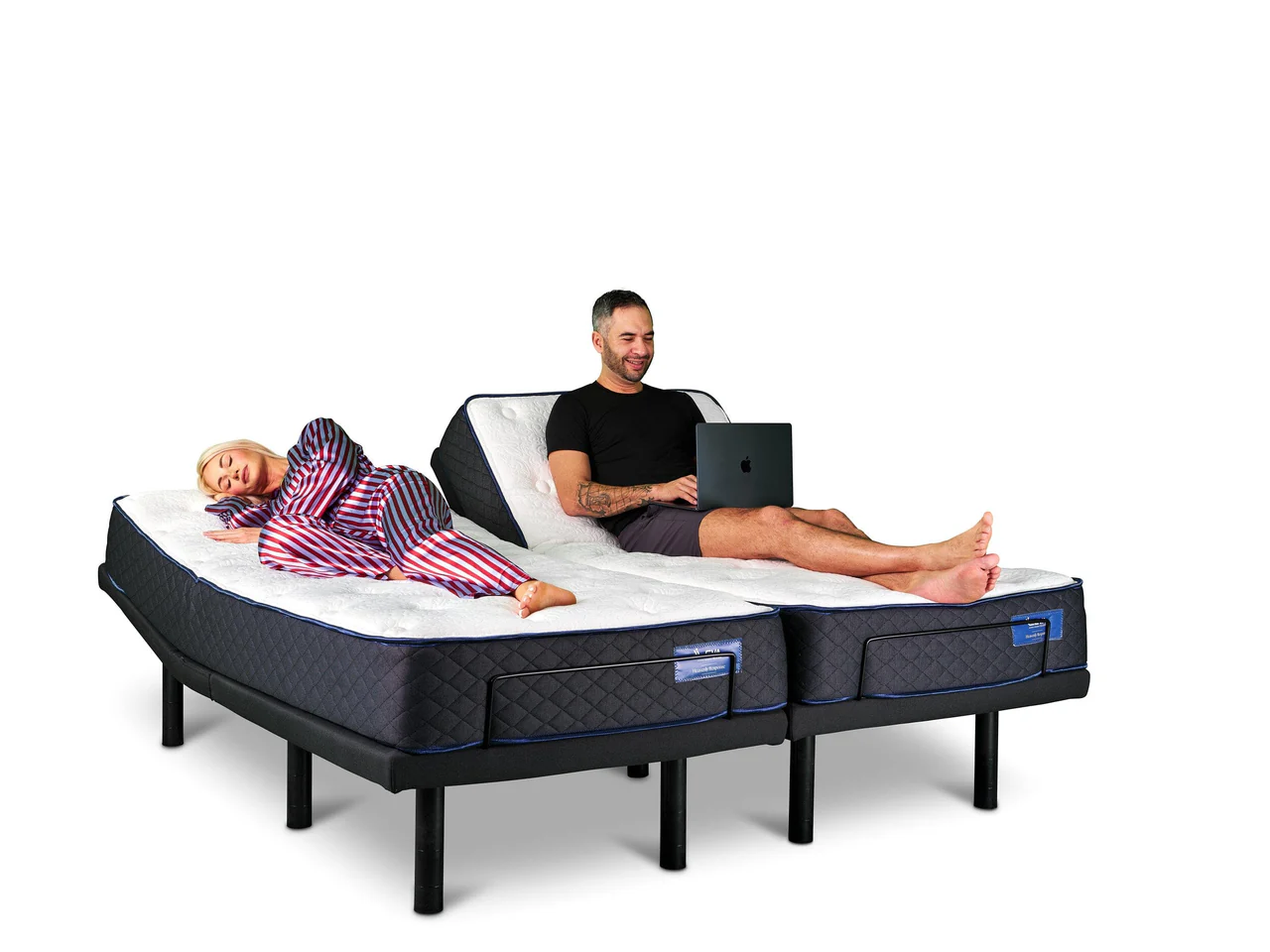
Split adjustable bases remove the constant compromise of a shared flat mattress. Leva Sleep’s Split Queen and King setups give each partner independent control of elevation, firmness, and positioning while you still share one bed.
With over 25,000 customers served across 8 years, Leva Sleep focuses on couple-specific solutions for different comfort levels, medical needs, and sleep styles. App-based controls allow quiet, personal adjustments so you do not need to negotiate every change with your partner.
10. Anti-Snore Mode + Apnea Fixes
Smart positioning features can respond to breathing changes during the night. Automated positional therapy via smart beds, which detect supine sleeping position and elevate the head or upper torso, can help reduce snoring in mild to moderate snorers without requiring CPAP or other medical devices.
Leva Sleep’s upcoming anti-snore mode, planned for spring 2026, will detect snoring patterns and make small head-elevation adjustments for gentler breathing support. Building on the elevation benefits discussed earlier, a 2024 randomized pilot trial testing adjustable beds for mild head elevation in daily life showed significant reductions in both respiratory distress index and apnea-hypopnea index without causing discomfort or worsening sleep satisfaction.
11. Temperature Regulation + Accessories
Personal temperature control helps resolve one of the most common couple sleep disagreements. Leva Sleep’s bedding line uses temperature-regulating materials and works with heating and cooling pads so each partner can fine-tune warmth.
Fitted sheets with extra elastic stay in place during elevation changes, and duvet clips keep covers separated when partners choose different positions. These accessories support comfort and function across all bed settings while preserving individual temperature preferences.
12. Seamless Setup with White-Glove Delivery
Professional setup removes installation stress and ensures you use every feature correctly. Leva Sleep’s white-glove delivery includes bedroom setup, height adjustment, product walkthroughs, and old bed removal so you can start sleeping better right away.
Vertical integration allows Leva Sleep to offer premium adjustable systems at 30-50% less cost than comparable competitors while maintaining strong quality control and a consistent customer experience from purchase through setup.
Frequently Asked Questions
What is the 3-3-3 rule for sleep?
The 3-3-3 rule means you stop eating 3 hours before bedtime, end work 3 hours before sleep, and spend 3 minutes in mindful wind-down. This timing supports digestion, calms your mind, and prepares your body for restorative sleep cycles.
Which sleep solutions work best for couples with different needs?
Split adjustable bases work well for couples with different comfort preferences, medical conditions, or sleep positions. Unlike flat mattresses that force compromise, split systems give each partner independent control of elevation, firmness, and positioning while still supporting closeness and intimacy.
How does Leva Sleep compare to traditional adjustable beds?
Leva Sleep focuses only on adjustable sleep systems and offers 15-20 models, compared to 3-5 at many general retailers. Features include whisper-quiet German motors, app control, anti-snore technology, and bedding designed specifically for adjustable bases. The vertical integration model mentioned earlier enables this cost advantage while maintaining premium quality standards.
Are anti-snore positioning features safe for nightly use?
Clinical research shows that mild head elevation can reduce snoring and sleep apnea symptoms. Automated adjustments occur gradually and follow natural sleep patterns, which makes them suitable for long-term nightly use.
What is the investment range for a complete adjustable sleep system?
Leva Sleep’s adjustable systems deliver premium features at 30-50% less cost than many luxury competitors through direct-to-consumer pricing and vertical integration. The total investment depends on size, feature set, and accessories, and financing options are available.
Schedule a showroom visit for personalized pricing based on your needs and to try different configurations in person.
Conclusion
Improving sleep quality at home works best when you follow a clear progression from basic bedroom changes to advanced positioning technology. These 12 steps give couples aged 35-70 a practical roadmap for addressing complex sleep challenges together.
Begin with steps 1 and 2 to build strong sleep hygiene, then explore Leva Sleep’s split adjustable systems for personalized comfort that removes nightly compromise. Keep tracking your sleep and speak with healthcare providers about ongoing medical concerns.
Reclaim shared, restorative sleep for better health, energy, and relationships. Start your journey to better sleep by exploring Leva Sleep’s split adjustable systems designed specifically for couples.