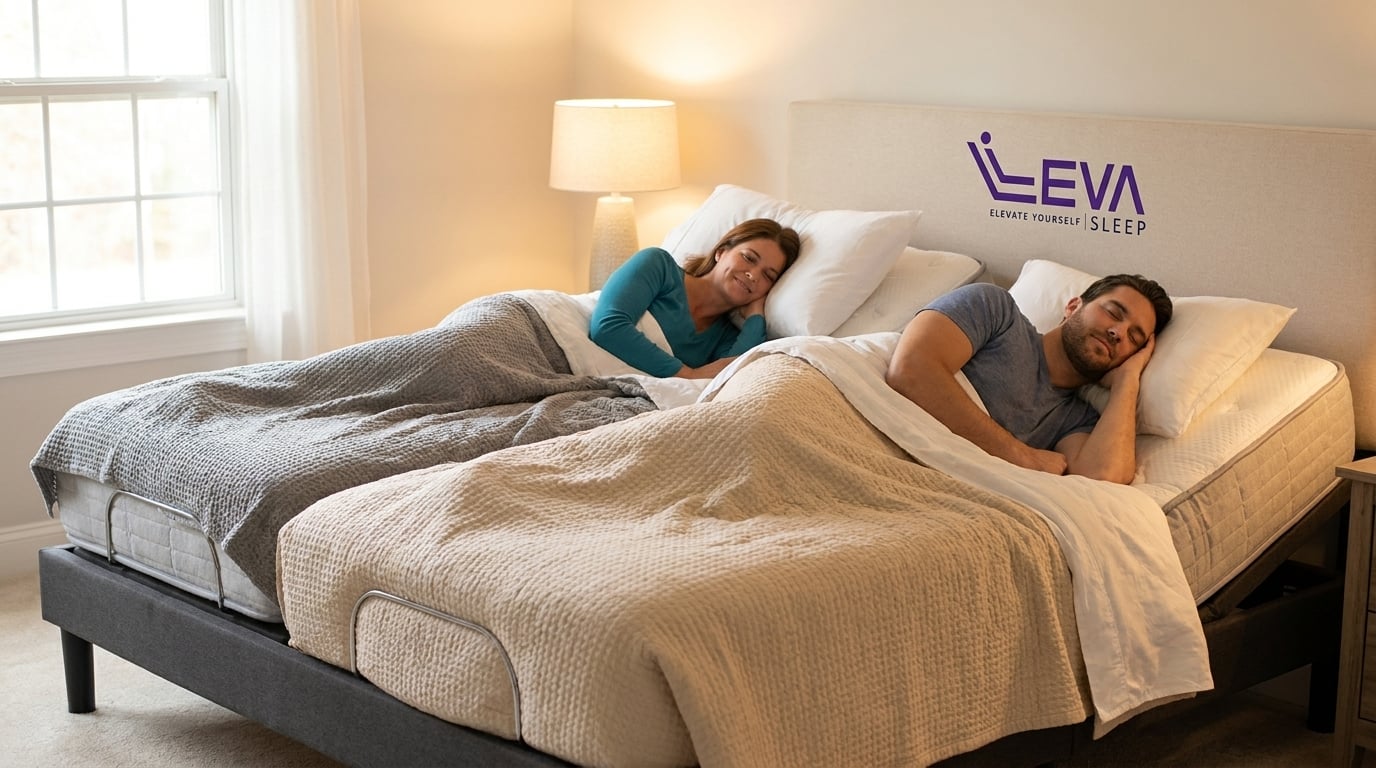
Written by: Matthew Timmins, Founder and Managing Director, Leva Sleep
Key Takeaways for Better Sleep as a Couple
- Couples often face sleep disruptions from snoring, motion transfer, temperature differences, and mismatched firmness preferences that traditional beds cannot resolve.
- Synchronize bedtime routines, use separate blankets, and add white noise to handle basic sleep interferences without major changes.
- Track sleep patterns and refine pillow choices to pinpoint and reduce specific partner-related disturbances.
- Split adjustable bases with anti-snore technology, independent positioning, and tailored firmness remove many compromises for shared sleep.
- Reclaim shared bed comfort by exploring Leva Sleep’s split adjustable systems and in-person showroom experience through Leva Sleep’s online and showroom options.
Why Couples Sleep Poorly Together
Couples sleep poorly together when core sleep needs clash and the bed cannot adapt. The most common issues stem from fundamental incompatibilities that flat beds simply cannot address.
Snoring and Sleep Apnea
Partner snoring affects sleep quality for both individuals. The snorer often experiences fragmented sleep due to breathing interruptions, while their partner endures repeated awakenings. Traditional flat beds offer no positioning solutions that address airway obstruction, a common cause of snoring.
Movement and Motion Transfer
Each time one partner shifts position, gets up for the bathroom, or experiences restless leg movements, the motion can travel through a traditional mattress. That movement disturbs the sleeping partner and pulls both people into lighter, less restorative sleep.
Temperature Regulation Differences
Many couples have opposite temperature needs at night. One partner may sleep hot while the other feels cold, which leads to thermostat battles and bedding compromises that leave neither person comfortable. Flat beds provide no individualized temperature control for each side.
Firmness and Support Preferences
Body weight, sleeping position, and pressure point sensitivity vary significantly between partners. A mattress that provides ideal spinal alignment for one person may create pressure points or inadequate support for the other. Couples often end up compromising on comfort when they share a single, uniform surface.
Medical and Positioning Needs
Conditions such as acid reflux, sleep apnea, chronic pain, or post-surgical recovery often require elevated or adjusted sleeping positions. Flat beds cannot accommodate these needs for one partner without affecting the other. When one person needs elevation for health reasons, both individuals usually adapt to an uncomfortable shared setup.
9 Expert Steps to Fix Poor Couples Sleep (No Separate Beds Needed)
These nine steps move from simple lifestyle tweaks to complete sleep system upgrades. Couples can follow them in order and address specific challenges one layer at a time.
1. Synchronize Bedtime Routines and Wind-Down Practices
Aligned routines reduce late-night disruptions and help both partners fall asleep more easily. Establish consistent sleep schedules where both partners begin winding down 30 to 60 minutes before bed. Create shared rituals such as reading, gentle stretching, or meditation that signal the body to prepare for sleep. This foundation supports better sleep together by aligning circadian rhythms and limiting one partner’s activities from disturbing the other.
2. Use Separate Blankets and Temperature-Regulating Bedding
Separate bedding often solves nightly temperature battles quickly. Replace shared comforters with individual blankets or duvets to reduce tug-of-war and temperature-related conflicts. Consider moisture-wicking sheets, cooling mattress toppers for the warm sleeper, and warmer layers for the partner who runs cold. This simple change addresses one of the most common sleep disruptions without major expense.
3. Implement White Noise and Sound Management
Sound control helps mask partner noise and creates a calmer sleep environment. Install white noise machines, use earplugs designed for side sleepers, or try sleep-specific headphones to soften partner sounds such as snoring, movement, or different breathing patterns. Position sound sources carefully so each person enjoys a comfortable sound environment within the same room.
4. Track Sleep Patterns with Wearable Technology
Objective data reveals when and how partner habits disturb sleep. Use sleep tracking devices or smartphone apps to identify specific patterns in sleep disruptions. Document when partner movements, snoring, or temperature changes cause awakenings. This information helps couples understand their unique challenges and measure progress as they apply new solutions.
5. Optimize Pillow Selection and Head Positioning
Proper pillows support the neck and reduce strain for each partner. Choose pillows that match each person’s preferred sleeping position and neck alignment needs. Side sleepers typically need thicker, firmer pillows, while back sleepers usually require medium support. Consider adjustable pillows that allow fine-tuning of height and firmness so each partner can dial in personal comfort.
6. Address Snoring Through Positioning and Technology
Targeted head elevation can reduce snoring for many couples. Elevate the head of the bed by 6 to 12 degrees to help keep airways open and lower snoring frequency. Consider adjustable bases with anti-snore modes that automatically detect snoring sounds and make subtle head elevation changes. These quiet adjustments reduce snoring without waking either partner and address one of the main reasons couples struggle to sleep side by side.
7. Implement Split Mattress Solutions for Firmness Differences
Split mattresses give each partner a tailored feel while preserving a shared bed. Consider split mattresses that allow different firmness levels on each side of the bed. This approach solves the challenge of finding the best mattress for couples with different preferences by providing personalized support on each side. Confirm that the mattress offers strong edge support and effective motion isolation between the split sections.
8. Invest in Split Adjustable Bases for Complete Customization
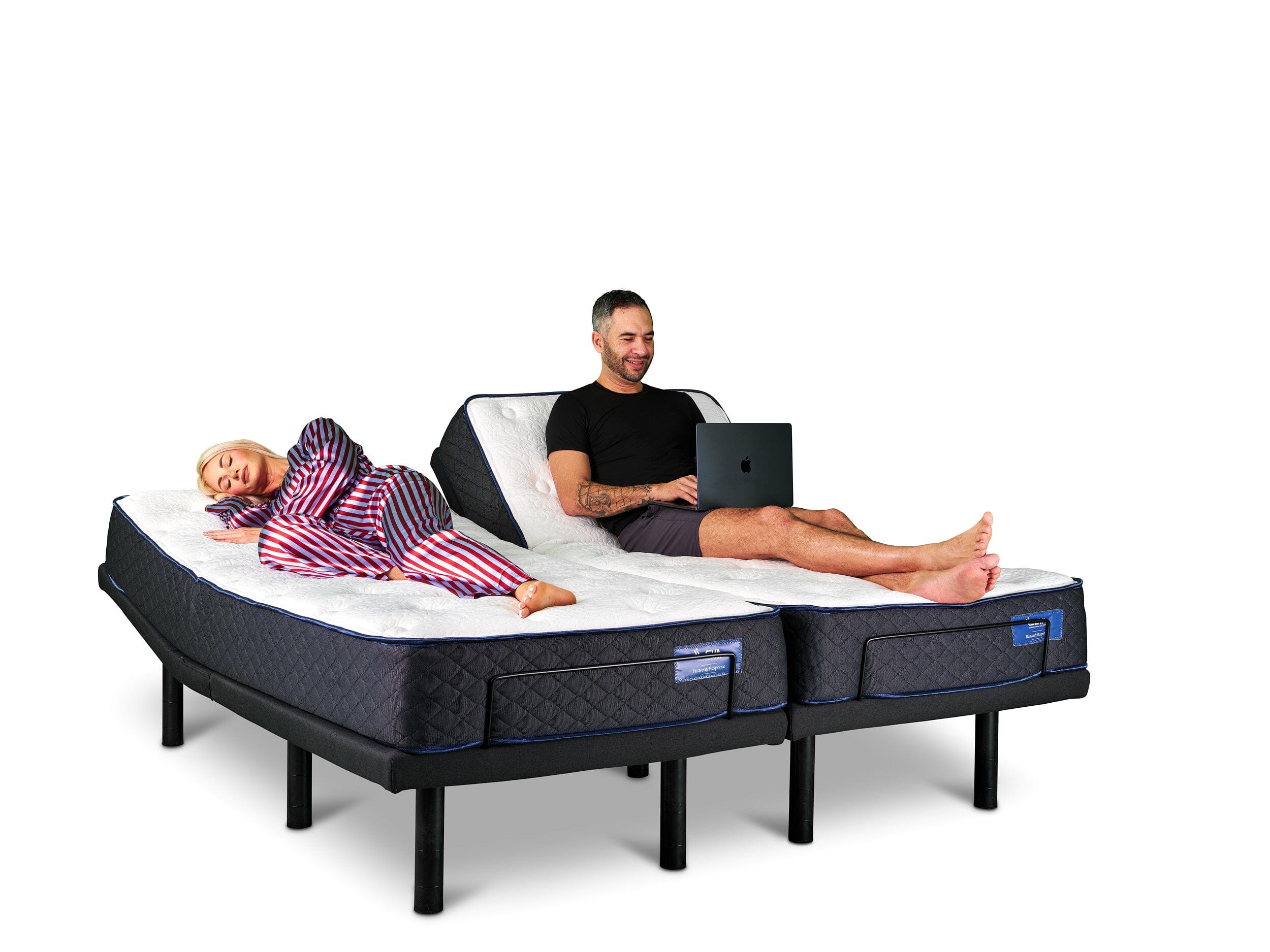
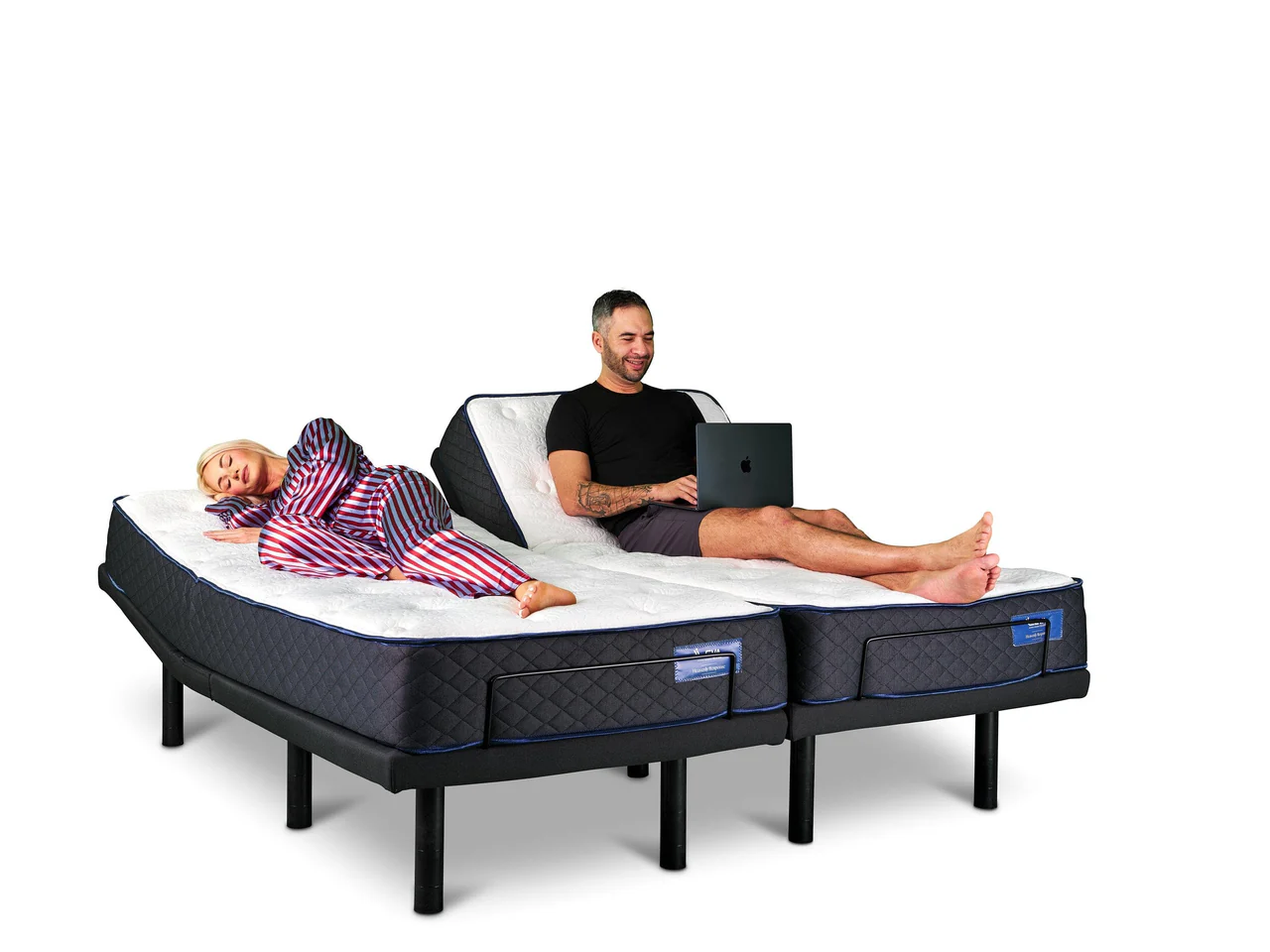
Split adjustable bases deliver the most comprehensive fix for complex couples sleep problems. These systems use quiet motors that allow each partner to control elevation, massage, and positioning independently. Integrated apps provide custom sleep positions, vibrating alarms, and automatic adjustments based on preferences. Many models add luxury features such as lumbar support, pillow tilt, and anti-snore positioning that tackle multiple sleep challenges at the same time.
9. Complete the System with Adjustable-Specific Bedding
Proper bedding keeps adjustable bases comfortable and frustration free. Standard bedding often fails on adjustable bases, because fitted sheets can pop off during elevation changes. Specialized bedding with extra elastic, deep pockets, and duvet clips maintains proper fit and separation when bed positions differ. This attention to detail keeps the entire sleep system working smoothly and supports a true “sleep divorce” solution that still keeps couples in the same bed.
The comparison table below highlights how split adjustable bases solve key issues that flat beds cannot address.
| Feature | Flat Beds | Split Adjustables |
|---|---|---|
| Customization | None | Independent sides with elevation, firmness, and positioning control |
| Snoring Reduction | Not Available | Auto head elevation |
| Noise Level | Not Applicable | Under 40 dB operation, quieter than a typical library |
| Pain Relief | Poor spinal alignment | Spinal elevation, massage, and zero-gravity positioning |
Why Split Adjustables Work: Research and Real Results
Clinical research shows that sleep and pain have a bidirectional relationship, where poor sleep increases pain sensitivity and higher pain levels further disrupt sleep. Adjustable bases help by supporting neutral spinal alignment and pressure-relieving positions tailored to each person’s body and preferences.
Anti-snore technology also delivers measurable benefits in everyday use. Automated snore response systems that raise the head approximately 12 degrees can reduce snoring in otherwise healthy individuals who snore due to body positioning, with users reporting that partners cannot feel the adjustment. One customer shared, “When he starts snoring the bed raises smoothly and quietly without disruption and magically his snoring either stops completely or decreases significantly.”
Split adjustable solutions show strong real-world validation from couples. Many partners report reuniting in the same bedroom after years of separate sleeping arrangements. Others describe experiencing their first full night’s sleep in years once they adopted these systems.
Experience these research-backed benefits at Leva Sleep’s La Jolla showroom or online store, where you can test split adjustable systems and receive tailored recommendations.
Choosing the Best Split Adjustable System for Your Couple
Thoughtful selection ensures your adjustable system fits your daily life and bedroom space. Evaluate motor quality and app functionality when comparing systems, because these features shape reliability and ease of use every night. Look for German-engineered motors that operate quietly and smartphone apps that provide intuitive control over positioning, massage, and automated features. After confirming quality components, match the configuration to your room by considering Split Queen setups for smaller bedrooms or Split King for maximum space and customization.
Health needs and room layout should guide the final decision. Consult with healthcare providers if either partner has medical conditions that might benefit from elevation or specific positioning. Measure bedroom dimensions carefully to confirm proper fit and clearance for both head and foot elevation. Pair adjustable bases with mattresses designed for flexibility, such as Leva’s hybrid pocket coil or all-foam options that articulate smoothly without resistance.
Frequently Asked Questions About Couples Sleep Solutions
What is the best bed for couples dealing with snoring issues?
Split adjustable bases with anti-snore technology offer a highly effective solution for snoring couples. These systems can automatically detect snoring and gently elevate the head to open airways, which reduces or sometimes eliminates snoring without waking either partner. This quiet, automatic response preserves sleep quality for both individuals.
Should couples choose a Split Queen or Split King adjustable base?
Split Queen bases suit couples who want independent control in smaller bedrooms, measuring 60 inches wide with two 30-inch adjustable sections. Split King bases provide more individual space at 76 inches wide with two 38-inch sections, ideal for couples who prefer extra room to move. Leva Sleep uniquely offers Split Queen configurations that many competitors do not provide, which makes them a specialist in space-conscious adjustable solutions.
Do adjustable beds actually help with sleep apnea and breathing issues?
Head elevation can support breathing for many sleepers. Raising the head by 6 to 12 degrees helps keep airways open and can reduce mild sleep apnea symptoms by limiting the tongue and soft tissues from collapsing backward during sleep. Adjustable beds should not replace medical treatment for diagnosed sleep apnea, yet they can provide meaningful relief for positional snoring and mild breathing disruptions. Many users report reduced CPAP dependence when they sleep in elevated positions, under medical guidance.
How does Leva Sleep compare to other adjustable bed companies?
Leva Sleep focuses on adjustable sleep systems and complementary products such as heating and cooling mattress pads. They offer roughly 15 to 20 different models, compared to the 3 to 5 models often found at general mattress retailers. Their vertical integration allows them to deliver luxury features at lower costs than competitors like Sleep Number or Tempur-Pedic. Local assembly in Southern California supports quality control and enables white-glove delivery that includes setup, tutorials, and old bed removal.
What bedding works best with split adjustable bases?
Purpose-built bedding keeps split adjustable bases comfortable and neat. Standard bedding often fails because fitted sheets pop off during elevation changes and regular duvets bunch up when partners choose different positions. Leva Sleep designs specialized bedding with extra elastic, deep pockets, duvet clips, and side remote pockets that maintain proper fit and function. This integrated approach keeps the complete sleep system working smoothly instead of needing constant readjustment.
Conclusion: Reclaim Your Bed with Leva Sleep
Couples do not need to choose between comfort and closeness when sleep quality declines. These nine expert steps create a clear path from simple nightly adjustments to advanced split adjustable solutions that address every major couples sleep challenge. Split adjustable bases offer a powerful option for partners who refuse to compromise, providing separate control over elevation, firmness, temperature, and positioning while preserving the connection of a shared bed.
Visit Leva Sleep’s La Jolla showroom or explore their online catalog to find the split adjustable system that can help you and your partner reclaim shared bed comfort without sacrificing individual needs.