Written by: Matthew Timmins, Founder and Managing Director, Leva Sleep
Key Takeaways
- Military Method and 4-7-8 breathing calm the nervous system and can bring on sleep in under 2 minutes, supported by Cleveland Clinic research.
- Progressive muscle relaxation and body scan meditation ease physical tension and quiet mental chatter within 5-10 minutes, lowering cortisol per Mayo Clinic.
- Evening habits like a 60-67°F bedroom, screen cutoffs, and the 20-minute rule strengthen circadian rhythms and help you fall asleep faster.
- Head elevation techniques reduce snoring and pain by improving airway positioning, which benefits many couples sharing a bed.
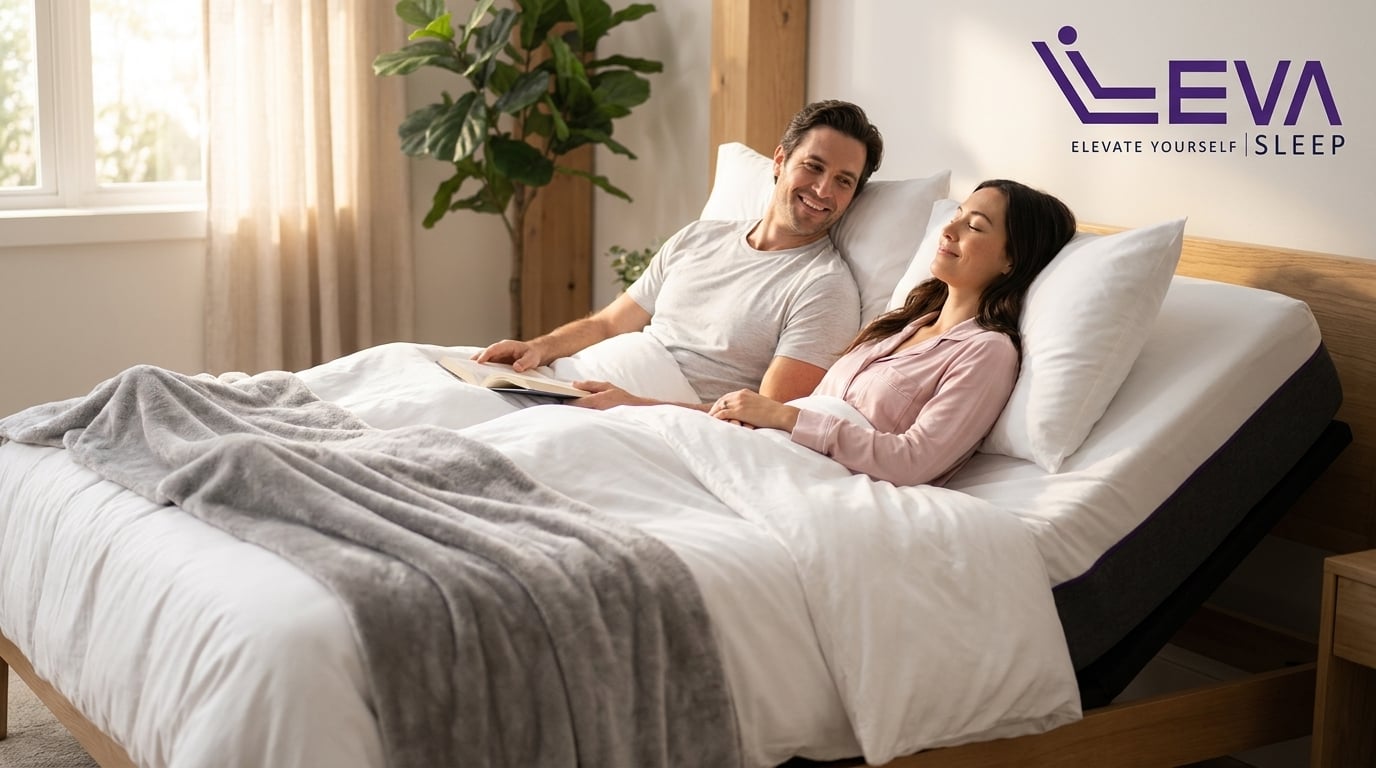
- Combining these methods with Leva Sleep’s split adjustable bases allows personalized positioning, anti-snore support, and deeper rest for both partners.
Fall Asleep in Under 2 Minutes (Methods 1-4)
Method 1: Military Method
Steps: Relax facial muscles completely, drop shoulders, release chest tension, and rest arms at your sides. Clear your mind for 10 seconds while you picture a calm scene.
Outcome: Consistent practice may help you fall asleep within about 2 minutes.
Science: Triggers a parasympathetic nervous system response that supports relaxation.
Pro Tip: Add slight head elevation to deepen relaxation and ease airway resistance.
Method 2: 4-7-8 Breathing Technique
Steps: Exhale fully, then inhale through your nose for 4 counts. Hold your breath for 7 counts. Exhale through your mouth for 8 counts. Repeat this cycle 4 times.
Outcome: Slows a racing mind and eases anxiety-related wakefulness.
Science: Supports relaxation and may reduce anxiety by regulating breath and heart rate.
Pro Tip: Practice during the day so the pattern feels automatic at night.
Method 3: Japanese Tongue Trick
Steps: Press your tongue firmly against the roof of your mouth behind your front teeth. Hold for 30 seconds while you breathe normally.
Outcome: May create rapid muscle relaxation through pressure point stimulation.
Science: Engages vagus nerve pathways that promote calm and rest.
Pro Tip: Pair this with progressive muscle release, starting at your toes and moving upward.
Method 4: Paradoxical Intention
Steps: Intentionally try to stay awake with your eyes closed. Focus on remaining alert while you stay still and relaxed.
Outcome: Reduces sleep anxiety by taking away the pressure to fall asleep quickly.
Science: Interrupts the cycle of performance anxiety around sleep.
Pro Tip: Set a mental limit of about 10 minutes so you do not drift into full wakefulness.
5-10 Minute Relaxation Techniques (Methods 5-8)
If the rapid methods feel too intense or do not fully calm your body, these slightly longer techniques build deeper physical and mental relaxation.
Method 5: Progressive Muscle Relaxation
Steps: Tense each muscle group for 5 seconds, then release. Start with your toes, then move through calves, thighs, abdomen, arms, shoulders, and face.
Outcome: Physical tension eases, which often brings mental relaxation within 8-10 minutes.
Science: Lowers cortisol levels and supports stress relief.
Pro Tip: Spend extra time on areas where you usually hold stress, such as jaw, neck, or shoulders.
Method 6: 3-3-3 Rule for Insomnia
Steps: Quietly name 3 things you can see in the room, 3 sounds you can hear, and then gently move 3 body parts, such as fingers, toes, and shoulders.
Outcome: Shifts attention from worry to present-moment awareness.
Science: Grounds the nervous system through simple sensory input.
Pro Tip: Keep movements small and slow so your body stays in a sleepy state.
Method 7: Visualization Technique
Steps: Picture a peaceful scene such as a beach or forest. Add detail by imagining sounds, smells, textures, and temperature in that place.
Outcome: Pulls focus away from worries and repetitive thoughts.
Science: Occupies the prefrontal cortex, which can reduce anxiety-driven wakefulness.
Pro Tip: Use the same scene every night so your brain starts to link it with sleep.
Method 8: Body Scan Meditation
Steps: Move your attention slowly from head to toe, noticing sensations in each area without judgment. Spend about 30 seconds on each region.
Outcome: Mindful awareness softens mental chatter within 7-10 minutes.
Science: Engages brain networks associated with rest and internal focus.
Pro Tip: When your mind wanders, gently return to the current body part and continue.
Evening Routines for Faster Sleep (Methods 9-12)
These methods shape your environment and habits so your body expects sleep at the right time each night.
Method 9: 20-Minute Rule + Bed Association
Steps: If you stay awake longer than 20 minutes, leave the bed for a quiet activity. Return only when you feel sleepy. Reserve your bed for sleep and intimacy.
Outcome: Builds a strong mental link between your bed and falling asleep.
Science: Prevents conditioned arousal in your sleep environment.
Pro Tip: Choose dimly lit activities such as light reading or gentle stretching during these wake periods.
Method 10: Optimal Room Temperature (60-67°F)
Steps: Set your thermostat between 60-67°F. Use breathable bedding and consider a cooling mattress pad if you tend to sleep hot.
Outcome: Mirrors the natural drop in body temperature that signals sleep readiness.
Science: Supports the normal decline in core temperature that helps you drift off.
Pro Tip: Explore Leva Sleep’s dual-zone temperature control for couples with different heat preferences.
Method 11: Screen and Caffeine Cutoffs
Steps: Avoid screens for 60 minutes before bed and skip caffeine after 2 PM. Dim household lights about 2 hours before your target sleep time.
Outcome: Protects your natural circadian rhythm and melatonin release.
Science: Blue light can suppress melatonin for up to 3 hours after exposure.
Pro Tip: Wear blue light blocking glasses when evening screen time cannot be avoided.
Method 12: Strategic Sleep Positioning
Steps: Elevate your head 6-12 inches to improve airflow. Raise your legs slightly to ease lower back pressure and keep your spine aligned.
Outcome: Reduces snoring, supports easier breathing, and eases joint pain that delays sleep.
Science: Head elevation opens upper airways and can reduce sleep apnea episodes.
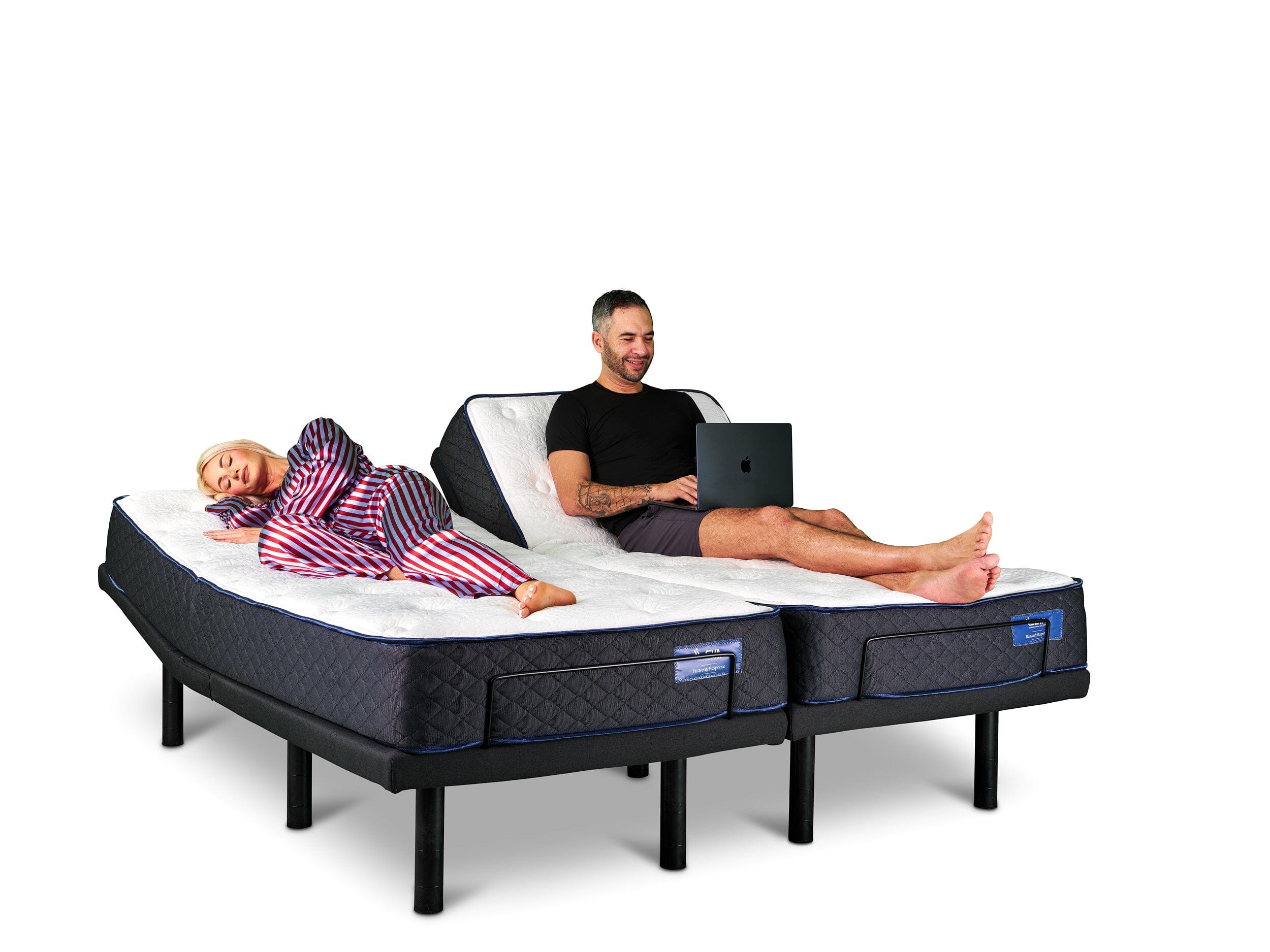
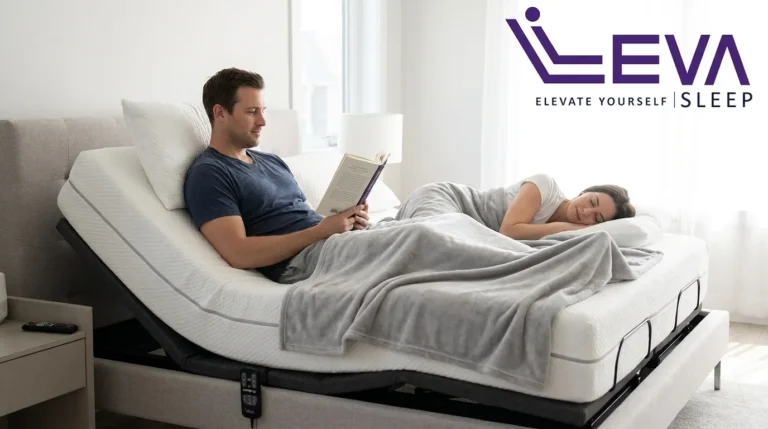
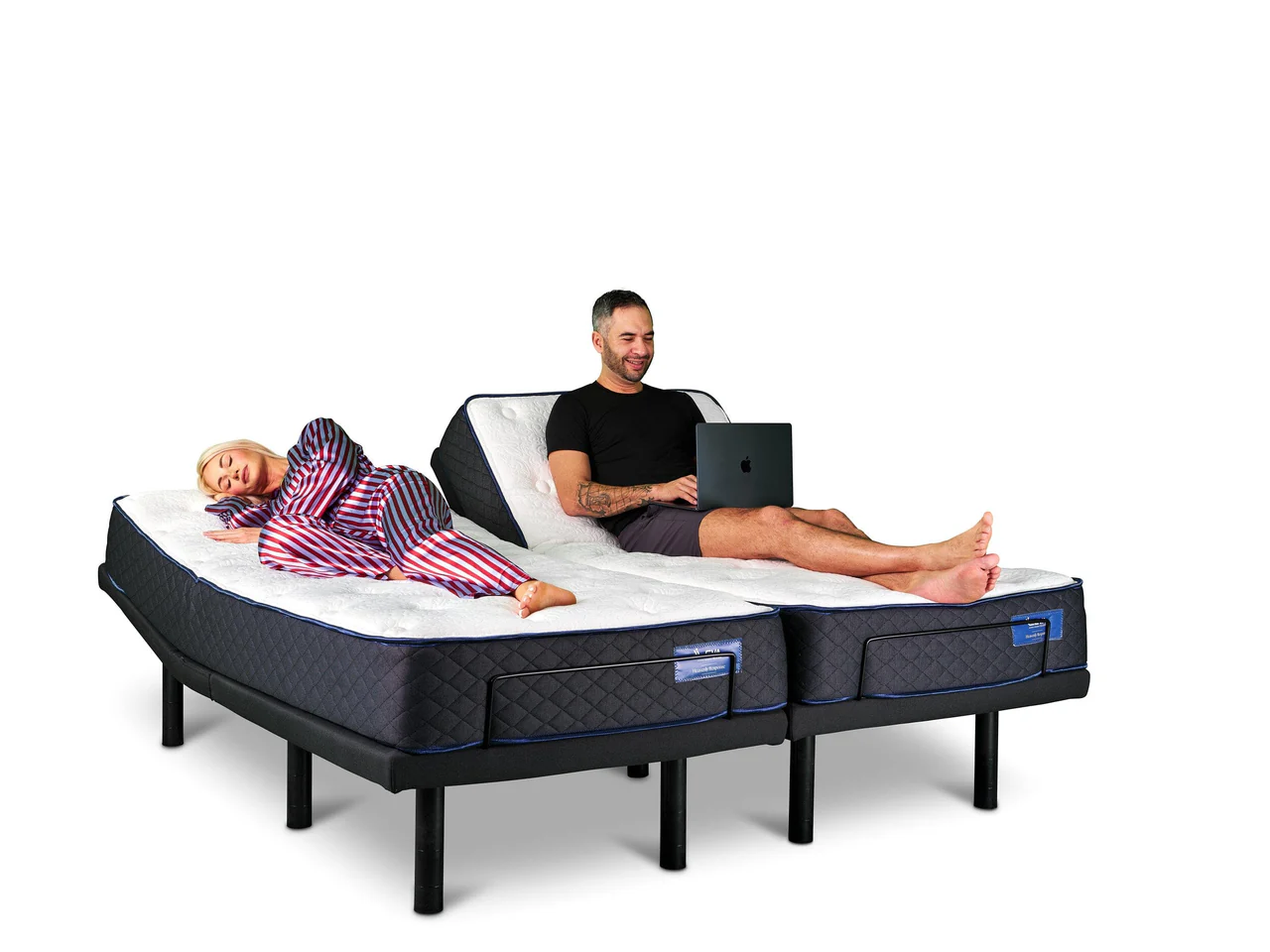
Pro Tip: Leva Sleep’s split queen and king adjustable bases offer independent positioning for couples, which addresses the challenge of different sleep needs. Whisper-quiet German motors allow adjustments without waking your partner, and upcoming 2026 anti-snore technology will fine-tune head position when it detects snoring. Because these systems cost 30-50% less than many competitors and include white-glove San Diego delivery, couples can resolve sleep divorce without paying typical premium prices.
The table below highlights four highly effective methods, comparing how quickly they work and what they address most directly.
| Method | Time to Effect | Best For | Source |
|---|---|---|---|
| Military Method | 2 minutes | Racing thoughts | Cleveland Clinic |
| 4-7-8 Breathing | 2-3 minutes | Anxiety, stress | NHLBI |
| Progressive Muscle Relaxation | 8-10 minutes | Physical tension | Mayo Clinic |
| Strategic Positioning | Immediate | Snoring, pain, couples | NHLBI |
Common Sleep Pitfalls and Simple Fixes
A racing mind that ignores breathing exercises often needs a combined strategy. Pair 4-7-8 breathing with gentle head elevation so your body and airway relax together. When partner snoring disrupts your progress, split-control setups help. Leva’s independent app controls let one partner adjust position without disturbing the other.
Physical pain that blocks relaxation usually responds to careful elevation. Raise the head of the bed 6-8 inches for neck and shoulder relief, and elevate feet for lower back support. Start with small changes and talk with your physician if you live with chronic pain.
Track your sleep onset time with a wearable device or a simple notebook. Apply the 20-minute rule mentioned earlier and leave the bed instead of forcing sleep. Steady, repeated use of these methods makes them more effective over time.
Track Your Sleep Progress
Monitoring your sleep onset time, nighttime awakenings, and morning energy helps you see which methods work best for you. Advanced tracking through Leva Sleep’s app integration adds custom position memory, AI-based sleep analysis, and the upcoming 2026 anti-snore detection system that adjusts head position when snoring appears.
See how Leva’s sleep tracking and positioning work in real life and notice how better alignment can strengthen these natural techniques.
Frequently Asked Questions
What is the Military Method for falling asleep?
The Military Method is a step-by-step relaxation technique created by the U.S. Navy to help pilots sleep quickly under stress. You relax facial muscles, drop your shoulders, release chest and arm tension, then clear your mind for about 10 seconds while you picture a peaceful scene. With regular practice, many people notice faster sleep onset.
Does elevating your head help with snoring?
Yes. Elevating the head 6-12 inches can open upper airways by limiting tissue collapse that triggers snoring. This position lets gravity help keep airways clearer, which often benefits people with mild sleep apnea or positional snoring. Leva Sleep’s adjustable bases can detect snoring and make small adjustments to improve head position through the night.
What is the best sleep setup for couples with different needs?
Split adjustable beds work well for couples who have different comfort levels, snoring patterns, or medical positioning needs. Each side can adjust elevation, firmness, and temperature while you still share one bed. Leva Sleep focuses on split queen and king designs with whisper-quiet motors that avoid waking your partner during changes.
How does the 3-3-3 rule help with insomnia?
The 3-3-3 rule calms anxious thoughts by anchoring you in the present moment. When you lie awake, you name 3 things you can see, 3 sounds you can hear, and gently move 3 body parts. This simple sensory routine redirects mental energy away from worry and often eases wakefulness within 5-10 minutes.
What is the Japanese trick for falling asleep?
The Japanese tongue trick asks you to press your tongue firmly against the roof of your mouth behind your front teeth and hold for 30 seconds while breathing normally. This action stimulates pressure points that activate vagus nerve pathways, which can bring quick muscle relaxation and calm. Many people find it even more effective when they pair it with progressive muscle release.
The fastest path to better sleep combines quick methods like the Military Method or 4-7-8 breathing with strategic positioning that targets the root causes of disruption. Start using one or two of these approaches tonight and build from there as your sleep improves. Visit Leva Sleep’s La Jolla showroom or shop online to experience how adjustable sleep systems can reinforce these natural techniques for lasting sleep gains.